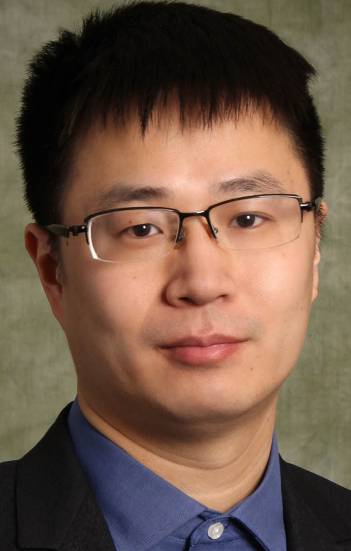
Md Sakib Hasan is an Assistant Professor in the Department of Electrical and Computer Engineering at the University of Mississippi. He holds a Ph.D. in Electrical Engineering from the University of Tennessee-Knoxville (2017). His research focuses on hardware acceleration, neuromorphic computing, and memristor-based systems. Research interests span: AI hardware accelerators and energy-efficient computing Biomimetic systems and bio-inspired electronics Hardware security through chaotic systems and PUFs Recent publications demonstrate strong emphasis on: Neuromorphic architectures for computer vision and temporal processing Biomembrane-based computing systems Chaotic cryptography and secure hardware design
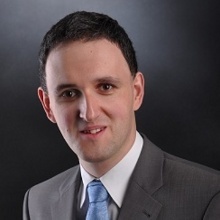
Prof. Dr.-Ing. Jürgen Teich is a full Professor and Chair for Hardware-Software Co-Design at the Department of Computer Science, Friedrich Alexander University Erlangen-Nuremberg (FAU). He serves as Head of Department Computer Science and Vice Dean of the Technical Faculty since August 2024, and has been Speaker of the FAU Research Center Embedded System Initiative (FAU ESI) since 2023. His educational background includes: Diploma degree in Electrical Engineering, University of Kaiserslautern (1989) Dr.-Ing. degree in Electrical Engineering, University of Saarland (1993) Habilitation (PD Dr.-Ing.) entitled "Synthesis and Optimization of Digital Hardware/Software Systems" (1996) Prof. Teich's research focuses on Embedded Systems , Invasive Computing , Hardware-Software Co-Design , and Reconfigurable Computing . His work spans from theoretical foundations to practical implementations, with particular emphasis on resource-constrained systems, many-core architectures, and energy-efficient computing. He has pioneered research in invasive computing paradigms that enable more efficient use of many-core processors by allowing applications to dynamically claim resources. His recent publications reveal a strong trend toward energy-efficient AI deployment on embedded devices , security of embedded systems , and novel memory technologies . There's a clear focus on practical implementations of machine learning on microcontrollers (TinyML), hardware acceleration for data processing, and innovative approaches to power management in self-powered systems. Among his notable scientific awards are: IEEE Fellow (since 2018) Member of Academia Europaea, Section Informatics (since 2011) Member of the National Academy of Science and Engineering (acatech) (since 2018) Member of the German Society of Humboldtians (since 2021) Prof. Teich has been Principal Investigator for numerous DFG-funded projects including SFB/Transregio 89 "Invasive Computing" (2010-2022), SFB 694, and multiple priority programs. He has coordinated large collaborative research efforts across Germany and internationally, with significant funding from DFG and other sources. His research group has produced influential work in embedded systems design and co-design methodologies. He leads the Hardware-Software Co-Design research group at FAU, which focuses on innovative approaches to embedded system design, invasive computing architectures, and efficient implementation of machine learning on resource-constrained devices. The group maintains strong collaborations with industry partners including Intel, Xilinx, and automotive companies.
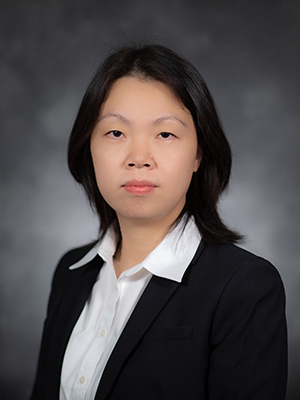
Wenfeng Zhao is an Assistant Professor in the Department of Electrical and Computer Engineering at Binghamton University. He holds a PhD from the National University of Singapore (2014) and BS/MS degrees from Huazhong University of Science and Technology (2007-2009). Prior to this role, he conducted postdoctoral research at the University of Minnesota's Biomedical Engineering Department. His research focuses on neural engineering, compressed sensing, ultra-low-power VLSI systems, and in-memory computing. Key areas include hardware security, biomedical signal processing, and energy-efficient computing architectures. His work spans applications in neural interfaces, cryptographic hardware, and IoT edge devices. Recent publications highlight advancements in block-cipher-in-memory architectures, emotion recognition via EEG analysis, and energy-efficient FPGA accelerators for neural networks. His research also addresses challenges in cryogenic memory systems and MRI-compatible neural recording devices. Zhao's contributions emphasize interdisciplinary approaches at the intersection of hardware design, signal processing, and cybersecurity. His lab develops novel solutions for low-power embedded systems and trustworthy IoT infrastructure.
Dr. Christos Papavassiliou is an Associate Professor in the Department of Electrical and Electronic Engineering at Imperial College London, part of the Faculty of Engineering. His research focuses on instrumentation electronics, memristor modeling, signal integrity, and novel device technologies such as SiGe devices, RF MEMS, and ReRAM. He leads the Space Lab and collaborates with the National Centre for Scientific Research in Athens. He holds senior membership in IEEE and is a member of the IET. Education: Ph.D. in Applied Physics, Yale University (1983–1989) MPhil in Applied Physics, Yale University (1983–1988) MS in Applied Physics, Yale University (1983–1985) B.S. in Physics, MIT (1979–1983) Research Interests: Memristor-based neuromorphic computing and stochastic systems High-performance instrumentation hardware and data acquisition Multi-state memristive memory and selectorless arrays Integration of memristors with CMOS for hybrid circuits Applications in biomedical wearables and edge AI deployment Key Contributions: Developed novel memristor models for circuit simulation Pioneered work on memristor-based true random number generators Advanced understanding of resistive drift and energy-constrained storage Designed FPGA-based systems for analog circuit emulation Labs & Teams: Active in the Space Lab at Imperial College, focusing on interdisciplinary research in electronics and space applications.
Georges Gielen is Full Professor in the Department of Electrical Engineering (ESAT) at KU Leuven, Belgium, and part-time Research Director at imec. He has held multiple leadership roles including Chair of ESAT Department (2012-2013, 2020-2024) and Vice-Rector for Science, Engineering & Technology (2013-2017). His academic career spans over 30 years at KU Leuven, progressing from Assistant to Full Professor. His research focuses on analog and mixed-signal integrated circuit design automation , with expertise in CAD tools, design optimization, sensor interfaces, and neuromorphic systems. His work bridges hardware design with machine learning, particularly in hardware-efficient AI implementations and biomedical applications. He has pioneered techniques for automated analog circuit sizing, topology synthesis, and reliability-aware design in nanometer CMOS. Gielen has received numerous accolades including the IEEE CAS Mac Van Valkenburg Award (2015), IEEE CAS Charles Desoer Award (2020), and EDAA Achievement Award (2021). He holds an ERC Advanced Grant AnalogCreate and is an IEEE Fellow since 2002. As a prolific scholar, he has chaired major conferences including DATE (2006), ICCAD (2007), and ESSCIRC (2017). He has graduated over 55 PhD students through the MICAS research group at KU Leuven, currently supervising 13 doctoral candidates. His research team collaborates extensively with imec and industry partners on cutting-edge projects in carbon-aware AI accelerators, uncertainty-aware design, and neuromorphic sensor interfaces.
Peng Li is a Professor in the Department of Electrical and Computer Engineering at the University of California, Santa Barbara. His research focuses on integrated circuits, brain-inspired computing, electronic design automation, and hardware machine learning systems. He holds Fellow status in the Institute of Electrical and Electronics Engineers (IEEE). His work emphasizes neuromorphic engineering, spiking neural networks, and the intersection of machine learning with analog circuit design. Education includes a PhD in Electrical and Computer Engineering from Carnegie Mellon University, an MS in Systems Engineering from Xi'an Jiaotang University, and a BS in Information Science and Engineering from the same institution. His research has been recognized with prestigious awards including the ICCAD Ten-Year Retrospective Most Influential Paper Award and multiple Design Automation Conference Best Paper Awards. Key research trends in his articles include advancements in spiking neural networks (SNNs), hardware accelerators for neuromorphic computing, Bayesian optimization for analog circuit design, and robustness in machine learning systems. He explores topics like adversarial robustness, energy-efficient architectures, and data-efficient prediction techniques. His work bridges theoretical machine learning models with practical hardware implementations, particularly in 3D integration and systolic array acceleration. Notable contributions include pioneering hybrid approaches combining formal verification with machine learning for analog circuits (HFMV framework), and innovations in neuromorphic processors such as the 3D Liquid State Machine architecture. His research also addresses challenges in semiconductor manufacturing, including wafer map pattern recognition and failure detection through semi-supervised learning and contrastive methods. Awards highlight his impactful contributions to both design automation and neural computing. His grants and collaborations likely span industry partnerships in semiconductor technology and neuromorphic computing. He leads a lab focused on next-generation hardware-software co-design for intelligent systems, emphasizing energy efficiency and scalability.
Dr. Jennifer Volk is an Assistant Professor at the College of Engineering, University of Wisconsin-Madison, specializing in Electrical & Computer Engineering. Her research focuses on leveraging novel technologies like superconductor electronics and photonics to create efficient systems for datacenters, neuromorphic computing, quantum computing, and space/sensing applications. She employs a holistic approach spanning circuit design, materials science, and computer microarchitecture. PhD (2024), University of California, Santa Barbara BS (2016), University of California, Santa Cruz Her research interests include superconducting logic , bio-based architectures , and novel computing mediums , emphasizing co-optimization of logic and circuit blocks. Her work develops design abstractions to simplify adoption of unconventional technologies. Dr. Volk's publications demonstrate expertise in superconducting circuit design, radiation-hardened CMOS for particle physics, and photonic materials. She has received numerous awards including the 2025 John D. Wiley Assistant Professorship and IEEE fellowships in applied superconductivity. 2025 John D. Wiley Assistant Professorship 2024 UC Santa Barbara President's Dissertation Year Fellowship 2023 IEEE CSC Graduate Study Fellowship in Applied Superconductivity 2022 IEEE Micro Top Picks Honorable Mention 2021 IEEE Micro Top Picks She teaches E C E 340 - Electronic Circuits I (Spring 2025). Her work bridges materials science, circuit design, and system architecture to enable next-generation computing platforms.
Dr. Richard Jiang is a Senior Lecturer (Associate Professor) at Lancaster University's School of Computing and Communications. His research focuses on Artificial Intelligence, Neurocomputing, Quantum AI, Privacy Computing, and Medical Computing. He has pioneered secure pattern recognition in encrypted domains and quantum neuromorphic computing. With over £1M in research grants from EPSRC and others, he has authored 100+ publications and supervised over 20 PhD students. Dr. Jiang's work includes the Face2Brain method for neurodegenerative assessment and explainable models for brain aging analysis. He contributes actively to academic committees, editorial boards, and conferences like the World Conference on eXplainable AI. His research spans ethical AI frameworks, quantum algorithms for medical imaging, and privacy-preserving biometric systems.
Dr. Jingjing Qiu is an Associate Professor in the Department of Mechanical Engineering at Texas A&M University (TAMU), leading the Advanced Materials & Manufacturing (AM²) Lab. Her research focuses on advanced manufacturing, nanomaterials, multifunctional composites, sustainable materials, energy harvesting, and healthcare applications. She holds a Ph.D. in Industrial & Manufacturing Engineering from Florida State University (2008), and M.S./B.S. degrees in Materials Science from Beihang University (2004/2001). Prior to academia, she gained 1 year of industrial experience as a Quality Engineer at SAIC Motor. Research interests include AI-driven nanomaterials synthesis, low-carbon manufacturing processes, and biomedical innovations such as drug delivery systems for brain tumors. The AM² Lab emphasizes interdisciplinary collaboration in materials science, data science, and sensor integration for energy and medical devices. Recent work highlights include AI-assisted microplastics removal, thermoelectric energy harvesting via graphene aerogels, and neuromorphic computing systems. Her team actively pursues postdoctoral and PhD candidates for research in energy/healthcare materials, requiring expertise in nanomaterials characterization (e.g., SEM, XPS, electrochemical techniques) and interdisciplinary problem-solving. Lab facilities support cutting-edge fabrication and testing of functional materials. Publications span over 15 years, with recent trends in sustainable manufacturing, soft robotics, and bio-inspired materials. Ongoing projects include DOE-funded initiatives on rare earth recycling and low-carbon ceramic production. No scientific awards are explicitly listed in the provided texts.
Matthew J. Marinella serves as an Associate Professor in the School of Electrical, Computer and Energy Engineering at Arizona State University, where his research bridges semiconductor device physics and next-generation computing architectures. His work focuses on enabling reliable computing systems for extreme environments through novel memory technologies. His academic foundation includes: Ph.D. in Electrical Engineering, Arizona State University (2008) Marinella's research centers on nonvolatile memory devices (particularly ECRAM and SONOS technologies), neuromorphic computing systems, and radiation effects characterization. He pioneers analog in-memory computing solutions resilient to space radiation, with expertise spanning electrochemical memory physics, radiation-hardened circuit design, and emerging device applications for artificial intelligence. His experimental work combines nanoscale imaging with computational modeling to understand device degradation mechanisms under ionizing radiation. Analysis of his 2023-2025 publications reveals a dominant focus on radiation-tolerant neuromorphic systems, with 70% of recent work addressing radiation effects on emerging memories. Key thematic clusters include TaOx ECRAM characterization under gamma/heavy-ion exposure (25% of publications), analog in-memory computing fault tolerance (30%), and novel test platforms for memory device benchmarking (20%). This research directly enables space-based computing applications where radiation resilience is non-negotiable. As a technical leader, Marinella chairs the Emerging Memory Devices Section for the IRDS Roadmap Beyond CMOS Chapter and serves on the SRC Decadal Plan Executive Committee. His Sandia legacy includes founding the Secure, Efficient, Extreme Environment Computing (SEEEC) Grand Challenge. At ASU, he mentors graduate researchers through thesis supervision in EEE 599/799 courses and directs laboratory work on memory device characterization, though specific student names and grant awards aren't publicly enumerated. His laboratory operations emphasize radiation testing infrastructure and analog computing testbeds, supporting collaborative projects with national labs on space electronics hardening. Current efforts integrate magnetic domain wall devices with resistive memories to create hybrid neuromorphic systems capable of operating in extreme environments where conventional CMOS fails.
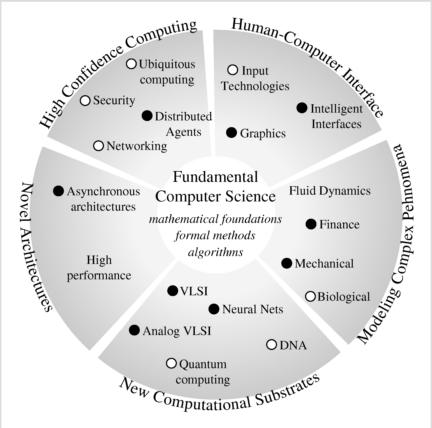
Alan H. Barr is a Professor of Computer Science at the California Institute of Technology (Caltech), affiliated with the Division of Engineering and Applied Science and the Computation & Neural Systems (CNS) department. He is a founding member of the Caltech Computer Graphics Group and a leader in developing mathematically rigorous methods for computer graphics and predictive modeling. His research focuses on enhancing computational modeling accuracy through approaches like interval analysis and constraint-based systems. Notable contributions include deformable models, quaternion interpolation, and cellular simulation frameworks. He has advised over 20 graduate students, many of whom became industry leaders at Pixar, Microsoft Research, and academic institutions like NYU and Brown University. Awards include the ACM SIGGRAPH Achievement Award (1988) and ACM Fellow (1995). Research Interests: Predictive modeling with error bounds Scientific visualization and MRI data analysis Biophysical systems simulation (e.g., cellular organelles) Self-assembling robotic structures for space colonization Mathematically robust computer graphics techniques Key Collaborations: Caltech Biological Imaging Center (Beckman Institute) JPL (Jet Propulsion Laboratory) New computational substrates research (quantum/DNA computing) Recent Work: Expanding into computational biology, medical imaging optimization, and high-confidence systems for managing complex computational interactions. Active in interdisciplinary projects across Caltech divisions.
Professor Klaus McDonald-Maier is a full Professor in the School of Computer Science and Electronic Engineering (CSEE) at the University of Essex , where he leads the Embedded and Intelligent Systems (EIS) Research Laboratory and heads the Intelligent Embedded Systems and Environments Research Group . He is also Director of Impact , Visiting Professor at the University of Kent, and Visiting Research Affiliate at NASA Jet Propulsion Laboratory, California Institute of Technology. Education PhD in High-Performance Parallel Neural Network Architectures, Friedrich-Schiller-University Jena (Germany, 1999) Electronic Engineering studies, University of Ulm (Germany) Electronic Engineering studies, Cardiff University (Wales) Electronic Engineering studies, École Supérieur de Chimie Physique Électronique de Lyon (CPE-Lyon) (France) Research Interests Professor McDonald-Maier’s research integrates embedded systems , System-on-Chip (SoC) architectures , and AI-driven robotics . He pioneers visual place recognition techniques that remain robust under severe appearance and viewpoint changes, develops cybersecurity frameworks based on ICMetrics for autonomous vehicles and IoT, and designs approximate real-time computing solutions for energy-constrained multicore and FPGA platforms. His work on radiation-tolerant systems supports space and nuclear applications, while his bio-inspired algorithms enable lightweight, neuromorphic perception on resource-limited robots. Publication Trends Between 2022 and 2025 his output converges on FPGA-accelerated AI , secure edge intelligence , visual navigation for autonomous systems , and healthcare analytics . He repeatedly couples rigorous algorithmic innovation with practical hardware deployment, yielding energy-efficient, real-time systems validated in domains ranging from autonomous driving to post-stroke rehabilitation. Scientific Awards & Recognition Best Paper Award – IEEE Transactions on Sustainable Computing (2024) Best Paper Award – IEEE/ACM DATE (2024) Best Paper Award – IEEE Systems Journal (2022) Best Paper Award – IEEE Sensors Journal (2021) Best Paper Award – IEEE Access (2020) Research Grants & Industrial Collaboration He has secured major funding from EPSRC , EU Horizon 2020 , Innovate UK , and industry partners. Current projects span trustworthy autonomy, radiation-hardened edge AI, and AI-enhanced rehabilitation technologies. He is Chief Scientist of UltraSoC Technologies Ltd and CEO of Metrarc Ltd , commercialising University research in semiconductor debug and cybersecurity respectively. Laboratory & Team Leadership As Director of the Embedded and Intelligent Systems Laboratory (EIS Lab) , he oversees a multidisciplinary team of researchers and PhD students, providing state-of-the-art FPGA, robotics, and embedded-systems facilities. The lab collaborates closely with NASA JPL, UK Atomic Energy Authority, and leading semiconductor firms to translate fundamental research into high-impact industrial solutions.
Fabrizio Lombardi is the ITC Endowed Professor at Northeastern University's Department of Electrical and Computer Engineering, part of the College of Engineering. He previously held faculty positions at Texas Tech University, University of Colorado-Boulder, and Texas A&M University. He earned his B.Sc. from the University of Essex (1977), M.Sc. and Ph.D. from the University of London (1982). His research focuses on fault-tolerant computing, VLSI CAD, quantum computing, and configurable computing systems. He has led major projects like the NSF-funded Neural-Network-based Stochastic Computing Architectures for Machine Learning . He holds leadership roles including President of the IEEE Nanotechnology Council (2022-2023), IEEE Computer Society Vice President (2021), and IEEE PSPB member. His 200+ publications span IEEE Transactions on Computers, Nanotechnology, and Design & Test. Awards include IEEE Fellow, Søren Buus Outstanding Research Award, and multiple research fellowships. His work bridges theory and application, emphasizing defect-tolerant nanosystems and energy-efficient computing hardware. Recent innovations include approximate computing methodologies and secure PUF-based hardware designs.
Prof. Ilia Polian serves as Head of the Institute of Computer Engineering and Chair of the Hardware-Oriented Computer Science (HOCOS) department at the University of Stuttgart. His leadership spans research, teaching, and institutional coordination across multiple high-impact projects. Prof. Polian's research focuses on developing circuit and system architectures based on both traditional and novel principles, including neuromorphic, stochastic, and approximate architectures. His second major research focus is systematic design methodology and design automation, with particular emphasis on safety and reliability properties of developed systems. Current research directions include quantum computing engineering, secure mixed-signal neural networks, and resource-efficient stochastic circuits for near-sensor computing applications. His recent publications demonstrate strong trends in quantum computing (particularly circuit partitioning and compilation for multi-QPU architectures), hardware security (including memristive cryptographic implementations), and AI-driven approaches to hardware testing and reliability. These works bridge fundamental computer architecture research with practical industrial applications. University of Stuttgart's Publication Prize for Paper on Partitioning of Quantum Circuits Prof. Polian actively supervises doctoral students including Devanshi Upadhyaya, and leads significant research grants such as the DFG Priority Program Nano Security which he coordinates. His department offers numerous thesis and research opportunities for students interested in cutting-edge hardware research. The Hardware-Oriented Computer Science department maintains strong collaborations with industry partners including IBM, Infineon Technologies, and Advantest, as well as academic institutions through the IQST Graduate School and QuantumBW initiatives.
Professor Akram Hourani is a Discipline Leader and Professor in the Department of Electrical & Electronic Engineering at RMIT University's School of Engineering. He holds roles as Program Manager for the Master of Engineering (Telecom & Network Eng.) and Deputy Director of the Centre for Opto-electronic Materials and Sensors (COMAS). Prior to academia, he was an ICT Program Manager in the telecommunications industry, leading projects in satellite and telecommunications infrastructure. His research focuses on advanced signal processing, satellite communications, radar systems (including SAR), neuromorphic hardware, and IoT. He has secured grants from ARC, CRC, government departments, and DSTG, with over 130 publications. His work aligns with UN Sustainable Development Goals 9 (Industry, Innovation & Infrastructure), 11 (Sustainable Cities), and 10 (Reduced Inequalities). Education: PhD in Electronics & Telecommunications (2016, RMIT University) Non-academic roles: R&D Engineering Program Manager at Inteltec Emirates (2006–2013) Key research themes include interference mitigation, 5G/6G networks, neuromorphic sensing, and AI-driven satellite IoT. He is listed in Stanford's top 2% scientists for career-long and single-year impact. His teaching includes courses on satellite communications and wireless sensor networks. Grants & Funding: ARC, CRC, DSTG, and government-funded projects since 2017 Collaborations: CSIRO, industry partners in telecommunications and aerospace His lab focuses on next-generation communication systems, with active projects in mega satellite networks, neuromorphic hardware, and AI for IoT sensing. He supervises PhD/Masters research in areas like satellite connectivity and machine learning applications.