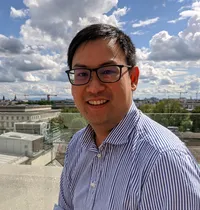
Holger Hoos is a Professor in the Department of Methodology of Artificial Intelligence at RWTH Aachen University. His research spans artificial intelligence, automated algorithm configuration, and machine learning robustness, with applications in optimization, earth observation, and quantum computing challenges. Research Focus: His work emphasizes: Robustness verification and efficiency improvements in neural networks Automated Machine Learning (AutoML) frameworks and benchmarking Multi-objective optimization and algorithm configuration AI applications in remote sensing, time-series analysis, and recommender systems Recent publications (2024-2025) show a dominant trend toward enhancing AI reliability through rigorous verification methods, scalability solutions for large-scale problems, and adaptable frameworks for dynamic data environments. Quantum computing applications and energy-efficient AI also feature prominently. He leads research initiatives at RWTH Aachen focusing on methodological advances in AI, though specific labs/teams are not detailed.
Aymeric Blot is a Senior Lecturer at the University of Rennes, France, where he is affiliated with the ISTIC faculty. He is also a member of the IRISA research centre within the joint Inria/IRISA DiverSE team. His work focuses on advancing software improvement techniques through genetic algorithms and automated optimization approaches, with significant contributions to the field of Genetic Improvement. Dr. Blot received his PhD in Computer Science from Université de Lille (2015-2018), following a Magistere in Computer Science and Telecommunications from ENS Rennes (2011-2015). His educational background also includes an MSc from ENS Cachan and a BSc from Université Rennes 1, establishing a strong foundation in both theoretical and applied computer science. Dr. Blot's research primarily centers on Genetic Improvement and Search-Based Software Engineering . His work explores how software can be automatically evolved and optimized through techniques like evolutionary computation, automated machine learning, and algorithm configuration. A key contribution to this field is his development and maintenance of Magpie , an automated software improvement framework. His research has practical applications in software performance optimization, program repair, and multi-objective combinatorial optimization problems. Dr. Blot has made significant contributions to understanding mutation operator efficacy, fitness function design, and the combination of different software improvement approaches. Analysis of Dr. Blot's recent publications shows a consistent focus on empirical evaluation of software improvement techniques. His work often compares different approaches like genetic improvement, parameter tuning, and their combinations to determine optimal strategies for software optimization. There's a clear trajectory toward more comprehensive surveys and frameworks that integrate multiple improvement techniques, as evidenced by his recent survey on benchmarks for software's non-functional properties published in ACM Computing Surveys. Dr. Blot has been actively involved in the academic community, serving on program committees for major conferences including ASE, ICSE, ISSTA, and GECCO. He has organized workshops on Genetic Improvement and contributed to community resources like the genetic improvement website. His service includes roles as Program Committee member, track chair, and keynote speaker at numerous international conferences. At the University of Rennes, Dr. Blot teaches Software Engineering and Operational Research courses. He previously served as a Research Associate at University College London (2018-2022) and at Université du Littoral Côte d'Opale (2022-2023) before joining his current tenured position in 2023. His international experience includes research visits to Leiden University in the Netherlands and Shinshu University in Japan.
Professor Giselher Pankratz serves as Head of University at the Deutsche Bundesbank University of Applied Sciences, where he teaches IT and IT management, process management, and payments systems. His courses include SAP exercises, IT project management, cashless payment instruments, bank management business games, and payment transaction case studies. He earned his economics degree specializing in business informatics from the University of Siegen and completed his PhD at FernUniversität in Hagen under Professor Hermann Gehring, receiving the Stinnes Logistics Award in 2003 for his dissertation. His research spans combinatorial auctions, heuristic decision-making approaches, multi-objective optimization, process management, requirements analysis patterns, cyber laundering technology, and Distributed Ledger Technologies. Professor Pankratz's publication history reveals an evolution from logistics optimization (2000-2010) toward blockchain applications (2019), with consistent focus on combinatorial auctions and transportation systems. His work bridges theoretical operations research with practical financial technology applications, particularly in payment systems and distributed ledgers. Stinnes Logistics Award 2003 (for doctoral dissertation) As a peer reviewer for international journals and coordinator of research projects sponsored by Germany's Federal Ministry of Economics and Technology, he has lectured in Bachelor's and Master's programs at Hagen Institute for Management Studies and Danube University Krems. His academic leadership extends to editing works like 'Intelligent Decision Support' (2008) and 'Intelligente Systeme zur Entscheidungsunterstützung' (2008). While specific lab affiliations aren't detailed, his research involved collaborations at FernUniversität in Hagen and practical industry projects, particularly in transportation logistics and payment systems development.
Sebastian Pokutta is a Professor at Technische Universität Berlin, Vice President at Zuse Institute Berlin (ZIB), and Chair of the Cluster of Excellence MATH+ and MODAL. His research focuses on artificial intelligence, optimization, and machine learning, with emphasis on algorithmic development, decision-making systems, and real-world applications in areas like satellite data analysis, quantum computing, and combinatorial mathematics. He leads a research group exploring AI-driven methodologies and their interdisciplinary applications. He holds academic positions including leadership roles in major institutions and has contributed to numerous high-impact publications in optimization, machine learning, and quantum computing. His work has been recognized with awards such as the Science Prize of the Association for Pediatric Orthopedics (VKO). Pokutta actively engages in academic outreach, delivering talks on optimization and AI, and contributes to open-source projects like the FrankWolfe.jl library. His research bridges theoretical foundations with practical implementations, addressing challenges in computational efficiency, mathematical modeling, and AI ethics.
Prof. Dr. Stefan Ruzika is a full professor (W3) in the Department of Mathematics at the Rheinland-Palatinate Technological University Kaiserslautern-Landau. He leads the Competence Center for Mathematical Modelling in MINT Projects in Schools (KOMMS) and chairs the DFG-funded Graduate School 'Mathematics of Interdisciplinary Multiobjective Optimization' (MIMO), starting in 2024. His research focuses on multi-criteria optimization, integer programming, mathematical modeling, and network optimization. He teaches courses such as 'Multicriteria Optimization' and supervises Bachelor’s and Master’s theses. Education: PhD (2007, TU Kaiserslautern), Master of Science (2002, Clemson University), Diplom in Mathematics (2003, TU Kaiserslautern). Positions include professorships at TU Kaiserslautern (2017–present) and University of Koblenz-Landau (2012–2017), and postdoctoral roles at TU Kaiserslautern (2003–2007). Research interests include optimization on networks, approximation algorithms, and decision support systems for sustainable urban planning. Projects include 'Ageing Smart' (decision support for elderly quality of life) and 'GRK 2982: MIMO' (multiobjective optimization research).
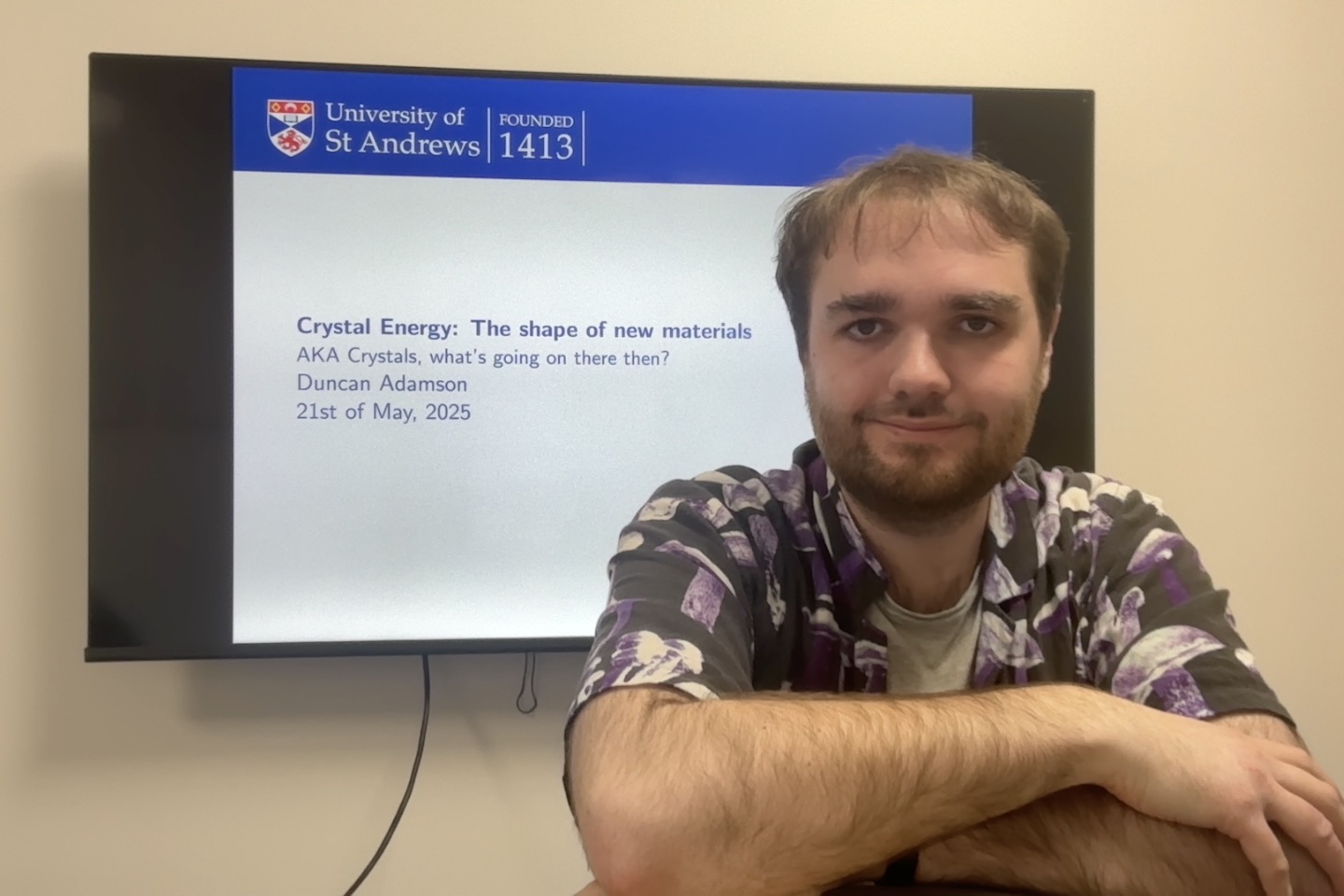
Duncan Adamson is a Lecturer in the School of Computer Science at the University of St Andrews, United Kingdom. He has held prior research positions at the Leverhulme Research Centre for Functional Materials Design, the University of Göttingen, Reykjavik University, and the University of Liverpool. His academic foundation includes a PhD from the University of Liverpool supervised by Prof. Igor Potapov and undergraduate studies at the University of Glasgow. His research lies at the intersection of theoretical computer science and discrete mathematics, with a focus on combinatorics on words , algorithm design , crystal structure prediction , and temporal graphs . He explores symmetry in multidimensional words, develops algorithms for combinatorial enumeration, and investigates computational hardness in materials science. His work often bridges abstract theory with real-world applications in chemistry and robotics. The recent publications show a strong trend in combinatorial algorithms , particularly in enumeration, ranking, and optimization over structured words, graphs, and sequences. A significant portion of his work involves the k-centre problem for implicitly defined combinatorial classes and temporal graph colouring , with increasing emphasis on algorithmic complexity and practical implementation. His 2024 paper on harmonious colourings in temporal matchings was awarded best paper at SAND 2024, highlighting the impact of his research. Scientific Awards: Best Paper Award, SAND 2024 – 'Harmonious Colourings of Temporal Matchings' Duncan Adamson has been supported by the Leverhulme Research Centre for Functional Materials Design during his PhD and postdoctoral work. While no formal advisees are listed, his supervision by leading researchers and collaborative projects suggest active mentorship and team integration. He teaches core computer science modules at St Andrews, including CS2001 and CS3302, and maintains a busy research schedule with weekly meetings and supervisory responsibilities. His research is conducted within the Algorithms and Complexity group at St Andrews, continuing collaborations with international teams in Iceland, Germany, and beyond. Projects often involve interdisciplinary efforts, especially in applying computational techniques to materials science and chemistry.
Pascal Kerschke is a Professor at the Chair of Big Data Analytics in Transportation at Technische Universität Dresden (TU Dresden). His research focuses on exploratory landscape analysis, multi-objective optimization, and automated algorithm selection for complex computational problems. Research Areas: Exploratory Landscape Analysis, Multi-Objective Optimization, Traveling Salesperson Problem (TSP), Machine Learning, Continuous Optimization Affiliation: Chair of Big Data Analytics in Transportation, TU Dresden Kerschke has pioneered methodologies for characterizing optimization problem landscapes using machine learning and statistical features, bridging gaps between algorithm design and practical applications in transportation analytics. His work includes developing frameworks like FLACCO for fitness landscape analysis and advancing visualizations for multi-objective optimization. Recent publications highlight his contributions to deep learning integration for landscape analysis (e.g., Deep-ELA), multiobjectivization techniques, and benchmarking challenges. He has also explored adversarial robustness in neural networks and parameter tuning methodologies. Scientific Awards: PPSN 2016 Best Paper Award Kerschke's collaborations with optimization heuristic developers and his role in creating benchmarking libraries (e.g., ASlib, OpenML) underscore his interdisciplinary impact in computational optimization and data-driven decision-making.
Dr. Bogdan Savchynskyy is a Senior Researcher and Group Leader at the Computer Vision and Learning Lab, Heidelberg University. His academic journey includes roles at TU Dresden and the Heidelberg Collaboratory for Image Processing. He holds a Ph.D. in Computer Science from National Technical University of Ukraine (Kiev Polytechnic Institute). Savchynskyy's research focuses on combinatorial optimization, graphical models, and their applications in computer vision and machine learning. Education: PhD in Computer Science, National Technical University of Ukraine (2009) Postdoc, Heidelberg Collaboratory for Image Processing (2009–2014) His research interests include large-scale combinatorial optimization, multi-graph matching, and unsupervised learning. Notable achievements include developing state-of-the-art graph matching solvers and securing DFG grants for projects like OPTEMA and UMDISTO. He has published extensively in top venues such as CVPR, ICCV, and AAAI. Dr. Savchynskyy supervises students in projects involving optimization techniques and teaches courses like Applied Combinatorial Optimization . His lab hosts regular seminars on convex and combinatorial optimization. Awards: DFG Grants (2016, 2022, 2024) Outstanding Reviewer Awards (ICML 2022, CVPR 2016/2015) Best Student Paper Award at CVPR 2014 Key projects include the Graph Matching Benchmark and Tracking-by-Assignment , advancing bioimaging and computer vision applications. His lab fosters collaboration in optimization and interdisciplinary research.
Prof. Alf Kimms is a full professor at the University of Duisburg-Essen, holding the chair of Logistics and Traffic Management. He previously served as a full professor at the Technical University of Freiberg (2001–2006). His research focuses on applying operations research methods to logistics, supply chain optimization, revenue management, and evacuation planning. He earned his Ph.D. in Business Administration from the University of Kiel (1996) and his postdoctoral lecturer qualification (2001), both focusing on project management and production scheduling. Kimms' academic career is marked by contributions to high-impact journals such as European Journal of Operational Research and Annals of Operations Research . He has led projects for companies like Bayer, Lufthansa, and DaimlerChrysler, emphasizing practical applications of optimization. A 2005 Handelsblatt ranking placed him among Germany’s top ten business administration professors. He actively participates in professional societies, including the German OR Society (GOR), where he founded the Revenue Management working group. His research spans network design, disaster response logistics, cooperative game theory, and airline alliance strategies. Notable projects include evacuation modeling for urban areas and revenue management frameworks for broadcasting industries. Kimms reviews for the German Research Foundation (DFG) and serves on international conference committees, balancing academic rigor with industry collaboration.
Prof. Dr. Marc Pfetsch is a full professor of Discrete Optimization at the Technical University of Darmstadt, holding the W3 chair since 2012. He leads the Optimization Group within the Department of Mathematics and has served as Dean of the Department from October 2022 to September 2024. His research focuses on optimization methodologies, particularly in gas network modeling, discrete and mixed-integer programming, and computational algorithms. He is a core developer of the SCIP Optimization Suite, a leading solver for mixed-integer programming problems. Education : Mathematics studies at the University of Heidelberg (1992–1997) Operations Research at Cornell University (1997–1998, via Fulbright Scholarship) PhD in Mathematics from TU Berlin (2002) Habilitation in Computational Aspects of Combinatorial Optimization (2008) Research Interests : Discrete and combinatorial optimization Gas network optimization and resilience design Symmetry handling in mixed-integer programming Algorithm development for SCIP and optimization software Key Projects : Transregio/SFB 154: Mathematical Modeling, Simulation, and Optimization of Gas Networks SCIP Optimization Suite development Clean Circles: Iron as an energy carrier for climate-neutral systems Awards : EURO Excellence in Practice Award 2016 for "Evaluating Gas Network Capacities" Grants and Labs : Principal investigator in multiple DFG projects (e.g., SPP 2298, Matheon) BMWi-funded projects on flexible heating networks and resilient systems
Anita Schöbel is a Professor in the Department of Mathematics at the Rheinland-Pfälzische Technische Universität Kaiserslautern-Landau (RPTU) and serves as the Director of the Fraunhofer Institute for Industrial and Financial Mathematics (ITWM) in Kaiserslautern. She is a leading figure in operations research and mathematical optimization, with a strong focus on public transportation systems, robust optimization, and multi-objective decision-making. Her dual roles bridge academic research and industrial application, particularly in logistics, healthcare, and energy systems. Her research interests include: Robust and integer optimization Public transport planning (timetabling, line planning, delay management) Facility and hub location problems Multi-objective optimization under uncertainty Algorithmic methods in transportation networks The analysis of her recent publications reveals a consistent focus on integrating robustness into transportation planning, using machine learning to enhance schedule reliability, and advancing theoretical frameworks for multi-objective optimization. Her work often combines mathematical rigor with real-world applicability, especially in public transit and pandemic modeling. She has contributed significantly to the development of optimization models for public health during the COVID-19 crisis. Her scientific awards include leadership roles in major professional societies: President of the European Association of Operational Research Societies (EURO), 2022–2023 President of the German Society for Operations Research (GOR), 2019–2020 Anita Schöbel has been actively involved in grant-funded research and collaborative projects, including the DFG Research Group FOR2083 on integrated transportation planning, the EU project EASIER, and the BMBF project SynphOnie. She is currently co-spokesperson of the DFG Graduate College 2982 on 'Mathematics of Interdisciplinary Multiobjective Optimization'. She also serves on advisory boards such as the steering committee of HLRS and the Fraunhofer Strategic Research Field on Next Generation Computing. She leads the research group 'Optimization' at RPTU and is associated with initiatives like LinTim (software for transport planning), QuanTUK (quantum computing applications), and GRK 2982. Her leadership extends to academic governance, including membership in the RPTU University Council and the Departmental Council of Mathematics.
Sami Davies is a Research Scientist in Theoretical Computer Science at the Simons Institute and the Department of Electrical Engineering and Computer Sciences (EECS) at the University of California, Berkeley. He earned his PhD in Mathematics from the University of Washington in 2021 under the supervision of Thomas Rothvoss, with work spanning the Department of Mathematics and the Allen School theory group. Prior to Berkeley, he was a postdoctoral researcher in the theory group at Northwestern University. His research lies at the intersection of theoretical computer science and combinatorial optimization. Key interests include scheduling algorithms, clustering, hypergraph matchings, approximation algorithms, and algorithmic applications in machine learning. His work often addresses fundamental problems in algorithm design with practical implications in resource allocation, data analysis, and network optimization. The most recent publications reflect a strong trend in developing efficient combinatorial algorithms for clustering and scheduling problems, particularly under complex constraints such as communication delays or fairness objectives. There is a growing integration of machine learning concepts into traditional algorithmic frameworks, as seen in works on predictive flows and trace reconstruction. His research is consistently published in top-tier venues including NeurIPS, ICML, SODA, FOCS, and COLT, indicating high impact and recognition within the theoretical CS community. Sami is actively engaged in academic service and outreach. He has served as a mentor in the Washington Directed Reading Program and co-taught the 'Math in Society' course through FEPPS, which provides education to incarcerated individuals. He has also taught yoga at the University of Washington. He enjoys bouldering, running with his dog, vegan cooking and baking, and practicing yoga. He completed a 200-hour yoga teacher training in 2019. Contact: Email: samidavies@berkeley.edu , davies@berkeley.edu
Heather Newman is an Assistant Professor in the Department of Computer Science at Vassar College. She earned her PhD from the interdisciplinary Algorithms, Combinatorics, and Optimization (ACO) program at Carnegie Mellon University through the Mathematics Department, advised by Ben Moseley. She received her A.B. in Mathematics with a minor in Computer Science from Princeton University in 2019 and an M.Sc. in Mathematical Sciences from Oxford in 2020. Her research lies at the intersection of discrete mathematics, theoretical computer science, and operations research, focusing on approximation and online algorithms for combinatorial optimization problems. She is particularly interested in clustering, scheduling, and developing new beyond-worst-case models for online algorithms with pessimistic lower bounds. The recent publications reflect a strong trend in algorithmic design for optimization problems, especially in clustering (e.g., correlation clustering, k-median), scheduling , and graph-based optimization . Her work emphasizes theoretical rigor with practical implications, often involving novel algorithmic frameworks and combinatorial techniques. She frequently publishes in top-tier theoretical venues such as ICALP, APPROX, SPAA, ICML, and SIGMETRICS. Scientific Awards No awards listed in the provided text. Advising and Grants There is no explicit mention of graduate students or PhD advisees in the provided information. Heather Newman does not list any specific grants or funded projects, but her research output suggests active engagement in theoretical computer science research. She was involved with Moon Duchin’s Metric Geometry and Gerrymandering Group, which applies mathematical methods to redistricting and social justice issues, indicating interdisciplinary outreach and potential collaborative funding. Labs and Research Teams While no formal lab is mentioned, Heather Newman has been affiliated with interdisciplinary research groups, notably the Metric Geometry and Gerrymandering Group led by Moon Duchin. This group brings together mathematicians and computer scientists to analyze gerrymandering through geometric and algorithmic tools. Her primary research collaborations appear to be with leading figures in theoretical computer science, including Ben Moseley, Kirk Pruhs, and Anupam Gupta, suggesting active participation in a broader research network focused on algorithm design and analysis.
Dr. Ir. Anh Vu Doan is a Lecturer at the Technical University of Munich (TUM) under the Chair of Integrated Systems and a Senior Project Leader at Infineon in Neubiberg, Germany. With a Belgian-Vietnamese background and prior residence in Japan, he has held academic roles including postdoctoral fellowships at Keio University and TUM, as well as teaching assistant and stand-in lecturer positions at Université libre de Bruxelles (ULB) and IÉSEG School of Management. Research Interests: Embedded systems design Combinatorial optimization Problem modeling and decision aiding Approximate computing and 3D-stacking memory Machine learning reliability and safety Network-on-Chip (NoC) optimization Recent Publications focus on neuromorphic systems, power optimization for multicore processors, adversarial attacks in ML, and multi-objective design strategies using genetic algorithms. His work bridges hardware-software co-design and sustainable mobility decision frameworks. Scientific Awards: Erasmus-Mundus Grant (EASED program) JST/CREST Research Program Education: MSc in Electrical Engineering (ULB, 2009) PhD in Engineering Sciences (ULB, 2015)
Pandian Vasant is a prominent researcher in optimization, renewable energy systems, and metaheuristic algorithms. His work focuses on applying computational intelligence techniques to solve complex engineering problems, particularly in energy systems, manufacturing, and supply chain optimization. Collaborating with institutions globally, he has extensively published in reputable journals and conferences, including Computers & Industrial Engineering , Applied Soft Computing , and Wireless Networks . Key research areas include hybrid renewable energy optimization, nature-inspired algorithms (e.g., Grey Wolf Optimizer, Bat Algorithm), and fuzzy logic applications in decision-making under uncertainty. Major contributions include optimizing biogas plant processes, solar photovoltaic systems, and electric vehicle charging infrastructure. He has also explored industrial applications such as green sand mould systems and biofuel supply chains. His methodologies often integrate metaheuristics with fuzzy logic to handle real-world uncertainties. Vasant frequently collaborates with researchers like Timothy Ganesan, Igor Litvinchev, and José Antonio Marmolejo Saucedo, co-authoring over 100 peer-reviewed articles between 2002 and 2024. Notable trends in his publications include multi-objective optimization, energy efficiency, and smart grid technologies. Recent works emphasize Industry 4.0 integration, intelligent social systems for visually impaired individuals, and advanced machine learning models for stress detection in drivers.