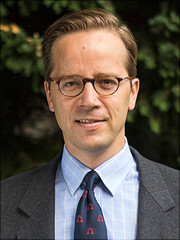
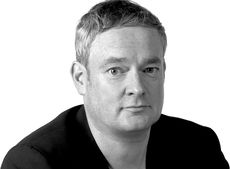
Professor Ignacio Cirac is Director at the Max Planck Institute for Quantum Optics and leads the Theory Division. His pioneering work in quantum information theory has fundamentally advanced quantum computing and quantum simulation frameworks. Research breakthroughs include: Developing theoretical foundations for quantum computers and quantum networks Creating new algorithms for quantum communication Designing quantum simulation methods for many-body systems Establishing theoretical tools for quantum entanglement characterization His group develops concepts for quantum gates and algorithms implemented by experimental physicists worldwide. Current investigations focus on quantum simulation of solid-state systems using ultracold atoms in optical lattices, advancing understanding of magnetism and superconductivity. Major Awards: Wolf Prize in Physics (2013) Niels Bohr Medal (2013) Prince of Asturias Prize (2006) Benjamin Franklin Medal (2009) Quantum Electronics Prize (2005)
Prof. Wolf-Georg Ringe is a Professor of Law & Finance and Director of the Institute for Law & Economics at the University of Hamburg. He concurrently serves as a permanent Visiting Professor at the University of Oxford and holds roles such as Research Member at the European Corporate Governance Institute and Vice President of the European Banking Institute. His research focuses on corporate law, financial market regulation, and the intersection of law with emerging technologies like AI and blockchain. Education: LL.M. (M.Jur.) from the University of Oxford (2004) Ph.D. in Law from the University of Bonn (2006) Legal Training in Hamburg (2004–2006) Research Interests: Prof. Ringe examines interdisciplinary legal issues in finance, including blockchain externalities, AI governance in banking, and ESG integration into corporate law. He emphasizes European integration challenges, such as Eurozone resilience and post-Brexit regulatory frameworks. His work bridges theoretical legal analysis with practical policy applications. Publications & Projects: He co-authored Business Law and the Transition to a Net Zero Economy (2022) and leads initiatives like the Network for AI and Law (NAIL) . Recent articles address topics like AI-driven financial supervision and blockchain’s environmental costs. His scholarship spans over 150 works, including contributions to the Journal of Financial Regulation . Awards & Roles: Fellow, European Banking Institute (Frankfurt) Research Member, European Corporate Governance Institute (Brussels) Editorial Board Member, Journal of Financial Regulation Advisory & Collaborations: He advises on fintech regulation, climate finance, and AI ethics. His projects include the Nordic Finance and the Good Society initiative at Copenhagen Business School and the Law, Finance, and Technology research group at Hamburg. Labs/Teams: Directs the Institute for Law & Economics and co-leads the NAIL network, fostering interdisciplinary research on AI’s legal implications.
Arthur Korte is an Assistant Professor of Evolutionary Genomics at the Faculty of Biology, University of Würzburg, Germany. He leads the Arthur Korte Group within the Center for Computational and Theoretical Biology (CCTB). His research focuses on evolutionary genomics, plant genetics, and abiotic stress responses, particularly in Arabidopsis thaliana . Korte’s work integrates computational methods like genome-wide association studies (GWAS) with experimental plant biology to uncover genetic mechanisms underlying environmental adaptation. Education: PhD in Botany, TU Munich (2009) Postdoc at TU Munich (2005–2009) and Gregor-Mendel Institute, Vienna (2010–2015) Diploma and undergraduate studies at University of Freiburg (1997–2004) Research Interests: Korte’s lab explores natural genetic variation in plants, emphasizing stress responses (e.g., salt, temperature, nutrient deficiency) and root architecture. Key projects include the AraGWAS Catalog and AraPheno databases, which standardize GWAS data and phenotypic information for Arabidopsis . Recent studies investigate rapid evolutionary adaptation in field settings and molecular mechanisms of stress tolerance. Publications: His work spans plant genomics, bioinformatics, and molecular biology. Recent trends focus on permutation-based GWAS improvements, root suberization under salt stress, and genetic regulators of thermotolerance. Over 30 peer-reviewed articles highlight contributions to plant stress biology and computational genetics. Awards: None explicitly listed, though his work has been widely cited in plant genomics and bioinformatics. Advising & Grants: Advises PhD students in computational and experimental plant biology. No specific grants listed, but contributions to large-scale projects like the 1001 Genomes Consortium indicate substantial collaborative funding. Labs & Teams: Leads the Evolutionary Genomics group at CCTB, collaborating with institutions like the Gregor-Mendel Institute. Active in developing bioinformatics tools for genomic analysis.
Dr. Isaak Lim is a researcher in the Department of Computer Science at RWTH Aachen University, Faculty of Mathematics, Computer Science and Natural Sciences. His contact information includes Room 109, phone +49 241 8021805, fax +49 241 8022899, and email isaak.lim@cs.rwth-aachen.de. He maintains an active research profile with publications spanning from 2016 to 2025. Lim's research focuses on computer graphics, 3D shape generation, deep learning applications for visual data, and geometry processing. His work bridges computer vision and graphics with machine learning techniques, particularly exploring how to represent and generate visual data more effectively. He has made significant contributions to point cloud processing, feature curve analysis, and vision-language model fine-tuning. His research often addresses the challenge of creating efficient representations of visual data that balance compression with information preservation. His publication record shows a clear trajectory of increasing independence and impact, with recent work (2023-2025) often featuring him as first author on high-impact venues like ICCV and VMV. His research demonstrates a consistent focus on improving the representation and processing of visual data through novel algorithmic approaches that combine traditional computer graphics techniques with modern deep learning methods. Among his notable achievements is the Best Paper Award at VMV 2025 for his work on Quantised Global Autoencoders, which presented a holistic approach to visual data representation inspired by spectral decompositions but enhanced with data-driven basis functions. Lim frequently collaborates with Prof. Leif Kobbelt and other researchers at RWTH Aachen, contributing to a productive research environment in computer graphics. While specific grant information isn't provided in the available text, his consistent publication output across major conferences suggests active research funding support. His work has practical applications in areas including 3D modeling, image generation, and computer vision systems. His research group appears to be part of the Computer Graphics group at RWTH Aachen, focusing on the intersection of traditional computer graphics techniques with modern deep learning approaches. The team's work emphasizes practical solutions for visual data representation that balance computational efficiency with high-quality output.
Prof. Maike Buchin is a Professor of Computer Science at Ruhr-University Bochum, leading the Theoretical Computer Science/Algorithmics department. She serves as Studiendekanin (Dean of Studies) for Computer Science. Her academic journey includes roles as Visiting Professor at TU Dortmund (2017-2019), Junior Professor at Ruhr-University Bochum (2013-2017), and Assistant Professor at TU Eindhoven (2011-2013). She holds a Doctorate in Computer Science from Freie Universität Berlin (2007) and a Mathematics Diploma from the University of Münster (2003). Her research focuses on computational geometry, algorithms, and trajectory analysis. Key interests include Fréchet distance computations, geometric clustering, and applications in geographic information systems. She has contributed to trajectory grouping structures, map construction from subtrajectories, and efficient algorithms for curve analysis. Publications highlight work on Fréchet distance variants, clustering algorithms, and geometric optimization. Recent trends emphasize practical applications of theoretical algorithms in movement data analysis and network extensions. Her research often bridges algorithmic theory with real-world spatial data challenges. No scientific awards or grants are explicitly listed in the provided materials. She advises graduate students through her academic roles and collaborates internationally in computational geometry and related fields.
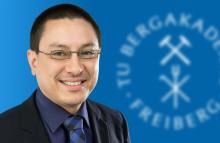
Oliver Rheinbach is a Professor of High-Performance Computing in Continuum Mechanics at the Institute of Numerical Mathematics and Optimization, Faculty of Mathematics and Computer Science, TU Bergakademie Freiberg. He also serves as the Pro-Dean of the faculty and the Scientific Director of the University Computing Center (URZ). His academic affiliations reflect a deep integration of computational mathematics and high-performance computing in engineering and biomedical applications. Research Interests: His primary fields include High-Performance Computing, Numerical Mathematics, Domain Decomposition Methods, Finite Element Methods, and Fluid-Structure Interaction. His work bridges theoretical numerical analysis with practical applications in biomechanics, materials science, and exascale computing. He actively explores the co-design of algorithms and solvers for next-generation supercomputers. Research Trends from Publications: The 15 most recent articles reveal a consistent focus on scalable domain decomposition methods (e.g., BDDC, FETI-DP), particularly for nonlinear and time-dependent problems in solid and fluid mechanics. There is a strong emphasis on parallel algorithms for exascale systems, with applications in hemodynamics, glacier modeling, and cardiac simulation. Recent work integrates machine learning into inverse problems, indicating a forward-looking research direction. Scientific Awards and Recognition: h-index of 28 (Google Scholar), 16 (zbMATH) Active participation in DFG and BMBF-funded priority programs Leadership roles in major academic and computing infrastructures Advising and Grants: While no formal list of students is provided, his leadership in research projects such as SPP2311, SPP2256, and SCALEXA suggests extensive mentorship and collaboration. He has secured substantial grant funding from the DFG (e.g., EXASTEEL, Domain-Decomposition-Based FSI) and BMBF (SCALEXA, OERSax), reflecting national recognition of his research impact. Labs and Teams: As Scientific Director of the URZ, he leads the university's high-performance computing infrastructure. He is deeply involved in the Faculty’s Compute Cluster and collaborates with interdisciplinary teams in computational biomechanics and materials science. His work in the SPP2256 and SPP2311 consortia involves national and international research networks focused on variational modeling and cardiovascular simulation.
Daniel Neider is a Professor in the Department of Computer Science at TU Dortmund University, where he leads research on Verification and Formal Guarantees of Machine Learning. He is also affiliated with the Center for Trustworthy Data Science and Security at the University Alliance Ruhr and has previously held a research group leader position at the Max Planck Institute for Software Systems, Kaiserslautern. He teaches courses at both TU Dortmund and RPTU Kaiserslautern and is a principal investigator in multiple research projects. Research Interests: Daniel Neider's research lies at the intersection of machine learning and formal methods, with a focus on ensuring the safety, reliability, and trustworthiness of AI systems. His work combines symbolic reasoning from logic with inductive techniques from machine learning to develop automated tools for verification, synthesis, and explainability. Key areas include the verification of learning systems (e.g., robustness of neural networks), explainability of AI decisions, learning-based synthesis of reactive systems, specification learning, and the integration of automata learning into reinforcement learning. His theoretical work extends into automata theory, game theory, and logic. Publication Trends: His recent publications show a strong emphasis on neuro-symbolic methods, temporal logic inference, robustness certification of neural networks, and learning-based verification. He frequently publishes in top venues such as AAAI, IJCAI, TACAS, FMCAD, and CAV, reflecting his leadership in both AI and formal methods communities. Scientific Awards: No specific awards are mentioned in the provided text. Advising and Grants: Daniel Neider supervises numerous Master's and Bachelor's students and advises PhD candidates, particularly on topics combining formal methods with AI. He is a principal investigator in several funded projects, including the DFG-funded Temporal Logic Sketching and the DAAD-supported LeaRNNify , which explore specification assistance and the synergy between grammatical inference and neural network learning. Labs and Teams: He leads a research group focused on building practical tools for trustworthy AI. The group has developed influential software such as ICE, Horn-ICE, libalf, and QUGA, which are used for invariant synthesis, program verification, automata learning, and verification of deep autoencoders. These tools are publicly available on GitHub and Bitbucket, and some are accessible via web demos.
Prof. Dr.-Ing. Dipl.-Phys. Markus Bautsch is a full professor at the Berliner Hochschule für Technik (BHT) in the Department of Mechatronics since 2025. His career spans physics research, software development, and interdisciplinary studies connecting astronomy, music theory, and historical technology. PhD in Physics from Technical University of Berlin (TUB) Extensive work in international product testing consortia (ICRT) Contributions to DIN/DKE standards committees since 2003 Specializing in optomechatronic systems and computational modeling His research interests bridge optomechatronics and archaeoastronomy , with notable publications on ancient astronomical artifacts like the Tal-Qadi Sky Tablet and Rocher des Doms Stele . He has developed software for acoustic transmission lines , cellular automata , and celestial mechanics simulations. Bautsch's 15 most recent publications (2024-2025) demonstrate his interdisciplinary approach through: Gravitational potential calculations for cosmic structures Digital restoration of 19th-century astronomical photographs Software implementations of historical mathematical patterns Analysis of spectroscopic principles in astrophysics Computational modeling of prehistoric orientation systems Programming language evolution from Basic to Component Pascal Scientific achievements include: 2024 Ehrenpreis der Berliner Hochschule für Technik Leadership in EU Twinning projects (2001-2005) Key role in International Consumer Research & Testing (ICRT) (2002-2025) Contributions to consumer protection standards with DIN/DKE As both a physicist and software engineer , Bautsch combines rigorous mathematical analysis with practical implementation skills across 8 programming languages since 1979. His work at the Wilhelm-Foerster-Sternwarte (since 2022) and MOBIUS European Project (2006-2008) demonstrates long-term commitment to public science and applied research.
Daniel Fišer is an Associate Professor in the Department of Computer Science at Aalborg University, Denmark, within the Technical Faculty of IT and Design. He is affiliated with the Distributed and Embedded and Intelligent Systems Group and maintains active research in automated planning and artificial intelligence. His research interests include automated planning , symbolic search , heuristic design , lifted planning , multi-agent planning , and policy learning . His work focuses on improving the efficiency and scalability of planning algorithms through novel heuristic methods, abstraction techniques, and formal analysis of planning tasks. Daniel Fišer's recent publications span top venues such as Artificial Intelligence Journal , AAAI , ICAPS , IJCAI , and ECAI . His work shows a strong trend toward enhancing symbolic and lifted planning through operator-potential heuristics, mutex analysis, policy validation, and integration with learning-based methods like LLMs. He has also contributed to planning competitions and benchmarking efforts. ICAPS 2023 Best Paper Runner-Up Award AAAI 2022 Outstanding Paper Award: Honorable Mention He has advised and collaborated with several researchers and has developed open-source software tools such as cpddl , maplan , and pddl-data . Daniel Fišer holds a PhD (2021) and Master’s degree (2016, Dean’s Award) in Computer Science. His former affiliation includes Saarland University, Germany. He is actively publishing, with recent and upcoming work in 2024–2025.
Professor Andreas Hotho leads the Data Science Chair at the University of Würzburg's Faculty of Mathematics and Computer Science, while serving as founding spokesman of the Center for Artificial Intelligence and Data Science (CAIDAS). His academic journey includes senior researcher roles at the University of Kassel and research positions at the AIFB Institute (University of Karlsruhe) and L3S Research Center (Hannover). Research Focus: Machine Learning, Large Language Models, Climate Modeling, Semantic Web, and Knowledge Graphs Methodologies: ConvMOS architecture, DenseLoss approach, LanZ-DML, and BibSonomy system Applications: Environmental monitoring, Digital Humanities, Smart Beehive Analysis, and Social Media Analytics With over 15 recent publications, his work spans climate model output statistics, zero-shot metric learning, imbalanced regression techniques, and German language model development. He serves as editor-in-chief for the Transactions on Graph Data and Knowledge and maintains active roles in academic governance through PC memberships at ECML-PKDD, WWW, and other major conferences. Scientific awards include: NAACL 2024 Best Paper Honorable Mention ICDM 2023 Best Paper Award NeurIPS 2020 Best ML Innovation Award ISWC 2018 SWSA Ten-Year Award WWW 2015 Best Paper Award FAIML 2020 Best Student Paper His research group includes doctoral researchers like Jan Pfister, Julia Wunderle, and Albin Zehe. Key projects include LitBERT for literary analysis, BigData@Geo series for climate modeling, and BeeConnected for ecosystem monitoring.
Richard Durbin is the Al Kindi Professor of Genetics at the University of Cambridge's Department of Genetics, holding this position since October 2017. Previously, he worked at the Wellcome Trust Sanger Institute (1995–2017) as a core faculty member, transitioning to associate faculty status post-2017. His research focuses on computational and evolutionary genomics, with particular emphasis on genome analysis, population genetics, and algorithmic methods for genomic data. He holds a PhD in Biology from the MRC Laboratory of Molecular Biology and a BA in Mathematics from Cambridge University. His work includes groundbreaking contributions to genome assembly tools (e.g., FastGA, Oatk), evolutionary studies in cichlid fish and hominin lineages, and methodological advancements in haplotype-based inference and transposable element curation. Collaborations span institutions like Stanford University and the MRC Laboratory of Molecular Biology. Durbin's publications frequently address high-impact topics such as genetic diversity, adaptive traits, and the integration of ancient DNA into modern genomic frameworks. Notable projects include the Dracula fish genome sequencing and the development of tools like MCHelper for transposable element analysis. His research also explores ethical implications of large-scale genomic initiatives, such as the Earth BioGenome Project. Awards and recognition are not explicitly listed, but his extensive peer-reviewed output underscores his influence in the field. He advises on high-profile genomic projects and has contributed to over 200+ peer-reviewed articles, reflecting his role as a leading figure in computational genomics.
Anna-Maurin Graner is a researcher in the Working Group 'Discrete Mathematics' at the Department of Mathematics, Faculty of Mathematics and Natural Sciences, University of Rostock. Holding an M.Sc. degree, she actively contributes to research and teaching while developing novel computational methods for polynomial algebra over finite fields. Her core research interests include: Finite field theory and algebraic structures Polynomial factorization algorithms Construction of irreducible polynomials Coding theory applications Cryptographic protocol foundations Computational algebra implementation Graner's 2023 publications demonstrate significant advancements in polynomial factorization efficiency. Her sole-authored work introduces a stable, high-speed algorithm for factoring X^n-a expressions, while her collaboration with Kyureghyan establishes recursive methods for generating irreducible polynomials. These contributions reveal a clear research trajectory toward optimizing algebraic computations for real-world applications in data security and error-correcting codes, with implementations outperforming standard SageMath/PARI tools. She maintains an active teaching schedule across multiple semesters: Linear Algebra sequences for engineering and computer science students (2018-2024) Discrete Structures and Iteration Methods (Winter 2023/2024) Algebra and Number Theory for teaching degree programs Mathematics for Economics undergraduates Graner presents her work internationally, including at the DMV Meeting 2023 (Ilmenau), Fq15 Conference (Paris), and Workshop on Coding and Cryptography 2022 (Rostock). Her GitHub repository (amg-code/PolynomialsOverFiniteFields) provides open-source implementations of RichFiniteField and RichPolynomial classes, enabling efficient polynomial manipulation over finite fields.
Jia Yu is a researcher affiliated with Arizona State University , Tempe, AZ, USA. Their work focuses on geospatial data management, database systems, and cluster computing frameworks like Apache Spark. They have collaborated extensively with Mohamed Sarwat and other researchers on projects such as GeoSpark , GeoSparkViz , and GeoSparkSim , contributing to scalable spatial data processing and visualization systems. Key research areas include Learned indexing mechanisms (e.g., GLIN) Microscopic traffic simulation Parallel and distributed data processing Interactive geospatial dashboards Column correlation exploitation for database efficiency Integration of visualization with backend data systems Recent publications (2014-2024) demonstrate expertise in geospatial analytics, database indexing, software testing, and Apache Spark-based systems. Notable projects include Turbocharging Visualization Dashboards , HERMIT Indexing , and Spindra Knowledge Graph Management . Work emphasizes both theoretical innovation and practical implementation for handling massive-scale spatial data.
Markus Holzbach is a Professor of Visualization and Materialization at the Offenbach University of Art and Design (HfG Offenbach), where he has been a faculty member since 2009. He leads the Institute for Materials Design (IMD) and has held significant leadership roles, including Dean and Vice Dean of the Design Department. His academic affiliations extend internationally through visiting professorships at Politecnico di Milano, MIT, RWTH Aachen, and the Berlage Institute. His research centers on material innovation , parametric design , and bio-materialization , exploring the dialogue between materials and their environments. Holzbach’s work emphasizes interdisciplinary experimentation, digital fabrication, and sustainable design practices. Projects like the Angel’s Trumpet and ECHOLOT Pavilion exemplify his integration of nature-inspired forms with interactive technologies. The 15 most recent projects reflect a consistent focus on computational design , material transfer , and sustainable architecture . Themes include responsive environments, modular systems, and the reinterpretation of natural forms through digital tools. His work spans product design, pavilions, housing, and industrial structures, often involving CNC fabrication and algorithmic modeling. Notable scientific awards include the Red Dot Design Award , BEST of SHOW ’16 at ISE 2016 , and the Music Super NAMM Award 2016 for the CURV 500® speaker. He has served on design juries such as the materialPREIS 2018 and Werk.Klasse. Markus Holzbach advises students and leads research teams at the IMD, fostering innovation in material design. His projects often receive institutional or corporate sponsorship, such as Palmengarten Frankfurt and Sonosfera. He has not received mention of formal grants, but his work is supported through collaborative and applied research funding. He directs the Institute for Materials Design (IMD) , a hub for experimental material research, student projects, and public exhibitions. The IMD has showcased work at events like the Triennale di Milano and Passagen Köln, emphasizing hands-on, interdisciplinary exploration of materiality.
Prof. Dr.-Ing. Frank Ulrich Rückert is a Professor of Fluid Energy Machines at the University of Applied Sciences Saarland (HTW Saar), where he teaches Thermodynamics, Fluid Dynamics, and Computational Fluid Dynamics. He serves as Spokesperson for the Institute for Physical Process Technology, Study Director for the Master's program in Safety Management, and Deputy Study Director for the Bachelor's program in Industrial Engineering. His work spans multiple research projects including WiPaKü, ELTROSOL, and H2-Schmiede. Dr. Rückert earned his degree in Environmental Engineering and Process Engineering with a focus on Process and Plant Engineering at BTU Cottbus, followed by a doctorate at the University of Stuttgart on technical combustion. His professional experience includes significant work at Robert Bosch GmbH at various international locations, where he developed nozzle and valve systems for liquid fuels and gases, and contributed to the pre-development of micro-steam turbines for waste heat recovery for over four years. His research focuses on modeling and simulation of physical and chemical processes, with particular expertise in Computational Fluid Dynamics (CFD), Computer Aided Engineering (CAE), digital twins, and programming mathematical models. He investigates renewable energy systems, heat transport, thermodynamics, energy storage, waste heat recovery, and high performance computing applications. His work bridges theoretical knowledge with practical engineering applications across power plant technology and grate firing systems. Dr. Rückert's recent publications demonstrate a strong trend toward digital twin technology across multiple engineering domains including hydraulic, pneumatic, electric, and mechanical systems. His work increasingly integrates artificial intelligence with simulation techniques, as evidenced by publications on AI-based positioning systems and metaverse applications for education. The research spans both fundamental engineering principles and cutting-edge applications in renewable energy systems. Honorary Golden Spike Award 2002 from the High Performance Computing Center Stuttgart (HLRS) Saarland Higher Education Teaching Award 2021 Dr. Rückert has secured funding for numerous research projects including WiPaKü (development of gearless wind energy generators), ELTROSOL (electrofilters for aerosol capture), H2-Schmiede (CO2 reduction in forging processes), and RePowerFish (renewable power supply for fish farming). He serves on the Scientific Committee for the SYMKOM conference and is actively involved with the Commercial Vehicle Cluster CVC Südwest. His external engagements include membership on the Landstuhl City Council and the Saarland Energy Innovation Initiative (LIESA). As Spokesperson for the Institute for Physical Process Technology and member of the wi-institute, Dr. Rückert leads several research teams focused on simulation and measurement technology. His work with the Wind Energy Lab demonstrates practical application of theoretical knowledge, while his involvement in the eClose project shows commitment to innovative educational approaches. The Competence Center for Fluid Machinery, Simulation and Measurement Technology serves as the hub for his interdisciplinary research activities.