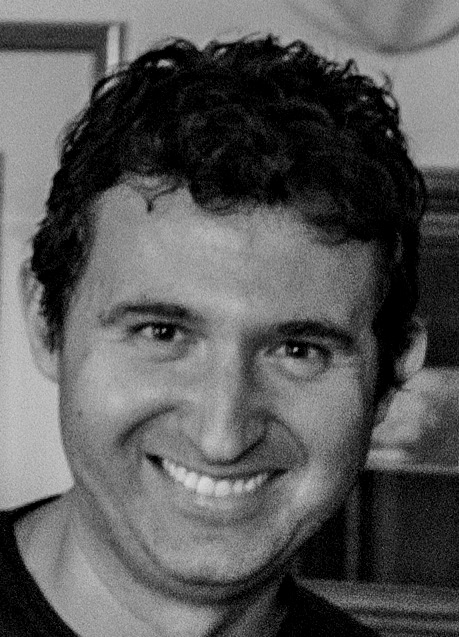
Simon Masnou is a Full Professor at Université Claude Bernard Lyon 1, affiliated with the Institut Camille Jordan (CNRS UMR 5208). He holds leadership roles as Head of the 'Applied Mathematics, Statistics' Master's degree and Head of the 'M2 Maths in Action' program. Previously, he served as Director of the Camille Jordan Institute (2018-2022). His research focuses on applied mathematics, image processing, shape optimization, and geometric measure theory, with contributions to variational models, geometric flows, and applications in computer vision and materials science. Education: PhD in Mathematics (1998, Paris Dauphine) and HDR (2008, Paris 6). Research projects include ANR STOIQUES (2024-2028), PEPR PDE-AI (2023-2028), and collaborations with industry on topics like defect prediction in aluminum production and high-dimensional data analysis. Teaching includes courses on linear algebra, optimization, and machine learning at undergraduate and graduate levels. Key contributions span phase field models, varifold-based surface approximation, and image inpainting. He supervises PhD students in geometric variational problems and computational methods. His work bridges theoretical mathematics with industrial challenges, addressing issues in materials science, medical imaging, and cultural heritage preservation.
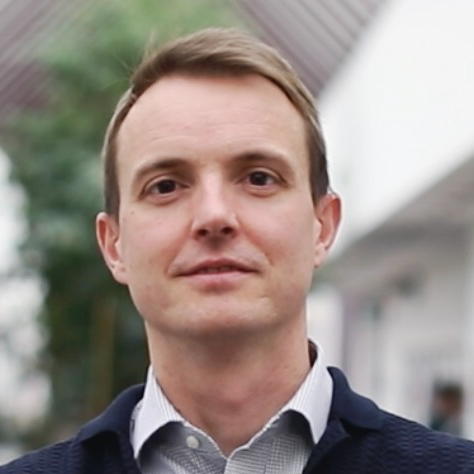
Damiano Piovesan is Associate Professor in Bioinformatics (SSD BIO/10) at the Department of Biomedical Sciences , University of Padua , Italy. Since March 2022 he has held this rank, having previously served as Assistant Professor (2022) and PostDoc researcher (2019) in the same department. Education 2013 – PhD in Biotechnology, Pharmacology and Toxicology, University of Bologna 2009 – MSc in Bioinformatics, University of Bologna 2007 – BSc in Biotechnology, University of Bologna Research Focus Piovesan’s research integrates machine-learning approaches with structural bioinformatics to advance understanding of intrinsically disordered proteins (IDPs) and protein function prediction . He develops widely used resources such as MobiDB for disorder annotation, DisProt for functional curation of disordered regions, and RING for residue interaction networks. Additional interests include tandem repeat proteins , cancer-related IDP targets , and community benchmarking initiatives (CAFA, CAID, CAGI). Publication Trends His 2024–2025 output is dominated by updates to flagship databases ( InterPro , DisProt , MobiDB ), next-generation disorder predictors leveraging deep learning ( PredIDR , MobiDB-lite 4.0 ), and large-scale genomics challenges ( CAGI6 ). Across the decade, recurring themes include methodological advances in disorder prediction, creation of interoperable bioinformatics platforms, and rigorous benchmarking to ensure community-wide reliability. Scientific Awards No specific awards are listed in the provided materials. Advising & Grants No individual students or grant details are explicitly supplied; however, his leadership in multi-institutional consortia (e.g., InterPro, DisProt, CAFA) implies substantial supervisory and funding coordination roles. Labs & Teams Piovesan is affiliated with the BioComputingUP Lab ( https://biocomputingup.it/ ) at the University of Padua, a hub for computational biology and bioinformatics tool development.
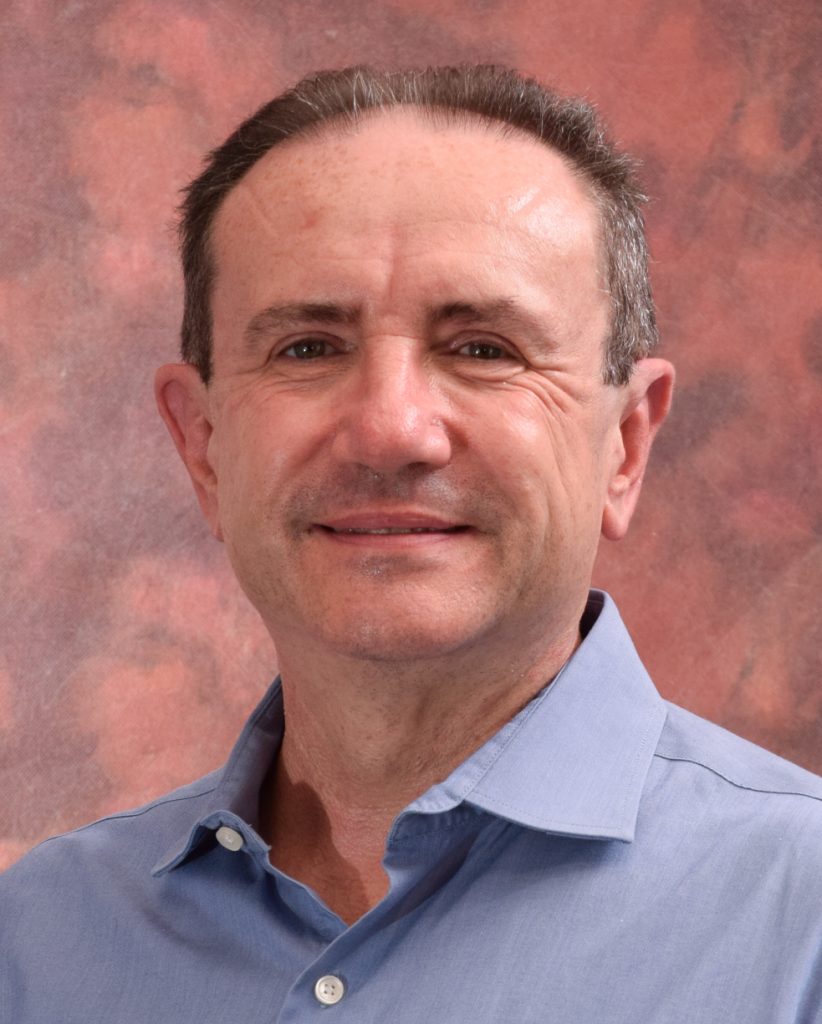
Gabriella Casalino is an Assistant Professor at the University of Bari Aldo Moro, Department of Computer Science, and a key researcher at CILAB - Computational Intelligence Lab. Her work focuses on Computational Intelligence methods for interpretable data analysis, particularly in eHealth, Data Stream Mining, and eXplainable Artificial Intelligence (XAI) within medical and educational domains. She has contributed to innovative approaches in smartphone-based health monitoring, fuzzy logic applications, and remote vital sign detection via photoplethysmography. Education : Ph.D. in Computer Science, with advanced training at institutions like Universitat de Girona and Université de Mons. Research Trends : Recent publications highlight applications of evolving granular computing, neuro-fuzzy systems, and explainable AI in hypertension prediction, bipolar disorder monitoring, and educational data analysis. Key subfields include remote health monitoring, medical data streams, and hybrid AI models. Grants : Research funded by AIRC (Italian Cancer Research Foundation), focusing on computational methods for healthcare challenges. Labs & Collaborations : Active in CILAB, collaborating on projects involving mHealth solutions, cardiovascular risk assessment, and intelligent educational systems.
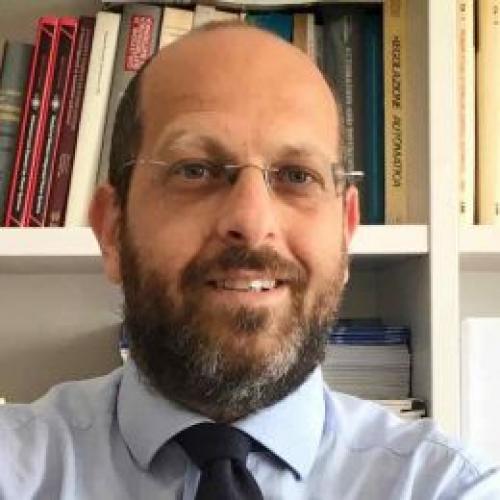
Andrea Passerini is a Full Professor in the Department of Information Engineering and Computer Science at the University of Trento, Italy, where he also serves as Coordinator of the PhD programme in Information Engineering and Computer Science (Ministerial Decree 45/2013). His academic footprint spans multiple departments including Mathematics, Sociology, Cellular Biology, and Industrial Engineering, reflecting deep interdisciplinary engagement across computational sciences and life sciences. His research centers on Machine Learning and Data Mining with specialized expertise in Neuro-Symbolic AI , Probabilistic Reasoning , and Statistical Relational Learning . He pioneers methods for graph-based learning, medical AI applications, and explainable systems, with significant contributions to bioinformatics (particularly RNA-protein interactions) and healthcare diagnostics. His work bridges theoretical rigor with practical implementations in critical domains. Analysis of his 2025 publications reveals dominant trends in neuro-symbolic integration for graph data, human-AI collaboration in medical decision-making, and robust recommender systems. His research increasingly focuses on interpretable AI for high-stakes applications like surgical planning and physician support, while advancing foundational techniques in graph neural networks and concept-based modeling. As PhD programme Coordinator, Professor Passerini mentors doctoral candidates across AI and computer science disciplines. His collaborative network extends to medical researchers at CIBIO (Cellular, Computational and Integrative Biology department) and industrial partners, though specific lab structures aren't documented in available materials. Current projects emphasize medical AI validation, temporal network modeling, and LLM integration with structured reasoning frameworks.
Francesca Marazzi is an Assistant Professor at the University of Rome Tor Vergata's Department of Economics and Finance. She holds affiliations with the CESifo Research Network (as an affiliate), the CESIEG research centre at LUISS Guido Carli University (Deputy Director), and the DEMA P research cluster at Middlesex University, London. Her research focuses on behavioral and experimental economics, particularly exploring dishonest behavior, responsibility avoidance, and health economics issues like women's health and obesity interventions. She teaches courses such as 'Coding for Economic Applications' and 'Research Methods for Social Sciences' at both bachelor's and master's levels. Her work bridges theoretical models with empirical experimentation, addressing topics like corruption, public goods provision, and policy design. Notable contributions include studies on transparency's impact on bribery, pandemic-related behavioral changes, and the effects of soft drink taxation on adolescent health. She actively participates in interdisciplinary projects, such as the CREA initiative integrating AI and mathematics for fairness assertions, and the LongITools exposome analysis in chronic disease research. Marazzi's academic output emphasizes experimental methodologies, with recent focus on pandemic-driven behavioral shifts, financial stability mechanisms, and innovative governance metrics leveraging earth observation data post-wildfires. Her research portfolio reflects a commitment to applied microeconomic analysis with direct societal relevance.
Luca Sterpone is a Full Professor at the Department of Control and Computer Science (DAUIN), Politecnico di Torino. He serves as Head of the Control and Computer Engineering Department (2023-2027), coordinates the Aerospace and Safety Computing Lab, and is a member of the Academic Senate and Power Electronics Innovation Center (PEIC). His research spans reconfigurable computing, fault tolerance, and radiation effects analysis in electronic systems. Professor since 2021 Department Head (DAUIN) since 2023 Coordinates international collaborations with ESA, AMD Xilinx, NVIDIA, and Thales Alenia Space Develops radiation-hardened FPGA tools (SETA, VERI-Place, PyXEL) 2007 EDAA Outstanding Dissertation Award and 2005 IEEE Best Paper Award Research Focus : Designing radiation-tolerant systems for aerospace, including fault-tolerant AI accelerators, FPGA reliability, and software-based error mitigation. He investigates soft error propagation in nanoscale circuits and develops tools for radiation sensitivity analysis in VLSI. His work integrates hardware-software co-design for mission-critical applications. Awards : EDAA Outstanding Dissertation Award (2007) IEEE European Test Symposium Best Paper (2005) SMACD Best EDA Tool Award (2018) ARC Best Paper candidate (2018) Teaching : He leads courses in Reconfigurable Computing (PhD level), GPU Programming , and Operating Systems . He has formal responsibility for teaching roles across 9 bachelor's and 7 master's years, and mentors multiple PhD students. Collaborations : Coordinates with the European Space Agency (ESA), University of Bielefeld, Universidad de Sevilla, and industrial partners like AMD Xilinx, NVIDIA, and General Motors. He leads projects such as RESCHIP4EU, VEGAS, and TERRAC for radiation-hardened computing solutions.
Matteo Ploner is a Full Professor at the Department of Economics and Management , University of Trento, and Deputy Coordinator of the Doctoral Programme in Economics and Management under the Doctoral School of Social Sciences. He also serves as Deputy Manager of the Cognitive and Experimental Economics Laboratory (CEEL) at the University of Trento. Academic Roles: Full Professor, Deputy Coordinator (Doctoral School), Deputy Manager (CEEL) Location: Via Inama, 5 - 38122 Trento Contact: matteo.ploner@unitn.it Research Interests: His work focuses on Behavioral Economics , Behavioral Finance , and Experimental Economics , examining human decision-making in economic environments. His research spans topics like cooperation in multicultural societies, information avoidance in climate decisions, algorithmic delegation, and welfare dynamics in advisory markets. Recent Publications highlight experimental analyses of skewness-seeking in finance, cognitive barriers to energy efficiency, and behavioral interventions in low-income contexts. He also explores mental accounting principles and the interplay between trust and innovation through experimental frameworks. Labs & Teams: He is actively involved in the Cognitive and Experimental Economics Laboratory (CEEL) , contributing to experimental market analysis and behavioral research.
Fabrizio Riguzzi is a Full Professor at the Department of Mathematics and Computer Science of the University of Ferrara, Italy. His academic career spans over two decades at the same institution, having served as Associate Professor (2014-2020) and Assistant Professor/Ricercatore (1999-2014). He is an active researcher in the fields of Logic Programming and Statistical Relational Artificial Intelligence with numerous publications and leadership roles in international conferences. His educational background includes: PhD in Electronic and Computer Engineering from the University of Bologna (1999) Laurea in Computer Engineering from the University of Bologna (1995) Riguzzi's research focuses on probabilistic approaches to artificial intelligence, particularly probabilistic logic programming and statistical relational AI. His work bridges symbolic reasoning with probabilistic methods, developing frameworks for uncertain knowledge representation and reasoning. He has made significant contributions to probabilistic answer set programming, neuro-symbolic integration, and applications in areas like network intrusion detection and knowledge graph completion. His research demonstrates how logical formalisms can be enhanced with probabilistic reasoning to tackle real-world problems with uncertainty. An analysis of his recent publications reveals a strong trend toward integrating neural and symbolic approaches in AI, with significant work on probabilistic answer set programming frameworks. His research spans theoretical foundations of probabilistic logic programming, practical implementations, and applications in cybersecurity, knowledge graphs, and decision-making under uncertainty. The interdisciplinary nature of his work connects computer science theory with practical AI applications. His notable awards include: Alain Colmerauer 10-Year Test-of-Time Award at ICLP 2021 Best Paper Award for "BUNDLE: A Reasoner for Probabilistic Ontologies" at RR-2013 Highly Commended Paper Award for "Probabilistic declarative process mining" at KSEM 2010 Riguzzi has supervised several PhD students to completion, including Elena Bellodi, Riccardo Zese, and Giuseppe Cota, who have gone on to win prestigious awards for their theses. He has served in numerous editorial roles, including Associate Editor of the Journal of Artificial Intelligence Research and Editor in Chief of Intelligenza Artificiale. His leadership extends to organizing major conferences like ILP 2018 and serving on program committees for top AI venues including IJCAI, AAAI, and ECAI. He is a member of the ML@unife research group and has developed several online systems including cplint, TRILL, and an Online AUC calculator. His work has fostered collaborations across the AI research community, particularly in the areas of probabilistic logic programming and neuro-symbolic AI.
Maurizio Ramanzin is a Full Professor at the University of Padova , affiliated with the School of Animal Science and Department of Agronomy, Animals, Food and Natural Resources (DAFNAE) . His research focuses on Agricultural Sustainability , Environmental Impact Assessment , and Precision Livestock Farming . Academic Field : AGR/19 Email : maurizio.ramanzin@unipd.it Address : Agripolis - Viale dell'università, 16 - Legnaro (Padova) – ITALY His work explores the interactions between livestock systems and ecosystem services in mountainous regions, with emphasis on: Grazing Management and biodiversity conservation Life Cycle Assessment (LCA) of dairy and beef systems Climate Change Adaptation in Alpine ungulates Animal Welfare in small-scale farms Technological Tools (GPS, NIRS) for monitoring grazing behavior Key trends in his recent publications include: Quantifying environmental drivers of wolf predation on livestock Developing low-cost biologging systems for dairy cows Analyzing social-ecological trade-offs in mountain agriculture Assessing microbial dynamics in alpine soils
Diana Gratiela Berbecaru is an External Collaborator and External Lecturer at the Department of Control and Computer Science (DAUIN), Politecnico di Torino, where she contributes to teaching and research in cybersecurity and digital identity. She is affiliated with the TORSEC Security Group and actively participates in EU-funded research projects such as Q-FENCE, focusing on quantum-resistant cryptography. She teaches core courses including Security and Privacy for Digital Identity Frameworks and Information Systems Security , and has been recognized with the Italian national scientific habilitation as Associate Professor in 2025, affirming her academic standing. Full Name: Diana Gratiela Berbecaru University: Politecnico di Torino Department: Department of Control and Computer Science (DAUIN) Academic Rank: Associate Professor (habilitated) Teaching Status: Part-time External Lecturer Email: diana.berbecaru@polito.it Her research focuses on cybersecurity, identity management, and trusted computing, with specific interests in authentication, authorization, data privacy, network security, and trusted computing in distributed and IoT environments. She investigates practical implementations of digital identity systems using the eIDAS infrastructure, certificate validation, TLS security, and post-quantum cryptography. Her work bridges theoretical security models with real-world deployment challenges. Her recent publications (2022–2025) reflect a strong focus on TLS security, X.509 certificate analysis, anomaly detection using AI, remote attestation for IoT, and post-quantum migration strategies. These works are published in high-impact venues such as IEEE Access, IEEE ISCC, and ARES, indicating active and influential contributions to the cybersecurity research community. The research trend shows a consistent emphasis on practical tools and frameworks for enhancing trust and security in digital systems. Scientific Awards and Recognition: Italian National Scientific Habilitation as Associate Professor (Abilitazione Scientifica Nazionale, II fascia), 2025 She serves as an Associate Editor for IEEE Transactions on Network and Service Management and IEEE Access , and as a Guest Editor for Electronics and Computer Networks . She chairs and co-chairs international workshops such as TrustAICyberSec and IMTrustSec, and is a frequent member of program committees for major conferences including ARES, IDC, and ISCC. These roles demonstrate her active engagement in academic leadership and knowledge dissemination. Labs and Research Groups: TORSEC - Security Group (DAUIN): Core research group focusing on cybersecurity, trusted systems, and digital identity.
Federico Silvestro is a Full Professor at the University of Genoa , affiliated with the Naval, Electrical, Electronic and Telecommunications Engineering Department . His academic roles include being a Course Coordinator, Department Council Member, and Deputy Director of DITEN. His research focuses on Power systems stability and control Cybersecurity in energy networks Electric propulsion for marine applications Optimal energy storage and microgrid design Integration of renewable energy in maritime contexts Recent publications highlight trends in data-driven power system analysis , DC microgrid modeling , cybersecurity for virtual power plants , and advanced energy management strategies for maritime and port systems. Email: federico.silvestro@unige.it He leads the ENET-RT Lab , focusing on real-time power systems simulation and co-simulation platforms for marine and grid applications.
Roberto Garello is a Tenured Associate Professor at the Department of Electronics and Telecommunications (DET) of Politecnico di Torino . He specializes in Communication Systems , Satellite Networks , and Channel Coding , with a focus on 5G/6G Technologies and Non-Terrestrial Networks . His work aligns with the School of Master’s Programmes and Lifelong Learning . Research Interests: Satellite communications systems, Direct-to-Satellite IoT constellations, Mega-constellation services in space, and physical layer advancements for 5G/6G. Teaching: Offers courses like Information Theory for Data Science , Communication and Network Systems , and Space Exploration and Resources , while supervising Applied Signal Processing Laboratory . Projects: Leads initiatives such as DitDSSS (satellite localization), RESTART (future telecommunications), and TESL@ (ICT energy efficiency). Scientific Awards: Received Best Paper Awards at CTRQ 2010 and COCORA 2013. Students: Supervises PhD candidates including Alessandro Compagnoni, Agbotiname Lucky Imoize, and Riccardo Tuninato, focusing on topics like Wireless Communication, Machine Learning, and Non-Terrestrial Networks. Publications: His recent work explores OTFS vs. OFDM, spectrum sensing algorithms, MIMO with cylindrical arrays, and 5G NTN synchronization, reflecting trends in satellite IoT and machine learning integration.
Marco Ghislieri is an Assistant Professor at the Department of Electronics and Telecommunications (DET) of Politecnico di Torino, Italy. He is a member of the Interdepartmental Center PolitoBIOMed Lab and teaches in the Biomedical Engineering program, including courses like Neuroengineering and Design of Programmable Biomedical Devices . His research spans Artificial Intelligence, Biomedical Signal Processing, Neuroscience, and Rehabilitation Engineering . PhD in Bioengineering and Medical-Surgical Sciences (2017-2021) at Politecnico di Torino Thesis: Muscle Synergy Assessment during Cyclic and Non-Cyclic Movements His research focuses on muscle synergy analysis in Parkinson’s Disease (PD) patients post- Deep Brain Stimulation (DBS) , AI-driven gait analysis for fall prevention, and wearable sensor applications for stress-cognitive decline monitoring. He leads the S-CoDe and OMNIA-PARK projects, and contributes to PRIN as a team member. Recent publications highlight advancements in machine learning for intraoperative DBS targeting , statistical gait analysis , and neurorehabilitation tools . He serves as Associate Editor for Scientific Reports and Applied Bionics and Biomechanics , and Guest Editor for Frontiers in Neural Circuits . Awards include the Carlo J. De Luca Award (2022) , GNB Doctoral Award (2022) , and the Best Poster Award at M. Grattarola Summer School (2022) . He supervises Fabrizio Sciscenti (PhD candidate) and collaborates on neuroengineering and biomedical device design courses. His work addresses Goal 3 (Good Health) and Goal 4 (Quality Education) of the UN SDGs.
Fabrizio Falchi is a researcher at the Artificial Intelligence for Media and Humanities (AIMH) Lab of the Institute of Information Science and Technologies (ISTI) within Italy's National Research Council (CNR). He also maintains an associate position at the Biorobotics Institute of Scuola Superiore Sant'Anna. His work focuses on developing advanced multimedia retrieval systems, with the VISIONE platform being his most notable contribution, which has won international competitions including the Video Browser Showdown in 2024 and placed second in 2023. Falchi's educational background includes: Ph.D. in Information Engineering from University of Pisa (Italy) Ph.D. in Informatics from Faculty of Informatics of Masaryk University of Brno (Czech Republic) M.B.A. from Scuola Superiore Sant'Anna in Pisa His research spans deep learning, convolutional neural networks, deep features extraction, similarity search algorithms, distributed indexing systems, multimedia information retrieval, computer vision applications, and peer-to-peer systems. Falchi has made significant contributions to fine-grained visual understanding, cross-modal retrieval (particularly image-text matching), and robustness of deep learning systems against adversarial attacks. His work demonstrates a strong focus on practical applications of these technologies, particularly in video retrieval systems and safety monitoring solutions. Analysis of Falchi's recent publications reveals a strong focus on video and image retrieval systems, with the VISIONE platform being central to his work. His research shows increasing emphasis on fine-grained understanding in computer vision, cross-modal retrieval, and addressing practical challenges like cross-resolution face recognition. Recent work demonstrates innovation in making these systems more efficient through techniques like knowledge distillation (ALADIN) and leveraging virtual worlds for training data. His publications consistently bridge theoretical advances with practical applications in surveillance, safety monitoring, and multimedia search. Falchi's work has received significant recognition: Best paper award at CBMI 2024 for 'Is ClLIP the main roadblock for fine-grained open-world perception?' VISIONE 2024 won the Video Browser Showdown competition in Amsterdam VISIONE obtained second place at Video Browser Showdown 2023 in Bergen Best Paper Award for 'Learning Safety Equipment Detection using Virtual Worlds' at CBMI 2019 Falchi collaborates extensively with researchers at ISTI-CNR, particularly within the AIMH Lab. His work on VISIONE involves collaboration with Giuseppe Amato, Paolo Bolettieri, Fabio Carrara, Claudio Gennaro, Nicola Messina, Lucia Vadicamo, and Claudio Vairo. As co-chair of Ital-IA 2023, the 3rd National Conference on Artificial Intelligence, he plays an active role in the academic community. He is a member of ACM (since 2012), the Computer Vision Foundation, the Italian Association for Computer Vision Pattern Recognition and Machine Learning (CVPL), and the CINI Lab on Artificial Intelligence and Intelligent Systems. Falchi is a key member of the Artificial Intelligence for Media and Humanities (AIMH) Lab at ISTI-CNR, where he leads research on video retrieval systems. The lab has developed the award-winning VISIONE platform, which combines multiple scientific results in content-based video retrieval. His team focuses on developing systems that enable users to search for target videos using textual prompts, drawing objects and colors, or images as query examples. The lab's work demonstrates strong interdisciplinary collaboration, bridging computer science with practical applications in media, safety monitoring, and urban environments.
Chiara Longoni is an Associate Professor in the Department of Marketing at Bocconi University in Milan, Italy. Her interdisciplinary research examines consumer responses to artificial intelligence applications in healthcare, government services, and sustainability, as well as drivers of societal well-being. She has received multiple scientific awards including the 2023 MSI Young Scholar award and 2022 Journal of Consumer Research Best Article Award. Ph.D. in Marketing from New York University’s Stern School of Business M.S. (summa cum laude) from Bocconi University M.A. (Honors) in Psychology from NYU M.Phil. in Marketing from NYU Stern Her research spans two primary domains: AI Adoption: Investigates psychological responses to artificial intelligence in healthcare, recommendation systems, and governance. Sustainability: Analyzes behavior change mechanisms and climate action drivers through global interventions involving 63 countries. Key publication venues include Journal of Consumer Research , Journal of Marketing , Nature Human Behavior , and Science Advances . Current editorial roles as Associate Editor for the Journal of Consumer Research and reviewer for top journals across marketing, management, and medicine.