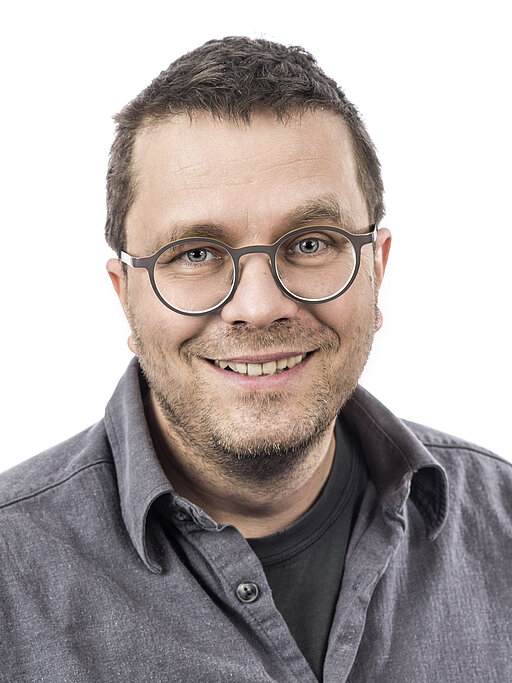
Prof. Felix Brandt is a Professor of Algorithmic Game Theory at the Technical University of Munich (TUM), within the School of Computation, Information and Technology. His research focuses on algorithmic game theory, computational social choice, and their intersections with theoretical computer science, AI, and economics. Education: Diploma and PhD from TUM, postdoctoral research at Carnegie Mellon University and Stanford University. Habilitation from LMU Munich (2010). Research interests include social choice theory, mechanism design, and strategic behavior in multi-agent systems. Notable contributions include work on tournament solutions, probabilistic social choice, and Nash equilibrium characterizations. Recent articles explore Condorcet-consistent voting systems, stability in hedonic games, and axiomatic foundations of Nash equilibrium. Awards include the DFG Heisenberg Professorship (2010) and TUM Supervisory Award (2021). Advises over 10 PhD students and has supervised numerous postdocs. Active in editorial roles for journals like Games and Economic Behavior and Social Choice and Welfare .
Nicole Wein is an Assistant Professor in the Department of Electrical Engineering and Computer Science at the University of Michigan, where she is a member of the Theory of Computation Lab within the Computer Science and Engineering Division. Her research focuses on theoretical computer science, particularly graph algorithms and lower bounds across various domains including distance-estimation, dynamic, parameterized, distributed, and online algorithms. Education: PhD in Computer Science from MIT, advised by Virginia Vassilevska Williams Master's in Computer Science from Stanford University B.S. in Computer Science/Mathematics from Harvey Mudd College Nicole's research centers on theoretical aspects of graph algorithms and computational complexity. She investigates fundamental questions about how algorithms can efficiently handle changing data, extract information from graphs in linear time, and understand the structure of shortest paths, especially in directed graphs. Her work spans multiple algorithmic paradigms including dynamic algorithms that adapt to changing inputs, parameterized approaches for hard problems, and fine-grained complexity that establishes precise relationships between problem difficulty. Analysis of Nicole's recent publications reveals a strong focus on graph algorithms, particularly shortest path problems, spanners, and hardness results. Her work often bridges theoretical insights with practical implications, developing novel techniques for distance estimation, dynamic graph processing, and approximation algorithms. A significant portion of her research examines the structural properties of graphs that enable or constrain efficient computation, with applications across computer science. Nicole actively mentors students at various levels. She currently advises PhD student Jubayer Nirjhor and has worked with undergraduate researchers including Sam Hiken (now a pre-doc at MIT), Michael Wang, and Tony Zhang. Her teaching includes foundational courses like EECS 376: Foundations of Computer Science and specialized courses such as EECS 598: Graph Algorithms. Nicole contributes to the academic community through service as a program committee member for major conferences including SOSA 2025, FOCS 2025, SODA 2025, and others. She co-organized the June 2023 DIMACS workshop on Modern Techniques in Graph Algorithms and previously organized Algorithms Office Hours at MIT to improve communication between theory and applications of algorithms.
Deepa Kundur is the Professor & Chair of The Edward S. Rogers Sr. Department of Electrical & Computer Engineering at the University of Toronto. She earned her BASc, MASc, and PhD in Electrical and Computer Engineering from the same institution in 1993, 1995, and 1999, respectively. Current roles: IEEE Spectrum Advisory Board Conference leadership: General Chair of 2018 GlobalSIP Symposium, TPC Co-Chair for IEEE SmartGridComm 2018, among others Her research focuses on cybersecurity , signal processing , and complex dynamical networks , particularly in smart grid applications. She has authored over 200 publications and pioneered techniques for detecting false data injection attacks, enhancing grid resilience, and integrating machine learning into power systems. Her recent work spans quantum learning for grid security , LLM-based mental health prediction , and resilient control systems . She has received 14 best paper recognitions, including IEEE SmartGridComm (2015) and IEEE INFOCOM Workshop (2008). Fellowships: IEEE Fellow (2015), Canadian Academy of Engineering Fellow (2016), Massey College Senior Fellow (2019) Teaching awards: Tenneco Meritorious Teaching Award (2005), Gordon Slemon Teaching of Design Award (2002) Early career honors: NSERC Scholarships (PGS A/B), Canada Scholarship She leads the Kundur Research Group , developing models for cyber-physical systems in smart grids and autonomous vehicle networks. Her team explores reinforcement learning for grid defense , transmissibility-based fault detection , and privacy-preserving smart grid analytics .
Hans Bihs is a Professor in the Department of Civil and Environmental Engineering, Faculty of Engineering. His research focuses on computational fluid dynamics (CFD), wave hydrodynamics, and wave-structure interaction using the open-source framework REEF3D. Key Research Areas: CFD simulations, wave modeling, floating body dynamics, ocean wave energy, aquaculture hydrodynamics, sediment transport, and high-performance computing. Projects: ERC Consolidator Grant PARTRES (2023-2028), EEA Grants Portugal SurfWave (2023), NFR KPN IPIRIS (2021-2025), EEA Baltic SolidShore (2021-2024), NTNU's MAPLE (2022-2025), and DigiCoast (2021-2024). Email: hans.bihs@ntnu.no His recent publications (2025-2020) analyze fluid-structure interaction, ship-induced waves, floating offshore wind turbines, submerged vegetation, and coastal structures using advanced CFD techniques. Topics include wave hydrodynamics, turbulence, and numerical modeling for marine and aquaculture systems.
Tina Eliassi-Rad is Professor and the Inaugural Joseph E. Aoun Chair at Khoury College of Computer Sciences, Northeastern University in Boston. She serves as Core Faculty at the Network Science Institute and holds External Faculty positions at both the Santa Fe Institute and Vermont Complex Systems Institute. Additionally, she maintains Affiliated Faculty status across six Northeastern University institutes including the NULab for Digital Humanities and Computational Social Science, Global Resilience Institute, Cybersecurity and Privacy Institute, Institute for Experiential AI, and Internet Democracy Initiative. Her research spans: Data Mining & Machine Learning Network Science & Complex Systems Artificial Intelligence & Society She leads two major research initiatives: Trustworthy Network Science , which addresses explainability, transparency, stability, and robustness in network science ML algorithms; and Just Machine Learning , which examines broader complex systems where ML operates to understand and mitigate risks. Her work bridges theoretical foundations with societal applications. Dr. Eliassi-Rad's publication record demonstrates consistent focus on applying network science to critical societal challenges. Her recent research examines pandemic mobility patterns and cybersecurity threats using network-based approaches that combine epidemiological modeling with network analysis techniques. She actively mentors doctoral students through her RADLAB research group, currently advising PhD candidates Wan He (Network Science) and David Liu (Computer Science), along with PhD students Zohair Shafi and Samantha Dies (Computer Science). Her research has secured funding from prestigious organizations including the National Science Foundation, Department of Defense, Defense Advanced Research Projects Agency, Army Research Lab, and others. As leader of RADLAB, she directs research at the intersection of data science, network analysis, and societal impact, with particular emphasis on ensuring that technical advances in AI and network science serve societal needs responsibly and equitably.
Professor Jürgen Richter-Gebert is a full professor of Geometry and Visualization at the Technical University of Munich (TUM), working within the TUM School of Computation, Information and Technology. Born in 1963, he has been at TUM since 2001, following positions at ETH Zurich (1997-2001) and TU Berlin (1994-1997). His educational background includes studies at TU Darmstadt (1983-1988) and dual PhDs from TU Darmstadt and KTH Stockholm (1991-1992). Richter-Gebert's research spans combinatorial and computer-oriented geometry, with particular expertise in polytope theory and mathematical visualization software. He develops processes for the automatic generation of geometric problem solutions and is actively involved in raising the public profile of mathematics. Richter-Gebert's publications and research focus on the intersection of mathematics and computer science, with particular emphasis on projective geometry, dynamic geometry, polytope theory, and combinatorial geometry. His work demonstrates how mathematical structures can be made accessible through computerized interactive visualizations. His most notable publications include "Perspectives on Projective Geometry" (2011) and "Geometriekalküle" (2009), along with numerous papers on dynamic geometry systems. Ars Legendi Prize for excellent university teaching (2011) Karl Max von Bauernfeind Medal of the TUM (2010) MedidaPrix - media didactic university prize (2008) EASA - European Academic Software Award (2000) Communicator Preis for science communication (2021) As founder and director of the ix-quadrat mathematics exhibition at the Garching Campus, Richter-Gebert has made significant contributions to mathematics education and outreach. He has developed influential mathematical visualization tools including Cinderella, CindyJS, and iOrnament, which have received multiple awards for educational software excellence. His research group focuses on mathematical foundations, authoring systems, and mathematical visualizations with applications in education and public scenarios.
Prof. Marc Lackenby is a Professor of Mathematics at the Mathematical Institute, University of Oxford. His research spans topology, geometry, group theory, and their intersections, particularly focusing on low-dimensional topology and geometric algorithms. His editorial roles include serving as an editor for the International Mathematical Research Notices , Groups, Geometry and Dynamics , and the Forum of Mathematics, Pi and Sigma . He was previously an editor for the Journal of Topology (2007–2021) and the Journal of the LMS (2008–2013). Recent publications highlight his work on hyperbolic knots, triangulation complexity of 3-manifolds, and applications of machine learning to topological problems. His research bridges classical geometric topology and modern computational methods. Scientific awards include the LMS Whitehead Prize (2003), EPSRC Advanced Research Fellowship (2004–09), Philip Leverhulme Prize (2006), and the Frontiers of Science Award (2024). He was an invited speaker at the International Congress of Mathematicians (ICM) in 2010.
Iryna Susha serves as an Assistant Professor in the Innovation Studies group within the Copernicus Institute of Sustainable Development at Utrecht University's Faculty of Geosciences. Her academic journey includes obtaining a PhD from Orebro University in Sweden, establishing her expertise in digital governance and data collaboration frameworks. Dr. Susha's research focuses on how organizations across different sectors can collaborate and leverage data to address 21st century societal challenges while contributing to sustainability goals. Her work spans digital government, open data initiatives, and data collaboratives for public good, with particular attention to cross-sector partnerships, data governance models, and the practical implementation challenges of data sharing initiatives. She has developed significant expertise in analyzing how data ecosystems can be structured to support societal benefits while navigating complex regulatory and organizational landscapes. Her publication record shows a clear evolution from early work on e-participation and open government data toward more sophisticated frameworks for data collaboratives and digital innovation for sustainability. The research demonstrates consistent engagement with practical implementation challenges while maintaining strong theoretical grounding in governance and organizational theory. Prizes & Grants (1) Dr. Susha actively supervises PhD candidates, currently guiding Dwayne Ansah's research on data donations for social good and Olafur Thorarensen's work on algorithmic decision systems in healthcare. She leads the "Digital Innovation" course where students develop critical understanding of digital innovations' societal and economic impacts. Additionally, she co-leads the Special Interest Group on Digitalization & AI for Sustainability (DAISY), which serves as a hub for interdisciplinary research on sustainable digital transformation. Her research connects with several major projects including the DATA ALLY project and Data Purchasing project, demonstrating practical applications of her theoretical work in real-world contexts. The DAISY group she co-leads provides an important forum for advancing research on sustainable digital innovation across disciplinary boundaries.
Nezihe Merve Gürel is an Assistant Professor in Computer Science at Delft University of Technology (TU Delft), affiliated with the Pattern Recognition & Bioinformatics Group within the Intelligent Systems Department of the Faculty of Electrical Engineering, Mathematics and Computer Science. Her research focuses on developing robust, reliable, and efficient machine learning methods with enhanced reasoning capabilities, bridging theoretical rigor and practical applications. She emphasizes data-centric approaches to improve ML systems. Education: PhD in Computer Science from ETH Zurich, MSc from EPFL (Switzerland). Research Interests: ML robustness, reliability, reasoning, data-centric ML, federated learning, and explainable AI. Her recent work includes certified robustness for retrieval-augmented models and time-efficient learning algorithms. She has contributed to the Journal of Data-centric Machine Learning Research as an executive editor and served as a reviewer for top ML conferences (NeurIPS, ICML, ICLR). She previously held roles at IBM Research, Stanford University's Human-Centered AI Lab, and Westlake Institute for Advanced Study. Her awards include the Generation Google Scholarship and Cisco Research Funding . Scientific Awards : Generation Google Scholarship (2021) Cisco Research Center University Funding Labs & Teams : She leads research in the Pattern Recognition Laboratory at TU Delft and collaborates with international institutions like Stanford and Westlake Institute for Advanced Study.
Professor Jörn Steuding holds the Professorship for Number Theory at the University of Würzburg since 2006, where he is affiliated with the Institute of Mathematics within the Faculty of Mathematics and Computer Science. His academic career includes a Ramon y Cajal research position at Universidad Autónoma de Madrid (2004-2006), postdoctoral work at the University of Frankfurt under Professors W. Schwarz and J. Wolfart (1999-2004), and completion of his habilitation at Frankfurt in 2004. His educational background includes a PhD from the University of Hannover in 1999 under Prof. G.J. Rieger, where he also served as an assistant from 1996-1999, and undergraduate studies in mathematics at Hannover from 1991-1995. Professor Steuding's research spans multiple areas of number theory, with particular focus on Zeta and L-functions (including zero distribution, universality properties, and connections to Random Matrix Theory), Diophantine analysis (covering approximation theory, equations, and the abc conjecture), elliptic curves and modular forms , algebraic number theory (including arithmetically equivalent fields), and elementary number theory with applications to primality testing and factorization. His work often bridges theoretical foundations with historical perspectives, as evidenced by his research on the Hurwitz brothers' contributions to complex continued fractions. His publication record demonstrates consistent contributions to leading journals in number theory, with research trends showing evolution from foundational work on Riemann zeta function zeros to broader investigations of L-functions in the Selberg class, Diophantine problems over quadratic fields, and historical aspects of number theory. His publications appear in prestigious journals including Mathematische Annalen, Acta Arithmetica, and the Bulletin of the American Mathematical Society. Professor Steuding has authored significant monographs including Diophantine Analysis (CRC Press/Chapman-Hall, 2005), Value distribution of L-functions (Springer Lecture Notes in Mathematics 1877, 2007), and Elementary Number Theory: A Gentle Introduction to Higher Mathematics (Springer Spektrum, 2015, co-authored with N. Oswald). He serves as the Erasmus Coordinator for his department alongside Dr. Jens Jordan, facilitating international academic exchanges. His research collaborations span multiple institutions, with notable co-authors including N. Oswald, M. Technau, H. Nagoshi, and L. Pankowski. Professor Steuding leads the Number Theory team at the University of Würzburg, maintaining an active research group focused on contemporary problems in analytic and algebraic number theory. His work continues to explore connections between classical number theory and modern mathematical physics through Random Matrix Theory applications.
Dr. Sameer A Ansari, MD, PhD is a Professor of Radiology (Interventional Neuroradiology), Neurological Surgery, and Neurology at Northwestern University's Feinberg School of Medicine. He holds appointments in multiple departments reflecting his interdisciplinary expertise in neurovascular interventions and stroke care. His educational background includes: MD from Jefferson Medical College, Thomas Jefferson University (2000) PhD from College of Graduate Studies, Thomas Jefferson University (2000) Radiology Residency at University of Illinois at Chicago (2005) Neuroradiology Fellowship at University of Michigan Health System (2006) Interventional Neuroradiology Fellowship at University of Michigan Health System (2008) Dr. Ansari is board certified in both Neuroradiology and Diagnostic Radiology by the American Board of Radiology. His primary research interests focus on endovascular treatment of neurovascular diseases, particularly advanced MRI techniques to optimize patient selection for acute ischemic stroke interventions and intracranial atherosclerotic disease treatments. He has published extensively on stroke thrombectomy outcomes, intracranial aneurysm management, and neurointerventional oncology. His recent publications (2025) demonstrate significant contributions across multiple domains including probabilistic modeling for stroke outcomes prediction, racial disparities in aneurysm treatment, novel approaches to medium vessel occlusion, and the emerging field of neurointerventional oncology. His work frequently leverages the NeuroVascular Quality Initiative-Quality Outcomes Database (NVQI-QOD) registry to generate real-world evidence. Dr. Ansari maintains active leadership roles in professional societies: Scientific Exhibits Committee-Interventional, ASNR (2010-Present) Session Moderator-Adult Brain: Vascular, Intracranial, ASNR (2010-Present) AHA/ASA Abstract Grading Subcommittee, International Stroke Meeting (2010-Present) Presentation Award Committee-Interventional, ASNR (2010-Present) His professional society memberships include the American Heart/Stroke Association, American Society of Neuroradiology, Society of Neurointerventional Surgery, American Roentgen Ray Society, American University Radiologists, American College of Radiology, and Radiological Society of North America. In 2024, he served on boards for the American Board of Radiology, American College of Radiology, American Heart Association, and multiple medical device companies including Boston Scientific, Medtronic, and MicroVention. Dr. Ansari's clinical work focuses on the endovascular treatment of neurovascular diseases, with particular expertise in acute stroke intervention and complex cerebrovascular disorders. His research bridges clinical practice with advanced imaging techniques to improve patient outcomes in neurointerventional procedures.
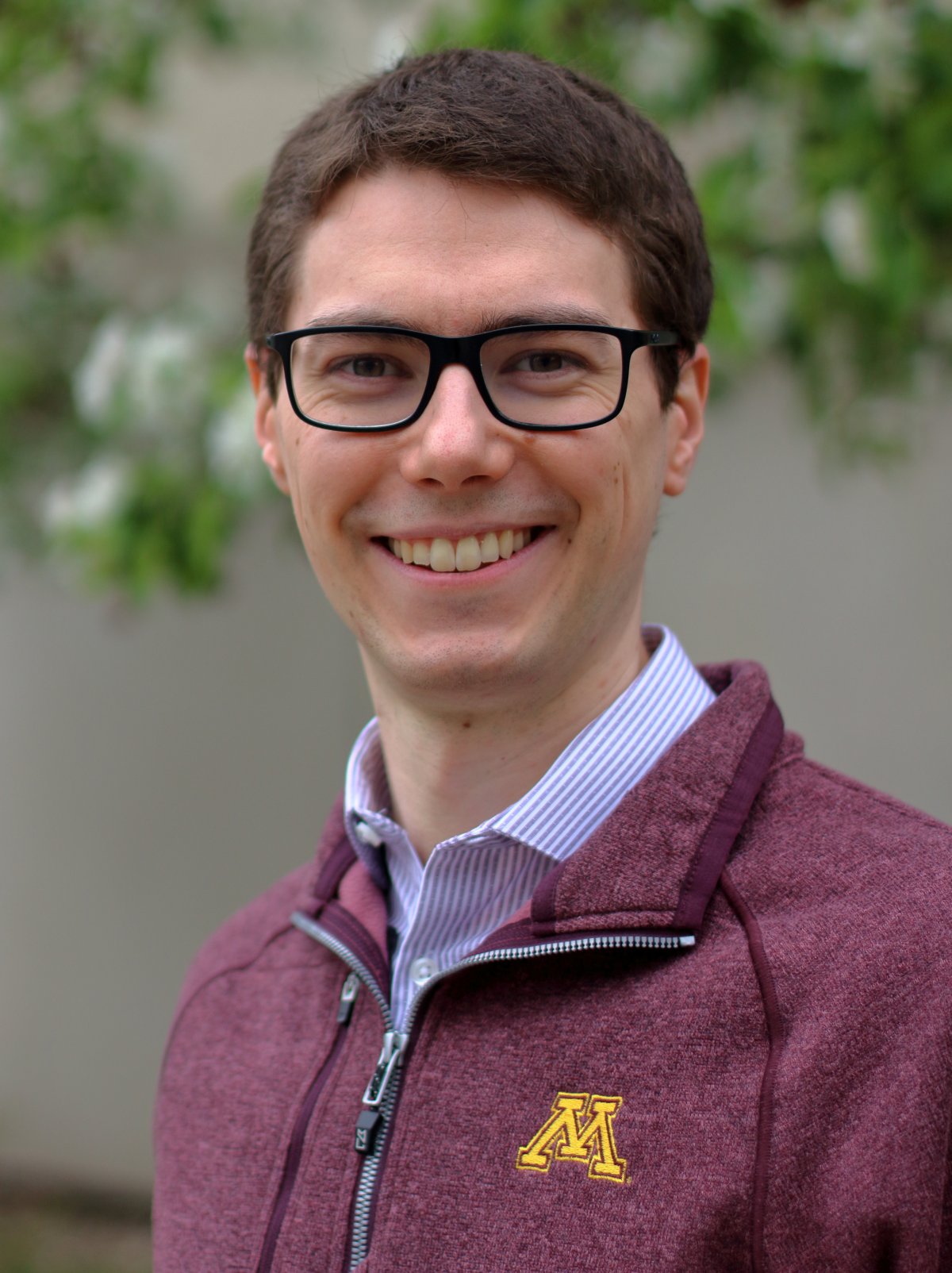
Ryan Caverly serves as an Associate Professor in the Department of Aerospace Engineering and Mechanics at the University of Minnesota, Twin Cities, holding the prestigious McKnight Land-Grant Professorship. His research bridges theoretical control frameworks with practical aerospace and robotics applications, focusing on dynamic modeling and system control. Education: BS in Honours Mechanical Engineering from McGill University MS in Aerospace Engineering from the University of Michigan PhD in Aerospace Engineering from the University of Michigan Professor Caverly's research centers on input-output stability, robust control of nonlinear systems, and computationally efficient modeling of flexible structures. His work spans aerospace vehicles, spacecraft, and robotic manipulators, emphasizing theoretical rigor alongside real-world implementation challenges in structural flexibility and control precision. Recent publications reveal strong emphasis on predictive control for orbital mechanics, hypersonic vehicle dynamics, and cable-driven systems. His work consistently integrates convex optimization, state estimation, and structural dynamics to solve complex problems in solar sail technology, UAV navigation, and hypersonic flow measurement. Scientific Awards: McKnight Land-Grant Professor Caverly leads multiple externally funded projects including NASA-sponsored research on solar sail momentum management, UAV state estimation with Honeywell, hypersonic bow shock measurements with the Air Force, and deployable space structure control. His grants portfolio demonstrates significant industry and government collaboration in aerospace innovation. He directs the Aerospace, Robotics, Dynamics, and Control (ARDC) Lab, which specializes in the intersection of dynamic modeling and control theory for flexible multi-body systems, with particular focus on cable-driven mechanisms and lightweight aerospace structures.
Dr Ehsan Nabavi is a Senior Lecturer in Technology and Society at the College of Asia and the Pacific (CPAS), Australian National University (ANU). He leads ANU’s Responsible Innovation Lab, focusing on responsible computing, modeling, and AI ethics. His interdisciplinary work bridges technical and social sciences, particularly addressing wicked problems in sustainability and water governance. Current Affiliation: ANU (CPAS), since 2020 Former Roles: Research Fellow at ANU School of Cybernetics (2018–2020), Harvard Kennedy School (2016–2017) Visiting Positions: SOAS University of London, University of Bonn (ZEF) His research spans responsible AI , transdisciplinary modeling , and socio-technical systems , as reflected in his publications across journals like Nature Humanities and Social Sciences Communications , IEEE Transactions on Technology and Society , and Water Alternatives . His recent articles emphasize ethical AI deployment, human-water systems, and integrating social aspects into modeling. Labs: Responsible Innovation Lab (ANU) Future Work: Developing frameworks for responsible AI in sustainability and policy contexts
Elette Boyle is an Associate Professor at the Efi Arazi School of Computer Science, Reichman University (IDC Herzliya), Israel. She serves as the Director of the FACT Research Center and is a Senior Scientist at NTT Research. Additionally, she heads the RRIS International Program. Her academic career spans prestigious institutions including MIT, Technion, and Cornell. Dr. Boyle received her Ph.D. in Mathematics from MIT under the guidance of Shafi Goldwasser and Yael Tauman Kalai. Following her doctorate, she completed postdoctoral research at the Technion Israel Institute of Technology (2013-2015) hosted by Yuval Ishai, and a short-term postdoc at Cornell University (Summer 2013) hosted by Rafael Pass. She completed her undergraduate studies in mathematics at Caltech. Her research focuses on the theoretical foundations of computer security and cryptography, with particular expertise in secure multiparty computation, function secret sharing, distributed point functions, and memory checking protocols. Her work bridges theoretical computer science with practical cryptographic applications, developing protocols that balance security guarantees with computational efficiency. Dr. Boyle's research has significantly advanced the field of cryptography, particularly in understanding the fundamental limits and possibilities of secure computation protocols. Analysis of her recent publications reveals a strong focus on the theoretical foundations of secure computation, with particular emphasis on understanding computational and communication complexity limits. Her work spans multiple dimensions of cryptography including foundational protocols, complexity analysis, and practical implementations. A recurring theme in her research is developing efficient cryptographic primitives that minimize communication overhead while maintaining strong security guarantees. Her contributions to function secret sharing, distributed point functions, and pseudorandom correlation generators have been particularly influential in the field. Dr. Boyle has advised several graduate students including Pierre Meyer (Ph.D., co-advised with Geoffroy Couteau), Matan Hamilis (Ph.D.), and D'or Banon (MSc., co-advised with Ran Cohen). Her research has been supported by various grants enabling her to lead significant projects in cryptography and secure computation. As Director of the FACT Research Center, she leads a team focused on foundational aspects of computer science and cryptography. Her center collaborates with researchers worldwide and serves as a hub for advancing cryptographic research in Israel and internationally.
Sean O'Rourke is an Associate Professor in the Department of Mathematics at the University of Colorado Boulder. His research focuses on probability, random matrix theory, and random polynomials. He has organized multiple workshops and minisymposia, including events at the Canadian Discrete and Algorithmic Mathematics Conference (CanaDAM) and ICERM, demonstrating his active role in academic community engagement. His research spans spectral properties of random matrices (e.g., singular values, elliptic matrices, Laplacian matrices), probabilistic behavior of polynomial roots under operations like differentiation and summation, and applications of free probability theory. Recent work includes universal behavior in eigenvalue gaps, non-Hermitian matrix controllability, and asymptotic refinements of classical theorems for random polynomials. Publications highlight collaborations with researchers such as Andrew Campbell, Kyle Luh, David Renfrew, and Van Vu. His work appears in leading journals like Annals of Probability , Electronic Journal of Probability , and Transactions of the American Mathematical Society , covering topics from Gaussian fluctuations to low-rank perturbations and noncommutative harmonic analysis.