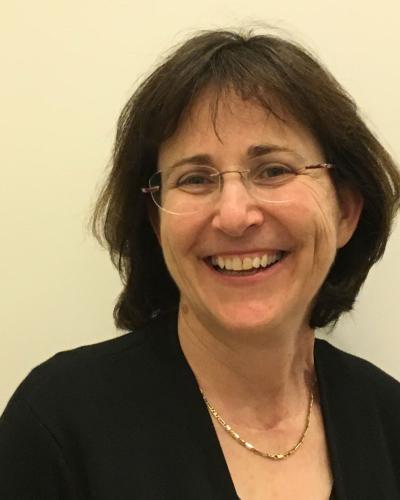
Christiane Barz is a Professor of Mathematics at the University of Zurich's Institute for Business Administration since 2016. Previously, she held academic roles at the UCLA Anderson School of Management, the Chicago Booth School of Business, and the Technical University (TU) Berlin. Her research focuses on stochastic dynamic systems, Markov decision processes, and their applications in revenue management. She emphasizes making mathematical tools accessible and practical for real-world problem-solving, particularly in optimizing decision-making under uncertainty. Education includes a degree in industrial engineering and a doctorate from the University of Karlsruhe (TH), Germany. Her career path includes postdoctoral research at the University of Chicago's Booth School of Business and roles as an Assistant Professor at UCLA. She combines academic excellence with balancing family life, advocating for gender equity in STEM fields. Her research explores risk-sensitive decision-making frameworks, dynamic pricing models for transportation and healthcare, and optimizing resource allocation in complex systems. Recent work includes applications in FlixBus, air cargo networks, and improving patient admission scheduling in hospitals. Barz's teaching philosophy prioritizes demystifying mathematics for students, encouraging critical engagement rather than fear of complexity. She collaborates with industry partners to apply operations research methods to real-world challenges, emphasizing both theoretical rigor and practical relevance.
Professor Dahlia Malkhi is a leading academic and researcher in distributed systems and blockchain technology. She currently holds a faculty position at the University of California, Santa Barbara (UCSB), where she heads the Foundations of Financial Technology (FfTech) research lab. Her work focuses on reliability, security, and consensus mechanisms in distributed systems, with a recent emphasis on blockchain innovations like HotStuff, which underpins Diem, Aptos, and other blockchains. She has held influential roles at industry leaders such as Chainlink Labs, Diem Association, VMware, and Microsoft Research. Education: Ph.D. in Computer Science from The Hebrew University of Jerusalem. Past roles include CTO of Diem Association (2019–2022), Principal Researcher at VMware (2014–2019), and Partner Principal Researcher at Microsoft Research (2004–2014). Research Interests: Blockchain consensus algorithms (e.g., HotStuff, Flexible Paxos), Byzantine Fault Tolerance (BFT), secure multi-party computation (FairPlay), and distributed database systems (CorfuDB). Her work bridges academic theory with industrial applications, emphasizing practical scalability and security. Awards: ACM Fellow (2011), IEEE TCDP Outstanding Technical Achievement Award (2021), IBM Faculty Award (2003/2004). She has also held leadership roles in conferences like Usenix ATC and program chairs for multiple distributed systems events. Advising & Grants: Advises projects at Space Computer, Lyquor Labs, and Chainlink Labs. Her research labs and collaborations include work on BBCA-Chain, Lumiere, and BFTBrain, advancing consensus mechanisms in decentralized systems. Labs/Teams: Leads UCSB’s FfTech lab, co-founded VMware Research, and contributed to foundational blockchain projects like DiemBFT and Espresso Systems. Her work impacts technologies such as NSX-T control planes and distributed financial infrastructure.
Yong-Bin Kang is a Senior Data Science Research Fellow at the ARC Centre of Excellence for Automated Decision Making and Society (ADM+S) at Swinburne University of Technology, affiliated with the School of Social Sciences, Media, Film and Education. He holds a PhD in AI from Monash University and leads numerous transdisciplinary research projects applying artificial intelligence to address complex societal challenges. Education: PhD in Faculty of IT, Monash University, Australia Dr. Kang's research focuses on Responsible AI and Society, with specific interests in developing Societal-AI platforms that integrate social data with ethical principles. His work spans healthcare, humanitech, education, financial planning, environmental health, and justice domains. He investigates how AI can enhance decision-making processes while promoting societal well-being, with particular attention to ethical implementation and human-centered approaches. His expertise encompasses AI, natural language processing, machine learning, and decision-making optimization. Analysis of Dr. Kang's recent publications reveals a strong trajectory toward socially responsible AI applications across diverse domains. His work consistently bridges technical AI capabilities with social implications, particularly focusing on ethical frameworks, community-centered design, and addressing societal inequalities through technology. The publications demonstrate increasing collaboration across disciplines including criminology, environmental science, mental health, and education. Dr. Kang is actively involved in significant research funding initiatives, with multiple ongoing projects that address critical societal challenges through AI. His supervision availability includes Doctorate (PhD) candidates, indicating his commitment to mentoring the next generation of researchers in AI and data science fields. Current Flagship Areas: Digital Capability Innovative Society Manufacturing Futures Sustainable Development Goals: Good Health and Well Being (SDG 3) Industry, Innovation and Infrastructure (SDG 9) Affordable and Clean Energy (SDG 7)
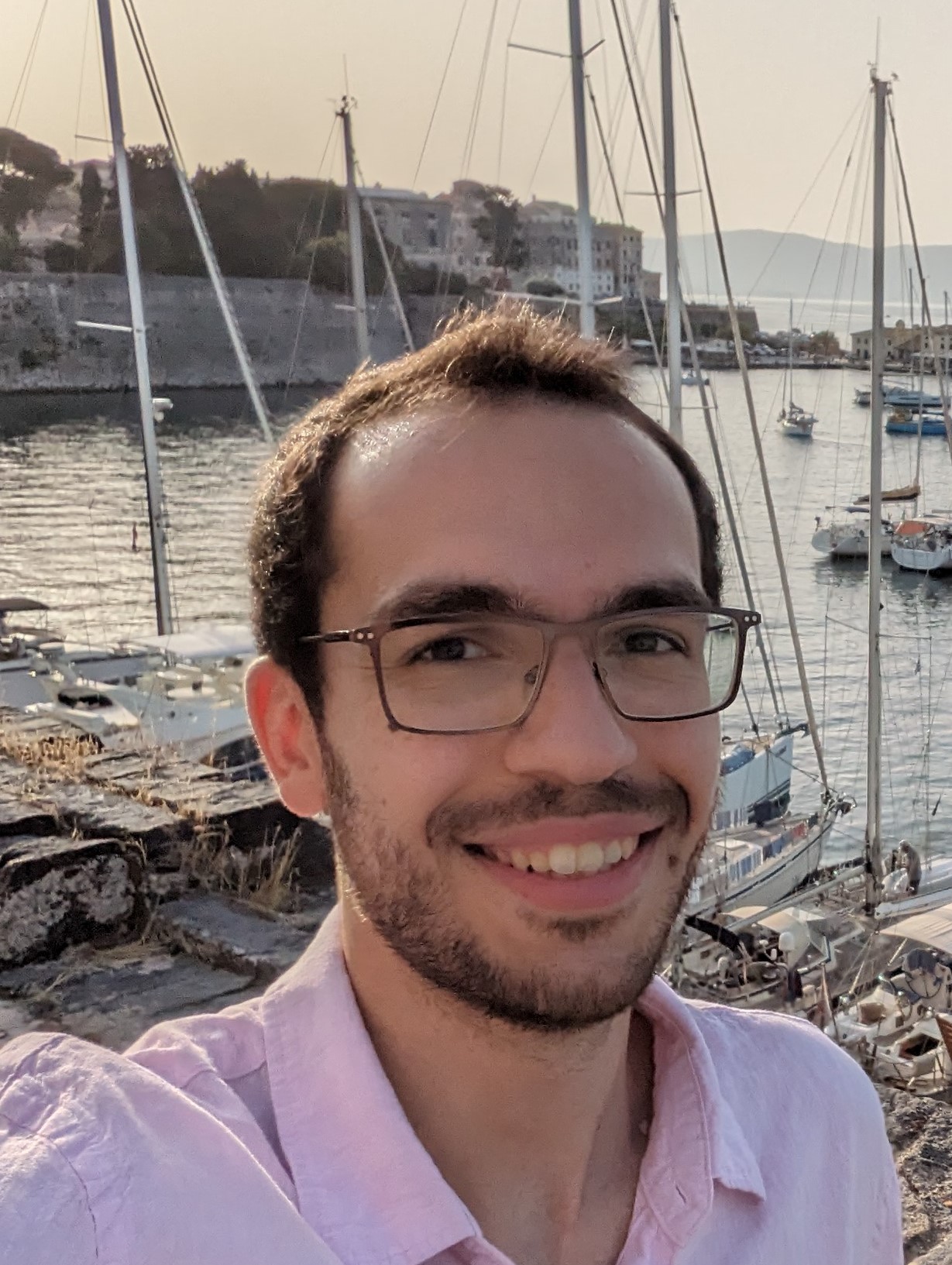
Nikolaos Tziavelis is an Assistant Professor in the Department of Computer Science and Engineering at Basking Engineering, University of California, Santa Cruz. His research bridges theoretical and practical aspects of database systems, focusing on improving real-world data processing through novel algorithmic solutions. Education: Ph.D. from Northeastern University (advised by Mirek Riedewald and Wolfgang Gatterbauer) Diploma from National Technical University of Athens, Greece Research Interests: Data Management Database Theory Query Processing and Optimization Algorithms for Big Data Integration of Machine Learning with Database Systems Publication Trends: His work emphasizes ranked enumeration, join algorithms, and query optimization, with applications in responsive database systems and machine learning integration. Key themes include theoretical foundations, practical system improvements, and algorithmic efficiency for complex data processing tasks. Scientific Awards: 2022 Google PhD Fellowship PODS 2021 Best of Recognition 2023 VLDB PhD Workshop Best Paper Award 2024 Khoury Research Award from Northeastern University Service: He has served on program committees for major conferences including SIGMOD, VLDB, PODS, EDBT, ICDE, and Northeast Database Day.
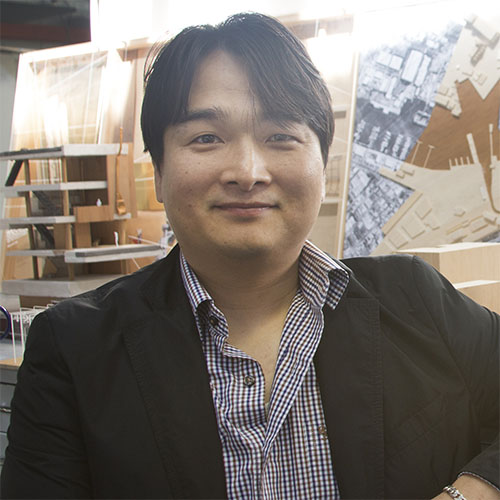
JuHyun Lee is an Associate Professor of Architecture and Computational Design in the School of Built Environment at the Faculty of Arts, Design and Architecture (ADA), University of New South Wales (UNSW) Sydney, where they also hold the prestigious title of Scientia Academic. With a professional background in architecture and construction (1998-2002), they have held academic positions across Australia including a five-year post-doctoral fellowship at the University of Newcastle (2012-2017) and a senior research fellowship at the University of South Australia (2018), following earlier research and teaching roles in South Korea (2003-2011). Lee specializes in architectural design computing, design cognition, and urban complexity, integrating computational methods, cognitive science, and architectural theory to advance architectural intelligence and human-centered design. Their research spans architectural visualization, analysis and design methods, algorithm/protocol design, and data visualization with computational approaches. They have established a strong research program examining the intersection of language, culture, and design cognition, particularly focusing on cross-cultural design communication between Australia and Korea. Lee's recent publications demonstrate a clear trajectory toward increasingly sophisticated integration of computational methods with architectural design theory, particularly in the areas of shape grammar, space syntax, and machine learning applications. Their work shows consistent focus on practical applications of computational design methods to real-world architectural problems, with growing emphasis on cross-cultural collaboration and intelligent design systems. The research portfolio reveals a deepening engagement with AI and machine learning techniques applied to architectural design assessment and generation. Scientia Academic at UNSW Sydney Associate Fellow of the Higher Education Academy (AFHEA, 2020) As an educator, Lee develops cutting-edge courses in computational design and Building Information Modeling (BIM), integrating experiential learning and industry engagement. They have secured over $11 million in research funding, including multiple ARC Discovery Projects and an Australia-Korea Foundation grant. Lee co-directs the Advanced Architectural Analytics Laboratory (A 3 LAB), leading interdisciplinary research on design automation, spatial analysis, and machine learning applications in architecture, while also leading cross-cultural initiatives like the Australia-Korea Architects' Network (AKAN). Lee supervises multiple HDR students working on culturally sustainable urban design, socio-spatial patterns in public housing, and computational layout generation. Their research has significant implications for improving design communication across cultural boundaries and developing more coherent, clear, and accessible built environments through computational design approaches.
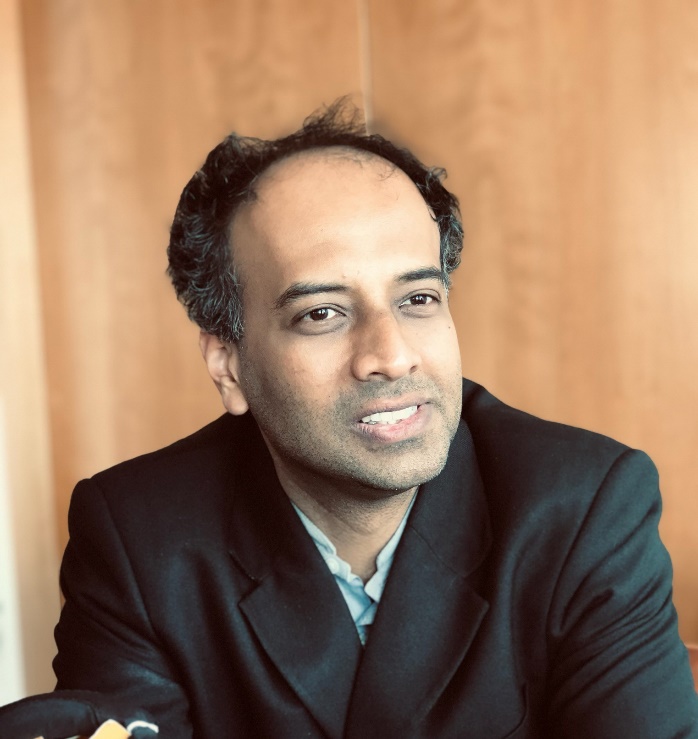
Krishna Jagannathan is a full-time Professor in the Department of Electrical Engineering at the Indian Institute of Technology Madras (IIT Madras), India. He specializes in stochastic modeling, communication networks, information theory, and queuing theory. He obtained his B.Tech from IIT Madras in 2004, followed by S.M. and Ph.D. degrees from MIT in 2006 and 2010, respectively. After post-doctoral positions at Caltech and MIT, he joined IIT Madras in 2011. Education: B.Tech in Electrical Engineering, IIT Madras (2004) S.M. in Electrical Engineering and Computer Science, MIT (2006) Ph.D. in Electrical Engineering and Computer Science, MIT (2010) Research Interests: His research focuses on stochastic modeling and analysis of communication networks , information theory , and queuing theory . He has made significant contributions to understanding network performance, resource allocation, and risk-aware decision-making in complex systems. He leads the Networks and Stochastic Systems lab at IIT Madras, mentoring a large cohort of Ph.D. and M.S. students working on cutting-edge problems in networking, optimization, and stochastic systems. Scientific Awards: Best Paper Award at WiOpt 2013, Tsukuba, Japan Young Faculty Recognition Award for Excellence in Teaching and Research, IIT Madras (2014) Teaching & Mentorship: He has taught a wide range of courses including Probability Foundations , Stochastic Modeling and Queuing Theory , Convex Optimization , and Signals & Systems , consistently receiving high teaching evaluations. He has supervised over 15 Ph.D. and M.S. students to completion and continues to guide several active researchers.
Avi Wigderson is the Herbert H. Maass Professor in the School of Mathematics at the Institute for Advanced Study, Princeton. He is a leading authority in theoretical computer science, particularly computational complexity theory. Wigderson organizes the Computer Science and Discrete Mathematics (CSDM) program at the Institute, fostering interdisciplinary research at the intersection of mathematics and computer science. Wigderson earned his Ph.D. (1983), M.A. (1982), and M.S.E. (1981) from Princeton University. Prior to his current position, he held appointments at The Hebrew University of Jerusalem (1986-2003), Princeton University (1990-1992), Mathematical Sciences Research Institute, Berkeley (1985-1986), IBM Research (1984-1985), and University of California, Berkeley (1983-1984). Wigderson's research spans computational complexity theory, randomness and computation, algorithms and optimization, circuit complexity, proof complexity, quantum computation and communication, and cryptography. His work explores fundamental questions like whether mathematical creativity can be automated (P vs NP problem), the security of electronic commerce, the role of randomness in computation, and the potential of quantum mechanics to enhance computation. He has made significant contributions to understanding the power and limitations of efficient computation. Analysis of Wigderson's recent publications reveals a strong focus on optimization, complexity theory, and their mathematical foundations. His work connects diverse areas including non-commutative algebra, geometric complexity, graph theory, and quantum computing. A recurring theme is exploring whether fundamental computational problems like P vs NP can be addressed through optimization techniques such as gradient descent. His research shows increasing interdisciplinary connections between theoretical computer science, mathematics, and physics. ACM A.M. Turing Award (2023) Abel Prize (2021) Donald E. Knuth Prize (2019) Gödel Prize (2009) American Mathematical Society's Levi L. Conant Prize (2008) Rolf Nevanlinna Prize (1994) Yoram Ben-Porat Presidential Prize for Outstanding Researcher (1994) Bergman Fellowship (1989) Member, American Academy of Arts and Sciences Member, National Academy of Sciences While specific details about Wigderson's students are not provided in the source material, his extensive lecture series, workshops, and program organization suggest significant mentorship activities. His book "Mathematics and Computation" published by Princeton University Press serves as an educational resource for students and researchers. Wigderson has organized major programs at the Institute for Advanced Study including "Lower Bounds in Computational Complexity" (2018) and "Pseudorandomness" (2017), creating research opportunities for numerous scholars. Wigderson leads the Computer Science and Discrete Mathematics (CSDM) program at the Institute for Advanced Study, which brings together researchers from mathematics and computer science to explore fundamental questions in computation. His work with collaborators across multiple institutions has established connections between theoretical computer science and diverse fields including quantum information theory, algebraic geometry, and optimization. Recent projects focus on non-commutative optimization and its applications to computational complexity problems.
Golnoosh Farnadi is an Associate Professor at the Department of Computer Science and Operational Research at the University of Montreal and an Assistant Professor at the School of Computer Science at McGill University. She holds a Canada-CIFAR Chair in Artificial Intelligence and serves as a Senior Academic Member at Mila - Quebec Institute for Artificial Intelligence. Her interdisciplinary work bridges computer science, operations research, and ethical AI considerations. Her educational background includes a Ph.D. in Computer Science from KU Leuven and Ghent University (2017), followed by postdoctoral positions at the University of Montreal/MILA (2018-2020) and the University of California, Santa Cruz (2017-2018). Her research focuses on algorithmic fairness, responsible AI, deep learning, and probabilistic models, with applications spanning healthcare, recommender systems, and public policy. Farnadi's recent publications demonstrate a strong emphasis on addressing fairness in machine learning systems, with particular attention to cultural diversity in recommender systems, fairness in healthcare optimization (particularly kidney exchange programs), and mitigating hallucinations in large language models. Her work consistently combines theoretical rigor with practical applications, often employing novel mathematical frameworks to tackle complex ethical challenges in AI. Among her notable recognitions are the Google Scholar Award (2021), Facebook Research Award (2021), Google Award for Inclusion Research (2023), and being named one of the 100 Brilliant Women in AI Ethics (2023). She was also recognized as a Rising Star in AI Ethics in 2021. Farnadi supervises numerous graduate students through her EQUAL Lab (EQuity & EQuality Using AI and Learning algorithms), which focuses on developing AI systems that promote fairness and equity. Her teaching includes courses on Responsible AI, Machine Learning, and Trustworthy Machine Learning at both McGill University and HEC Montreal.
Alexander Westkamp is a Professor in Economics at the University of Cologne since 2018. His research focuses on matching markets , mechanism design , and behavioral economics , with significant contributions to understanding stability, strategy-proofness, and exchange mechanisms in complex market structures. Current position: Associate Professor (W2) with tenure , University of Cologne Prior roles: Assistant Professor , Maastricht University (2013–2015); Visiting Scholar , Stanford University (2012–2013) Affiliated with interdisciplinary research clusters like ECONtribute: Markets & Public Policy , Germany’s first Cluster of Excellence in economics. His work has been published in top journals including the Journal of Political Economy , Games and Economic Behavior , and Theoretical Economics . Recent articles explore topics such as: Generalized matching with contracts and networks Stability and strategy-proofness in trading networks Tie-breaking mechanisms in priority-based matching systems Westkamp’s research often intersects with quantum computing and social behavior through collaborations at the University of Cologne’s Key Profile Area: Social and Economic Behaviour .
Aditya T Siripuram is an Associate Professor at the Indian Institute of Technology Hyderabad (IITH), holding joint appointments in the Department of Electrical Engineering and the Department of Artificial Intelligence. He completed his PhD at Stanford University and holds B.Tech and M.Tech degrees from IIT Bombay. Education: PhD in Electrical Engineering, Stanford University (2017) - GPA: 4.17/4 M.Tech in Electrical Engineering, IIT Bombay (2009) - GPA: 9.79/10 B.Tech in Electrical Engineering, IIT Bombay (2009) - GPA: 9.79/10 Research Interests: His research spans Fourier analysis, signal processing, machine learning, convex and combinatorial optimization, with applications in AI/ML and applied mathematics. His work particularly focuses on computational aspects of Fourier analysis, including fast DFT computation for structured signals, convolution idempotents, and graph-based signal processing techniques. His recent research directions involve developing efficient algorithms for computing Discrete Fourier Transforms for signals with structured frequency support, investigating relationships between additive structures in frequency domains and computational complexity, and exploring graph learning techniques under spectral constraints. Awards and Recognition: Excellence in Teaching Award, IIT Hyderabad (2019, 2022) Stanford Graduate Fellowship Qualcomm Innovation Fellowship (awarded to his PhD student Charantej Reddy P in 2021) Teaching and Service: He has taught courses including AI1110 Probability and Stochastic Processes, EE5609 Matrix Theory, EE5606 Convex Optimization, and EE5328 Introduction to Submodular Functions. He serves as Departmental Undergraduate Committee Chair for the Department of AI at IITH (2020-present) and was MTech Admissions Coordinator for the same department (2019-2022). Research Group: He currently advises three PhD students working on signal processing based graph learning techniques, DFT computation for structured signals, and coded computing problems.
Professor Paul Skrzypczyk is a distinguished theoretical physicist at the University of Bristol's School of Physics, where he leads cutting-edge research in quantum information theory. His work bridges fundamental quantum mechanics with practical applications in quantum technologies. He serves as Principal Investigator for multiple significant research projects and holds the prestigious CIFAR Azrieli Global Scholar position (2022-2024). Dr. Skrzypczyk's research primarily focuses on quantum nonlocality, measurement incompatibility, and quantum thermodynamics. His investigations explore how quantum theory enables 'nonlocal' effects where actions in one location seemingly affect distant places instantaneously, challenging classical physics understanding. His thermodynamics research examines how traditional thermodynamic laws apply at quantum scales, particularly for small systems far from their original realm of applicability, with implications for future quantum technologies. His publication record demonstrates consistent high-impact contributions to quantum information science, with recent work spanning quantum measurement theory, quantum resource theories, quantum thermodynamics, and quantum foundations. His research output shows a clear trajectory toward increasingly sophisticated applications of quantum information principles to fundamental physics questions. Among his notable recognitions is the CIFAR Azrieli Global Scholar award, reflecting his standing in the international quantum research community. His work has generated substantial scholarly attention, with numerous highly-cited publications including the influential 2014 Nature Communications paper on work extraction from individual quantum systems. Professor Skrzypczyk actively secures research funding, currently leading the "Software Enabling Early Quantum Advantage" project (2023-2025) and previously directing the "Investigating Measurement Incompatibility in Quantum Theory" initiative (2017-2021). His media engagement includes contributions to the widely covered "quantum Cheshire cats" research, which garnered attention across multiple news outlets, blogs, and academic platforms. As a member of the Bristol Quantum Information Institute, he contributes to one of the UK's leading quantum research centers, collaborating extensively across international networks as evidenced by his diverse research partnerships. His theoretical work provides foundational insights that inform the development of practical quantum technologies.
Eugene Feinberg is a Distinguished Professor in the Department of Applied Mathematics and Statistics at Stony Brook University's College of Engineering and Applied Sciences. He is renowned for his extensive contributions to Markov Decision Processes (MDPs), stochastic optimization, and inventory control. Research Interests: His work spans theoretical and applied aspects of Markov Decision Processes , stochastic optimization , inventory control , healthcare decision-making , and machine learning . He has particularly focused on solving complex decision-making problems under uncertainty, with applications ranging from operations research to medical decision-making. Scientific Awards: He has been honored with the title of Distinguished Professor , recognizing his outstanding contributions to his field. Advising and Grants: While specific details on students and grants are not provided, his prolific publication record and faculty status suggest active involvement in advising and securing research funding. Contact and Resources: His university webpage can be accessed at http://www.ams.sunysb.edu/~feinberg/ , and his Google Scholar profile is available at https://scholar.google.com/citations?user=LLt--pgAAAAJ&hl=en .
Dr. Bo Liu is an Associate Professor in the School of Computer Science at the University of Technology Sydney (UTS), where he serves as a core member and director of the AI Security and Privacy (AISP) Research Lab at the Australian Artificial Intelligence Institute (AAII). With expertise spanning cybersecurity, privacy protection, AI and machine learning, and wireless communications, Dr. Liu has established himself as a leading researcher in the field of AI security and privacy. Dr. Liu earned his PhD from the Department of Electronic Engineering at Shanghai Jiao Tong University in 2010. His academic journey at UTS has progressed from Senior Lecturer (November 2019-December 2022) to his current position as Associate Professor (January 2023-present). Dr. Liu's research focuses on the critical intersection of artificial intelligence and security, particularly addressing emerging threats in the age of advanced AI systems. His work spans multiple dimensions of security and privacy, including deepfake detection, privacy-preserving data synthesis, AI model security, and fair machine learning. He has pioneered approaches to detect AI-generated content, protect visual privacy through de-identification techniques, and address the complex relationship between algorithmic fairness and privacy preservation. His publication record demonstrates significant contributions across multiple cutting-edge research areas, with particular emphasis on detecting and mitigating threats from generative AI systems. His recent work reveals a strong focus on deepfake detection across multiple modalities (images, video, and audio), privacy-preserving techniques for sensitive data, and the security implications of emerging AI architectures like Retrieval-Augmented Generation systems. Dr. Liu has secured substantial research funding, including as Lead Chief Investigator on multiple ARC Discovery and Linkage Projects, totaling over $3.5 million AUD. His industry collaborations include partnerships with the NSW Department of Planning and the Reserve Bank of Australia, demonstrating the practical applicability of his research. As an academic leader, Dr. Liu serves as Associate Editor for IEEE Transactions on Broadcasting and actively contributes to the academic community through conference organization, peer review for top-tier venues, and assessment for ARC grant schemes. He also teaches courses including Penetration Testing, Ethical Hacking and Offensive Security, and supervises Masters and PhD students in cybersecurity and privacy research.
Masayuki Goto is a Professor in the Department of Industrial Systems Engineering, School of Creative Science and Engineering at Waseda University, Japan, where he has served since 2011. He earned his Doctor of Engineering from Waseda University and leads research integrating statistical science, machine learning, information theory and management engineering to solve business-analytics, marketing, AI ethics and industrial optimisation problems. Education: Doctor of Engineering, Waseda University Research Interests: His work spans data science, machine learning, business analytics, statistical learning theory, generative AI, deep neural networks, natural language processing, network analysis and information theory, with recent emphasis on trustworthy AI and synthetic data generation. Publication Trends: Over 2024-2025 his group has published extensively on deep learning for tabular data, vision-language models, recommender systems, causal inference and ethical AI, demonstrating a shift toward generative-AI-driven business analytics and interpretable models. Scientific Awards: Best Paper Award, CIE51 2024 Outstanding Paper Award, APIEMS 2023 Best Paper Award, APIEMS 2022 Best Paper Award, 20th ANQ Congress 2022 2022 PC Conference Best Paper Award Best Paper Award, JASMIN 2021 Best Paper Award, 19th ANQ Congress 2021 Encouragement Award, AAMSA 2021 IDR User Forum 2020 Enterprise & DBSJ Special Awards Best Paper Award, APIEMS 2019 Best Paper Award, ANQ Congress 2018 World CIST'18 Best Paper Award Best Paper Award, ANQ Congress 2017 JSPS Grant Review Commendation 2016 JIMA Distinguished Research Award 2015 Best Paper Award, Journal of JIMA 2015 IPSJ National Convention Best Paper Awards (2015 & 2012) Advising & Grants: He has mentored a large cohort of graduate students evidenced by co-authorship on over 100 recent papers. He has served as PI on numerous JSPS KAKENHI grants and industry projects focused on data-driven management, AI marketing and ethical AI frameworks. Labs & Teams: He heads the Goto Laboratory within the Waseda Institute for Advanced Study, leading interdisciplinary projects on business AI, data-ethics education and industrial optimisation.
Chicheng Zhang is an Assistant Professor in the Computer Science Department at the University of Arizona, where he conducts research in the theory and applications of interactive machine learning. He earned his Ph.D. in Computer Science from the University of California, San Diego (UCSD) in 2017 under the supervision of Professor Kamalika Chaudhuri, and was previously an undergraduate student at Peking University working with Professor Liwei Wang. From 2017 to 2019, he was a postdoctoral researcher at the Machine Learning Group at Microsoft Research NYC. His research lies at the intersection of learning theory and practical algorithm design, focusing on interactive machine learning paradigms such as reinforcement learning, contextual bandits, active learning, and imitation learning. He aims to develop algorithms that are data-efficient, computationally tractable, and robust, with applications in healthcare, wireless communication, and fair AI systems. His work emphasizes principled algorithm design with theoretical guarantees and empirical validation. The most recent publications reflect a strong trend in developing efficient, theoretically grounded methods for sequential decision-making and interactive learning. Key themes include sample efficiency, robustness to noise, fairness in algorithmic decisions, and application-driven research in domains like oral cancer detection and mmWave network optimization. His work frequently bridges theoretical analysis with real-world deployment considerations. While no scientific awards are mentioned in the provided text, Dr. Zhang actively mentors prospective PhD students and encourages collaboration. He has contributed to interdisciplinary projects involving fairness-aware bandit algorithms for network coexistence, interpretable classifiers for cancer detection, and LLM-based initialization for reinforcement learning. His lab focuses on developing intelligent agents that actively learn from environments and human experts. He can be reached at chichengz@arizona.edu .