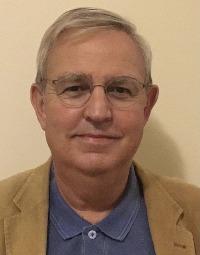
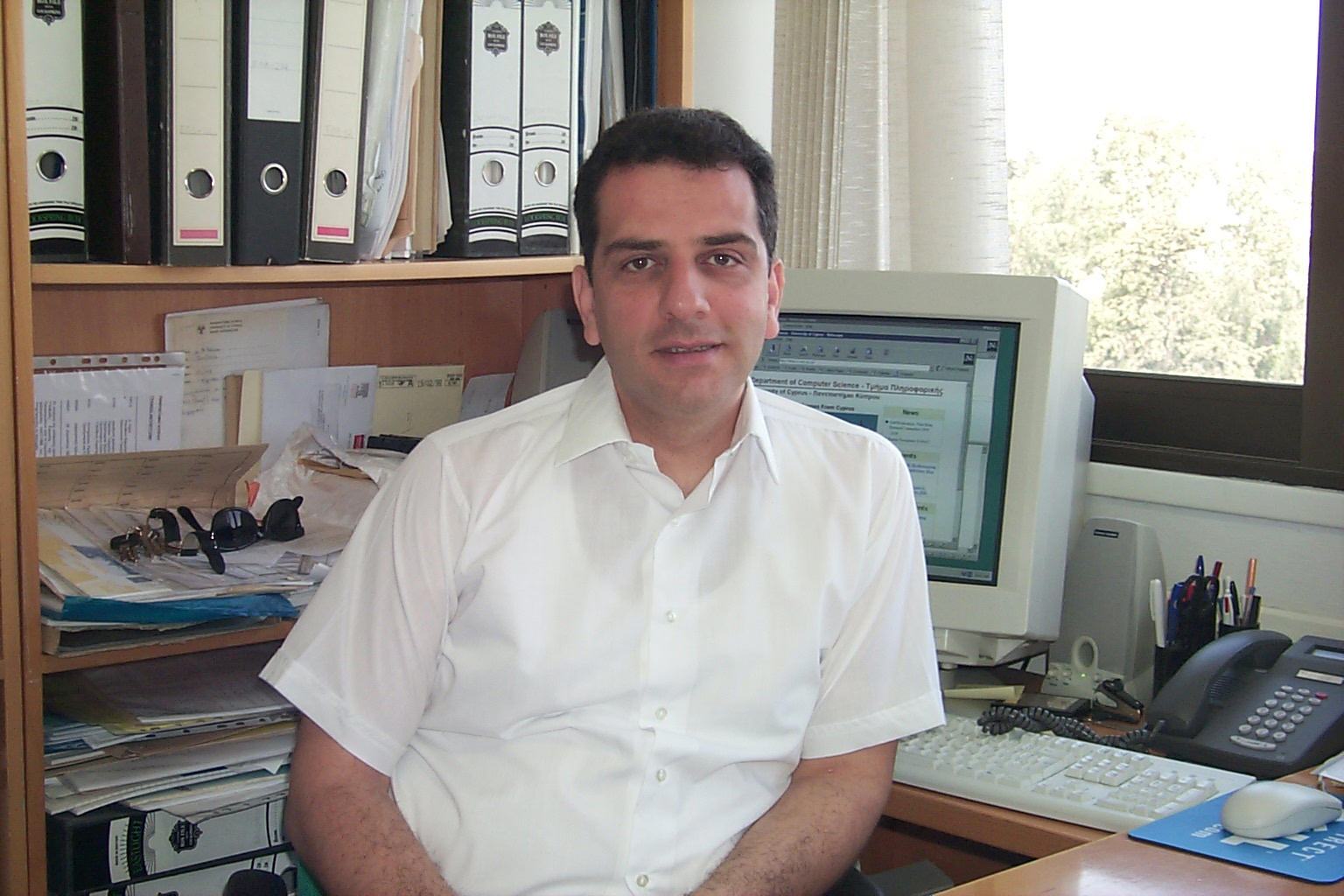
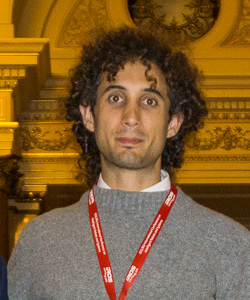
Yannis Dimopoulos is a Professor and Department Vice-Chair at the Department of Computer Science, University of Cyprus. He holds a B.Sc. and Ph.D. in Computer Science from the Athens University of Economics (1987 and 1992, respectively). Prior to his current role, he held research positions at the Max-Planck-Institut für Informatik in Germany and the University of Freiburg. His research focuses on Artificial Intelligence , particularly in Knowledge Representation and Reasoning , Planning , Logic Programming , Constraint Satisfaction , and Machine Learning . He has published extensively in top conferences and journals, including AAAI, IJCAI, and Artificial Intelligence. Dimopoulos's work integrates theoretical contributions with practical applications, such as argumentation frameworks, planning systems, and multi-agent negotiation. His publications reflect a strong emphasis on formal methods, computational logic, and AI reasoning. He has advised numerous students and contributed to the development of tools like plasp for Answer Set Programming-based planning. His research has been supported by grants and collaborations with international institutions.
Chryssis Georgiou is a Professor and Chair of the Department of Computer Science at the University of Cyprus. He holds a B.Sc. in Mathematics from the University of Cyprus (1998) and a Ph.D. in Computer Science and Engineering from the University of Connecticut (2003). His research focuses on Algorithms and Complexity, Parallel and Distributed Computing, and Fault-tolerance, with over 115 publications. He has served as General Chair of PODC 2015 and Chair of the Steering Committee of ACM PODC (2021-2024). His work is funded by the European Commission and the Cyprus Research and Innovation Foundation. Research interests span distributed systems, blockchain principles, and algorithmic mechanisms. He has led projects such as ESS-BFT (Byzantine Fault-Tolerant Blockchain) and COLLABORATE (fault-tolerant distributed storage). His advising includes numerous doctoral, master’s, and bachelor’s students in areas like machine learning and distributed systems. He co-authored books on Distributed Cooperative Computing and Blockchain systems. Notable roles include Editorial Board member of Information Processing Letters (2018-2023) and participation in EU-funded projects like AEOLUS and DELIS. His labs include the Research Laboratory for Foundations of Computing Systems and Theoretical Computer Science. Current projects involve fault-tolerant storage and machine learning applications in healthcare.
Andreas Karageorghis is a Professor in the Department of Mathematics and Statistics at the University of Cyprus, affiliated with the School of Natural and Applied Sciences. His research focuses on numerical analysis, scientific computations, and boundary element methods, particularly employing the Method of Fundamental Solutions (MFS). He holds a DPhil from Oxford University, preceded by a BA and MA. His work emphasizes solving complex elliptic boundary value problems, inverse scattering, and geometric reconstruction. Notable contributions include advancements in MFS algorithms for biharmonic equations, axisymmetric systems, and polyharmonic problems. He has also explored hybrid meshless methods and RBF neural networks for nonlinear problems. Key applications span fluid mechanics (e.g., Brinkman equations), elasticity, and acoustic scattering. His research addresses challenges like void detection, shape identification, and steady-state heat conduction. Karageorghis has published extensively in top journals like SIAM and IMA Numerical Analysis, with over 40 years of continuous academic contribution. His methodological innovations include matrix decomposition algorithms, efficient Kansa-type MFS formulations, and non-iterative approaches for inverse problems. Ongoing work includes optimal parameter selection for RBF methods and extending MFS to higher-order PDE systems.
Antonis C. Kakas is a Professor in the Department of Computer Science at the University of Cyprus. His work spans computational logic, abduction, argumentation, and reasoning about actions and change. Education: B.Sc. in Mathematics, Imperial College London (1980) M.Sc. in Computer Science, Imperial College London (1987) Ph.D. in Theoretical Physics, Imperial College London (1984) Research focuses on Computational Logic , including Abductive Logic Programming , Argumentation , and Autonomous Agents . His projects involved EU-funded initiatives like Computing II, CompuCyprus, and SOCS. Key software developments include ACLP (Abductive Constraint Logic Programming), E-RES (reasoning about actions), and Gorgias (argumentation systems). Recent publications (2000-2005) explore integration of abduction with machine learning, agent deliberation, and answer set programming.
Sotiris Nikoletseas is a Full Professor and Founding Director of the Internet of Things Laboratory (IoT-Lab) at the Computer Engineering and Informatics Department of the University of Patras, Greece. He also serves as a Senior Researcher of the Algorithms Group at the Computer Technology Institute and Press "Diophantus" (CTI), Greece. His academic career includes Visiting Professor positions at the Universities of Geneva, Ottawa and Southern California (USC). Professor Nikoletseas's research spans several cutting-edge domains in computer science, with primary focus on algorithmic aspects of wireless sensor networks and the Internet of Things (IoT). His work extends to Artificial Intelligence of Things (AIoT), wireless energy transfer protocols, probabilistic algorithms and random graphs, and innovative applications of psychoanalysis driven computing to social networks and interactive media. His interdisciplinary approach bridges theoretical computer science with practical applications in networked systems. His publication record is exceptional, with over 300 publications in international journals and refereed conferences, three influential books, and 30 invited chapters in publications by major publishers. His most recent book, 'Wireless Power Transfer Algorithms, Technologies and Applications in Ad Hoc Communication Networks' (Springer, 2016), represents a significant contribution to the field. Best Paper award at the 18th International Conference on Distributed Computing and Networking (ICDCN), Hyderabad, India, 2017 Best Paper Award at the 6th IEEE International Conference on Distributed Computing in Sensor Networks (DCOSS), Santa Barbara, USA, 2010 Inclusion in the list of highly cited computer scientists based on Google Scholar h-index As an academic leader, Professor Nikoletseas has supervised over 50 diploma theses and numerous graduate students, including 7 PhD candidates who have completed their degrees under his guidance. His research has been supported by substantial external funding, including multiple European Union projects where he served as site leader or coordinator. His work with industry includes direct contracts with organizations like Pfizer through their Center for Digital Innovation. The IoT-Lab he founded at the University of Patras serves as a hub for research in algorithms and systems for the Internet of Things, fostering collaboration between academia and industry. His current research directions include AI-enhanced IoT applications, wireless power transfer systems, and innovative approaches to cybersecurity and environmental monitoring through advanced sensor networks.
Prof. Dr. Aykut Hocanin is a faculty member in the Department of Electrical and Electronics Engineering at Eastern Mediterranean University (EMU). He holds a PhD in Electrical and Electronics Engineering from Bogazici University, an MS in Electrical Engineering from Texas A&M University, and a BS in Electrical and Computer Engineering from Rice University. PhD: 1994-2000, Bogazici University MS: 1992-1993, Texas A&M University BS: 1988-1992, Rice University Research Interests: Dr. Hocanin specializes in adaptive signal processing algorithms, wireless communication systems, and sparse system identification. His work focuses on developing efficient algorithms for impulsive noise environments and improving CDMA system performance through robust detection and interference cancellation techniques. He has contributed significantly to adaptive filtering methods, including recursive inverse algorithms and variable step-size LMS approaches. Scientific Contributions: His recent research (2020-2024) includes fast quasi-Newton adaptive algorithms and data-reuse extended NLMS techniques. Earlier work (2011-2015) explored entropy-based subspace separation, 2D recursive inverse filtering, and mobility modeling in wireless networks. He has supervised numerous graduate theses on these topics. Professional Role: As a professor at EMU, Dr. Hocanin teaches courses like INFE362 and EENG461 while maintaining active research in digital signal processing and wireless communication. He serves as an associate editor and reviewer for academic journals and conferences.
Ioannis Michos is an Assistant Professor at the Department of Computer Science and Engineering, European University, Cyprus. He holds a Ph.D. in Pure Mathematics (Algebra) from the University of Manchester (1999) with a thesis on 'Finite groups acting on free Lie algebras.' His academic career includes positions at Frederick University and the University of Ioannina. He is actively involved in research projects like GRATOS and PPW, focusing on permutations and combinatorics. Education Ph.D. in Pure Mathematics (Algebra), University of Manchester, 1999 M.Sc. in Pure Mathematics (Algebra), University of Manchester, 1994 B.Sc. in Mathematics, University of Ioannina, 1991 Research Interests : Discrete Mathematics, Theoretical Computer Science, Algebra, Combinatorics, and applications in graph theory and concurrent systems. His work spans free Lie algebras, permutation patterns, trace monoids, and kernel PCA methods in astrophysics. Awards Recognition at STACS’02 for work on trace monoids (2002) Onassis PhD Scholarship (1994–1997) NATO M.Sc. Scholarship (1992–1993) SERC Studentship in Manchester (1992–1995) Grants & Projects : Led projects on permutation patterns (PPW) and collaborated on ALAPEDES (TMR-funded). Current role as EUC Research Committee member and co-organizer of the EUC Colloquium.
Stelios Neophytou is an Associate Professor and Head of the Department of Engineering at the University of Nicosia. He holds a PhD in Computer Engineering from the University of Cyprus (2009) and a Bachelor's degree in Computer Engineering and Informatics from the University of Patras, Greece (2003). His research focuses on Electronic Design Automation, specifically developing algorithms for integrated circuit design verification and post-manufacturing testing. This includes methodologies for enhancing Automatic Test Pattern Generation (ATPG), test size compaction, and multiprocessing environments, alongside work on Built-In Self-Test architectures and graph-theoretic problems involving Binary Decision Diagrams. Dr. Neophytou has held academic roles such as Special Scientist and Teaching Assistant at the University of Cyprus (2003–2008) and Special Teaching Staff (2008). His expertise aligns with UN Sustainable Development Goals, particularly in advancing quality education and innovation. Notable contributions include research on IoT performance estimation frameworks, underwater sound classification using edge computing, and cross-national studies on automated vehicle acceptance. His work emphasizes scalability in testing processes, leveraging multicore systems and shared-memory architectures to improve efficiency. Recent studies explore real-time signal processing in IoT systems and agile edge classification for environmental monitoring. Dr. Neophytou maintains active collaborations in both technical and interdisciplinary research areas, contributing to both academic and practical advancements in engineering and computer science.
Christos Georgalas is a Professor of Surgery at the University of Nicosia Medical School, specializing in Otolaryngology and Skull Base Surgery. His research focuses on endoscopic approaches for sinonasal and skull base pathologies, outcomes of surgical interventions, and management of chronic rhinosinusitis. He has contributed extensively to consensus guidelines and classifications in endoscopic skull base surgery, including the International Endoscopic Sphenoid Surgery Classification (IESSC) and expert recommendations for chronic rhinosinusitis treatment. His work emphasizes anatomical precision and patient outcomes, particularly in complex cases involving proximity to critical structures such as the internal carotid artery. Georgalas has published widely on surgical techniques, quality-of-life metrics post-surgery, and oncological management of sinonasal tumors. His research integrates anatomical, clinical, and technological advancements to improve surgical efficacy and reduce complications. Key contributions include systematic reviews on nodal metastasis in squamous cell carcinoma and comparative analyses of treatments like transoral robotic surgery versus radiotherapy. He has also developed guidelines for posterior epistaxis management and explored sociodemographic factors in academic otolaryngology.
Professor Dimitris Drikakis serves as Vice President for Global Partnerships at the University of Nicosia, Cyprus, and holds a joint professorship in the School of Sciences and Engineering. His academic career spans over 24 years, including roles as Executive Dean and Head of Department at UK universities. His research focuses on fluid dynamics, acoustics, computational science, and nanotechnology, emphasizing uncertainty reduction and physics-based modeling. He has co-authored two books, published over 400 papers, and graduated 45 PhD students globally. Research interests include super-resolution fluid flow analysis, machine learning applications in turbulence simulation, and computational methods for aerodynamics and heat transfer. His work on indoor aerosol transmission and epidemiological modeling has addressed pandemic-related challenges. He serves on editorial boards for journals like Computers and Fluids and Physics of Fluids . Recent articles highlight advancements in deep learning for fluid-structure interaction, shock-wave predictions, and AI-driven thermal optimization. His contributions bridge computational science with real-world engineering and public health applications.
Michalis Ramp serves as a Research Associate at the KIOS Research and Innovation Center of Excellence (KIOS CoE) of the University of Cyprus, a role he commenced in March 2023. His academic qualifications include: Diploma in Mechanical Engineering from the University of Cyprus (2008) Masters Diploma in Mechanical Engineering (Control Systems) from the University of California at Berkeley (2010), supported by the Fulbright scholarship Ph.D. from the National Technical University of Athens (NTUA), Greece (2022), with doctoral research titled 'Geometric, Coordinate-free, Modeling and Control of Multirotor Unmanned Aerial Vehicles'. His scholarly work integrates theoretical and applied domains across control systems and mathematics. Primary research thrusts encompass Traffic Flow Control for urban infrastructure optimization, Modeling of Dynamic Systems for predictive analytics, Robotics for autonomous vehicle development, Nonlinear Control Systems for complex system stabilization, Geometric Mechanics/Control for coordinate-free UAV navigation frameworks, and Applied Mathematics for algorithmic innovation. This interdisciplinary approach bridges aerospace engineering principles with transportation and robotics applications. His recognition includes the Fulbright scholarship award for graduate studies in the United States.
Constantinos Hadjistassou is a Professor at the Department of Engineering, School of Sciences and Engineering, University of Nicosia (Cyprus). He founded the Marine & Carbon Lab (www.carbonlab.eu) in 2016, focusing on marine environmental research and energy systems. His academic background includes a Master's from MIT, a Master of Science in Ocean Systems, and a DPhil in Engineering Science from the University of Oxford. Key Research Areas: Marine debris detection using AI, natural gas treatment/production, flow mechanics in porous media, offshore infrastructure reliability, decarbonization strategies, and microvascular oxygen transport modeling. Scientific Contributions: Pioneering work in subsea connector failure analysis, LNG processing, gas hydrate dynamics, and cybersecurity for offshore energy assets. External Roles: Program Chair for the Society of Petroleum Engineers International since 2021. His publications span marine engineering, energy systems, and biomedical applications, with a focus on computational modeling, deep learning, and environmental impact assessments. Recent projects include CyMIC (MIC Involvement in Damaged Water Pipes) as a collaborator.
Cyprus International Institute of ManagementCyprus
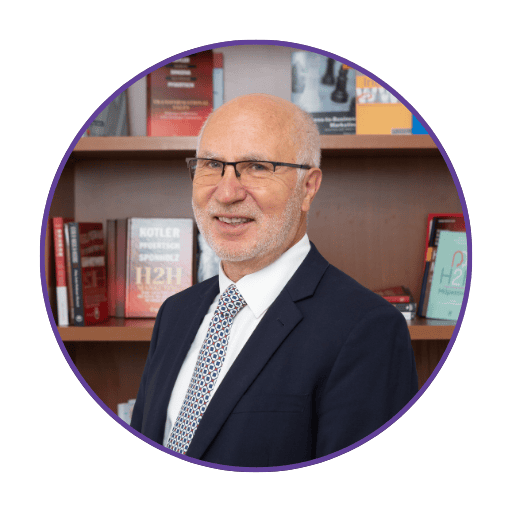
Dr. Waldemar Pfoertsch serves as Professor of Marketing Management and Strategic & Digital Marketing at the University of Limassol, Cyprus, within the Department of Administration. His academic leadership spans foundational research in human-centric marketing approaches with significant contributions to both theoretical frameworks and practical business applications. Education: Master's degree in Economics and Business Administration from Freie Universität Berlin PhD in Technology Transfer from Freie Universität Berlin (1981) Dr. Pfoertsch's research centers on human-to-human (H2H) marketing as an interdisciplinary philosophical framework addressing modern marketing challenges. His work explores how Human Digital Marketing fosters genuine empathetic business-customer relationships through regenerative practices and sustainable business models. He investigates the ethical dimensions of marketing in digital transformation, emphasizing emotional intelligence, societal impact, and long-term value creation beyond transactional interactions. His scholarship bridges academic theory with real-world applications across diverse industries and cultural contexts. Analysis of his 2020-2025 publications reveals consistent evolution of H2H marketing theory into actionable frameworks like the 5Es Marketing-Mix. Key trends include AI-human synergy in customer engagement, global brand management strategies, sustainable consumer behavior analysis, and B2B relationship optimization. His research demonstrates increasing integration of regenerative practices with digital marketing while maintaining human-centric core principles across publications. Scientific Awards: No specific awards mentioned in source materials Dr. Pfoertsch maintains active academic collaboration evident through co-authored publications with scholars like Philip Kotler and Kejsi Sulaj, though no formal student list is provided. His work shows consistent funding through institutional support for publications and conference participation, but specific grant details aren't documented in available materials. He leads development of H2H marketing educational resources including case studies and instructor manuals, operating within research teams focused on practical implementation of human-centric frameworks. Current projects examine AI ethics in marketing and regenerative business models for sustainable community impact.
Chryssis Georgiou is a Professor and Chair of the Department of Computer Science at the University of Cyprus , where he leads the Research Laboratory for Foundations of Computing Systems and Theoretical Computer Science . He holds a Ph.D. and M.Sc. in Computer Science from the University of Connecticut and a B.Sc. in Mathematics from the University of Cyprus. Ph.D. in Computer Science (2003), University of Connecticut M.Sc. in Computer Science (2002), University of Connecticut B.Sc. in Mathematics (1998), University of Cyprus His research focuses on the Theory and Practice of Fault-Tolerant Distributed and Parallel Computing , with emphasis on algorithms, complexity, and blockchain systems. He has published over 115 refereed articles and co-authored two books on distributed computing. Recent work includes Byzantine-tolerant consensus, dynamic storage for large objects, and blockchain resilience frameworks. His 15 most recent publications span topics in Byzantine Fault Tolerance , Atomic Shared Memory , WSN Optimization , and Distributed Ledger Formalization , with applications in IoT networks, cryptocurrency systems, and GPU-inspired shared memory models. Advising and Projects include coordination of the MA(R)S project (Cyprus Research Foundation), e4Pain (machine learning for pain coping), ESS-BFT (self-stabilizing blockchain infrastructure), and participation in the CoronaSurveys system for pandemic data collection. He has served as project coordinator for the ONISILIOS-funded ESS-BFT and as academic supervisor for industry-linked PhD programs. Labs and Teams include the Research Laboratory for Foundations of Computing Systems at the University of Cyprus, with collaborations across Europe and North America. He chairs the 2026 SIROCCO conference and contributes to editorial boards and program committees for top-tier distributed computing venues.
Dr. Neşet Deniz Turgay is an Assistant Professor in the Department of Mathematics at the Faculty of Arts and Sciences, Eastern Mediterranean University (EMU) in Northern Cyprus. He holds office AS147 and can be reached at +90 392 630 2412 or neset.turgay@emu.edu.tr. His educational background includes: PhD in Mathematics from Swansea University (2010-2013) MS in Mathematics from Ege University, Izmir (2006-2009) BS in Mathematics from Ege University, Izmir (2001-2006) Dr. Turgay's research spans two primary areas of mathematics: algebraic topology (particularly Steenrod algebra and Leibniz-Hopf algebra) and discrete geometry (focusing on distance metrics in various grid structures and patterns). His work in algebraic topology examines conjugation invariants, Adem relations, and structural properties of the Steenrod algebra. In discrete geometry, he investigates distance calculations in crystallographic structures including face-centered cubic grids, Cairo patterns, and body-centered cubic lattices, often applying operational research techniques to solve optimization problems. His publications demonstrate sophisticated mathematical modeling and computational approaches to solve complex geometric and topological problems. His recent publications show a clear trend toward applying mathematical techniques to crystallographic and pattern recognition problems, while maintaining a strong foundation in algebraic topology. The research demonstrates sophisticated mathematical modeling and computational approaches to solve complex geometric and topological problems, with publications spanning from 2013 to 2023 showing consistent scholarly productivity. Scientific awards and recognitions: Socrates Erasmus scholarship for research at the University of Aberdeen (2008) Dr. Turgay has secured research funding for several projects, including "Clifford Analysis Knowledge Exchange (CAKE)" funded by Eastern Mediterranean University (35,000 TL grant, 2023) and "Some calculations in the Steenrod algebra" supported by Ege University (2008-2009). His research demonstrates both theoretical depth in algebraic topology and practical applications in discrete geometry and pattern recognition, with numerous collaborations with researchers including Gergely Kovács, Benedek Nagy, and Bela Vizvári.