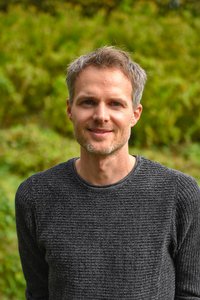
Prof. Dr. Tobias Windisch is a Professor at the University of Applied Sciences Kempten, where he serves as head of the Institute for Machine Vision within the Faculty of Mechanical Engineering. He leads the Optical 3D Measurement and Computer Vision Laboratory (3D visionlab) and oversees research activities focused on machine learning applications for industrial automation. Dr. Windisch received his PhD in mathematics from OvGU Magdeburg under the supervision of Thomas Kahle, and holds an Honors Master's degree in mathematics from TU Munich within the elite TopMath program. Prior to his academic career, he worked on machine learning projects for Robert Bosch GmbH and Daimler TSS GmbH (now Mercedes-Benz Tech Innovation). His research spans machine learning, computer vision, and optical sensing with a strong focus on industrial applications. Windisch's work primarily explores how reinforcement learning can be combined with optical sensing to develop intelligent control strategies for manufacturing processes. His team develops mechanical processes built around machine learning models to further automate industrial applications using data from optical sensors. The research has practical applications in automotive production, quality control, and precision manufacturing. Analysis of his recent publications reveals a strong trend toward practical implementations of machine learning in industrial settings, with particular emphasis on reinforcement learning for process optimization, drift detection in high-dimensional data, and causal structure learning for manufacturing analytics. His work bridges theoretical machine learning with real-world industrial challenges. As a dedicated educator and research leader, Windisch maintains high standards for academic integrity and excellence. He believes in creating an environment where students can focus deeply, think boldly, and innovate through meaningful research. Dr. Windisch leads a dynamic research group with numerous Master's and Bachelor's students working on cutting-edge projects including reinforcement learning for active alignment, drift detection in sensory data, latent drift detection with Autoencoders, and representation learning for industrial processes. His laboratory, the 3D visionlab, serves as the physical hub for this research. The Institute for Machine Vision under his leadership develops practical tools and frameworks such as relign, lineflow, and driftbench that are openly available on GitHub, demonstrating his commitment to reproducible research and practical applications.