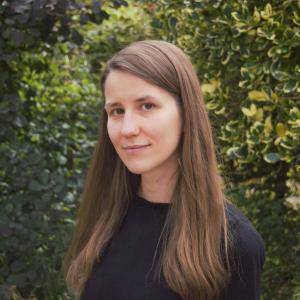
Ge Tiffany Wang is an incoming Assistant Professor at the University of Illinois Urbana-Champaign, Department of Computer Science (starting Aug 2025), with research focusing on Human-Computer Interaction , Human-Centered Artificial Intelligence , and Usable Security & Privacy . She leads the OATS Lab (Openness, Autonomy, Trust in Supportive AI), which investigates how AI systems can better support user agency, particularly for vulnerable populations like children. Education : D.Phil. in Computer Science, University of Oxford MSc in Information Science, University College London BSc in Physics, University of Oxford Her research includes designing systems like CHAITok (for children's data control) and the KOALA Hero Toolkit (for educating families about data risks). She will complete a postdoctoral fellowship at Stanford HAI (2024-2025) before joining UIUC. Her work bridges technical design with ethical considerations, emphasizing child development and algorithmic accountability. Scientific Contributions : 15 most recent articles focus on decentralized social media, AI ethics for children, and data autonomy tools Key trends: algorithmic transparency, child-centered AI, and family data literacy
Asia J. Biega is a tenure-track faculty member (W2) at the Max Planck Institute for Security and Privacy (MPI-SP), where she leads the interdisciplinary Responsible Computing group. She is also a principal investigator of the Cluster of Excellence CASA and the FINDHR consortium. Her work sits at the intersection of computing and society, focusing on responsible computing, data protection & governance, and digital well-being within data-driven and AI-based systems. Dr. Biega's research spans multiple disciplines including computer science, law, philosophy, and social sciences. Her work examines how principles of responsible computing can be computationally operationalized, with particular attention to data protection frameworks, privacy technology governance, and digital well-being. She actively collaborates across disciplinary boundaries to make technical contributions while supporting research in other fields. Her approach combines theoretical rigor with practical applications, often drawing from her industry experience at Microsoft and Google. Her publication record reveals a strong focus on the intersection of fairness, privacy, and transparency in information retrieval systems. She has pioneered work on data minimization compliance, fair ranking algorithms, and user perceptions of data collection practices. Her research consistently bridges technical and legal perspectives, particularly examining how GDPR principles can be computationally implemented. Recent work shows increasing attention to generative AI governance, algorithmic hiring systems, and the relational aspects of data in recommender systems. Dr. Biega has received several prestigious awards including the Council of Europe's Rodotà Award for innovative research in data protection, the SaTML Notable Reviewer Award, the GI-DBIS Dissertation Award of the German Informatics Society, and recognition as one of the '100 Brilliant Women in AI Ethics' in 2025. She has advised numerous PhD students and postdocs who have gone on to faculty positions at institutions including the University of Trieste, Penn State, and the University of Washington. Her research is funded by the Max Planck Society, Alexander von Humboldt Foundation, and the European Union (Horizon Europe FINDHR). She serves as General Co-Chair for ACM FAccT 2025 and has held leadership roles in multiple academic conferences.
Professor Jean Burgess is a leading scholar in digital media studies, holding positions as Distinguished Professor of Digital Media at Queensland University of Technology (QUT) and Associate Director of the ARC Centre of Excellence for Automated Decision-Making and Society (ADM+S). She is affiliated with the Digital Media Research Centre (DMRC) and School of Communication at QUT. Her work focuses on the social implications of digital platforms, algorithmic culture, and innovative digital methods. Education: PhD (Queensland University of Technology) M.Phil (University of Queensland) B. Arts (Hons) and B. Mus (Hons) (University of Queensland) Research Interests: Burgess explores digital media technologies' societal impacts, platform governance, and algorithmic systems. Her recent work includes studies on GenAI, Instagram's visual culture, and automated decision-making. She co-authored Everyday Data Cultures (2022) and contributes to platforms like The Conversation. Awards: Fellow, Australian Academy of the Humanities Member, ARC College of Experts Recipient of the Vice-Chancellor’s Award for Excellence Grants & Projects: Key projects include the ARC-funded ADM+S Centre, research on Instagram’s machine vision, and studies on algorithmic transparency in advertising. She collaborates with industries like Australia Post and the Australian Centre for the Moving Image. Labs/Teams: Leads the DMRC and ADM+S QUT node, fostering interdisciplinary research on digital media's role in society.
Gregory Paradis is an Assistant Professor in the Department of Forest Resources Management at the University of British Columbia (UBC) Faculty of Forestry. His research focuses on sustainable forest management, integrating operations research, mathematical optimization, and systems modeling to address complex interactions between ecosystems, industries, and society. He works with the FRESH Lab and collaborates with the Integrated Remote Sensing Studio, emphasizing ecological and economic integration in forest planning. Sustainable Forest Management Operations Research Forest Economics Data Science Risk Assessment GIS-based Methods His research spans forest inventory optimization, climate change adaptation strategies, wildfire risk modeling, and decision support systems for invasive species. He develops computational frameworks to enhance wood supply planning, carbon management, and ecological resilience. Recent work includes machine learning applications for fire safety in timber structures and automated road planning tools for wildlife conservation. Paradis’s publications highlight trends in applying optimization methods to sustainable forestry, with a focus on biodiversity, climate adaptation, and value chain innovation. He advocates for interdisciplinary approaches that bridge silviculture, industrial engineering, and data science to tackle emerging challenges in forest ecosystems. As an educator, he seeks motivated students with quantitative and creative problem-solving skills. His lab collaborates on remote sensing integration, risk assessment models, and policy-relevant forest management strategies, ensuring plans account for uncertainties like insect infestations or windthrow events.
Professor Will Bateman is a distinguished academic at the Australian National University (ANU) College of Law, where he serves as a Professor and recently completed his term as Associate Dean (Research) from 2021 to 2024. He is also a Chief Investigator for the ANU Grand Challenge project "Humanising Machine Intelligence" and a Fellow at the Gradient Institute, a leading ethical AI research organization based in Sydney. Professor Bateman's educational background is impressive, having earned a PhD and LLM (Hons) from the University of Cambridge and a BA/LLB (Hons) from the Australian National University. Prior to his academic career, he worked in appellate litigation, commercial disputes, and banking as a solicitor at Herbert Smith Freehills, and served as an associate to Justice Stephen Gageler AC of the High Court of Australia and Justice Steven Rares of the Federal Court of Australia. Professor Bateman's research spans two major interdisciplinary domains that sit at the intersection of law with finance and technology. His work on financial regulation focuses on the legal aspects of central banking, sovereign debt markets, digital currencies, and sustainable investing. He has provided expert evidence to the UK Parliament's House of Lords Inquiry into Quantitative Easing, and has collaborated with major financial institutions including the Federal Reserve Bank of New York and the Bank of England. His research on artificial intelligence examines regulatory frameworks for AI in the public sector, with collaborations including the Minderoo Foundation and the Gradient Institute. His recent publications demonstrate a remarkable breadth across legal theory, financial regulation, and AI governance. The articles reveal a consistent theme of examining how traditional legal frameworks adapt to new financial technologies and monetary policy challenges. His work bridges theoretical legal scholarship with practical policy implications, as evidenced by his numerous government consultations and collaborations with central banks worldwide. 2020 Yorke Prize by the University of Cambridge for his work on public finance and constitutionalism Top 10 all-time most downloaded SSRN paper on central banking ("Central Bank Money: Liability, Asset, or Equity of the Nation?") Professor Bateman actively supervises research students, currently mentoring Benjamin Ettinger who is pursuing a PhD on "Legal Method, Cartels and Public Monopolies: A View From the High Court 1908 - 1948." He has secured significant research funding, including projects funded by the Economic and Social Research Council (UK), the German Research Foundation (Deutsche Forschungsgemeinschaft), and The Minderoo Foundation. His "Rebuilding Macroeconomics Initiative: Legal and Economic Conceptions of Money" received £245,000, while the "FA Mann" project was funded with €620,000 (approximately A$1,012,500). He leads the "Humanising Machine Intelligence" project, an ambitious interdisciplinary initiative involving computer scientists, mathematicians, philosophers, sociologists, psychologists, and lawyers aimed at developing democratically legitimate machine intelligence. He also co-led a major project with the University of Western Australia to formulate model legal frameworks for AI regulation in the public sector, funded by The Minderoo Foundation.
Luciano Floridi is the Professor of Philosophy and Ethics of Information at the University of Oxford, directing the Digital Ethics Lab at the Oxford Internet Institute (OII). He holds multiple roles including Distinguished Research Fellow at the Uehiro Centre for Practical Ethics and Research Associate at the Department of Computer Science. Additionally, he is Faculty Fellow at the Alan Turing Institute and Adjunct Professor at the American University, Washington D.C. His research focuses on Digital Ethics, AI Ethics, Philosophy of Information, and Technology, with over 150 publications and influential books like *The Fourth Revolution* and *The Ethics of Information*. Floridi earned his laurea from Rome University La Sapienza (1988), followed by an MPhil and PhD from the University of Warwick (1989–1990). He has held positions at Oxford since 1990, including roles at Wolfson College, the Warburg Institute, and the University of Hertfordshire (2009–2014) where he held a UNESCO Chair in Information Ethics. His academic journey includes postdocs with Susan Haack and Michael Dummett, shaping his expertise in logic and epistemology. His research interests span Digital Ethics, AI ethics, and the Philosophy of Technology, with notable work on information warfare ethics and the governance of emerging technologies. He contributed to policy initiatives like the European Commission’s *Onlife Initiative* and advises bodies such as the EU’s Ethics Advisory Group and the UK’s House of Lords. Floridi is a leader in global digital ethics, influencing frameworks for AI governance and privacy. Floridi has received numerous awards, including the Barwise Prize (2009) and Weizenbaum Award (2013). He chairs the Alan Turing Institute’s Data Ethics Group and collaborates with institutions like Tencent and Google on ethical AI. His upcoming role as Founding Director of Yale’s Digital Ethics Center (2023) underscores his continued impact on global digital ethics discourse. Key achievements include pioneering the Philosophy of Information as a discipline and advocating for infraethics—the ethical foundations enabling moral systems. His work bridges academic theory and real-world policy, addressing challenges like data privacy, algorithmic accountability, and AI’s societal implications.
Christopher S. Tang is a UCLA Distinguished Professor and Edward W. Carter Chair in Business Administration at the Anderson School of Management , where he researches global supply chain management with a focus on social innovation in developing countries . He also serves as Senior Associate Dean for Global Initiatives and Faculty Director of the Center for Global Management . Education: Ph.D. in Management Science (1985, Yale University) M.Phil. in Administrative Science (1983, Yale University) M.A. in Statistics (1983, Yale University) B.Sc. in Mathematics (First Class Honors, 1981, King’s College, University of London) His research explores the intersection of corporate responsibility and supply chain innovation , addressing topics like microfinancing , mobile platforms for developing economies , direct agricultural procurement , and disaster response logistics . He emphasizes visibility, integrity, and agility in uncertain environments. Recent work highlights AI adoption benefits for supply chains , strategies to reduce forced labor risks , and policy impacts on ride-sharing platforms . His research bridges operations management and social justice , advocating for environmental stewardship alongside business growth. Scientific Awards: Salzberg Medallion (2017) Lifetime Fellow, INFORMS (2011) Responsible Research in Management Award (2017) Teaching Excellence Award (multiple years, UCLA-NUS) Dean’s Excellent Service Award (2014) As an influential adviser and consultant , Tang has worked with Amazon, HP, IBM, Nestlé, GKN , and Accenture . He has taught at Stanford University, UC Berkeley, Hong Kong University of Science and Technology , and served as visiting professor at Cambridge University and the Institute of Advanced Study at HKUST .
Anil Madhavapeddy serves as Professor of Planetary Computing at the University of Cambridge's Department of Computer Science and Technology and directs the Cambridge Centre for Carbon Credits (4C). A Fellow of Pembroke College, he integrates systems research with environmental conservation through the Computer Laboratory's Environment and Energy Group. His career spans industry leadership (NetApp, Citrix, Intel), academic appointments (Cambridge, Imperial, UCLA), and entrepreneurial ventures (XenSource, Unikernel Systems, Docker). Madhavapeddy earned his PhD at Cambridge's Computer Laboratory in 2006. His research bridges computational systems and planetary-scale environmental challenges, with deep expertise in open-source development (OCaml, Xen, Docker, OpenBSD) and technology strategy advising for organizations including Zededa, Tezos Foundation, and Tarides. His work centers on environmental computing and climate informatics, leveraging distributed systems and functional programming to develop sensing infrastructure for conservation. Recent projects focus on carbon credit systems, AI-driven biodiversity monitoring, and sustainable computing architectures that minimize ecological footprints while maximizing analytical capability. Analysis of his 2025 publications reveals a concentrated effort on AI-integrated conservation tools, privacy-preserving carbon accounting, and energy-efficient computing. Key themes include spatial networking for ecological data, LLM-enhanced evidence retrieval in conservation science, and novel metrics for extinction risk assessment—demonstrating computational innovation applied to urgent planetary boundaries. No scientific awards were documented in the source material. Madhavapeddy advises multiple technology firms on strategic development while leading the Cambridge Centre for Carbon Credits, though specific grant funding details remain unreported. He actively contributes to the Environment and Energy Group at Cambridge's Computer Laboratory and directs the interdisciplinary Cambridge Centre for Carbon Credits (4C). His open-source leadership spans critical infrastructure projects including OCaml, Xen, and Docker, fostering collaborative development communities that underpin modern cloud and container technologies.
Mizuko (Mimi) Ito is a cultural anthropologist and learning scientist at the University of California, Irvine, serving as Director of the Connected Learning Lab and holder of the John D. and Catherine T. MacArthur Foundation Chair in Digital Media and Learning. She previously held research appointments at Keio University and the University of Southern California. Ito earned dual PhDs in Education and Anthropology from Stanford University and a BA in East Asian Studies from Harvard University. Education: PhD in Education, Stanford University PhD in Anthropology, Stanford University Bachelor's Degree in East Asian Studies, Harvard University Research Interests: Ito's work focuses on leveraging youth interests and digital media to foster equitable, socially connected learning. Her research spans mobile media culture in Japan, youth social media engagement in the US, and global adoption of children's media. She developed the connected learning framework, emphasizing youth-centered, equity-oriented approaches to education in the digital age. Grants & Partnerships: Ito has secured funding from major organizations including the MacArthur Foundation, Bill and Melinda Gates Foundation, National Science Foundation, and Microsoft Research. She co-founded the Connected Learning Alliance to advance research and impact in technology and learning. Awards: Recipient of the Jan Hawkins Award for Early Career Contributions (AERA) Labs & Initiatives: Directs the Connected Learning Lab at UC Irvine, which explores opportunities and risks of digital media in education. The Lab collaborates with global networks to design inclusive learning ecosystems.
Florian Jacques is a Researcher at the University of Namur, affiliated with the Faculty of Law and the Namur Digital Institute. He holds a Doctorate from the University of Namur (2019). His research focuses on digital law, data protection, AI ethics, and EU regulatory frameworks. Jacques has led and collaborated on projects like the eIDAS legal study and a training initiative on government-to-government information exchange. His work bridges legal challenges posed by emerging technologies, with notable contributions to AI policy, pandemic governance, and digital identity regulations. He has published extensively across journals and edited volumes, including analyses of the DSA/DMA frameworks and APD jurisprudence. Education: Doctorate in Law, University of Namur (2019) His research interests center on digital transformation’s legal implications, particularly in data governance, e-commerce, and public policy. Jacques has analyzed how pandemic responses exposed gaps in legislative frameworks and explored ethical dimensions of AI applications like ChatGPT. His publications reflect a cross-disciplinary approach to modern legal challenges in digital spaces. Notable projects include a 2025 study on eIDAS modernization and a training program on international data exchange protocols. While no formal awards are listed, his active research output (24+ publications since 2019) underscores his academic engagement. He collaborates with institutions like the Centre de Recherche Information, Droit et Société (CRIDS) and contributes to policy-oriented research teams.
Lisa Soder serves as Senior Policy Researcher and Acting Head of Technical AI Governance at Interface, a leading European tech policy think tank, and is an incoming Visiting Research Fellow at Stanford University's Intelligent Systems Laboratory within the School of Engineering. She holds a Master's degree from the London School of Economics focusing on comparative transatlantic approaches to technology regulation and competition law, and brings prior experience from the Centre for the Governance of AI, Boston Consulting Group, and global health NGO work in Ethiopia. Her research centers on establishing AI accountability infrastructures with particular emphasis on developing third-party auditing ecosystems and bridging technical and regulatory aspects of AI governance. She has developed a taxonomy for Technical AI Governance organized along technical targets (Data, Compute, Algorithms and Models, Deployment) and governance capacities (Assessment, Access, Verification, Security, Operationalization, Ecosystem Monitoring). Her work examines open problems across these dimensions, highlighting the critical need for technical tools to support effective AI governance. Analysis of her publications reveals a strong focus on practical implementation challenges in AI regulation, particularly regarding the EU AI Act's provisions for general-purpose AI systems. Her research consistently addresses the gap between policy aspirations and technical capabilities, with particular attention to verification mechanisms, risk assessment frameworks, and the development of technical infrastructure necessary for oversight. She advocates for closer collaboration between technical experts and policymakers to ensure governance mechanisms are both feasible and effective. Lisa has been actively engaged in high-level policy discussions, participating in events such as the AI Action Summit in Paris, Sino-German Track 2 Dialogues on AI governance, and expert briefings on frontier AI systems. Her upcoming visiting research fellowship at Stanford University represents a formal academic affiliation that complements her policy-focused work at Interface.
Professor Sandra Wachter is a leading academic in legal and ethical implications of AI, Big Data, and robotics at the Oxford Internet Institute (OII) , University of Oxford, and as Humboldt Professor at the Hasso Plattner Institute. She leads the OII's governance of emerging technologies (GET) research programme , focusing on AI regulation, algorithmic bias, and human rights. Affiliations : Berkman Klein Center (Harvard University), World Economic Forum, UNESCO, IEEE, World Bank, Bonavero Institute of Human Rights, Oxford Martin School, and more. Research : Legal and ethical frameworks for AI, explainability (notably Counterfactual Explanations ), fairness metrics, and combating algorithmic discrimination through her Conditional Demographic Disparity (CDD) tool. Awards : Alexander von Humboldt Foundation Research Award (2025), O2RB Excellence in Impact Award (2021, 2018), Computer Weekly Women in UK Tech (2021), Privacy Law Scholar (2019), CognitionX Outstanding Achievements (2023, 2017). Impact : Her work is implemented by Google, IBM, Amazon, and Microsoft; influences NHS and MHRA policies; and has been cited in major media outlets including The New York Times, BBC, and Nature.
Prof. Alexander Pretschner is a Professor of Software & Systems Engineering at the Technical University of Munich (TUM) and Founding Director of the Bavarian Research Institute for Digital Transformation (bidt). He also serves as Scientific Director of fortiss, a Bavarian research institute for software-intensive systems. His research focuses on software engineering, testing, information security, and ethical software development. Pretschner holds a PhD from TUM and has held academic positions at Karlsruhe Institute of Technology (KIT) and TU Kaiserslautern. He is a co-editor of several prestigious journals, including IEEE Transactions on Reliability and the Journal of Software Testing, Verification and Reliability. Education: PhD in Computer Science, Technical University of Munich MSc in Computer Science, University of Kansas (on Fulbright Scholarship) Diplom in Computer Science, RWTH Aachen University Research Interests: His work spans testing methodologies, secure software design, and ethical considerations in agile development. Notable contributions include frameworks for metamorphic testing, distributed data usage control, and accountability mechanisms for cyber-physical systems. Awards: IBM Faculty Award (2012, 2013) Google Focused Research Award (2011, 2012) EARTO Innovation Prize (2014) 2nd Platz Supervisory Award (2020) Advising & Grants: Pretschner has supervised numerous PhD and Master’s students, contributing to over 200 publications. He leads projects like EDAP (Ethical Deliberation in Agile Processes) and collaborates with industry partners on cybersecurity and AI ethics initiatives. Labs & Teams: His work is anchored in bidt, fortiss, and TUM’s Chair of Software & Systems Engineering, focusing on societal impacts of digitalization and trustworthy AI systems.
Professor Stephen Cave is the Academic Director of the Leverhulme Centre for the Future of Intelligence (CFI) and Co-Director of the Institute for Technology and Humanity at the University of Cambridge. With a PhD in Philosophy from Cambridge, he previously served as a policy advisor and diplomat in the British Foreign Office for nearly a decade before returning to academia. Education: PhD in Philosophy, University of Cambridge Current Roles: Academic Director (CFI), Co-Director (Institute for Technology and Humanity) Media Engagement: Regular contributor to Financial Times , Guardian , New York Times , and media appearances on BBC and NPR His research bridges philosophy and ethics of technology , with two primary strands: (1) the ethics of AI and robotics , focusing on responsible AI development and societal impact through works like AI Narratives and Feminist AI ; and (2) the ethics of life-extension and immortality , explored in Immortality and Should You Choose to Live Forever? . Recent publications analyze algorithmic fairness, gender representation in AI narratives, and digital death. The articles listed reflect his engagement with responsible AI frameworks , cultural portrayals of AI , and existential implications of life extension . His work often synthesizes historical, ethical, and cultural perspectives to address contemporary challenges in AI governance and mortality philosophy.
Catherine Tucker is the Sloan Distinguished Professor of Management and Professor of Marketing at the MIT Sloan School of Management. She serves as the faculty director of the EMBA program and has chaired the MIT Sloan PhD Program. Her research focuses on the intersection of technology, marketing, and public policy, with expertise in digital privacy, online advertising, and blockchain applications. She co-founded the MIT Cryptoeconomics Lab and has testified before Congress on digital privacy issues. Tucker holds a PhD in Economics from Stanford University and a BA from the University of Oxford. Education: PhD in Economics, Stanford University Bachelor of Arts, University of Oxford Research Interests: Algorithmic bias and fairness Privacy regulation and consumer data Blockchain technology applications Healthcare technology and digital health Marketing strategy in digital ecosystems Awards: NSF CAREER Award (2010s) William F. O’Dell Award (Long-term Impact in Marketing) Garfield Economic Impact Award (2020) Editorial Roles: Senior editor at Marketing Science , former co-editor at Quantitative Marketing and Economics , and associate editor roles at Management Science and Journal of Marketing Research . Labs & Initiatives: Co-director of the NBER Digital Economics and AI program, and co-founder of the MIT Cryptoeconomics Lab studying blockchain applications.