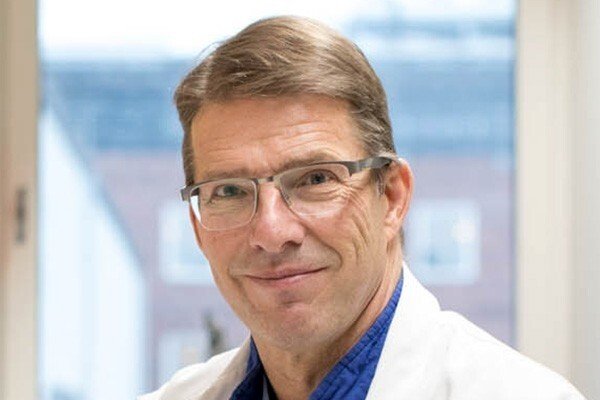
Anders Friberg is a Professor at KTH Royal Institute of Technology, affiliated with the School of Electrical Engineering and Computer Science (EECS) and the Department of Speech, Music and Hearing. His research focuses on music communication, perception, and modeling, encompassing topics such as music performance, expressive timing, and the interplay between music and emotion. He leads projects in computational models for music analysis, audio signal processing, and the neuroscience of music. His work bridges musicology, computer science, and cognitive science. Research Interests: Music perception and modeling Expressive performance analysis Audio feature extraction Music emotion and crossmodal perception Neuroscience of singing and vocal production Key Contributions: Development of the KTH rule system for musical performance Studies on jazz swing rhythms and ensemble timing Computational models for accent salience and dynamics Investigations into insula connectivity in trained singers Publications highlight interdisciplinary approaches, with recent work on vocal sound imitation models, child-computer interaction in music learning, and neural correlates of musical expression.
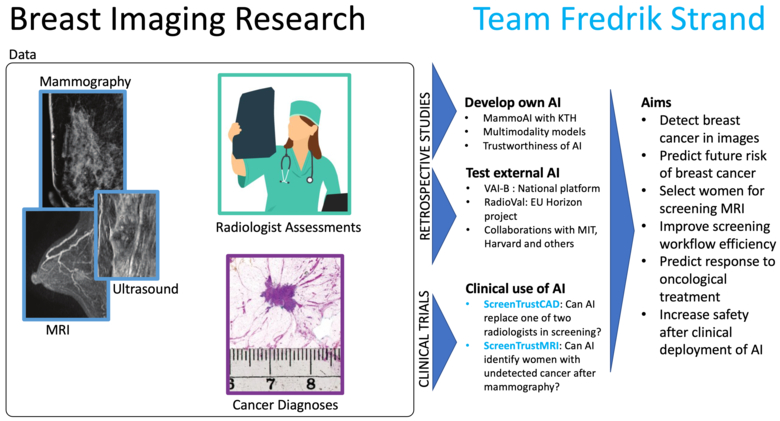
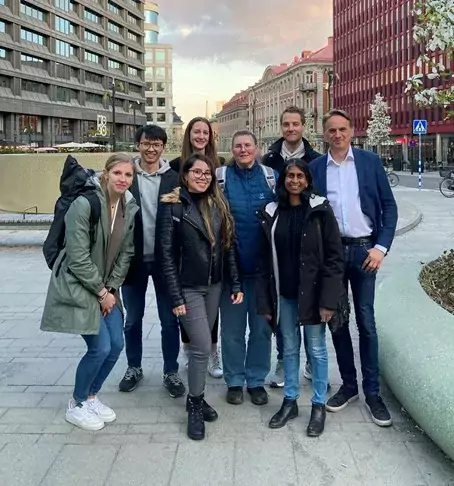
Fredrik Strand is a researcher at the Karolinska Institute , specifically within the Department of Oncology-Pathology under the Faculty of Medicine . He leads the Computational Breast Imaging Group , focusing on leveraging Artificial Intelligence (AI) for early breast cancer detection , precision diagnostics , and image-guided minimally invasive procedures . His work spans cross-disciplinary collaboration with institutions like the Royal Institute of Technology (KTH) and involves major clinical trials such as ScreenTrustCAD and ScreenTrustMRI . His research emphasizes AI in precision screening to address interval cancers and optimize radiologist workflows. Projects like VAI-B and RadioVal aim to validate AI algorithms and predict therapy response for neoadjuvant treatment . Recent publications highlight advancements in multi-modality imaging (mammography, MRI), GAN-based synthetic data generation , and trustworthy AI frameworks for clinical deployment. A consistent focus is on cost-effectiveness , equity in AI diagnostics , and human-AI interaction dynamics . Key trends in his work include deep learning for tumor detection , reinforcement learning for screening policies , and multi-institutional validation of AI tools. His research is funded by organizations such as Medtechlabs , Vinnova , EU Horizon Europe , and the Swedish Breast Cancer Association .
Kristoffer Månsson is an Associate Professor and Senior Research Specialist at Karolinska Institutet, affiliated with the Department of Clinical Neuroscience and leading the Neuroimage Affective Treatment and Individual Variability (NATIV) Laboratory. His work bridges psychiatry, neuroimaging, and computational psychiatry, focusing on neural variability and rapid brain plasticity as biomarkers for psychiatric treatment outcomes. Role : Associate Professor, Senior Research Specialist, Docent University : Karolinska Institutet Department : Department of Clinical Neuroscience Laboratory : NATIV Lab Research Interests : His research explores how moment-to-moment neural variability and rapid brain plasticity predict treatment responses in anxiety and depression, leveraging computational models, machine learning, and multimodal neuroimaging (fMRI, MRI, EEG). Key themes include biomarker development, placebo mechanisms, and personalized cognitive therapies. Publications Trends : Recent work emphasizes neural variability as a treatment predictor (2022), gray matter dynamics (2022), and biomarker guidelines (2024). Collaborations span zebrafish models, EU-funded youth mental health studies, and cross-disciplinary projects with the ENIGMA-Anxiety database. Scientific Awards : Best Scientific Talk at Alpine Brain Imaging Meeting (2020), Honorable Mention for Somerfeld-Ziskind Award (2023), Aaron T Beck Scholarship (2013). Grants & Collaborations : Funded by the Swedish Research Council (2023), European Union (2023-2026), Center for Innovative Medicine (CIMED), and the Swedish Brain Foundation (2022). Collaborates with institutions including Dartmouth College, Max Planck Institute, and Babeș-Bolyai University.
Sören Lehmann is a Professor of Hematology at Uppsala University and leads a research group affiliated with Karolinska Institutet's Department of Medicine, Huddinge. His work focuses on acute myeloid leukemia (AML) through translational approaches integrating epigenetics, multiomic data, and drug sensitivity to improve precision medicine. Key collaborations include the Swedish AML Group , Nordic AML Group , and HOVON International Steering Committee . Specialist in Hematology and Internal Medicine PhD from Karolinska Institutet (2002) Postdoc at UCLA (2005-2006) Research spans epigenetic dysregulation in AML, long non-coding RNAs , clonal hematopoiesis , and therapy-related leukemias . His team employs CRISPR-Cas9 for functional validation and single-cell analyses to dissect heterogeneity. Recent projects include FLT3 mutation-targeted immunotherapy and HEAT-AML clinical trials . Publications emphasize multiomic integration for prognostic modeling, epigenetic drug targets , and real-world data applications in AML and APL. Funding includes the Swedish Cancer Foundation , Swedish Research Council , and Knut and Alice Wallenberg Foundation . His group trains PhD students including Elisabetta Cozzi and Louisa Fredrikson , with former members like Anne Neddermeyer . Collaborations span institutions including Uppsala University, Lund University, and RIKEN Institute (Japan).
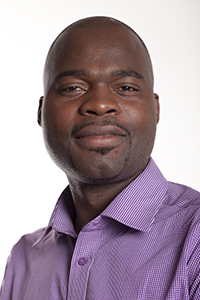
Gideon Mbiydzenyuy is a Senior Lecturer at the University of Borås, affiliated with the Department of Information Technology under the Faculty of Librarianship, Information, Education and IT. He holds a PhD in Computer Science from Blekinge Institute of Technology and has been at the University of Borås since 2015. His research focuses on applied computer science, particularly data analysis within industrial AI. Key areas include detecting anomalies in industrial networks, optimizing data-driven decision-making, clustering algorithms, and leveraging machine learning (supervised/unsupervised), neural networks, and reinforcement learning. Applications span energy networks, traffic systems, logistics, retail, and healthcare. Recent publications emphasize AI-driven solutions for district heating, marketing optimization, and intelligent transport systems. His work bridges theoretical advancements with practical implementations in industry and policy contexts. Publications highlight contributions to anomaly detection, machine learning applications in energy and transport, and policy studies on road taxation. His research often integrates interdisciplinary approaches, addressing real-world challenges through computational methods.
Mohsen Soleimani Mohseni is a Senior Lecturer at Halmstad University , affiliated with the School of Business, Innovation and Sustainability . He serves as Programme Director for the Master's Programme in Energy Smart Innovation in the Built Environment. His research focuses on Building Physics , HVAC Systems , and Energy Efficiency , with a particular emphasis on thermal performance optimization, control strategies for heating systems, and the application of artificial intelligence in climate control. Key research interests include: Thermal modeling of building components and systems Energy-efficient HVAC design and retrofitting Artificial neural networks for climate prediction and control Renovation technologies for sustainable buildings His publications span over 20 years, addressing topics such as transient radiator performance, low-energy building controls, and hybrid heating systems. He has authored technical handbooks like Formelsamling i energiteknik and contributed to international conferences on building automation and energy engineering. Mohsen collaborates on projects integrating smart technologies into building design, emphasizing practical solutions for climate-smart infrastructure.
Praveen Papareddy is an Associate Professor in Infection Medicine at Lund University (BMC). His research focuses on host defense mechanisms against infections, coagulation pathways, and systemic inflammation. He investigates antimicrobial peptides, innate immunity, and the interplay between inflammation and infectious diseases. His work contributes to UN Sustainable Development Goals related to health and well-being. He leads the project 'Consumption of antithrombin in patients suffering from severe COVID-19-infections' (2020–present), exploring coagulation disorders in critical illness. Collaborations span institutions globally, including studies on bacterial sepsis, thrombin-derived peptides, and inflammatory biomarkers. Expertise: Innate immunity, coagulation, antimicrobial peptides, sepsis Key Projects: Antithrombin in severe infections, nitroxoline repurposing His research highlights include discovering factor XII's role in trapping bacterial infections and elucidating serum amyloid A proteins' dual roles in inflammation. Articles emphasize translational potential for novel therapeutics in infection and cancer.
Professor Ulf Hedin is a distinguished vascular surgery researcher and clinician at Karolinska Institutet, where he serves as Professor and Chief Physician in the Department of Molecular Medicine and Surgery. He leads the Vascular Surgery research group at Karolinska University Hospital's Department of Vascular Surgery and maintains extensive collaborations with cardiovascular research groups at CMM, clinical physiology, cardiology, neurology, nuclear medicine, clinical chemistry, and clinical pharmacology departments. His research spans vascular biology, atherosclerosis, carotid stenosis, stroke prevention, and peripheral vascular disease. The research group has built a comprehensive platform integrating advanced cell and molecular biology, animal models, and patient-centered studies to investigate central processes in vascular disease including thromboembolism in carotid stenosis and stroke, aortic aneurysm development, and vascular wall repair processes following surgical interventions. The group also includes translational research in traumatology with multiple specialized teams focusing on specific aspects of vascular disease. Professor Hedin's publication record demonstrates consistent contributions to understanding atherosclerotic plaque instability, vascular wall biology, and innovative approaches to vascular disease diagnosis and treatment. His work combines molecular approaches with clinical applications, particularly in developing biomarkers for unstable atherosclerosis and targeted therapies to prevent stroke and other vascular complications. Alexander W. Clowes Distinguished Lecturer 2025 Professor Hedin actively supervises doctoral students including Marko Bogdanovic, Antti Siika, Maria Talvitie, and Ulrika Hahn-Lundström. His research is supported by significant funding including a 22.5 million SEK grant from MedTechLabs for research on peripheral vascular disease, which he leads jointly with Christian Gasser from KTH. His research group consists of specialized teams including the Carotid Stenosis and Stroke team and the Translational Vascular Medicine team, which apply integrative analyses combining bioinformatic and clinical data studies with murine models of vascular injury. The research group maintains a world-unique Biobank of Karolinska Endarterectomies (BiKE) containing over 1,400 tissue and blood samples from patients who have undergone carotid artery surgery, which serves as a foundation for many of their molecular investigations. They also develop innovative imaging diagnostics using software like vascuCAP to visualize plaque components associated with unstable atherosclerosis.
Richard Rosenquist Brandell is Professor of Clinical Genetics and Chief Physician leading the Clinical Genetics research group within the Department of Molecular Medicine and Surgery at Karolinska Institutet. His work focuses on molecular mechanisms of hematological malignancies, particularly chronic lymphocytic leukemia (CLL) and lymphoma, with emphasis on translational applications in genetic diagnostics and precision medicine. Department: Molecular Medicine and Surgery (K1 MMK Clinical Genetics) Research Group: Six specialized teams covering CLL/lymphoma, pediatric leukemia, metabolic bone diseases, congenital skeletal disorders, multi-omics cancer analysis, and cancer genetics Key Initiatives: Genomic Medicine Sweden (GMS), European Research Initiative in CLL (ERIC) His research spans four primary areas: molecular characterization of stereotypical B-cell receptor subgroups in CLL using whole-genome and transcriptome sequencing; identification of dysregulated cellular signaling pathways; understanding resistance mechanisms to targeted therapies; and validation of NGS-based methods for clinical diagnostics. His team employs high-throughput technologies including single-cell sequencing, methylation analysis, and phospho-flow cytometry to investigate B-cell receptor, MAP/ERK, STAT, and NF-kB signaling pathways. Recent publications demonstrate leadership in CLL genomic profiling, with emphasis on ATM mutations, TP53 variants, and spliceosomal alterations. His work bridges basic research with clinical implementation through national initiatives like Genomic Medicine Sweden, where whole-genome sequencing is nearing cost parity with standard diagnostics for blood cancers. 80 million SEK government funding for Genomic Medicine Sweden (2025) Multiple Swedish Cancer Society grants (2014-2018) Vetenskapsrådet project funding (2024) Interview in Newsweek on whole-genome sequencing implementation As Principal Investigator for the CLL/lymphoma team, he mentors doctoral students and postdocs while collaborating with international consortia including ERIC. His group's work directly informs clinical practice through biomarker validation and diagnostic protocol development, particularly for prognostic stratification in CLL where molecular markers like IGHV mutation status and chromosomal abnormalities guide treatment decisions. Current efforts focus on implementing precision diagnostics nationwide through SciLifeLabs and Genomic Medicine Sweden platforms.
Esteban Guerrero Rosero is an Associate Professor in Social-Aware Artificial Intelligence at the Department of Computer Science, Umeå University (Sweden). His work bridges multi-agent systems , knowledge representation , and neuro-symbolic methods to develop trustworthy hybrid intelligence systems. He has co-led multidisciplinary projects in Sweden and Finland, focusing on AI applications in health , economics , and sports . Education: Ph.D. in Computer Science, Umeå University M.Sc. in Computer Science, Malmö University B.Eng. in Electronics and Telecommunications, University of Cauca (Colombia) His research emphasizes software agents and non-monotonic reasoning to model human activities in domains like health informatics and ambient intelligence . By integrating argumentation frameworks and neuro-symbolic approaches , he develops systems that adapt to social and behavioral contexts, with applications in digital coaching and behavior change interventions . Recent publications highlight trends in value-based decision-making , financial robo-advisors , and AI regulations , reflecting his focus on trustworthy AI and ethical reasoning . His work often involves cross-disciplinary collaboration , particularly in healthcare and personalized systems. Guerrero Rosero has led the Formal Methods for Trustworthy Hybrid Intelligence research group since 2019. He is involved in projects like STAR-C (2018–2024), Socially Intelligent Autonomous Systems (2017–2019), and NTC - Nordic Telemedicine Center (2015–2018), aiming to create AI systems that support human activities in complex social contexts.
Dr. Alberto Rinaldi is a postdoctoral researcher at Lund University's Department of Law , where he has worked since August 2022. His research bridges traditional legal scholarship with emerging emerging disruptive technologies and artificial intelligence in global conflicts and security challenges. Education: Master in Human Rights Law from the American University in Cairo (2012) PhD in International Law from Sciences Po Paris (2019) Dr. Rinaldi's research explores the intersection of human rights with contemporary security challenges, including cognitive warfare , biometric technologies , and neuroage privacy . His work addresses the balance between counter-terrorism measures and fundamental freedoms, while examining the implications of AI in migration control and biosecurity threats from genomic technologies. His publications span peer-reviewed journals , book chapters , and a 2024 monograph on foreign fighters. Current projects focus on mind protection through human rights and humanitarian law frameworks. Dr. Rinaldi has taught public international law , humanitarian law , and human rights at both bachelor and master's levels. He also supervises master's students and participates in international research networks like the Greyzone Genomics and The Future of Human Rights projects. Recent presentations include talks at Monash University's Prato Centre, focusing on cognitive warfare , biometric battlefields , and emotional AI challenges to international law. His work aligns with UN Sustainable Development Goal 16 (Peace, Justice, and Strong Institutions).
Fredrik Levander is a Senior Lecturer at Lund University's Department of Immunotechnology and Principal Investigator at the Lund University Cancer Centre (LUCC). He leads computational proteomics research while coordinating within NBIS (National Bioinformatics Infrastructure) and managing proteoform analysis platforms. Lund University LUCC - Lund University Cancer Centre Profile Area: Engineering Health Profile Area: Food and Bio His research focuses on improving computational methods for mass spectrometry data analysis to advance cancer biology understanding. Key areas include: Algorithm development for proteomic data Bioinformatics tools for omics datasets Cancer proteoform biomarker discovery Label-free LC-MS/MS workflows Pathway enrichment modeling Leveraging mass spectrometry and bioinformatics, Levander's publications reveal expertise in: Data-independent acquisition (DIA) analysis Quantitative proteomics normalization Software implementation for clinical applications Computational oncology approaches Peptide and proteome analysis Machine learning applications in proteomics He actively supervises doctoral research and contributes to collaborative projects like: Enabling proteoform biomarker discovery (WASP-funded, 2023-2025) NILS study (Non-invasive lymph node diagnostics, 2019-2027) Plasma proteomics on EOC subgroups (2018-2020) As infrastructure manager for: Mass spectrometry proteomics platform National Bioinformatics Infrastructure Sweden He drives technological development alongside 7 supervised researchers, including doctoral student Linda Thörnqvist.
Markus Ringnér serves as a senior bioinformatician at the National Bioinformatics Infrastructure Sweden (NBIS), which operates as the SciLifeLab Bioinformatics Platform. His position is housed within the local node at Lund University's Department of Biology. He leads bioinformatics long-term support initiatives focused on providing advanced computational support for nationally prioritized research projects, delivering national and regional training workshops, and fostering bioinformatics networking across Sweden. His research spans medical, evolutionary, ecological, and environmental genomics, with particular emphasis on neurodegenerative diseases, cancer genomics, and epigenetic mechanisms. His work integrates computational approaches with biological discovery across multiple domains: Development of bioinformatics pipelines for genomic analysis Investigation of Parkinson's disease mechanisms through mitochondrial dysfunction studies Analysis of clonal evolution in pediatric cancers Exploration of transgenerational epigenetic inheritance Analysis of his recent publications reveals a strong focus on neurodegenerative disease mechanisms (particularly Parkinson's), cancer genomics, and epigenetic regulation. His work frequently bridges computational methods with experimental validation, often involving multi-institutional collaborations across Scandinavia. The research demonstrates consistent application of bioinformatics to complex biological questions in both medical and ecological contexts. Ringnér actively contributes to academic mentoring through PhD supervision and examination. His leadership extends to national infrastructure development: Second supervisor for 5 named PhD students (2013-2018) Examiner for doctoral theses Manager of National Bioinformatics Infrastructure Sweden Coordinator for Pufendorf IAS research networks He maintains active involvement in national bioinformatics infrastructure through the Department of Biology, where he contributes to strategic development of computational resources for Swedish life science research.
Name: Claes Granmar, Associate Professor in European Law at Stockholm University's Department of Law. Research focuses on EU internal market, external trade relations, and global digitalization within constitutional frameworks. Academic affiliations include Oxford University (Institute for European and Comparative Law, 2017-2018), Max Planck Institute (Munich), and Melbourne Law School (Honorary Fellow, 2019). Research Interests: Broader themes include EU law, ECHR, data protection, and AI's legal implications. Specific subfields cover GDPR territorial scope, EU-US data transfers, trademark law, and competition law applications. Articles address topics like AI regulation under the EU AI Act, EU investment tribunals' legality, and enforcement of privacy rights post-Schrems rulings. Publications span monographs (e.g., Trade Mark Paradoxes ) and edited volumes like AI and Fundamental Rights . Advising: Supervises PhD candidates Karolis Kubilevicus and Giorgi Parulava, with expertise in EU law and data protection. Collaboration: Involvement in projects like SPARC (AI in healthcare) and the Nordic Forum for a Living European Convention. Leadership roles in academic institutions and journals.
Sean Rudd is a Senior Researcher at Karolinska Institutet's Department of Oncology-Pathology, affiliated with the Nucleotide Metabolism and Molecular Therapeutics research group at SciLifeLab. His work focuses on molecular pharmacology and cancer therapy optimization through nucleotide metabolism studies.