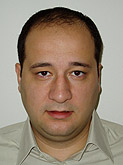
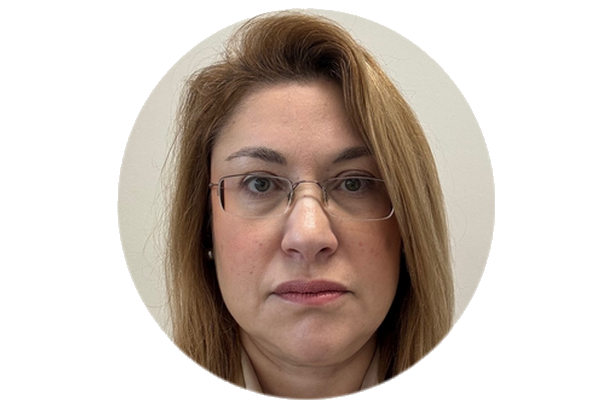
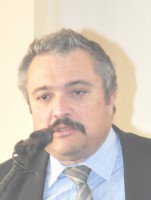
Nikolaos Efkolidis is an Assistant Professor at the University of Western Macedonia in the Department of Product and Systems Design Engineering . He is a member of the Computational Design and Digital Fabrication Research Lab ( codeplus.uowm.gr ) and co-founder of the design studio heptahedron.studio . Research Focus : Computational design, digital fabrication, AI-driven optimization, and sustainable product development. Key Techniques : Response Surface Methodology (RSM), Genetic Algorithms, Finite Element Analysis (FEA), and Additive Manufacturing. His recent publications highlight trends in multi-material 3D printing , machine learning for machining processes , and user-driven customization . Applications span footwear, marine robotics, and industrial design.
Alex Psomas is an Assistant Professor in the Department of Computer Science at Purdue University, directing research at the intersection of computer science and economics. His work develops algorithmic solutions for fair resource allocation, with applications to food rescue networks and social welfare systems. Funded by NSF and Google, his lab collaborates with non-profits including 412 Food Rescue. Research combines theoretical computer science with practical implementations, particularly in dynamic fair division and mechanism design. Current projects develop AI systems for equitable food distribution through the Indy Hunger Network partnership. Recent publications advance multi-agent resource allocation with work appearing in NeurIPS, EC, and ACM Transactions. The 2024 EAAMO paper received Best Student Paper honors for its impact on food insecurity interventions. Major Recognition: NSF CAREER Award for algorithmic fairness research Google AI for Social Good Award MEGA-ACE grant for blockchain applications The Purdue AI for Social Good Lab develops open-source tools deployed in food banks nationally. PhD students investigate approximation algorithms for combinatorial optimization problems.
Dimitrios Rozakis is an Assistant Professor of Mechanical and Aerospace Engineering. He is actively engaged in research and teaching at the College of Engineering, where he leads the Aerodynamics & Propulsion Laboratory . Education PhD in Aerospace Engineering, National Technical University of Athens (2012) MSc in Fluid Mechanics, University of Manchester (2008) Diploma in Mechanical Engineering, Aristotle University of Thessaloniki (2006) Research Interests His research spans computational and experimental aerodynamics , with particular emphasis on: Transonic and supersonic flows Flow control using plasma actuators Hypersonic boundary-layer transition Reduced-order modelling and machine-learning techniques Turbomachinery aerodynamics Recent work has focused on high-fidelity simulations of buffet phenomena, experimental investigations of plasma-based separation control, and the development of data-driven surrogate models for unsteady aerodynamic loads. Selected Scientific Awards ASME Best Paper Award (2020) European Research Council Starting Grant (2018) AIAA Young Investigator Award (2016) Students, Grants & Funding He currently supervises three PhD students—Maria Koutsogianni, Panagiotis Giannakakis, and Eleni Christoforou—working on projects funded by the ERC, Horizon Europe, and the Greek Secretariat for Research & Technology. Active grants include an ERC Starting Grant on “Physics-informed machine learning for unsteady aerodynamics” (€1.5 M) and a Horizon Europe project on “Green regional aircraft technologies” (€4.2 M). Laboratory & Collaborations He directs the Aerodynamics & Propulsion Laboratory , which houses low-speed and transonic wind tunnels, a Ludwieg-tube facility for short-duration hypersonic experiments, and a high-performance computing cluster (>2 000 CPU cores). Ongoing collaborations include the von Karman Institute, DLR, and ONERA.
Thanasis Papaioannou is a Senior Researcher at the STEcon lab at Athens University of Economics and Business (AUEB), where he has been since 2006. He concurrently teaches Python Programming and Android Programming at the University of Thessaly and Data Management in IoT at the Technological Educational Institute of Thessaly. His research focuses on smart grid demand-side management, IoT data management, gamification for energy conservation, and privacy mechanisms in distributed systems. Education: He holds a B.Sc. (1998), M.Sc. (2000) in Computer Science from the University of Crete, and a Ph.D. (2006) in Informatics from AUEB. He has held postdoctoral roles at EPFL (2008-2013) and positions at CERTH (2013-2016). Research Interests: His work spans IoT-enabled gamification for energy efficiency, decentralized management frameworks, and blockchain applications for trustworthy systems. Notable contributions include frameworks like ONTOCHAIN and CHArGED, addressing challenges in energy conservation and distributed trust. Publications: Over 65 papers in high-impact venues including IEEE Transactions on Smart Grid and ACM e-Energy. Recent work emphasizes blockchain-semantic convergence, decentralized IoT governance, and energy market coordination under uncertainty. Professional Impact: Project manager in 17 national/EU projects, with over 1200 citations. Advises on energy systems and decentralized technologies, emphasizing user-centric design and behavioral interventions.
Elias Xidias is an Assistant Professor at the Department of Product & Systems Design Engineering, University of the Aegean. His academic focus is on Motion Planning of Autonomous Moving Units . He holds a Ph.D. in Robotics from the University of Patras and has worked as a Research Engineer in the Robotics Intelligent Transportation Systems (RITS) team at INRIA de Paris. His research interests span Robotic Logistics , Intelligent Transportation Systems , and Human-Robot Collaboration , aiming to enhance automation in manufacturing and transportation through advanced algorithms and autonomous systems. Education : Ph.D. in Robotics, University of Patras (2009) M.Sc./B.Sc. in Mathematics, University of Patras (2003) Research Interests : Xidias' work focuses on optimizing autonomous systems in dynamic environments, including path planning for car-like robots, energy-efficient task scheduling, and collaborative robotics. He explores applications in warehouse automation, maritime navigation, and multi-robot coordination. His methodologies often integrate fuzzy logic, genetic algorithms, and probabilistic models to tackle real-world challenges in logistics and manufacturing. Key Contributions : Developed algorithms for AGV routing and motion planning in flexible manufacturing systems. Advanced real-time autonomous navigation techniques for maritime and aerial vehicles. Pioneered the Aegean Ro-Boat Race , fostering innovation in marine robotics. Grants & Collaborations : Xidias has collaborated with institutions like INRIA Paris and contributed to projects such as the RITS team. His work bridges academia and industry, addressing challenges in smart logistics and autonomous systems. Labs & Teams : Associated with the Robotics & Intelligent Transportation Systems research groups, focusing on applied robotics solutions for industrial and urban environments.
Panagiotis Hadjidoukas is an Associate Professor and Head of the Laboratory for Computing at the Computer Engineering and Informatics Department, University of Patras, within the School of Engineering. His work focuses on high-performance computing systems and parallel programming models. His research spans parallel and distributed computing , runtime support for parallel programming models , and automation of AI/ML workloads . Key contributions include developing the torc runtime system for task parallelism and pioneering work in extreme-scale scientific simulations. His interests bridge theoretical computer science with practical applications in scientific computing and AI acceleration. Notable achievements include the ACM Gordon Bell Prize Winner (2013) for 11 PFLOP/s cloud cavitation simulations and Finalist (2015) for in-silico lab-on-a-chip microfluidics. His software tools ( torc_lite , torcpy ) enable efficient parallelism across diverse architectures. Doctor of Philosophy (2003), University of Patras Master of Science (2001), University of Patras Diploma in Computer Engineering (1998), University of Patras As Head of the Laboratory for Computing, he leads infrastructure development while maintaining active research collaborations with IBM Research and ETH Zurich. His teaching portfolio includes graduate courses on high-performance computing for data sciences and parallel processing principles.
Michael D. Bond is a Professor in the Department of Computer Science & Engineering at Ohio State University's College of Engineering. He leads the Programming Languages and Software Systems (PLaSS) Research Group, which focuses on designing program analyses and software and hardware systems that enhance computing reliability, scalability, and security. His academic service includes general chair for PLDI 2027, program committee membership for multiple top conferences, and committee roles in SIGPLAN Research Highlights (2024-2027). Professor Bond's research spans programming languages, systems, and security, with particular expertise in memory management, concurrency, hardware transactional memory, information flow control, and predictive race detection. His work bridges theoretical foundations with practical implementations, as evidenced by numerous open-source projects accompanying his publications. The PLaSS group has made significant contributions to understanding and improving memory models, developing efficient garbage collection techniques for modern architectures, and creating novel approaches to secure programming in languages like Rust. Analysis of his recent publications reveals a clear trajectory toward addressing security and reliability challenges in modern computing systems, particularly through language-based approaches. His work increasingly focuses on Rust programming language security mechanisms, memory disaggregation for datacenters, and advanced techniques for detecting and preventing concurrency bugs. The research demonstrates strong continuity in exploring memory models and concurrency while adapting to emerging hardware trends and security challenges. Outstanding Teaching Award, Department of Computer Science and Engineering, Ohio State University (2018) Lumley Research Award, College of Engineering, Ohio State University (2016) OOPSLA 2015 Distinguished Paper and Artifact Awards NSF CAREER Award ACM SIGPLAN Outstanding Doctoral Dissertation Award Intel PhD Fellowship Professor Bond actively mentors several PhD students including Chujun Geng, Vincent Beardsley, Chris Xiong, Victor Chen, and Noah Charlton, with external co-advisee Zixian Cai at Australian National University. His research is currently supported by multiple NSF grants including SaTC-2348754 (2024-2027), CyberCorps-2336531 (2024-2029), and CSR-2106117 (2021-2025), reflecting sustained funding for his work in information flow control, security, and systems research. The PLaSS Research Group maintains a strong presence in both academic and industrial communities, with graduated PhD students securing positions at major technology companies like Google, Amazon Web Services, and Huawei, as well as academic positions at institutions like UIUC and IIT Kanpur. The group's work combines theoretical rigor with practical implementation, consistently producing open-source artifacts that enable reproducibility and further research in the systems and programming languages community.
Steve Blackburn is a research scientist at Google DeepMind and professor of computer science at the Australian National University in the College of Engineering and Computer Science. His primary research focus is on programming language implementation, with expertise spanning memory management, virtual machines, and performance analysis. He has served in significant leadership roles including Associate Dean for Diversity and Inclusion (2016-2019) and as Program Chair for PLDI 2015 and General Chair for PLDI 2023. Blackburn's research interests center on making software run faster and more power-efficiently on modern hardware. His primary areas include microarchitectural support for managed languages, fast and efficient garbage collection, and the design and implementation of virtual machines. He maintains a strong interest in sound methodology and infrastructure for successful research innovation. His work bridges theoretical computer science with practical systems implementation, with particular focus on memory management frameworks and performance benchmarking. His publication record reveals a consistent focus on memory management systems, with recent work exploring garbage collection in modern contexts including CRuby, Julia, mobile devices, and memory-disaggregated datacenters. His research shows an evolution from foundational garbage collection algorithms toward practical implementations addressing real-world constraints in contemporary programming languages and hardware platforms. A notable trend is his increasing focus on quantifying and understanding the true costs of garbage collection in production environments. Fellow of the ACM Blackburn has supervised numerous doctoral students including Zhen He, John Zigman, Robin Garner, Ting Cao, and currently advises Wenyu Zhao, Zixian Cai, and others. He has also served on multiple program committees for major conferences including PLDI, ASPLOS, ISMM, and OOPSLA, demonstrating his significant contributions to the programming languages and systems research community. His service includes editorial roles for ACM Transactions on Programming Language Applications and Systems from 2017-2020. He leads two major research infrastructure projects: the MMTk memory management framework and the DaCapo benchmark suite, both of which have become foundational tools for researchers in programming languages and systems. These projects reflect his commitment to shared research infrastructure and reproducible methodology in systems research.
Professor Papaloukas Konstantinos is affiliated with the University of Ioannina, where he leads research in bioinformatics and computational biology. His work focuses on integrating machine learning with biomedical data to address challenges in healthcare, such as disease prediction, biomarker discovery, and personalized medicine. He teaches courses including Bioinformatics and Introduction to Computer Science, and directs the Bioinformatics Laboratory. Research interests span computational analysis of proteins, automated tissue classification, and biomedical signal processing. Key areas of exploration include cardiovascular disease mechanisms, diabetes management, autoinflammatory disorders, and cancer biomarkers. His most recent studies leverage ensemble learning for hypoglycemia prediction and deep learning for autoinflammatory biomarker discovery. Publications highlight contributions to multimodal patient data integration, synthetic data generation for chronic diseases, and multimodal glucose prediction systems. Collaborative projects span cardiology, oncology, and infectious disease research. Despite no explicitly listed awards, his work demonstrates significant impact in computational medicine and bioinformatics. As part of his academic role, he advises students in bioinformatics and computational biology, though specific advisee names are not documented in available materials. His laboratory focuses on translating genomic and clinical data into actionable insights for clinical decision support.
Kostas Vlachos is an Assistant Professor in the Department of Computer Science and Engineering at the University of Ioannina, Greece. He has been in this position since 2014, following prior teaching roles at the University of Thessaly (2007–2013). He is a member of the Information Processing and Analysis (I.P.AN.) research group and actively supervises PhD, MSc, and diploma students in robotics and control systems. PhD, School of Mechanical Engineering, National Technical University of Athens, 2004 MSc, Interdepartmental Postgraduate Program in Automation Systems, National Technical University of Athens, 2000 Diploma in Electrical Engineering, Technical University of Dresden, Germany, 1993 His research focuses on robotics and control, with emphasis on microrobotics , haptic mechanisms , medical simulators , and autonomous navigation . He has made significant contributions to over-actuated marine platforms, reinforcement learning for navigation, and tactile robotic systems. His work bridges mechanical engineering and computer science, particularly in intelligent robotic control. The 15 most recent publications highlight a strong trend in autonomous marine robotics , multi-agent reinforcement learning , and intelligent control systems . Key themes include energy-efficient control, obstacle avoidance, sensor fusion, and learning-based navigation. The research spans from theoretical control design to real-world implementation in unmanned surface vehicles and microrobots. Best Student Paper Award, 9th Hellenic Conference on AI (SETN 2016) Vlachos has supervised over 30 students at various levels and has participated in multiple national and European research projects in robotics and automatic control. His teaching includes courses such as Computational Mathematics, Robotics, and Robotic Systems. He collaborates extensively with researchers like E. Papadopoulos and K. Blekas. He leads research within the Information Processing and Analysis (I.P.AN.) group, focusing on intelligent perception and control of robotic systems. His lab works on mobile manipulators, haptic devices, mini-robots, and marine platforms, integrating simulation (ROS/Gazebo) with real-world experimentation.
Irene Koronaki is a Professor at the National Technical University of Athens , affiliated with the School of Mechanical Engineering and the Thermal Engineering Section . She serves as Director of the Laboratory of Applied Thermodynamics, Cooling Technology & Refrigerated Vehicles since 2022 and has held academic roles at NTUA since 1999. Her research focuses include thermodynamics, heat pumps, energy efficiency, and renewable energy systems. Diploma in Mechanical Engineering, NTUA (1996) PhD in Thermal Engineering, NTUA (2000) Postdoctoral Researcher, NTUA (2002) Her research spans thermodynamics of cooling cycles, heat pumps, power cycles, energy saving in buildings, and thermal energy storage. She has pioneered work in nanofluids, solar cooling, and CO2 absorption systems. Her publications and projects reflect expertise in Stirling engines, hybrid solar collectors, and building energy optimization. Her recent articles highlight advancements in superfluid thermodynamics, solar PV/T systems, and medical robotics. Awards include the Edward F. Obert Award (2022) and leadership of the 2021 ASHRAE Student Design Competition winning team. She serves on ASME and ASHRAE committees and co-authored educational materials for refrigeration and energy inspection standards.
Georgios Keramidas is an Assistant Professor in Computer Architecture at the Department of Informatics, Aristotle University of Thessaloniki . He also holds an Adjunct Professor position at the Hellenic Open University and collaborates with institutions like the University of Peloponnese and University of Patras . Research Interests : Computer Architecture, Memory Systems, Multicore/GPU Design, Low-Power Techniques, Fault-Tolerant Systems His work focuses on cache optimization , energy-efficient computing , and security-aware memory design . Key contributions include DVFS frameworks , reuse-distance prediction , and non-deterministic cache mechanisms . Recent article trends highlight innovations in computation-in-memory , IoT platform components , and security/low-power co-design . Patents on image compression and GPU optimization reflect practical applications of his research. Academic Network : Collaborates with institutions including University of Patras , University of Manchester , and TU Dresden
Stavroulakis Georgios is a Professor at the School of Production Engineering and Management, Technical University of Crete. His research focuses on smart structures, vibration control, finite element methods, and advanced materials. He leads interdisciplinary projects in structural mechanics, acoustics, and computational mechanics with applications in engineering systems and heritage preservation. Key areas include: (1) Development of robust control systems for smart structures, (2) Numerical modeling of masonry and composite materials, (3) Applications of artificial intelligence in structural analysis and material science. Office: Δ5.109, DPEM Building. Research activities emphasize: Active vibration suppression using piezoelectric systems and auxetic materials Advanced finite element analysis for biomedical and historical structures Data-driven computational methods for material characterization Acoustic comfort optimization in urban environments Structural health monitoring through physics-informed neural networks His work bridges traditional engineering disciplines with modern AI tools, addressing challenges in infrastructure resilience and sustainable design. Publications span smart materials innovation, nonlinear mechanics, and heritage building restoration.
Telelis Orestis is an Assistant Professor at the Department of Digital Systems, University of Piraeus. His research focuses on algorithm design, computational complexity, and approximation algorithms for computationally hard problems, with recent work emphasizing algorithmic game theory including mechanism design and auction algorithms. Education: BSc in Computer Science & Telecommunications (NKUA, 2001) MSc in Advanced Information Systems (NKUA, 2003) PhD in Theoretical Computer Science (NKUA, 2006) Research interests include theoretical computer science fundamentals and applied algorithmic solutions for complex systems. His career includes postdoctoral research at University of Evry (France), Aarhus University (Denmark), and CWI Amsterdam (Netherlands), as well as research positions at University of Liverpool (UK). He received the Allain Bensoussan Fellowship supporting his research at CWI Amsterdam. Grants: General Secretariat for Research & Technology (2012-2014) His work bridges theoretical foundations with practical algorithmic solutions in game theory and computational economics.
Stefanos Gritzalis is a Professor of Information and Communication Systems Security at the University of Piraeus, Greece (2019+), leading the Lab. of Systems Security. Previously, he served as Rector of the University of the Aegean (2014-2018) and held academic roles at the University of the Aegean, including Professor and Head of the Department of Information and Communication Systems Engineering. His expertise spans cybersecurity, privacy, and regulatory compliance, particularly in cloud computing and IoT. He is a member of the Hellenic Authority for Communication Security and Privacy and the National Commission for Human Rights (2024+). Education includes a BSc in Physics, MSc in Electronic Automation, and PhD in Information and Communications Security from the University of Athens. His research focuses on cybersecurity, privacy preservation, and GDPR compliance, with over 336 publications, including 14 books and 37 chapters. He has an h-index of 55 and is ranked in the top 2% of global ICT researchers (Elsevier, 2024). He serves as Area Editor for IEEE Communications Surveys and Tutorials , and has edited 35 journals. He has supervised 17 PhD theses and over 150 Master’s and 300 BSc theses. His work includes designing privacy-aware systems and frameworks for cloud forensics, with grants exceeding €6 million. He advises on EU-funded projects and evaluates proposals for global research bodies like the ERC and Swiss National Science Foundation. His contributions to policy include co-creating Greece’s Open Government Partnership National Action Plan and advising on digital transformation strategies. He promotes cybersecurity education through gamification and has published on privacy literacy initiatives.