Tom Zimmermann is a full-time Professor for Data Analytics at the University of Cologne , affiliated with the Faculty of Management, Economics and Social Sciences (WiSo Faculty). His work bridges Data Science , Finance , and Empirical Macroeconomics , with a focus on monetary policy impacts, cybersecurity economics, and quantitative finance. Education : PhD in Economics (2009-2015) and MA in Economics (2009-2012) from Harvard University; Diploma in Economics (2004-2009) from the University of Bonn; Visiting student (2007-2008) at UC Berkeley. His research explores unconventional monetary policy effects (e.g., QE), publication bias in finance, cybersecurity costs in public sectors, and machine learning applications in macroeconomic forecasting. Key initiatives include collaborations with the ECONtribute Cluster of Excellence and the Cologne Laboratory for Economic Research (CLER). Selected Publications address topics like: Quantitative Easing and Bank Lending Standards Employment Effects of Unconventional Monetary Policy Publication Bias in Asset Pricing Cybersecurity Economics in Municipalities Machine Learning for Corporate Default Prediction Fiscal Multipliers and Policy Narratives His work spans Finance , Macroeconomics , and Data Science , with subfields in QE Analysis , Portfolio Theory , Cyber Risk , and Economic Policy . He is based at the University of Cologne’s WiSo Faculty, contributing to Germany’s first economics-focused Excellence Cluster focused on markets and public policy.
Prof. Dr. Jürgen Seitz is a full Professor and Head of the Business Information Systems programme at the Baden-Württemberg Cooperative State University (DHBW) in Heidenheim, Germany. Since April 2001 he has shaped the university’s applied informatics curriculum and serves as data-protection liaison and German Informatics Society (GI) trustee. Internationally, he is Associate Editor for several journals and chairs tracks at conferences such as WHICEB and Bled eConference. Education 1988–1991 Diplom-Betriebswirt (BA), Berufsakademie Stuttgart (now DHBW) – focus on data processing 1992–1996 Diplom-Ökonom, University of Hohenheim – economics 1998 Dr. rer. pol., Europa-Universität Viadrina – dissertation on the impact of IT on banking structures Research Interests Seitz’s research integrates business informatics with pressing societal challenges. Key themes include: e-Finance & FinTech: cryptocurrency literacy, blockchain sustainability, digital payment futures e-Health & Health Telematics: barrier-free e-kiosk design, telematics infrastructure for electronic health cards, pandemic digital health solutions Data Management & Analytics: heterogeneous data-warehouse integration, big-data approaches to agriculture, water-quality prediction, renewable-energy forecasting IT Management & Modeling: business-model evaluation, Industry 4.0 architectures, enterprise system integration Publication Trends Across more than 150 peer-reviewed works (1998–2024), Seitz demonstrates a shift from foundational studies in e-commerce and digital watermarking to cutting-edge applications of AI, blockchain, and data analytics in finance, health, and sustainability. Recent articles emphasize machine-learning techniques (k-means, ARIMA, PCA) applied to global agriculture, renewable-energy growth, and gendered cryptocurrency adoption, reflecting a commitment to data-driven, cross-disciplinary impact. Editorial & Scientific Service Associate Editor: International Journal of Networking and Virtual Organisations (IJNVO) , Journal of Cases on Information Technology (JCIT) , International Journal of Cases on Electronic Commerce (IJCEC) Editorial Board Member: International Journal of Global Sourcing and Management (IJGSM) , Journal of Digital Marketing (JDM) , Journal of Internet Banking and Commerce (JIBC) , among others Conference Chair/Co-Chair: WHICEB (Wuhan International Conference on E-Business), Bled eConference eHealth Track Technical Programme Committee Member: IEEE ICDMAI, IEEE IEMCON, IEEE UEMCON, CCWC External examiner & guest lecturer in China, India, USA, Australia, Malaysia, Jordan, Poland, UK, Belarus Advising & Collaborative Networks While individual student names are not disclosed, Seitz mentors within the DHBW cooperative-education model and supervises industry-linked capstone projects. He is a key liaison for German industry partners and international universities, facilitating funded research on FinTech adoption, e-health feasibility, and sustainable IT architectures. His leadership of the Business Informatics programme positions him to coordinate grants and consortia across Europe and Asia. Laboratories & Teams At DHBW Heidenheim, Seitz steers the Business Informatics Lab —a hub for applied R&D projects with corporate partners such as Landesbank Baden-Württemberg and health-sector IT providers. The lab focuses on prototyping blockchain-based e-prescription systems, evaluating FinTech business models, and deploying predictive-maintenance analytics in automotive supply chains. Interdisciplinary student teams work under his guidance to translate academic insights into market-ready solutions.
Don Hickerson is a Lecturer at the Faculty of Business, British University Vietnam (BUV), with a multidisciplinary background in sociology, business administration, and AI ethics. His career spans academia, consulting, and recreation management. PhD Candidate at Edgewood College (University of Wisconsin, USA) Graduate Certificate in Contract Law from Western University (2022) MA in Sociology (Migration & International Relations) from HarvardX (2012) BA (Hons) in Sociology & Psychology from University of Western Ontario (2007) Hickerson's research focuses on self-generating AI models and their societal impacts, symbolic boundary building in networks, small-scale economies , and gender issues in Asian governance . His recent publications analyze AI content detection techniques and their implications for academic integrity. Key conference presentations include: 2024: AI Bias Detection at BUV x SU Conference 2024: AI Production Environmental Impact at ICGSTM2024 2012: Small-Scale Economy as Women's Economic Coping Mechanism Scientific recognition includes: Outstanding Research Award (2012, University of Western Ontario) Rotary International Scholar Award (2007) He has secured research grants totaling over $182,000, including: Canadian Council on Learning Grant ($150,000, 2012) World University Service of Canada Grant ($20,000, 2008) Rotary International Scholarship ($12,000, 2007)
Stefan Luther is a Professor and Max Planck Research Group Leader at the Max Planck Institute for Dynamics and Self-Organization's Biomedical Physics group (Göttingen, Germany). His work spans cardiac dynamics, optogenetics, and biomedical data infrastructure. Current Affiliation: Max Planck Institute for Dynamics and Self-Organization, Biomedical Physics Research Themes: Cardiac arrhythmia control, excitable media dynamics, optogenetic interventions, and semantic data management systems Research Interests : Luther's research focuses on controlling cardiac arrhythmias through advanced pacing techniques (optogenetic, resonant feedback), modeling spatiotemporal chaos in cardiac tissue, and developing data management systems like CaosDB for scientific workflows. His work bridges computational modeling, experimental validation, and clinical translation. Article Trends : Recent publications emphasize low-energy defibrillation (2023), optogenetic pacing (2024), and hierarchical data integration (2024). The 2025 papers highlight high-throughput imaging systems and electromechanical wave analysis for transmural activation patterns. Labs & Teams : He leads the Biomedical Physics group at the Max Planck Institute, working on interdisciplinary projects combining cardiology, physics, and data science. His team develops tools like the CaosDB system for managing complex research data workflows.
Prof. Dr. Martin Matzner is a Professor at Friedrich-Alexander University Erlangen-Nürnberg, holding the Chair of Digital Industrial Service Systems. He studied Business Informatics at the University of Münster and Turku School of Economics, earned his doctorate in 2012 for work on service networks, and received a teaching license in Business Informatics in 2016. His research focuses on IT-supported services, business process management, and design-oriented business informatics research, with significant contributions to digital transformation and smart service systems. Current affiliation: Friedrich-Alexander University Erlangen-Nürnberg Previous roles: University of Münster (2007-2017) Key research areas: Business Process Management, Process Mining, Smart Service Systems, Predictive Analytics His recent publications emphasize predictive process monitoring using machine learning, transfer learning for cross-domain applications, explainable AI in business processes, and platform ecosystem governance . He has pioneered methods for adaptive AI control in manufacturing and context-aware process analytics , with applications spanning logistics, healthcare (ICU admission prediction), and human resources. His work bridges technical process mining with sociotechnical perspectives , particularly in algorithm adoption and ethical implications. Prof. Matzner's research has produced 15+ recent publications (2025-2024) in journals like International Journal of Production Research , Computers in Industry , and conferences including ECIS and ICIS. Topics demonstrate a progression from process efficiency optimization to human-AI collaboration and regulated AI risk assessment . His methodological toolkit spans LSTM networks , graph-based neural models , and LRP explanation techniques .
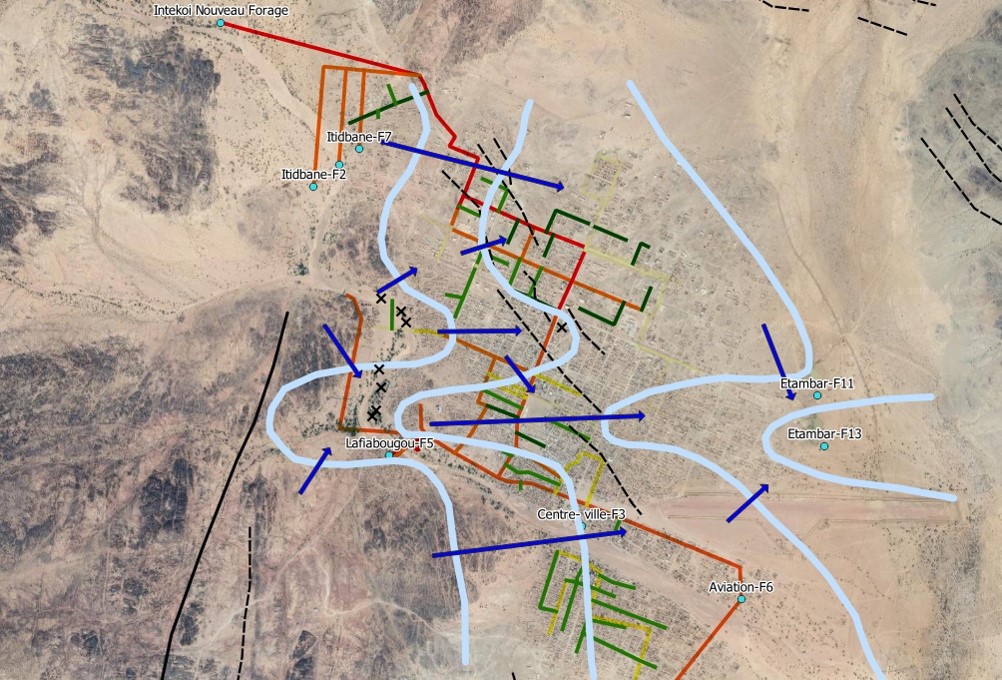
Andreas Braun is a Senior Lecturer at the Department of Geography, University of Tübingen, Germany. He leads lectures and courses on physical geography, geospatial methods, and remote sensing applications. Currently serving since January 2022, his academic responsibilities include teaching, thesis supervision, and research in geoinformatics with a focus on humanitarian response applications. PhD in Geography (2014-2019), University of Tübingen Baden-Württemberg Certificate in University Didactics (2015-2017) Professional experience at Stuttgart's Land Surveying Office (2013) His research bridges geospatial technologies with humanitarian applications, emphasizing remote sensing for environmental monitoring in refugee camps, urban structure analysis, and climate change adaptation. Key areas include SAR data utilization, geosimulation for landscape dynamics, and machine learning applications in geospatial projects. Scientific publications span topics like urban heat island effects in Vietnam, refugee camp monitoring using satellite imagery, and landscape change modeling. His work appears in journals such as IEEE Journal of Selected Topics in Applied Earth Observations , Remote Sensing , and Journal of Flood Risk Management . Teaching activities cover physical geography methods, GIS, remote sensing, and applied geoinformatics for both B.Sc. and M.Sc. programs. He supervises interdisciplinary projects connecting geography with social sciences, focusing on urban planning, climate adaptation, and environmental justice.
Prof. Jürgen Knies serves as Professor and Vice Dean of Faculty 2 (Faculty of Architecture, Civil Engineering and Geomatics) at Bremen City University of Applied Sciences. Based in the Department of Infrastructure Planning of Environmental and Energy Systems (building UB, room 107), his work integrates ecological principles, Geographic Information Systems (GIS), Building Information Modeling (BIM), and environmental law to address complex infrastructure challenges. His leadership extends to municipal heat planning initiatives and跨-institutional research networks across Northwest Germany. His research focuses on urban energy transitions , with particular emphasis on heat system transformation, spatial planning integration, and socio-technical implementation barriers. Key methodologies include GIS-based spatial analysis, BIM integration, and multi-stakeholder governance frameworks. Current investigations target cold district heating networks, wastewater heat recovery, solar cadastre validation, and equity considerations in energy transitions—always contextualized within Bremen's municipal challenges and North German regional cooperation frameworks. Analysis of his 15 most recent publications (2017-2025) reveals a consistent trajectory: evolving from foundational spatial energy modeling toward integrated socio-technical solutions for urban heat transitions. The body of work demonstrates increasing sophistication in Digital integration (E-Government/BIM fusion) Multi-scale spatial analysis (neighborhood to regional) Equity-focused implementation strategies Legal-regulatory-compliance frameworks with Bremen serving as both living laboratory and model for municipal energy planning. No scientific awards are documented in the provided materials. His advising activities center on thesis supervision in infrastructure planning, while grant leadership includes major projects: hyBit (Hydrogen for Bremen's industrial transformation; 2021-2022) Heat Transition Northwest (digitalization for heat implementation; 2021-2025) North German Research Associations coordination Bremen Heat Transition Network initiatives These involve partnerships with municipal authorities, industry, and regional research consortia. His operational ecosystem includes the GIS Laboratory for spatial analysis, active participation in Networking AG Wärme (Heat Working Group), and leadership in the Bremen Heat Transition Network . Current engagements extend through 2026, including coordination of the 3rd North German Conference on Thermal Research—demonstrating sustained commitment to advancing urban energy infrastructure through academic-practice integration.
Prof. Dr. Martin Supper (born 1947) is an Adjunct Professor teaching Electroacoustic Music and Sonic Arts at the Faculty of Music, Berlin University of the Arts (UdK Berlin), where he also teaches in the postgraduate Sound Studies and Sonic Arts program. Since 2013, he has served as a regular guest professor for Sonic Arts at the Shanghai Conservatory of Music. Supper previously headed the UNI.K Studio for Sonic Arts and Sound Research from 1985 to 2017 and directed the postgraduate Sound Studies program from 2009 to 2015. Education: Training as radio and television technician Studies in Theoretical Computer Science, Linguistics and Systematic Musicology at Technical University of Berlin DAAD scholarship recipient (1980-82) at Instituut voor Sonologie, Rijksuniversiteit Utrecht Post-graduate degree in Computer Science PhD in Musicology under Helga de la Motte-Haber and Dieter Schnebel Supper's research focuses on the history and aesthetics of sound art, electroacoustic music, and computer music. His work explores questions about media-appropriate music and compositional strategies, particularly in the work of Iannis Xenakis. His scholarly approach bridges technical and artistic perspectives, examining how technological developments shape musical expression and perception, with special emphasis on spatial sound and the relationship between mathematical structures and musical form. His publications reveal a consistent focus on spatial sound phenomena, the theoretical foundations of electroacoustic music, and historical analyses of electronic music pioneers. Supper examines how sound interacts with physical space, the relationship between mathematical structures and musical expression, and historical developments in electronic music composition from both technical and aesthetic perspectives. Professional Recognition: DAAD scholarship recipient (1980-82) Contributing Editor of OPEN SPACE Magazine New York (2002-) Member of EARS consortium (ElectroAcoustic Resource Site project, UNESCO funded, 2005) Editorial Board member at Organized Sound, Cambridge University Press (2007-) MGG Advisory Board for Post-1950 US Music (1995-) Supper has extensive experience in academic leadership and organization. He founded and managed the Berlin studio CUE (1984-1989) and established the Studio for Electroacoustic Music & Sound Art at UdK Berlin in 1985. He has organized major international festivals including ICMC2000, SMC2008, and EMS2014. Supper has served on numerous prestigious juries including Ars Electronica Linz, Villa Aurora, and the DAAD Artists-in-Residence Programme. As a reviewer, he has evaluated submissions for major conferences and journals including ICMC, EMS, and Leonardo Music Journal. His artistic practice includes numerous compositions and sound installations, with notable works such as DH2 (1989), which was selected for the 1990 World Music Days in Oslo, and fragment (2003), which premiered in Florence as part of Tempo Reale Firenze. He has collaborated extensively with theater directors, actors, dancers, and filmmakers throughout his career.
Dr. Fabio Valdés is a researcher at FernUniversität in Hagen's Faculty of Mathematics and Computer Science, specializing in spatial databases and trajectory data analysis. He teaches core modules including Softwaresysteme, Databases and Security on the Internet, and Data Mining while leading advanced research in metric space indexing and pattern recognition. His research focuses on symbolic trajectories , efficient pattern matching for time-dependent data, and metric space indexing . Key contributions include the N-tree index structure for trajectory similarity search and frameworks for spatio-textual trajectory mining. His work bridges theoretical foundations with industrial applications in aircraft tracking, wildlife monitoring, and industrial image processing systems. Analysis of his 15 most recent publications reveals an evolution from foundational symbolic trajectory models (2013-2017) to advanced indexing structures (2020-2025). Current work integrates machine learning for neural network interpretability and energy price forecasting, maintaining strong ties to ACM SIGSPATIAL and IEEE venues while expanding into AI-driven applications. Best Demo Award at DASFAA 2013 Dr. Valdés has supervised over 40 Master's and Bachelor's theses since 2013, covering machine learning, reinforcement learning, and data engineering across finance, autonomous systems, and medical applications. His students have developed solutions for investment decision systems, autonomous agricultural robots, and medical NER systems while addressing industrial challenges in packaging machinery optimization and cockpit staffing.
Dr. Hai Dong is a Senior Lecturer at the School of Computing Technologies, RMIT University in Melbourne, Australia, with promotion to Associate Professor scheduled for 2026. He serves as the Founding Director of the CloudTech-RMIT Green Cryptocurrency Joint Research Laboratory (GreenCryptoLab) and Leader of the Smart Sensing and Services Research Area. Previously, he held research fellow positions at both RMIT University and Curtin University. Dr. Dong is a Senior Member of IEEE and chairs the IEEE Computational Intelligence Society Task Force on Deep Edge Intelligence. Dr. Dong's research spans several cutting-edge domains including Service-Oriented Computing, Edge Intelligence, Blockchain, AI Security, Cyber Security, and Machine Learning. His work bridges theoretical foundations with practical applications, particularly in secure and efficient computing systems. He has developed innovative approaches for smart contract security, edge computing optimization, federated learning, and blockchain applications with a strong focus on sustainability and real-world impact. His publication record demonstrates consistent high-impact contributions across top venues including AAAI, ASE, ICML, TSE, and TSC. Dr. Dong's research shows a clear trajectory toward increasingly sophisticated integration of AI with edge computing and blockchain systems, with growing emphasis on security, privacy, and resource efficiency. Recent work highlights his leadership in addressing emerging challenges in LLM-generated smart contracts and secure federated learning systems. Best Research Paper Award at ICSOC 2016 Best Paper Award at IEEE ICBC 2025 2023 RMIT Award for Research Engagement and Impact - Industry Engagement in Graduate Research Dr. Dong has successfully supervised numerous PhD and Master's students to completion, with many going on to prestigious positions. He has secured over $5 million in research funding as Chief Investigator from sources including ARC, CRC, QNRF, and industry partners like ANZ, CloudTech, and Telstra. His GreenCryptoLab research facility represents a significant industry-academic partnership focused on sustainable blockchain technologies. Dr. Dong maintains active collaborations with researchers worldwide and serves on committees for over 100 international conferences.
Matteo Esposito is a postdoctoral researcher at the University of Oulu, Finland, where he works in the M3S Cloud Group. His research focuses on the intersection of Large Language Models, Software Quality, Software Maintenance, and Software Architecture. Prior to his academic career, he served as R&D Vice Director at an Italian cybersecurity firm. Matteo earned his European Label Ph.D. in "Computer Science, Control, and Geoinformation" from the University of Rome, Tor Vergata, where he also completed his MSc Degree in Computer Science Engineering with highest honors (110 cum Laude) in October 2021. His primary research interests span several cutting-edge domains in software engineering: Secure Software Engineering and Security Artificial Intelligence and Large Language Models applications in software development Software Quality, Maintenance, and Architecture Quantum Software Engineering, a rapidly emerging field bridging classical and quantum computing Matteo's recent publications demonstrate a strong focus on applying AI techniques, particularly Large Language Models, to various software engineering challenges. His work spans multiple domains including defect prediction, security analysis, microservice architecture analysis, and quantum computing integration. A significant trend in his research is the application of network analysis methods to understand software architecture evolution and identify potential degradation points in microservice systems. Matteo is actively involved in the academic community, serving on program committees for major software engineering conferences including ESEM, ECSA, and ICSA. He has also organized workshops, such as the First International Workshop on Quantum Software Engineering: The Next Evolution (QSE-NE) co-located with FSE 2024. As a passionate educator, Matteo has served as a Teaching Assistant at the University of Rome "Tor Vergata" since 2019, instructing courses in Software Engineering and Algorithms. He is committed to promoting tech literacy, digital inclusion, and community-driven technological empowerment. Matteo is a member of the M3S Cloud Group at the University of Oulu, where he collaborates with researchers on cloud computing, microservices, and software architecture topics. His work bridges theoretical research with practical applications in mission-critical systems.
Reinhold Schodl serves as Professor and Head of the Bachelor's program in Logistics and Transport Management at the University of Applied Sciences BFI Vienna, leveraging his engineering degree, business degree, and doctorate alongside international teaching and practical experience to shape logistics education. His academic foundation includes: Engineering Degree Business Degree Doctorate Professor Schodl's research centers on logistics management, supply chain management, and transport/traffic systems with specialized focus on logistics trends, sustainability integration, human resource challenges, e-commerce impacts, and urban logistics solutions. His work addresses critical industry transformations driven by digitalization and environmental pressures in global supply chains. Analysis of his publications reveals consistent investigation into urban logistics innovations, particularly micro-hub implementations and multimodal transport solutions. His research bridges practical industry applications with academic rigor, emphasizing sustainability metrics, regional impact assessments, and technological integration across European logistics networks. No scientific awards or fellowships were documented in the source material. He actively leads seven major research initiatives including alBOX (parcel segment business models), Logistics Concierge (micro-hub service integration), Inned (technology-driven network design), CommunityHub (shared urban logistics space), Q4 (multimodal freight nodes), Benchmark TransSped (vehicle data benchmarking), and Optihubs (water-segment logistics optimization), demonstrating strong industry engagement and practical research orientation. The available information does not specify dedicated laboratories or permanent research teams under his leadership, though his project portfolio indicates collaborative cross-institutional work.
Nada Sissouno is a Professor of Mathematics and Didactics of Mathematics at the Faculty of Electrical Engineering, Media and Informatics at Amberg-Weiden University of Applied Sciences since November 2023. She also serves as Vice Dean and Co-head of the Competence Center Grundlagen (CCG). Additionally, she maintains a position as a guest researcher at the Research Group: Applied and Numerical Analysis and Optimization and Data Analysis at the Technical University of Munich (TUM). Her educational background includes a Doctorate in Mathematics (Dr. rer. nat.) from TU Darmstadt (2007-2011) and a Diplom in Mathematics with a minor in psychology from TU Darmstadt (2000-2007). She has completed further education as a Diversity Manager in 2021 and holds certificates in teaching in higher education from the Bavarian Universities (2014-2016). Professor Sissouno's research focuses on mathematical methods in signal and image processing, data science, dynamical systems, numerical simulation, and approximation theory. Her work particularly emphasizes spline functions on domains, wavelets and frames, and evidence-based development of teaching methodologies. Her recent publications demonstrate strong expertise in mathematical imaging, phase retrieval problems, and approximation theory, with applications spanning ptychographic imaging, variational inpainting methods, and structural sparsity in multiple measurements. Her collaborative research bridges theoretical mathematics with practical applications in signal processing and image analysis, with a particular focus on developing robust numerical algorithms for complex data analysis problems. She has published in prestigious journals including Advances in Computational Mathematics, Journal of Fourier Analysis and Applications, IEEE Transactions on Signal Processing, and Inverse Problems. Referentin für Talentmanagement & Diversity at TUM (2022-2023) Deputy spokesperson of Research Associates' Council of the TUM (2019-2023) Gender equality officer of Department of Mathematics (2019-2022) Professor Sissouno teaches mathematics courses for engineering and computer science students, with a focus on making mathematical concepts accessible and relevant to practical applications. She has been involved in teacher training and the evidence-based development of teaching methodologies, demonstrating her commitment to both research excellence and educational innovation.
Christian Katzenbach is Professor of Media and Communication at the University of Bremen and Head of the Lab "Platform Governance, Media, and Technology". At the Alexander von Humboldt Institute for Internet and Society (HIIG), he is project lead researcher for the Research Program: The Evolving Digital Society. Previously, he was interim professor for communication policy and media economics at the Institute for Media and Communication Research at Freie Universität Berlin and chair of the Section Digital Communication of the German Communication Association. His educational background includes: Media and Communication Studies Philosophy Computer Science studied across institutions in Berlin, Madrid, and Potsdam. Professor Katzenbach's research focuses on the intersection of technology, communication, and governance. His primary areas of interest include the governance and regulation of digital platforms, discourses and governance of artificial intelligence, and the increasing role of data, algorithms, and digital infrastructures in organizing communication and social interactions. His work examines how technological systems shape and are shaped by social, political, and regulatory frameworks, with particular attention to the evolving structures of platform governance and AI policy. He approaches these topics from interdisciplinary perspectives that bridge communication studies, science and technology studies, and digital governance frameworks. His recent publications demonstrate a consistent focus on platform governance, AI policy, and digital society issues. The research shows an evolution from examining foundational issues in platform governance toward more specific analyses of AI systems, content moderation mechanisms, and the regulatory challenges posed by algorithmic systems. There is a clear methodological diversity in his work, incorporating qualitative, quantitative, and mixed methods approaches to understand the complex interplay between technology and society. His notable scientific achievements include: German Communication Association Best Dissertation Award (2016-2017) for his conceptual work on governance, technology, and communication Professor Katzenbach has secured significant research funding for multiple international projects. His current projects include "Shaping 21st Century AI – Controversies and Closure in Media, Policy, and Research" (2021-2024; ESRC, DFG, ANR, SSHRC), "Imaginaries of Artificial Intelligence: The Communicative Construction of AI in China, Germany and the US" (2021-2024; SNF, DFG), "Platform Governance and Copyright" (H2020) (2020-2022; H2020), and "Innovative Open Access in Small Sciences" (InnOAccess) (2019-2021; DFG). He has successfully led research initiatives funded by the German Research Foundation, the EU Framework Programme H2020, the German Ministry of Education and Research, and the Volkswagen Foundation. He leads the "Platform Governance, Media, and Technology" Lab at the University of Bremen and is actively building the "Platform Governance Archive" – a longitudinal corpus of platform policies. Additionally, he is a co-initiator of the open access journal Internet Policy Review and a PI of a research project on sustainable funding of scholar-led open access journals. He co-initiated a research network in the field of platform governance and was co-responsible for hosting the 2016 conference of the Association of Internet Researchers in Berlin – for the first time in Germany.
Dr. Jörg Pohle is a PostDoc researcher at the Humboldt Institute for Internet and Society (HIIG) where he heads the research programme 'Data, actors, infrastructures: The governance of data-driven innovation and cyber security' and the 'Global Privacy Governance' project. His interdisciplinary work bridges Informatics, Law, and Sociology, focusing on data protection theory and practice, privacy governance, and the societal implications of digital technologies. Pohle completed his doctorate at Humboldt-Universität zu Berlin with a dissertation on the history and theory of data protection and its implications for ICT system design. His academic background spans Law, Political Science, and Computer Science, with early work examining security of voting computers and related security discourse. His research interests include the intersections of Informatics and Law, Informatics and Sociology, modellification processes, and data protection by design. He has developed critical frameworks like 'Welt → Modell → Technik → Welt' for analyzing how power structures become embedded in sociotechnical systems. His work often takes historical perspectives on data protection debates while addressing contemporary challenges in technology governance. Analysis of his recent publications reveals a strong focus on translating data protection principles into practical applications, particularly in healthcare contexts like nursing care and pandemic response. His research increasingly addresses AI governance challenges, examining large language models' impact on scientific practices and developing legal design patterns for law-technology translation. He advocates for freedom-preserving approaches to digital governance and information separation of powers in digital environments. Pohle serves as a board member of the Working Group on Digitalization as a Challenge for Sociological Theory within the German Sociological Society. He has contributed to significant research projects including 'Strengthening Digital Skills through Micro-Credentials,' 'DUCAH @ HIIG,' and 'Making Repositories and AI Systems Usable in Everyday Nursing Care.' He is a prolific organizer of the annual Interdisciplinary Workshop on Privacy, Data Protection & Surveillance and regularly contributes to policy discussions through media appearances in Handelsblatt, Leipziger Volkszeitung, and specialized podcasts examining the intersection of IT and law.