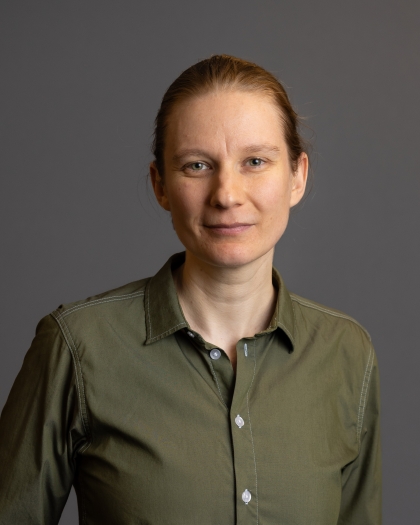
Dr. Tessa Diphoorn is an Associate Professor at the Department of Cultural Anthropology, Faculty of Social and Behavioural Sciences, Utrecht University. Her research focuses on policing, security, violence, and authority in Kenya and South Africa, with expertise in ethnographic fieldwork and sovereignty studies. ERC Starting Grant recipient (2024) for 'ARMIES' project Previously held NWO Veni Grant (2017-2020) Co-founder of Travelling Concepts on Air podcast Research Themes: She analyzes state and non-state security arrangements through comparative frameworks, examining algorithmic policing in South Africa, firearm communities in three continents, and digital surveillance systems in Kenya. Her work bridges Governing the Digital Society , Institutions for Open Societies , and Migration and Societal Change at Utrecht University. Key Publications: Her 2016 book Twilight Policing (University of California Press) established her as a leading scholar on private security in South Africa. Recent articles explore corporate sovereignty (2022), data-driven policing (2024), and nodal security governance (2024). Academic Leadership: She co-founded the Contesting Governance platform at Utrecht Center for Global Challenges and serves on editorial boards for security studies. Her interdisciplinary work appears in journals like Policing and Society and Anthropological Theory .
Paula Rodríguez-Modroño is a Senior Lecturer in Economics at Pablo de Olavide University, where she serves as Director of the Interdisciplinary Centre of Feminist, Women's, and Gender Studies (CINEF) and the Master Programme in Gender and Equality. She leads the CAREFEM research project (2024-2027) on platformization of healthcare ecosystems and continues the GENDER4REV project (2020-2024) examining digitalization's impact on gender inequalities. Education: PhD in Economics (University of Seville), MPhil in Development Studies (University of Cambridge), Postgraduate Diploma in Development Economics (University of Essex), BSc in Business & Management (University of Maryland) Her research integrates feminist economics with institutional analysis, focusing on gender inequalities in labor markets, care work dynamics, social reproduction, and digital economy impacts. She examines how technological transformations and austerity policies exacerbate gender disparities in employment, well-being, and economic participation. Recent publications analyze digital care platforms, gender budgeting mechanisms, and intersectional inequalities in remote work systems. Her work spans feminist economic theory, social reproduction studies, and policy evaluation, with empirical focus on Spain, Latin America, and European comparative frameworks. Scientific Awards: Seville Town Council Prize 2020 Meridiana Prize 2017 X Prize 2012 She directs multiple academic initiatives including the Gender Observatory on Economics, Politics & Development (gep&DO) and the international research group 'Gender, work, care and technological development' within the Spanish Labour History Network. Her leadership extends to the Spanish Association for Radical Political Economy (AEC) and the European Labour History Network's working groups.
María Amparo Grau Ruiz is a Professor at the Department of Financial and Tax Law, Complutense University of Madrid. Her work bridges tax law with emerging technologies, focusing on AI applications in public expenditure auditing and sustainability-driven fiscal policies. Complutense University of Madrid – Department of Financial and Tax Law Author in Deusto Journal of Human Rights , Spanish Journal of External Control , and Tax Technical Magazine Researcher on EU tax harmonization and digital economy taxation Her research explores AI integration in tax administration , sustainability-focused fiscal instruments , and robotics governance . Articles address technical challenges like DAC6 transposition, carbon taxation frameworks, and digital economy taxation. Collaborations with Rita de la Feria and Yolanda Sánchez-Urán Azaña highlight interdisciplinary approaches to tax policy and labor dynamics. Key themes include: AI in Public Finance: Ethical implications of algorithmic budgeting and auditing Sustainability Taxation: Carbon credits, energy-efficient housing incentives Digital Economy: Taxation of digital services, platform economy regulations Robotics: Social security implications, fair taxation of automation
Sacha Molitorisz is a Senior Lecturer at the Faculty of Law, University of Technology Sydney (UTS), where he has been employed since 2018. He is affiliated with the Centre for Media Transition (CMT) at UTS and serves as a Committee Member of the Human Research Ethics Committee since 2022. Molitorisz also teaches Global Media at NYU Sydney since 2012. His academic career follows nearly two decades of professional journalism experience at The Sydney Morning Herald, where he worked as a reporter, blogger, editor, and senior features writer. Molitorisz holds a PhD in Philosophy from Macquarie University (completed 2017), an LLB from UNSW Australia, and a BA (Hons) in English Literature from UNSW Australia. His doctoral research applied Kantian ethics to digital privacy, which formed the basis of his 2020 book "Net Privacy, How we can be free in an age of surveillance" published by New South Books and McGill-Queen's University Publishing. Dr. Molitorisz's research focuses on the intersection of media, law, and ethics in the digital age. His primary areas of interest include media and communication law, privacy and data rights, journalism studies, and applied ethics. He examines how legal frameworks can address contemporary challenges such as misinformation, algorithmic regulation, digital privacy, and the sustainability of public interest journalism. His work often blends journalism, philosophy and law scholarship to propose regulatory solutions that balance freedom of expression with platform accountability while protecting democratic values. Analysis of Molitorisz's recent publications reveals a consistent focus on media regulation in the digital ecosystem, particularly regarding platform accountability, news industry sustainability, and privacy protection. His work demonstrates interdisciplinary approaches combining law, philosophy, and media studies to address complex challenges like algorithmic transparency and the impact of digital platforms on journalism. A recurring theme is the tension between freedom of expression and the need for platform accountability, with Molitorisz advocating for nuanced regulatory approaches that protect democratic values while addressing power imbalances between platforms and news organizations. Dr. Molitorisz has received positive recognition for his book "Net Privacy," with endorsements from notable figures including Shaun Micallef, Julia Baird, and Robbie Buck, as well as academics from institutions worldwide. His research has been cited in multiple scholarly publications and picked up by numerous news outlets, demonstrating its impact on both academic and public discourse. As an educator, Molitorisz has taught media, ethics, and law courses at UTS, UNSW, Macquarie University, and NYU Sydney since 2011. At UTS, he teaches Media Law and Accountability and Ethics, Law and Justice. His prior professional journalism experience provides a practical dimension to his academic teaching, allowing him to blend "the nimbleness of journalism with the rigour of academia." He has contributed to research supervision through the Centre for Media Transition, focusing on contemporary media law and journalism challenges. Dr. Molitorisz is actively involved with the Centre for Media Transition (CMT) at UTS, a collaborative initiative examining the future of journalism and media in the digital age. Through the CMT, he contributes to research projects addressing media sustainability, platform regulation, and journalistic ethics. His work often involves collaboration with interdisciplinary teams across Australia and internationally, focusing on practical solutions to the complex challenges facing contemporary media ecosystems.
Anna-Bertha Heeris Christensen is an Assistant Professor at the Department of Marketing, Copenhagen Business School , specializing in digital person-branding, influencer marketing, and brand activism. Her work explores the intersection of consumer expectations, emotional labor, and psycho-political dynamics in digital media ecosystems. Current affiliation: Copenhagen Business School (Assistant Professor) Key research areas: Brand activism, personal branding, social media ethics, influencer power dynamics Active in public discourse through 81 media engagements (2023-2025) Christensen's research reveals how digital influencers negotiate authenticity through dialectical emotional labor, and how brands' silence can become a strategic communication tool. Her work demonstrates the evolving relationship between consumers and subjectivized brands in platform capitalism contexts. Recent publications analyze generational marketing disparities, the honesty paradox in influencer advertising, and psycho-political branding frameworks. She has contributed to Organization Studies and participated in multiple conference panels addressing digital marketing challenges. Through 21 media appearances since 2023, Christensen has shaped public understanding of influencer power structures and emotional labor demands, including commentary on DR-Dokumentar and TV2 Fyn's regional news programs.
Nanna Bonde Thylstrup is an Associate Professor on the Promotion Programme in Modern and Digital Culture at the Department of Arts and Cultural Studies, University of Copenhagen (Faculty of Humanities). She leads the Digital Culture Research Cluster and serves as Principal Investigator for multiple funded projects including the ERC-supported Data Loss: The Politics of Disappearance, Destruction and Dispossession in Digital Societies (DALOSS) . Her academic background includes a PhD and MA in Modern Culture from the University of Copenhagen, with visiting fellowships at Duke, Cornell, and Columbia Universities. Thylstrup's research examines the intersection of technology, power, and cultural memory through several interconnected domains: The ethics and politics of data infrastructures and algorithmic systems Machine learning's impact on knowledge governance and archival practices Digital humanities approaches to cultural heritage preservation Theoretical frameworks for understanding data loss and digital disappearance Her publications demonstrate consistent focus on critical data studies, with recent work exploring algorithmic epistemologies in news distribution, political economies of cloud storage, and reparative approaches to digital archives. This scholarship collectively examines how datafication transforms societal structures of memory, power, and knowledge production. Awards include: Europeana Research Grant (2017) She leads significant research initiatives as PI/co-PI including: DALOSS (ERC-funded) AI REUSE Follow Me (FoMe) Personalized Intelligence in News Datafied Living Thylstrup directs the interdisciplinary Digital Culture Research Cluster and serves on the editorial board for Cambridge University Press's AI in Culture and Society series.
Nicklas Holmberg serves as Senior Lecturer and Head of the Department of Informatics at Lund School of Economics and Management (LUSEM), Lund University. With a PhD in Information Systems specializing in Process and Service Design and Development, he leads the Department of Informatics while maintaining active research and teaching responsibilities. His professional roles include Director of Studies and Director of the Bachelor's Programme, demonstrating comprehensive leadership within the academic unit. Dr. Holmberg's research focuses on Business Process Service Orientation with significant applications in healthcare and banking sectors. His work on the business logic centric digital service VacSam demonstrates practical implementation of his research in vaccination coordination systems. Additional research areas include Service Oriented Architecture, Decision Modeling and Automation, Business Rules Approach, and Business Process Modeling. His research profile shows strong alignment with UN Sustainable Development Goals, particularly in areas related to technology for societal benefit. Analysis of his recent publication trends reveals a strategic evolution from foundational work in Enterprise Resource Planning Systems toward contemporary challenges in digital transformation, AI integration, and information systems education. His 2023-2024 publications increasingly address the impact of generative AI on IS education, decentralized web technologies, and enterprise social media applications, while maintaining continuity with his established research trajectory in business process management. Senior Associate at MIT Research School eGovernment Member DMN On-Ramp Review Group Member IBM Smarter Planet Reference Member Microsoft Certified Technology Specialist (MCTS) As an educator, Holmberg teaches Business Decision Management at the advanced postgraduate level and supervises both BSc and MSc Degree Project Essays. His supervision extends to PhD candidates, with Sinan Deniz listed as a current PhD student under his guidance. He has been involved in significant research projects including S-HELP (Securing Health.Emergency.Learning.Planning), funded by the European Commission FP7 program (2014-2017), and VacSam – Digital eService for Coordinated Vaccination Control (2008-2012). His departmental leadership role encompasses strategic direction for the Informatics department within LUSEM's broader academic framework.
Jun.-Prof. Dr. Maximilian Mayer serves as a Junior Professor at the Institute of Political Science and Sociology within the University of Bonn. His research intersects Political Science , International Relations , and Globalization Studies , with a particular focus on Asia/Orient , Dependency , Heritage , and Temporality/Spatiality . He contributes to the TRA Present Pasts , which examines modern societies through historical and spatial lenses. Recent publications highlight his work on digital governance , technopolitics , and China's global influence . Key themes in his 15 most recent articles include digital fragmentation , military realignments , agricultural digitalization , and geopolitical implications of AI . His scholarship bridges empirical analysis with theoretical innovation across digital memory practices , space diplomacy , and techno-economic corridors . Maximilian Mayer is affiliated with the University of Bonn’s TRA Present Pasts and collaborates with institutions like CASSIS (Center for International Studies). His work informs debates on technological sovereignty , global digital political economy , and post-Western globalization . Contact details: maximilian.mayer@uni-bonn.de .
Dr. Mohamed Al-Hussein is a Professor and NSERC Industrial Research Chair in the Industrialization of Building Construction at the University of Alberta’s Department of Civil and Environmental Engineering. His work focuses on advancing modular and offsite construction technologies through automation, lean principles, and Building Information Modelling (BIM). PhD, Construction Engineering & Management, Concordia University (1999) MASc, Construction Engineering and Management, Concordia University (1995) MSc, Civil Engineering, University of Architecture & Civil Engineering, Bulgaria (1988) BSc, Civil Engineering, University of Architecture & Civil Engineering, Bulgaria (1983) Dr. Al-Hussein’s research spans five key domains: Modular Construction: Pioneering high-efficiency offsite building systems, including rapid assembly of student dorms and mid-rise residential buildings. BIM & Digitalization: Developing 3D/4D modeling frameworks, automated design systems, and digital twin applications for construction optimization. Environmental Sustainability: Quantifying CO2 emissions, exploring nano energy storage, and advancing solar PV integration in residential construction. Urban Planning: Specializing in age-restricted community design, municipal infrastructure maintenance, and housing affordability analysis related to paving standards. Construction Safety: Applying ergonomic risk assessment tools and virtual reality to enhance worker safety and reduce construction-related hazards. His 400+ peer-reviewed publications reflect cutting-edge applications of AI, deep learning, and simulation across construction processes. Recent work explores metaverse integration, blockchain collaboration tools, and advanced crane operation optimization using reinforcement learning. As Editor-in-Chief of the International Journal of Industrialized Construction , Dr. Al-Hussein remains a global authority in this field. He has developed industry-transforming technologies like the Quikmod-2 modular lift frame and PCL lift frame project , with real-world implementations ranging from Shell Scotford complex equipment replacement to CBC News and Forbes featured projects.
Eva-Maria Nyckel is a Researcher at the Department of Sociology of the Future of Work at Humboldt University of Berlin. Her work focuses on the digitalization of work , media techniques of process management , and the theory of logistical media . She has held research positions at institutions including the Weizenbaum Institute in Berlin and the International Research Center for Cultural Studies in Vienna. Education : Master of Arts in Media Studies, Humboldt University of Berlin (2012-2016) Bachelor of Arts in Communication, Knowledge, Media, University of Applied Sciences Upper Austria (2008-2001) Her research connects cybernetics , media theory , and work sociology to analyze algorithmic management systems like Salesforce and logistical phenomena such as Amazon's anticipatory shipping. She explores how digital technologies reshape labor, control, and temporal structures in corporate environments. Eva-Maria contributes to logistical media theory and has published on topics including digital Taylorism , media infrastructures , and probability-based market production . She is a member of the Society for Media Studies, co-speaker of the Data and Networks Working Group, and affiliated with the Special Interest Group for Computing, Information, and Society (SIGCIS).
Hannah Maria Leontine Ackermans is a Postdoctoral Researcher at the Department of Linguistic, Literary and Aesthetic Studies, University of Bergen, actively contributing to electronic literature and digital accessibility research since 2015. She is affiliated with the Research Group Electronic Literature and Research Group for Digital Culture, and serves as a core member of the Center for Digital Narrative, funded by the Research Council of Norway (project reference 332643) with 26 participants producing 129 results. Her research interests prioritize: Electronic Literature : Examining its preservation, community dynamics, and transnational development Digital Accessibility : Pioneering accessibility features as literary aesthetics in digital works Database Criticism : Developing evaluation frameworks for academic databases Digital Hermeneutics : Analyzing text-context relationships in fragmented digital forms Narrative Theory : Investigating digital storytelling in globalized network societies Ackermans' publication trends reveal three distinct phases: foundational database criticism (2019-2020), community-focused electronic literature studies (2021-2023), and current accessible design applications (2024). Her work consistently bridges media theory, disability studies, and inclusive practice, with recent emphasis on projects like Accessible Bits 1.0 and the Glossary Project. Key journals include Electronic Book Review , Hyperrhiz , and Revista de Comunicação e Linguagens . No scientific awards are documented in the provided sources. Her research is exclusively funded through the Center for Digital Narrative project, where she collaborates with Astrid Ensslin and Richard Snyder on accessibility tools. Ackermans has not been identified as student advisor in any capacity. She operates within the Center for Digital Narrative alongside UiB's Research Group Electronic Literature and Research Group for Digital Culture. These teams focus on experimental digital narrative forms, with Ackermans leading initiatives like Access Works and ELO (Un)Linked. Her lab work emphasizes practical accessibility implementation and collaborative digital hermeneutics.
Lauren Xiaoyuan Lu is the Norman W. Martin 1925 Professor of Business Administration at the Tuck School of Business, Dartmouth College. She previously held faculty positions at the Kenan-Flagler Business School (University of North Carolina) and Kellogg School of Management (Northwestern University), where she taught operations management courses across MBA, EMBA, and undergraduate programs. Education PhD, Kellogg School of Management, Northwestern University, 2007 MS, Industrial Engineering, Stanford University, 2000 MA, Biology, Johns Hopkins University, 1999 BS, Biochemistry, Nanjing University, 1996 Professor Lu employs data-driven and game-theoretic modeling approaches to investigate operational drivers of organizational performance. Her research spans healthcare management (focusing on human-AI interaction, health IT, and nursing home regulation), retail operations (including generative AI deployment and fashion retail), and supply chain management (contracting and global operations). She frequently utilizes causal inference and field experiments to address real-world problems in these domains. Her publication portfolio reveals a strategic evolution toward AI-integrated operational research, with increasing emphasis on healthcare policy implications and retail technology innovation. Recent work demonstrates methodological sophistication through field experiments in e-commerce and nursing homes, while maintaining theoretical rigor in supply chain contracting models. The interdisciplinary nature of her research bridges operations management with healthcare policy and consumer behavior. Scientific Awards Best Paper Award, Conference on Health IT and Analytics (CHITA), 2025 Runner-up, INFORMS CIST Best Paper Award, 2024 Finalist, MSOM Society iFORM SIG Best Paper Award, 2023 Finalist, MSOM Society Award for Responsible Research in Operations Management, 2022 First Prize, INFORMS Junior Faculty Interest Group Paper Competition, 2009 Professor Lu actively mentors doctoral students and has received significant research funding supporting her field experiments in healthcare and retail settings. Her editorial leadership as Department Editor for Manufacturing & Service Operations Management and Associate Editor for Management Science and Operations Research facilitates scholarly advancement in operations research. She has led professional societies including serving as President of the Supply Chain Management College of the POMS society and Chair of the MSOM Society's Supply Chain Management Special Interest Group. Her current research integrates generative AI applications with traditional operations frameworks, particularly examining worker-AI collaboration in customer service and decision-making contexts. She maintains active collaborations with healthcare institutions and retail enterprises to implement evidence-based operational improvements.
Luke Mason serves as Professor of Jurisprudence and Head of Westminster Law School at the University of Westminster, a position he assumed in 2021 after leadership roles at Birmingham City University, the University of Surrey, and St Mary's University. His international academic engagements include visiting professorships at Sorbonne Law School, Catholic University of Paris, EM Normandie, and the University of Bordeaux's COMPTRASEC research centre. His research program centers on: Labour law and social policy, particularly the legal construction of work relationships and platform economy regulation Legal philosophy examining law's relationship with culture and truth claims Innovative collaborations with artists producing films, museum exhibitions, and public engagement projects exploring legal concepts Recent publications demonstrate consistent engagement with contemporary challenges including Brexit's impact on social Europe, pandemic-era labor market responses, and the constitutionalization of EU labor rights. His work bridges doctrinal analysis with philosophical inquiry across multiple jurisdictions. Notable recognition includes: OUP Law Teacher of the Year prize (2014) Current research initiatives feature: European Commission-funded FUTOURWORK project (2024) improving tourism and hospitality worker well-being through social dialogue Mason actively supervises doctoral research, including Iuliia Patsiukova's machine learning analysis of sexual violence procedural reforms. He maintains extensive policy consultancy experience across the UK and internationally while serving on professional association boards, reflecting his commitment to translating academic work into practical legal and social impact.
Esteve Almirall Mezquita is a Full Professor in the Department of Operations, Innovation and Data Sciences at Esade School of Business Administration and Management . He actively contributes to the Institute for Innovation and Knowledge Management (IIK) and focuses on interdisciplinary research at the intersection of smart cities, open innovation, and digital governance. Primary Affiliation: Esade School of Business Administration and Management Research Focus: Open Innovation in Smart Cities, Blockchain for Urban Energy Transition, Artificial Intelligence Applications His research explores how technology reshapes corporate leadership and urban governance. Recent work includes blockchain implementation for energy transition in cities and synthetic data utilization in smart city digital twins. Key projects include: DigitalWORK (2024-2027): Fair digitization of work through algorithmic transparency LABORAlgorithm (2019-2022): Legal frameworks for automated decision-making in labor contexts INVITE (2017-2021): Mathematical models for smart city decision-making
Anne Burkhardt, Dr. , is a postdoctoral researcher at the Center for Rhetorical Science Communication Research on Artificial Intelligence (RHET AI Center) within the Institute of Media Studies at the University of Tübingen. She works in Unit 2 (Visual Communication) under the Chair of Audiovisual Media, Film, and Television. Education: University of Mainz (Film and Theater Studies), University of Tübingen (PhD in Media Studies) Research Interests: AI and Visual Culture, Media Ethics, Global South Studies, Right-Wing Populism, Latin American Conflict Analysis Her publications focus on AI infrastructures in the Global South, decolonial perspectives on digital technology, and Latin American cinematic responses to surveillance and control. She has contributed to critical discourse on platform justice and urban conflicts, particularly examining right-wing populism's intersection with media. Scientific Awards: Dissertation Prize, German Association for Latin American Studies (ADLAF) DAAD Scholarship State Graduate Fund Scholarship Previously held academic roles include: Lecturer and Research Assistant, Institute of Media Studies (2014-2016) Research Assistant, International Center for Ethics in the Sciences and Humanities (2016-2021) Her work combines empirical film analysis with critical theory, addressing ethical implications of AI and visual communication in post-conflict societies.