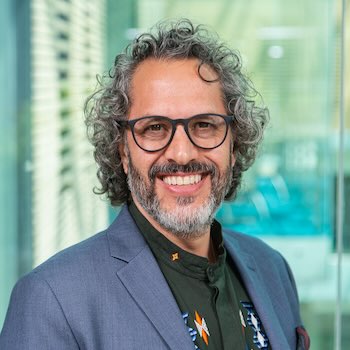
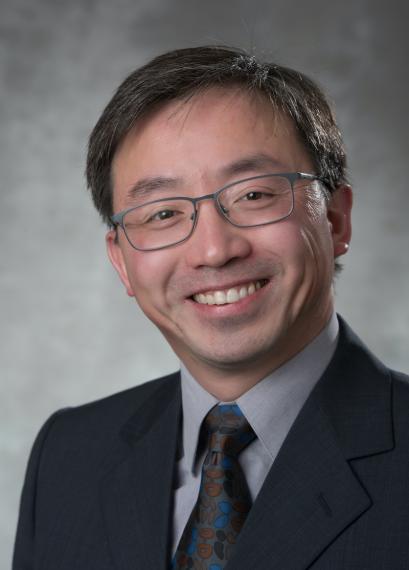
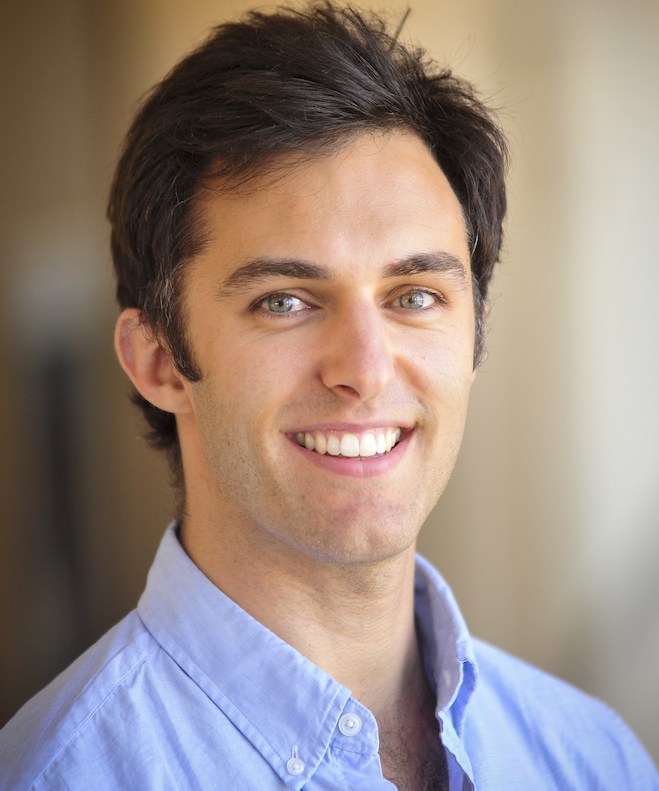
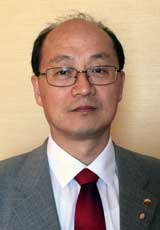
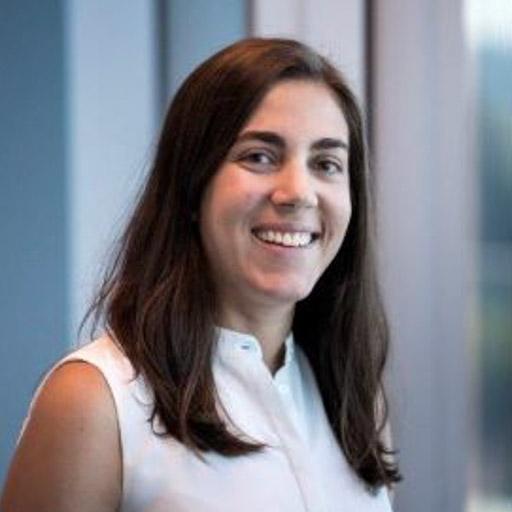
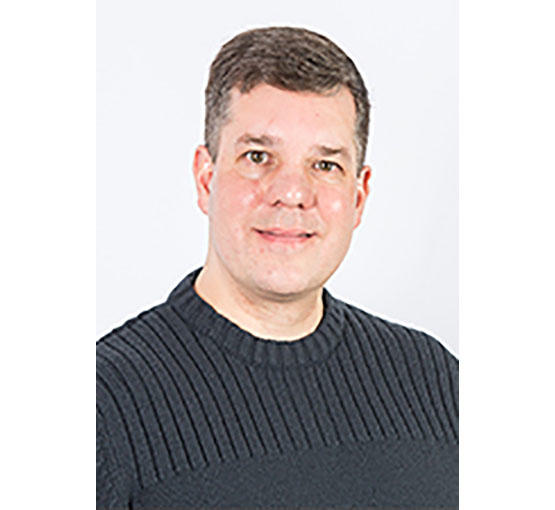
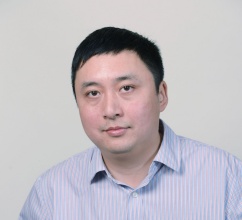
Leijun Li, PhD, P.Eng., is a Professor in the Department of Chemical and Materials Engineering at the University of Alberta, where he also serves as Chair. With a career spanning institutions including Rensselaer Polytechnic Institute, University of Northern Iowa, and Utah State University, he specializes in physical metallurgy , welding metallurgy , and additive manufacturing . His research focuses on microstructure characterization, mechanical properties, and modeling of non-equilibrium phase transformations during welding and AM processes. Current affiliations: University of Alberta, American Welding Society, ASM International Research themes: Additive manufacturing of alloys, Corrosion science, Pipeline metallurgy, Phase transformations, Welding robotics He has received multiple AWS Hobart Awards (4 times) and Savage Awards (2 times) for his work on pipeline welding and metallurgy. His group has published extensively on topics including delta-ferrite retention in Grade 91 steel, inverse bainite transformations , and welding defect analysis . Recent projects include NSERC Alliance Missions Grant for rare earth mineral recovery and Alberta Innovates Ecosystem Program for advanced manufacturing. Key collaborators: Dr. Tom Lienert, Dr. Xiaoying Fang, Dr. P-Q Xu Labs: Rooms 2-158/3-133 (CME Building), Office 12th Floor DICE Building
Ignacio Castillo is a Professor and Associate Dean of Business (Graduate Academic Programs) at the Lazaridis School of Business and Economics, Wilfrid Laurier University. His expertise spans facility location optimization, supply chain management, and sustainable operations. He holds a leadership role in graduate academic programming and teaches courses in operations and statistics. Research focuses on optimizing facility layouts, material handling systems, and closed-loop supply chains. He has developed frameworks for multi-objective facility design and advanced packing optimization algorithms. His work bridges theoretical models with real-world applications in manufacturing and retail sectors. Publications emphasize nonlinear optimization techniques, packing problems, and supply chain coordination strategies. Recent work explores irregular object configurations and retail category space optimization. His textbooks include Business Statistics for Contemporary Decision Making and Operations Management , emphasizing practical decision-making tools. Office: LH4001M | Languages: English, Spanish
Dr. Weihua Zhuang is a University Professor and University Research Chair in the Department of Electrical and Computer Engineering at the University of Waterloo. She holds prestigious fellowships from IEEE, Royal Society of Canada, and other organizations. Her research focuses on future communication networks, including 6G, network virtualization, autonomous vehicles, and smart grids. She has led groundbreaking work on MAC protocols like VeMAC for vehicular networks and has contributed extensively to AI-driven network management. Education : Doctorate in Electrical Engineering, University of New Brunswick, Canada (1993) M.Sc. and B.Sc. in Electrical Engineering, Dalian Maritime University, China Research Interests : Dr. Zhuang's work spans wireless networking, IoT, autonomous systems, and smart infrastructure. She explores solutions for network architecture evolution, machine learning applications in communication systems, and service customization for dynamic environments. Her recent projects include digital twin-driven networks, cross-modal transmission strategies, and AI-native slicing for 6G. Awards : Women's Distinguished Career Award (IEEE VTS, 2021) R.A. Fessenden Award (IEEE Canada, 2021) Fellowships from IEEE, RSC, CAE, EIC Grants & Professional Activities : She led the Tier I Canada Research Chair in Wireless Communication Networks (2010–2024) and has held roles such as IEEE VTS President (2023–2024). Her grants include the NSERC Discovery Accelerator Supplements and PREA awards. She edits journals like IEEE Transactions on Vehicular Technology and co-chairs major conferences. Labs & Teams : Her research group focuses on network architecture, AI-driven protocols, and vehicular communication. Collaborations include projects on 6G, satellite-terrestrial integration, and edge computing for autonomous systems.
Dr. Minglun Gong is a Professor and Director of the School of Computer Science at the University of Guelph (since 2019). Previously, he served as Professor and Head of the Department of Computer Science at Memorial University of Newfoundland. He holds a Ph.D. from the University of Alberta (2003), M.Sc. from Tsinghua University (1997), and B.Engr. from Harbin Engineering University (1994). His research focuses on visual computing, including computer graphics, computer vision, visualization, image processing, and pattern recognition. He has authored over 150 referred papers and holds patents in the field. He is an Associate Editor for Pattern Recognition and IEEE Signal Processing Letters , and has received awards such as the Izaak Walton Killam Memorial Award and multiple best paper awards. Dr. Gong has advised numerous students, including Ph.D./M.Sc. candidates and visiting scholars. His lab's recent work includes UAV path planning for urban reconstruction, image stylization techniques, and 3D human pose estimation. He actively participates in academic service, including editorial roles, conference program committees, and administrative roles at multiple institutions. His teaching spans courses in image processing, computational photography, and technical communication. He is also involved in administrative committees, such as Graduate Studies and Promotion at Memorial University. Key research contributions include advancements in transparent object modeling, underwater 3D reconstruction, and image-to-image translation. His work emphasizes practical applications in fields like medical imaging, autonomous systems, and environmental modeling.
Golnoosh Farnadi is an Assistant Professor at McGill University's School of Computer Science , an Adjunct Professor at Université de Montréal , and a Visiting Faculty Researcher at Google Research . She holds the Canada CIFAR AI Chair and is a core academic member of Mila – Quebec AI Institute . Her research focuses on algorithmic fairness , responsible AI , and optimization . She founded the EQUAL Lab (EQuity & EQuality Using AI and Learning algorithms) to address bias and discrimination in AI systems. Key publications explore fairness in kidney exchange programs, generative model geometry, multilingual LLM de-biasing, and prototype-based recommender systems. Her work bridges causal inference, adversarial robustness, and ethical AI. Google Award for Inclusion Research (2023) Women in AI Awards North America Finalist (2023) Facebook Privacy Enhancing Technologies Award (2021) IVADO Postdoctoral Fellowship (2018–2021) She has supervised over 15 PhD and Master's students, including Prakhar Ganesh (McGill) and William St-Arnaud (Université de Montréal). Her teaching includes Responsible AI and Machine Learning courses at McGill and HEC Montréal.
Melanie Campbell is a Professor at the University of Waterloo, cross-appointed to the School of Optometry and Department of Systems Design Engineering. Her research focuses on the optical properties of the eye, developing imaging systems for diagnosing Alzheimer's disease and diabetic retinopathy through polarization techniques and adaptive optics. PhD in Physics from Australian National University (1982) MSc in Physics from University of Waterloo (1977) BSc in Chemical Physics from University of Toronto (1975) Research interests include: Retinal amyloid detection for Alzheimer's diagnosis Adaptive optics for high-resolution imaging Polarimetry in ocular pathology Presbyopia and ophthalmic corrections Her publications (2012-2019) demonstrate interdisciplinary applications of optics in neuroscience and diabetes research, with key contributions to: Retinal polarization imaging Two-photon therapy systems Cone photoreceptor analysis Animal models of neurodegeneration Scientific honors include: 2019 Laird Lecturer 2014 CAP-INO Medal 2004 Rank Prize in Optoelectronics Fellow of Optical Society of America As director of Campbell Labs, she leads research on retinal imaging techniques and their applications in neurological disease diagnosis.
Daniel Roy is a Full Professor at the University of Toronto, holding cross-appointments in the Department of Statistical Sciences, Computer Science, Electrical and Computer Engineering, and the Department of Computer and Mathematical Sciences at UTSC. He is also a Canada CIFAR AI Chair and Research Director at the Vector Institute, reflecting his leadership in AI and machine learning research. His educational background includes a PhD, MEng, and BSc in Computer Science from MIT, where his doctoral work earned the MIT EECS Sprowls Award. Prior to joining Toronto, he was a Newton International Fellow at the Royal Society and a Research Fellow at Emmanuel College, University of Cambridge. His research centers on foundational principles in machine learning, statistics, and probabilistic reasoning. Key interests include statistical learning theory, Bayesian nonparametrics, probabilistic programming, and information-theoretic generalization. His work bridges theoretical computer science, mathematical logic, and applied probability. His recent publications, appearing in ICML, NeurIPS, COLT, and JMLR, reflect a strong focus on theoretical advances in generalization, online learning, and stochastic optimization. Themes include minimax rates, conditional mutual information, and the role of data in PAC-Bayes bounds. His group has made foundational contributions to probabilistic programming, including work on Church and the computability of conditional probability. NSERC Discovery Accelerator Supplement Ontario Early Researcher Award Google Faculty Research Award Newton International Fellowship MIT EECS Sprowls Award Daniel Roy advises numerous PhD students and postdoctoral researchers, many of whom have gone on to prestigious positions in academia and industry. His group actively collaborates with leading researchers in machine learning and statistics. He is also an Action Editor for the Journal of Machine Learning Research and Transactions of Machine Learning Research, underscoring his role in shaping the field. He leads a vibrant research group focused on theoretical machine learning and probabilistic modeling, and maintains active collaborations with institutions such as MIT, Cambridge, and the Vector Institute. He is also the founder and maintainer of the probabilistic-programming.org wiki, a key resource in the community.
Alla Sheffer is a Professor and Associate Head of Faculty Affairs in the Department of Computer Science at the University of British Columbia, Faculty of Science. She is affiliated with multiple research centers including CAIDA (Centre for Artificial Intelligence Decision-making and Action), the Institute of Applied Mathematics, and ICICS (Institute for Computing, Information and Cognitive Systems). B.Sc., Hebrew University, Jerusalem (1991) M.Sc., Hebrew University, Jerusalem (1995) Ph.D., Hebrew University, Jerusalem (1999) Postdoctoral Research Associate, University of Illinois, Urbana-Champaign (1999-2001) Assistant Professor, Technion, Israel (2001-2003) Assistant Professor, University of British Columbia (2003-2008) Associate Professor, University of British Columbia (2008-present) Professor Sheffer's research focuses on geometry processing, addressing algorithmic challenges in digital shape modeling and manipulation. Her work primarily deals with discrete geometry representations, specifically meshes (polygonal model representations), with applications in computer graphics and computer-aided engineering. She utilizes tools from computational and differential geometry, discrete mathematics, and graph theory to generate, manipulate, and edit discrete geometric models. Her research spans virtual and augmented reality, visual computing, and 3D modeling, with significant contributions to sketch-based modeling, mesh processing, and cloth simulation. The 15 most recent publications reveal a consistent research trajectory in geometry processing, with recent work focusing on vector sketch processing, VR drawing tools, and advanced mesh manipulation techniques. Her work demonstrates a strong connection between human perception and computational methods, particularly in the interpretation of freehand sketches and the generation of perceptually-accurate geometric representations. The recurring themes across her publications include flowlines, curve networks, mesh parameterization, and the application of perceptual studies to improve algorithmic outputs. Eurographics Fellow ACM Fellow IEEE Fellow Royal Society of Canada Fellow SIGGRAPH Academy Member UBC Killam Research Prize NSERC Discovery Accelerator Supplement IBM Faculty Award Professor Sheffer has supervised numerous doctoral and master's students, with recent theses focusing on geometric mesh processing, vector sketch interpretation, VR drawing tools, and garment modeling. Her research group maintains strong connections with industry through various partnerships and has received substantial grant funding to support their innovative work in geometry processing and computer graphics. She teaches courses in computer graphics, geometric modeling, and video game programming, contributing significantly to both undergraduate and graduate education in computer science.
Dr. Yun Zhang is a Professor and Canada Research Chair in the Department of Geodesy and Geomatics Engineering at the University of New Brunswick. He holds a PhD from the Free University of Berlin and has pioneered research in remote sensing, image processing, and computer vision since 2000. His patented technologies are licensed to global companies including PCI Geomatics and DigitalGlobe. Research Focus: Optical/radar image processing, digital photogrammetry, AI applications in geomatics, and sensor fusion for UAV systems. His work enables advanced geospatial analysis across environmental, urban, and defense sectors. Distinctions: First Giuseppe Inghilleri Award (ISPRS 2012) NSERC Synergy Innovation Award from Governor General of Canada (2011) ASPRS Talbert Abrams Grand Award (2005) Featured in CFI 20th Anniversary Book for breakthrough innovations Technology Impact: Solutions deployed by NASA, USGS, Google Earth, and DND Canada across five continents. Recognized among top 9 Canadian research achievements in AUTM's global case studies alongside MIT and Stanford innovations.
Rebecca Dziedzic is an Assistant Professor in the Department of Building, Civil, and Environmental Engineering at Concordia University. Her research focuses on asset management, water system sustainability, and infrastructure resilience. She holds a PhD in Civil and Environmental Engineering from the University of Toronto. Dr. Dziedzic's work integrates machine learning, data science, and policy analysis to address challenges in urban infrastructure systems. Her research explores topics such as water distribution network optimization, climate change adaptation in infrastructure, and circular economy strategies for construction. Recent projects include predicting water main breaks using multivariate models, developing frameworks for energy-efficient pump operation, and assessing carbon footprints in industrial facilities. Dr. Dziedzic supervises graduate students in Civil Engineering (MASc/PhD) and maintains an active research group through the UrbanLinks initiative. Her work has been published in over 30 peer-reviewed articles, with a strong focus on smart city technologies, disaster risk reduction, and sustainable infrastructure design.
Sergey Norin is an Associate Professor in the Department of Mathematics and Statistics at McGill University, specializing in Graph Theory and Combinatorics. His research focuses on structural graph theory, extremal problems, and combinatorial optimization, with a particular emphasis on graph minors, Ramsey numbers, and graph coloring. He contributes to theoretical advancements in discrete mathematics and their algorithmic applications. Recent work includes studies on sparse graphs, graph minors, and properties of hereditary families. His articles address topics like twin-width in random graphs, defective coloring, and asymptotic dimensions. Norin holds no listed awards but is active in publishing cutting-edge research in top-tier journals. No specific advising or grants are detailed in the provided information. His academic profile reflects a strong commitment to advancing combinatorial theory through rigorous mathematical analysis.
Michael J. Jacobson Jr. is a Professor in the Department of Computer Science at the University of Calgary. He also serves as Deputy Director of ISPIA and Director of the Information Security Program. His research focuses on computational number theory and its applications to public-key cryptography, including the development of efficient algorithms for arithmetic in class groups of number fields and algebraic curves. His work aims to enhance cryptographic protocol efficiency while improving security through algorithmic advancements and benchmarking. His research interests span cryptographic protocol design, discrete logarithm problem analysis, and the interplay between number theory and cryptography. Notable contributions include studies on divisor arithmetic on hyperelliptic curves, class group computations in quadratic fields, and the security implications of cryptographic systems. Recent publications highlight his interdisciplinary work in both cryptography and medical informatics, including studies on clinical trial methodologies for dermatological conditions. He has also contributed to foundational research in computational algebraic geometry and algorithm optimization for cryptographic applications. Michael has received no publicly listed scientific awards in the provided texts. His advising and grants include collaborations on topics ranging from cryptographic infrastructure to clinical trial design. He leads the Information Security Program at the University of Calgary, fostering interdisciplinary research in cybersecurity and algorithmic security.
Meng He is a Professor in the Faculty of Computer Science at Dalhousie University. He obtained his PhD from the Cheriton School of Computer Science at the University of Waterloo in 2008 and held postdoctoral and research positions at Carleton University and the University of Waterloo before joining Dalhousie. He is affiliated with the Algorithms & Bioinformatics research cluster and is actively recruiting graduate students for master's and PhD studies, as well as supervising honors theses and USRA internships. His research focuses on the design and analysis of efficient algorithms and data structures, particularly in the areas of computational geometry, databases, text retrieval, and bioinformatics. His work often involves developing succinct and dynamic data structures for fundamental problems in graph theory, trees, and geometric data. His recent publications show a strong focus on path and distance queries in various graph types (especially interval graphs and trees), range counting, mode queries, and succinct representations. The research trend emphasizes theoretical foundations combined with practical efficiency, often addressing dynamic and space-constrained scenarios. Alberto Apostolico Best Paper Award of CPM 2017 Dr. He has supervised numerous PhD and master's students and collaborators, frequently co-authoring with researchers such as J. Ian Munro, Travis Gagie, Gonzalo Navarro, and Norbert Zeh. His research has been supported by grants from NSERC and other funding agencies, though specific grant details are not listed in the provided text. He has also contributed significantly to the academic community through editorial work for journals like Computational Geometry - Theory and Applications and Algorithmica , and by organizing major conferences such as CCCG and WADS. He leads a research group focused on algorithms and data structures, fostering collaborations both within Dalhousie and internationally. Future work is likely to continue exploring the theoretical and practical aspects of dynamic and succinct data structures, with applications in large-scale data processing and information retrieval systems.
Kirill Serkh is an Assistant Professor in the Department of Mathematics at the University of Toronto, with a cross-appointment to the Department of Computer Science. His research focuses on advanced numerical methods for solving complex mathematical problems. Key Research Areas: Numerical analysis, Scientific computing, Partial differential equations, Numerical linear algebra, Quadrature and approximation theory, Special functions His recent work explores high-order numerical schemes for PDEs on non-smooth domains, adaptive methods for oscillatory integrals, and efficient evaluation of Newtonian potentials. He has contributed to the development of hybrid boundary integral methods and spectral techniques for challenging computational problems. While no specific scientific awards are mentioned in the provided text, his publications demonstrate expertise in computational mathematics and interdisciplinary applications in fluid dynamics, wave propagation, and machine learning. His methodological innovations span both theoretical and applied domains.
Julian Lowman is a Professor at the University of Toronto Scarborough (UTSC), specializing in planetary interiors, mantle convection, and computational fluid dynamics. His research focuses on understanding the thermal and structural evolution of planetary mantles, core-mantle interactions, and high-performance numerical modeling techniques. He holds a Ph.D. from York University (1996) and contributes to advancing geodynamic simulations for terrestrial planets and moons. Key research interests include the mechanics of mantle convection, the role of viscosity and compositional variations, and the application of high-performance computing to model planetary processes. He has explored topics such as stagnant-lid convection, plate tectonic dynamics, and the thermal evolution of planetary cores and mantles. His work bridges computational methods with geophysical observations to address questions in Earth science and planetary science. Lowman’s publications span over three decades, addressing topics from Mercury’s mantle dynamics to exoplanet tectonics. His methodologies include advanced numerical models that simulate 2D and 3D convection patterns, fluid dynamics under Arrhenius viscosity regimes, and the influence of curvature on planetary interiors. He collaborates on projects involving mantle plumes, supercontinent cycles, and the interplay between surface tectonics and deep mantle structure. Despite his extensive contributions, no specific scientific awards or grants are explicitly listed in the provided texts. He advises no named students in the available data but likely contributes to graduate training at UTSC. His research aligns with interdisciplinary themes in computational geosciences and planetary evolution.