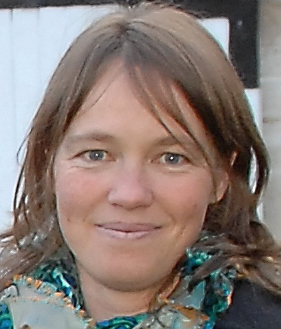
Flavio Vasconcellos Comim is a Full Professor at IQS School of Management in Barcelona, Spain, holding the Chair of Ethics and Christian Thought (intercenter). His research focuses on the intersections of Sustainability, Economics, and Ethics. Fields of Interest : Human Development, Capability Approach, Social Exclusion, Regional Development, AI Ethics, Poverty Stigma (Aporophobia), Sustainable Development, Social Welfare, Justice, and Happiness. Recent research includes publications on youth HDI in Spain (2025), AI bias against the poor (2024), and critiques of Sen's social choice theory (2024). He leads projects like Big data applied to the study of aporophobia and Population Medicine and Sustainable Development collaborations with China. His academic output spans journals like Regional Studies , AI and Society , and Cambridge Journal of Regions, Economy and Society , with keywords spanning Economics, Machine Learning, Human Development, and Social Justice. No formal students or awards are listed in available records.
Nicolò Cesa-Bianchi is a Professor of Computer Science at the University of Milan, where he serves as head of the Computer Science programs. He is also associated with the Department of Electronics, Information and Bioengineering (DEIB) at Politecnico di Milano. Cesa-Bianchi holds significant leadership roles including Board member, Fellow and co-director of the Milan unit of the European Laboratory for Learning and Intelligent Systems (ELLIS), and membership in the prestigious Accademia Nazionale dei Lincei. He is also involved with The European Lighthouse on Secure and Safe AI (ELSA), The European Lighthouse of AI for Sustainability (ELIAS), and The FAIR foundation. Professor Cesa-Bianchi's research focuses on the theoretical foundations of machine learning, with special emphasis on sequential decision making and online learning algorithms. His work spans multiple areas including multi-armed bandit problems, regret analysis, prediction with expert advice, and learning on graphs. He has made significant contributions to understanding the theoretical limits of learning algorithms and developing efficient methods for various learning scenarios. His research has important applications in online markets, social networks, and bioinformatics. His monographs 'Prediction, Learning, and Games' and 'Regret Analysis of Stochastic and Nonstochastic Multi-armed Bandit Problems' are considered seminal works in the field. His recent publications demonstrate continued leadership in advancing the theoretical understanding of machine learning, with 2024-2025 papers covering cooperative online learning, multitask learning, fair trade mechanisms, and refined analyses of bandit algorithms. The research shows increasing focus on practical economic applications while maintaining strong theoretical foundations. Google Research Award Xerox Foundation UAC Award Member of the Accademia Nazionale dei Lincei ELLIS Fellow Cesa-Bianchi has been deeply involved in academic service, having served as action editor for the Machine Learning Journal, IEEE Transactions on Information Theory, and the Journal of Machine Learning Research. He currently serves as associate editor for the Journal of Information and Inference and TheoretiCS. He has held leadership positions including President of the Association for Computational Learning and member of the steering committee for the EC-funded Network of Excellence PASCAL2. He was program chair of the 13th Annual Conference on Computational Learning Theory and the 13th International Conference on Algorithmic Learning Theory. He leads the Laboratory for AI and Learning Algorithms (ALGA) at the University of Milan, which focuses on theoretical and applied research in machine learning. His international collaborations are extensive, with visiting positions at UC Santa Cruz, Graz Technical University, Ecole Normale Supérieure in Paris, Google, and Microsoft Research. As an educator, he teaches advanced courses including Reinforcement Learning and Statistical Methods for Machine Learning, and has supervised numerous students through the years.
Bryon Aragam is an Associate Professor of Econometrics and Statistics and Robert H. Topel Faculty Scholar at the University of Chicago Booth School of Business. His research focuses on the intersection of causality, statistical machine learning, and probabilistic modeling, with particular emphasis on applications to artificial intelligence systems including large language models like ChatGPT and generative models like DALL-E. Dr. Aragam completed his PhD in Statistics and a Masters in Applied Mathematics at UCLA, where he was an NSF graduate research fellow. Prior to joining the University of Chicago, he was a project scientist and postdoctoral researcher in the Machine Learning Department at Carnegie Mellon University. Research Focus: Causal structure learning in probabilistic generative models Key Areas: Causal machine learning, deep generative models, latent variable models, statistical learning theory Applications: AI interpretability, ethics, and fairness in artificial intelligence systems Teaching: Business Statistics, Econometrics and Statistics Colloquium His recent publications demonstrate a strong theoretical foundation combined with practical applications, particularly in understanding and improving AI systems. His work spans causal discovery, graphical models, deep learning, and latent variable modeling, with particular attention to the theoretical properties of these methods and their applications to real-world AI challenges. The research shows a progression toward increasingly complex problems in causal representation learning and AI interpretability. Scientific Awards: Robert H. Topel Faculty Scholar NSF Graduate Research Fellow Dr. Aragam's work has been published in top statistics and machine learning venues including the Annals of Statistics, Neural Information Processing Systems (NeurIPS), the International Conference on Machine Learning (ICML), and the Journal of Machine Learning Research (JMLR). His research group publishes broadly across both statistical and machine learning communities, demonstrating the interdisciplinary nature of his work at the intersection of statistics, machine learning, and causal inference. As a data science consultant for technology and marketing firms, Dr. Aragam has applied his expertise to problems in survey design, customer retention, logistics, and ranking, bridging the gap between theoretical research and practical applications.
Bernhard Schölkopf is a Director at the Max Planck Institute for Intelligent Systems and holds a Professorship at ETH Zurich. He is one of Europe's leading researchers in Artificial Intelligence and serves as co-founder and president of ELLIS (European Laboratory for Learning and Intelligent Systems). His scientific interests focus on machine learning and causal inference, with applications spanning biomedical problems, computational photography, and astronomy. Schölkopf has conducted research at prestigious institutions including AT&T Bell Labs, GMD FIRST in Berlin, and Microsoft Research Cambridge before joining the Max Planck Society in 2001. Schölkopf's recent work examines the tangible risks of AI systems rather than speculative existential threats, highlighting important challenges including algorithmic bias, lack of transparency, privacy violations, worker exploitation, carbon footprint of AI systems, and job displacement across multiple publications in different languages. His scientific achievements have been recognized with numerous prestigious awards: Academy Prize of the Berlin-Brandenburg Academy of Sciences and Humanities Royal Society Milner Award Leibniz Award Koerber European Science Prize BBVA Foundation Frontiers of Knowledge Award Allen Newell Award Fellow of the ACM Fellow of the CIFAR Program "Learning in Machines and Brains" Schölkopf is a member of the German Academy of Sciences (Leopoldina) and co-founded the series of Machine Learning Summer Schools. His work bridges theoretical advances in machine learning with practical applications across diverse domains, while advocating for responsible AI development that addresses real-world challenges rather than speculative existential threats.
Yuan Zhong is an Associate Professor of Operations Management at the University of Chicago Booth School of Business . He previously held positions as an Assistant Professor at Columbia University’s Department of Industrial Engineering and Operations Research and was a Postdoctoral Scholar at UC Berkeley’s Computer Science Department. Education: PhD in Operations Research, MIT (2012) MA in Mathematics, Caltech (2008) BA in Mathematics, University of Cambridge (2006) His research focuses on applied probability and stochastic system design , with applications in cloud computing , supply chain management , and e-commerce logistics . Recent work explores multi-period production systems and dynamic resource allocation in data centers and healthcare operations . Recent publications analyze cloud value chains , sparse graph design for delivery networks, and process flexibility in manufacturing. He has contributed to journals like Operations Research , Annals of Applied Probability , and Stochastic Systems . Scientific Awards: 2012 Kenneth C. Sevcik Outstanding Student Paper Award Best Student Paper Award at ACM Sigmetrics (2012) He teaches courses in business process fundamentals and queueing theory , with a future schedule including Operations Management: Business Process Fundamentals (2025–2026). No explicit student advising list was provided.
Scott Nelson is an Associate Professor of Finance at the University of Chicago Booth School of Business. His research bridges consumer credit markets, regulatory frameworks, and behavioral economics, with a focus on how information asymmetries and algorithmic decision-making shape market outcomes. He has contributed to understanding the impacts of the 2009 CARD Act, eviction protections in housing markets, and fairness in credit scoring systems. PhD in Economics, Massachusetts Institute of Technology BA (summa cum laude) in Economics and Mathematics, Yale College Nelson's work employs diverse data sources, including credit reports, court filings, and tax records, combined with structural models to analyze consumer and firm behavior. Key themes include regulatory efficiency, validity disparities in predictive models, and the welfare implications of policy interventions. His articles reveal trends in algorithmic regulation (2025), eviction dynamics (2025), credit scoring disparities (2024), and public finance impacts on Chinese real estate (2023). These publications highlight interdisciplinary methodologies integrating economics, law, and data science. Scientific awards include the AQR Top Finance Graduate Award (2018) and National Science Foundation Graduate Research Fellowship. He has held postdoctoral roles at the Consumer Financial Protection Bureau/Princeton University and visiting research positions at the Federal Reserve Bank of Boston.
Julian Fierrez is a Full Professor at the School of Engineering, Universidad Autonoma de Madrid. With an h-index of 74 and over 20,000 citations, his work spans biometrics, signal/image processing, artificial intelligence, and human-computer interaction. Key research areas include: Biometric anti-spoofing and DeepFakes detection Mobile and behavioral biometrics Bias/fairness in AI systems Biometric applications in e-health and education Security in multimodal biometric systems His recent publications show strong focus on deep learning applications for biometric security, with specific subfields including fake detection, keystroke authentication, facial analysis for Parkinson detection, and privacy-preserving AI. He serves as Associate Editor for multiple IEEE and Elsevier journals. Scientific distinctions include: IAPR Young Biometrics Investigator Award (2017) Miguel Catalan Award to Best Researcher under 40 (2017) EURASIP Best PhD Award (2012) EBF European Biometric Industry Award (2006) Prof. Fierrez leads the BiDA Lab and supervises students like Ruben Tolosana and Aythami Morales. Current projects include BBforTAI (Biometrics and Behavior for Unbiased & Trustworthy AI) and PRIMA (Privacy Matters). He also contributes to standardization efforts in biometric evaluation.
Claudio Ulises Cortes Garcia is a Professor at the Department of Computer Science , Technical University of Catalonia, and leads the IDEAI-UPC (Intelligent Data Science and Artificial Intelligence Research Group) and KEMLG (Knowledge Engineering and Machine Learning Group). He is affiliated with the Barcelona Supercomputing Center (BSC-CNS) and the Barcelona School of Informatics (FIB). With a Doctor en Informática (PhD in Computer Science) and Ingeniero Industrial y de Sistemas (Industrial and Systems Engineering) degrees, his work spans Artificial Intelligence , Intelligent Agents , and Assistive Technology . His research integrates European Programs and Internet with applications in Second Life and Software . His recent publications focus on Post-COVID cognitive effects , AI ethics , and agent-based modeling for urban water management. He received the Doctor Honoris Causa from Universitat de Girona in 2024 and has collaborated on projects like DIGITAfrica and HUB D'INNOVACIÓ PEDIÀTRICA . His work bridges Neuroscience , Environmental Modeling , and Digital Humanities , with over 650 activities recorded in his academic career. ORCID : 0000-0003-0192-3096 WoS Researcher ID : B-7284-2009 Scopus Author ID : 7004065770
Mireia Artigot Golobardes is an Associate Professor of Civil Law at the Faculty of Law, Pompeu Fabra University, where she holds a Ramón y Cajal research fellowship. She is admitted to the bar in both New York and Barcelona and previously clerked for Hon. Edwin H. Stern at the New Jersey Appellate Division. Her interdisciplinary research examines private law through economic lenses, with specializations in contract law, consumer protection, and digital market regulation. Education: JSD & LLM, Cornell Law School Law Degree & BA Economics, Pompeu Fabra University BA Music, Conservatory of Barcelona Research Focus: Her work investigates algorithmic decision-making in consumer transactions, AI's impact on fundamental rights, sustainability in contract law, and regulatory frameworks for digital markets. She leads significant projects including: JuLIA (Justice, Fundamental Rights and AI) - EU-funded judicial training program AlgorithmLaw - Examining algorithmic transparency in legal norms iConsumers - Studying digital market impacts on consumer rights Publications: Her scholarly output demonstrates consistent focus on law-economics-technology intersections. Recent works examine algorithmic personalization in consumer contracts (2022), sustainability challenges in market regulation (2024), and limitations of data protection frameworks (2021). The publications show progressive engagement with emerging digital law challenges. Awards & Honors: Ramón y Cajal Research Fellowship (Spain's prestigious research award) Professional Activities: She maintains international connections through visiting professorships at Brooklyn Law School, University of Kassel, University of Trento, and research visits to NYU and University of Western Cape. She serves as Teaching Fellow for the Europaeum Program at Oxford University and is affiliated with UPF's Center for Studies in AI and Natural Intelligence.
Carlos Castillo is an ICREA Research Professor at Universitat Pompeu Fabra, leading the Social and Responsible Computing Research Group. Their work focuses on algorithmic fairness, social computing, and mitigating bias in AI systems across criminal justice, education, healthcare, and hiring. Key projects include the Horizon Europe FINDHR initiative to detect discrimination in algorithmic hiring, causal inference studies on recidivism risk prediction, and analyzing gender biases in student evaluations. Research Interests: Algorithmic fairness, bias mitigation in AI systems, social data ethics, criminal justice analytics, education technology, and health informatics. Notable contributions include the FA*IR fair ranking algorithm and foundational work on auditing algorithms in digital health. Recent Trends in Articles: Recent work emphasizes interdisciplinary applications of algorithmic fairness—e.g., improving representativeness in hiring datasets, analyzing disparities in medical AI models, and addressing bias in student satisfaction surveys. Publications also explore radicalization pathways via recommendation systems and the societal impact of algorithmic decision-making. Awards: Best Paper Awards in CIKM 2022 (Francesco Fabbri), ICAIL 2019 (Marius Miron), and ISCRAM 2013 (Muhammad Imran). Grants: Leads the Horizon Europe FINDHR project and collaborates with the European Commission on algorithmic discrimination research. Labs/Teams: Directs the Social and Responsible Computing Group, focusing on interdisciplinary projects with PhD students and industry partnerships.
Cecilio Angulo Bahón is a full Professor at the Polytechnic University of Catalonia (UPC), affiliated with the Barcelona School of Industrial Engineering (ETSEIB) and the Department of Systems, Automatics and Industrial Informatics Engineering . He leads research in Artificial Intelligence and Robotics , with significant contributions to healthcare data analytics, digital twins, and human-robot collaboration. His research spans machine learning for medical data harmonization, generative adversarial networks in health informatics, and evolutionary algorithms for control systems. Recent publications focus on synthetic healthcare data generation, climate-resilient agriculture , and UMAP-based data analysis . His work bridges AI theory with practical applications in industrial and healthcare domains. Scientific awards include the Sant Jordi 2023 Digital Polytechnic Initiative Award . He has supervised doctoral candidates like Carlos Flores-Vázquez and N. Raya, with key collaborations at the IDEAI-UPC Intelligent Data Science and AI Research Group and the Institute of Robotics and Industrial Informatics (CSIC-UPC).
Antonio Aloisi is a Professor of Labor Law at IE University in Madrid, where he teaches European and Comparative Labour Law and guides students in digital regulation. He co-leads the Jean Monnet Center 'Lawtomation' and is affiliated with the 'LawAhead' Center on the Legal Profession, while also serving as a fellow at the UNESCO Chair in Ethics and Governance of Artificial Intelligence. His research focuses on the impact of digital transformation on labor markets, particularly in the gig economy and algorithmic decision-making, blending insights from labor law, data protection, and EU policy. Antonio’s work examines the dual transition of green and digital economies, advocating for governance frameworks that balance innovation with labor rights. His scholarship frequently appears in high-impact journals and is cited in policy documents, court rulings, and media, reflecting his influence on debates about platform work and AI surveillance. He has held visiting roles at institutions like NYU School of Law, Fundação Getulio Vargas, and European University Institute, and his collaborations with international bodies such as the European Parliament, ILO, and OECD underscore his global engagement. Articles by Aloisi highlight trends in algorithmic management, EU Platform Work Directive, and the socio-legal implications of AI. His work critiques the 'robocalypse' narrative, emphasizing that automation often intensifies organizational processes rather than displacing workers, while advocating for collective action and regulatory innovation. Scientific awards include the Marie Skłodowska-Curie Fellowship for the 'Boss Ex Machina' project and a research grant by the European Commission. Scientific Awards: Marie Skłodowska-Curie Fellowship (2020-2022) European Commission Research Grant
David José Soto Díaz is a Professor in the Department of Public Law at the Faculty of Law, University of A Coruña (UDC). His academic focus centers on procedural law, particularly criminal procedural law, with growing expertise in digital law and artificial intelligence applications in legal contexts. He maintains an active research profile with an ORCID identifier 0000-0002-5078-4291 and is affiliated with the research group "Criminology, Legal Psychology and Criminal Justice in the 21st Century". Dr. Soto Díaz's research spans criminal procedural law, digital law, artificial intelligence in legal contexts, criminology, and legal psychology. His work explores the intersection of technology and law, particularly in digital legal proceedings and AI applications in justice systems. He has investigated how emerging technologies impact traditional legal frameworks and procedural justice, with publications addressing evidence in criminal proceedings, alternative dispute resolution, and the implications of digital transformation for legal practice. His publication record demonstrates consistent scholarly output from 2013-2023, with increasing attention to digital law and AI in recent years. His work appears in journals like Anuario da Facultade de Dereito da Universidade da Coruña , REVISTA VASCA DE DERECHO PROCESAL Y ARBITRAJE , and Ars Iuris Salmanticensis , alongside numerous book chapters and conference communications. His research shows a clear trajectory from traditional procedural law toward contemporary challenges at the intersection of law and technology. Dr. Soto Díaz has directed numerous bachelor's and master's theses since 2013 covering diverse legal topics including constitutional law, criminal procedure, private contracting, and European Union law. His thesis supervision addresses contemporary legal challenges such as human trafficking, gender violence, immigration issues, and the legal implications of AI. He has participated in multiple research projects funded by the Ministry of Education, University and Vocational Training, the Ministry of Science and Innovation, and regional Galician authorities, with project durations spanning from 2015-2026. He is actively involved with the "Criminology, Legal Psychology and Criminal Justice in the 21st Century" research group and has collaborated with the "Grupo de Investigación sobre Criminoloxía, Psicoloxía Xurídica e Xustiza Penal no século XXI, Ecrim." His work connects legal theory with practical applications in contemporary justice systems, as evidenced by his conference presentations at universities across Spain, Portugal, Italy, and the Netherlands.
Sylvie Putot is a Professor of Computer Science at École Polytechnique, where she focuses on formal verification of numerical programs and cyber-physical systems. She leads the Cosynus team at LIX laboratory and organizes the LIX Seminar series. Current affiliation: École Polytechnique (Computer Science Department) Prior affiliation: CEA LIST (developer of FLUCTUAT static analyzer) Her research spans formal methods for cyber-physical systems , emphasizing reachability analysis , invariant synthesis , and probabilistic verification . She combines abstract interpretation with zonotopic domains and constraint programming to address numerical stability and safety in AI-driven control systems. Recent publications highlight work on Safe AI through Formal methods (SAIF project) , including probabilistic guarantees for neural networks and applications in mobile robotics. Her team’s best paper award at EMSOFT 2015 recognized scalable quadratic invariant computation for embedded systems. Scientific awards: Best paper award, ACM SIGBED International Conference on Embedded Software (EMSOFT 2015) She has supervised numerous PhD students in topics like mobile robotics , neural network verification , and numerical error analysis . Active in ANR projects (COVERIF, MALTHY, DEFIS) and currently leads the PEPR IA initiative on AI validation.
Josep Curto is a full Professor at Universitat Oberta de Catalunya and Adjunct Professor at IE University . He serves as Academic Director of the Master in Business Analytics (MIBA) , Facilitator at the Center for AI Safety , and founder of AthenaCore and Delfos Research . His career spans 25+ years in data science education across 15+ institutions.