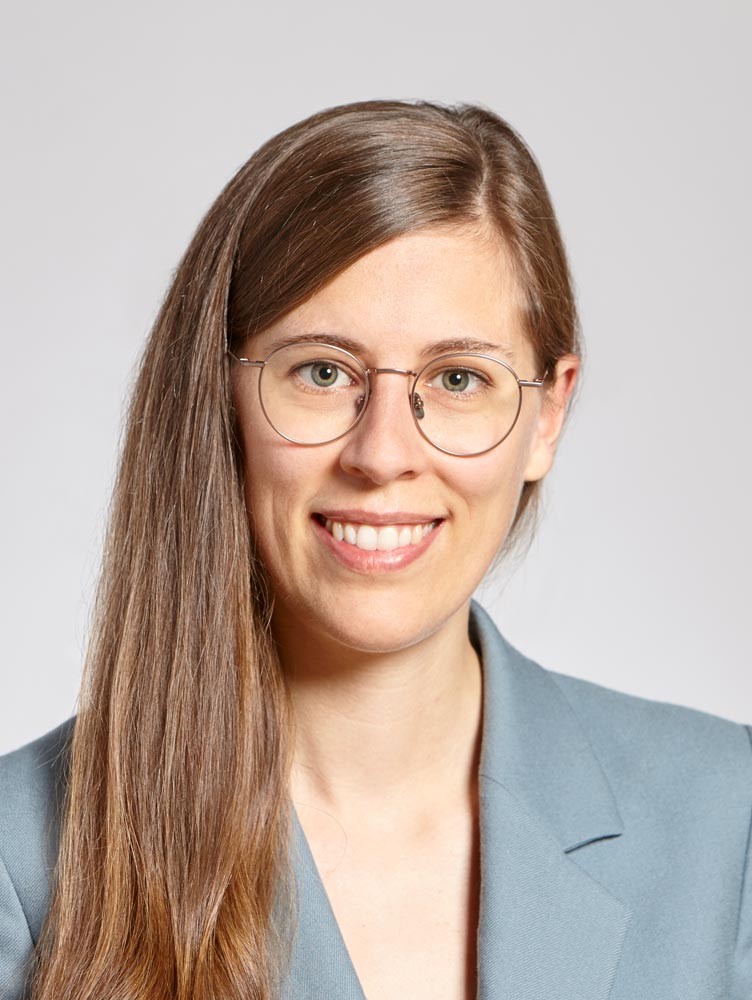
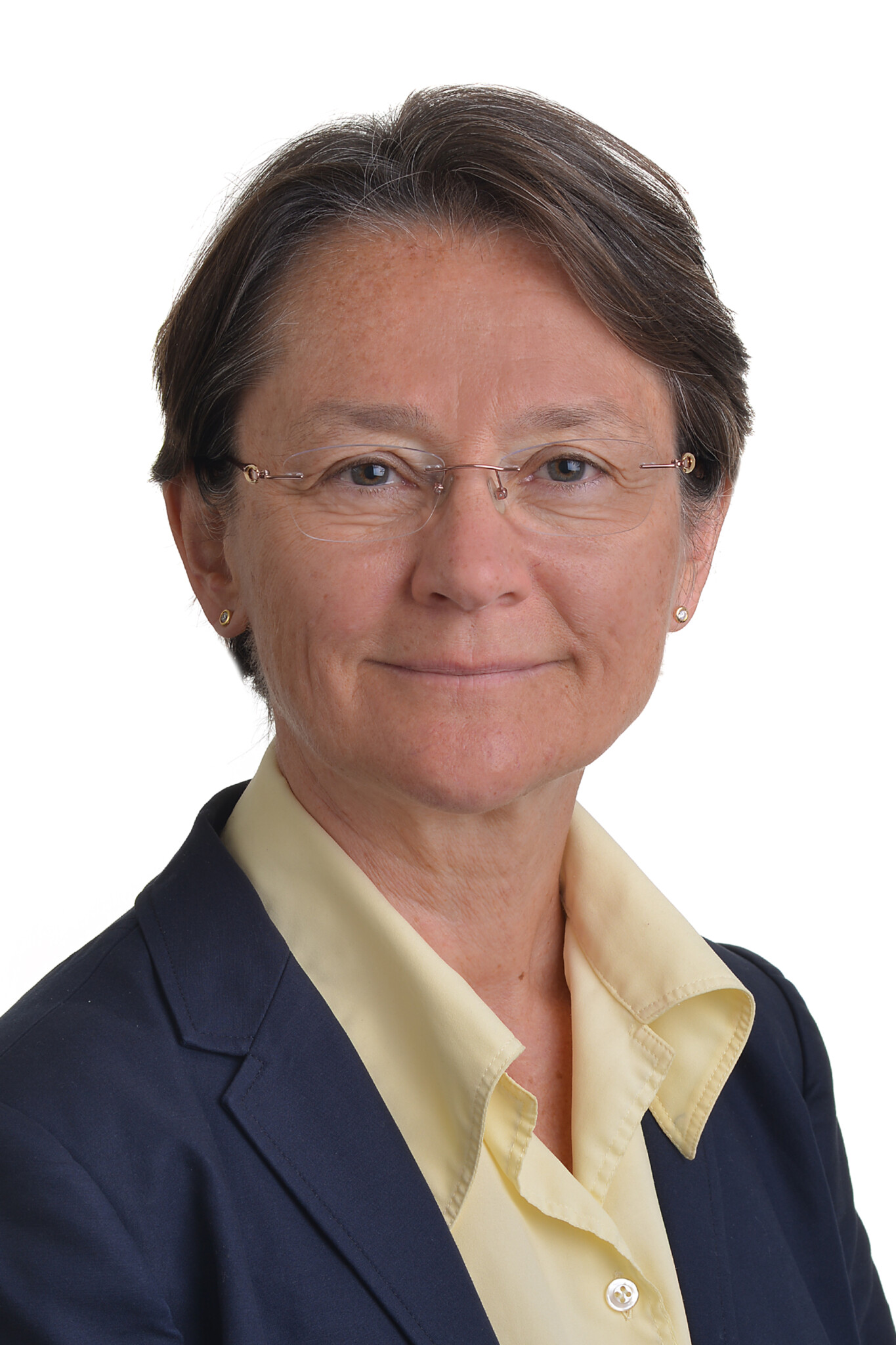
Stefan Bechtold is a Full Professor of Intellectual Property at ETH Zurich since 2013 and Associate Vice President IP Policy (2023–2026). He is affiliated with the ETH AI Center and serves on global advisory boards including the Academic Advisory Board of the German Federal Ministry for Economic Affairs and Climate Action. His interdisciplinary research bridges law, economics, and computer science.
Carlo Alberto Furia is an Associate Professor and Vice Dean at the Faculty of Informatics, Università della Svizzera italiana (USI). He is affiliated with the Software Institute, where he leads the ATOM research group. His academic journey includes prior roles as an Associate Professor at Chalmers University of Technology and a Senior Researcher at ETH Zurich’s Chair of Software Engineering. PhD in Computer Science, Politecnico di Milano Master of Science in Computer Science, University of Illinois at Chicago Laurea in Computer Science and Engineering, Politecnico di Milano His research centers on formal methods for software engineering, aiming to enhance software correctness, reliability, and quality through rigorous techniques. Key areas include automated program verification, contract-based development, loop invariant inference, and empirical evaluation using Bayesian data analysis. He emphasizes practical applicability and automation in formal methods. His recent publications reflect a strong focus on program analysis at the bytecode level, multilingual software analysis, automated repair of Android security issues, and empirical methodologies. These works span topics such as JVM substitutability, exception behavior in Java bytecode, and information flow security, demonstrating a consistent thread in improving software robustness through formal and automated techniques. He is actively involved in the software engineering research community as an Associate Editor of the Empirical Software Engineering (EMSE) journal and as a Program Committee member for major conferences including FASE, FM, ASE, ICSE, and CauSE. Carlo Furia has advised multiple research projects and supervised student theses. He has led and contributed to funded research initiatives, particularly in program analysis and verification. His group has developed tools such as AutoProof and other software artifacts available through the ATOM software page. He regularly teaches courses such as Software Analysis, Programming Fundamentals, and Software Design & Modeling. He leads the ATOM research group, which focuses on advancing automated techniques for software testing, analysis, and verification. The group develops practical tools and conducts empirical studies to validate research outcomes.
Prof. Catherine De Wolf is an Assistant Professor at ETH Zurich's Department of Civil, Environmental and Geomatic Engineering and Deputy Head of the Institute of Construction and Infrastructure Management. She leads the Chair of Circular Engineering for Architecture (CEA), an interdisciplinary lab focused on automating building material reuse through digital innovation. Her work bridges academia, government, and industry, exemplified by partnerships with institutions like the Centre Pompidou and initiatives like Anku and the Digital Circular Economy (DiCE) Lab. She is also a faculty member at ETH Zurich's AI Center and collaborates with EMPA's Urban Energy Systems Lab. Her roles include Chair of the Design++ Advisory Board and PI in the National Centre of Competence in Research on Digital Fabrication (DFAB). Education: Catherine holds a PhD in Building Technology from MIT, with prior studies in Civil Engineering and Architecture at VUB and ULB. She has additional training in documentary filmmaking and postdoctoral research at the University of Cambridge and EPFL's Structural Xploration Lab, funded by Marie Sklodowska-Curie and Swiss Excellence scholarships. Research Interests: Her work centers on digital tools for circular construction, including blockchain-based material passports, AI-driven design, and automated deconstruction planning. Key areas include: Material reuse and lifecycle analysis Building Information Modeling (BIM) applications Decentralized data networks in construction Carbon reduction in structural systems Interdisciplinary collaboration across engineering, architecture, and computer science Awards: Marie Sklodowska-Curie Postdoctoral Fellowship (European Commission) Swiss Excellence Scholarship Advising & Grants: Catherine has overseen projects funded by EU initiatives and industry partnerships. Her research group actively collaborates with firms like Arup and Thornton Tomasetti through initiatives such as the Structural Engineers 2050 Commitment. She advises on policy frameworks like the EU's Level(s) sustainability standard. Labs & Teams: Her CEA lab operates with 20+ researchers and has pioneered tools like the '5D Digital Circular Workflow.' The lab's work is showcased in real-world projects such as the Centre Pompidou material reuse case study.
Andrea Barbon is an Assistant Professor of Finance at the University of St. Gallen (HSG) , affiliated with the Center for Financial Services Innovation (FSI-HSG) . His research and teaching focus on Fintech , Blockchain , Decentralized Finance (DeFi) , Asset Pricing , and Monetary Policy . Education: Bachelor's Degree in Pure and Applied Mathematics - University of Padua, Italy Master's Degree in Pure Mathematics - WU Vienna University of Economics and Business, The Netherlands Ph.D. in Financial Economics - Università della Svizzera italiana (USI) Lugano and Swiss Finance Institute Barbon's research bridges financial economics with machine learning and cryptocurrency market dynamics . He explores topics such as Bitcoin and altcoin trading strategies , stablecoin rate responses to monetary policy , and liquidity provision in ETFs and options markets . His work also extends to NFTs , non-standard errors in financial data , and market quality in crypto exchanges . His publications reflect a strong emphasis on cryptocurrency , algorithmic trading , and monetary policy transmission . He has contributed to debates on NFT bubbles , DeFi's policy challenges , and gamma fragility in options markets . Barbon teaches advanced courses in Mathematics for Finance (PhD) and Financial Technology (Master's). Barbon is affiliated with the Center for Financial Services Innovation (FSI-HSG) , a hub for research on financial technology and innovation. His work often intersects with blockchain and machine learning applications in finance.
Ingrid Bauer-Hänsel is an Assistant Professor of IT Management at the University of St. Gallen (HSG), affiliated with the Information Management (IWI-HSG) department. Her academic career includes roles as a Senior Technology Manager at Chage:ON (AMAG Group) and a doctoral researcher at the University of Zurich. She holds a Ph.D. in Blockchain Information Systems from the University of Zurich and a M.Sc. in Business Administration and Information Systems from Copenhagen Business School. Her research focuses on blockchain technologies, data markets, agile IT systems, and interorganizational systems design. Notable projects include the InnoSuisse Cardossier Project and studies on blockchain consortia. Bauer-Hänsel teaches courses such as Agile IT and Organization , Information Management , and Business Informatics 1 at both bachelor and master levels. She received the 2018 2nd Runner-up Best Paper Award at the ICIS conference. Her work explores socio-technical systems, tokenization, and AI-driven business models, with a particular emphasis on automotive and financial sectors. Current initiatives include designing blockchain-based data markets and exploring generative AI’s impact on knowledge work. Bauer-Hänsel’s professional background includes IT consulting at PwC, risk management roles at Danske Bank, and academic research at IBM and the Karlsruhe Institute of Technology. She actively contributes to bridging academic research with industry applications through collaborative projects and advisory roles.
Omri Ben-Shahar is the Leo and Eileen Herzel Professor of Law at the University of Chicago Law School, where he specializes in contract law, consumer protection, and the intersection of law and economics. His research examines market regulation through private law mechanisms, with emphasis on disclosure requirements, behavioral economics applications, and the design of efficient legal remedies in commercial contexts. Ben-Shahar's scholarly work focuses on developing frameworks for modern regulatory challenges, including: Personalization of legal rules using behavioral data Reform of mandatory disclosure regimes Efficiency of boilerplate contracts in self-regulation Algorithmic governance and liability frameworks Privacy tradeoffs in data-driven markets His recent publications demonstrate a strong emphasis on empirical methodologies and technological adaptation in law, particularly regarding AI governance, dynamic contract interpretation, and quantitative analysis of legal doctrines. This evolving research trajectory addresses emerging challenges in digital markets and algorithmic decision-making.
Matthias Stürmer serves as a Professor at Bern University of Applied Sciences (BFH) within the School of Management and Head of the Institute for Public Sector Transformation (IPST). He concurrently holds a lecturer position at the University of Bern. His professional identity centers on Swiss digital governance initiatives, with active leadership roles in @Parldigi, @DigitalImpactCH, @CH_Open, and @OpendataCH advocating for open source, open data, and transparent public sector innovation. His research program bridges legal technology and digital governance, specializing in multilingual (German/French/Italian) processing of Swiss jurisprudence. Core focus areas include developing AI systems for judicial summarization and criticality prediction, advancing digital sovereignty frameworks, and analyzing sustainable public procurement practices. He investigates the tension between open justice principles and privacy preservation in court documentation, while pioneering methods for anonymizing legal texts against re-identification threats from large language models. Stürmer's publication trajectory reveals a strategic shift toward legal AI applications since 2020, with 12 of his 15 most recent works addressing multilingual legal processing challenges. His scholarship consistently targets Swiss institutional contexts, creating specialized datasets like Multilegalpile and Lextreme while examining practical implementation barriers for open source adoption in public administration. As director of IPST at BFH, he leads institutional efforts to transform public sector services through open standards and collaborative governance models. His team develops practical frameworks for digital sovereignty implementation and sustainable ICT procurement, directly influencing Swiss federal policies on open data and public sector technology adoption.
Prof. Dennis Fehrenbacher is an Associate Professor of Management Accounting at the University of St. Gallen (HSG), Switzerland, where he also serves as Director. He previously held roles at Monash University, Australia, and Siemens Ltd., Dublin. His expertise spans Management Accounting, Accounting Information Systems, and Enterprise Risk Management. He has been recognized for his teaching excellence, including the Innovation in Teaching and Learning Award and Dean’s Commendation. His research focuses on digitization, sustainability accounting, and behavioral aspects of managerial decisions. Education: PhD: University of Stuttgart, Germany MSc: European School of Business, Germany BSc: Dublin City University, Ireland Research Interests: His work explores how technology transforms accounting practices, including AI in budgeting, risk management frameworks, and performance evaluation systems. Recent trends in his publications highlight applications of generative AI, digital visualization tools, and ethical considerations in automated decision-making. Awards & Recognition: Innovation in Teaching (Monash University) Editor-in-Chief Commendation (Journal Decision Support Systems) Best Paper Award (AFAANZ Management Accounting Stream) Professional Activities: As an active researcher, he has presented keynote lectures at institutions like WU Wien and University of Melbourne. He serves on ISO risk management committees and editorial boards of journals like Decision Support Systems and Behavioral Research in Accounting . Labs & Collaborations: Involved in interdisciplinary projects on enterprise risk management and digital transformation initiatives at HSG. His work frequently intersects with industry partners through consulting roles and standardization efforts.
Anne Catherine Hahn is a Lecturer in Law and Compliance at Kalaidos Law School (part of Kalaidos University of Applied Sciences). As a Partner at Wartmann Merker, she specializes in corporate litigation, arbitration, and compliance risk management. Dr. iur., LL.M., Universität Fribourg and University of Michigan Her research focuses on legal compliance in digital transformation, corporate liability, and arbitration law. She explores intersections between technology regulation, data privacy, and business ethics, with a particular emphasis on cross-border compliance challenges. Recent publications analyze AI regulation, digital medical applications, and corporate liability frameworks. Awards include Walter Hug Preis and Peter Jäggi Preis for her doctoral work. Walter Hug Preis Peter Jäggi Preis She leads continuing education programs and contributes to ethics committees, including serving as President of the Equal Opportunities Mediation Commission for the ETH domain.
Ursula Sury is a Swiss law professor, Vice Dean at Lucerne School of Computer Science and Information Technology, and founder of Advokatur Sury AG. Specializing in IT law, data protection, and legal risk management, she combines academic leadership with practical legal consultancy. Her career spans academic governance, postgraduate teaching, and interdisciplinary research. University of Zurich (1986) - Law Harvard Business School (2013) - Executive Education Columbia University (2008) - Legal Mediation Her research focuses on data protection law , blockchain governance , and digital transformation across sectors. Recent work examines AI compliance , cross-border data flows , and cybersecurity liability . She leads EU Commission research projects on regional innovation strategies. Key article trends include: Comparative analysis of Swiss and GDPR frameworks Legal challenges in blockchain/DLT systems Corporate responsibility for AI decisions Cloud computing liabilities Smart home privacy issues Digital identity regulations As founder of Advokatur Sury AG since 1993, she advises on Data protection IT contract management Digital compliance Her academic leadership includes directing the Management & Law master's program and serving on the CRUS rector conference. She represents Switzerland in international digital law forums.
Dov Fox is a Professor of Law and Director of the Center for Health Law Policy and Bioethics at the University of San Diego School of Law. His scholarly work spans health law, bioethics, reproductive rights, and constitutional law, with a particular focus on the intersection of medicine, technology, and legal regulation. His research interests include: Health Law and Policy Bioethics and Medical Ethics Reproductive Law and Rights Constitutional Law as applied to medical issues Genomics and Genetic Privacy Law Medical Conscience and Professional Regulation Fetal Personhood and Reproductive Negligence Professor Fox's recent scholarly output demonstrates a strong focus on contemporary issues in reproductive law following the Dobbs decision, fetal personhood doctrines, medical conscience protections, and the legal implications of emerging biotechnologies. His work frequently examines tensions between individual rights, medical practice, and regulatory frameworks, with particular attention to how law shapes medical decision-making and patient outcomes. His recent publications address critical questions about reproductive loss valuation, polygenic embryo screening, and the legal treatment of frozen embryos in post-Dobbs America. His notable scholarly contributions include: Analysis of abortion jurisprudence and policy evolution Examination of fetal personhood doctrines across multiple contexts Studies on reproductive negligence and damages frameworks Research on genetic privacy and data sharing in medical contexts Exploration of medical conscience protections and limitations Investigation of racial dimensions in assisted reproduction As Director of the Center for Health Law Policy and Bioethics, Professor Fox oversees research initiatives examining contemporary challenges at the intersection of law, medicine, and technology. His leadership in this role positions him at the forefront of scholarly discourse on emerging issues in health law and bioethics.
Christoph Schindler is a Swiss Professor at the Lucerne School of Design, Film and Art (HSLU), where he heads the Bachelor's Programme in Object Design since 2014. He holds a doctorate in architecture from ETH Zurich and combines academic work with his role as partner in the Zurich-based furniture design firm schindlersalmerón GmbH , which he co-founded in 2005. Research Interests: His work spans digital fabrication , sustainable product design , and woodworking innovation , focusing on merging computational technologies with natural material properties. Key areas include parametric modeling , moldless manufacturing , and material lifecycle systems . He explores the intersection of Swiss craft traditions with algorithmic design through projects like the ZipShape method and Serial Branches series. Scientific Contributions: He has published over 40 works, with recent 2025-2023 articles examining social object design , climate-responsive furniture , and sustainable Swiss wood systems . His research appears in outlets like International Journal of Architectural Computing and Werkspuren , while his ETH dissertation on fabrication-based architectural periodization remains influential. Awards: iF Design Award (2019), Lista Office Design Award GOLD (2012), iF Material Design Award (2008) Teaching: Lecturer at ZHAW (2010-2014), Royal Danish Academy external examiner (2014-2026), and workshop leader at institutions including ETH Zurich, NTNU Trondheim, and Virginia Tech Industry Roles: Founding member of schindlersalmerón (2005-present) and Swiss Design Board representative (2022)
Prof. Henriette Elise Breymann is a Professor in the Department of Finance, Risk Management and Econometrics at the ZHAW School of Engineering, Zurich University of Applied Sciences (ZHAW). Her research focuses on financial risk modeling, algorithmic contract standards (ACTUS), big data analytics, and regulatory technology (RegTech). She has led numerous projects, including Data Driven Financial Risk and Regulatory Reporting, Strengthening Swiss Financial SMEs through Reinforcement Learning, and Explainable AI in Credit Risk Management. Her work intersects finance, physics, and computational methods, with contributions to energy economics (e.g., renewable energy systems), high-frequency financial data analysis, and quantum chaos applications. She co-authored Unified Financial Analysis: The Missing Links of Finance (2009) and pioneered the ACTUS framework for standardizing financial contracts. Projects: 12+ leadership roles in applied finance, risk modeling, and energy systems. Key Expertise: Regulatory reporting, stress testing, and data-driven financial systems. ACTUS Standard: Global initiative for granular financial contract representation. Her research spans interdisciplinary collaborations, including the Risk- and Finance-Lab, and has been presented at major conferences like the Society for Economic Measurement. She advises on regulatory innovations and financial resilience strategies for SMEs.
Isabelle Oehri holds dual roles as Deputy Head of the Competence Center for Management and Law and Lecturer at the Lucerne School of Business (HSLU). She specializes in business law, labor law, and data protection, with notable expertise in intellectual property and entrepreneurship. Her academic background includes a Master's in Law & Economics from the University of St. Gallen (2011) and a legal qualification as a Zurich-licensed attorney (2015). She leads the 'Smart-up' startup support program and chairs the 'Recht & Steuern' department at HSLU. Her research focuses on AI ethics in law, employment law challenges (e.g., contractual obligations, termination alternatives), and digital transformation in business practices. She actively contributes to regulatory discussions on data protection (EDÖB investigations) and intellectual property rights in AI contexts. Her work bridges academic research with practical business needs, particularly for SMEs. Key projects include evaluating Luzern’s sex work regulations, analyzing administrative burdens for SMEs, and exploring agile management practices. She serves on the University Council of the University of Liechtenstein and co-leads the 'Digital Female Founders' initiative to promote gender diversity in tech startups.