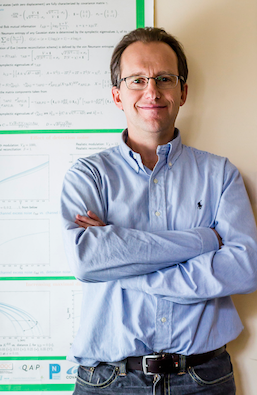
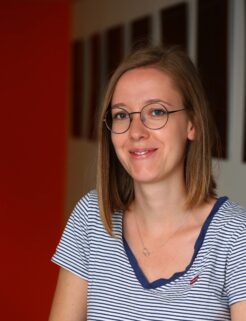
Dr. Vincent Ginis is a prominent academic at Vrije Universiteit Brussel (VUB), associated with the Applied Physics Department and the Data Analytics Lab. His roles include doctoral scholarship supervision and research leadership in interdisciplinary projects. He holds a strong background in applied physics, metamaterials, and AI-driven solutions for societal challenges. Current affiliations include: Principal Investigator in 19 funded projects (2010–2029), focusing on AI ethics, sustainable transitions, and historical data analysis Supervisor of 60+ student theses across master's and doctoral levels Recipient of 15+ prestigious awards including the Agathon De Potter Award and FWO/Barco Prize Research interests span: Applied Physics: Metamaterials, optics, and photonics AI Applications: Ethics, bias mitigation, and historical data digitization Social Sciences: Wealth inequality, intergenerational mobility, and policy impact analysis Recent work highlights include groundbreaking studies on: Large Language Models' performance in OCR tasks Bias patterns in AI citation practices Ethical frameworks for human-centered AI systems Notable collaborations span institutions in Europe and beyond, with 1295 citations across 120+ publications. His work is amplified through platforms like Strava data for urban planning and historical datasets from 19th-century archives.
Maarten Blommaert is an Assistant Professor at the Department of Mechanical Engineering, Faculty of Engineering Technology at KU Leuven. He leads the Applied Mechanics and Energy conversion (TME) unit at the Geel Campus and heads the Subdivisie EnergyVille TME. His research focuses on numerical optimization of thermal systems, particularly district heating networks, additive manufactured heat exchangers, and plasma-facing components for nuclear fusion reactors. Assistant Professor, KU Leuven Head, Subdivisie EnergyVille TME Member, KIES Institute Member, Leuven.AM Institute Member, EnergyVille Blommaert's research explores three main areas: heat network optimization through automated design tools like PATHOPT, additive manufacturing of high-performance heat exchangers, and thermally resistant wall modules for nuclear fusion reactors. His work combines computational modeling with advanced manufacturing techniques to enhance energy efficiency and reduce carbon emissions. Scientific awards include collaborative research contributions in: Optimizing district heating networks for renewable energy integration Developing next-generation heat exchangers Advancing nuclear fusion reactor technology Blommaert actively supervises research projects in thermal-fluid systems and collaborates with institutions like VITO and EnergyVille. His research team IDEAL (Innovative Design for Energy Applications Lab) specializes in free-shape and topology optimization techniques for energy components and systems.
Nicolas Cerf is a Full Professor at the Ecole Polytechnique de Bruxelles, Université Libre de Bruxelles (ULB), where he heads the Centre for Quantum Information and Communication (QuIC). He has been a faculty member at ULB since 1998, initially as an associate professor and promoted to full professor in 2009. Cerf maintains visiting appointments at Caltech, MIT, and the University of Arizona, demonstrating his international standing in the quantum information community. His educational background includes a M.Eng. in Electronics and Telecommunication (1987), M.Sc. in Physics (1988), and Ph.D. in Physics (1993), all from ULB. After his PhD, he was awarded a Marie Curie fellowship and worked at the University of Paris XI, followed by research faculty positions at Caltech before returning to ULB. Nicolas Cerf's research focuses on quantum information science, with significant contributions including the discovery of the role of negative (conditional) entropies in quantum information theory, development of continuous-variable quantum cloning and cryptographic protocols, invention of the adiabatic quantum search algorithm, and establishing the fundamental quantum limit on information transmission via Gaussian bosonic channels. His work spans quantum information theory, quantum cryptography, quantum computation, quantum optics, and quantum foundations. His recent publications (2023-2025) demonstrate continued innovation in quantum information processing, particularly in boson sampling validation, Wigner entropy theory, majorization applications, and quantum channel capacities. These works show a consistent focus on both theoretical foundations and practical applications of quantum information principles. Marie Curie Excellence Award (2006) Caltech President's Fund award (1997) Alcatel-Bell scientific prize (1999) Prize of the Wernaers fund awarded by the Belgian National Fund for Scientific Research (FNRS) (2000) Elected member of the Royal Academies for Science and the Arts of Belgium (2009) COVAQIAL project nominee for 2007 Descartes Prize Nicolas Cerf has supervised numerous PhD students including Sofyan Iblisdir, Jérémie Roland, Gilles Van Assche, and many others. He has hosted many postdocs and senior scientists. His research has been supported by numerous European projects across multiple Framework Programs, including EQUIP, CHIC, RESQ, SECOQC, COVAQIAL, QAP, COMPAS, HIPERCOM, QALGO, QUCHIP, ShoQC, and AppQInfo. As head of QuIC, Cerf leads a research team exploring cutting-edge topics in quantum information. The group maintains strong international collaborations and has been instrumental in establishing Belgium as a significant player in quantum information research. The team's work bridges theoretical developments with potential applications in quantum communication, quantum computing, and quantum cryptography.
Rishikesh Yadav is a postdoctoral researcher at the Department of Mathematics and Mathematical Statistics, Umeå University, Sweden , and previously held a postdoctoral position at the Namur Institute for Complex Systems (naXys), University of Namur, Belgium . He earned his Ph.D. in Approximation Theory from Sardar Vallabhbhai National Institute of Technology Surat, India. His research focuses on Approximation Theory, Functional Analysis, Dynamical Systems, Operator Theory, and Optimization Theory. Notable contributions include work on Koopman operators, control theory, and compressed sensing. He has received awards such as the V. M. Shah Prize (2020) and Best Oral Presentation Award (2019). Recent research emphasizes developing algorithms for convex optimization on measure spaces, supported by the Kempe Foundation (2024–2026). His work bridges approximation theory with dynamical systems, including publications on Szász-Mirakjan operators, statistical convergence, and Koopman operator approximations via Bernstein polynomials. Grants/Fellowships: Kempe Foundation (2024–2026) Labs/Teams: naXys Institute (Belgium), Umeå University's Department of Mathematics
Anthony SIMONOFSKI is an Associate Professor at the Department of Management Sciences within the Faculty of Economic, Social and Management Sciences at the University of Namur. He is actively involved in the Namur Digital Institute (NADI) and leads the Management of INformation and DIgital Transformation (MIND IT) research group. His academic background includes dual doctorates in Business Economics from KU Leuven and Computer Science from UNamur. His educational background demonstrates exceptional interdisciplinary training: Doctor in Business Economics, KU Leuven Doctor in Sciences (Computer Science), UNamur Master in Business Engineering - Information Management, UNamur Master in Handelsingenieur in de Beleidsinformatica, KU Leuven Bachelor in Business Engineering - Information Management, UNamur SIMONOFSKI's research focuses at the intersection of digital technology and public administration, with particular expertise in digital transformation, smart cities, and citizen participation. His work bridges information systems theory with practical governance challenges, developing frameworks for more responsive public services. His recent publications reveal a strong trend toward AI applications in citizen engagement, with increasing focus on ethical implementation and practical frameworks for public sector use. His scientific contributions have been recognized with several prestigious awards: Best Paper Award at the 19th IEEE Conference on Business Informatics (2017) Publica Award for Methodological Guidance of La Louvière (2019) Nomination for the De Woot Award for Master's Thesis (2018) As Principal Investigator, SIMONOFSKI leads seven major research projects with significant funding, including PARIS2 (2025-2029) on proactive digital public services and Di-Fic (2025-2030) on digital citizenship education. He has supervised numerous graduate students and contributes to the academic community through committee service, including serving on the Faculty Council of Economic, Social and Management Sciences. His work with the ALMEN Alumni Association Committee (as Member 2016-2017 and President 2017-2020) demonstrates his commitment to academic community building. He directs the MIND IT research group which focuses on practical applications of digital transformation in public administration, with particular emphasis on citizen-centered design and implementation challenges in real-world governance contexts.
Daniel Peralta Cámara is a Postdoctoral Researcher at Ghent University's Faculty of Engineering and Architecture, Department of Information Technology (EA05). His work spans Machine Learning , Bioinformatics , High Performance Computing , and Biometrics , with a focus on Single-Cell Data Analysis , Image Cytometry , and Missing Value Handling . Affiliation: Ghent University Academic Rank: Researcher Research Disciplines: Data Mining, Parallel Computing, Bioinformatics, High Performance Computing His research designs scalable machine learning frameworks for biological and engineering applications, including SCIP for morphological profiling and MSDeepAMR for antimicrobial resistance prediction. He explores advanced techniques like Polar Encoding for missing data and Fuzzy Rough Sets for classification uncertainty, contributing to one-class classification and novelty detection through Python libraries like Fuzzy-rough-learn 0.2 . Key Trends: Hybrid CNN-LSTM for sports analytics Time-series feature selection in healthcare UWB/IMU wearable integration for animal monitoring Dr. Peralta supervises PhD candidates like Maxim Lippeveld (2025) and Oliver Urs Lenz (2023). His collaborations span Ghent University researchers including Eli De Poorter , Chris Cornelis , and Yvan Saeys . Applications: Badminton strategy analysis Goat activity classification White blood cell identification
Hans Van Oosterwyck serves as a full Professor in the Department of Mechanical Engineering at KU Leuven's Faculty of Engineering Sciences. He leads the Prometheus-Mechanobiology subdivision and actively contributes to the iSi Health and LIMNI research institutes, driving interdisciplinary work at the engineering-biology interface. His research centers on cellular mechanobiology in vascular and musculoskeletal pathologies, with pioneering work in traction force microscopy and organ-on-chip systems . Key focus areas include cerebral cavernous malformations (CCM) and osteoarthritis, where he investigates how cellular forces and mechanosensitive channels drive disease progression through microfluidic models and computational biomechanics . Analysis of his 2023-2025 publications reveals a dominant trend toward 3D force measurement techniques in disease modeling, particularly using degradable hydrogels for chondrocyte studies and vessel-on-chip platforms for CCM. Over 60% of recent work targets CCM pathomechanics, emphasizing Piezo/TRPV channels and cellular force dynamics. Prof. Van Oosterwyck directs multiple FWO-funded projects including "Cerebrale caverneuze misvormingen op een chip" (2023-2026) and "De relatie tussen osteoarthritis en krachten" (2023-2027). His team develops advanced tools like the Confocal BioAFM nano-opto-mechanical platform for multiscale biological analysis. He heads the Prometheus-Mechanobiology subdivision within KU Leuven's Biomechanics unit, leveraging collaborations through iSi Health for physics-based in silico health modeling and LIMNI for micro-nano technology integration. This ecosystem enables translational research from cellular mechanics to clinical applications.
Peter Schelkens is a Professor at the Department of Electronics and Informatics (ETRO), Vrije Universiteit Brussel (VUB). He holds additional roles including Department Chair and Head of Research Group, focusing on technology transfer and innovation in electronics and informatics. His research spans fundamental signal processing, holography, medical imaging, and standardized multimedia coding frameworks like JPEG Pleno. Education and Academic Background: Postdoctoral Fellowship (2002–2011) funded by the Research Foundation – Flanders (FWO). His work bridges theoretical advancements with applied domains such as eHealth, bio-informatics, and cultural heritage preservation. Research Interests: Holography and digital signal processing dominate his focus, including holographic compression, Fourier-based techniques, and light field imaging. Strategic projects involve error-resilient coding, computer architectures (e.g., GPU/GPGPU), and quality assessment metrics. His applied research addresses medical imaging, 3D media broadcasting, and immersive technologies. Article Trends: Recent work emphasizes holographic video codecs (e.g., INTERFERE), high-throughput hologram generation, and JPEG Pleno standardization. He explores computational methods for 3D metrology and deep learning applications in hologram optimization. Scientific Awards: Gauss Award (2000), ERC Consolidator Grant (2014), Best Associate Editor Award (2014), and multiple industry accolades. Grants/Projects: Leads major initiatives like the SRP-Onderzoekszwaartepunt LSDS (2022–2027) and GEAR (2021–2025), focusing on health tech and learning-based systems. Labs/Teams: Active in ETRO, the interdisciplinary research group at VUB, collaborating globally on holography, multimedia standards, and biomedical imaging systems.
Hugues Bersini is a Professor at Université Libre de Bruxelles (ULB) and Co-Director of the IRIDIA laboratory, the Artificial Intelligence research laboratory of ULB. His academic career spans over three decades, with significant contributions to the fields of artificial intelligence, complex systems, and biological networks. Bersini earned his MS degree in 1983 and his Ph.D. in engineering in 1989, both from Université Libre de Bruxelles. After working as a researcher with an EEC grant from the JRC-CEE in Ispra (1984-1987), he joined the IRIDIA laboratory at ULB, where he has remained throughout his career, eventually becoming a full professor. His research spans a diverse range of topics within artificial intelligence and complex systems. Bersini is particularly known for his work on modeling and control of complex systems, neural networks, fuzzy control, data mining, autonomous agents, and biological networks. He pioneered the exploitation of biological metaphors, especially from the immune system, for engineering and cognitive sciences applications. His research has evolved to include computational chemistry, immune engineering, cognitive sciences, bioinformatics, and object-oriented technology. In recent years, he has focused on business intelligence applications and public goods through the Brussels Institute FARI. Throughout his career, Bersini has published approximately 300 papers, demonstrating consistent productivity and evolving research interests. His early work focused on optimization algorithms and immune-inspired computing, which gradually expanded to include fuzzy and neuro control systems, biological networks, and more recently, applications to real-world problems through spin-off companies and the FARI institute. His publications show a clear trajectory from theoretical foundations to practical applications, with growing emphasis on interdisciplinary approaches that bridge computer science with biology, chemistry, and cognitive sciences. Bersini has been actively involved in the academic community, having co-organized major conferences including the Parallel Problem Solving from Nature (PPSN), European Conference on Artificial Life (ECAL), European Workshops on Reinforcement Learning (EWRL), and International Competitions on Evolutionary Optimization (ICEO). He also organized tributes to Francisco Varela and the International Conference on Artificial Immune Systems (ICARIS). As an educator, Bersini teaches artificial intelligence, object-oriented programming (C++, Java, .Net, Kotlin, UML, Django/Python), and design patterns to both university students at Solvay and Polytechnic Schools and for industry professionals. He has authored fourteen French books covering computer science fundamentals, complex systems, and the intersection of computer science with other fields. His books range from technical manuals to philosophical explorations of complex systems and emergence. Bersini has coordinated significant research projects including the FAMIMO LTR European Project on fuzzy control for multi-input multi-output processes and participated in ESPIRIT projects NEMORETS and METHODS. His work has led to practical applications through spin-off companies such as Cluepoints, Tevizz, and In Silico DB, and more recently through the Brussels Institute FARI which addresses public goods like mobility, epidemics, access to jobs and schools, and energy transition.
Nele Vandersickel is an Associate Professor in the Department of Physics and Astronomy at Ghent University's Faculty of Sciences. Her research bridges physics and cardiology, focusing on the application of computational methods and network theory to understand cardiac arrhythmias. She leads multiple research projects funded by the Research Foundation - Flanders (FWO) and European funding programs, with current work extending through 2025-2029 including a BOF-ZAP professorship in biophysics. Dr. Vandersickel's research interests center on cardiac biophysics, particularly the development and application of Directed Graph Mapping (DGM) as a novel approach for analyzing cardiac arrhythmias. Her work integrates topology , network theory , and computational modeling to investigate mechanisms of atrial and ventricular arrhythmias. She has pioneered methods to identify critical boundaries in atrial tachycardia, analyze fibrotic tissue effects on arrhythmia drivers, and distinguish between different types of cardiac reentry patterns. Her research has significant clinical implications for improving cardiac mapping and ablation procedures. Analysis of her recent publications reveals a clear trajectory from fundamental physics research toward increasingly clinically relevant cardiac electrophysiology applications. Her work now focuses on translating topological approaches into clinical tools that can automatically detect critical arrhythmia boundaries and improve understanding of complex reentrant circuits. The research spans from basic computational modeling to validation in animal models and clinical data analysis. Principal Investigator for 'Directed networks as a novel approach for improving the management of cardiac arrhythmias' (2021-2027, European funding) Promotor for 'Networks and topology to tackle cardiac arrhythmia' (2025-2026, Special Research Fund) Administrative supervisor for multiple doctoral projects on directed graph mapping applications Recipient of BOF-ZAP professorship in biophysics (2019-2029) Dr. Vandersickel actively mentors the next generation of researchers, currently supervising multiple doctoral students including Arthur Santos Bezerra, Robin Van Den Abeele, and Bjorn Verstraeten. Her laboratory develops computational tools like the DG-Mapping software package that enable analysis of reentry and focal activation patterns in cardiac arrhythmias. The research group collaborates extensively with clinical electrophysiologists to ensure their computational approaches address real clinical challenges in arrhythmia diagnosis and treatment.
Jitka Annen is a Postdoctoral Researcher at the Coma Science Group within the Faculty of Medicine at the University of Liège, Belgium. Her work focuses on multimodal neuroimaging approaches to study brain structure-function relationships in disorders of consciousness and space neuroscience applications. Education: PhD in Biomedical Sciences and Pharmaceutics (Multimodal Neuroimaging in Patients with Disorders of Consciousness), University of Liège, Belgium (2019) MSc in Biomedical Sciences, Neurobiology, University of Amsterdam, The Netherlands (2014) BSc in Psychobiology, Neurobiology, University of Amsterdam, The Netherlands (2012) Her research integrates neuroimaging and neurophysiology across spatio-temporal scales to investigate consciousness mechanisms, brain connectivity in pathological states, and the effects of extreme environments like zero gravity on neural systems. She employs complementary data acquisition techniques to study disorders of consciousness, including coma, unresponsive wakefulness syndrome, minimally conscious state, and locked-in syndrome, with recent work extending to cosmonaut brain adaptations. Analysis of her publication record reveals consistent focus on advancing neuroimaging methodologies for consciousness assessment, developing computational models of brain dynamics in pathological states, and exploring novel therapeutic interventions including neuromodulation and psychedelic compounds. Her work bridges clinical applications with fundamental neuroscience questions about consciousness mechanisms. Research Leadership: Active member of Coma Science Group at GIGA research institute Collaborator on international space neuroscience projects studying brain changes in cosmonauts Contributor to development of standardized assessment protocols for disorders of consciousness
Dries Peumans serves as a Research Fellow at the Department of Electronics and Informatics within the Faculty of Engineering at Vrije Universiteit Brussel (VUB), Belgium. His research spans RF engineering, microwave systems, and nonlinear signal processing with significant contributions to measurement instrumentation and 6G technology development. Based at the Pleinlaan 2 campus in Brussels, he maintains an active research profile with an h-index of 139 according to institutional metrics. Peumans' research focuses on RF/microwave systems engineering and nonlinear distortion analysis , particularly in power amplifiers and time-varying systems. His work integrates intelligent instrumentation techniques using reinforcement learning and big data approaches to reduce measurement complexity. Key application areas include 6G communications, beamforming transmitters, and EMI shielding materials. His fingerprint analysis reveals dominant expertise in frequency response (100%), power amplifiers (58%), and nonlinear distortion (47%). Recent publications demonstrate strong trends in real-time signal processing for 5G/6G systems, with particular emphasis on digital predistortion techniques using ROVA modeling. His 2025-2024 output shows increasing diversification into materials science (EMI shielding composites) and geophysical applications (lava lake thermal sensing), while maintaining core expertise in RF measurement optimization and time-varying system modeling. Scientific contributions include: Development of scalable models for linear periodic time-varying (LPTV) systems Innovations in power sweep stitching for modulated RF experiments Compact impedance sensors for 24-31GHz beamforming transmitters Equivalent modeling of multilayered conductive composites Peumans actively supervises doctoral research, notably guiding Amedeo Varano's work on ROVA modeling applications. His current projects include OZR4181 (Reducing measurement complexity through intelligent instrumentation, 2023-2027) and SRP78 (Center for Model-Based Systems Improvement, 2022-2027), which integrate photonics, reinforcement learning, and transceiver design. He participates in the FOD168 initiative for 6G leadership development and maintains collaborations across European research institutions through the VUB's Center for Model-Based Systems Improvement. His laboratory work centers on advanced RF measurement systems, with emphasis on time-domain characterization of nonlinear systems and development of intelligent instrumentation frameworks. Current team projects focus on scaling LPTV modeling techniques to incorporate system parameter variations, enabling predictive design of rotating mechanical systems and electronic oscillators.
Steven Vanduffel is a Professor at Vrije Universiteit Brussel (VUB) in Belgium, affiliated with the Department of Finance, Insurance, Risk & Economics. He heads the FIRE (Finance, Insurance, Risk & Economics) research group and holds additional administrative positions including Rector, Vice Rector, Dean, or Department Chair roles. His office is located at Pleinlaan 2, 1050 Brussels. Professor Vanduffel's research focuses on quantitative risk management , actuarial science , and financial decision-making with specialized expertise in portfolio optimization, dependence modeling, longevity risk, pension systems, and Value-at-Risk methodologies. His work bridges theoretical finance with practical applications in insurance and pension design. His extensive publication record shows consistent focus on: Advanced risk measurement techniques and model uncertainty Optimal risk-sharing mechanisms in pensions and insurance Portfolio construction under complex constraints Statistical methods for financial applications Awards & Recognition: Robert I. Mehr Award (2022) Robert C. Witt Award (2018) PRMIA Frontiers in Risk Management Award (2014) Johan de Witt Prijs (2012) Lloyds Science of Risk Prize (2011) He actively advises graduate students, with recent Master's theses supervised on topics including COVID-19 impacts on businesses, pension systems, investment behavior, and insurance risk analysis. Current research projects (2024-2029) focus on systemic risk, longevity risk sharing, and dependence modeling applications in finance and insurance.
Nicole Van Lipzig is a full professor at the Department of Earth and Environmental Sciences, Faculty of Science, KU Leuven. Her research focuses on climate change impacts, wind energy meteorology, and mesoscale atmospheric processes. She leads multiple long-term projects spanning 2022-2028, including wind farm co-design in the North Sea and climate adaptation strategies in Belgium. Faculty of Science Advisory Committee Chair KU Leuven Institute for Energy and Society (KIES) member Urban Studies Institute (LUSI) member Her sabbatical project (2023-2025) involves collaborations with global institutions like Technical University of Denmark and NREL, aiming to strengthen wind energy research through industry partnerships and academic exchanges. Current students include Borgers, R., Jamaer, S., and Neirynck, J.
Prof. Alexandre Mayer is a faculty member at the University of Namur, affiliated with the Department of Physics. His research focuses on interdisciplinary topics such as genetic algorithms, quantum mechanics, and optical engineering. He leads major projects like PHOENIX (2024–2029) and Bessel-CNNs (2023–2024), advancing machine learning and materials science. He has been recognized with the Quantum Project Stipend (2000) and Fenia Berz Award (2003). His work contributes to UN Sustainable Development Goals via photovoltaic innovations and materials optimization. Education: Doctor of Sciences (1998), DEA in Physics and Material Chemistry (1996), Master in Physics (1995). Research Interests: Mayer’s expertise spans computational intelligence, high-performance computing, and nanotechnology. Recent efforts include optimizing nanopyramidal absorbers and developing 2D quaternion convolutions for 3D image processing. His work intersects physics, computer science, and engineering, with applications in cosmology and historical document analysis. Grants & Activities: Principal Investigator of €5M+ projects, including PNV+ (2016–2020) and LED (2015–2019), focusing on photovoltaics and nanostructured devices. Active in conferences like SPIE Photonics Europe (2024) and workshops on quantum technologies. Labs & Affiliations: Namur Institute of Structured Matter (NISM) and Namur Institute for Complex Systems (naXys), fostering interdisciplinary research in materials science and computational physics.