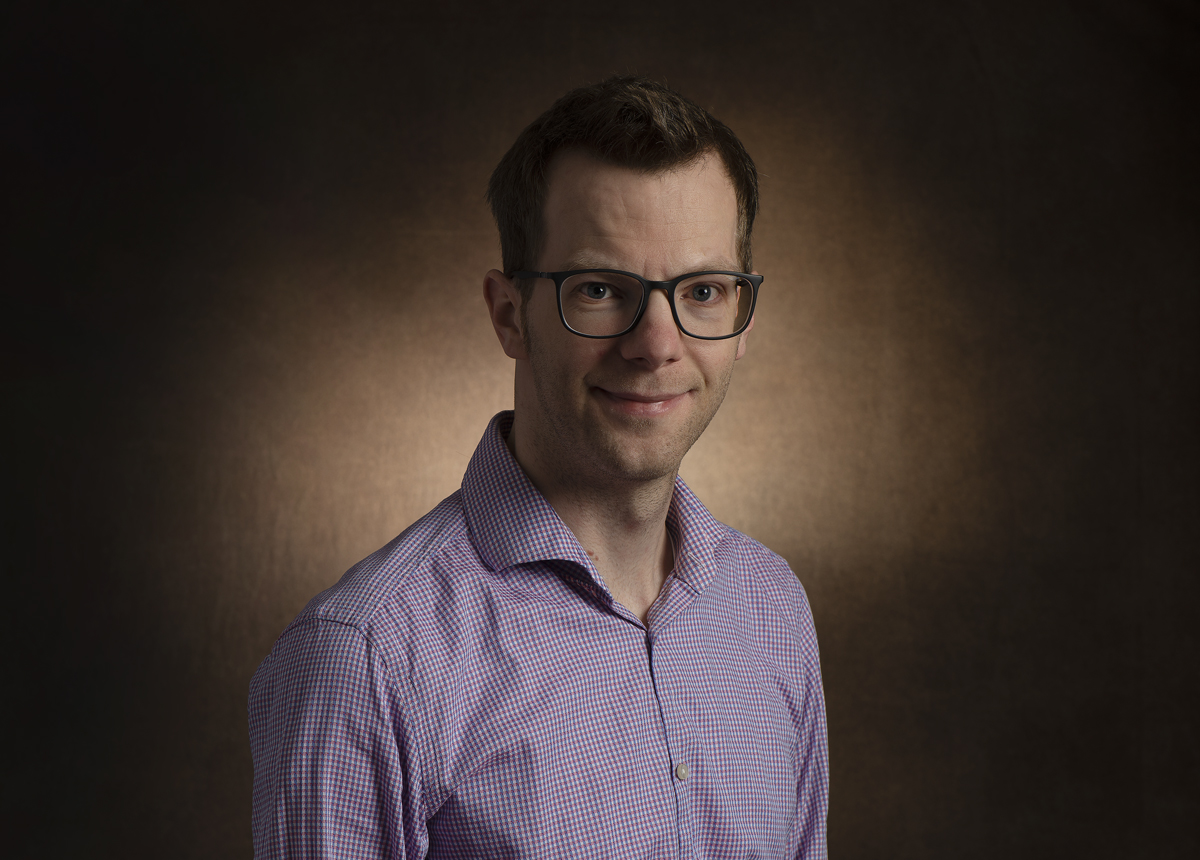
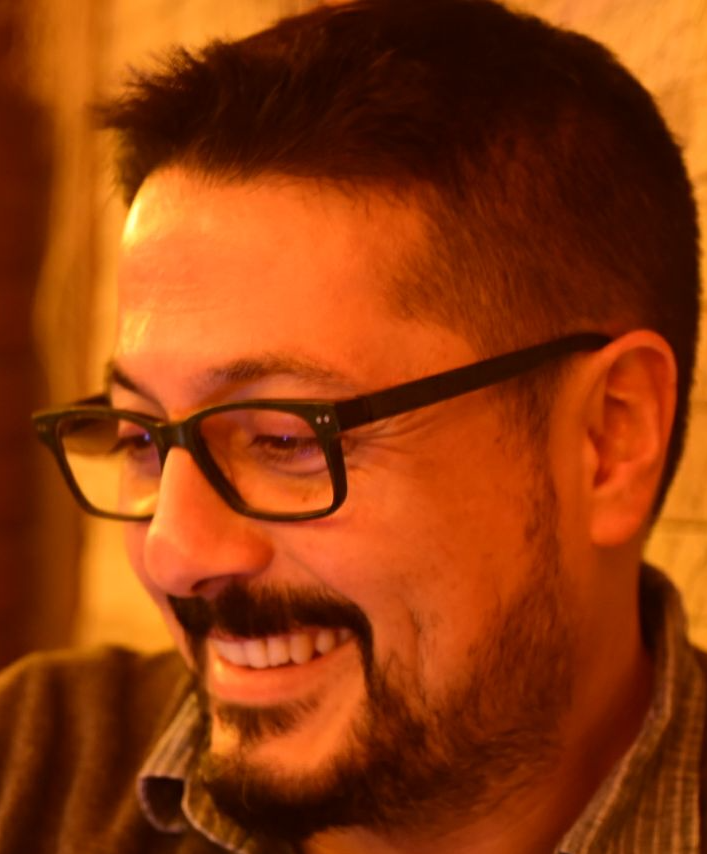
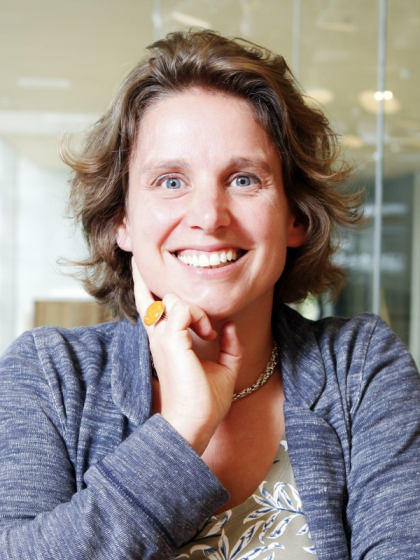
Dr. Andreas Alfons is an Associate Professor in the Department of Econometrics at Erasmus School of Economics, Erasmus University Rotterdam. His research focuses on robust statistical methods, machine learning, psychometrics, and software development for high-dimensional data. He leads the NWO Vidi project on robust analysis of rating-scale data and contributes to the interdisciplinary project on digital decision support. He is an editor for the Journal of Statistical Software and Journal of Data Science, Statistics, and Visualization. His research interests include robust statistical learning, high-dimensional data analysis, and open science practices. Key contributions include R packages like robmed , robustHD , and simFrame . Recent work addresses careless responding in surveys and robust mediation analysis. Publications span journals such as Computational Statistics & Data Analysis , Econometrics and Statistics , and Journal of Statistical Software . His work emphasizes reproducibility and software tools for statistical analysis.
Dr. Ioanna Lykourentzou is an Associate Professor in the Software Technology for Learning and Teaching department at Utrecht University's Faculty of Science. She leads the Collaborative Technologies Lab and coordinates the Computing Science Master's and Information Sciences Honors Bachelor's programs. Additionally, she serves as a Fair Data and Software fellow within the Open Science Team of the Faculty of Science and as a member of the Ethics Review Board for the Faculties of Science and Geosciences. Her research focuses on collaborative and crowd systems, developing methods that help people work together, coordinate efforts, and innovate at scale, both online and in physical spaces. Her interdisciplinary approach combines computational science (machine learning, agent-based modeling, mathematical optimization) with social sciences (personality testing, team building). Her expertise spans Human-Computer Interaction, Algorithms, Agent-Based Modelling, Telecollaboration, Creativity, and Innovation. Her recent publications (2021-2025) demonstrate a strong focus on human-AI interaction, generative models, and applications in cultural heritage and education. She examines how technology can facilitate collaboration, with particular attention to team formation, personality factors, and digital nudging techniques. Her work bridges theoretical research with practical applications in digital humanities, cultural heritage, and computing education. Dr. Lykourentzou has received significant recognition for her research, with multiple publications garnering substantial citations and reader attention across platforms like Mendeley and social media. Her work on personality-based team formation (2016) has been particularly influential with over 90 citations. Prior to joining Utrecht University, she worked as a Senior Researcher at the Luxembourg Institute of Science and Technology (LIST), where she coordinated the European H2020 project CROSSCULT. She has also collaborated with the Human-Computer Interaction Institute of Carnegie Mellon University as a visiting researcher and with INRIA Nancy-Grand Est and the Public Research Center Henri Tudor as a postdoctoral fellow.
Sjoukje van der Meulen is an Assistant Professor of Modern and Contemporary Art History in the Department of History and Art History at Utrecht University's Faculty of Humanities. She holds a PhD from Columbia University (2009) and has previously taught at Columbia University, University of Illinois at Chicago, University of Oregon, and University of Amsterdam. She was selected as Rudolf Arnheim Visiting Professor 2020-2021 at Humboldt University in Berlin. Her educational background includes a master's degree from Columbia University's Department of Art History and Archaeology, where she studied with Professor Rosalind Krauss, and a doctoral degree in architectural history and theory under Professors Kenneth Frampton and Andreas Huyssen. Dr. van der Meulen specializes in modern and contemporary art from circa 1850 to the present day. Her research spans several interconnected areas: New Media and Digital Culture, examining the impact of digital technologies on art production and reception Globalization discourse with a special focus on contemporary Chinese art in a global context Art in the European Union since the 1992 Maastricht Treaty, analyzing cultural policy and artistic practice The intersection of art history with postcolonial studies, globalization studies, European studies, and media studies Art and digital culture, particularly the challenges posed by AI for art and society Her recent publications demonstrate a consistent focus on the relationship between art, globalization, and social issues. She has written extensively on Chinese contemporary art, European biennials, and the impact of digital culture on artistic practice. Her work often bridges theoretical analysis with concrete case studies of contemporary art practices. Dr. van der Meulen has received several prestigious recognitions: Aspasia Award (January 18, 2018) Outstanding Peer Reviewer Acknowledgment (January 7, 2021) Rudolf Arnheim Guest Professorship (2020) Beyond her academic work, Dr. van der Meulen has served as editor and art critic for Metropolis M and co-editor-in-chief of Stedelijk Studies. She has extensive experience as a museum educator, lecturer, and guide for the Stedelijk Museum and Van Gogh Museum, working in four languages: Dutch, English, German, and French. She regularly contributes to media discussions on contemporary Chinese art and has upcoming engagements including a Visiting Scholar position at Tongji University in Shanghai (2025-2026).
Dr. Robert Vogt-Ardatjew is a researcher specializing in Radio Systems , with a focus on Electromagnetic Compatibility (EMC) , Risk Management , and Software Defined Radio (SDR) . His work spans Shielding Effectiveness , Propagation Channel Modeling , and Frequency-Selective Emission Detection , contributing to both academic research and practical EMC engineering solutions.
Dr. A.A.A. Qahtan is an Assistant Professor in the Data Intensive Systems research group within the Department of Information and Computing Sciences at Utrecht University's Faculty of Science. His academic appointment focuses on advancing research and education in data-intensive computing with particular expertise in data stream mining, data cleaning, and explainability of machine learning techniques. Dr. Qahtan completed his PhD studies at KAUST (King Abdullah University of Science and Technology) under the supervision of Xiangliang Zhang and Soujin Wang. Prior to joining Utrecht University, he worked as a postdoc at QCRI (Qatar Computing Research Institute) where he developed pattern functional dependencies (PFDs) for data cleaning. His research spans several critical areas in data science: Data Stream Mining and Real-time Processing Data Cleaning and Quality Assessment Pattern Recognition and Functional Dependencies Outlier and Anomaly Detection Concept Drift Detection in Streaming Data Fairness in Machine Learning Systems Missing Data Imputation Techniques Dr. Qahtan's publication record demonstrates consistent contributions to top-tier venues including PVLDB, KDD, ICDE, and SIGMOD. His recent work shows a progression from foundational data cleaning techniques to advanced applications in categorical data analysis, fairness in AI, and cryptocurrency market analysis. His research bridges theoretical foundations with practical applications across multiple domains. Dr. Qahtan actively contributes to academic education at Utrecht University, teaching courses including Data Analytics, Data Science and Society, Data Wrangling and Data Analysis, and Databases across multiple academic years from 2019 to 2024.
D. (Dimka) Karastoyanova is a Professor of Information Systems at the University of Groningen , Faculty of Science and Engineering, Computer Science Department. She leads the Information Systems Group and serves as vice-chair of the Bernoulli Institute Board since 2024. Previously, she was Head of the Computer Science Department (2020-2024) and a member of the Informatics Europe Board since 2023. Dimka's research focuses on data-driven, service-based process automation for cross-organizational collaboration, emphasizing runtime adaptability, security, and sustainability . Her work spans applications in manufacturing, logistics, healthcare, and eScience , integrating Scientific Workflows, Cloud Computing, and Middleware Systems to enhance process flexibility. Her scientific contributions include 15+ publications on topics like Choreography Lifecycle Management, BPEL Adaptation, and Cloud Migration Frameworks , reflecting her expertise in Service-Oriented Computing, Workflow Technologies, and Distributed Systems . She received the Rosalind Franklin Fellowship and has served on program committees for IEEE, ICWS, and BPM conferences . Dimka holds a PhD in Computer Science (TU Darmstadt, 2006), an MSc in Computational Engineering (University of Erlangen-Nuremberg), and MSc/BSc in Industrial Engineering (Technical University of Sofia). She previously held roles as Associate Professor of Data Science at KLU Hamburg and Senior Researcher at Hasso Plattner Institute, University of Potsdam.
Prof. Dr. Mirella Minkman serves as Endowed Professor holding the Vilans Chair in Innovation of Organization and Governance of Integrated Care at Tilburg University's TIAS School for Business and Society. She simultaneously chairs the Board of Directors of Vilans, the Dutch knowledge organization connecting science, practice, policy and education in long-term care. Her international roles include board membership at the International Foundation for Integrated Care (IFIC), editorial position at the International Journal of Integrated Care, advisory roles with WHO's Integrating the Health and Care Workforce group, and membership in the UK Center for Evidence IMPACT's Critical Friends Group. Her research focuses on person-centered integrated care systems, exploring governance innovations through leadership, oversight and accountability mechanisms. She investigates collaborative models including networks, alliances and caring communities, with particular emphasis on long-term care transformation. Her work bridges theoretical frameworks with practical implementation through large-scale innovation programs addressing systemic healthcare challenges. Analysis of her recent publications reveals consistent focus on governance challenges in integrated care systems, with emerging attention to AI ethics in elderly care and cross-sectoral service integration. Her work demonstrates strong emphasis on practical implementation frameworks, stakeholder alignment, and value-based healthcare transformation across European contexts. Minkman actively contributes to healthcare policy development through leadership roles including chairing the Dutch Healthcare Supervisory Board's Governance Innovation Committee and the Scientific Advisory Council of the Dutch Association of Healthcare Supervisors. She serves as healthcare supervisor at RIBW Brabant and Rivierenland Hospital while co-leading the VGN expert committee with fellow professors. Her organizational leadership extends to hosting public knowledge platforms connecting professionals and citizens, developing implementation programs for cross-domain partnerships, and directing Vilans' knowledge infrastructure strengthening initiatives. Recent publications include the 2023 books 'Supervising Collaboration' and 'Care for Transition' co-edited with Peter van der Voort and Nardo van der Meer.
Dr. George van Voorn is an Associate Professor in Applied Modelling & Machine Learning at Wageningen University & Research, affiliated with the Biometris department. His research focuses on developing and applying mathematical and computational models to study socio-ecological systems, resilience, and complex adaptive systems. He specializes in agent-based modelling (ABM), hybrid machine learning approaches, and dynamical systems analysis (e.g., stochastic differential equations). Van Voorn coordinates courses such as MAT15003 (Mathematics 3), SSB-30806 (Modelling in Systems Biology), and PhD-level modelling courses. He also leads projects on resilience quantification in socio-ecological systems, including agricultural and fisheries systems. His work addresses topics like tipping points, bifurcation analysis, and model validation methodologies for health-economic and environmental policy applications. Key research areas include: Resilience metrics for socio-technical systems Climate change adaptation strategies using ABM Machine learning integration with crop and ecological models Model validation frameworks (e.g., AdViSHE tool) He collaborates on interdisciplinary projects such as the 4TU DeSIRE initiative, focusing on systems resilience engineering. His recent publications emphasize model-based analysis of socio-environmental feedbacks, food system dynamics, and health-economic decision-making.
Marcel L.A.M. Bogers is a Full Professor of Open & Collaborative Innovation at Eindhoven University of Technology (TU/e), leading the Innovation, Technology Entrepreneurship and Marketing (ITEM) group within the Department of Industrial Engineering & Innovation Sciences. He also holds positions as Affiliated Professor at the University of Copenhagen and Garwood Research Fellow at UC Berkeley. His research focuses on open innovation ecosystems, business model innovation, and addressing societal challenges through collaborative approaches. Bogers has authored over 178 publications and contributed to projects like REWIRE and Fieldlabs@Scale, aiming to foster innovation across sectors. He has received multiple awards, including the Highly Cited Researcher (2019, 2020) and Best Teacher Award (2012). Education: MSc (distinction) from TU/e, PhD from EPFL (Switzerland), postdoc at University of Southern Denmark. Visiting roles at Chalmers, UC Berkeley, and others. Active in editorial roles for journals like Research Policy and conferences. Research Interests: Open innovation dynamics, innovation ecosystems, sustainability, and digital transformation. His work spans contexts such as healthcare, food systems, and emerging markets. Recent articles explore AI-driven innovation, public-sector open innovation, and ecosystem governance frameworks. Grants & Projects: Manages initiatives like the EU-funded COOPERATE project and Fieldlabs@Scale, focusing on circular agriculture and innovation ecosystems. Collaborates globally, emphasizing cross-sector partnerships for societal impact. Supervised 22 student works, advancing innovation management practices. Awards: Highlights include recognition for research impact, teaching excellence, and contributions to open science. His work aligns with UN Sustainable Development Goals, particularly in sustainability and health.
Prof. Dr. Ilker Birbil is a Professor of AI & Optimization Techniques for Business & Society at the University of Amsterdam (UvA), affiliated with the Amsterdam Business School's Business Analytics section. He previously held professorships at Erasmus University and Sabancı University, focusing on optimization and data science. His research interests include interpretable machine learning, data privacy, and optimization methods in decision-making. Education: PhD in Operations Research from North Carolina State University Postdoc at Erasmus Research Institute of Management (ERIM), Netherlands Research Interests: Optimization in data science, interpretable AI, privacy-preserving algorithms, and decision-making systems. Recent work focuses on differentially private optimization and meta-learning techniques like LESS. Key Achievements: Recipient of multiple teaching awards at Sabancı University Affiliated researcher at OPTIMAL (Optimization for and with Machine Learning) Organized workshops on ML for optimization and mathematics of ML Grants & Teams: Leads the UvA group on Optimization and Machine Learning at LNMB. Collaborates on projects blending OR and ML, including privacy-aware algorithms and revenue management systems. Labs/Teams: OPTIMAL, UvA Optimization Group, and interdisciplinary teams in data analytics.
Berend Jan van der Zwaag is an Assistant Professor at Universiteit Twente, affiliated with the Sensors and Smart Systems Research Centre. His work contributes to UN Sustainable Development Goals related to sustainable industry and innovation. He focuses on Artificial Intelligence, Cyber-physical systems, and Machine Learning applications in sensor networks and inertial measurement systems. Research interests include equine gait analysis using IMU sensors, machine health monitoring through ontology-based frameworks, and wireless sensor network design. Notable projects include the EquiMoves system for objective horse gait examination and an ontology framework for smart product-service systems in industrial IoT. Recent work emphasizes terrain classification for equine systems, gait event estimation, and speed estimation using body-mounted sensors. His publications span conferences like IEEE DCOSS-IoT and journals like Sensors and IEEE Internet of Things Journal. Accepting PhD Students Key collaborator: Prof. Paul Havinga (Twente) Research partnerships in Netherlands and international institutions
H.H.J. ten Kate is a Full Professor specializing in Energy Materials Systems, focusing on superconductivity, magnet design, and high-field magnet applications. Their research contributes to advancements in superconducting materials for particle accelerators, electric aircraft propulsion, and fusion reactors like ITER. They have collaborated internationally on projects such as the ASCEND demonstrator at Airbus, the Muon Collider initiative, and the Future Circular Collider feasibility studies. With over 600 publications and an h-index of 52, they lead teams addressing challenges in superconducting magnet technology, thermal management, and high-energy physics experiments. Notable contributions include optimization of Nb3Sn magnets, AC loss analysis in ReBCO cables, and quench modeling for accelerator systems. Research interests span superconductivity applications in aerospace, nuclear fusion, and particle physics infrastructure. Key projects include designing superconducting links for aircraft power systems, developing advanced materials for high-field magnets, and advancing muon collider technology. Their work aligns with UN SDGs through innovations in sustainable energy and clean technologies. Collaboration highlights include Airbus (superconducting aviation systems), CERN (ATLAS detector upgrades), and international muon collider initiatives. Supervised 33 students, though specific names aren't listed here. Grants and funding support research on magnet technology, fusion reactor components, and next-generation collider systems.
Dr. Jos Hageman is an Assistant Professor affiliated with the Mathematical and Statistical Methods group (Biometris) at Wageningen University & Research. His research focuses on integrating advanced analytical techniques (e.g., mass spectrometry, metabolomics) with statistical modeling to address challenges in food science, plant biology, and environmental systems. He specializes in developing predictive models for food product design, microbial activity analysis, and environmental impact assessment. Education: Not explicitly stated in provided texts. Key research interests include metabolomics-driven food innovation, lipid and protein interaction modeling, and the environmental effects of microplastics. His work combines proteomics, metabolomics, and statistical methods to investigate plant-microbe interactions, crop diversity, and sustainable agriculture. He has collaborated on projects involving statistical analysis of fermentation processes, QSAR modeling for antibacterial compounds, and machine learning for ingredient characterization. Recent publications highlight advancements in QSAR models for food systems, microplastic toxicity assessment, and lipid species analysis via mass spectrometry. His datasets include metabolite profiles of grassland plants and breast milk protein dynamics. As a co-promotor, he oversees PhD projects on kwashiorkor etiology, plant-based protein optimization, and bioreactor transcriptomics. Current active projects focus on improving plant-based food proteins and understanding kwashiorkor pathophysiology through causal learning. His work bridges analytical chemistry, computational methods, and applied biology, contributing to food security and environmental sustainability initiatives.
Andreas Bayerl is an Assistant Professor of Marketing at the Erasmus School of Economics, Erasmus University Rotterdam. He holds a PhD in Quantitative Marketing from the University of Mannheim and conducts interdisciplinary research at the intersection of digital behavior, consumer psychology, and data science. His research focuses on how individuals generate, process, and are influenced by digital information, particularly in the context of online reviews and influencer marketing. Using a mixed-method approach—combining large-scale observational data, text and image analysis, and field and laboratory experiments—Andreas investigates behavioral patterns in digital ecosystems. His work has been published in leading journals including Journal of Marketing , Harvard Business Review , MIT Sloan Management Review , and Nature Human Behavior . The most recent publications reveal a consistent focus on digital influence, credibility, and consumer decision-making. Key themes include the effectiveness of micro-influencers, the psychological impact of fake reviews, multimodal analysis of visual and textual content, and experimental validations of marketing strategies across platforms. His methodological rigor and real-world relevance are evident across these works. Andreas has received significant recognition for his contributions, including: H. Paul Root Award for groundbreaking research in influencer marketing He actively teaches in the area of data science and marketing analytics, contributing to the next generation of analytically skilled marketers. While no formal advisees are listed, his role as an assistant professor suggests involvement in student supervision and academic mentorship. His research program appears to be supported by empirical rigor and industry relevance, though specific grants or lab affiliations are not mentioned in the provided text.
Prof. Liesbeth Veenhoff is an Associate Professor at the University of Groningen's Faculty of Medical Sciences, based at the European Research Institute for the Biology of Ageing (ERIBA) within the University Medical Center Groningen. Her research focuses on nuclear pore complex function, cellular ageing mechanisms, and intrinsic disorder in proteins, using baker's yeast as a model system. She holds a PhD from the University of Groningen (2001, Cum Laude) and has held postdoctoral positions at Rockefeller University (2002-2003) and the University of Groningen (2004-2010). Key research interests include nuclear transport dynamics, NPC assembly quality control, and systems biology approaches to aging. She leads a lab investigating molecular changes in aging yeast cells, including altered protein complex stoichiometry and compromised nuclear envelope transport. Her work combines microscopy, proteomics, and microfluidics to study age-related nuclear pore dysfunction. Received prestigious grants: NWO-Vici (2020), Aspasia Award (2016), and multiple VIDI/VENI fellowships Co-led a systems biology initiative on energy metabolism and aging Developed imaging tools like PunctaFinder for automated microscopy analysis Notable contributions include discovering selective transport mechanisms for NPC assembly proteins and identifying nuclear pore quality control deficits in aging cells. Her 2023 review in Trends in Biochemical Sciences synthesizes physicochemical perspectives on aging processes.