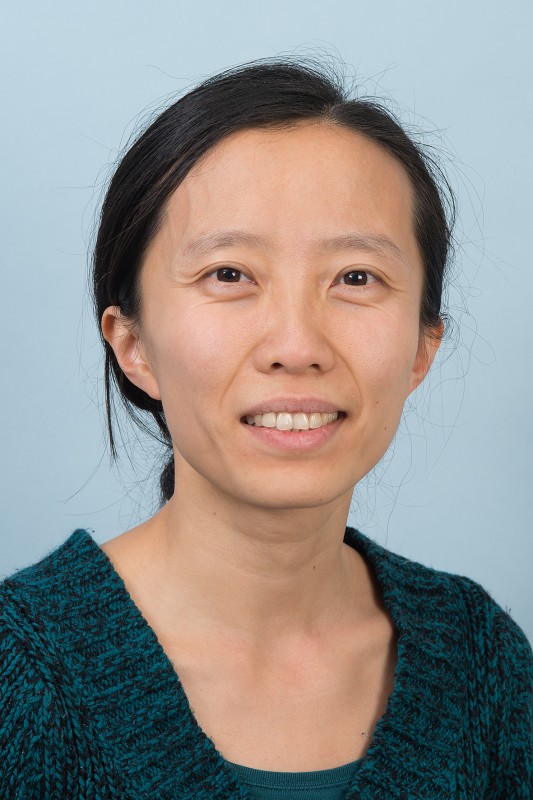
Soheyl Massoudi is a Research Fellow at ETH Zürich's IDEAL Lab, developing AI-driven methodologies for engineering design. His research integrates surrogate modeling, neural networks, and optimization algorithms for complex mechanical systems. Holds Ph.D. (2024) and M.Sc. (2020) in Mechanical Engineering from EPFL, with doctoral work focusing on surrogate-assisted optimization of turbocompressors for renewable energy applications. Current work explores autonomous artificial agents using large language models for iterative design tasks. Created computational frameworks like DARTS-NETGAB for real-time simulation and ParaturboCAD for parametric geometry generation.
Dr. Shien Zhu is affiliated with the Institute for Computing Platforms at ETH Zurich, holding a Researcher role within the academic faculty. Their primary research focuses on Deep Learning Acceleration , Software-Hardware Co-Design , Quantization Algorithms , and In-Memory Computing , with direct ties to advancements in Computer Architecture . Based at Stampfenbachstrasse 114, Zurich, Switzerland, Dr. Zhu contributes to interdisciplinary efforts at the intersection of hardware innovation and computational efficiency. No specific academic awards or grants are explicitly noted in the provided text, though their work aligns with cutting-edge trends in embedded systems and AI infrastructure.
Dr. Valery Vishnevskiy is a Lecturer at the Department of Information Technology and Electrical Engineering at ETH Zürich , affiliated with the Biomedical Imaging Group . His research focuses on advanced medical imaging techniques, particularly in cardiac MRI , ultrasound , and machine learning applications . He contributes to projects involving 4D flow MRI reconstruction , speed-of-sound imaging , and motion-corrected diffusion tensor analysis . Primary Affiliation : ETH Zürich, Department of Information Technology and Electrical Engineering Research Interests : Biomedical Imaging, MRI Reconstruction, Ultrasound Physics, Cardiac Imaging, Deep Learning His recent work emphasizes self-supervised learning for medical imaging, including the development of FlowMRI-Net for accelerated 4D flow MRI and Speed-of-Sound Imaging using diverging waves. Publications span hyperpolarized 13C metabolic imaging , viscoelasticity reconstruction , and probabilistic sampling optimization . Dr. Vishnevskiy's contributions to deformable image registration include methods for handling sliding interfaces in abdominal and cardiac imaging, with applications in respiratory motion compensation and tissue ablation monitoring . He also explores mathematical models for enzyme activity analysis and behavioral pattern detection.
Reto A. Wildhaber is a Professor for Digital Biomarkers and Signal Processing at Fachhochschule Nordwestschweiz (FHNW) and a Senior Researcher at the Signal and Information Processing Laboratory (ISI) , ETH Zürich. He specializes in biomedical signal analysis, model-based signal processing, and development of medical sensor systems. Education : Dr. sc. ETH, Dr. med. Research : Focuses on digital biomarkers, clinical trials for medical devices, and advanced signal processing techniques for physiological signals. Teaching : Co-teaches courses in Biomedical Engineering and Medical Informatics, including 'Model-Based Signal Processing and Diagnostics' and 'Digital Biomarkers'. Publications : His work spans cardiovascular diagnostics, neural signal processing, and esophageal mapping technologies, with recent studies on intracoronary ECG analysis and smartwatch ECG signal characterization. Patents : Holds patents for medical catheter designs and ECG monitoring systems. Projects : Develops open-source tools like lmlib.ch for biomedical signal processing and CLabUZH for cardiopulmonary simulations.
Dr. Anja Zai is a Researcher affiliated with the Department of Neuroinformatics at ETH Zürich. Her work focuses on interdisciplinary investigations of vocal motor control, neuroethology, and computational methods in animal behavior. She specializes in studying songbirds as model systems to explore sensory-motor integration, reinforcement learning, and acoustic communication. Her research integrates advanced imaging techniques (e.g., synchrotron X-ray CT), machine learning, and experimental setups like the RecOOrder modular recording environment. Key research themes include vocal learning mechanisms in zebra finches, environmental influences on vocal behavior, and neuroprosthetic applications through sensory substitution. Her studies address fundamental questions about how organisms adapt vocalizations under sensory deprivation, optimize motor exploration, and encode complex vocal repertoires. Recent work emphasizes multimodal sound source separation (Vib2Sound) and algorithmic modeling of vocal planning processes. Dr. Zai’s methodological contributions include benchmarking datasets for vocalization analysis and tools for non-invasive welfare monitoring in isolated animals. While no scientific awards are explicitly listed, her frequent publication in high-impact journals since 2015 indicates sustained research excellence. Her work bridges computational neuroscience, behavioral ecology, and engineering through cross-disciplinary approaches.
Lars Schöbitz is a Lecturer at the Department of Mechanical and Process Engineering at ETH Zürich, specializing in environmental engineering, sanitation systems, and data science. He holds expertise in developing methodologies for quantifying faecal sludge in urban areas and leveraging unstructured data for insights. His work integrates interdisciplinary approaches across multiple countries in Africa and Asia, focusing on sustainable development goals (SDGs) such as safely managed sanitation (6.2) and treated wastewater (6.3). As a consultant, Schöbitz supports governments, NGOs, and multilateral organizations in monitoring and evaluation. His current focus includes professional data science education using R for civil servants globally, advocating for open government and computational reproducibility. He has managed large-scale projects like the WHO/UNICEF Joint Monitoring Programme and contributed to the SFD Promotion Initiative analyzing excreta flows in cities like Kampala and Dar es Salaam. His research emphasizes practical applications in sanitation logistics, waste-to-energy solutions, and policy-driven interventions. Notable outputs include studies on faecal sludge quantification, GIS-based waste management optimization, and open data science tools for public health systems.
Emma Hoes is a Postdoctoral Research Fellow at the University of Zurich's Department of Political Science, affiliated with the ERC-funded PRODIGI project and the Digital Democracy Lab. She holds a PhD from the European University Institute in Florence. Her research examines digital technologies' impact on information ecosystems, emphasizing the unintended consequences of misinformation interventions. She employs experimental methods and computational social science approaches. Education: PhD in Political and Social Sciences (European University Institute), MA/BA details not stated. Research focuses on misinformation dynamics, AI ethics, social media governance, and media literacy. Notable findings include the trade-offs between fact-checking and public skepticism, and the disproportionate media attention toward misinformation risks. Her work appears in journals like Nature Human Behavior and Political Communication . Grants/Projects: Involved in PRODIGI (ERC-funded), Digital Democracy Lab. Active in interdisciplinary collaborations, including AI-generated news impact studies and social media platform analyses. Labs/Teams: Core member of Digital Democracy Lab at UZH. Engages in experimental research platforms like TOD (Tool for Online Discussions).
Fischer Andreas is a Professor at HES-SO (University of Applied Sciences and Arts Western Switzerland) , specifically affiliated with the School of Engineering and Architecture of Fribourg (HEIA-FR) . His research spans Pattern Recognition , Applied Machine Learning , Handwriting Recognition , and Graph-based Methods . He has secured significant grants from TAINA Technology , Swisscom , and the Hasler Foundation for projects including automatic handwriting recognition for tax forms , Swiss German translation , and graph-based keyword spotting in Vietnamese steles . Education : BSc in Computer Science from HEIA-FR. Research Highlights : Graph Neural Networks for Büchi automata classification Annotation-free alignment in historical documents Graph edit distance optimization for keyword spotting Hybrid deep learning for Vietnamese stele analysis Graph-based tumor budding analysis in digital pathology Collaborative Impact : Fischer's work bridges historical document analysis and medical imaging , demonstrated through frameworks like DIVA-DAF and tools like GammaFocus for histopathology. His 2024 conferences suggest ongoing exploration of LLM integration in document processing and OCR-free models for information extraction.
Rudolf Scheurer is an Associate Professor at the Fribourg School of Engineering and Architecture, part of the HES-SO University of Applied Sciences and Arts Western Switzerland. His expertise spans Web Security, Network Security, Programming & Algorithms, and Web Technologies. He teaches courses in Teleinformatics, Java Programming, Algorithms and Data Structures, and Advanced IP Network Design across various programs. He is affiliated with the School's departments, contributing to academic programs such as the BSc in Telecommunications, BSc in Computer Science, and MSc in Engineering. His work integrates practical applications of cybersecurity and network principles in educational settings. He maintains an academic homepage at https://rudolf.scheurer.isc.heia-fr.ch/ .
Ingram Sandy is a Professor at the Haute école d'ingénierie et d'architecture de Fribourg (HES-SO), part of the iSIS Institute for Intelligent and Secure Systems. Her research focuses on Human-Computer Interaction, Recommender Systems, and Digital Wellbeing, with a strong emphasis on applying technology to education and workplace environments. She leads and collaborates on interdisciplinary projects addressing challenges in smart environments, user experience design, and AI integration in learning platforms. Key projects include developing serious games for mental health support (Sesame Project), workplace comfort systems (SpotOn), and chatbot-enhanced educational tools. She has also contributed to frameworks like eLogBook and Graasp, aiming to bridge formal and informal learning through social software innovations. Her work spans over 15 years, with publications in top venues like IEEE, ACM, and international conferences on human-computer interaction and learning technologies. Ingram Sandy’s research interests span from foundational AI methods (reinforcement learning, deep learning) to applied domains like digital wellbeing assessment, smart office comfort modeling, and chatbot-mediated education. She actively collaborates with industry partners (e.g., OrchardAI) and academic networks across Switzerland and Europe. Her contributions highlight the intersection of technology, human behavior, and educational design.
Martin Tomasik is a Professor at the Institute of Educational Science , University of Zurich, focusing on Research Methods in Developmental and Educational Sciences . He leads the development of digital tools for measuring learning processes and advancing mathematical models for intensive longitudinal data analysis, in collaboration with the Institute for Educational Evaluation in Zurich. Research spans quantitative methodology , mathematical modeling , and longitudinal data in education and development. His work involves statistical software development and analysis of large-scale assessments and formative feedback systems . Key research themes include: Competence trajectory modeling and psychometric software. Cross-domain longitudinal studies on social change , developmental barriers , and adaptive disengagement . Applications of virtual reality and machine learning in cognitive and educational assessments. Scientific Awards : German Study Prize/Recognition Award (Körber Foundation) for his doctoral work on developmental barriers and disengagement. Project Leadership includes the Zurich Learning Progress Survey (LEAPS) , examining learning trajectories from kindergarten to compulsory schooling, and collaborations with institutions like PH Zurich , Witten-Herdecke University , and Max Planck Institute for Human Development .
Dr. Luigi Ferraioli is a Researcher at ETH Zurich's Institute of Geophysics, under the Professorship for Seismology and Geodynamics. His work focuses on advanced instrumentation for space-based gravitational wave detection, precision measurement systems, and cosmic ray studies. Key contributions include the LISA Pathfinder mission analysis, seismic sensor design, and data-driven approaches to gravitational wave astronomy. Research interests span seismology, geodynamics, and interdisciplinary applications of space technology. He has extensively contributed to LISA Pathfinder mission analysis, exploring noise mitigation, magnetic force characterization, and sensor calibration. His work bridges theoretical astrophysics with practical engineering solutions for space missions. Publications highlight expertise in gravitational wave detection, precision actuator systems, and machine learning applications for astrophysical data analysis. Current projects involve advancing instrumentation for future missions like LISA and asteroid geophysical exploration.
Dr. Dieter Werthmüller is a Lecturer at the Department of Earth and Planetary Sciences (D-EAPS) at ETH Zurich, affiliated with the Institute of Geophysics. His research focuses on geophysical methods, particularly electromagnetic induction, data assimilation in geosciences, and applications to geothermal energy and environmental monitoring. He specializes in near-surface geophysics, geothermal reservoir modeling, and the integration of geophysical datasets for subsurface characterization. His work emphasizes open-source software development for geophysical modeling, such as the emg3d and empymod tools. He has contributed to studies on electromagnetic monitoring of geothermal systems, rainwater lenses in polders, and temperature changes in near-surface environments. His recent articles highlight advancements in joint inversion techniques, CSEM applications for gas hydrates, and ocean-bottom seismometer calibration. Dr. Werthmüller collaborates on projects involving geothermal energy systems, environmental hydrology, and marine geophysics. His research addresses challenges in subsurface imaging, parameter sensitivity analysis, and the development of modular frameworks for geophysical data interpretation.
Dr. Leila Mizrahi Dr. Leila Mizrahi is a Lecturer at the Department of Earth and Planetary Sciences at ETH Zürich, Switzerland. She is affiliated with the Schweiz. Erdbebendienst (SED), the Swiss Seismological Service. Her research focuses on earthquake forecasting, seismological modeling, and disaster risk assessment. Research Interests Development and validation of earthquake forecasting models (e.g., ETAS framework) Aftershock dynamics and deep learning applications for seismic event prediction Operational earthquake forecasting for regional risk mitigation Integration of historical and modern seismic data for improved model robustness Key Contributions Recent work includes the suiETAS project for Swiss seismic forecasting and analysis of the 2023 Turkey-Syria earthquake sequence. She emphasizes interdisciplinary approaches to seismic hazard communication and policy integration. Affiliations ETH Zürich, Department of Earth and Planetary Sciences Schweiz. Erdbebendienst (SED)
Yiwen Chu is an Assistant Professor in the Department of Physics at ETH Zürich, where she leads the Laboratorium für Festkörperphysik (Laboratory for Solid State Physics). Her research focuses on quantum physics with specialization in quantum acoustics, superconducting qubits, and quantum measurement techniques. She explores fundamental quantum phenomena in mechanical systems and develops quantum technologies using acoustic resonators. Her recent publications demonstrate consistent focus on quantum acoustic systems, quantum measurement techniques, and macroscopic quantum phenomena. Work shows progressive development from foundational quantum acoustics (2018) to complex quantum state engineering (2024). A significant trend is the exploration of mechanical systems for quantum information processing, with recent advances in mechanical qubits and multimode quantum interactions. No scientific awards mentioned. No advising information available regarding PhD or Master's students. Leads the quantum devices group at the Laboratorium für Festkörperphysik, focusing on hybrid quantum systems combining superconducting circuits with mechanical resonators.