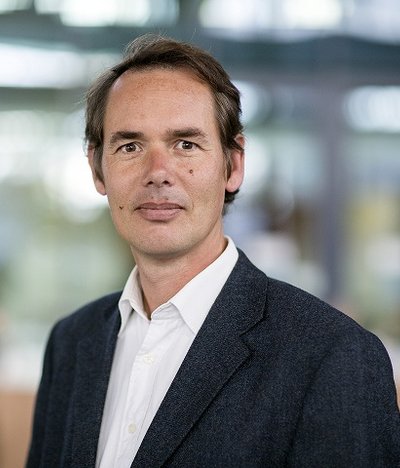
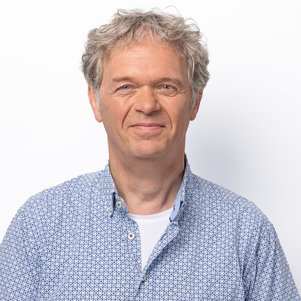
Elham Khani is a researcher at the Electrical Engineering Department of Technische Universiteit Eindhoven. Her work focuses on optical communication systems, data center networking, and AI applications in semiconductor manufacturing. She is actively involved in the SmartTWO project (2019-2025), contributing to next-generation telecom technologies. Research Interests : Optical network design for metro-access systems AI-driven defect detection in microchips Scalable data center architectures with optical switching Energy-efficient network solutions supporting UN SDGs Collaborations : Her work intersects computer science (100% data center focus) and electrical engineering, with significant contributions to network architecture optimization (72%) and real-application traffic management (100%).
Tom Peters is a postdoctoral researcher at Eindhoven University of Technology, affiliated with the College of Mathematics and Computer Science and the Applied Geometric Algorithms department. His work focuses on theoretical computer science, particularly in robotics and geometric algorithms. Education: Master of Science (MSc) in Computer Science Current Role: Researcher in distributed systems and programmable matter Research Interests: Peters specializes in robotics and computational geometry , developing theoretical frameworks for energy-constrained mobile robots and sliding cube compaction. His research explores algorithm design for programmable matter, emphasizing reconfiguration and distributed control. Publication Trends: Recent work (2024-2025) centers on mobile robot systems , cube-based programmable matter , and computational power optimization . Key themes include geometric constraints, theoretical modeling, and distributed system protocols.
Martin Roa-Villescas is a Doctoral Candidate and Teaching Assistant in the Department of Electronic Systems within the Electrical Engineering school at Eindhoven University of Technology (TU/e). He also holds an external position as a Docent (Lecturer) at Fontys University of Applied Sciences since August 2023. His educational background includes a B.Sc. in Electronic Engineering from the National University of Colombia (2010) and an M.Sc. in Embedded Systems from TU/e (2013). Between 2013 and 2018, he worked as an embedded software designer at Philips Research in Eindhoven. Roa-Villescas' research focuses on probabilistic graphical models, Bayesian machine learning, and tensor network applications. His work spans both theoretical advancements in probabilistic inference algorithms and practical implementations in open-source software. He has made significant contributions to optimizing message passing algorithms and developing efficient execution schedules for Bayesian inference. His recent publications demonstrate a clear trajectory toward improving the scalability and efficiency of probabilistic inference methods, with applications spanning audio signal processing, robotics, and hearing aid technology. The development of TensorInference, a Julia package for tensor-based probabilistic inference, represents his commitment to open-source tools that advance the field. As a researcher involved in the STW Zero Autonomous Acoustic Systems project (2017-2024), he has contributed to advancing acoustic sensing technologies through probabilistic modeling approaches. His work aligns with UN Sustainable Development Goals related to technology innovation and accessibility.
David Katzin is a researcher at GTB Tuinbouw Technologie , part of Wageningen University & Research . His work focuses on greenhouse climate modeling , energy efficiency , and sustainable horticulture . He has developed open-source tools like the Virtual Greenhouse Simulator and GreenLight for analyzing greenhouse systems and lighting technologies. His research spans topics such as radiometric properties of shading screens , LED lighting optimization , and vertical farming sustainability . Recent publications highlight his contributions to energy-saving measures, heat requirements under different lighting systems, and the environmental impact of controlled-environment agriculture. Collaborations include work with experts like Christian Stanghellini and Leo Marcelis. Current projects involve probabilistic modeling for LED efficiency in greenhouses (2016–2021), with ongoing activities in technical lectures, data sharing, and conference presentations. He contributes to datasets and software tools that advance greenhouse technology research and promote open science.
Andy D. Pimentel is a Full Professor at the University of Amsterdam, where he chairs the Parallel Computing Systems (PCS) group within the Systems and Networking Lab at the Informatics Institute. His research focuses on multi-core and multi-processor computer systems, with emphasis on design, programming, and run-time management. Dr. Pimentel earned his PhD in Computer Science in 1998 and MSc in Computer Science in 1993, both from the University of Amsterdam. His educational background laid the foundation for his extensive work in computer architecture and embedded systems. His research interests span a wide range of topics including multi-core embedded systems, system-level design and simulation, design space exploration, performance and power analysis, system dependability, hardware/software co-design, run-time resource management, and Edge AI. His work consistently addresses the extra-functional aspects of computing systems such as performance, energy consumption, and system dependability, while also considering the productivity of designing and programming these complex systems. Analyzing his recent publications reveals a clear trajectory toward sustainable and efficient computing systems. His work has evolved from foundational research in embedded systems design space exploration to cutting-edge research in Edge AI, distributed deep learning, and energy-efficient computing. His publications demonstrate strong interdisciplinary connections between computer architecture, artificial intelligence, and sustainable computing. IEEE CEDA Outstanding Service Recognition Award DATE Fellow Award Professor Pimentel has held significant leadership roles in the academic community, serving as Chair of the Board for the Advanced School for Computing and Imaging (ASCI) since 2021, and as a Board member of ICT Research Platform Nederland (IPN) since 2020. He has organized major conferences including serving as General Chair for Design Automation and Test in Europe (DATE) 2024 and IEEE/ACM Embedded Systems Week 2026. His extensive service to the community demonstrates his leadership in the field of computer architecture and embedded systems. At the University of Amsterdam, Professor Pimentel leads the Parallel Computing Systems group, which investigates the design, programming, and run-time management of multi-core and multi-processor systems. The group's research emphasizes modeling, analysis, and optimization of performance, power/energy consumption, and system dependability, while also focusing on improving the productivity of designing and programming these complex systems.
Wan Fokkink is a part-time Full Professor of Model Based System Engineering at the Eindhoven University of Technology (TU/e) , affiliated with the Control Systems Technology Group in the Faculty of Mechanical Engineering. His research bridges theoretical computer science and mechanical engineering, focusing on formal methods for distributed systems and safety-critical software. Education : MSc in Mathematics (University of Amsterdam), PhD in Computer Science (University of Amsterdam) Affiliations : Vrije Universiteit Amsterdam (Full Professor of Theoretical Computer Science since 2004), TU/e (since 2012) Research Interests include applying formal modeling techniques to synthesize PLC code for civil engineering structures, protocol verification, and multi-valued abstraction methods. His work often involves collaboration with industry partners and national research institutes. Key Contributions are in model-based design frameworks that automate software transformation from requirements, with applications in baggage handling systems, network protocols, and distributed control algorithms. He co-founded IFIP Working Group 1.8 and chaired the national research school IPA board.
Dr. Wouter Swierstra is an Associate Professor in the Software Technology group within the Faculty of Science at Utrecht University. His research focuses on functional programming, type theory, and program verification, with particular expertise in dependently typed programming languages like Agda. His research interests span several key areas in programming language theory and implementation: Functional programming language design and implementation Dependent types and formal verification Program transformation and derivation Generic programming techniques Formal methods for blockchain and smart contracts Hardware verification using domain-specific languages Swierstra's recent work shows a strong trend toward applying formal methods to practical problems, particularly in the areas of blockchain technology and hardware verification. His publications demonstrate expertise in both theoretical foundations of programming languages and their practical applications. He has made significant contributions to the understanding of data structures in functional settings, program derivation techniques, and verification methodologies. Dr. Swierstra teaches courses related to functional programming, including "Advanced functional programming" and "Logic for Computer Science," helping to train the next generation of programming language researchers and practitioners.
Katherine Poggensee is a Researcher at Erasmus MC (Rehabilitation Medicine) and holds an external position at Mechanical Engineering, Technische Universiteit Delft . She earned her PhD from Stanford University and focuses on human-in-the-loop optimization for rehabilitation robotics. Educated at Stanford University (PhD) Her research integrates biomechanics and robotics to improve assistive technologies. Key projects involve exoskeletons, wheelchair design, and haptic interfaces. Publications in Nature , PLoS ONE , and Frontiers in Robotics and AI highlight her work on motor learning and energy cost reduction. Recent work emphasizes user participation in rehabilitation technology development and real-time adaptive systems for human-robot interaction. Marie Skłodowska-Curie Postdoctoral Fellowship (2023)
Prof.dr.ir. J.M. Hoekstra is a Professor in the Department of Aerospace Engineering at Delft University of Technology. His research focuses on advancing air traffic management systems through computational methods and AI applications. Research Focus: Hoekstra leads investigations in aircraft engineering, air traffic optimization, and autonomous systems. His work integrates reinforcement learning for conflict resolution in drone operations and develops trajectory generation algorithms for urban airspace. Recent projects examine safety systems for high-density air traffic and optimal flight path modeling under environmental constraints. Honors and Awards: Best Paper Award at ICRAT 2024 Best Paper Award (2022) for contributions to air transportation research Academic Leadership: He co-founded the BlueSky research community and organized its 10th-anniversary symposium. Hoekstra supervises graduate research (13+ supervised works) and chairs program committees for major conferences including SESAR Innovation Days.
R.E. Kooij is a Professor at the Quantum & Computer Engineering department within the Electrical Engineering, Mathematics and Computer Science faculty. His research spans quantum computing, network robustness, and complex systems analysis. Active in Quantum Computing and Computer Science . Key contributions to Network Resilience and Graph Theory . Works on Cloud-Native Systems and Environmental Engineering applications. His recent publications focus on quantifying robustness metrics, optimizing network controllability, and developing quantum algorithms. Activities include speaking at academic meetings since 2013. Press/media coverage includes public engagement in 2021.
Alireza Sheikh is a University Researcher in the Department of Electrical Engineering at Eindhoven University of Technology (TU/e), specializing in Signal Processing Systems. He is affiliated with the ICT Lab at TU/e and has been actively involved in research projects such as FUN-NOTCH: Fundamentals of the Nonlinear Optical Channel. Dr. Sheikh received his B.Sc. (Hons.) degree in electrical engineering from Ferdowsi University of Mashhad, Iran, in 2011, his M.Sc. (Hons.) degree in communication systems engineering from the University of Tehran, Iran, in 2014, and his Ph.D. degree in electrical engineering from Chalmers University of Technology, Sweden, in 2019. Prior to joining TU/e, he was a visiting researcher at the Institute of Communications and Navigation, German Aerospace Center (DLR), Germany, in 2017-2018. Dr. Sheikh's research focuses on communication systems with particular emphasis on data protection and efficient communication. His primary research interests include channel coding , optical communication , wireless communication , information theory , machine learning , and estimation theory . He is particularly interested in designing low-complexity coding schemes for next-generation communication systems that can protect data against imperfections. His recent publications demonstrate a strong focus on improving communication systems through advanced coding techniques and signal processing methods. His work spans optical communications (addressing nonlinearity issues), wireless communications (particularly Massive MIMO systems), and fundamental information theory problems. A common thread in his research is the development of practical, high-throughput solutions for real-world communication challenges, with significant contributions to product codes, error correction, and nonlinearity-tolerant communication schemes. Dr. Sheikh has contributed to significant research projects, most notably as a project member of FUN-NOTCH (Fundamentals of the Nonlinear Optical Channel), which runs from 2018 to 2025. This project focuses on addressing challenges in optical communications, particularly related to nonlinearity, modulation formats, and product codes. He is actively involved in teaching, specifically in the course "Applications of Information Theory (5LSF0)" at TU/e, demonstrating his commitment to sharing knowledge with the next generation of engineers and researchers.
Francesco Lombardi is an Assistant Professor at the Delft University of Technology (TU Delft) within the School of Technology, Policy and Management , Energy and Industry department. He specializes in computational methods for energy system design, emphasizing social justice and technical robustness. PhD in Energy Engineering from Politecnico di Milano Visiting researcher at ETH Zurich and KU Leuven His research focuses on Modelling to Generate Alternatives (MGA) methods, including the SPORES algorithm , integrated into the open-source energy framework Calliope . He leads the development of RAMP software , a stochastic model for energy demand profiles in data-scarce scenarios like remote areas and future electric-vehicle fleets. Current projects include advancing MGA methods for policy-relevant energy questions and contributing to the PowerWeb Institute , Urban Energy Institute , and Open Energy Modelling Initiative . His work spans urban-to-national scales, addressing multi-energy systems and decarbonization strategies. Notable publications include studies in Joule and Applied Energy on renewable deployment, fossil fuel elimination, and smart charging. Collaborations involve industrial and academic partners, with software like RAMP co-funded by institutions such as Reiner Lemoine Institut and University of Liège.
Martin D. Verweij is an Associate Professor at the Laboratory of Acoustical Wavefield Imaging within the Faculty of Applied Sciences at Delft University of Technology. Since 2015, he maintains a part-time position at the Biomedical Engineering group of Erasmus Medical Centre in Rotterdam, bridging academic research with clinical applications. Dr. Verweij earned his M.Sc. (cum laude) and Ph.D. in electrical engineering from Delft University of Technology in 1988 and 1992. His career includes a Research Fellowship with the Royal Netherlands Academy of Arts and Sciences (1993-1997) and visiting scientist positions at Schlumberger Cambridge Research. He joined Delft University as Assistant Professor in 1998, becoming Associate Professor later that year, initially in Electromagnetic Research before moving to Acoustical Wavefield Imaging in 2011. His research focuses on medical ultrasound technology, specializing in transducer design, beamforming algorithms, and theoretical modeling of ultrasound wavefields. He is renowned as the originator of the Iterative Nonlinear Contrast Source (INCS) method for computing nonlinear ultrasound fields. His work spans fundamental acoustical theory and practical clinical applications, particularly in cardiac imaging and contrast-enhanced ultrasound. Recent publications reveal his leadership in developing advanced ultrasound technologies including high-frame-rate 3D imaging systems, innovative transducer calibration methods, and microbubble contrast agent research. His scholarly output demonstrates consistent integration of electrical engineering principles with medical imaging applications, enhancing diagnostic capabilities across multiple medical specialties. As a research leader for the Dutch Technology Foundation (NWO/TTW), Dr. Verweij oversees projects involving transducer design and imaging technologies. His work has produced 267 research outputs and he has supervised 14 graduate students according to his Scopus profile. His laboratory focuses on developing next-generation ultrasound technologies with emphasis on 3D imaging systems, transducer innovation, and novel beamforming approaches. Current projects include high-volume rate ultrasound probes, specialized transceiver ASICs for medical applications, and acoustic streaming-based calibration techniques that improve imaging precision.
Ronald Cramer is a Full Professor of Cryptology at the Mathematical Institute of Leiden University and serves as the Head of the Cryptology Group at Centrum Wiskunde & Informatica (CWI) in Amsterdam. His academic career spans multiple prestigious institutions including Aarhus University, ETH Zurich, and CWI, where he has held various research and professorial positions since earning his PhD from the University of Amsterdam in 1997. Professor Cramer's research interests focus on the theoretical foundations of cryptology, with significant contributions to algebraic number theory, algebraic geometry, coding theory, combinatorics, algorithms, and complexity theory. His work bridges deep mathematical concepts with practical cryptographic applications, particularly in secure multiparty computation and zero-knowledge proof systems. Over the past decade, his research has increasingly focused on developing efficient cryptographic protocols that operate over rings and lattices, expanding the theoretical boundaries of the field. His publication record demonstrates a consistent trajectory of high-impact research, with recent work (2017-2022) emphasizing compressed sigma-protocol theory, arithmetic secret sharing over various algebraic structures, and efficient multiparty computation protocols. These publications reveal a research program focused on optimizing communication complexity while maintaining strong security guarantees, with applications ranging from secure computation to threshold cryptography and verifiable computation. ERC Advanced Grant (2016) Member of the Royal Netherlands Academy of Arts and Sciences (KNAW) (since 2013) Fellow of the International Association for Cryptologic Research (IACR) (since 2013) Invited Speaker at 30th Annual IACR EUROCRYPT (2011) NWO VICI Laureate (2006) KNAW DJA (2005) Distinguished Cryptographer Lecture Series, NTT Research, Tokio (2003) KNAW Christiaan Huygens Award (1998) Professor Cramer has advised several PhD students including Thomas Attema, Wessel van Woerden, Diego Mirandola, Gabriele Spini, and Niek Johannes Bouman. His professional service includes editorial board memberships for leading cryptography journals and chairing major conferences including EUROCRYPT 2005, PKC 2008, and TCC 2012. He has also served on the IACR Board of Directors from 2005-2007. His research has been supported by significant grants including an ERC Advanced Grant in 2016 and an NWO VICI grant in 2006, enabling substantial contributions to both theoretical foundations and practical applications of modern cryptography.
J. Dankelman is a Professor in Mechanical Engineering at Delft University of Technology. His work bridges biomedical engineering and surgical technology through innovative research on medical devices and bio-inspired systems. Active in surgical robotics, medical device design, and intraoperative visualization Led research on robotic catheters, electrosurgical knives with optical tissue readout, and tools for low-resource environments Recipient of three prestigious scientific awards including Netherlands Academy of Engineering fellowship His research focuses on improving surgical precision through advanced visualization, robotics, and sensor integration. Recent projects include interactive modalities for endovascular interventions and computer-aided decision support in pancreatic cancer surgery. Key trends in his publications reveal expertise in: Medical robotics with emphasis on deformable environments 3D modeling applications in oncology Low-cost, context-driven medical device design Temperature sensing for nerve function assessment Electrosurgical instrument innovation Scientific recognition includes: Fellow, Netherlands Academy of Engineering (2023) Open Education Award (2022) Professor of Excellence Award (2019) As editor and committee member, he contributes to translational engineering and scientific integrity initiatives.