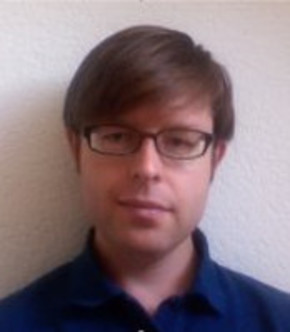
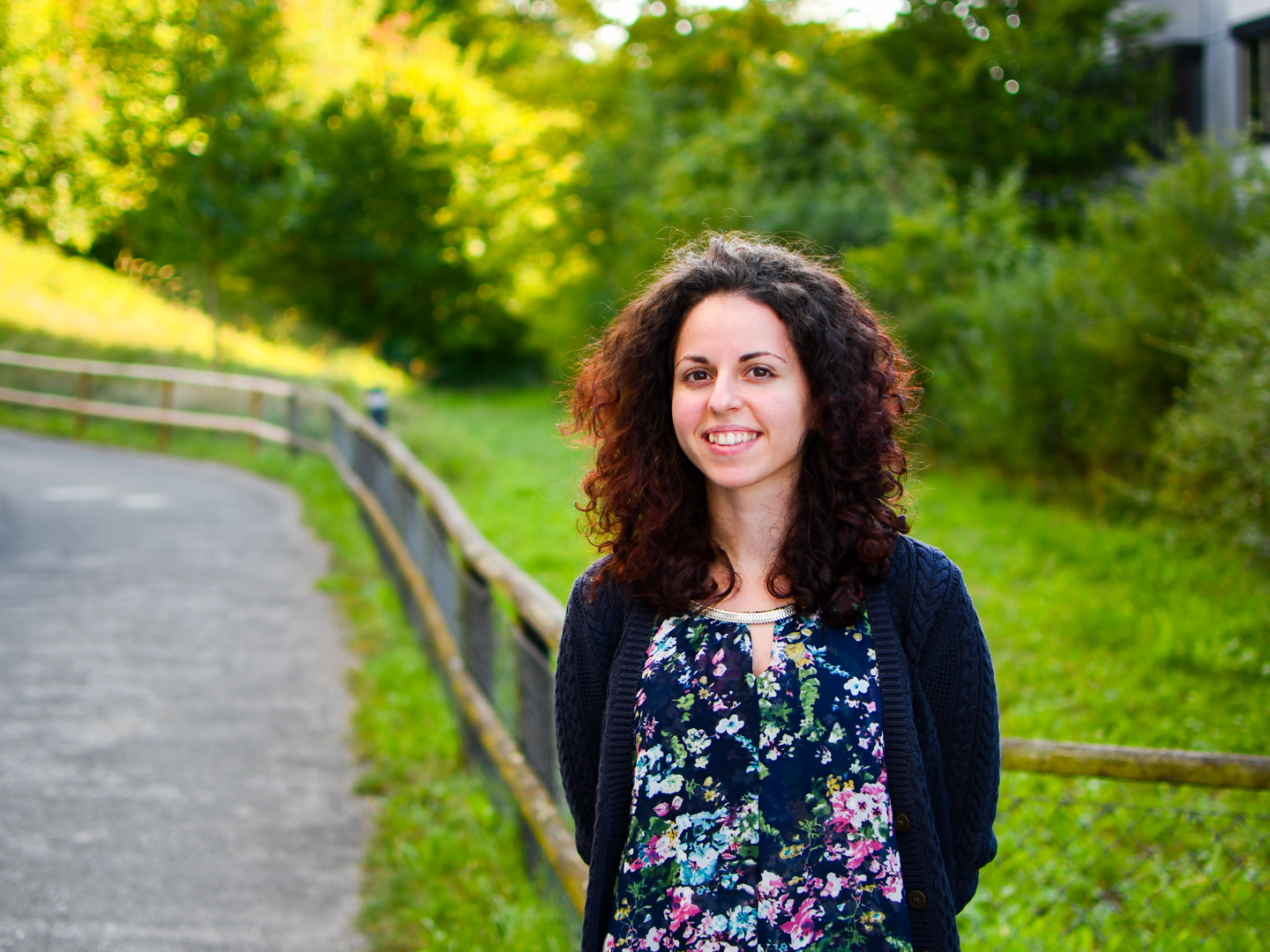
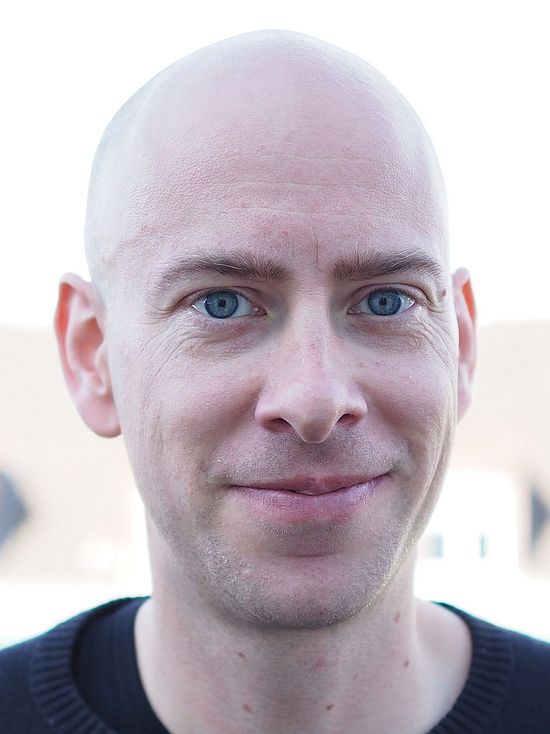
Björn Hagströmer is an Associate Professor at Stockholm University's Stockholm Business School, specializing in financial economics and market microstructure. His research focuses on high-frequency trading, market liquidity dynamics, and the structural evolution of financial markets. He has contributed extensively to understanding fragmentation in European markets, the behavior of high-frequency traders, and the design of optimal trading mechanisms like call auctions. His work bridges theoretical models with empirical analysis of real-world market data, addressing issues such as bid-ask spread biases, limit order cancellations, and the impact of colocation strategies on liquidity provision. Hagströmer's studies often involve collaborations with leading institutions, including the Federal Reserve Bank of St. Louis and Vrije Universiteit Amsterdam. Key themes across his research include evaluating the efficiency of decentralized markets, measuring information revelation through trading activity, and assessing regulatory policies affecting market quality. His findings have been published in top journals like the Journal of Financial Economics and Review of Financial Studies .
Prof. Dr. George Metcalfe is a Professor and Managing Director of the Mathematical Institute (MAI) at the University of Bern. His research focuses on proof theory, non-classical logics, and ordered algebraic structures, with particular emphasis on algebraic semantics and decidability questions. He holds an office at Sidlerstrasse 5, Bern, and can be contacted via george.metcalfe@unibe.ch. His work bridges logic and algebra, exploring topics such as residuated lattices, fuzzy logics, and modal logics. Recent contributions include advancements in equational theories, interpolation properties, and decision procedures for algebraic structures. His research often intersects with computational logic and automated reasoning. Publications span foundational studies of algebraic systems and their logical counterparts, with a focus on substructural logics, lattice-ordered groups, and temporal models. His work frequently addresses decidability, completeness, and computational aspects of abstract algebraic frameworks. Metcalfe has organized international conferences such as the Advances in Modal Logic and Logic, Algebra, and Truth Degrees events. His research demonstrates interdisciplinary rigor, connecting formal logic with algebraic methods to solve complex theoretical problems.
Prof. Hanssen Henner is Deputy Head of the Department of Prevention, Sports Medicine & System Physiotherapy at the University of Basel's Medical Faculty. He holds a faculty position in the Department of Sport, Exercise and Health (DSBG), focusing on cardiovascular health, hypertension management, and exercise physiology. His research bridges clinical practice and population health, emphasizing early intervention strategies, vascular biomarkers, and exercise-based therapies. Key areas include pediatric cardiovascular risk, post-COVID-19 recovery, and microvascular dysfunction in chronic diseases. Research interests span hypertension pathophysiology, retinal vessel analysis as a biomarker, and the role of physical activity in disease prevention. He leads trials like VascuFit and HyperVasc, evaluating exercise interventions for cardiovascular risk reduction. Collaborations include international guidelines (ESC) and interdisciplinary projects on metabolic profiling and epigenetic influences on health. His work addresses translational challenges such as standardizing retinal imaging protocols and developing personalized exercise prescriptions. Recent studies highlight the metabolic signatures of cardiorespiratory fitness and the impact of dietary components (e.g., AGEs) on vascular health. He also investigates pandemic-related occupational stress in healthcare workers and long-term post-COVID-19 sequelae. Grants and projects involve randomized controlled trials (e.g., HIT-GLAUCOMA, SphingoFIT), biomarker validation initiatives, and public health strategies targeting obesity trajectories in children. His expertise is reflected in contributions to clinical consensus statements on cardiovascular prevention and sports medicine guidelines for post-infection athlete management.
Marco Raglianti is a Postdoctoral Fellow and Research Assistant in the Reverse Engineering, Visualization, and Evolution Analysis Lab (REVEAL) at the Faculty of Informatics, Università della Svizzera italiana (USI). His research focuses on software engineering, documentation landscapes, developer communities, and visualization tools. He holds a PhD in Informatics from USI (2025) and M.Sc./B.Sc. degrees in Computer Science from the University of Pisa (Cum Laude). Key contributions include tools like DwarvenMail for documentation analysis, DiscOrDance for Discord community visualization, and Vizor for interactive graph exploration. He co-supervised multiple thesis projects and taught courses in software engineering at USI. His work bridges empirical software engineering with practical tool development, emphasizing developer-centric solutions. Raglianti's publications address topics like UML evolution, VR-based refactoring, and microservices data access patterns. He actively reviews for journals like ACM Transactions on Software Engineering and conferences such as ICSE and ESEC/FSE. His lab's focus on reifying software documentation reflects a commitment to improving developer workflows through systematic analysis and visualization.
Slobodan Lukovic is a Senior Researcher at the Faculty of Informatics of the Università della Svizzera italiana (USI), affiliated with the ALaRI group and the Dalle Molle Institute for Artificial Intelligence (IDSIA USI-SUPSI). He holds a PhD in Computer Architectures from USI and a master’s in Embedded Systems Design, alongside a bachelor’s degree from the University of Belgrade’s Faculty of Electrical Engineering. His research focuses on applying advanced AI techniques to IoT challenges, particularly in sustainability and Smart Grids. Key areas include energy storage optimization, grid load forecasting using deep learning, and blockchain integration in smart city infrastructure. He leads projects such as SONDER, GraPV, and SWAIN, emphasizing proactive maintenance, grid resilience, and virtual power systems. Lukovic’s work spans cyber-physical systems, data-driven methods, and machine learning applications. Notable contributions include frameworks for smart grid disturbance analysis, fault injection testing, and multi-agent systems for prosumer integration. His expertise in NoC-based MPSoC security and model-driven design further underscores his interdisciplinary approach. He has advised multiple projects and contributes to labs/teams at USI, focusing on bridging ICT and energy systems for sustainable urban development.
Monaldo Mastrolilli is a Professor at the University of Applied Sciences of Southern Switzerland and holds a permanent position as Senior Researcher at IDSIA (Dalle Molle Institute for Artificial Intelligence), a joint institute of USI and SUPSI. He earned his PhD summa cum laude from the University of Kiel and a Computer Science Engineering degree from Politecnico di Milano. His research focuses on combinatorial optimization, complexity theory, approximation algorithms, and scheduling problems. He has authored over 30 publications in top journals/conferences such as FOCS, SODA, and Journal of Algorithms. Research interests include approximation algorithms, metaheuristics, scheduling theory, and computational complexity. His work bridges theoretical foundations with practical applications in operations research and artificial intelligence. Notable contributions include advancements in Sum-of-Squares proofs, scheduling algorithms, and combinatorial optimization techniques. He has supervised four PhD students and serves on program committees for ICALP, APPROX, and WAOA. Awards include the Whizzkids'97 competition prize and a prestigious PhD distinction. Education: PhD (summa cum laude) in Computer Science, University of Kiel (2002); Master's in Computer Science Engineering, Politecnico di Milano (1997) Key Research Areas: Complexity Theory, Approximation Algorithms, Scheduling, Metaheuristics
Matilde Iorizzo is a Lecturer at the Faculty of Biomedical Sciences, Università della Svizzera italiana (USI). Her research focuses on dermatological conditions, particularly nail disorders, psoriasis, alopecia, and autoimmune skin diseases. She contributes to clinical guidelines through collaborations like the EADV Task Force on Hair Diseases and Dermatology for Cancer Patients. Her work emphasizes innovative diagnostics (e.g., AI-driven nail psoriasis assessment) and therapeutic interventions (e.g., JAK inhibitors, PRP therapy). Recent studies explore drug-induced autoimmune bullous diseases and telemedicine applications in dermatology. Education details are not provided in the source text, but her professional activities suggest advanced training in dermatology. Research interests include nail surgery outcomes, trichoscopy, and the intersection of dermatology with oncology. She collaborates internationally, contributing to consensus projects like the CONSONANCE Consensus on onychomycosis management and the International Dermoscopy Society’s trichoscopy task force. Key Projects: Delphi consensus on lichen planopilaris, systematic reviews on nail JAK inhibitors, multicenter studies on trichoteiromania. Technical Expertise: Dermoscopy, confocal microscopy, clinical trial design. Clinical Focus: Nail psoriasis, inflammatory nail dystrophies, chemotherapy-induced alopecia. Her publications span 2016–2025, demonstrating sustained contributions to both basic and applied dermatological research.
Luca Maria Gambardella is a Full Professor at the Faculty of Informatics of Università della Svizzera italiana (USI) and serves as the Vice Rector for Innovation and Corporate Relations at USI. He is also the co-director of the Artificial Intelligence Master program and affiliated with IDSIA (Istituto Dalle Molle di studi sull'intelligenza artificiale USI-SUPSI). Additionally, he is the Co-Founder, CTO & Head of Applied AI at Artificialy SA, a Lugano-based company. His educational background includes a PhD in Engineering Sciences and Technology from ULB, École Polytechnique de Bruxelles, and a Master in Computer Science from the University of Pisa, Italy. Gambardella's research spans several cutting-edge areas in artificial intelligence and robotics. His work focuses on meta-heuristics algorithms , particularly Ant Colony Optimization, as well as machine learning and swarm intelligence . In operational research, he specializes in scheduling , vehicle routing and robust optimization . His robotics research emphasizes swarm robotics , mobile robots , and drones , with particular interest in human-robot interaction and visual anomaly detection. His recent publications (2023-2025) demonstrate a strong focus on optimization problems (particularly Traveling Salesman and Steiner Tree problems), robotics (swarm robotics, navigation, and human-robot interaction), and educational applications of computational thinking. A significant portion of his recent work combines traditional optimization techniques with modern machine learning approaches, reflecting the interdisciplinary nature of his research. Ranked by Stanford University in the top 2% of scientists worldwide (2021-2023) Special Swiss ICT Award 2016 (with Juergen Schmidhuber) "Watt d'Or", Swiss award for best energy projects 2015 Gambardella has supervised 14 PhD theses (with four in progress) and has secured over 61 million CHF in research funding, including 26 Swiss National Science Foundation projects (20 as principal investigator), 7 European Projects, and numerous industrial collaborations. He leads the Swarm Robotics Lab at IDSIA and has been instrumental in establishing several research units and master's programs in intelligent systems. His artistic endeavors include "the sense gallery" immersive space at FoxTown in Mendrisio, the interactive urban installation "Neuralrope#1" in Lugano-Besso pedestrian tunnel, and several published novels including "Sei Vite" (2013), "Il suono dell'alba" (2019), and "Segni particolari: tatuaggio con una stella a 5 punte sul polso sinistro" (2024).
Michel Deriaz is a Senior Lecturer at the University of Geneva's Research Institute for Statistics and Information Science. He holds a Ph.D. from the same institution. His research focuses on machine learning applications in healthcare technology, sensor systems, and recommendation systems, with a strong emphasis on interdisciplinary projects involving wearable devices, data analysis, and human-centric technologies. Key research interests include: Machine learning for gait analysis and early disease detection Indoor/outdoor localization using IMU and GPS fusion AI-driven recommendation systems for seniors and startups Health monitoring through biometric sensors (e.g., grip strength analysis) Optimization of mobile positioning systems His recent work demonstrates expertise in: Convolutional neural networks for equine lameness detection Transformer-based models for localization during GPS outages Predictive analytics for foreign exchange markets Validation of medical devices for clinical assessment No scientific awards or current grants are listed, though his extensive publication record indicates active collaboration with healthcare providers and tech innovators. His work often bridges theoretical computer science with practical applications in geriatric care, veterinary science, and disaster management systems.
Dr. Heidi Gebauer is a researcher at the ZHAW School of Engineering, specializing in Scientific Computing & Algorithmics. She is based at the Winterthur campus and actively contributes to theoretical computer science and discrete mathematics research. Her research interests span Theoretical Computer Science , Combinatorics , Random Graphs , Algorithm Design , Advice Complexity , and Graph Theory . Her work combines mathematical rigor with computational applications, particularly in algorithmic game theory and combinatorial structures. The recent publications reflect a strong focus on theoretical analysis of algorithms and combinatorial models, with applications in computational complexity and discrete optimization. Her work often appears in high-quality peer-reviewed venues in combinatorics and computing. Dr. Gebauer has contributed to completed research projects including the development of an intelligent scheduling system for a 14-axis laser welding machine and a new end-point controller. These projects suggest applied algorithmic work alongside theoretical contributions. No scientific awards listed in the provided text. She has collaborated with researchers such as Dennis Clemens, Anita Liebenau, Dennis Komm, and others. There is no mention of student supervision or grant leadership in the available information. Dr. Gebauer is part of the research team in the Research Focus Scientific Computing & Algorithmics at ZHAW, which likely involves collaboration on algorithm development, mathematical modeling, and computational problem-solving.
Gianira Alfarano is an Assistant Professor (tenure-track) at the University of Rennes 1, affiliated with the Géométrie et Algèbre Effectives team. She holds a Ph.D. in Mathematics from the University of Zurich (2022) and has held postdoctoral positions at TU Eindhoven and University College Dublin. Her research focuses on Algebraic Coding Theory, Finite Fields, Combinatorics, and Finite Geometry. Alfarano has organized sessions at international conferences and won awards such as the ACA-ERA 2022 and a Best Presentation Award. She teaches courses in algorithms, coding theory, and cryptography at Rennes University. Her academic journey includes teaching assistant roles at Zurich and postdoctoral research in network coding and information theory. Alfarano’s work bridges algebraic structures with practical coding solutions, addressing challenges in data storage, security, and error correction. Recent research emphasizes rank-metric codes, q-matroids, and service rate regions in distributed systems. Education: Ph.D. in Mathematics, University of Zurich, 2022 Postdoc: TU Eindhoven (2022–2023), UCD (2023–2024) Awards: Applications of Computer Algebra Early Research Award (ACA-ERA) 2022 Best Presentation Award at Contemporary Algebraic and Geometric Techniques in Coding Theory and Cryptography Alfarano’s publications span journals like SIAM Journal on Applied Algebra and Geometry and conferences such as ISIT. Her invited talks include sessions on minimal codes, service rate regions, and q-analogues in combinatorics. She actively contributes to the academic community through organizing workshops and editorial roles in coding theory.
Roman Schmied is a Researcher in the Department of Physics at the University of Basel, affiliated with both the Quantum Optics Lab (Treutlein group) since 2010 and the Human Optics Lab since 2016. His work bridges quantum physics and applied optics, focusing on entanglement in atomic ensembles, quantum metrology, and myopia research. He earned his Ph.D. from Princeton University (2006) and conducted postdoctoral research at the Max Planck Institute of Quantum Optics (2006–2010). Roles: Senior Scientist at University of Basel (2010–present) Former Substitute Professor at University of Freiburg (2017) Research interests span quantum simulations with trapped ions, Bell correlations in Bose-Einstein condensates, and optical systems for myopia studies. He has pioneered Mathematica tools like SurfacePattern for trap design and contributed to quantum entanglement detection protocols. A skilled educator, he won the Golden Chalk Award for teaching excellence multiple times. Notable achievements include the Paul Ehrenfest Award (2017) for Bell Correlations in a Bose-Einstein Condensate , and ERC-supported collaborations on hybrid atom-optomechanical systems. His work integrates experimental and theoretical approaches, addressing fundamental quantum phenomena and their technological applications.
Prof. Dr. Fabian Schär is a Professor of Distributed Ledger Technology and Fintech at the University of Basel's Faculty of Business and Economics. He serves as Managing Director of the Center for Innovative Finance (CIF), a board member of the Responsible Digital Society, and an Affiliate Professor at the Swiss Finance Institute. His research focuses on blockchain technology, decentralized finance (DeFi), financial privacy, and cryptoassets. Schär co-authored the MIT Press bestseller *Bitcoin, Blockchain, and Cryptoassets* and advises institutions like the Bank for International Settlements (BIS) and the IMF. His work bridges economics and computer science, addressing topics such as blockchain governance, metaverse economics, and regulatory frameworks. **Education**: No explicit details provided in texts, though his academic role implies doctoral qualifications. **Research Interests**: Public blockchains, DeFi protocols, cryptoasset markets, metaverse spatial economics, and regulatory compliance for decentralized systems. His interdisciplinary approach explores technical and socio-economic dimensions of blockchain applications. **Articles Trends**: Recent works analyze metaverse governance, DeFi risk transfer, blockchain privacy, and contagion effects in crypto markets. Early contributions include foundational analyses of Bitcoin mining and stablecoin design. **Awards**: Recognized in the NZZ ranking of Switzerland's most influential economists (2023). His book is a key reference in the field. **Advising & Grants**: Technical advisor to BIS’s CPMI, visiting scholar at IMF, and contributor to OECD/IOSCO working groups. No explicit grants listed, but his involvement in policy discussions implies institutional support. **Labs/Teams**: Leads the CIF, a hub for innovative finance research, and collaborates with decentralized autonomous organizations (DAOs) and central bank initiatives.
Dr. Tobias Kaufmann is the Acting Head of the FHNW Institute of Mathematics and Natural Sciences and a Lecturer in Mathematics at FHNW's School of Engineering and Environment. He teaches in bachelor's programs including Mechanical Engineering, Electrical and Information Technology, Computer Sciences, and Energy and Environmental Technology. His research focuses on multi-physics system modeling, machine learning, high-performance computing, ultrasonics, radar, and vacuum measurement technologies. He holds a PhD in theoretical physics from the University of Zurich and completed postdoctoral research at ETH Zurich and the University of California, Irvine. Education Background: Tobias Kaufmann earned a Diploma in Theoretical Physics and a Teaching Diploma from the University of Zurich. He also holds a CAS in Higher Education from the University of Applied Sciences of Eastern Switzerland. His professional career spans roles as a Professor at the University of Applied Sciences of Eastern Switzerland, a Data Scientist at Geopraevent, a Scientist at ABB Corporate Research, and a Principal Investigator at ETH Zurich's Department of Physics. Research Interests: His work bridges computational physics and engineering applications, emphasizing: Multi-physics system modeling and simulation Machine learning for data analysis and predictive systems High-performance computing for large-scale simulations Ultrasonic and radar sensing technologies Continuum mechanics and electrodynamics Notable Projects: As project leader, he has managed initiatives like the Innosuisse-funded 'Optimized Side Seamer for Fleximed tube bodies' with Neopac AG and SF-funded projects on particle-based CFD simulations, smart power tools, food industry classifiers, and cable car dynamics simulators. Collaborations include Hilti AG, Winterhalter AG, and Bartholet AG. Technical Contributions: His inventions include non-intrusive liquid level measurement systems (patented with ABB) and acoustic signal propagation methods. He has also contributed to Google's AI research, including text prediction and communication template systems.
PD Dr. Benedikt Helgason is a Senior Lecturer at the Department of Health Sciences and Technology, ETH Zürich. He works at the Institute for Biomechanics (Laboratory for Orthopaedic Technology), focusing on computational modeling of bone mechanics and medical device innovation. His research spans: Finite element analysis of bone-implant interactions Fracture risk prediction algorithms Computational modeling Medical device design and testing Machine learning applications in biomechanics Recent work demonstrates expertise in generating super-resolution 3D models from clinical CT scans, optimizing spinal fusion cages through topology design, and developing frameworks for early health technology assessments. He investigates prophylactic intramedullary nailing for hip fracture prevention and evaluates neural network models for screw stability prediction. Key collaborations include the AGES-Reykjavik study cohort for aging research and experimental validation of finite element models using high-speed x-ray techniques. His team develops validated, non-linear explicit FE models for screw-bone interactions and explores bioresorbable magnesium-fiber reinforced bone cements. Contact: bhelgason@ethz.ch