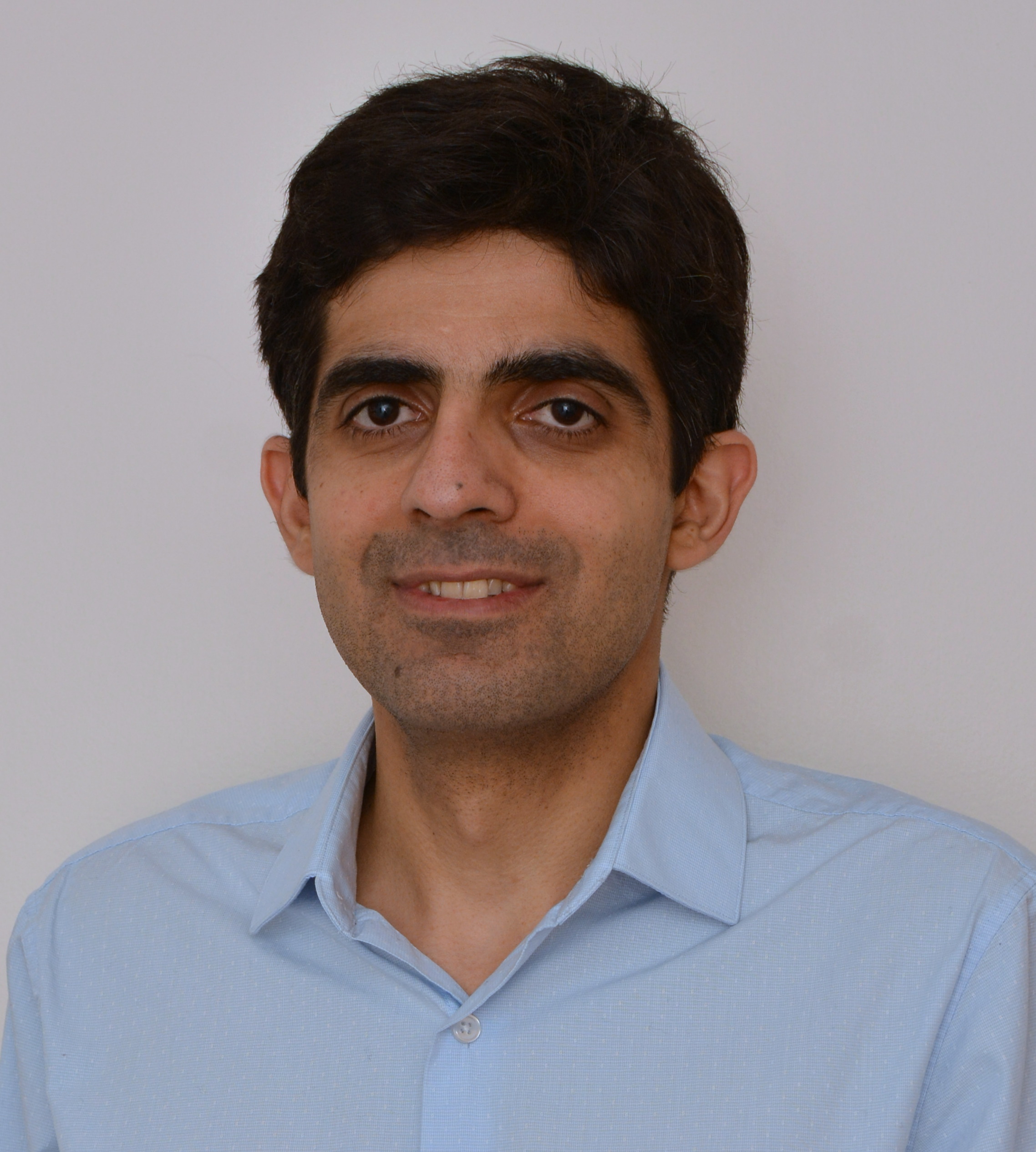
Abhijit Pal is an Associate Professor in the Department of Mathematics & Statistics at the Indian Institute of Technology Kanpur. He holds a PhD from the Indian Statistical Institute, Kolkata (2011), an M.Sc in Pure Mathematics from Calcutta University (2004), and a B.Sc with Mathematics Honours from Calcutta University (2002). His office is located at FB-575, IIT Kanpur. His research focuses on Geometric Group Theory , with specific interests in Relatively Hyperbolic Groups and Mapping Class Groups . His work bridges geometric topology and algebraic structures, exploring hyperbolic extensions and boundary mappings. Recent publications (2010–2013) center on Cannon-Thurston maps, Teichmüller quasigeodesics, and relative hyperbolicity, contributing to advancements in low-dimensional topology and group dynamics.
Univ.-Prof. Dr. Norbert Schuch is a Professor of Physics and Mathematics at the University of Vienna, leading the Quantum Information and Quantum Many-Body Physics group. His research bridges Quantum Information Theory, Quantum Computing, and the study of complex quantum many-body systems, with a focus on Tensor Networks, Topological Order, and Symmetry Breaking. He has offices at both the Faculty of Physics (Boltzmanngasse 9) and Faculty of Mathematics (Oskar-Morgenstern-Platz 1). Research Interests : Quantum Information at the interface of Many-Body Physics, including Entanglement Theory, Topological Quantum Computation, Tensor Network algorithms, and Symmetry-Protected Topological (SPT) phases. His work develops numerical and analytical frameworks to study entanglement order parameters and prepare/experiment with topological states in quantum simulators. Teaching : Courses on Quantum Information, Quantum Computing, Theoretical Physics, and seminars on quantum many-body topics. Prior to Vienna, he was a tenured group leader at Max-Planck-Institute of Quantum Optics and a lecturer at Technical University Munich. Scientific Awards : ERC Consolidator Grant SEQUAM (2020–2025) FWF ESPRIT Programme ESP 306 FWF SFB BeyondC FWF Entanglement Order Parameters Research Trends : His recent publications explore Quantum Algorithms, Tensor Networks for Topological Phase Transitions, Entanglement Spectra, and Symmetry-Protected Phases. Key subfields include Non-Abelian Anyons, Chiral Spin Liquids, and Computational Complexity in Many-Body Systems. Group Members : Current team includes postdocs like Dr. Ilya Kull and Dr. András Molnár, with historical alumni spanning PhDs, Masters, and BSc students now at institutions like Xanadu, MIT, and Quantinuum.
Sofia Kantorovich is a Professor at the University of Vienna, serving as Deputy Head of both the Research Platform MMM (Mathematics-Magnetism-Materials) and Computational and Soft Matter Physics group. Her departmental affiliation is with Computational and Soft Matter Physics at Kolingasse 14-16, 1090 Wien (Room 03.22). She actively teaches undergraduate and graduate courses including Linear Algebra for Computational Science, Analysis for Computational Science, and seminars on soft matter physics through the 2025 academic year. Her research centers on computational modeling of magnetic soft matter systems, with emphasis on ferrofluids, magnetic nanoparticles, nanogels, and supracolloidal polymers. She investigates how external magnetic fields influence structural properties, self-assembly dynamics, rheological behavior, and transport phenomena in complex magnetic fluids. Key applications include drug delivery systems, responsive materials design, and magnetic composites engineering, employing molecular dynamics simulations and theoretical analysis to uncover fundamental mechanisms. Analysis of her 2023-2025 publications reveals consistent focus on field-responsive dynamics in magnetic colloidal systems. Her work frequently examines coarsening phenomena in ferrogranulate networks, morphology-dependent responses in magnetic nanogels, and filamentous structure behavior under applied fields. These studies demonstrate how particle shape, concentration gradients, and interaction potentials govern macroscopic properties in magnetic soft matter. No scientific awards are documented in the available sources. Information regarding graduate student advising and grant funding details is not provided in the current materials. Professor Kantorovich leads research within the Computational and Soft Matter Physics group and co-directs the interdisciplinary MMM platform, which integrates mathematical modeling, magnetic theory, and materials science to advance understanding of complex magnetic systems and their technological applications.
Dr. Kiril Kuzmin is a Lecturer in the Department of Computer Science at Georgia State University, where he teaches Data Structures, Algorithms, Data Science, and Machine Learning. He holds a Ph.D. in Computer Science (2024) with a concentration in Bioinformatics from Georgia State University and a Ph.D. in Mathematics (2009) from the National Academy of Sciences of Belarus. His academic journey includes roles as Assistant and Associate Professor at Belarusian State University and a postdoctoral fellowship at the University of Turku, Finland. Dr. Kuzmin’s research focuses on Bioinformatics, Machine Learning, Discrete Optimization, and Graph Theory. He has published over 50 papers, with notable contributions in stability analysis of combinatorial optimization problems and applications of machine learning in genomics. His work includes predicting host specificity of coronaviruses and developing algorithms for heterogeneous genomic population analysis. Dr. Kuzmin has received the Scopus Award in Mathematics (2013) and served as PI/co-PI on three international projects. His teaching spans Java programming, Data Structures, and advanced mathematical courses like Calculus and Algebra. He is affiliated with Georgia State’s bioinformatics research group and has actively contributed to academic and political advocacy in Belarus.
Andrew Török is a Professor in the Department of Mathematics at the University of Houston. His research focuses on dynamical systems, ergodic theory, and their applications to statistical mechanics and probability. He has contributed to studies on random dynamical systems, extreme value theory, and stability properties of hyperbolic flows. Teaching responsibilities include courses like MATH 3364: Introduction to Complex Analysis. His work spans topics such as cohomology of dynamical systems, transitivity of group extensions, and statistical limit theorems for non-uniformly hyperbolic systems. Key publications address Birkhoff sum convergence, stable laws for Gibbs-Markov systems, and transitivity properties of Heisenberg group extensions. Research extends to applications in financial mathematics and market dynamics through studies on stock price fluctuations. Professional activities include organizing the Dynamics Colloquium and participating in interdisciplinary projects like gene network modeling. His address is at PGH Building, University of Houston, with contact via torok@math.uh.edu.
Magdalena E. Musat is a Professor at the Department of Mathematical Sciences, University of Copenhagen, within the Faculty of Science. She holds a Ph.D. from the University of Illinois at Urbana-Champaign (2002) and has extensive teaching experience across institutions including the University of Copenhagen, University of Southern Denmark, and UC San Diego. Her research focuses on Functional Analysis, Operator Algebras, and their intersections with noncommutative probability, quantum information theory, and group theory. She has organized major conferences like the Harald Bohr Lectures and the ICM Satellite conference on Operator Algebras. Her academic contributions include over 15 publications in top journals such as Inventiones Mathematicae and Communications in Mathematical Physics. She has supervised numerous Ph.D. and Master’s students, including current advisee Rasmus Kløvgaard Stavenuiter. Her work explores topics like quantum channel factorization, Connes embedding problem, and non-commutative L_p-spaces. Musat serves as Head of Studies for the Master’s Program in Mathematics and co-organizes the Department Colloquium. Her teaching spans advanced courses on Functional Analysis, Operator Algebras, and Measure Theory. Professional activities include organizing masterclasses on Sofic Groups and Approximation Properties for Operator Algebras.
Nathaniel Eldredge is a Professor and PhD Program Coordinator in the Department of Mathematical Sciences at the University of Northern Colorado (UNC), part of the College of Natural and Health Sciences. His research focuses on probability theory, stochastic processes, and geometric analysis, with specializations in sub-Riemannian manifolds, Lie groups, and partial differential equations. Eldredge holds a Ph.D. in Mathematics from the University of California, San Diego (2009), an M.A. (2005), and a B.S. from Harvey Mudd College (2003). Education: Ph.D. Mathematics, UC San Diego, 2009 M.A. Mathematics, UC San Diego, 2005 B.S. Mathematics, Harvey Mudd College, 2003 His research interests bridge probability and analysis, particularly in stochastic processes on geometric structures like Lie groups and sub-Riemannian manifolds. Recent work includes studies on hypoelliptic heat kernels, functional inequalities, and transportation inequalities in complex geometric settings. Publications span topics such as hypercontractivity, logarithmic Sobolev inequalities, and heat kernel analysis on stratified Lie groups. His work often intersects functional analysis and geometric analysis, with applications to stochastic modeling and mathematical physics. While no formal awards are listed, his extensive publication record reflects sustained contributions to stochastic and geometric analysis. Eldredge has advised the PhD program at UNC since 2018, following roles as Associate Professor (2018–present) and Assistant Professor (2013–2018). He previously held postdoctoral positions at Cornell University (2009–2013) and UC San Diego (2003–2009).
Alexandra Andreeva Soskova is a Full Professor in the Department of Mathematical Logic and its Applications at Sofia University's Faculty of Mathematics and Informatics. She holds a PhD in Mathematics (1990) and has held academic roles since 1979, including Head of Department (2008-2016) and Vice Dean (2015-2016). Her research focuses on computability theory, computable structure theory, and enumeration reducibility, with notable contributions to degree spectra and abstract structures. Education: BS (1978), MS (1979) in Mathematics, PhD (1990) in Mathematical Logic (Sofia University) Award: Honorary badge 'St. Kliment Ohridski' (2020) Her work explores effective properties of abstract structures, including coding in graphs, cohesive powers, and jump inversion theorems. She has supervised multiple PhD and MS students, including Stefan Vatev. Key grants include collaborations with institutions in Austria, Russia, and the US. She actively participates in academic service, including roles with the Association for Symbolic Logic and organizing international conferences.
Niels Otani is an Associate Professor in the School of Mathematics and Statistics at the College of Science, Rochester Institute of Technology (RIT). He holds a BA from the University of Chicago and a Ph.D. from the University of California, Berkeley. His research focuses on cardiac electrophysiology, computational biology, and biomechanical imaging, with a particular emphasis on understanding and controlling cardiac arrhythmias such as ventricular fibrillation. Dr. Otani has pioneered methods for visualizing action potential propagation using ultrasound and developed novel defibrillation strategies that reduce energy requirements. He also investigates the role of ephaptic coupling in cardiac dynamics and the mechanisms underlying spiral wave formation and termination. His work bridges mathematics, physics, and cardiology, with applications in clinical therapies and biomedical engineering. Dr. Otani's research has been supported by grants such as an NSF award for developing diagnostic tools for cardiac disease. He teaches advanced courses in multivariable calculus, linear algebra, and research thesis supervision. Collaborations span interdisciplinary teams, including veterinary cardiology and biomedical imaging groups. His contributions include over 50 publications on topics ranging from action potential dynamics to computational modeling of cardiac tissue, with a focus on translating theoretical findings into clinical solutions.
Camille Horbez is a CNRS researcher at Laboratoire de Mathématiques d'Orsay, Université Paris-Saclay, working on geometric group theory. His research explores groups like Out(F_n) through geometric actions, subgroup classification, and rigidity problems. He leads the ERC Starting Grant 'Artin groups, mapping class groups and Out(Fn): from geometry to operator algebras via measure equivalence'. Research focuses on: Classification of subgroups of Out(F_n) Measure equivalence rigidity Random walks on groups
Jayadev S. Athreya is an Associate Professor in the Department of Mathematics at the University of Washington, where he also serves as Director of the Washington Experimental Mathematics Lab. His primary affiliation is with the College of Liberal Arts & Sciences. He holds dual roles as a Professor of Mathematics and Professor of the Comparative History of Ideas. Athreya co-directs the Pacific Institute for the Mathematical Sciences and is a founder of the Washington Experimental Mathematics Lab, emphasizing interdisciplinary experimental mathematics. His research interests span dynamical systems, geometric topology, number theory, and algebraic geometry. He focuses on translation surfaces, billiards dynamics, geometric flows, and probabilistic methods in geometry. His work often intersects with problems in ergodic theory, Teichmüller theory, and moduli spaces. Athreya has an extensive publication record, with recent work exploring billiard complexity in regular polygons, linear flows on translation prisms, and spectral properties of marked tori. His papers frequently address counting problems, asymptotic distribution of geometric objects, and connections between number theory and dynamical systems. He has taught advanced courses such as Quasiconformal Maps and Teichmüller Theory, Complex Analysis, and Elementary Number Theory. His pedagogical approach emphasizes hands-on exploration through the Washington Experimental Mathematics Lab, fostering collaborative research projects with undergraduates. Athreya is committed to accessible mathematics education, reflecting his alignment with Federico Ardila-Mantilla's axioms on equity and inclusivity in mathematical experiences. His work bridges theoretical research with educational outreach, advocating for mathematics as a universal, adaptable tool.
Prof. Marius Crainic is a Professor of Fundamental Mathematics at the Mathematical Institute, part of the Science faculty at Utrecht University. His research focuses on geometric structures such as Poisson manifolds, Lie groupoids, symplectic geometry, and differential geometry. He has contributed extensively to the study of deformation theory, cohomology, and geometric analysis. His work bridges algebraic topology, differential geometry, and mathematical physics. Notable research areas include the study of Poisson manifolds of compact types, Lie pseudogroups, and the interplay between geometric structures and algebraic frameworks. His publications often address foundational topics in geometric analysis and their applications. He is involved in teaching courses like Differential Geometry and Introduction to Topology. Contact: crain101@uu.nl .
Tiziano De Matteis is an Assistant Professor in the @Large Research group at Vrije Universiteit Amsterdam's Faculty of Science, Department of Computer Systems. He also holds an affiliation with the Network Institute. His research focuses on overcoming post-Moore architecture challenges through parallel and distributed computing, high-performance systems, energy efficiency, and FPGA applications. Previously, he was a PostDoc at ETH Zurich's SPCL Group and earned his MSc/PhD from the University of Pisa. Education PhD in Computer Science, University of Pisa MSc in Computer Science, University of Pisa Research Interests Post-Moore architectures for distributed ecosystems Energy-aware parallel computing High-level abstractions for parallel software development FPGA-based hardware acceleration Data stream processing and distributed systems Recent Research Trends Recent work emphasizes: Data center risk analysis and sustainability Optimizing microservices and distributed scheduling LLM model offloading to NVMe storage Python-based data-centric programming productivity GPU interconnect performance in supercomputing Grants & Projects Participates in the EU-funded 'Extreme and Sustainable Graph Processing' project (2023-2025), exploring scalable graph algorithms and energy-efficient computing systems. Teaching Accelerator-Centric Computing Ecosystems Computer Organization Distributed Systems Systems Seminar
Hadi Salmasian is a Full Professor in the Department of Mathematics and Statistics at the University of Ottawa, Faculty of Science. He holds a PhD from Yale University and specializes in Lie groups, Lie algebra representations, and related areas of algebra and mathematical physics. Education: PhD in Mathematics, Yale University Research Interests: Dr. Salmasian's research focuses on representation theory of Lie groups and Lie superalgebras, quantum groups, invariant theory, and applications to mathematical physics. His work explores topics such as Capelli eigenvalue problems, spherical functions on supergroups, and polynomiality of faithful dimensions for nilpotent groups. Recent Research Trends: His publications emphasize the interplay between algebraic structures (e.g., Weyl algebras, quantum homogeneous spaces) and representation-theoretic techniques, with applications to quantum computing and cryptography. Notable themes include classification of dual pairs in Lie supergroups and development of hash functions over finite groups. Awards: No awards explicitly mentioned in the provided texts. Advising & Grants: Supervised students include Manal Al-Zahrani, Mengyuan Cao (co-supervised with Monica Nevins), Dene Lepine, and Mitra Mansoori. Postdoctoral researchers include Ali Assem Mahmoud (co-supervised with Anne Broadbent and Monica Nevins). Research activities involve collaboration with groups in algebra and Lie theory. Labs/Teams: Active in research groups focused on algebra, Lie theory, and representation theory within the Department of Mathematics and Statistics at the University of Ottawa.
Francesco Galuppi is an Assistant Professor at the University of Warsaw, within the Faculty of Mathematics, Informatics and Mechanics. His research focuses on complex algebraic geometry, tensor decompositions, and their applications to signature tensors of paths, bridging theoretical mathematics with applied sciences like data analysis and machine learning. He leads the Sonata grant 'Tensor rank and its applications to signature tensors of paths' funded by the National Science Center, Poland. His work explores geometric approaches to tensor structure, emphasizing interactions across disciplines. Key topics include secant varieties, tensor rank, and symmetry analysis of signature tensors. Galuppi has organized workshops such as 'Apolarity in Varsavia' and co-organized conferences like the SIAM minisymposium 'Tensors in Applications.' His recent activities include talks on path signatures, eigenpoint schemes, and defectivity of Segre-Veronese varieties, reflecting his commitment to advancing algebraic geometry’s practical applications. He actively engages in academic communities, delivering seminars and collaborating internationally. His research narrative includes grants, interdisciplinary collaborations, and contributions to thematic semesters like AGATES, focusing on tensors in diverse fields from quantum physics to optimization.