

Prof. Igors Gorbovickis is an Associate Professor of Mathematics at the Department of Mathematics, School of Computer Science and Engineering, Constructor University (formerly Jacobs University Bremen). His research focuses on complex dynamical systems, including topics such as renormalization theory, bifurcation analysis, Julia sets, and applications to mathematical physics. He also contributes to discrete geometry, particularly exploring conjectures like the Kneser-Poulsen problem. His work bridges pure mathematics with interdisciplinary applications, emphasizing rigorous analysis of nonlinear systems and geometric configurations. Key areas of investigation include critical point accumulations, Hausdorff dimension estimates, and equidistribution phenomena in parameter spaces. Recent publications highlight advancements in understanding chaotic systems, circle maps, and the interplay between algebraic structures and dynamical behavior. Prof. Gorbovickis collaborates internationally, with co-authored papers appearing in journals like Advances in Mathematics , Ergodic Theory and Dynamical Systems , and Nonlinearity . His office is located at Research I, Room 128 on the Constructor University campus in Bremen, Germany.
جستجوی استاد راهنمای دانشگاهی
برای مسیر پژوهشیتان، استاد راهنما، استاد دانشگاه و پژوهشگر مناسب را پیدا کنید و با آنها ارتباط بگیرید.
نمایش ۱-۱۵ از ۳۳۵ استاد راهنما
اطلاعات پروفایلها از صفحات عمومی دانشگاهها گرفته شده و ممکن است بهروز نباشد.
Peter Benner is a Professor and Director at the Max Planck Institute for Dynamics of Complex Technical Systems in Magdeburg, where he leads the Computational Methods in Systems and Control Theory group. He also holds an Honorarprofessor position for Mathematics at Otto-von-Guericke Universität Magdeburg since 2011. Benner has previously served as Managing Director of the Max Planck Institute during multiple periods (2013-2014, 2021-2022, and 2025-2026), demonstrating his leadership in the field. Benner's research focuses on Scientific Machine Learning, Numerical Linear and Multilinear Algebra, Model Order Reduction and Reduced-order Modeling, Numerical Methods in Systems and Control Theory, PDE Constrained Optimization, High-performance and Power-aware Computing, and Mathematical Software development. His work bridges theoretical mathematics with practical engineering applications, particularly addressing challenges in large-scale dynamical systems. Analysis of his recent publications reveals a strong emphasis on developing efficient computational methods for complex systems. Benner has pioneered approaches combining model order reduction with tensor methods to tackle high-dimensional problems in uncertainty quantification and PDE-constrained optimization. His work shows a consistent trend toward integrating data-driven techniques with traditional model-based approaches, particularly for nonlinear and parametric systems. Throughout his career, Benner has actively mentored students and collaborated with researchers worldwide, delivering numerous invited talks at prestigious institutions and conferences across Europe, North America, and Asia. His research has received significant funding, supporting the development of mathematical software and computational methods for industrial applications. Benner leads the Computational Methods in Systems and Control Theory department at the Max Planck Institute, which focuses on developing and implementing advanced numerical methods for large-scale dynamical systems. The group maintains strong connections with both theoretical mathematics and practical engineering applications, particularly in fluid dynamics, energy systems, and control theory.

Anders Rantzer is a Professor of Automatic Control at the Department of Control Engineering, Faculty of Engineering, Lund University, Sweden. He has held visiting positions at Caltech (2004–2005) and the University of Minnesota (2015–2016) as the Taylor Family Distinguished Visiting Professor. His academic journey began with a PhD from KTH Stockholm in 1991, followed by a postdoc at the Institute for Mathematics and its Applications (IMA), University of Minnesota. His research interests center on modeling, analysis, and synthesis of control systems , with a strong focus on scalability, adaptation, and applications in energy networks . He is particularly known for foundational work in positive systems and integral quadratic constraints (IQCs) . These theoretical frameworks are critical in analyzing stability and robustness of large-scale interconnected systems. His work bridges mathematical rigor with practical engineering applications, especially in sustainable energy and networked systems. The recent publications and lecture materials reflect a consistent trajectory in scalable and robust control, optimization, and distributed systems. Themes such as large-scale convex optimization , nonlinear and stochastic control , and network dynamics dominate his scholarly output, indicating a sustained commitment to advancing control theory for complex, real-world systems. Scientific honors include: Fellow of IEEE Member of the Royal Swedish Academy of Engineering Sciences (IVA) Chairman of the Swedish Scientific Council for Natural and Engineering Sciences Chairman of the Royal Physiographic Society of Lund Rantzer has supervised numerous students and contributed extensively to academic leadership and education. He has been involved in major national and international research initiatives such as WASP (Wallenberg AI, Autonomous Systems and Software Program) and ELLIIT. His work includes developing educational tools and courses in control, optimization, and machine learning. He leads and contributes to research projects on autonomous systems, cloud control, and smart energy networks. He is affiliated with the Control Lab at LTH and participates in collaborative efforts such as the Nordic University Hub on Industrial Internet of Things (HI2OT). His work integrates theoretical advances with practical implementations in robotics, biomedical systems, and industrial automation.

Prof. Dr. Kai Cieliebak is a Professor of Mathematics at the University of Augsburg, where he holds the Chair of Analysis and Geometry within the Institute of Mathematics under the Faculty of Mathematics, Natural Sciences, and Materials Engineering. He has been at Augsburg University since 2012, following a professorship at Ludwig-Maximilians-Universität München from 2001-2012. His research group includes several researchers and postdocs working on symplectic geometry and related fields. Dr. Cieliebak earned his Diplom in mathematics summa cum laude from Ruhruniversität Bochum in 1992, with thesis on "Pseudo-holomorphe Kurven und periodische Orbits auf Cotangential Bündeln" under advisor H. Hofer. He completed his PhD in mathematics at ETH Zürich in 1996, with thesis "Symplectic boundaries: closed characteristics and action spectra," also advised by H. Hofer. His academic journey included positions at Harvard University, Stanford University, and research at IBM Zürich before his professorships in Munich and Augsburg. Prof. Cieliebak's research focuses on symplectic and contact geometry , with significant contributions to understanding symplectic manifolds, Lagrangian and Legendrian knots, Stein manifolds, and string topology. His work in Hamiltonian dynamics explores variational methods, periodic orbits, and celestial mechanics problems, particularly the restricted three-body problem. In global analysis , he investigates solution spaces of elliptic PDEs and symplectic field theory. His approach often bridges differential geometry, topology, and dynamical systems, with applications to mathematical physics. Over the past decade, Prof. Cieliebak's publications reveal a consistent focus on symplectic homology, Floer theory, and their applications to geometric problems. His work shows increasing integration of algebraic structures with geometric methods, particularly in cyclic homology and string topology. Recent research demonstrates strong collaboration with Urs Frauenfelder on celestial mechanics problems, applying symplectic techniques to the restricted three-body problem and related orbital dynamics. Prof. Cieliebak has secured significant research funding throughout his career, including multiple DFG grants under project codes CI 45/1 through CI 45/12, NSF grants, and participation in European Science Foundation networking programs. His most notable grants include "Foundations of Symplectic Field Theory" (2009-2015) and the current "Rabinowitz Floer Homology" project (since 2023), both in collaboration with U. Frauenfelder. He has mentored numerous researchers and maintains an active research group at Augsburg University, including postdocs and collaborators working on symplectic geometry problems. His team includes researchers such as Dr. Filip Broćić, Zhen Gao, Dr. Hanna Häußler, Emilia Konrad, Shuaipeng Liu, Dominik Meidert, Dr. Airi Takeuchi, Dr. Evgeny Volkov, Milan Zerbin, and PD Dr. Lei Zhao. Prof. Cieliebak has also organized numerous workshops on symplectic geometry, including the annual "Symplectic Field Theory" workshop series.
Prof. Dr.-Ing. Lars Linsen is a full Professor of Computer Science at the Westfälische Wilhelms-Universität (WWU) Münster, leading the VISualization & graphIX (VISIX) group. His primary affiliation is the Institute of Computer Science within the Faculty of Mathematics and Computer Science. He holds adjunct professorships at Jacobs University, Bremen, and has held previous academic roles including Full Professor at Jacobs University (2012–2017) and Associate/Assistant Professor roles in Germany and the U.S. His research focuses on interactive visual analysis, medical visualization, and scientific visualization, with applications in life sciences and engineering. Education: PhD (Dr.-Ing.) in Computer Science from Universität Karlsruhe (2001), M.Sc. (Diplom) in Computer Science (1997), B.Sc. (Vordiplom) in Computer Science (1994). Awards: IEEE Visualization Design Contest Winner (2008, 2022, 2018), Preis des Fördervereins des Forschungszentrum Informatik (2002). Research Highlights: Develops visualization tools for medical imaging (e.g., mass spectrometry imaging, MRI data analysis) and physical simulations (e.g., wildfire spread analysis, asteroid impact modeling). Active in EU-funded projects like Pig-Pro-QuO (surface coatings) and cells-in-motion initiatives. Supervised over 20 PhD/MS advisees, including notable graduates in medical visualization and simulation ensemble analysis. Publications: Over 100 peer-reviewed articles in top venues like IEEE Transactions on Visualization and Computer Graphics, Computers & Graphics, and EuroVis. Key works include SciVis contest-winning wildfire analysis frameworks and medical visualization tools for stenosis detection. Teaching: Offers courses on visualization, computer graphics, and computational science. Actively involved in thesis supervision and curriculum development at both WWU Münster and Jacobs University. Grants & Collaborations: Principal investigator on DFG-funded projects (e.g., hemodynamics simulations, ensemble visualization) and industry collaborations (e.g., Tascon GmbH for coating quality analysis). Member of the Cells-in-Motion Interfaculty Centre and CDH board at WWU.
- Theoretical Computer Science
- Automata Theory
- Logic
- +۶ مورد دیگر
Manfred Droste is a Professor at the Institute of Computer Science of the University of Leipzig, where he leads the Research Group on Automata and Formal Languages. He serves as Director of the Graduate Centre Mathematics, Computer Science and Natural Sciences and is Vice-speaker of the DFG-Research Training Group Quantitative Logics and Automata. His academic career spans decades of research and leadership in theoretical computer science and algebra. Prof. Droste's research focuses on theoretical computer science, particularly automata theory, logic, algebraic models for concurrent systems, and domain theory. In algebra, his interests include model theory, automorphism groups, and ordered algebraic structures. His work bridges theoretical foundations with practical applications in formal language theory and quantitative systems. His extensive publication record demonstrates a consistent focus on weighted automata, formal languages, and their logical characterizations. Over the years, his research has evolved to address increasingly complex quantitative models, with recent work focusing on weighted complexity classes, weighted linear dynamic logic, and decidability boundaries for weighted automata. Prof. Droste has received significant recognition including election to Academia Europaea, an honorary doctorate from Immanuel Kant Baltic Federal University, and fellowship in the Asia-Pacific Artificial Intelligence Association. These honors reflect his substantial contributions to theoretical computer science. He has supervised numerous PhD students including Dietrich Kuske, Paolo Boldi, and Karin Quaas, many of whom have become prominent researchers. His extensive grant portfolio includes multiple DFG projects on weighted automata and international collaborations through DAAD funding. Prof. Droste leads a vibrant research team including Andrea Hesse, Karin Quaas, Erik Paul, and others. He has organized the international workshop series "Weighted Automata: Theory and Applications" since 2002, fostering global collaboration in this specialized field.

Gheorghe Craciun is a Professor in the Department of Mathematics and the Department of Biomolecular Chemistry at the University of Wisconsin-Madison. His research focuses on mathematical and computational models in biology and medicine, particularly dynamical systems models of biological interaction networks. He has been a visiting researcher at the Max Planck Institute for Mathematics in the Sciences during the 2019-2020 academic year and has organized the Madison Workshops on Mathematics of Reaction Networks. Craciun's primary research interests include Mathematical Biology, Dynamical Systems, Chemical Reaction Networks, Computational Biology, Systems Biology, and Algebraic Geometry. He investigates systems of differential equations with polynomial right-hand sides, which are common in biochemical reaction networks, ecological interactions, and epidemiological models. His work often involves proving global stability, analyzing multistability, and characterizing steady states using tools from algebraic geometry and combinatorics. Recent publications demonstrate his focus on toric differential inclusions, endotactic networks, and the global attractor conjecture, extending to applications in biochemical networks and discrete Boltzmann equations. His extensive publication record reveals a strong trend toward algebraic and geometric methods for analyzing complex biological networks, with significant contributions to reaction network theory, stability analysis, and parameter characterization. Craciun's work bridges abstract mathematical concepts with practical applications in biochemistry, ecology, and medicine, including modeling vitellogenin production in trout and peptide mass distributions. He has collaborated extensively with international researchers including Alicia Dickenstein, Anne Shiu, Bernd Sturmfels, Casian Pantea, and Miruna-Stefana Sorea. In education, Craciun teaches graduate courses such as Math 703 and mentors students through the Madison Math Circle and Putnam Club, while organizing specialized workshops that foster collaboration in reaction network theory.
- Arakelov Geometry
- Automorphic Forms
- Modular Forms
- +۵ مورد دیگر
Prof. Jürg Kramer is a Professor of Mathematics at Humboldt University of Berlin, affiliated with the Faculty of Mathematics and Natural Sciences and the Institute of Mathematics. His research focuses on Arakelov geometry, automorphic forms (particularly modular forms), and their intersections. Notable contributions include advancements in arithmetic intersection theory with logarithmic singularities and sup-norm bounds for modular forms. He is also deeply engaged in mathematics education, leading initiatives for teacher training and promoting mathematical talent through networks like the Berlin School Mathematics Network. Active in academic service, he served as EMS Education Committee Chair (2017–2022) and President of the German Mathematical Society (2013/14). His work bridges pure mathematics with pedagogical innovation, emphasizing public understanding through popular science publications. Research: Arakelov geometry, modular forms, L-functions, hyperbolic geometry methods Education: Teacher training programs, math talent promotion, textbook authorship Affiliations: Leibniz Institute for Science and Mathematics Education (IPN), EMS, Deutsche Akademie der Technikwissenschaften Key educational contributions include Felix-Klein teacher training programs and co-authoring standards for mathematics teacher education. His publications span advanced mathematical research and accessible expositions on topics like Fermat’s Last Theorem and Riemann Hypothesis.
- Geometry
- Visualization
- Computer Science
- +۷ مورد دیگر
Professor Jürgen Richter-Gebert is a full professor of Geometry and Visualization at the Technical University of Munich (TUM), working within the TUM School of Computation, Information and Technology. Born in 1963, he has been at TUM since 2001, following positions at ETH Zurich (1997-2001) and TU Berlin (1994-1997). His educational background includes studies at TU Darmstadt (1983-1988) and dual PhDs from TU Darmstadt and KTH Stockholm (1991-1992). Richter-Gebert's research spans combinatorial and computer-oriented geometry, with particular expertise in polytope theory and mathematical visualization software. He develops processes for the automatic generation of geometric problem solutions and is actively involved in raising the public profile of mathematics. Richter-Gebert's publications and research focus on the intersection of mathematics and computer science, with particular emphasis on projective geometry, dynamic geometry, polytope theory, and combinatorial geometry. His work demonstrates how mathematical structures can be made accessible through computerized interactive visualizations. His most notable publications include "Perspectives on Projective Geometry" (2011) and "Geometriekalküle" (2009), along with numerous papers on dynamic geometry systems. Ars Legendi Prize for excellent university teaching (2011) Karl Max von Bauernfeind Medal of the TUM (2010) MedidaPrix - media didactic university prize (2008) EASA - European Academic Software Award (2000) Communicator Preis for science communication (2021) As founder and director of the ix-quadrat mathematics exhibition at the Garching Campus, Richter-Gebert has made significant contributions to mathematics education and outreach. He has developed influential mathematical visualization tools including Cinderella, CindyJS, and iOrnament, which have received multiple awards for educational software excellence. His research group focuses on mathematical foundations, authoring systems, and mathematical visualizations with applications in education and public scenarios.
Ursula Ludwig is a Professor at Université Côte d'Azur in Nice, France, affiliated with the Laboratoire Jean-Alexandre Dieudonné. She previously held professorial and permanent academic positions at the University of Münster and Universität Duisburg-Essen, and has been actively involved in major research collaborations and grants across Germany and France. Her educational background includes a PhD from the University of Leipzig and the Max-Planck Institute, followed by a habilitation at the University of Freiburg. Her research is centered on the interplay between geometry, topology, and analysis on singular spaces, with a focus on index theory, analytic torsion, and stratified Morse theory. Ludwig’s recent publications reveal a strong trajectory in extending classical theorems like the Cheeger-Müller and Bismut-Zhang theorems to singular and conical spaces, using advanced tools from global analysis and intersection cohomology. Her work bridges deep theoretical mathematics with concrete analytic methods, particularly on stratified and singular manifolds. She has been recognized with prestigious honors including being an Invited Sectional Speaker at the European Congress of Mathematics 2024 and serving as Associate Editor for the Journal of Singularities. She has led multiple DFG and ANR-DFG research projects and was a Marie Curie Fellow. Invited Sectional Speaker at ECM 2024 Associate Editor, Journal of Singularities Marie Curie Actions Research Fellow Principal Investigator, RTG 2553 and ANR-DFG project She advises PhD students such as Robert Franz and Ravjot Kohli, and has secured significant research funding. Her involvement in outreach includes organizing workshops for high school students and mentoring programs. She is a key member of the Cluster of Excellence Mathematics Münster and has organized multiple international scientific events.

Felix Motzoiمشاهده پروفایل
دانشیار
Prof. Felix Motzoi is an Associate Professor at the University of Cologne and Division Leader & Head of the 'Automatic Optimization, Control and Design' group at the Peter Grünberg Institute (PGI-8) in Jülich. His research focuses on advancing quantum technologies, including superconducting and semiconducting architectures, trapped cold atoms/ions, Rydberg qubits, and long-range entanglement. He leads theoretical efforts in quantum control theory, machine learning applications, hardware co-design, and error mitigation strategies. Key research areas include developing optimal control methodologies (e.g., DRAG, STA), numerical optimization, and dynamics modeling for quantum systems. His work bridges theoretical frameworks with experimental implementations, emphasizing practical solutions for scalable quantum computing. Recent publications highlight innovations in quantum gate design, error suppression via pulse shaping, and hybrid optimization techniques combining machine learning with physics-driven approaches. His team collaborates across disciplines to address challenges in qubit coherence, entanglement stabilization, and robust quantum processing.
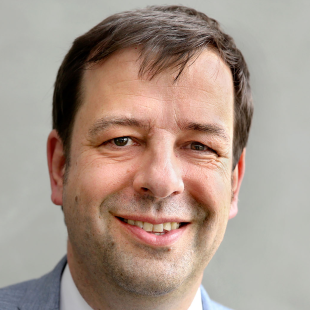
Prof. Dr. Christian Plessl is a W3 Professor of High-Performance Computing at the Institute of Computer Science, University of Paderborn. He leads the Paderborn Center for Parallel Computing (PC²), a national HPC center within the NHR alliance. His roles include Director of PC², Board Member of the NHR association, and member of the Sonderforschungsbereich 901. Education: PhD (Dr. sc. ETH) in Computer Engineering, ETH Zürich (2006) MSc in Electrical Engineering, ETH Zürich (2001) Postdoc at ETH Zürich (2007–2011) Research Interests: Architecture and tools for high-performance parallel and reconfigurable computing, FPGA acceleration, quantum chemistry, scientific computing, adaptive systems, and energy-efficient HPC solutions. Key projects include EKI-App (FPGA-based neural networks), FPGA4XPCS (X-ray spectroscopy), and HighPerMeshes (unstructured grid frameworks). Publications: Over 100 peer-reviewed works, focusing on FPGA acceleration, HPC frameworks, and quantum computing. Recent trends emphasize energy-efficient neural networks, FPGA-based quantum computing, and scalable HPC algorithms. Awards: Best Paper Awards at HEART 2023, ReConFig 2012/2014 Paderborn University Research Awards (2018, 2009) SEW-EURODRIVE Student Award (2001) Grants & Projects: Principal investigator in DFG, BMBF, and EU-funded projects. Collaborates with AMD/Xilinx, Intel/Altera, and Fujitsu. Leads initiatives like PerficienCC (custom computing) and HighPerMeshes. Labs/Teams: Directs the High-Performance Computing group at PC², focusing on FPGA supercomputing and HPC infrastructure. Active in the NHR alliance for national HPC coordination.

- Type Theory
- Proof Theory
- Programming Languages
- +۷ مورد دیگر
Dr. Farzaneh Derakhshan is an Assistant Professor in the Computer Science Department at Illinois Institute of Technology (Illinois Tech), where she explores logical foundations of concurrency and develops formal methods for program verification. She earned her Ph.D. in Pure and Applied Logic from Carnegie Mellon University in 2021 under Frank Pfenning, followed by a postdoctoral fellowship at CMU with Limin Jia and Stephanie Balzer. Current affiliation: Illinois Tech (since ~2021) Previous affiliation: Carnegie Mellon University (Ph.D. and postdoc) Research focus: Type theory, logical verification, and security for concurrent systems Teaching: Courses on programming languages, type systems, and security Her research addresses fundamental challenges in concurrent programming, including: Developing modal logic frameworks for system verification Designing type systems for intermittent computing Creating behavioral type systems for security guarantees Applying relational logic to GPU security and secure compilation Investigating logical foundations of session-typed processes Formal verification of cyclic process networks Current research trends include: Hybrid dynamic verification for parallel systems Logical approaches to side-channel security Formal methods for cyber-physical systems Crash-resilient computing models Security verification in decentralized applications Noninterference proofs in session-typed concurrency Scientific recognition: NSF SaTC CORE Collaborative Award #2350217 Organizing committee member at Dagstuhl Seminar 26071 Professional leadership: Program committee co-chair for PLACES 2025 Committee roles at LICS 2026, ESOP 2026, ICFP 2025, and ECOOP 2025 Regular reviewer for ACM Transactions journals Laboratory involvement: Co-director of behavioral types research at Illinois Tech Collaboration with Carnegie Mellon's formal verification group Key participant in the FACCT workshop
Matthew K. Tamمشاهده پروفایل
دانشیار
- continuous optimisation and its applications
- monotone operator theory
- variational and convex analysis
- +۳ مورد دیگر
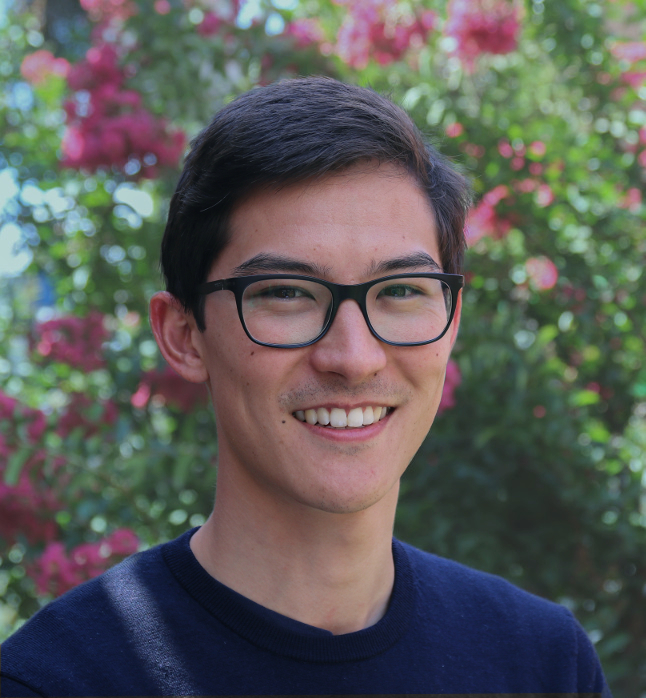
Matthew K. Tam is an Associate Professor at the School of Mathematics and Statistics, The University of Melbourne, specializing in Operations Research. He is also an investigator at the Melbourne Centre for Data Science and an associate investigator in the ARC Training Centre OPTIMA. PhD in Mathematics (2016) from University of Newcastle under Jonathan Borwein Postdoctoral research at University of Göttingen with RTG-2088 and Alexander von Humboldt Foundation Junior Professor at University of Göttingen (2017-2020) His research focuses on continuous optimization, monotone operator theory, and variational analysis, with applications in wavelet construction and inverse problems. Key trends include distributed algorithms, resolvent splitting, and convergence analysis for feasibility problems. Discovery Early Career Researcher Award (DECRA) Alexander von Humboldt Fellowship He collaborates with institutions like ANZIAM, Springer, and IEEE, with publications spanning mathematical optimization, harmonic analysis, and computational mathematics. His work emphasizes algorithmic design for complex data systems and real-world applications in imaging and industrial modeling.
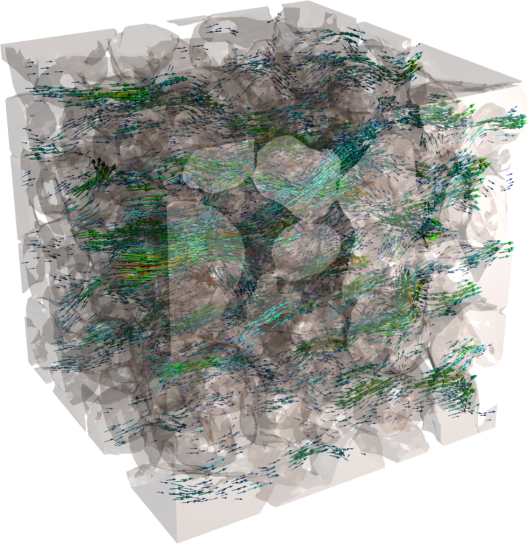
Christian Engwer is a full Professor at the University of Muenster in the Institute for Applied Mathematics, specializing in Analysis and Numerics. He leads the Engwer Group focused on Applications of Partial Differential Equations and is actively involved in the Cells in Motion initiative as a supervisor in the CiM-IMPRS Graduate Programme. His research centers on developing numerical methods for partial differential equations, particularly addressing challenges in complex geometries and multi-physics applications. He specializes in Unfitted Discontinuous Galerkin methods, which allow simulations on complex geometries without requiring domain-fitted meshes. His work spans porous media modeling, biological systems, and bioelectromagnetism applications, with significant contributions to EEG/MEG forward modeling in neuroscience. Analysis of his recent publications reveals a strong focus on model order reduction techniques, stabilized numerical schemes for cut-cell meshes, and applications in bioelectromagnetism. His work demonstrates a consistent trajectory toward developing robust, efficient numerical methods applicable to real-world problems in medical imaging and biological modeling, with increasing emphasis on high-performance computing implementations. Professor Engwer actively supervises doctoral students, with recent completions including Lukas Renelt (2025), Michael Wenske (2021), and Maria Carla Piastra (2019), among others working on topics related to numerical methods and biomedical applications. He leads several major research projects including BrainStorm: Highly Extensible Software for Advanced Electrophysiology and MEG/EEG Imaging (NIH-funded since 2019), multiple EXC 2044 Cluster of Excellence projects through 2025, and the InterKI interdisciplinary teaching program on machine learning and artificial intelligence. His group develops several important software packages including DUNE (Distributed and Unified Numerics Environment), duneuro (for bioelectromagnetism applications), and TPMC (Topology Preserving Marching Cubes). These tools support research in numerical methods and their applications to complex scientific problems.