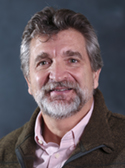
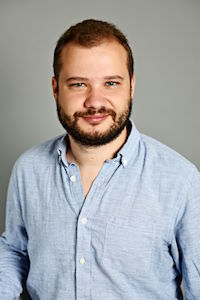
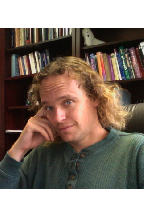
Prof. Dr. Peter Schmid is a faculty member at the Mathematical Institute of the University of Tübingen , specializing in Group Theory , Representation Theory of Groups , and Algebraic Number Theory . His academic career spans multiple semesters, teaching courses such as Algebra II, Analysis III, and seminars on Field Theory and Group Theory. Research Focus : Pure mathematics (Group Theory, Number Theory) and interdisciplinary applications in climate modeling and biomedical research. Email : peter.schmid@uni-tuebingen.de Recent Publications (2024-2025) highlight his contributions to climate simulation and biomedical research , bridging theoretical mathematics with applied domains like deep learning and renewable energy . While his primary affiliations are in mathematics, these works suggest cross-disciplinary collaborations.
Jennifer Darling-Aduana is an Assistant Professor in the Department of Learning Sciences at Georgia State University's College of Education & Human Development. She specializes in K-12 educational equity, digital and online learning, education policy, and research-practice partnerships. Education: Ph.D. in Education Leadership and Policy Studies, Vanderbilt University M.Ed. in Measurement, Evaluation, Statistics, and Assessment, University of Illinois at Chicago B.S. in Education and Social Policy, Northwestern University Her research focuses on the equity implications of K-12 digital learning and student-teacher interactions in virtual environments that contribute to social reproduction. Current projects involve design-based and evaluation studies for implementing culturally sustaining pedagogy in virtual learning contexts. Her recent publications explore trends in virtual instruction, culturally relevant pedagogy in online settings, and the efficacy of digital assessment tools. Research consistently examines how virtual environments can be optimized for equitable outcomes, particularly for marginalized student populations. Research Areas: K-12 Digital Learning Equity Culturally Sustaining Pedagogy Virtual Learning Environments Education Policy Analysis
Candace A. Mulcahy serves as Associate Professor in the Department of Teaching, Learning and Educational Leadership at Binghamton University, where she has held faculty positions since joining in 2007. Her work bridges academic research with practical applications through collaborations with school districts and state agencies nationwide to improve educational services for students with disabilities. Her educational foundation includes: BS from University of Maryland MEd from University of Maryland PhD from University of Maryland Dr. Mulcahy's research program centers on three interconnected pillars: Special Education Policy : Critical analysis of education systems for students in segregated environments including juvenile corrections Behavioral Interventions : Development of evidence-based discipline support frameworks to replace exclusionary practices Teacher Development : Examination of educator knowledge gaps and efficacy in implementing academic/behavioral interventions Her publication trajectory reveals intensifying focus on autism inclusion and systemic discipline reform, with recent work challenging seclusion practices and advancing project-based learning adaptations for disabled learners. The 2023-2025 publications particularly emphasize teacher competence development and technology integration. Dr. Mulcahy maintains active partnerships with correctional education systems, translating research into practical tools like her numeracy toolkit for short-term facilities. Her work with state agencies informs policy implementation while her teacher preparation research directly impacts educator training programs across multiple states.
Alperen Ergür is an Assistant Professor at the University of Texas at San Antonio , affiliated with the College of Sciences and Department of Mathematics. His teaching integrates modern mathematical and computational skills, including courses on probability theory, optimization, algorithmic foundations of data science, reinforcement learning, and computational abstract algebra. Ph.D. in Mathematics from Texas A&M University M.S. in Mathematics from TOBB University of Science and Technology B.S. in Mathematics from Bilkent University Research spans real algebraic geometry , convex geometry , randomized numerical algorithms , and reinforcement learning . Key trends in his publications include: Polynomial system analysis Tropical geometry applications Tensor rank approximation Algorithm complexity in computational geometry Probabilistic methods in optimization Homotopy algorithms for real zeros He organizes the UTSA Algorithms Seminar and co-founded a student-friendly research seminar on Geometry, Probability, and Computing with Grigoris Paouris and Petros Valettas. With Suleyman Tek and Rodrigo Velez, he established a creative/competitive math circle for middle schoolers.
Jian Wang is a tenured Professor & Helen DeVitt Jones Chair in Teacher Education at Texas Tech University's College of Education , Department of Curriculum & Instruction. His academic journey includes roles at UNLV and teaching experience in China. He specializes in teacher education, mathematics pedagogy, and comparative education. Education: Ph.D. in Curriculum, Teaching & Educational Policy (1998) – Michigan State University M.A. in Education Foundations (1988) – Northeast Normal University, China B.A. in English Teaching (1983) – Nanchang Vocational and Technological Teachers College, China Research Focus: Teacher mentoring systems, reform-minded teaching practices, and cross-national studies of mathematics learning. His work emphasizes qualitative and mixed-methods approaches to education reform. Awards & Recognition: Twice recipient of Distinguished Research Award (UNLV College of Education) Spencer Research Grant for studying mathematics knowledge and student learning in China Co-editorship of Journal of Teacher Education (raised journal impact factor to top 10 globally) Grants & Editorial Work: Led Texas Tech's teacher preparation program evaluation. Authored/co-edited influential works like Past, Present, and Future Research on Teacher Induction . Active in AERA, CIES, and other education organizations. Labs/Teams: Leads research initiatives on teacher development and curriculum reform, collaborating with international institutions on comparative education projects.
Seyed Ahmad Mojallal is a Postdoctoral Fellow at the University of Regina, Faculty of Science, Department of Mathematics and Statistics, under the supervision of Professors Sandra Zilles and Shaun Fallat. He has held postdoctoral positions at GERAD (HEC Montreal) and Sungkyunkwan University's Applied Algebra and Optimization Research Center (AORC), with research interests in Spectral Graph Theory, Algebraic Graph Theory, and Graph Learning. Ph.D. in Algebraic Graph Theory (Sungkyunkwan University, 2016) PIMS and GERAD Postdoctoral Fellowships Published extensively on zero forcing, graph energies, and Toeplitz graphs His recent work includes the q-analogue of zero forcing and learning hypertrees from shortest path queries. Mojallal has taught courses in calculus, linear algebra, and discrete structures at the University of Regina. He serves as a referee for journals like Linear Algebra and Its Applications and Discrete Mathematics. Notable awards include the PIMS Postdoctoral Fellowship (2020) and GERAD Postdoctoral Fellowship (2019). 2024: 2 publications in Discrete Applied Mathematics and Algorithmic Learning Theory 2023: 2 key works on zero forcing and vertex-clique matrices 2022: 4 studies on Toeplitz graphs, threshold graphs, and Pascal matrices Scientific awards include: 2020 PIMS Postdoctoral Fellowship 12th GERAD Postdoctoral Fellowship BK21+ grants for international conferences Full PhD scholarship at Sungkyunkwan University Mojallal's teaching experience spans multiple institutions, including the University of Regina (MATH 110, 111, 222, 826) and past roles in Iran. He has organized sessions for the CMS Winter Meeting and Western Canada Linear Algebra Meeting.
Daniel Vaccaro is a Lecturer in the Mathematics department at the University of North Georgia (UNG). He is based at the Cumming campus and can be reached via email at daniel.vaccaro@ung.edu. His phone number is 470-239-3115. While specific research interests or publications are not detailed in the provided text, his role as a Mathematics lecturer suggests a focus on teaching and curriculum development in areas such as algebra, calculus, and STEM pedagogy. The university's commitment to academic freedom, leadership development, and a safe learning environment underscores his operational context. No grants, awards, or advised students are explicitly mentioned in the available information.
Moreno Falaschi is a Professor at the University of Siena's Department of Information Engineering and Mathematical Sciences. He teaches Programming Fundamentals for Biotech Engineering, Models and Languages for Bioinformatics for Artificial Intelligence Engineering, Programming for Mathematics, and Information Processing Systems, with current responsibilities extending to the 2025/2026 academic year. His research centers on Reaction Systems as formal models for biochemical processes, applying rewriting systems, concurrency theory, and constraint logic programming to analyze biological systems. Key applications include comorbidity treatment strategies, hemostasis pathways, and T cell differentiation, bridging theoretical computer science with medical bioinformatics. Recent publications (2023-2025) demonstrate consistent innovation in dynamic slicing techniques, guarded reaction systems for medical applications, and quantitative extensions using SOS semantics. His work spans formal verification, computational biology, and biomedical AI, with significant contributions to journals like the International Journal on Software Tools for Technology Transfer.
Aleksandar Nikolov is an Associate Professor in the Department of Computer Science at the University of Toronto, holding the Canada Research Chair in Algorithms and Private Data Analysis. He is affiliated with the Vector Institute and a faculty fellow at the Schwartz Reisman Institute. His research focuses on theoretical computer science, algorithm design, and their connections to high-dimensional geometry, differential privacy, discrepancy theory, and approximation algorithms. Nikolov completed his PhD at Rutgers University under Muthu's advisement and was a postdoctoral researcher at Microsoft Research. Research Interests: Nikolov explores high-dimensional geometry's applications in algorithm design, particularly in private data analysis (differential privacy), discrepancy theory, and experimental design. His work bridges geometric tools with computational challenges, including nearest neighbor search and geometric optimization. He also delves into approximation algorithms and sublinear/parallel algorithms for large-scale data analysis. Awards: Nikolov received the Best Paper Award at SoCG 2015 and a $100 prize from Joel Spencer for resolving Beck's 3-permutations conjecture. His contributions span theoretical computer science with a focus on algorithmic foundations and privacy. Supervision and Education: He has mentored several graduate and undergraduate students, including current PhD candidates Haohua Tang and Lily Li. Teaching includes advanced courses like CSC2420 (Algorithm Design) and a discrepancy theory course. His research spans over 50 publications, with recent work emphasizing differential privacy and geometric algorithms. Affiliations: Beyond his academic role, Nikolov collaborates with industry and academic institutions, contributing to Canada's AI ecosystem through Vector Institute and interdisciplinary efforts at Schwartz Reisman.
Kevin Lawanto is an Instructional Designer III in the Teaching, Learning & Culture department at Texas A&M University and a doctoral student in Educational Psychology. He holds a Master of Science in Instructional Technology and Learning Sciences (Utah State University, 2016) and a Bachelor of Science in Psychology (Utah State University, 2013). His research focuses on self-regulation, metacognition, and innovative assessments in healthcare to enhance medical education quality. He actively contributes to educational technology research, particularly in computational thinking and K-12 mathematics interventions. Education: M.S., Learning Sciences, Utah State University (2016) B.S., Psychology, Utah State University (2013) Kevin’s work bridges educational theory and practice, emphasizing technology’s role in fostering critical thinking and improving healthcare education outcomes. His publications explore computational thinking in middle school students, the impact of educational technology on mathematics achievement, and teacher professional development strategies. As an instructional designer, he collaborates on curriculum development and assessment tools to support both educators and learners. Though no scientific awards are listed, his contributions to educational innovation are evident through his diverse publication portfolio and interdisciplinary research focus.
Whitney McCoy is a Research Scientist at Duke University’s Center for Child and Family Policy, specializing in community-engaged research focused on educational environments, STEM education, and educator development. Her work emphasizes improving K-12 learning through curriculum design, professional development, and strategies to enhance student well-being and engagement, particularly in engineering and technology education. Education: B.S. in Biology, Winston-Salem State University M.A. in Teaching, UNC Charlotte Ph.D. in Teacher Education and Learning Science (Educational Psychology), NC State University Research Focus: Dr. McCoy employs advanced qualitative and mixed-methods approaches to examine systemic inequities in education, including racial microaggressions, Black student success, and the role of counterspaces in fostering resilience. She collaborates with community partners to design culturally relevant curricula and advocate for anti-racist pedagogical practices. Key Contributions: Her recent work includes groundbreaking studies on racial microaggressions in higher education, critical race mixed methodology (CRMM), and the intersection of African American language in children’s literature. She has been awarded the NSF Graduate Research Fellowship and the Outstanding Dissertation of the Year. Professional Background: Prior to her current role, she served as a Postdoctoral Research Associate at the University of Virginia, leading a randomized control trial on computer science professional development for elementary teachers. She also has six years of K-6 teaching experience, specializing in curriculum development.
Michael T. Heath is a Professor and Fulton Watson Copp Chair Emeritus in the Department of Computer Science at the University of Illinois at Urbana-Champaign (UIUC). He holds a Ph.D. in Computer Science from Stanford University (1978). His research focuses on scientific computing, numerical linear algebra, optimization, and parallel computing with notable contributions to sparse matrix computations and parallel algorithm design. Heath has directed major initiatives such as the Computational Science and Engineering Program (1996–2012) and the Center for Simulation of Advanced Rockets (1997–2010), securing over $52M in research funding. He is an ACM Fellow, SIAM Fellow, and European Academy of Sciences member. Teaching excellence defines his career, highlighted by awards including the IEEE Taylor L. Booth Education Award (2009) and UIUC's Campus Award for Excellence in Graduate Teaching (2002). He developed interactive educational modules in scientific computing and teaches courses like CS 450 (Numerical Analysis) and CS 554 (Parallel Numerical Algorithms). His research spans parallel performance visualization, numerical optimization, and mathematical software, with over 50 years of contributions to computational science. Education: Ph.D. Computer Science, Stanford University (1978) Affiliations: Department of Computer Science, UIUC; former Interim Head (2007–2009) Key Roles: Director, Computational Science and Engineering Program; Director, Center for Simulation of Advanced Rockets His publications emphasize parallel algorithms, numerical methods, and computational frameworks for multiphysics simulations. Heath’s work bridges academic research and practical applications, exemplified by his leadership in high-performance computing and rocket propulsion modeling.
Helmer Aslaksen is an Associate Professor at the University of Oslo , affiliated with the Department of Teacher Education and School Research . He holds a Cand. mag. from the University of Oslo and a Ph.D. in Mathematics from the University of California, Berkeley. His research spans mathematics education, cultural astronomy, calendar systems, Lie theory, and the history of mathematics. He has authored numerous publications, including works on the Chinese, Islamic, and Indian calendars, and has contributed to interdisciplinary courses like 'Mathematics in Art and Architecture.' Aslaksen is a recipient of the Outstanding Educator Award (2004) from the National University of Singapore. He directs the Special Programme in Science and the Joint ANU-NUS Master of Science in Science Communication . His teaching focuses on general education modules, including 'Heavenly Mathematics & Cultural Astronomy' and 'Mathematics in Art and Architecture.' He has organized public lectures, Sudoku competitions, and exhibitions, such as 'Art Figures: Mathematics in Art' at the Singapore Art Museum. His outreach activities emphasize connecting mathematics to cultural, historical, and artistic contexts.
Chris Eliasmith is a Professor jointly appointed in the Systems Design Engineering and Philosophy departments at the University of Waterloo, with a cross-appointment to Computer Science. He is the Founding Director of the Centre for Theoretical Neuroscience and holds the Canada Research Chair in Theoretical Neuroscience. His research focuses on mathematical modeling of neural systems, including the Neural Engineering Framework (NEF) and Semantic Pointer Architecture (SPA), which underpin the world’s largest functional brain simulation, Spaun. He leads the Computational Neuroscience Research Group (CNRG), advancing neuromorphic computing, spiking neural networks, and cognitive modeling. Education: PhD in Neuroscience & Psychology (2000), Washington University in St. Louis MA in Philosophy (1995), University of Waterloo BASc in Systems Design Engineering (1994), University of Waterloo Research: His work integrates theoretical neuroscience with practical applications in robotics, AI, and neuromorphic hardware. Key contributions include the NEF, Spaun, and innovations like the Legendre Memory Unit (LMU) and Spatial Semantic Pointers (SSPs). His lab explores adaptive neural systems, decision-making models, and biologically plausible machine learning algorithms. Teaching: Recent courses include SYDE 556 (Simulating Neurobiological Systems), SYDE 750 (Topics in Systems Modelling), and PHIL 356 (Intelligence in Machines, Humans, and Other Animals). Awards: 2015 NSERC Polanyi Prize Labs & Projects: The CNRG develops tools like Nengo for simulating large-scale neural systems and collaborates on neuromorphic hardware platforms such as Loihi. Current projects span neural robotics, cognitive architectures, and biologically inspired AI systems.
Professor Matthew Street is a Senior Lecturer in the Department of Spanish at the University of Virginia's College of Arts and Sciences. He specializes in innovative educational methodologies, focusing on ePortfolios, project-based learning, and active learning in foreign language courses. His teaching practices incorporate flipped classrooms and emphasize creating collaborative, interactive learning environments. While his academic career centers on Spanish education, his research portfolio reveals a parallel focus on financial modeling and credit risk analysis dating back to the 1990s. Dr. Street's publications demonstrate expertise in credit scoring systems, economic modeling, and financial risk management. His work spans topics like neural networks in credit assessment, regulatory capital requirements, and energy-efficient mortgage risk. Notably, he combines machine learning approaches with traditional financial modeling techniques in consumer lending contexts. The most recent 15 publications reflect a consistent focus on credit risk frameworks, portfolio optimization, and decision-making under uncertainty. His academic journey includes significant contributions to credit union research, dental practice economics, and hotel market feasibility studies. While no specific awards or students are mentioned in the provided text, his work on educational technologies like ePortfolios and his dual expertise in language education and financial modeling highlight unique interdisciplinary achievements.