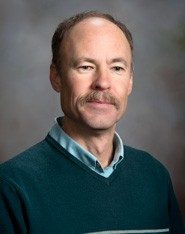
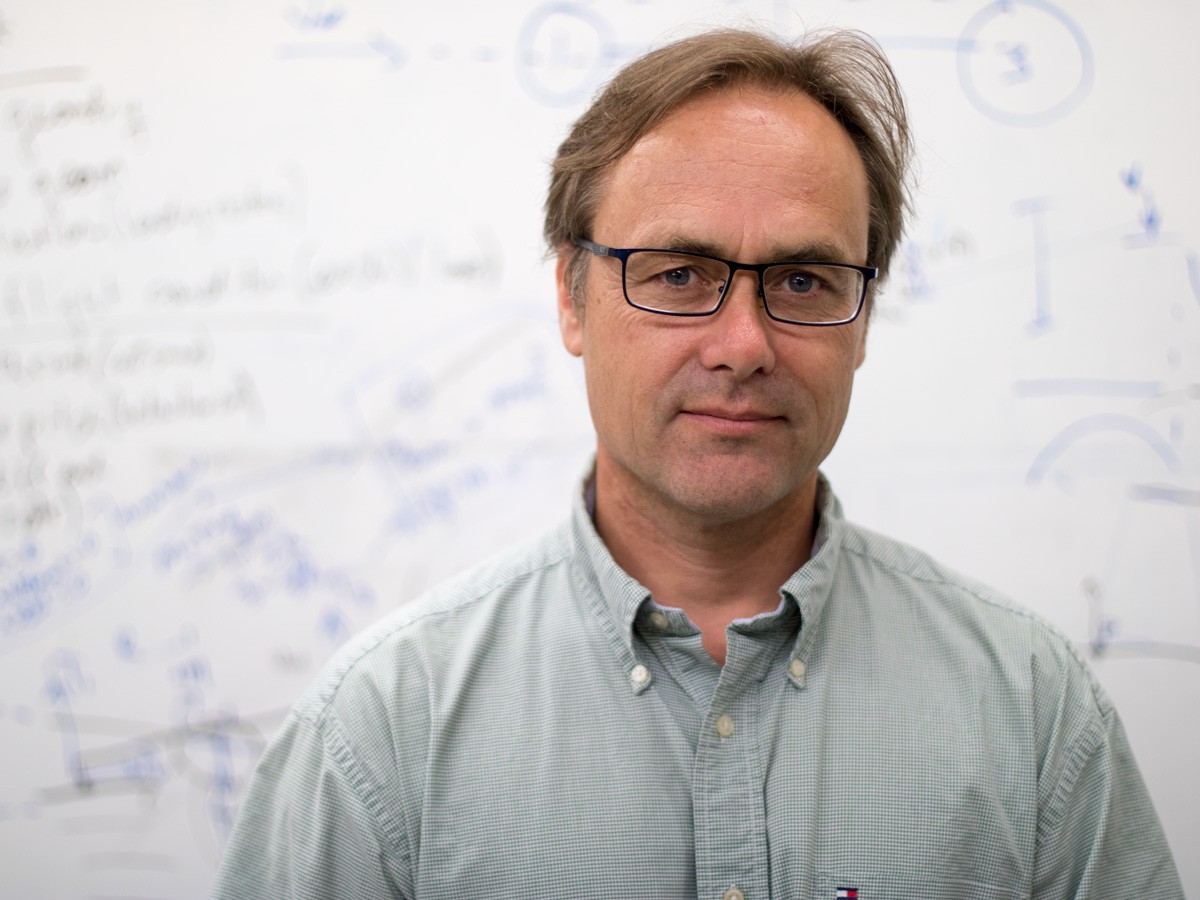
Lars Ulander is a Professor at Chalmers University of Technology specializing in radar remote sensing. His research focuses on synthetic aperture radar (SAR) signal processing, particularly for applications in forest biomass mapping and ground imaging using VHF/UHF-band systems. He is a key proposer for ESA's BIOMASS satellite mission (launching 2025) and leads the BorealScat project, utilizing a 50-meter tower-based tomographic radar to study boreal forest dynamics. His work spans radar system development, SAR tomography techniques, and environmental monitoring of forests and sea surface currents. Current research areas include vegetation water content estimation, bistatic radar configurations, and optimization of SAR data processing algorithms for multi-temporal analysis. Recent publications demonstrate expertise in P-band/L-band SAR for biomass retrieval, passive radar systems, and interferometric techniques. His articles investigate radar backscatter sensitivity to forest structure, moisture parameters, and seasonal changes, while contributing to mission design frameworks like SLAINTE and SESAME.
Prof. Dr. Christian Breitsamter is a Professor at the Technische Universität München (TUM), leading the Chair of Aerodynamics and Fluid Mechanics within the TUM School of Engineering and Design. He has held this position since 2007 and has been a member of key committees such as the ICAS Programme Committee and STAB-Programmleitung. His research focuses on aerodynamics of aircraft and rotorcraft configurations, including vortex dynamics, aeroelasticity, and fluid-structure interaction. Education: PhD in Aerodynamics (1997) Master’s in Aerospace Engineering (1989) Research Interests: Prof. Breitsamter’s work spans experimental and numerical studies of high-agility aircraft, helicopter aerodynamics, and advanced wing designs. Key areas include leading-edge vortices, gust load mitigation using flexible wings, and flow control techniques. His group investigates cutting-edge topics like deep learning for buffet prediction and hybrid neural networks for aerodynamic modeling. Awards: Willy Messerschmitt Preis (1999) AIAA Associate Fellow (2007) Advising & Grants: While specific student names are not listed, his research involves collaborative projects with industry partners (e.g., RACER Compound Helicopter) and EU initiatives like the FURADO program. His team contributes to the NFDI4ING infrastructure for engineering data. Labs/Teams: Active in the Aerodynamics Wind Tunnel facilities (Windkanäle A/B/C) and leads the SAGITTA flying wing demonstrator project. His group also explores membrane wings and elasto-flexible morphing technologies.
Dr. Kevin Kochersberger is an Associate Professor in the Department of Mechanical Engineering at Virginia Tech , with a career spanning academic research, technical innovation, and educational leadership. His work focuses on autonomous aerial systems , robotic control , and applied aerodynamics , particularly through the Uncrewed Systems Laboratory . Kochersberger's research has pioneered UAV-based radiation detection , 3D terrain mapping , and low-resource drone applications , including establishing the African Drone and Data Academy in Malawi . Education: Ph.D., Mechanical Engineering, Virginia Tech (1994) M.S., Mechanical Engineering, Virginia Tech (1984) B.S., Mechanical Engineering, Virginia Tech (1983) A.S., Engineering Science, Jamestown Community College (1981) Kochersberger's publications demonstrate expertise in UAV path planning , smart material actuation , and radiation source localization , with over $9M in research funding. His scientific awards include AIAA Associate Fellow (2009) and Aviation Week Aerospace Laureate (2003). Notable projects involve helicopter-deployable robotic systems and urban canyon navigation without GPS. Recent articles highlight BVLOS drone simulators , 2.5D terrain mapping , and autonomous negative obstacle traversal , reflecting his focus on real-time adaptive control and heterogeneous robotic systems . He teaches Drone Technology and Flight Operations and Advanced Design Projects , emphasizing student-driven innovation and industry collaboration .
Phillip J. Ansell is an Associate Professor in the Department of Aerospace Engineering at the University of Illinois at Urbana-Champaign (UIUC), affiliated with the Grainger College of Engineering. He directs the Center for Sustainable Aviation and the Center for High-Efficiency Electrical Technologies for Aircraft. His academic positions include Assistant Professor (2015–2021) and current role as Associate Professor since 2021. He teaches courses such as AE 416 (Applied Aerodynamics), AE 419 (Aircraft Flight Mechanics), and AE 515 (Wing Theory). Education: BS, The Pennsylvania State University, Aerospace Engineering, 2008 MS, UIUC, Aerospace Engineering, 2010 PhD, UIUC, Aerospace Engineering, 2013 Research Interests: Focuses on applied aerodynamics, sustainable aviation, distributed propulsion, flow control, and aircraft electrification. His work integrates experimental fluid mechanics and computational models to advance aviation sustainability. Key projects include hydrogen propulsion systems, cryogenics in aviation, and unsteady aerodynamics for rotorcraft. Research Contributions: Authored/co-authored books like Aircraft Cryogenics (Springer, 2024). His articles address sustainable aviation frameworks, hydrogen-electric propulsion, and high-lift aerodynamics. Recent trends emphasize decarbonization pathways and system-of-systems analysis. Awards & Honors: Dean's Award for Excellence in Research (2025) NASA Innovative Advanced Concepts Fellow (2025) AIAA Associate Fellow (2024) Forbes 30 Under 30 (2016) Advising & Grants: Advises graduate students on propulsion and aerodynamics. Secured grants from AFOSR, ARO, and NASA. Active in AIAA committees, including Electrified Aircraft Technology Technical Committee (Chair, 2020–2023). Labs & Teams: Leads the Aerodynamics and Unsteady Flows Research Group, using UIUC’s wind tunnel facilities. Collaborates on projects like the Five Circles of Sustainable Aviation framework and cryogenic propulsion systems.
Brian S Woodard serves as a Teaching Associate in the Department of Aerospace Engineering at the University of Illinois Urbana-Champaign, teaching undergraduate courses including AE 100 (Intro to Aerospace Engineering), AE 140 (CAD), and ENG 100/101 (Engineering Orientation). Education Doctor of Philosophy, Aerospace Engineering, University of Illinois Urbana-Champaign, 2012 Master of Science, Aerospace Engineering, University of Illinois Urbana-Champaign, 2004 Bachelor of Science, Aerospace Engineering, University of Illinois Urbana-Champaign, 2001 Research Interests His research focuses on High-Energy Lasers , Aerodynamics , and Aircraft Icing , with specialized work in electric discharge-pumped atomic iodine and oxygen-iodine laser systems. He investigates plasma discharge geometries for oxygen singlet delta production and their application in high-power laser development, while also studying aerodynamic effects of aircraft icing for flight safety. Publication Trends Publications from 2008-2011 reveal concentrated expertise in laser physics and plasma engineering, particularly in electric discharge pumping mechanisms for iodine-based laser systems. His work demonstrates consistent innovation in resonator design and discharge configuration to enhance laser efficiency, bridging aerospace engineering principles with advanced optical technologies for potential defense and propulsion applications. Scientific Awards No scientific awards were mentioned in the provided text. Advising and Grants Dr. Woodard mentors students through AE 298 RES (Research Seminar Mentoring and Introduction to Research courses), guiding undergraduate research projects. He has instructed over 20 distinct undergraduate courses spanning aerospace fundamentals, computational design, global engineering experiences, and leadership training, though no research grants are documented in the source material. Labs and Teams His research is conducted within Talbot Laboratory (Room 319K) at the University of Illinois, collaborating with prominent researchers including J.W. Zimmerman, G.F. Benavides, and W.C. Solomon on electric oxygen-iodine laser projects.
Parviz Moin holds the Franklin P. and Caroline M. Johnson Professorship in Stanford University's School of Engineering. As founding director of the Center for Turbulence Research (CTR)—a NASA-Stanford consortium established in 1987—he has pioneered computational methods for turbulence physics, including direct numerical simulation and Large Eddy Simulation (LES) techniques. CTR serves as an international hub for turbulence studies across engineering, mathematics, and physics disciplines. Moin's research encompasses computational physics of turbulent flows, with emphasis on boundary layer control, hypersonic aerodynamics, propulsion systems, and aircraft icing. His recent work advances high-fidelity simulations for aerospace applications, particularly developing wall models for LES that accurately capture separation phenomena under complex pressure gradients and Reynolds number effects. Recent publications demonstrate extensive applications of LES to aircraft design challenges, including transonic buffet prediction, high-lift configuration analysis, and icing aerodynamics. Investigations consistently address fundamental turbulence physics while developing practical computational tools for aerospace engineering, with particular focus on hypersonic boundary layers, flow separation mechanisms, and conjugate heat transfer in iced environments.
Dr. Goetz Bramesfeld serves as a Professor in the Department of Aerospace Engineering at Toronto Metropolitan University, where he leads research in applied aerodynamics and unconventional flight systems. His expertise spans flight vehicle design, small UAV development, and motorless flight dynamics, with particular emphasis on energy harvesting from atmospheric phenomena. Bramesfeld's educational background includes a PhD (2006) and MS (1999) from The Pennsylvania State University, and a BEng (1998) from Technische Universität Braunschweig. His research interests focus on applied aerodynamics , flight dynamics , and energy-efficient aircraft design , with notable contributions to sailplane optimization, gust energy extraction, and microwave-powered UAV concepts. His work bridges theoretical aerodynamics with practical applications in both terrestrial and planetary exploration contexts. Analysis of his publication record reveals consistent innovation in energy harvesting flight systems, particularly through gust energy extraction and unconventional propulsion methods. His research evolves from traditional sailplane optimization toward cutting-edge concepts like microwave-powered aircraft and planetary exploration gliders, maintaining strong connections between fundamental aerodynamics and real-world flight applications. Bramesfeld actively supervises graduate students through the Applied Aerodynamics Laboratory of Flight (AALF) and maintains significant professional engagement as a Senior Member of the American Institute of Aeronautics and Astronautics (AIAA), member of the Canadian Aeronautics and Space Institute (CASI), Associated Editor for the Technical Soaring Journal, and board member of the Organisation Scientifique et Technique du Vol à Voile (OSTIV).
Phillip J Ansell is an Associate Professor in the Department of Aerospace Engineering at the University of Illinois. He serves as the Director of the Center for High-Efficiency Electrical Technologies for Aircraft (CHEETA), focusing on advancing sustainable aviation through innovative propulsion and energy systems. His research interests include aerodynamics optimization, hydrogen propulsion, electric aircraft integration, and cryogenic technologies. Ansell has received prestigious awards such as the AFOSR Young Investigator Award (2015), ARO Young Investigator Award (2017), and the Lawrence Sperry Award (2023), recognizing his contributions to sustainable aviation and flow control technologies. His work spans interdisciplinary areas like hydrogen fuel cell systems, airfoil design, and electrified aircraft architectures. Recent research emphasizes sustainable aviation frameworks, cryogenic hydrogen storage, and propulsion-airframe integration. Ansell has collaborated on projects involving distributed propulsion systems, wind energy optimization, and advanced plasma actuators for flow control. His leadership in CHEETA drives innovations in superconductivity and high-temperature superconducting components for next-generation aircraft. Notable contributions include studies on laminar flow control, transonic aerodynamics, and the technical challenges of integrating MW-scale hydrogen propulsion systems. His publications reflect a blend of theoretical modeling, experimental validation, and systems engineering approaches to address aviation's sustainability challenges.
Wagdi George Habashi is a Professor and NSERC-Industrial Research Chair at McGill University's Faculty of Engineering, Department of Mechanical Engineering. He leads the Computational Fluid Dynamics (CFD) Lab, focusing on aerodynamics, fluid mechanics, and icing-related simulations. His research emphasizes in-flight icing prediction, computational wind engineering, and CFD-driven optimization of aircraft and jet engine systems. Education: Ph.D., Cornell University M.Eng., McGill University B.Eng., McGill University Research Interests: Habashi's work bridges analytical and computational methods to address multi-physics/multi-scale engineering challenges. Key areas include in-flight ice crystal ingestion in jet engines, ice surface roughness modeling, supercooled droplet dynamics, and CFD-based risk management for icing. His team develops tools like FENSAP-ICE for real-time aero-icing simulations and explores mesh adaptation, parallel computing, and reduced-order modeling. Labs/Teams: Computational Fluid Dynamics Lab (CFD Lab).
Dr. Kidambi Sreenivas is an Associate Professor in Mechanical Engineering at the University of Tennessee at Chattanooga (UTC), affiliated with the College of Engineering and Computer Science. He holds a PhD in Mechanical Engineering and specializes in computational fluid dynamics (CFD), with a focus on unstructured multi-physics flow solvers and applications in aerospace, environmental systems, and biomedical engineering. His research bridges academia and industry, collaborating with NASA, the U.S. Navy, Department of Energy, and private companies. Dr. Sreenivas' research interests include rotating machinery simulations, pre-conditioners for non-ideal fluids, and real-world applications such as submarine hydrodynamics, wind farm optimization, aerodynamic efficiency of vehicles, and contaminant dispersal modeling. He has pioneered methods for simulating complex geometries and physics, including high-fidelity simulations of hypersonic vehicles, weapons bay cavities, and shock-wave interactions. Recent work emphasizes advanced CFD methodologies for high-speed flows, thermal effects on turbulence, and aerothermal characteristics of hypersonic test articles. His collaborations have led to practical solutions for drag reduction on Class 8 trucks and improved accuracy in wind turbine modeling. Dr. Sreenivas also contributes to educational initiatives, such as developing PIV systems for undergraduate fluid mechanics labs. His advising and grants reflect partnerships with federal agencies and private sectors, focusing on projects like microplastic sampling devices for stormwater management. These projects highlight his interdisciplinary approach to solving real-world engineering challenges through cutting-edge computational methods.
Prof. Dr. Mehmet Reşit Tolun is a full-time Professor in the Department of Software Engineering at Çankaya University (Turkey) since 2022. Previously held full-time professor positions at Konya Food and Agriculture University (2020-2022), Aksaray University (2013-2017), and TED University (2011-2013), along with a part-time professorship at Başkent University (2017-2020). Specializes in Artificial Intelligence , Machine Learning , and Data Mining , with a focus on deep learning applications in aerospace, biomedical data analysis, and software process improvement. PhD in Computer Science (University of Kent, 1985) MSc in Computer Science (University of Kent, 1982) BSc in Physics and Computer Science (University of Kent, 1981) Research Interests span deep learning frameworks, hybrid expert systems, software engineering methodologies, and biomedical signal processing. Publications emphasize practical implementations in medical diagnostics, robotics, and agricultural pest detection. Scientific Awards include the IEEE Third Millenium Medal (2000). Supervised over 55 graduate students, including Burak Çetin, Uğur Özotuk, and Mahinur Doğan. Collaborated with researchers from Orta Doğu Teknik Üniversitesi , Çankaya University , and Aksaray University .
Rainald Loehner is a Distinguished Professor of Fluid Dynamics at George Mason University's Center for Computational Fluid Dynamics. Since 2003, he has led the Center for Computational Fluid Dynamics at George Mason University. He is currently a Hans Fischer Senior Fellow at the Technical University of Munich's Institute for Advanced Study (TUM-IAS) for 2023, hosted by Professors Kai-Uwe Bletzinger and Roland Wüchner in the 'Adjoint-Based System Identification of Large-Scale Structures' Focus Group. Loehner received his Diplom Ingenieur (Maschinenbau) degree from the Technical University of Braunschweig, and his PhD and a DSc in civil engineering from the University College of Swansea, Wales. After teaching at Swansea for a year, he worked at the Naval Research Laboratory in Washington, DC, followed by a research professorship at George Washington University. He joined George Mason University as an associate professor and was promoted to full professor in 1995 and distinguished professor in 2004. With over 35 years of experience, Professor Loehner's research spans the complete pipeline of numerical solvers and simulation tools. His expertise includes pre-processing, grid generation, numerical methods, field solvers, parallel computing, adaptive mesh refinement, fluid-structure interaction, shape optimization, system identification, and computational crowd dynamics. His current work focuses on developing advanced field solvers for compressible and incompressible flows, acoustics, electromagnetic wave propagation, heat and mass transfer, structural mechanics, and fluid-structure interaction. Key application areas include blast mitigation, ship hydrodynamics, blood flow, contaminant transport, and pedestrian safety. Loehner's recent research output (2020-2024) shows a strong trend toward digital twin technology and adjoint-based methods for structural analysis and optimization. His publications focus on high-fidelity digital twins for detecting structural weaknesses, risk assessment in engineering systems, and optimization of sensor placement. His work bridges computational mechanics with machine learning approaches, particularly in system identification and inverse problems, demonstrating how computational methods can solve complex real-world engineering challenges. 2020: Ranked #15119 in the Stanford List of Most Influential Scientists of the World; #8 in Aerospace and Aeronautics 2010: Distinguished International Career Award, Argentine Association of Computational Mechanics 2008: Fellow, International Association for Computational Mechanics 2006: Associate Fellow, AIAA 2005: Honorary Professor, University of Wales Swansea 2005: Advisory Professor, Shanghai Jiao Tong University 2004: Distinguished Professor of Fluid Dynamics, George Mason University 1999: Computational Mechanics Achievements Award, Japan Society of Mechanical Engineering 1993: Doctor of Science in Civil Engineering, University College of Swansea 1979-1983: Studienstiftung des Deutschen Volkes (Top 1% of German Students) Professor Loehner has mentored numerous students through his work at George Mason University and has supervised research in computational fluid dynamics, structural mechanics, and related fields. His research has been supported by various grants from government agencies and industry partners, enabling the development of advanced simulation tools applied in aerodynamics, hydrodynamics, shock-structure interaction, and medical applications. His codes and methods have been widely adopted in industry and academia for applications ranging from aircraft and ship design to medical simulations and urban pathogen transmission modeling. Loehner leads the Center for Computational Fluid Dynamics at George Mason University, which focuses on developing cutting-edge computational methods for fluid dynamics and related multiphysics problems. The center works on strategic application areas including blast mitigation, ship hydrodynamics, blood flow simulation, and pedestrian movement modeling. As a TUM-IAS Fellow, he collaborates with the Chair of Computational Modeling and Simulation at TUM on adjoint-based system identification of large-scale structures, bringing together expertise in computational mechanics and digital twin technology to address complex engineering challenges.
Alexandros Kontogiannis is a research fellow at the University of Cambridge, Department of Engineering, specializing in fluid dynamics and applied mathematics. His work combines Bayesian inference, machine learning, and physics-informed algorithms to solve inverse problems in magnetic resonance velocimetry (MRV) and fluid-structure interaction. EPSRC National Fellow in Fluid Dynamics Member of Energy, Fluids and Turbomachinery Division Research Focus: Development of digital twin frameworks that integrate MRV data with Navier-Stokes equations to reconstruct flowfields, infer rheological parameters in non-Newtonian fluids, and estimate hidden quantities like pressure and wall shear stress. Key innovations include: Physics-informed compressed sensing for sparse MRV data Simultaneous boundary shape and flowfield estimation Bayesian turbulence model parameter learning Scientific Awards: ASME Fluids Engineering Division Graduate Student Scholar (2021) Technical Chamber of Greece (TEE) Award (2018) Limmat Foundation Academic Excellence (2017) Mentzelopoulos Scholarship for international studies (2017) Greek State Scholarships Foundation Award (2012) Key Contributions: Algorithms for 3D flow reconstruction with adaptive discretization, viscous signed distance field regularization, and multi-objective aerodynamic shape optimization. His methodologies enable 27x reductions in MRI scanning time while maintaining diagnostic accuracy.
Seher Eken is an Assistant Professor in the Department of Aerospace Engineering at Istanbul Technical University. Her research focuses on structural dynamics and aeroelasticity of aerospace systems, specializing in thin-walled composite beams, spacecraft shielding, and hypervelocity impact mechanics. She has led multiple projects on topics like transonic flutter suppression, ballistic armor optimization, and orbital debris mitigation. Key research areas include: Composite material failure under extreme loads Aeroelastic stability of rotating structures Numerical simulation of hypervelocity impacts Dynamic analysis of aircraft wings and turbine blades Active vibration control techniques Her recent work emphasizes spacecraft protection systems, with studies on orbital debris impact dynamics and advanced composite armor design. She has also contributed to launch vehicle instability analysis and swept wing flutter characteristics. Current projects involve 3D-printed turbine blade repair, transonic flutter prediction for unmanned aircraft, and ballistic impact optimization for high-performance fabrics. Notable projects (2022–2025): AB Yeni Nesil İnsansız Savaş Uçakları Aeroelastik Uyarlama (Transonic Flutter Prediction) 3D-Printed Turbine Blade Repair with Sustainability Focus Ballistic Impact Analysis of Fabric Armors Orbital Debris Impact Simulation for Spacecraft Shields Her research integrates computational modeling (CFD, FEA) with experimental validation, focusing on aerospace structural systems under extreme conditions. Collaborations span international partners in composite material development and space debris mitigation strategies.
David K. Hall is an Assistant Professor in the Department of Aerospace Engineering at Pennsylvania State University, College of Engineering. His research focuses on advanced propulsion systems and aerodynamic integration for next-generation aircraft. He is actively involved in projects related to electric and hybrid-electric propulsion, boundary layer ingestion, and sustainable aviation technologies. Assistant Professor, Department of Aerospace Engineering, Penn State Researcher in Electrified Propulsion and Airframe Integration Contributor to NASA-affiliated research initiatives Dr. Hall's research interests center on improving aircraft efficiency and reducing environmental impact through innovative propulsion technologies. His work emphasizes boundary layer ingestion , distributed electric propulsion , and conceptual aircraft design optimization . He investigates how integrating propulsion systems with airframes can reduce fuel consumption and emissions, particularly in transport aircraft. The recent publications demonstrate a strong trend toward electrified and hybrid-electric aircraft systems, with a focus on mitigating flow distortion, optimizing fan-motor co-design, and assessing the environmental and economic viability of liquid hydrogen-fueled aircraft. His work bridges fundamental fluid dynamics with practical engineering applications in sustainable aviation. Dr. Hall has contributed to significant advancements in understanding the benefits and challenges of boundary layer ingestion, collaborating with leading researchers from MIT and NASA. While no formal scientific awards are listed, his publications in top-tier journals such as Journal of Turbomachinery and AIAA Journal reflect high research impact. He is likely involved in federally funded research projects, particularly through Penn State’s Vertical Lift Research Center of Excellence. He advises graduate students in aerospace research, particularly in propulsion and aerodynamics, though specific names are not listed. His lab or research group likely focuses on computational and experimental analysis of advanced propulsion concepts, possibly involving partnerships with industry and government agencies. Future work may explore cryogenic fuels, supersonic sustainable flight, and autonomy in electric aircraft.