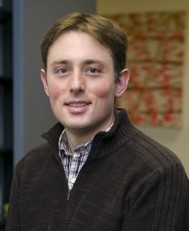
Maj Keith A. Wyman, PhD is a researcher affiliated with the Air Force Institute of Technology (AFIT), specializing in quantum optics and atmospheric photonics. His work focuses on photonic qubit propagation, atmospheric turbulence effects, and laser-based quantum technologies. He holds a PhD in Applied Physics from AFIT (2023), an M.S. in Applied Physics (2014), and dual B.S. degrees in Physics and Mathematics from the United States Air Force Academy (2012). Wyman’s research interests include developing atmospheric turbulence simulators, studying quantum communication protocols, and advancing laser technologies for free-space optical networks. His recent publications address photon pair indistinguishability, qubit degradation under turbulence, and sodium beacon systems for adaptive optics. He collaborates with institutions like Ohio State University’s Center for Quantum Information Science and Engineering. His academic contributions span conferences such as SPIE and FQMT, with a focus on experimental quantum systems and optical metrology. Wyman’s work bridges theoretical quantum mechanics with applied engineering solutions for military and civilian optical communication challenges.
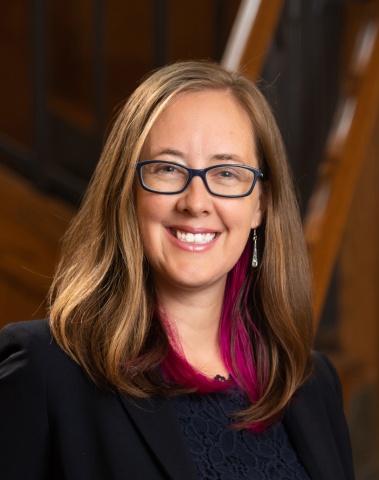
Emily Hannum is a Professor of Sociology and Education at the University of Pennsylvania's College of Arts & Sciences, where she also serves as Associate Dean for Social Sciences. She is affiliated with the Population Studies Center, Center for the Study of Contemporary China, Graduate School of Education, and Penn Development Research Initiative. Education: PhD in Sociology from University of Michigan (1998) Research Focus: Poverty and child welfare, gender and ethnic stratification, sociology of education Projects: Gansu Survey of Children and Families, climate-environment-childhood inequalities in LMICs Workshops: Co-organizer of Penn Education and Inequality Workshop Her research explores childhood poverty in China, demographic impacts on education systems, and climate risks affecting children's welfare. She investigates environmental hazards, educational disparities, and family separation effects across China, India, and low/middle-income countries. Recent publications analyze educational expansion in East Asia, climate crisis impacts on child health, and gender disparities in Latin America. She directs longitudinal studies on rural poverty and collaborates on cross-national projects related to environmental and educational equity. Scientific awards include the Stanley I. Sheerr Term Professorship in Social Sciences.
Rolf Halden is a Professor and Center Director at Arizona State University, holding appointments in the School of Sustainable Engineering and the Built Environment, the Biodesign Center for Environmental Health Engineering, and the Global Futures Scientists and Scholars program. He is a leading expert in environmental health engineering, wastewater-based epidemiology, and bioremediation. Education: Ph.D. in Civil (Environmental) Engineering, University of Minnesota (1997) M.S. in Civil (Environmental) Engineering, University of Minnesota (1994) M.S. in Biology, Technical University of Braunschweig, Germany (1992) Postdoctoral Fellow, Environmental Science, Lawrence Livermore National Laboratory (1998) Research Focus: Halden’s research integrates environmental chemistry, public health, and sustainability to understand how anthropogenic chemicals affect ecological and human health. His lab uses advanced mass spectrometry (LC-MS/MS, MALDI-TOF) to track pollutants such as PPCPs, microplastics, pesticides, and dioxins across air, water, soil, and biological systems. He pioneered the use of wastewater treatment plants as public health observatories, enabling real-time tracking of disease, drug use, and environmental exposures. Scientific Awards & Recognition: Leadership Award, Arizona State University (2018) Rocky Mountain Emmy Award (2018) Leroy E. Burney Lecturer, Johns Hopkins School of Public Health (2011) ACS Expert Program Member (2014–present) NIEHS Superfund R01 Working Group National Leader (2012–2014) Labs & Teams: Halden is the Founding Director of the Biodesign Center for Environmental Health Engineering at ASU, where he leads a multidisciplinary team focused on environmental proteomics, bioremediation, and diagnostic tool development. He also co-leads the Human Health Observatory , a national wastewater monitoring network. Grants & Funding: Halden has secured major funding from NSF, NIH, EPA, DoD, and private industry. Notable projects include the development of in-situ groundwater monitoring devices, national wastewater surveillance of SARS-CoV-2, and studies on microplastics and neurodegenerative disease.
Professor Todd Squires is a distinguished faculty member in the Department of Chemical Engineering at the University of California, Santa Barbara, within the Robert Mehrabian College of Engineering. His research focuses on the fundamental principles of transport phenomena as applied to interfaces, membranes, and complex fluids, employing theoretical, computational, and experimental approaches to address significant challenges in micro-scale fluid mechanics. Dr. Squires' educational background includes: BS in Physics, UCLA (1995) BA in Russian Language and Literature, UCLA (1995) PhD in Physics, Harvard University (2002) His research interests span microfluidics and electrokinetics, active and nonlinear microrheology of complex materials, polymer dynamics and sensors, with particular emphasis on non-linear electrokinetic flows, interfacial rheology, and the self-assembly of nanostructured materials. His work bridges fundamental fluid mechanics with practical applications in microfluidic devices, energy storage, and biomedical systems, demonstrating the versatility of this fascinating field. Analysis of Professor Squires' recent publications reveals a consistent focus on interfacial phenomena, with particular attention to the rheological properties of fluid interfaces, particle dynamics in complex fluids, and novel microfluidic techniques for measuring and manipulating these systems. His research demonstrates strong interdisciplinary connections between chemical engineering, physics, and materials science, with applications spanning energy storage, biomedical engineering, and environmental systems. Professor Squires has received numerous prestigious awards and honors: 2018 Robert W. Vaughan Lecture in Chemical Engineering, Caltech 2015 Elected Fellow of the American Physical Society 2013 Mid-Career Award, American Electrophoresis Society 2012 The Dudley Saville Memorial Lecture at Princeton 2010 Pierre Gilles de Gennes Prize 2010 Allan P. Colburn Memorial Lectureship, University of Delaware 2009 Francois Frenkiel Award for Fluid Mechanics 2009 Camille Dreyfus Teacher-Scholar Award 2008 Beckman Young Investigator 2007 NSF CAREER Award 2005 'Rising Star' - Chronicle of Higher Education As principal investigator of the Squires Group, Professor Squires leads a dynamic research team that combines experimental, theoretical, and computational approaches to investigate transport phenomena at interfaces. His work has been supported by major funding agencies including the National Science Foundation, with his CAREER award indicating early recognition of his potential as both researcher and educator. While specific grant details aren't provided in the source material, his extensive publication record and prestigious awards suggest robust and sustained research funding. The Squires Group maintains state-of-the-art laboratory facilities for studying micro-scale fluid mechanics, including specialized equipment for microrheology measurements, microfluidic device fabrication, and interfacial characterization. Their research environment fosters collaboration across disciplines, with connections to materials science, physics, and biomedical engineering researchers at UCSB and beyond.
Peter A. Raymond is the Oastler Professor of Biogeochemistry at Yale University's School of the Environment and Department of Geology and Geophysics. He serves as Senior Associate Dean of Research & Director of Doctoral Studies and is Co-Director of the Yale Center for Natural Carbon Capture. Raymond leads the Raymond Biogeochemistry Lab, which investigates the biogeochemistry of inland waters, enhanced weathering, methane cycling, and blue carbon systems through cutting-edge field, laboratory, and modeling approaches. Education B.S., Marist College Ph.D., College of William and Mary/Virginia Institute of Marine Science Research Focus Raymond's research fundamentally reshapes our understanding of carbon cycling in aquatic systems, demonstrating that rivers serve as dynamic conduits rather than passive pipes in the global carbon cycle. His work examines how biology and watershed variables alter carbon chemistry in streams, rivers, and estuaries, with particular emphasis on understanding global carbon cycles in relation to climate change. Raymond employs radiocarbon measurements to explore the age and turnover of carbon in aquatic ecosystems, revealing that rivers are variable sources of both old and young terrestrial dissolved organic carbon to oceans. The Raymond Lab is particularly known for developing the Pulse-Shunt Concept, which challenges traditional views of riverine biogeochemistry by emphasizing the episodic and dynamic nature of elemental fluxes. Current research directions include enhanced weathering and alkalinity studies for carbon removal, global greenhouse gas budgets through projects like RECCAP 2, natural methane cycling in aquatic systems, and blue carbon ecosystems such as mangroves and salt marshes. Publication Trends Raymond's recent publications (2023-2025) demonstrate a strong focus on global carbon and methane cycling, with particular attention to inland water systems' role in the Earth's climate system. His work increasingly integrates large-scale datasets with field measurements to understand how climate change and human activities affect greenhouse gas emissions from rivers and streams. A significant portion of his recent work contributes to international efforts like the Global Carbon Project, aiming to refine estimates of global carbon and methane fluxes. His research also shows growing emphasis on carbon removal strategies, particularly enhanced rock weathering through the Earthshot-funded GOAL-A project, and their potential for climate mitigation. Scientific Recognition Fellow of the American Association for the Advancement of Science Member of the Connecticut Academy of Science and Engineering Coastal and Estuarine Research Federations Cronin Award for Young Scientists ISI highly cited author Past Editor and Chief of the American Geophysical Union's journal Global Biogeochemical Cycles Mentorship and Funding Professor Raymond currently mentors four doctoral students (Jon Gewirtzman, Shou-En "Samuel" Tsao, Benjamin Saalidong, and Mingyu Zhang) and masters student Bella Garrioch. His research is supported by multiple grants from the National Science Foundation (NSF), including CAREER awards, and participation in the Earthshot-funded GOAL-A (Global Ocean And Land Alkalinization) project. Raymond has also been involved in significant collaborative projects with USGS data to research how climate and land use change alter carbon export from US watersheds, and with Lamont Doherty to develop methods for measuring air-sea gas exchange of CO2 in rivers and estuaries. Research Infrastructure The Raymond Biogeochemistry Lab at Yale is a dynamic research group comprising research scientists, postdocs, doctoral and masters students, and postgraduate researchers. The lab recently acquired a Mini Carbon Dating System (MICADAS) at Yale, significantly expanding their research capabilities in ecosystem carbon turnover and verification of natural climate solutions. The lab collaborates globally on projects in the Arctic, Hudson River, and middle Atlantic Bight, and is actively involved in the NASA Carbon Monitoring System BlueFlux field campaign to assess carbon exchange in coastal wetlands.
Dr. K. Max Zhang is a Professor in the Sibley School of Mechanical and Aerospace Engineering at Cornell University. He is the director of the Energy and the Environment Research Laboratory (EERL) and a fellow at the Atkinson Center for a Sustainable Future. His research is deeply interdisciplinary, focusing on sustainable energy systems, air quality, and environmental justice, with significant impacts on policy and community development in New York and beyond. Ph.D., Mechanical Engineering, University of California-Davis, 2004 B.S., Thermal Engineering, Tianjin University, 1998 B.A., English Language, Tianjin University, 1998 Dr. Zhang’s research centers on the integration of energy and environmental systems. He investigates air pollution dynamics using advanced numerical models like CTAG, with applications in near-source pollution, indoor air quality, and environmental justice. His work on renewable energy systems includes designing sustainable solar farms and managing distributed energy resources such as heat pumps to enhance grid flexibility. He also leads a pioneering initiative to create the first statewide public IoT network in the U.S., enabling hyperlocal weather forecasting and microclimate monitoring. His recent publications reflect a strong trend toward agrivoltaics, peer-to-peer energy markets, and IoT-based environmental monitoring. These works demonstrate a consistent focus on data-driven modeling, community-scale energy solutions, and the integration of social considerations into technical systems. The keywords across his articles highlight expertise in sustainability, machine learning, air quality, and energy transition. Cornell Town-Gown Achievement Award (2022) Engaged Scholar Prize, Cornell University (2017) People's Choice Sign of Sustainability Award, Sustainable Tompkins (2016) Scientific and Technological Achievement Award, Environmental Protection Agency (2015) Fellow of the American Society of Mechanical Engineers Dr. Zhang is actively involved in mentoring students and securing research grants from agencies such as the National Science Foundation (NSF) and the New York State Energy Research and Development Authority (NYSERDA). His projects often involve interdisciplinary collaboration across eight Cornell colleges and 16 academic departments. He has led initiatives such as the Cornell Atkinson Academic Venture Fund projects and the development of a county-level energy roadmap for Tompkins County. He also teaches courses in engineering thermodynamics, future energy systems, and air quality, emphasizing experiential and community-based learning. Dr. Zhang leads the Energy and the Environment Research Laboratory (EERL) and collaborates with the Atkinson Center for a Sustainable Future. His lab functions as a hub for innovation in sustainable communities, combining advanced modeling with real-world applications. Through partnerships with community organizations, government agencies, and industry, his team develops science-driven solutions to urban and rural sustainability challenges.
Massachusetts Institute of TechnologyUnited States
Alexandre Jacquillat is the Maurice F. Strong Career Development Associate Professor and Associate Professor of Operations Research and Statistics at MIT Sloan School of Management. His research focuses on data-driven decision-making with applications in air traffic management, urban mobility, and decarbonization. He holds a PhD in Engineering and MS degrees from MIT and École Polytechnique. Education PhD in Engineering, MIT MS in Technology and Policy, MIT MS in Applied Mathematics, École Polytechnique Research Interests His work develops scalable optimization models for efficient, equitable, and sustainable operations. Key areas include stochastic optimization, large-scale systems design, and machine learning applications in transportation and public policy. Recent projects explore vertiport planning for urban aerial mobility and prescriptive analytics for pandemic response. Awards Harold W. Kuhn Award (2024) INFORMS Harvey Greenberg Research Award (2023) MIT Jamieson Prize for Excellence in Teaching (2023) Multiple INFORMS Best Paper Awards (2015-2023) Named Leading Academic Data Leader by Chief Data Officer Magazine (2021-2022) Teaching & Grants Teaches courses in optimization (15.093, 15.083) and analytics (15.072). His grants support work in robotic warehousing, air traffic scheduling, and disaster response logistics. Advises on transportation analytics for industry and government. Labs/Teams Leads MIT Sloan's operations research group, collaborating with industry partners like McKinsey & Co. and Booz Allen Hamilton on transportation analytics and optimization projects.
David Stradling is the Zane L. Miller Professor of Urban History and Interim Director of the School of Environment and Sustainability at the University of Cincinnati. He has held academic positions since 1999, progressing from Assistant Professor to his current full professorship. His research focuses on urban and environmental history, with notable works including Where the River Burned and The Nature of New York . Stradling earned his PhD from the University of Wisconsin-Madison (1996) following degrees from Colgate University. His research interests span urban development, environmental policy, and Cincinnati's historical narrative. He co-authored a global history of dredging and has explored topics like climate justice, sustainability frameworks, and the interplay between cities and natural systems. Stradling actively participates in interdisciplinary projects, including a 2024 NSF-funded conference connecting Earth and health scientists. His scholarship emphasizes historical analysis of environmental challenges, from air quality regulation to modern sustainability strategies. Recent work addresses urban resilience, equitable development, and the moral dimensions of environmental decision-making. Stradling’s academic leadership includes roles in faculty governance and institutional reform initiatives.
University of North Carolina at Chapel HillUnited States
Dr. Stan Ahalt serves as the inaugural Dean of the UNC School of Data Science and Society (SDSS) and holds a professorship in the Department of Computer Science at UNC-Chapel Hill. He previously directed the Renaissance Computing Institute (RENCI) and currently acts as its executive advisor. Additionally, he is the associate director of informatics and data science at NC TraCS, the translational research institute at UNC. His academic journey includes a 22-year tenure as professor of electrical and computer engineering at Ohio State University and leadership roles at the Ohio Supercomputer Center. Ahalt’s research focuses on applying data science to societal challenges such as healthcare, climate, and judicial reform. Key initiatives include the National Consortium for Data Science and the iRODS project, which advanced enterprise data management systems. Ahalt has secured over $34.5M in grants to lead high-impact projects like the NHLBI BioData Catalyst (unifying biomedical data), the NCATS Translator (accelerating clinical discovery), and the NIH HEAL Initiative (ensuring FAIR data standards). He mentors students across doctoral and master’s programs, teaching data science fundamentals in courses like COMP 116: Introduction to Scientific Programming. His work emphasizes interdisciplinary collaboration, evidenced by roles in RENCI, NC TraCS, and the SDSS. Ahalt’s contributions span cyberinfrastructure development, educational innovation, and translational research, positioning UNC as a national leader in data science.
University of North Carolina at Chapel HillUnited States
Barbara J. Turpin, PhD, is a Professor and Director of Graduate Studies in the Department of Environmental Sciences and Engineering at the UNC Gillings School of Global Public Health. She specializes in aerosol science, atmospheric chemistry, and environmental engineering, with a focus on linking air pollution emissions to human exposure risks. Her research integrates laboratory experiments, chemical modeling, and field studies to advance public health protection strategies. Dr. Turpin holds a BS from the California Institute of Technology and a PhD from OGI at Oregon Health and Science University. Her work has contributed to understanding organic particulate formation, indoor-outdoor air pollution dynamics, and the health impacts of PM2.5. She currently serves on the EPA’s Clean Air Scientific Advisory Committee (CASAC) and is an Associate Editor of Environmental Science and Technology . Her research highlights include studies on aerosol chemistry in clouds, PM2.5 exposure disparities, and regulatory model development. Key awards include the Haagen-Smit Prize (2009) and AAAS Fellowship (2011). She actively advises on EPA air quality standards and collaborates with faculty in atmospheric chemistry and public health at UNC.
Michael Baldea is an Associate Professor in the Department of Chemical Engineering at the University of Texas at Austin . He holds a Ph.D. in Chemical Engineering from the University of Minnesota (2006), with prior degrees from 'Babeş-Bolyai' University in Romania (M.Sc. 2001, Diploma 2000). His research group develops theoretical and computational methods for Process and Energy Systems Engineering , focusing on integrated decision-making, performance optimization, and process intensification with industrial validation. Education: Ph.D., Chemical Engineering, University of Minnesota (2006) M.Sc., Interface Process Engineering, 'Babeş-Bolyai' University (2001) Diploma, Chemical Engineering, 'Babeş-Bolyai' University (2000) Research Thrusts: Integrated decision-making in chemical/energy supply chains Process performance monitoring and optimization Process integration and intensification Key applications include grid-responsive chemical plants, intensified distillation/column designs, and renewable energy integration for building systems. Scientific Awards: Frank A. Liddell, Jr. Fellowship NSF CAREER Award (2015-2020) Moncrief Grand Challenges Faculty Award (2014) AIChE Outstanding Young Researcher Award (2017) Implementation : His group has translated research into commercial tools through partnerships with industrial test beds and is working to integrate methods into commercial simulators. They explore predictive approaches for building energy management and strategic capital investment analysis in next-generation energy systems.
You-il (Chris) Park is an Associate Professor of Accounting at the University of Hawaii at Manoa’s Shidler College of Business, serving as Co-Chair of the Hawaii Accounting Research Conference (HARC) and Hawaii Accounting Research Doctoral Institute (HARDI). He holds the Accuity LLP Accounting Faculty Fellowship and coordinates the Accounting Ph.D. program. His research focuses on archival, economics-based studies examining how accounting standards, regulations, and corporate governance influence financial reporting, capital markets, and managerial decisions. Professor Park holds a Ph.D. in Business Administration (Accounting) from Duke University’s Fuqua School of Business, an M.A. in Economics from Duke University, and a B.S. in Management with Highest Honor and an Accounting Certificate from Georgia Institute of Technology’s Scheller College of Business. Prior to academia, he worked as an internal auditor at Georgia Power & Southern Company and as a computer programmer in the Republic of Korea Air Force. His research interests span topics such as IFRS impact on macroeconomics, credit rating affirmations, audit quality, and data analytics in operational efficiency. His work appears in top journals like The Accounting Review and Contemporary Accounting Research. Professor Park has received numerous accolades for teaching excellence, including the Presidential Citation for Meritorious Teaching (2025), Shidler College Professor of the Semester awards (2022–2025), and multiple nominations for the Board of Regents Medal for Teaching. His professional service includes roles as a doctoral consortium fellow and reviewer for prestigious journals. He actively contributes to academic communities through HARC and HARDI, fostering research collaboration and mentoring doctoral students. His curriculum development includes courses such as Accounting Capstone and Ph.D. seminars, emphasizing practical and theoretical mastery.
John Paisley is an Associate Professor of Electrical Engineering at Columbia University's Fu Foundation School of Engineering and Applied Science, and a member of Columbia's Data Science Institute (DSI). He holds a B.S., M.S., and Ph.D. in Electrical and Computer Engineering from Duke University (2004-2010), followed by postdoctoral research in Computer Science at Princeton University and UC Berkeley. His research focuses on Bayesian models, posterior inference techniques for Big Data, and applications in data analysis, recommendation systems, information retrieval, and compressed sensing. He has pioneered methods like Bayesian Gaussian Process ODEs and Double Normalizing Flows, with recent work emphasizing uncertainty quantification in environmental modeling and neuroimaging analysis. His collaborative workflows (e.g., bneR ) address air pollution exposure and PM2.5 concentration uncertainties, combining Bayesian nonparametric ensembles with geospatial data. He has also developed frameworks for neural network interpretability, image denoising, and compressed sensing MRI. Paisley's work bridges statistical theory and applied machine learning, with applications in healthcare, environmental science, and geophysics. His academic contributions include over 50 publications since 2016, spanning topics like deep metric learning, adversarial learning, and variational inference optimization. He maintains an active research group and serves on editorial boards for machine learning and signal processing journals.
Catherine H. Hausman is an Associate Professor at the Gerald R. Ford School of Public Policy, University of Michigan, and a Research Associate at the National Bureau of Economic Research (NBER). Her work bridges environmental economics, energy policy, and climate change mitigation. BA in Economics from University of Minnesota PhD in Agricultural and Resource Economics from University of California, Berkeley (2013) Her research explores: Electricity transmission barriers and corporate profit alignment Methane emissions and carbon intensity in fossil fuel production Climate change impacts on grid reliability and pricing Pollution inequality and nuclear power economics Recent publications examine decarbonization strategies, ancillary service market spillovers, and methane leak quantification. She has received a Fulbright grant for pre-graduate work in Peru and contributes policy insights through the Hamilton Project and NBER working papers.
Roles & Affiliations: Daniel J. Jacob is the Vasco McCoy Family Professor of Atmospheric Chemistry and Environmental Engineering at Harvard University. He leads the Atmospheric Chemistry Modeling Group at the Harvard John A. Paulson School of Engineering and Applied Sciences, part of the Department of Earth and Planetary Sciences. He has held academic ranks including Gordon McKay Professor (1994-2004) and Associate/Assistant Professor (1991-1994), and was a postdoc at Harvard (1985-1987). Education: Ph.D. in Environmental Engineering Science from Caltech (1985), Ingenieur Chimiste from École Supérieure de Physique et Chimie Industrielles (1981), and earlier studies at Lycee du Parc (Lyon). Research Interests: Jacob's work focuses on atmospheric chemistry, climate modeling, and air quality. Key areas include methane emissions, tropospheric ozone, satellite remote sensing, and global biogeochemical cycles. His research integrates field campaigns (e.g., SEAC4RS, ARCTAS) and chemical transport models (GEOS-Chem) to address environmental challenges like pollution and climate change. Publications & Awards: Jacob has authored over 550 peer-reviewed publications, with an H-index of 145 (ISI) and 184 (Google Scholar). Notable awards include the Haagen-Smit Prize (2010), Macelwane Medal (1994), and recognition for teaching and climate science leadership. His work on methane emissions and air quality has been featured in Nature , Science , and AGU journals. Grants & Advising: Jacob advises numerous PhD students and postdocs, many of whom hold academic or research roles globally. He leads international initiatives like the Carbon Mapper project and chairs committees for NASA and the National Academies. His grants support studies on methane detection, aerosol chemistry, and climate policy. Labs & Collaborations: The Atmospheric Chemistry Modeling Group collaborates with NASA, NOAA, and institutions worldwide. Key projects include the GEOS-Chem model, TROPOMI satellite inversion analyses, and the Integrated Methane Inversion (IMI) tool for emissions monitoring.