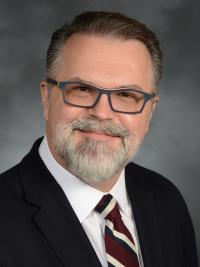
Ann Swidler is a Professor of the Graduate School at the University of California, Berkeley. Her research intersects sociology, anthropology, and development studies, focusing on the interplay between culture and institutions, particularly in sub-Saharan Africa. Education: PhD from UC Berkeley, BA from Harvard. Teaching: Sociology of culture, religion, and theory. Research Interests include: Cultural repertoires and institutionalization Religion and collective action in African contexts Responses to HIV/AIDS in Malawi Chieftaincy and local governance Global-local interactions in development Recent publications (2020–2024) explore institutional innovation in Africa, spirituality in rural Malawi, and cultural strategies amid HIV/AIDS. Her work often bridges sociological theory with ethnographic fieldwork. Selected Contributions: A Fraught Embrace: The Romance and Reality of AIDS Altruism in Africa (2017, co-authored with Susan Watkins) Talk of Love: How Culture Matters (2001) Habits of the Heart (1985, co-authored)
Dr Cosette Crisan is an Associate Professor (Teaching) in Mathematics Education at University College London’s IOE, ranked World Number 1 in Education. She specializes in curriculum design, subject-specific mentoring, and integrating digital technologies into mathematics education. Prior to joining UCL IOE in 2010, she taught mathematics at secondary and university levels for 16 years. Her research focuses on enhancing mathematics teaching practices through collaborative mentorship frameworks and technology integration. She co-leads the Curriculum and Subject Specialism Research Group and the ROPE group, driving pedagogical innovation. Notable achievements include the 2021 UCL Faculty Education Team Award for pandemic-era teaching support and leadership roles such as Academic Head of Learning and Teaching (2020–2023). She holds a PhD in Mathematics Education from London South Bank University and is a Principal Fellow of the Higher Education Academy. Current initiatives include developing a Mathematics and Secondary Mathematics Education BSc (QTS) Teacher Degree Apprenticeship program. Her research emphasizes revitalizing geometry education and preparing mentors to effectively guide novice teachers. Publications span topics like computer-aided assessment (STACK), pandemic-era teaching adaptations, and cross-cultural mentorship studies. Dr Crisan’s work bridges theory and practice, advocating for mathematics education as a design science. She actively contributes to the London Mathematical Society’s Education Committee, promoting public engagement with mathematics. Awards include the UCL Faculty Education Team Award (2021) and recognition for her role in transitioning teaching to online platforms during the pandemic. Her teaching portfolio includes leadership of the MA Mathematics Education program and supervision of doctoral candidates. Recent interests include exploring intersections between mathematics and cognitive neuroscience, inspired by her daughter’s career path.
Tan Chuan Hoo is an Associate Professor (tenured) and Deputy Head of the Department of Information Systems and Analytics at the National University of Singapore's School of Computing. With a distinguished academic career spanning multiple continents, he brings expertise in digital transformation, healthcare informatics, and enterprise systems to his teaching and research. His educational background includes: B.Sc. (1st Class Honours, National University of Singapore) M.Sc. (Accelerated, National University of Singapore) Ph.D. (National University of Singapore) Professor Tan's research focuses on digital transformation, particularly designing, deploying, and evaluating technological innovations. His work centers on two critical areas: digital commerce (provision of digital services such as online shopping aids) and digital organization (ensuring operational efficiency and performance). His research has significant implications for healthcare institutions, corporations, and crisis preparedness and response organizations. He conducts comprehensive analyses using various scientific methodologies including field experiments and mixed methods to understand how digital technologies reshape business operations and enhance societal well-being. His publication record shows a consistent focus on information systems, with recent articles (2020-2025) emphasizing healthcare informatics, digital transformation, and open innovation. His work demonstrates a clear trajectory toward understanding how technology intersects with organizational effectiveness and societal implications, with increasing attention to healthcare applications and digital crisis management. Professor Tan has received numerous prestigious awards for his contributions to the field: Faculty Teaching Excellence Award, NUS (2024, 2017) Information Management Research Award, China Information Economics Society (2023) Reviewer Hall of Fame, Journal of AIS (2020) Outstanding Associate Editor Award, MIS Quarterly (2016) Best Reviewer Award, Journal of AIS (2016) INFORMS ISS Design Science Award (2013) Honorable Mention, Journal of AIS (2015) He has successfully advised PhD students and collaborated with public and private entities on research projects. His editorial service as Associate Editor for Information Systems Research and MIS Quarterly, along with board memberships at other leading journals, demonstrates his significant influence in the field. Professor Tan has secured research grants supporting projects on digital crisis preparedness, disaster response technology, and healthcare digitalization. His research group focuses on understanding how technology can be designed and implemented to support organizations in crisis situations, enhance healthcare services, and improve digital commerce. Current projects include examining digital crisis management, technology for disaster response, and the digital transformation of healthcare services.
Massimo Mischi is a Full Professor at the Faculty of Electrical Engineering of the Eindhoven University of Technology (TU/e) and chairs the Signal Processing Systems (SPS) Division , the largest division at TU/e with over 250 researchers. He founded the Biomedical Diagnostics (BM/d) Lab in 2012, which now includes 180 researchers and clinical/industrial advisors, focusing on biomedical signal processing for diagnostics and monitoring.
Suman Datta is a Professor at the Georgia Institute of Technology , holding the Joseph M. Pettit Chair in Advanced Computing and Georgia Research Alliance Eminent Scholar titles. He has a joint appointment with the School of Materials Science and Engineering. Education : B.Tech in Electrical Engineering from IIT Kanpur; Ph.D. in Electrical and Computer Engineering from the University of Cincinnati. Prior Appointments : Stinson Endowed Chair Professor of Nanotechnology at University of Notre Dame (2015–2022); Professor at Penn State (2007–2015); Intel Corporation (1999–2007) in Advanced Transistor Group. Research Interests : His work focuses on high-performance heterogeneous computing using advanced CMOS and beyond-CMOS semiconductors. Key areas include ferroelectric field-effect transistors (FeFETs) , cryogenic computing , in-memory computing , and brain-inspired computing . He explores materials like ferroelectric gate stacks , insulator-to-metal phase transition oxides , and high-mobility oxides for next-generation compute architectures. Recent Article Trends : His group’s publications emphasize BEOL-compatible oxide transistors , negative capacitance , radiation-resilient devices , and machine learning-aided modeling . Subfields include low-voltage memory , 3D Ising machines , dynamic logic at cryogenic temperatures , and monolithic integration of power delivery systems. Scientific Awards : IEEE Fellow (2013) for contributions to transistor technologies NAI Fellow (2016) for societal impact via patents Intel Achievement Award (2003) for high-k/metal gate CMOS Intel Logic Technology Quality Award (2002) for Tri-gate transistors SEMI Award (2012) for high-k dielectrics Penn State Outstanding/ Premier Research Awards (2012, 2015) Advising & Grants : He has mentored students like Wriddhi Chakraborty , Khandker Akif Aabrar , and Sourav Dutta . His research is funded by SRC , DARPA , and NSF , including leadership of the ASCENT and EXCEL centers. Labs & Collaborations : Datta directs the STAR Lab at Georgia Tech, which specializes in atomistic modeling , nanofabrication , and compact model development . The lab collaborates with industry giants like Intel , Micron , and IBM through the ASCENT center.
Weijia Rao is an Associate Professor of Law at Boston University School of Law, located at 765 Commonwealth Avenue in Boston, Massachusetts. With a robust scholarly profile evidenced by 12 published papers with over 2,150 total downloads and 5 total citations, Professor Rao maintains an active research agenda in international legal studies. Professor Rao's research focuses primarily on international investment law, with particular expertise in investor-state dispute settlement mechanisms, bilateral investment treaties, and international arbitration. Their work examines the intersection of domestic politics and international investment law, the effects of foreign investors' challenges to domestic regulations, and the role of national security considerations in international legal frameworks. A significant portion of their research analyzes China's engagement with international investment law and WTO frameworks, as well as the dynamics of arbitrator behavior in ICSID proceedings. The scholarly output demonstrates a clear trend toward examining the practical implications of international investment law on domestic regulatory sovereignty, with recent work increasingly focusing on national security dimensions of international law. Professor Rao's research employs empirical methodologies to analyze how international legal frameworks interact with domestic political processes and economic outcomes, contributing valuable evidence-based insights to ongoing debates about reforming international investment law systems. Professor Rao has established productive research collaborations with scholars from institutions including University of Chicago Law School, University of Miami, and Brigham Young University. Their publications appear in prestigious venues such as the Harvard International Law Journal, Yale Journal of International Law, and Journal of Legal Studies, reflecting the high quality and impact of their scholarship.
Francisco Barillas Bedoya is an Associate Professor at the School of Banking and Finance within the UNSW Business School, University of New South Wales. His research focuses on theoretical and empirical asset pricing, particularly portfolio choice, asset pricing tests, macrofinance, and term structure of interest rates. He has published extensively in top-tier journals like the Journal of Finance and Management Science. PhD from New York University MA from University of British Columbia BSc from Trent University His recent publications analyze Sharpe ratios for model comparison, speculative behavior in bond markets, and risk premia in fixed income markets. While no formal awards are listed, his work intersects financial economics, econometrics, and computational methods. Office: Level 3, Room 333C, Ref E12 Email: f.barillas@unsw.edu.au
Monica Bell is a tenured Professor of Law and Associate Professor of Sociology at Yale University, holding joint appointments across Yale Law School and the Department of Sociology. Her office is located at 127 Wall Street, New Haven, CT. As the first Black woman to serve as a junior faculty member and the second Black woman to receive tenure at Yale Law School, she is deeply committed to advancing diversity in academia. Education: B.A. in Political Science and Sociology, Furman University (Truman Scholar) M.Sc. in Equality Studies, University College Dublin (Mitchell Scholar) J.D., Yale Law School Ph.D. in Sociology and Social Policy, Harvard University Bell's research examines structural inequality through interdisciplinary lenses, focusing on policing, legal estrangement, housing segregation, welfare policy, and racial-spatial dynamics. She employs qualitative methodologies to analyze how marginalized communities experience legal institutions, with emphasis on urban poverty and systemic exclusion. Her conceptual framework of 'legal estrangement' redefines understandings of community-law enforcement relationships. Her publications consistently engage with themes of racial justice, institutional reform, and community agency. Recent work demonstrates a strong focus on reimagining policing systems, analyzing residential segregation patterns, and developing democratic approaches to poverty governance. Articles frequently intersect law, sociology, and urban studies while incorporating critical race theory. Awards and Honors: Jane Addams Article Award (American Sociological Association) Derrick A. Bell, Jr. Award (AALS) Yale Law Women Faculty Excellence Award Russell Sage Foundation Visiting Scholar Fellowship Truman Scholarship & Mitchell Scholarship Bell teaches Constitutional Law and Law & Sociology, exploring governmental power structures and sociological applications to legal analysis. She previously clerked for Judge Cameron McGowan Currie (U.S. District Court) and served as an Arthur Liman Fellow at Legal Aid Society of D.C., focusing on TANF policy. No current grants, labs, or student advisees are detailed in available materials.
Daniel Kreisman is an Associate Professor of Economics at Georgia State University and a faculty affiliate at the University of Milan. His research focuses on labor economics, education finance, and policy, particularly examining school funding, career and technical education (CTE), and student loan repayment systems. Kreisman founded the Career & Technical Education Policy Exchange (CTEx), a multi-state consortium under Georgia Policy Labs, which analyzes CTE policy impacts. He holds a Ph.D. in Public Policy from the University of Chicago and a B.A. in History and Philosophy from Tulane University. Prior to academia, he taught high school English in New Orleans. His education includes a PhD from the University of Chicago (Public Policy) and a BA from Tulane University (History and Philosophy). Research Interests: Educational Finance and School Funding Mechanisms CTE Program Design and Equity Student Loan Repayment Behaviors Labor Market Signaling and Economic Outcomes Public Policy Evaluation CTEx collaborations include state partners in Massachusetts, Michigan, Montana, Tennessee, Texas, Washington, and Atlanta, focusing on data-driven policy to enhance CTE programs. Advising & Grants: Kreisman’s work bridges academia and policy, with grants supporting research on CTE alignment, financial aid impacts, and loan repayment systems. His lab affiliations enable applied policy analysis. Labs/Teams: Director of CTEx and active member of Georgia Policy Labs, emphasizing evidence-based education policy.
Axel Dreher is Professor of International and Development Politics at Heidelberg University’s Alfred-Weber-Institute for Economics. He is a leading scholar in political economy and development economics, with extensive affiliations including the German National Academy of Sciences Leopoldina, CEPR, CESifo, KOF, AidData, and EUDN. He serves as Editor of the Review of International Organizations and Co-Director of the Center for European Studies (CefES) at the University of Milan-Bicocca. Ruprecht-Karls-University Heidelberg (2011–Present) Georg-August University Göttingen (2008–2011) ETH Zurich (2005–2008) University of Konstanz (2004–2005) University of Exeter (2003–2004) University of Mannheim (2000–2003) His research centers on political economy , economic development , foreign aid , and globalization . He investigates how political institutions, leadership incentives, and geopolitical interests shape development outcomes and international financial flows. His work often employs empirical and geospatial methods to analyze aid allocation, corruption, migration, and the rise of emerging donors like China. The 15 most recent publications reflect a strong focus on China’s overseas development finance , regional favoritism , and the political determinants of aid . Keywords span political economy, development economics, and international relations, with subfields including Chinese foreign aid, geospatial analysis, governance, institutional quality, and South-South cooperation. His recent book Banking on Beijing and award-winning paper Wedded to Prosperity exemplify his cutting-edge contributions to understanding the political economy of development. Scientific awards include: 2023 Best Paper Award, Political Economy of Aid Society (PEAS) 2023 Best New Dataset Award, International Political Economy Society International Geneva (IG) Award 2020 Excellence in Refereeing Award, World Bank Economic Review (2019) 2010 KfW Excellence Award for policy-relevant research Multiple DFG and Swiss research grants Dreher has advised over 30 PhD students on topics ranging from aid effectiveness to political violence and migration. He has received major research grants from the German Research Foundation (DFG), Swiss Network for International Studies (SNIS), European Commission, and VolkswagenStiftung. His leadership roles include organizing the annual Political Economy of International Organizations conference series and serving on editorial boards of top journals such as World Development and Defence and Peace Economics . He is actively involved in academic labs and research networks including the Courant Research Center on Poverty and Equity at Göttingen, AidData at William & Mary, and the Center for European Studies (CefES). His current work continues to explore the intersection of politics, development, and globalization, particularly through georeferenced data and natural experiments.
Stephen Brown is a Full Professor at the School of Political Studies , part of the Faculty of Social Sciences at the University of Ottawa . His research focuses on democracy, democratization, conflict, foreign aid, and LGBT rights, particularly in Sub-Saharan Africa and Mongolia. He also analyzes Canadian foreign aid policies under recent governments. Email: brown@uottawa.ca Office: 613-562-5800 (1896) Languages: English, French, Spanish, Portuguese His work bridges international development, political science, and human rights, examining how foreign aid intersects with democratic ownership, gender equality, and conflict resolution. Recent publications highlight tensions between donor priorities and local contexts, as well as Canada's evolving role in global development. Key trends in his 15 most recent articles (2025–2020) include: Canadian foreign aid policy under Harper and Trudeau governments LGBTQI+ rights advocacy in Africa and Asia Impact of global crises (e.g., COVID-19) on development cooperation Political economy of extractive industries in developing economies Debates on aid effectiveness, policy coherence, and donor alignment Transitional justice and electoral conflict management in post-crisis states
Faez Ahmed is an Associate Professor at the Department of Mechanical Engineering, Massachusetts Institute of Technology (MIT), where he serves as the Doherty Chair in Ocean Utilization. He leads the Design Computation and Digital Engineering (DeCoDE) Lab, focusing on integrating machine learning and optimization with engineering design to enhance human-AI collaboration and accelerate design processes. Ph.D., Mechanical Engineering, University of Maryland College Park (2019) B.Tech.-M.Tech., Mechanical Engineering, Indian Institute of Technology Kanpur (2012) His research interests include generative design methodologies, AI-driven optimization techniques, and the development of algorithms that facilitate collaboration between human designers and artificial intelligence systems. This interdisciplinary work spans applications in automotive design , ship hull synthesis , and wind turbine optimization , with a strong emphasis on creating open-source tools and datasets for the engineering community. Recent publications demonstrate his lab's leadership in fields such as 3D CAD generation , multimodal design datasets , and constraint-aware generative models . These works often address challenges in design space exploration , performance prediction , and data-driven design frameworks . Scientific Awards NSF CAREER Award (2025) ASME Young Investigator Award (2024) Google Research Scholar Award (2024) 3M Non-Tenured Faculty Award (2022) University of Maryland Alumni Research Award (2022) Faez Ahmed's lab has trained numerous Ph.D. candidates and postdoctoral researchers, fostering a collaborative research environment that bridges mechanical engineering , artificial intelligence , and computational methods . The DeCoDE Lab actively engages with industry partners and academic institutions, contributing to large-scale datasets and benchmarks that power the next generation of engineering design research.
Nick Bansback is an Honorary Visiting Professor in the School of Population and Public Health at the University of British Columbia (primary affiliation) and affiliated with NUS Saw Swee Hock School of Public Health. His research focuses on maximizing healthcare value through economic evaluation, patient preference measurement, and decision analysis. He holds a PhD in Health Economics and Decision Sciences (University of Sheffield, 2010), an MSc in Health Economics (2004), and a BSc in Mathematics (2001). Key research areas include health technology assessment, patient-reported outcomes, and cost-effectiveness analysis of treatments for chronic conditions like rheumatoid arthritis and multiple sclerosis. He has pioneered methods for incorporating patient preferences into healthcare decisions, including developing decision aids and discrete-choice experiments. His work has been recognized with awards such as the UBC Killam Research Award (2020) and the Canadian Agency for Drugs and Technology in Health Rising Star Award (2016). He has contributed to over 30 peer-reviewed publications, emphasizing practical applications of health economics to improve healthcare resource allocation and patient-centered care. Prof. Bansback’s career spans postdoctoral research at UBC, health economics roles at the Centre for Health Evaluation and Outcomes Sciences, and early research at the University of Sheffield. His interdisciplinary approach bridges clinical practice, policy, and quantitative methods to address complex healthcare challenges.
Dr. Lucian Sulica is the Sean Parker Professor of Laryngology and Director of the Sean Parker Institute for the Voice at Weill Cornell Medical College. He is an attending Otolaryngologist at NewYork-Presbyterian Hospital with a clinical practice exclusively focused on voice disorders. Dr. Sulica served as the 2023 President of the American Laryngological Association and is a Fellow of the American Laryngologic, Rhinologic and Otologic Society (the Triologic Society). His educational background includes: A.B. from Dartmouth College (1989) M.D. from Georgetown University School of Medicine (1993) Residency at Georgetown University Medical Center Fellowship at New York Center for Voice & Swallowing Disorders, St. Luke's-Roosevelt Hospital Center Dr. Sulica's research focuses on evidence-driven principles for treating voice conditions, with particular emphasis on vocal fold injuries from voice use (especially in performers), neurologic voice disorders (including vocal fold paralysis, spasmodic dysphonia, and tremor), and in-office procedures for voice disorders that don't require general anesthesia. His work has addressed critical aspects such as gender differences in vocal fold injury, pathophysiology of laryngeal nerve injury, and diagnostic accuracy in voice disorders. Analysis of Dr. Sulica's recent publications reveals a strong focus on advancing diagnostic techniques through artificial intelligence, improving surgical outcomes for vocal fold lesions, understanding performers' unique voice care needs, and developing evidence-based protocols for vocal fold hemorrhage and other voice disorders. His research increasingly incorporates technology-driven approaches while maintaining a strong clinical focus on patient-centered outcomes. Dr. Sulica has received numerous prestigious awards including: Casselberry Award of the American Laryngological Association (2021) Felix Semon Lectureship in Laryngology, Royal Society of Medicine (2022) American Academy of Otolaryngology – Head & Neck Surgery Honor Award (2008) Consistent recognition as one of "Best Doctors in America" (2005-2024) Designation as one of "America's Top Physicians in Voice Disorders/Laryngology" (since 2006) Inclusion in "New York Magazine Best Doctors" list annually since 2013 As an educator, Dr. Sulica has authored more than 110 journal articles and 40 book chapters, and has edited three books including "Vocal Fold Paralysis," "Classics in Voice and Laryngology," and "Patologia Laringea y Fonocirugia" (in Spanish). He is passionate about teaching and has lectured extensively across the United States, Europe, Latin America, and Australia. His clinical work at the Sean Parker Institute for the Voice represents a comprehensive approach to voice care, incorporating innovative in-office procedures that have helped establish new standards in laryngology.
David Salesin is an Affiliate Professor in the Department of Computer Science & Engineering at the University of Washington and a Principal Scientist/Director at Google Research since 2019. He has held academic roles at Cornell University (Visiting Assistant Professor, 1991-92) and guest professorships at Zhejiang University. His career spans academia and industry, including leadership at Adobe's Creative Technologies Lab (2005-17) and Microsoft Research (1999-2005). PhD, Stanford University (1991) Sc.B., Brown University (1983) His research focuses on computer graphics, particularly non-photorealistic rendering, digital typography, color science, and adaptive document layout. He pioneered techniques in image-based rendering, pen-and-ink illustration, and facial animation, with applications in multimedia and user interface design. Article Trends : His work bridges procedural content generation, 3D visualization, and artistic computing, emphasizing user-driven tools for creative industries. Key subfields include texture advection, multiresolution modeling, and real-time camera control for virtual cinematography. Scientific Awards : ACM Fellow (2002) ACM SIGGRAPH Achievement Award (2000) Carnegie Foundation Professor of the Year (1998) NSF Presidential Faculty Fellow (1995-98) Alfred P. Sloan Research Fellowship (1995-97) Numerous industry grants and lab donations He has advised over 30 PhD and Master's students, including leaders at Microsoft, Pixar, and Google. His labs at UW and Adobe focused on graphics, imaging, and creativity tools.