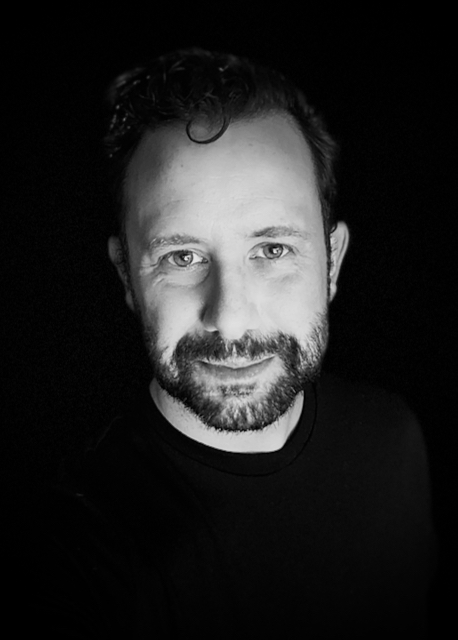
Alexandre Poulain is a Full Professor in the Department of Biology at the University of Ottawa and Vice Dean for Research and Infrastructure in the Faculty of Science. His multidisciplinary research bridges biogeochemistry, microbial physiology, and environmental toxicology. Education: B.Sc. (Angers, France), M.Sc. (INRS, Canada), Ph.D. (Université de Montréal, Canada), Postdoc (MIT, USA) Research Interests: Mercury cycling in Arctic and temperate ecosystems, microbial metal transformations, biosensor development for contaminants, redox reaction dynamics, bioremediation using environmental microbes, and mercury-organic matter interactions. His lab (2017-2025) has produced 15 recent publications on mercury biogeochemistry in oil sands, rice paddies, and Arctic lakes, alongside arsenic speciation studies and pesticide impacts on pollinators. Current students explore archaeal mercury regulators, acidothermophilic biosensors, and microbial remediation. Scientific contributions include: NSERC Postdoctoral Fellowship (2007-2009) Co-PI on Microbright, a startup commercializing microbial water treatment Developed portable arsenic biosensor tested in Cambodia Co-edited mercury-climate synthesis in Nature Communications
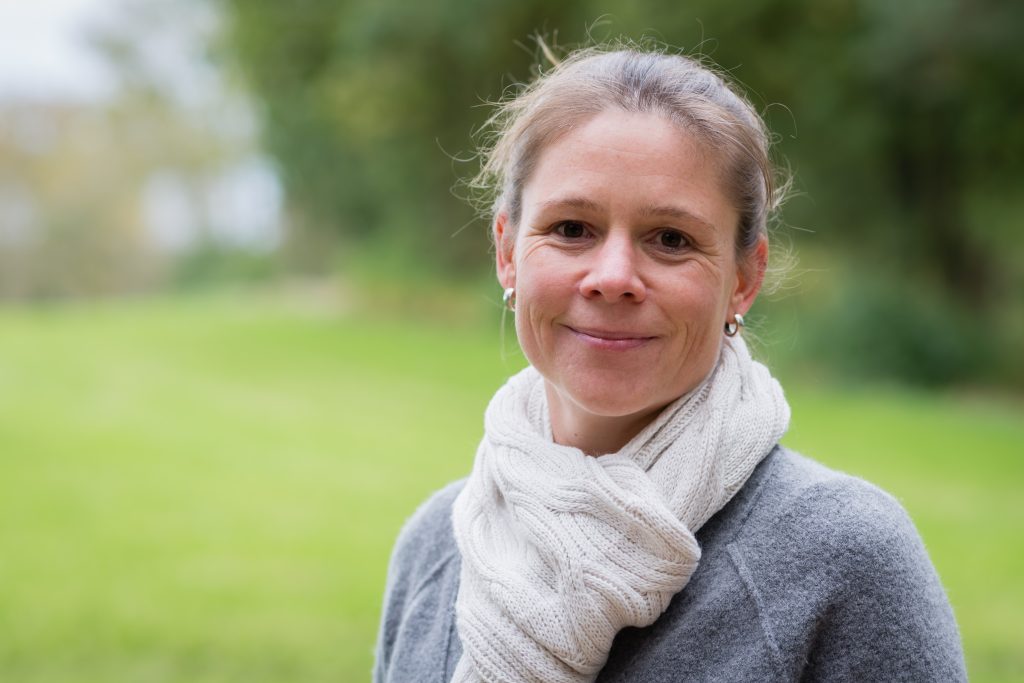
Dr. Marion Schrumpf is a Group Leader in the Soil Biogeochemistry research group at the Max Planck Institute for Biogeochemistry, affiliated with the Department of Biogeochemical Processes. Her work focuses on soil carbon dynamics, mineral-organic matter interactions, and climate change impacts on soil systems. Research areas: Soil biogeochemistry, carbon cycling, mineral-soil interactions, nutrient stoichiometry, microbial ecology, and climate modeling. Email: mschrumpf@... Phone: +49 3641 57-6182 Office: B2.015 Her recent publications address themes like mineral control over soil carbon stabilization, drought effects on soil processes, microbial stoichiometric adaptation, and the Jena Soil Model's role in simulating carbon-nutrient interactions. She leads efforts to disentangle the complex relationships between land use, mineralogy, and soil organic matter turnover across diverse ecosystems.
Matthew Mitchell is an Assistant Professor jointly appointed in the Department of Forest Resources Management at the Faculty of Land and Food Systems and the Faculty of Forestry, University of British Columbia (UBC). His research focuses on multifunctional landscapes, integrating ecological and socio-economic dimensions to balance biodiversity conservation with human well-being. He co-leads the M2L2 Lab, which emphasizes equitable and sustainable management of urban and agricultural systems. Mitchell’s work bridges landscape ecology, ecosystem service science, and conservation policy, leveraging interdisciplinary methods like socio-ecological modeling and participatory research. His research areas include community ecology, ecosystem services and conservation policy, and environmental change. He collaborates with stakeholders to co-design solutions for urban greenspace planning, agricultural sustainability, and mineral exploration that respect biodiversity. Mitchell’s lab actively engages in reconciliation efforts, acknowledging Indigenous land stewardship and UBC’s location on Musqueam territory. Notable contributions include studies on forest restoration trade-offs, flood mitigation via ecosystems, and biodiversity-ecosystem service linkages. Mitchell advises students like Dan Forrest (UBC Public Scholar) and MSc candidate Aaron Aguirre, exploring urban bat ecology and mutualistic city design. His work informs national conservation strategies and urban planning, emphasizing equity and ecological resilience. Lab activities focus on developing tools for multifunctional landscape planning, such as indices for restorative nature and frameworks balancing mineral prospectivity with conservation. Mitchell’s research underscores the urgency of addressing global biodiversity loss through inclusive, science-driven policies.
Dr. Marcell K. Peters is a Senior Academic Councillor at the Chair of Animal Ecology and Tropical Biology (Zoology III) at the University of Bremen. His research focuses on biodiversity patterns, ecosystem functioning, and climate-land use interactions in tropical and montane environments, with extensive fieldwork in East Africa and the Amazon. He leads projects under DFG and EU funding, including the UPSCALE initiative. Habilitation in Zoology (University of Würzburg, 2018) PhD in Biology (University of Bonn, 2008) Diploma in Biology (RWTH Aachen & University of Bonn, 2003) Research spans multi-taxa community ecology, army ants and ant-following birds, DNA barcoding applications, and climate change impacts on pollination networks. Google Scholar highlights recent work on climate-agriculture interactions in sub-Saharan Africa, trait-based community assembly, and network resilience in biodiversity hotspots. His publications emphasize elevational gradients, disturbance ecology, and functional diversity across Mount Kilimanjaro studies. Current affiliations include the DFG Research Unit Kilimanjaro and EU-funded UPSCALE project. He employs advanced methods like airborne LiDAR for biodiversity prediction and investigates nutrient use by ant communities across continents.
Dr. Katja Wehner is a Postdoctoral Researcher in the Faculty of Biology at the Technical University of Darmstadt, Germany, specializing in soil arthropod ecology with a focus on oribatid mite communities across forest microhabitats including litter, soil, dead wood, and tree bark. Her work examines their role in forest food webs and responses to environmental stressors. Education: PhD in Biology, Technical University of Darmstadt (2009). Dissertation: 'Parthenogenesis and Sexuality in Oribatid Mites' Diploma in Biology, Technical University of Darmstadt (2004). Thesis: 'Variability at the hsp82-locus of the parthenogenetic oribatid mite Platynothrus peltifer' Research Focus: Dr. Wehner investigates biotic interactions and acarological dynamics in Central European forests, emphasizing how land-use intensity, drought, and structural factors shape oribatid mite biodiversity. Her work integrates community ecology, soil science, and microhabitat specialization to understand ecosystem resilience and food-web interactions, with particular attention to parthenogenetic versus sexual reproduction strategies in microarthropods. Publication Trends: Recent publications (2018-2022) reveal a strong emphasis on anthropogenic impacts, including land-use change effects on aboveground-belowground linkages, drought/storm damage consequences for soil communities, and microhabitat-driven variations in mite sex ratios and seasonal dynamics. Her collaborative work in journals like Nature Communications and Global Ecology and Conservation demonstrates methodological integration of field surveys, controlled experiments, and multi-taxon analyses. Collaborative Networks: Dr. Wehner actively participates in large-scale ecological initiatives including the Biodiversity Exploratories project, collaborating with researchers from institutions like the Technical University of Munich and University of Würzburg on cross-taxa biodiversity studies. Her co-authorship on multi-investigator papers indicates strong engagement with Germany's ecological research infrastructure.
Caroline Brophy is a Professor in Statistics at the School of Computer Science and Statistics, Trinity College Dublin, Ireland. She lectures undergraduate and postgraduate modules, supervises student projects, and leads interdisciplinary research initiatives. As Head of Statistics and Information Systems, she oversees academic and administrative operations within her domain. Her research focuses on developing non-standard statistical models for ecological, agricultural, and environmental applications, particularly in modeling biodiversity-ecosystem function relationships and enhancing agricultural sustainability through species diversity. She is the lead Coordinator of the Marie-Curie Doctoral Network LegumeLegacy and Principal Investigator for the Research Ireland Frontiers for the Future project STRIVE . Funded Investigator with ADAPT and VistaMilk Research Ireland Centres Co-Director of LegacyNet , a global experimental network Her research group includes postdoctoral researchers, PhD students, and visiting researchers collaborating on projects like Multi4More , E3 Kinsella FOREST , and EthiopiaGrass . She has previously worked on plant reproductive allometry, species competition, and nitrate leaching dynamics.
Anna Cord is a Professor and Chair of Computational Landscape Ecology at the Technische Universität Dresden, Faculty of Environmental Sciences. She leads research at the intersection of remote sensing, biodiversity, and ecosystem services. Previously, she headed the working group 'Biodiversity and Ecosystem Services' at the Helmholtz Centre for Environmental Research – UFZ from 2012 to 2020. Doctorate (Dr. rer. nat): University of Würzburg, 2012 Studies: Biology and Geography, University of Würzburg and University of Umeå, Sweden Research Assistant: German Aerospace Center (DLR) and University of Würzburg, 2007–2012 Her research focuses on spatial analysis and modeling of land use impacts on biodiversity and ecosystem services , using remote sensing and GIS. She investigates trade-offs and synergies in multifunctional landscapes and develops methods to monitor ecosystem services via Earth observation. Her work supports sustainable land management and policy design. Her recent publications reveal strong trends in ecosystem multifunctionality , multi-objective land use optimization , and integration of socio-environmental data . She emphasizes scalable models, interdisciplinary frameworks, and policy-relevant tools, often using national and global datasets. Her work bridges computational ecology, environmental modeling, and conservation science. Scientific Awards and Honors: Best PhD Student Paper Award, iEMSs Conference, Ottawa, 2010 Scholarship, German Academic Scholarship Foundation, 2004–2007 Member, Young Academy of BBAW and Leopoldina, since 2019 Anna Cord is actively involved in academic service and mentoring. She serves as Study Programme Coordinator for BSc and MSc Geography and teacher training programs at TU Dresden. She leads major research grants such as BESTMAP (EU Horizon 2020) and ECO²SCAPE (BMBF) . She is also an editor for Regional Environmental Change and Remote Sensing in Ecology & Conservation . She contributes to international scientific coordination as Task Leader for Remote Sensing of Ecosystem Services in GEO BON . She has previously served on the Main Committee of the Scientific and Technical Council at UFZ. Her leadership extends to curriculum development and examination boards in geosciences.
Univ.Prof. Dipl.-Ing.Dr.nat.techn. Walter Sekot is a Professor at the Institute of Agricultural and Forestry Economics, Department for Economics and Social Sciences, University of Natural Resources and Life Sciences, Vienna (BOKU). His research focuses on forest economics, sustainable forest management, and socio-economic aspects of forestry, with expertise in accounting data networks and economic analysis of small-scale forestry. Education: Doctoral degree (1986) and Habilitation (1991) from BOKU; Professorship (1993) at TU Dresden. Key Research Areas: Forest economics, bioeconomy, risk analysis in forest management, international forest accounting harmonization, and non-wood forest services. His recent work includes analyzing forest accountancy data networks, timber and non-timber valuation, and challenges in sustainable forest management under climate change. He has presented extensively at international conferences like IUFRO and Forstökonomisches Kolloquium. Scientific Awards: Preis der Prof. Anton Kurir-Stiftung (1991) for supporting young researchers.
Maurizio Ramanzin is a Full Professor at the University of Padova , affiliated with the School of Animal Science and Department of Agronomy, Animals, Food and Natural Resources (DAFNAE) . His research focuses on Agricultural Sustainability , Environmental Impact Assessment , and Precision Livestock Farming . Academic Field : AGR/19 Email : maurizio.ramanzin@unipd.it Address : Agripolis - Viale dell'università, 16 - Legnaro (Padova) – ITALY His work explores the interactions between livestock systems and ecosystem services in mountainous regions, with emphasis on: Grazing Management and biodiversity conservation Life Cycle Assessment (LCA) of dairy and beef systems Climate Change Adaptation in Alpine ungulates Animal Welfare in small-scale farms Technological Tools (GPS, NIRS) for monitoring grazing behavior Key trends in his recent publications include: Quantifying environmental drivers of wolf predation on livestock Developing low-cost biologging systems for dairy cows Analyzing social-ecological trade-offs in mountain agriculture Assessing microbial dynamics in alpine soils
Dr. Jiangxiao Qiu is an Associate Professor of Landscape Ecology at the University of Florida's School of Forest, Fisheries, and Geomatics Sciences, based at the Fort Lauderdale Research and Education Center. His research integrates landscape ecology, ecosystem services, and sustainability science to address global environmental challenges. He employs interdisciplinary approaches including computational modeling, remote sensing, and field experiments to study human-nature interactions across scales. Research Focus: Dr. Qiu investigates how climate change, land-use intensification, and biological invasions alter ecosystems and biodiversity. Key themes include: Landscape sustainability science and social-ecological systems Ecosystem service tradeoffs in agricultural and urban landscapes Global change impacts on biodiversity-ecosystem function relationships Development of geospatial tools for environmental decision-making Recent publications (2024-2025) demonstrate strong emphasis on: Urban ecosystem services and greenspace multifunctionality Post-disturbance forest recovery using remote sensing Soil nutrient dynamics in managed grasslands Integration of cultural ecosystem services in landscape planning Scalable frameworks for biomass and biodiversity monitoring Dr. Qiu actively recruits graduate students through his Landscape Ecology and Sustainability Science Lab, focusing on transformative solutions for conservation and policy challenges. Current research explores urban-rural sustainability linkages, phosphorus cycling in subtropical systems, and climate-resilient landscape design.
Thomas Scholten is Professor of Soil Science and Geomorphology at the Department of Geoscience, Faculty of Science, Eberhard Karls University Tübingen. He has been director of the Institute of Geography at Tübingen University since 2006 and has held various leadership roles including President of the German Soil Science Society (2012-2015) and council member of the European Society for Soil Conservation since 2004. In 2016, he was elected as a member of German National Academy of Science and Engineering (acatech). Since 2017, he has been co-speaker of the Collaborative Research Center (SFB 1070) 'ResourceCultures' and since 2019, he has been a principal investigator in the Cluster of Excellence 'Machine Learning - New Perspectives for Science' at Tübingen University. Chair of Soil Science and Geomorphology (full professor) at Eberhard Karls University Tübingen (2005-present) Director of the Institute of Geography at Tübingen University (2006-present) Co-speaker of the Collaborative Research Center (SFB 1070) 'ResourceCultures' (2017-present) Principal Investigator in the Cluster of Excellence 'Machine Learning' (2019-present) Professor Scholten's research focuses on soil science, environment, geomorphology, geoecology, soil erosion, and machine learning applications in soil science. His fieldwork spans Europe, Africa, and Asia with major projects in South Africa, Swaziland, Sudan, Israel, China, Nepal, Switzerland, and Germany. He has published extensively with 9 books, 228 refereed papers, and 378 conference papers to his name. His recent publications reveal a strong integration of traditional soil science with cutting-edge machine learning techniques, particularly in digital soil mapping, soil erosion prediction, and resource management. The research spans multiple continents and addresses critical environmental challenges through interdisciplinary approaches combining soil science, remote sensing, and computational methods. Member of German National Academy of Science and Engineering (acatech) (2016-present) President of the German Soil Science Society (DBG) (2012-2015) Council member of the European Society for Soil Conservation (ESSC) (since 2004) Editorial board member of Journal of Plant Nutrition and Soil Science, Pedosphere Professor Scholten has received research grants from over 15 institutions, primarily the European Union (EU), the German Research Foundation (DFG), and the German Federal Ministry of Education and Research (BMBF). He serves as a referee for numerous international journals and has advised on scientific policy through various advisory boards and committees. His work has significant implications for sustainable land management and climate change adaptation strategies globally. He leads the Soil Science and Geomorphology work group at the University of Tübingen, with research activities spanning field studies, laboratory analyses, and computational modeling. His team collaborates with researchers across disciplines including geography, ecology, computer science, and archaeology to address complex environmental challenges through the ResourceCultures Collaborative Research Center and other international projects.
Michele Donati is an Associate Professor at the Department of Chemical, Life and Environmental Sustainability Sciences, University of Parma. With expertise in agricultural economics and agro-environmental policy, he specializes in quantitative analysis using mathematical programming models and Life Cycle Assessment (LCA) for evaluating sustainability in food systems. His teaching includes courses in Environmental Economics and Economic Modeling, and he leads research on CAP reforms and bio-economic modeling. Education: PhD in Agri-food Economics (2001–2003), Master in Environment and Natural Resource Economics (1999–2000), Degree in Economics (1992–1998) Research: Focuses on CAP policy evaluation, sustainable agri-food supply chains, bio-economic modeling, and greening strategies. Projects include Horizon2020's Strength2Food and EUROTOOLS. Teaching: Environmental Economics (2009–present), Economic Modeling (2008–present), and Rural Development (2011–2012). Awards: Received the 2016 European Association of Agricultural Economists Publication Award for policy contribution.
Wim van der Putten is a Professor in Functional Biodiversity at Wageningen University & Research and Head of the Department of Terrestrial Ecology at the Netherlands Institute of Ecology (NIOO-KNAW). He holds an honorary professorship at the Chinese Academy of Agricultural Sciences. His research focuses on climate change, land use dynamics, and soil biodiversity. He graduated from Wageningen University in 1984 and completed his PhD in 1989 on coastal dune ecosystems. He has led major projects like the Global Soil Biodiversity Initiative and the EU-funded EcoFinders and Liberation programs. His work bridges fundamental research with practical applications, such as soil health monitoring and ecosystem restoration. Key achievements include ERC and VICI grants, co-authoring the European and Global Soil Biodiversity Atlases, and chairing initiatives like the Heineken Environment Prize. His recent studies explore soil microbial communities, organic farming transitions, and biodiversity responses to global changes. He emphasizes sustainable land management, advocating for 'productive deintensification' in agriculture.
Francisco Dini-Andreote serves as Associate Professor of Plant Science at Penn State University's College of Agricultural Sciences and holds the endowed Huck Early Career Chair in Microbial Community Ecology. His research integrates microbiome science, plant-microbe interactions, and ecological theory to advance sustainable agriculture. Affiliations include the Huck Institutes' Microbiome Center, Center for Root and Rhizosphere Biology, and Center for Infectious Disease Dynamics. Research focuses on: Microbiome assembly in response to environmental gradients (e.g., urbanization, climate change) Engineering rhizosphere communities for crop resilience against drought and pathogens Soil health restoration via anaerobic disinfestation techniques Recent publications (2024-2025) reveal strong emphasis on: Ecological processes governing microbial coalescence and food web dynamics Molecular mechanisms of plant-microbe signaling under stress Cross-kingdom synthetic communities for agricultural applications Awards include the Dorothy Foehr Huck and J. Lloyd Huck Early Career Chair (2024). Grant leadership encompasses USDA-funded projects ($1M+) optimizing organic farming through microbiome manipulation. Actively advises graduate students and leads the Dini-Andreote Lab, which collaborates with international teams to study soil-plant-microbe interfaces.
Dr. rer. nat. Xu Li is a researcher at the Institute of Semiconductor Technology within the TU Braunschweig (Technische Universität Braunschweig), Germany. Affiliated with the Faculty of Electrical Engineering, Information Technology, Physics , Xu Li contributes to interdisciplinary research spanning materials science, environmental science, and computer engineering. Fields of Interest : Materials Science, Environmental Science, Biotechnology, Sensor Technology, Computer Science, Civil Engineering, IoT Contact : xu.li@tu-braunschweig.de Xu Li's research focuses on: Materials Science : Developing magnetoelectric sensors with energy harvesting capabilities, exploring concrete shrinkage mechanisms using porous aggregates. Environmental Science : Investigating microplastic impacts on soil ecosystems and carbon dynamics in tea plantations. Biotechnology : Advancing PCR-based mutation detection for viral pathogens. Computer Science : Innovating face recognition algorithms and agricultural IoT systems.