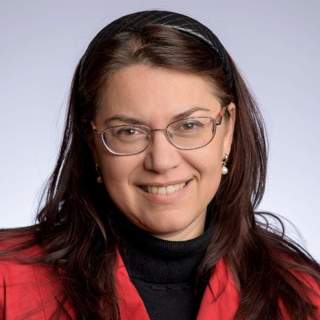
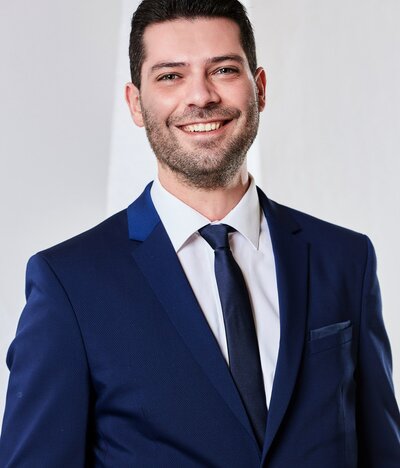
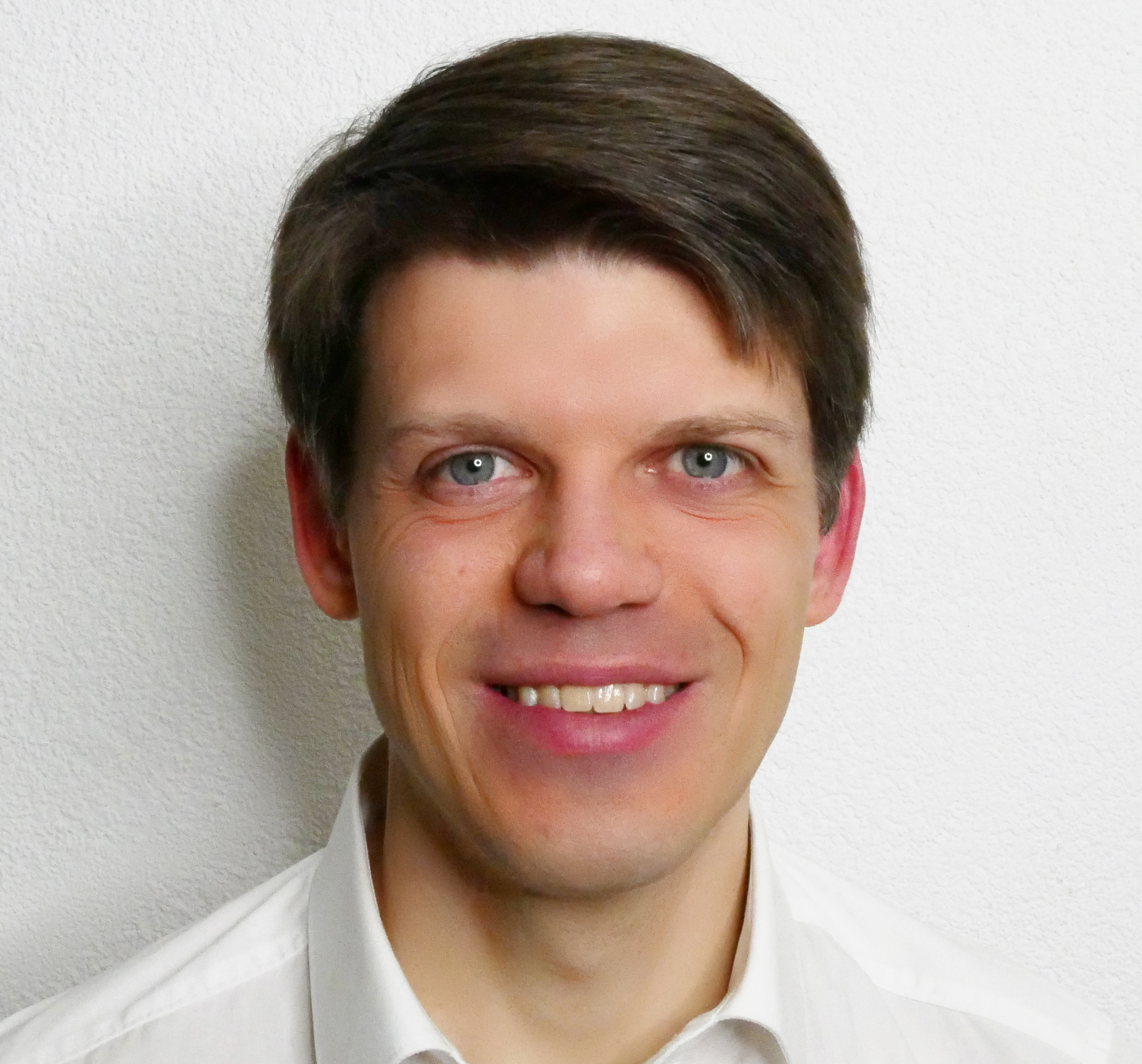
Mila N. Koeva is a Vice Dean Research and senior Associate Professor at the University of Twente's Faculty of Geo-Information Science and Earth Observation (ITC), Department of Urban and Regional Planning and Geo-Information Management. Her research focuses on 3D modeling and Digital Twins for land management and urban planning, integrating geospatial technologies, UAV data, and AI/ML methods. PhD in architectural photogrammetry MSc in Engineering (Geodesy) Research Themes: Digital Twinning for urban ecosystems AI-driven cadastral boundary extraction 3D modeling with LiDAR and satellite data Global partnerships in Rwanda, Kenya, and Ethiopia Interoperability standards for local digital twins Scientific Contributions: Geospatial World Innovation Award 2021 Copernicus Masters Competition (3rd place 2016) Editorial roles in Photogrammetric Records and MDPI journals Keynote speaker at 3D GeoInfo, GI Forum, and FIG events Her educational impact includes developing courses, lecturing, and supervising students whose work has received top awards in The Netherlands and international competitions.
Maya Daneva is an Associate Professor at the University of Twente's Digital Society Institute and part of the Semantics, Cybersecurity & Services research group. With over 200 research outputs, her work focuses on Requirements Engineering , Cybersecurity , and Agile Methodologies , particularly in digital transformation and enterprise systems. Academic Role: Associate Professor in Computer Science Institution: University of Twente Her research spans Model-Driven Engineering , security risk mitigation, and quality requirements prioritization, often employing empirical studies and systematic reviews. Recent articles explore phishing detection ontologies (2025), secure data storage architectures (2024), and digital consulting service modeling (2024). Scientific Awards: CBI 2021 Best Paper Award for work on digital IT consulting platforms EMMSAD 2025 Best Paper Award for phishing attack modeling She actively organizes academic events, serves on editorial boards (e.g., Empirical Software Engineering ), and contributes to conference peer-review, reflecting her leadership in the field.
Petra van den Bos is an Assistant Professor at the University of Twente, affiliated with both the Digital Society Institute and the Formal Methods and Tools department. Her research focuses on advancing software engineering through formal methods, model-based testing, and automated testing techniques. She has contributed to integrating Behavior-Driven Development (BDD) with model-based approaches, as well as developing tools like VeyMont for choreography-based concurrent programming. Her work emphasizes practical applications in video game development, web testing, and user story-driven methodologies. Notably, she received the FORTE 2023 Best artefact award for outstanding contributions to formal techniques. Petra collaborates on datasets archived on Zenodo, showcasing reproducible research in testing frameworks and formal verification. Research Interests: Formal Methods, Model-Based Testing, Automated Testing, Concurrent Programming, and Software Verification. Awards: FORTE 2023 Best artefact (2022). Advising & Grants: No formal advisees listed; contributions focus on collaborative research projects and open-source tool development. Labs/Teams: Active in the Formal Methods and Tools research group, advancing software reliability through interdisciplinary approaches.
Prof. D.M. van Solingen serves as a Professor in the Software Engineering department within the Electrical Engineering, Mathematics and Computer Science school at Delft University of Technology. His academic career spans over two decades with continuous research output through 2024, demonstrating active engagement in both theoretical and practical aspects of software development. His research interests focus on Agile methodologies , global software development , and value-driven project management . Key areas include empirical studies on offshoring economics, Scrum framework optimization, stakeholder value quantification, and organizational transformation during Agile adoption. His work bridges academic rigor with industry applicability, particularly in measuring the true costs of distributed development and identifying critical turnover impacts in global teams. Analysis of his recent publications (2016-2024) reveals a strong trend toward practical Agile implementation and value measurement . Over 60% of his work addresses real-world challenges in scaling Scrum, optimizing offshoring strategies, and quantifying business value. His research increasingly incorporates empirical data from industry collaborations, with significant focus on the human factors affecting software project outcomes. EASE 2016 Best Paper Award for research on stakeholder satisfaction and project impact Prof. van Solingen's advisory work includes doctoral supervision and industry collaborations focused on software process improvement. His research has attracted significant industry interest, evidenced by 118 Mendeley readers for his 2013 media coverage on hyperproductive Scrum teams and consistent Scopus citations across his publications. His work demonstrates sustained engagement with both academic and practitioner communities through books, conference workshops, and empirical studies.
Fred Langerak is a Full Professor and Chair of Product Development & Management at Eindhoven University of Technology (TU/e), within the Department of Industrial Engineering and Innovation Sciences. He serves as Vice-Dean of the department and has held roles such as chairman of the Innovation, Technology Entrepreneurship & Marketing (ITEM) group. His research focuses on enhancing the efficiency and effectiveness of product development processes, including fuzzy front end management, portfolio management, accelerated product development, and launch strategies. Academically, Langerak holds an MSc (1993) and PhD (1997) from the Erasmus School of Economics. Before TU/e, he worked as an Assistant and Associate Professor at Erasmus School of Economics and Rotterdam School of Management. He is an editorial board member of the Journal of Product Innovation Management and co-founded the Dutch PDMA chapter. His awards include the Christer Karlsson Best Paper Award (2017), Best Reviewer Award (2015), and a bronze listing in the JPIM Hall of Fame (2018). He has contributed to projects like Freight Traffic Management as a Service (2020–2023) and the Brabant Center of Entrepreneurship (2008–2013). His work addresses sustainable development goals through innovation in product lifecycle management and cross-industry collaborations.
Konstantinos Tsilionis is an Assistant Professor in the Department of Industrial Engineering & Innovation Sciences at Eindhoven University of Technology (TU/e), where he conducts research at the intersection of agile software development, business-IT alignment, and enterprise architecture. His work focuses on reconciling agile software development practices at the operational level with strategic organizational intents, with applications particularly in healthcare and telecommunications sectors. His academic background includes: Bachelor's degree in Physics from Aristotle University of Thessaloniki, Greece Master's degree in Business Economics from KU Leuven, Belgium Master's degree in Business Administration (MBA) with specialization in Business Information Management from KU Leuven, Belgium Ph.D. from the Research Center for Information Systems Engineering at KU Leuven, Belgium Tsilionis' research interests span multiple interconnected domains in software engineering and business-IT alignment. He investigates modeling-oriented approaches to drive feature-oriented development processes that deliver value to both end-users and strategic organizational layers. His work explores how agile methodologies can be scaled effectively in large software development projects while maintaining business-IT alignment. He has made significant contributions to understanding the complementarity between different modeling techniques like CMMN and iStar for complex domain problems. Additionally, his research examines diversity-driven power dynamics in software engineering environments, particularly focusing on gender and racial diversity impacts on workplace behaviors. His recent publications demonstrate a strong focus on the intersection of agile software development, enterprise architecture, and business-IT alignment. The research shows a progression from tactical agile implementation concerns toward strategic alignment considerations. Key themes include capability-based management, digital transformation in specific industries, scaling agility in large organizations, and the integration of different modeling approaches to address complex organizational challenges. Tsilionis actively contributes to the academic community through service activities: Program committee member for the International Conference on Business Informatics and ACM Symposium on Applied Computing Reviewer for high-impact journals including Information and Software Technology, IEEE Transactions on Services Computing, and IT Professional He teaches courses on Digitalization and Enterprise Systems and the Design of Business Information Systems at TU/e, connecting theoretical frameworks with practical applications for students. His educational background in both physics and business economics informs his interdisciplinary approach to software engineering research.
Vadim Zaytsev is an Associate Professor at Vrije Universiteit, specializing in Formal Methods and Tools. His research spans software language engineering, program verification, and model-driven development, with a focus on legacy systems and modernization. PhD in Recovery, Convergence, and Documentation of Languages (2008) Master's in Combinatorial Test Set Generation (2004) and Modelling Distributed Systems (2003) Bachelor's in Python Programming E-Learning (2002) Zaytsev's work integrates software language engineering , program verification , and domain-specific languages to address legacy system modernization. His recent publications emphasize data enrichment , automated repair , and refactoring detection across languages like Kotlin and Python. His scientific contributions include the IFIP TC2 Manfred Paul Award (2020) and datasets for program verification, refactoring detection, and automated repair. He actively participates in editorial work, including peer-review for workshops like OOPSLE 2020.
Prof. Fabiano Dalpiaz is Professor of Software Production at Utrecht University, where he leads the Requirements Engineering Lab. As Editor-in-Chief of Springer's Requirements Engineering Journal and Steering Committee chair of REFSQ, he blends AI with requirements engineering. His research develops tools for improving requirements elicitation and analysis. His work integrates natural language processing and visualization techniques to enhance requirements engineering processes. Recent publications focus on terminology standardization, automated analysis of software artifacts, and AI-assisted requirement extraction methods. Honors include the 2021 IEEE RE Best Paper Award. As program leader for the Computing Science master's program, he teaches model-driven engineering and requirements engineering courses.
Nathan W. Cassee is a University Researcher at Eindhoven University of Technology (TU/e) in the Department of Mathematics and Computer Science. His work focuses on software engineering, sentiment analysis, and technical debt prioritization, combining empirical studies with natural language processing. Education: PhD Thesis (2024) on "Sentiment in Software Engineering" Research Themes: Technical Debt, Sentiment Polarity, Software Maintainability, and Empirical Studies Recent Publications: Explore sentiment's impact on code quality, self-admitted technical debt, and security questions using empirical methods Teaching: Involved in the course "Automata, Language Theory and Complexity" (2018-2025)
Mostafa Hadadian Nejad Yousefi is a Researcher at the Faculty of Science and Engineering , University of Groningen , specializing in Distributed Systems . His work bridges machine learning and distributed computing, focusing on adaptive systems and digital twins. His research interests include: Machine Learning Service-Oriented Computing Neural Networks Distributed Systems Digital Twins Big Data Bioinformatics Recent publications highlight his work on: Digital twin architectures for water distribution networks (2024) Self-adaptive service selection in ML pipelines (2024) Service-oriented principles for ML development (2023) Dynamically reconfigurable distributed pipelines (2021) Neural network-based genomics analysis (2021) Contact: m.hadadian@rug.nl
Dr. Claudia Raibulet is an Assistant Professor in the Software and Sustainability (S2) group at the Faculty of Science, Vrije Universiteit Amsterdam, and holds a Visiting Fellow position at the Network Institute. Her research focuses on self-adaptive systems, machine learning operations, and sustainable software engineering. She actively contributes to conferences like ICSE, ENASE, and ACSOS, publishing on topics such as adaptive strategies, context-aware monitoring, and human-centered concept drift detection. Her work bridges theory and practice, addressing challenges in cyber-physical systems, cloud computing, and IoT. She emphasizes sustainability through adaptive mechanisms and has developed frameworks like the Adaptive Strategies Metric Suite (ASMS). Dr. Raibulet also teaches the Software Engineering Processes course, integrating project-based learning and collaboration tools like GitHub. Key research themes include: Self-adaptive systems design and evaluation Machine learning operationalization with human-in-the-loop monitoring Software sustainability metrics and long-term system resilience Recent articles highlight her contributions to MAPE-K guidelines for reactive systems, non-expert analysis of adaptivity, and cost-benefit assessments of adaptation strategies. She collaborates internationally on projects like CORT (Cloud Open Resource Trading) and Alembik frameworks for adaptive multimedia systems.
Antoine Cribellier is a Researcher in the Department of Experimental Zoology at Wageningen University & Research , focusing on the biomechanics and neuroethology of mosquito flight behavior. His work bridges entomology, neuroscience, and computational biology to understand vector-host interactions. Primary affiliation: Wageningen University & Research Secondary collaboration: Institut de Recherche en Sciences de la Santé (IRSS) His research explores: Mosquito escape responses to human and environmental threats 3D flight kinematics using machine learning tools like DeepLabCut Sensory integration in swarming behavior Microclimate and land-use impacts on vector adaptation Recent publications highlight his expertise in mosquito aerodynamics and smart trapping technologies . Notable awards include the SEB Robert McNeill Alexander Prize 2022 for outstanding contributions. As co-promotor, he advises PhD candidates studying: van den Bogaard, A. (Microclimate selection by mosquitoes) Pinda, P. (Vector adaptation to climate change)
Dr. Soreangsey Kiv is a Lecturer at the Department of Information Systems and Operations Management, Tilburg School of Economics and Management (TiSEM), Tilburg University. Their research focuses on Agile Software Development, Ontology, and Method Tailoring, with an emphasis on knowledge representation and systematic practice adoption in software engineering. Key research themes include: Ontology-based tools for agile method adoption (e.g., OBAMA) Validation of agile practices through expert systems and practitioner collaboration Development of socio-intentional frameworks for agile method customization Agile manifesto principles and their application in software process improvement Their publications from 2018–2022 highlight interdisciplinary work at the intersection of Computer Science, Software Engineering, and Knowledge Management, addressing challenges in agile practices and systematic methodologies.
Dr. Iftikhar Ahmed is a Professor of Software Engineering at the University of Europe for Applied Sciences (UE Innovation Hub) in Germany. He holds a Ph.D. in Engineering Sciences from Saarland University and a Master's in Computer Science from Albert Ludwigs University of Freiburg. As an active editorial board member for PeerJ Computer Science, Dr. Ahmed contributes to academic publishing and peer review. Education: Ph.D. in Engineering Sciences, Saarland University, Germany Master's in Computer Science, Albert Ludwigs University of Freiburg, Germany Dr. Ahmed's research spans Responsible AI , Explainable AI , and Social Network Analysis , with interdisciplinary applications in healthcare, finance, and digital governance. His work integrates machine learning and computational modeling to address real-world challenges. Recent publications highlight trends in AI ethics (healthcare equity in South Asia), natural language processing (citation context analysis), deep learning (stock market prediction), and scientific computing (emulsion stability modeling). These reflect his focus on explainability and cross-domain adaptability of AI systems.
Gerard Wagenaar is an Assistant Professor at the Department of Computer and Information Science, Faculty of Science, Utrecht University. His work focuses on agile software development practices, particularly the formal and informal use of artefacts in Scrum teams. Areas of Expertise: Software Development, Agile Methodologies, Scrum, Artefact Management Current Research: Definition of Done (DoD) and Definition of Ready (DoR) in agile frameworks, with emphasis on structure, quality, and testing integration. Recent Publications highlight agile frameworks, software security maturity, and team effectiveness. His research often involves case studies and structured decision-making models. For collaboration and inquiries, contact via g.wagenaar@uu.nl .