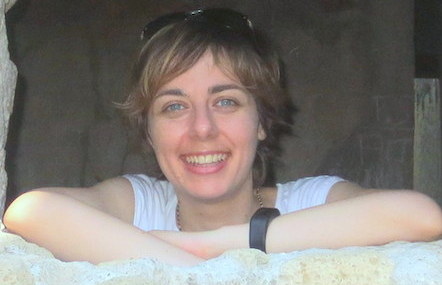
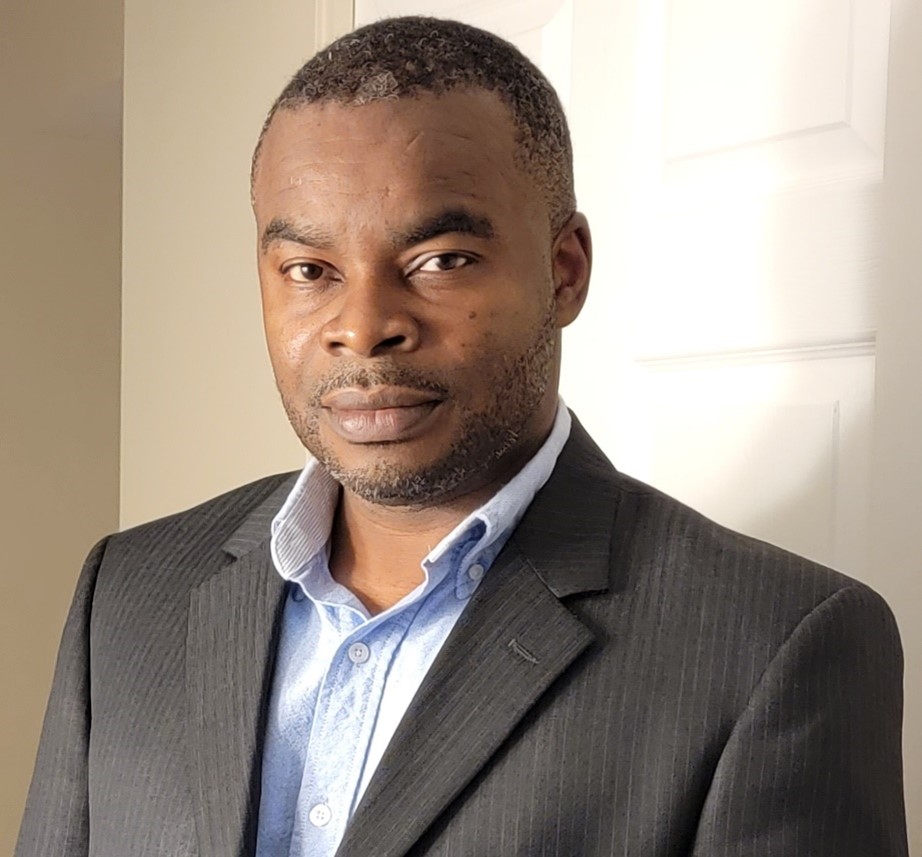
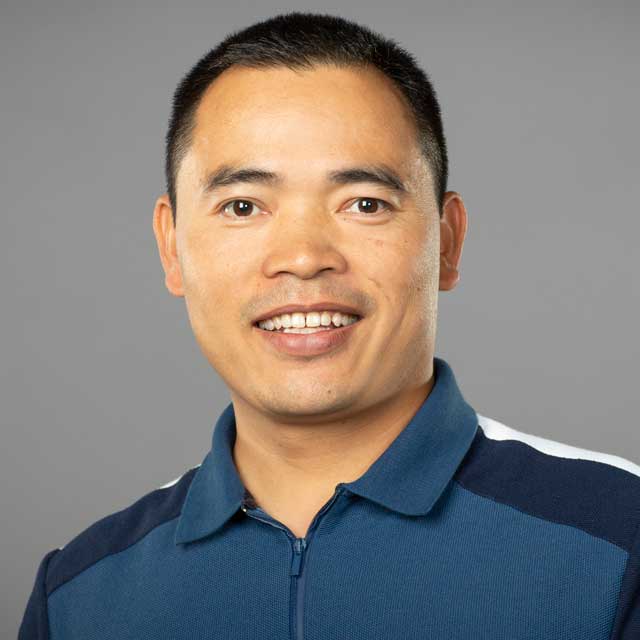
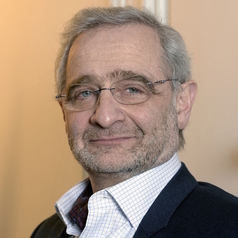
Federica Sarro is a Professor of Software Engineering at the Department of Computer Science, University College London (UCL). She leads the SOLAR group, focusing on Predictive Analytics, Search-Based Software Engineering, and Empirical Software Engineering. Her research emphasizes software testing, effort estimation, and app store analysis, with over 70 peer-reviewed publications and collaborations with 20+ institutions worldwide. Her research has been supported by grants including the €2.1M ERC EPIC grant and a £6.8M EPSRC Programme Grant (DAASE). She has supervised numerous PhD students and postdoctoral researchers, including graduated scholars like Afnan Al-Subaihin and William Martin. She is actively involved in program committees and editorial roles, including Associate Editor for ACM TOSEM and IEEE Transactions on Evolutionary Computation. Key achievements include the ACM Distinguished Paper Award (2019), the GECCO-HUMIES Medal (2016), and leadership roles in conferences like ICSE, FSE, and SSBSE. Her work bridges software engineering with machine learning and data analytics, addressing challenges in testing, defect prediction, and agile practices.
Yngve Lindsjørn serves as a Senior Lecturer in the Department of Informatics at the University of Oslo, where he contributes to the Software Engineering research group. His academic profile centers on empirical investigations of teamwork dynamics within agile software development frameworks, with particular emphasis on educational applications and gender diversity factors. His research spans core areas of Software Engineering, Agile Software Development, and Empirical Software Engineering, with specialized focus on Teamwork in Software Development, Gender Diversity in Software Engineering, and Software Engineering Education. Current investigations examine how team composition, collaboration patterns, and agile practices influence project outcomes in both industrial and capstone course settings. Analysis of his publication trajectory (2013-2025) reveals evolving research priorities: early work concentrated on agile team performance metrics, while recent studies increasingly integrate gender diversity considerations through mixed-methods approaches. His empirical work consistently employs large-scale student cohorts (e.g., 790 participants in 2025) and industrial case studies to validate teamwork effectiveness models. Lindsjørn operates within the Software Engineering research group at the Department of Informatics, University of Oslo, which conducts foundational research to advance evidence-based practices in software development methodologies and team dynamics.
Karin Bredin is an Associate Professor in Business Administration at Linköping University's Department of Management and Engineering (IEI), specializing in Human Resource Management (HRM) within project-based and temporary work environments. She concurrently serves as a Project Manager at LiU Commissioned Education, focusing on developing employer-focused programs in the Faculty of Science and Engineering. Education: PhD in Business Administration, Linköping University (2008) MSc in International Economics with Spanish, Linköping University (2003) Research Focus: Her work addresses challenges in organizations characterized by temporary logics, exploring how HR strategies can support knowledge integration and long-term competence development. Key themes include: HRM adaptation to project-based structures Utilizing international students' expertise in Sweden's labor market Cross-functional collaboration in agile projects Collaborations: She leads the Vinnova-funded Switch-to-Sweden project with Linköping Science Park, aiming to enhance the integration of international students' skills into the Swedish workforce. Her research also examines disciplinary expertise sustainability in project environments. Teaching: She teaches master's and bachelor's courses in HRM, including 'HRM in Modern Organizations' and 'Leading Creative Change,' emphasizing strategic HR and interdisciplinary approaches. Grants & Projects: Active in Vinnova-funded initiatives and collaborates with industry to bridge academic research with employer needs through LiU Commissioned Education. Labs/Teams: Part of Linköping University's Business Administration division, contributing to its research environment focused on management and engineering innovations.
Anne P. Massey is Dean and Thomas O'Brien Endowed Chair at the Isenberg School of Management, University of Massachusetts Amherst. Previously, she held leadership roles including Ruth L. Nelson Chair at the University of Wisconsin-Madison and Dean's Research Professor at Indiana University's Kelley School of Business. She earned her PhD, MS, and BS in Management from Rensselaer Polytechnic Institute. Her research focuses on computer-mediated teams, IT adoption, virtual workspaces, and technology-based service innovation. Key interests include knowledge transfer, telecommunication strategies, and design thinking. She has been recognized with the 2017 Distinguished Service Award nomination for her contributions to Indiana University. Education: PhD (1991), MS (1984), BS (1982) in Management/Industrial Engineering from Rensselaer Polytechnic Institute Research Themes: Virtual environments for collaboration, enterprise social media effectiveness, trust in IT service relationships Awards: Distinguished Service Award Nominee (2017) Leadership Roles: Academic appointments across top-tier business schools, emphasizing innovation and organizational transformation Her work bridges technology and human behavior, addressing challenges in global virtual teams, knowledge management, and organizational adaptation to digital tools. Recent publications explore the impact of 3D virtual environments on creativity and the role of social media in fostering workplace innovation.
Jens Roehrich is a Professor of Management Information, Decisions & Operations at the University of Bath’s School of Management. He holds the role of Editor-in-Chief of the International Journal of Operations & Production Management (ABS 4). His research focuses on inter-organizational relationships, supply chain governance, and project management in public and private sectors, emphasizing sustainable practices and behavioral dynamics. Roehrich completed his PhD in Operations Management at the University of Bath in 2010. Education: Doctor of Philosophy (Operations Management), University of Bath (2010) Research Interests: Roehrich’s work addresses long-term inter-organizational governance mechanisms, sustainable supply chains, and the 'dark side' of relationships (e.g., conflicts, trust breaches). He employs mixed-methods approaches, including longitudinal case studies and experiments. His research spans core operations journals and interdisciplinary outlets like health and policy management. Recent Research Trends: His articles focus on megaproject governance, smart contract applications, and NetZero strategies in public procurement. Key contributions include frameworks for resolving supply chain conflicts and integrating blockchain technology. Awards: ISM Best Paper Award (2024) Dean’s Award for Research Output (2024) Journal of Operations Management Highly Cited Paper (2023) Best Associate Editor (ABS 4 Journal, 2022) Projects & Grants: - Led projects on road maintenance procurement, public-private health collaborations, and RFID’s supply chain impact. - Active in funding from CEDR, British Academy, and NHS partnerships. Labs & Initiatives: Roehrich co-leads initiatives on megaproject network orchestration and sustainable procurement strategies, contributing to policy and industry practices through collaborative research networks.
Fred Langerak is a Full Professor and Chair of Product Development & Management at Eindhoven University of Technology (TU/e), within the Department of Industrial Engineering and Innovation Sciences. He serves as Vice-Dean of the department and has held roles such as chairman of the Innovation, Technology Entrepreneurship & Marketing (ITEM) group. His research focuses on enhancing the efficiency and effectiveness of product development processes, including fuzzy front end management, portfolio management, accelerated product development, and launch strategies. Academically, Langerak holds an MSc (1993) and PhD (1997) from the Erasmus School of Economics. Before TU/e, he worked as an Assistant and Associate Professor at Erasmus School of Economics and Rotterdam School of Management. He is an editorial board member of the Journal of Product Innovation Management and co-founded the Dutch PDMA chapter. His awards include the Christer Karlsson Best Paper Award (2017), Best Reviewer Award (2015), and a bronze listing in the JPIM Hall of Fame (2018). He has contributed to projects like Freight Traffic Management as a Service (2020–2023) and the Brabant Center of Entrepreneurship (2008–2013). His work addresses sustainable development goals through innovation in product lifecycle management and cross-industry collaborations.
Igor Ivkovic was a Professor in the Department of Systems Design Engineering at the University of Waterloo, Canada. His work focused on integrating theory and practice in complex information systems, emphasizing system modeling, process modeling, and data modeling to bridge technical and business stakeholder needs. He taught courses such as Data Structures and Algorithms, Algorithms and Data Structures, and Digital Systems in recent years. Education: Holds a Doctorate in Electrical and Computer Engineering (2011), along with advanced certificates in university teaching (Certificate in University Teaching, 2011) and instructional skills (ISW, 2015). Earlier degrees include a Master of Mathematics in Computer Science (2003) and a Bachelor of Mathematics in Operations Research (2001), both from the University of Waterloo. Research Interests: Specialized in Information Systems, Software Engineering, and Knowledge Engineering. His work addressed challenges in model synchronization, software evolution, and architecture recovery, leveraging formal methods and model-driven approaches to enhance system consistency and interoperability. Notable Contributions: Authored influential papers on model synchronization for software evolution (2011) and improving the Gnutella protocol (2001), the latter earning a prize-winning award. He also pioneered educational innovations like Design Days Boot Camps (2017–2021), integrating remote learning and augmented reality into engineering education. Awards: Recognized for his 2001 research on the Gnutella protocol, which won a prestigious award through the LimeWire contest.
Katherine Tatarinov is an Academic Fellow at the Institute of Management, University of Geneva. She holds a Ph.D. from the Geneva School of Economics and Management. Her research focuses on innovation ecosystems, organizational transformation, and digital solutions for global challenges within international organizations (IOs). Her work bridges international business strategy with practical innovation frameworks, emphasizing responsible innovation, intrapreneurship, and scaling impact. Key themes include wicked problem-solving via digital ecosystems, UN reform through innovation, and social innovation in IOs. Publications highlight her expertise in innovation units within IOs, digital transformation strategies, and case studies analyzing corporate rebirth (e.g., Nokia) and ethical trade (Sucafina). She actively contributes to academic conferences like the Academy of Management and Strategic Management Society, addressing topics like intrapreneurship dynamics and ecosystem versatility. Her work has been featured in journals like Journal of International Business Studies and Journal of Management Studies, alongside practitioner articles with the World Economic Forum. Professional networks include ResearchGate and LinkedIn.
Benjamin Eze is a part-time and adjunct professor at the School of Engineering Design and Teaching Innovation within the University of Ottawa . He holds a PhD in Digital Transformation and Innovation, an MSc in Electronic Business Technologies, and a BSc in Computer Engineering. Professionally, he serves as Lead Architect at Next Pathway Inc. and Business Intelligence Partner with Champlain Ontario Health at Home. Education: PhD – Digital Transformation and Innovation (University of Ottawa) MSc – Electronic Business Technologies (University of Ottawa) BSc – Computer Engineering Benjamin specializes in Big Data Analytics , Healthcare Data Privacy , Cloud Computing , and AI in Software Engineering . His work bridges technology and healthcare, focusing on secure data integration and digital transformation. Scientific Awards: Holds two patents in Canada and the United States Benjamin's research spans healthcare data governance, cloud infrastructure (DevOps, DevSecOps), and privacy-preserving technologies. His publications emphasize systematic approaches to data anonymization, cloud-based healthcare monitoring, and ethical AI frameworks. He teaches in upskilling programs at the University of Ottawa’s Professional Development Institute, FxInnovation, and CENGN CloudCampus DevOps programs, while collaborating with organizations like Cisco, Montfort Hospital, and Accreditation Canada.
Sharif Ullah is an Assistant Professor in the Department of Computer Science and Engineering at the University of Central Arkansas (UCA). He holds a Ph.D. in Electrical and Computer Engineering from Old Dominion University, along with M.Sc. and B.Sc. degrees in Applied Physics, Electronics & Communication Engineering from the University of Dhaka, Bangladesh. His research focuses on cybersecurity, including cyber threat analysis, anomaly detection, adversarial behavior analysis, and industrial internet of things (IIoT). He explores AI-driven solutions for intrusion detection, secure data sharing, and enhancing cybersecurity in critical infrastructure like energy delivery systems. Recent work highlights include adaptive intrusion detection systems leveraging reinforcement learning, privacy-preserving medical data sharing, and automated attack pattern analysis. His research also intersects interdisciplinary areas, such as analyzing social media discourse on immigration using mixed-methods approaches. Dr. Ullah’s publications span topics from cyber defense remediation in energy systems to cognitive radio network optimization. His work emphasizes practical applications of cybersecurity principles in real-world scenarios, particularly in industrial and healthcare domains.
Hung La is an Associate Professor in the Department of Computer Science and Engineering at the University of Nevada, Reno's College of Engineering. He directs the Advanced Robotics and Automation Lab, focusing on robotic systems for infrastructure inspection (culverts, bridges), autonomous navigation, and control systems. His research integrates computer vision, machine learning, and multi-agent systems to develop field-deployable robotic solutions. La's publications demonstrate expertise in robotic perception (3D registration, SLAM), control systems (quadrotors, climbing robots), and secure machine learning. Recent work emphasizes practical applications in civil infrastructure inspection, warehouse automation, and medical robotics. His research consistently combines theoretical advances with hardware implementations for real-world deployment.
Thierry Weil is a Professor of Economics at the CERNA (Centre d’économie industrielle) within MINES ParisTech - PSL. He holds a PhD in Solid-State Physics and has held multiple roles in academia, government, and industry. His research focuses on innovation management, industrial economics, and technology policy. He led the FutuRIS prospective study on France’s research and innovation system, advised the Prime Minister’s cabinet on technology and IP policy, and contributed to the creation of the Fabrique de l'Industrie think tank. Education: PhD in Physics, University of Paris-Dauphine Habilitation Key Roles: Deputy Director of MINES ParisTech, FutuRIS Director, Member of CCRRESTI, Founder of Observatoire des Pôles de Compétitivité His research explores innovation ecosystems, open innovation practices, and policy impacts on industry. He has authored over 100 publications, including books on leadership, innovation, and industrial strategy. His work bridges academic insights with practical applications in corporate strategy and public policy. Publications highlight themes like Silicon Valley's 'coopetition' dynamics, French competitiveness clusters, and leadership in organizations. He advises firms like EDF and Thales, and chairs seminars on technology management with industry leaders. Grants & Labs: Involved in ANRT-funded studies, member of key innovation observatories Teams: Founded and chairs the Journal de l'Ecole de Paris du Management, co-leads monthly management seminars
Dr. Sandeep Singh Sengar is a Senior Lecturer in Computer Science at Cardiff Metropolitan University, United Kingdom. Prior to his current role, he served as a Postdoctoral Research Fellow at the Machine Learning Section of the Computer Science Department at the University of Copenhagen, Denmark. His academic journey includes a Ph.D. in Computer Science and Engineering from Indian Institute of Technology (ISM), Dhanbad, India, and an M. Tech. in Information Security from Motilal Nehru National Institute of Technology, Allahabad, India. Sengar actively engages in research collaboration and has organized special sessions and delivered keynote presentations at international conferences. Education: Dr. Sengar holds the following academic qualifications: Ph.D. in Computer Science and Engineering from Indian Institute of Technology (ISM), Dhanbad, India M. Tech. in Information Security from Motilal Nehru National Institute of Technology, Allahabad, India Research Interests: Dr. Sengar's research focuses on advanced applications of machine/deep learning and computer vision, particularly in healthcare diagnostics and cybersecurity. His work combines theoretical methodologies with practical implementations, including: Medical Image Segmentation (e.g., brain tumors, functional connectivity) Motion Segmentation and Tracking for surveillance and activity recognition Visual Object Tracking and Recognition in dynamic environments Video Compression techniques leveraging adaptive optimization Cybersecurity frameworks targeting DDoS attack mitigation Exploring Metaverse applications in healthcare and AI ethics Publications Trends: His recent articles emphasize interdisciplinary innovation, with a strong focus on healthcare AI and cybersecurity. Key themes include hybrid neural networks for medical imaging, entropy-driven frameworks for neurological disorders, and proactive network threat detection using deep learning. He also investigates emerging technologies like the Metaverse's role in healthcare systems and generative AI's broader applications. Scientific Awards: No scientific awards were explicitly mentioned in the provided texts. Advising & Grants: While Dr. Sengar has not listed formal advisees or grant details, his research mentorship is evident through collaborative projects and conference contributions. He actively participates in organizing special sessions and peer-review processes, fostering academic-industry partnerships. Labs & Teams: Though no specific labs are named, his work aligns with Cardiff Met's research centers and innovation initiatives, such as the PDR International Centre for Design and Research and ZERO2FIVE Food Industry Centre.
Fred Strauss is an Adjunct Professor in the Department of Computer Science and Engineering at New York University’s Tandon School of Engineering. He holds a Master of Science in Computer Science from Polytechnic University (1977), Post Graduate Studies in Systems Management from Arizona State University (1969), and Post Graduate Study in Computer Science from the University of Southern California (1973). His research interests focus on Software Engineering methodologies (Agile/Lean/Scrum), Systems Engineering, innovation and design processes, and distributed systems architectures. He has extensive industry experience spanning over four decades, including roles at Bell Laboratories, NYNEX/New York Telephone, AT&T Network Systems, and FJS Associates, where he led projects in network systems design, software engineering standards, and strategic sales. Dr. Strauss has been recognized for academic excellence, including the 1995 National Center for Disability Services Award of Excellence and the 1993 Dowling College Outstanding Faculty Member award. His professional contributions also include sales accolades from AT&T and military commendations. He has authored/edited publications such as The Essential Coaching Book (2004) and contributed to strategic planning initiatives in both academia and industry. His work bridges academic research with practical applications in technology management and organizational development.
Professor Daniel Schlagwein is a leading academic in Digital Work and Organization at the University of Sydney's Sydney Business School. He heads the Digital Future(s) Research Group and serves as Editor-in-Chief of the Journal of Information Technology (JIT). His work focuses on digital nomadism, openness in organizations, and blockchain technology. He has received over A$390,000 in ARC funding for research on digital nomadism and advises governments and corporations like LEGO and Bosch. Research Interests: Schlagwein's research explores how digital technologies reshape work and organizational structures. Key areas include: - Digital nomadism's sociopolitical impacts - Crowdsourcing ethics and applications - Blockchain's socio-technical implications - AI ethics in research practices His work bridges theory and practice, with featured media coverage in ABC, Wired, and McKinsey Quarterly. Awards: Notable honors include the 2023 SUPRA Best Supervisor Award and multiple top paper awards from AIS and ASIS&T. He was named a Senior Scholar by the Association for Information Systems (AIS). Grants & Media: Led ARC Discovery Project (2019–2024) on digital nomadism. Advised Thailand and Australia on nomad visa policies. Regularly quoted in global media on crypto, remote work, and AI ethics. Teaching: Courses include digital strategy (MBA), qualitative research methods (PhD), and digital work practices (MCom). Developed 'The Crypto Game' to teach blockchain concepts interactively. Labs & Teams: Directs the Digital Future(s) Research Group, collaborating globally on digital transformation topics. Supervised 15 PhD/Master’s students to completion.