Associate Professor Johann Auer is affiliated with TU Wien's Energy Economics and Energy Efficiency Research Department. His work focuses on energy transition pathways, renewable integration, and optimization of energy systems. He leads projects like the 'Open ENergy TRansition ANalyses for a low-carbon Economy' and contributes to the Network Lab. Research interests include sector coupling, hydrogen storage, and electric mobility infrastructure. Recent publications analyze gas grid transitions, decentralized energy communities, and photovoltaic system impacts. Education: No explicit academic qualifications listed. Research Trends: 2023-2024 publications emphasize optimization models for energy networks, hydrogen's role in decarbonization, and smart charging infrastructure. His work often applies stochastic methods and case studies in Austria. Key awards: None explicitly listed Advising: Supervised 11+ theses including 'Towards carbon neutrality...' and 'Local energy communities beyond sector coupling' Labs/Teams: Network Lab, energy transition research group Grants: Projects funded through TU Wien's energy research initiatives.
Sergio Potenciano Menci is a Postdoctoral Researcher at the Interdisciplinary Centre for Security, Reliability and Trust (SnT) within the University of Luxembourg. His research focuses on smart grids, energy systems, and machine learning applications in energy management. He contributes to projects like the Energy Synchronization Platform, aiming to optimize industrial demand response and grid flexibility. His work addresses challenges in electricity markets, distributed energy resources, and privacy-preserving technologies like federated learning. Key areas of expertise include: Design of local flexibility markets for congestion management Short-term load forecasting with spatiotemporal models Privacy-preserving federated learning for energy data Optimization of battery storage in intraday markets Scalability analysis of smart grid functions Publications emphasize energy market structures, data imputation for smart meters, and regulatory frameworks for grid safety. His work intersects technical innovation with policy considerations, addressing both European energy systems and global climate risks. Active in collaborative projects like InteGrid and InterFlex, he explores grid management services and functional scalability in distribution networks. Research outcomes include frameworks for assessing vulnerability of national economies to physical climate risks and taxonomies for local flexibility markets.
Vilma Sandström is a Researcher and Research Coordinator at the University of Helsinki's Department of Economics and Management, affiliated with the Helsinki Institute of Sustainability Science (HELSUS). She focuses on enhancing interdisciplinary collaboration in food and water systems through her role in the Helsinki One Health and Helsinki Inequality Initiative networks. With a PhD in Environmental Science and Policy (2018) and M.Sc. (2013), her research emphasizes global material flows, food trade sustainability, and systems thinking. She contributes to projects like 'Water & Food Futures' and 'InterEarth RESET,' addressing sustainable water-food systems and university research profiles. Her research interests span food systems resilience, sustainability science, and science communication. Recent work highlights vulnerabilities in high-yielding crop regions and the potential of domestic byproducts to enhance food security. Vilma has supervised doctoral theses at Aalto University and actively participates in conferences like the Nordic-Baltic Food Systems Conference. She co-created global datasets on income inequality and contributed to media discussions on Finland's food and healthcare systems.
Banu Demir serves as Professor of Economics at the University of Oxford, affiliated with Brasenose College, and holds the administrative role of Associate Head (External Engagement). Her academic affiliations include research affiliate status with the Centre for Economic Policy Research (CEPR) in the International Trade and Regional Economics Programme and affiliation with the CESifo Research Network in Munich. Her research program critically examines how firms adapt to trade-related disruptions and how these micro-level adjustments cascade into macroeconomic outcomes including economic growth and income distribution. This work positions her at the nexus of international trade theory and development economics, with particular attention to structural transformation in global markets. Her methodological approach integrates applied microeconometric techniques with spatial economic modeling to analyze firm behavior within complex production networks. Demir's scholarly contributions focus on trade liberalization effects, development economics challenges, and spatial economic patterns across global regions. Her research demonstrates how firm-level responses to trade shocks fundamentally reshape aggregate economic performance, offering critical insights for policymakers navigating globalization pressures. She actively participates in Oxford's research ecosystem through the Centre for Research on Structural Transformation and Growth (CROSTAG) and the Trade and Spatial Economics group, where she collaborates on projects examining economic transformation mechanisms and spatial dimensions of trade flows. These affiliations provide institutional frameworks for her investigation of how production networks evolve in response to changing trade environments.
Franziska Glassmeier is an Associate Professor at the Faculty of Civil Engineering and Geosciences at Delft University of Technology (TU Delft) , where she has been since April 2020. Previously, she held positions at Wageningen University and the National Oceanic and Atmospheric Administration (NOAA) in Boulder, USA. Her research focuses on cloud dynamics, aerosol-cloud interactions, and climate modeling, leveraging complex systems theory and data science. PhD in Atmospheric Physics, ETH Zürich (2016) Diploma in Physics, University of Göttingen and Max Planck Institute for Dynamics and Self-Organization (2010) Her work aims to improve climate projections by studying cloud complexity through emergent behavior on system-wide scales, with methodological integration of process-based and data-driven approaches. She leads the Multiscale Cloud Physics Group at the Max Planck Institute for Meteorology, supported by prestigious grants including the ERC Starting Grant and Branco Weiss Fellowship . Her research trends span cloud self-organization , mesoscale dynamics , and aerosol impacts on climate , as evidenced by her recent publications. These studies employ large-eddy simulations , network theory , and non-equilibrium thermodynamics to address cloud-radiative feedbacks and geoengineering implications. Scientific Awards ERC Starting Grant Branco Weiss Fellowship Veni Grant Research Associateship award of the National Academies of Sciences (USA) PhD Award of the Swiss Academy of Sciences Glassmeier advises 6 PhD candidates and collaborates with international institutions like the Kavli Institute for Theoretical Physics. Her group's work intersects with cloud albedo effects, precipitation susceptibility, and nonlinear atmospheric charge generation. Her lab, the Multiscale Cloud Physics Group at the Max Planck Institute for Meteorology, emphasizes cross-disciplinary approaches to cloud-climate sensitivity and climate projection accuracy.
Amos H. C. Ng is a Professor at the School of Engineering Science, University of Skövde, specializing in simulation-based optimization and Industry 4.0 technologies. His research bridges production engineering with human-robot collaboration, ergonomics evaluation, and cloud-based cyber-physical systems for manufacturing efficiency. Key Affiliations: University of Skövde (School of Engineering Science), Uppsala University (Industrial Engineering and Management) Research Themes: Multi-objective optimization, Digital Twin frameworks, Human-centric production systems, Reconfigurable manufacturing, Throughput bottleneck analysis Projects: ACCURATE 4.0 (Knowledge Foundation), VF-KDO (Virtual Factories with Knowledge-Driven Optimization), EWASS (Wire Harness Assembly Optimization) His recent publications demonstrate expertise in applying evolutionary algorithms, machine learning models, and digital human modeling tools to solve complex manufacturing problems ranging from crankshaft machining to wood supply chain robustness. Current work integrates motion capture technology with DHM tools for objective ergonomic assessments in assembly stations. Amos collaborates extensively with industrial partners like Volvo Penta and academic institutions, utilizing simulation-based approaches to enhance decision-making in production systems. His methodological focus includes non-dominated sorting genetic algorithms, surrogate modeling, and parallel computing architectures for optimization tasks.
Makram El-Shagi is a Full-Time Professor at Henan University, based at the Jinming Campus in Kaifeng, China. His office is located in the Economics Building (Room A412). Contact is available via email at makram.el-shagi@cfds.henuecon.education or makram.elshagi@gmail.com. Education includes: Habilitation (University of Mannheim, 2008) on financial crises PhD in Economics (University of Mannheim, 2003, summa cum laude ) MSc-equivalent in Economics (University of Trier, 2001) Abitur (Gymnasium Saarburg, 1996) Research focuses on: Monetary macroeconomics , especially monetary policy transmission mechanisms International macroeconomics , with emphasis on financial market regulation Econometrics , including computational methods and time-series analysis Recent publications (2021-2025) predominantly analyze monetary policy effectiveness, financial market dynamics, and econometric methodologies, with strong regional emphasis on China and the Eurozone. Key themes include central banking operations, inflation forecasting, capital flows, and institutional impacts on economic outcomes. No awards, grants, or student advising relationships are documented in the provided materials.
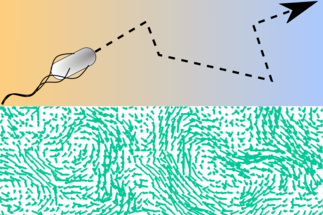
Dr. Remy Colin is a Project Group Leader at the Department of Systems & Synthetic Microbiology , Max Planck Institute for Terrestrial Microbiology , Marburg, Germany. His research focuses on the biophysics of bacterial motility and chemotaxis , particularly how hydrodynamic interactions , cell variability , and environmental sensing govern microbial population organization. Education: Licence (BSc) in Physics, University Paris Sud 11, France (2007) MSc in Physics, University Paris Sud 11 (2009) PhD in Physics, Complex Matter and Systems Laboratory, University Paris 7 Diderot (2012) Postdoctoral Training: Biological Physics, Rowland Institute at Harvard (2012-2014) Biological Physics, Max Planck Institute for Terrestrial Microbiology (2014-2018) Research Interests include emergent properties of bacterial chemotaxis , hydrodynamic interactions in microbial suspensions , and population-level effects of individual cell variability . His group combines microscopy , microfluidics , image analysis , and numerical simulations to study non-equilibrium microbial systems. Recent Work Trends (2025-2019) reveal expertise in chemotaxis pathways , flagellar motility , and active matter physics . Key themes: Evolutionary adaptation of chemotaxis networks Physics of bacterial swimming and fitness trade-offs Autoinducer-2 signaling in autoaggregation Hydrodynamic interactions in clonal populations Dynamic fluctuations in metabolic networks Emergent properties of bacterial chemotaxis Contact: Phone: +49 6421 28 21615 Email: remy.colin@...
Feng Liu is an Assistant Professor at the Decision Systems and e-Service Intelligence (DeSI) Lab within the Australian Artificial Intelligence Institute (AAII) at the University of Technology Sydney (UTS). He also serves as a Visiting Scientist at RIKEN-AIP, Japan. His academic journey includes a PhD in Computer Science from UTS (2020), an MSc in Probability and Statistics from Lanzhou University (2015), and a BSc in Mathematics from the same institution (2013). His educational background includes: Ph.D. (2020), Computer Science, University of Technology Sydney, Australia M.Sc. (2015), Probability and Statistics, Lanzhou University, China B.Sc. (2013), Mathematics, Lanzhou University, China Feng Liu's research centers on developing trustworthy intelligent systems through hypothesis testing and reliable knowledge transfer across domains. His work spans two-sample testing for distribution comparison, transfer learning for knowledge adaptation across domains, and defending against adversarial attacks to improve model robustness. His approach combines theoretical foundations with practical applications, particularly in domain adaptation with interval-valued data and secure multi-source learning. His recent publications demonstrate a strong focus on trustworthy machine learning, with significant contributions to interval-valued data processing, novel class discovery under unreliable sampling conditions, and privacy-preserving domain adaptation. His work bridges theoretical machine learning with practical applications in computer vision, bioinformatics, and recommender systems, showing a consistent pattern of addressing fundamental challenges in trustworthy AI. Among his notable recognitions are: Outstanding Reviewer Award of ICLR (2021) AAII Best Student Paper Award (2020) Best Student Paper Award from IEEE International Conference on Fuzzy Systems (2019) UTS-FEIT HDR Research Excellence Award (2019) Publons Peer Review Awards - Top 1% reviewers in Computer Science (2019, 2018) Dr. Liu has actively contributed to the academic community through supervision and service. He has helped supervise four students who collectively produced eight academic papers, three of which were published in CORE Tier A* venues. His service includes program committee roles for major conferences including NeurIPS, ICML, ICLR, and AAAI, as well as reviewing for prestigious journals like IEEE-TPAMI and IEEE-TNNLS. His research has been supported by various grants, including the Australian Laureate postdoctoral fellowship. As part of the AAII at UTS, Dr. Liu contributes to a vibrant research environment focused on advancing artificial intelligence through interdisciplinary collaboration. His work in the Decision Systems and e-Service Intelligence Lab addresses real-world challenges in trustworthy machine learning, with applications spanning healthcare, robotics, and secure information systems.
Tobias Philipp Broer is a Researcher at the Institute for International Economic Studies (IIES) at Stockholm University , where he has been affiliated since 2009. He holds a PhD from the European University Institute in Florence, Italy, and previously worked as an economist for the Bank of England and the Central Bank of Chile , focusing on monetary aggregates and policy strategy. Education: PhD in Economics (European University Institute) His research explores consumption distributions with enforcement challenges in insurance contracts, the impact of individual income risks on international economies, and domestic inequality dynamics. His publications analyze financial market constraints, portfolio participation, and wealth-income correlations in global economic contexts. Key themes from his 2014 and 2017 articles include income volatility, asset market diversification, and cross-border financial behaviors. These works employ economic modeling to examine borrowing limits, risk hedging, and wealth distribution patterns.
Dr. Craig J Tambling is a Senior Lecturer in the Department of Zoology and Entomology at the University of Fort Hare, South Africa. His research specializes in predator-prey dynamics, large mammal ecology, and conservation biology, with field expertise across African savannas. Key affiliations include: Current: University of Fort Hare (Senior Lecturer, 2016–present; Associate Professor, 2016–2016) Previous: Nelson Mandela University (PostDoc, 2008–2016), University of Pretoria (PhD Student, 2002–2008) His work investigates behavioral responses of prey to carnivore reintroductions, spatial ecology of large cats, and human-wildlife conflict. Research employs advanced technologies like GPS telemetry, LiDAR, and stable isotopes to analyze movement patterns, kill sites, and trophic interactions. Publications emphasize: Anti-predator behaviors in ungulates Carnivore diet selection and coexistence Impacts of bushmeat poaching and livestock predation Awards recognizing his contributions include the Claude Leon Postdoctoral Fellowship and Southwood Prize for early-career research excellence. He collaborates extensively within South Africa’s conservation network, focusing on applied ecology for protected area management.
Professor Justin Mattias Valasek serves as Professor in the Department of Economics at NHH Norwegian School of Economics, Bergen, Norway. He maintains significant affiliations as a CESifo Research Network Fellow and Distinguished CESifo Affiliate, positioning him within Europe's premier economic research network focused on public policy challenges. His research centers on Political Economy, Public Economics, and Behavioural Economics, investigating how institutions shape fairness perceptions, collective decision-making, and societal responses to migration and inequality. Key themes include the dynamics of corruption cultures, committee effectiveness, representation gaps, and the political economy of fiscal policy—addressing fundamental questions about designing institutions that balance efficiency with equity in diverse, aging societies. Recent publications (2023-2025) reveal intensified focus on institutional fairness mechanisms, dynamic reform processes, and migration's social capital impacts. His work consistently bridges theoretical rigor with policy relevance, analyzing how default effects influence inequality acceptance, how quotas affect representation quality, and why committees succeed or fail in information aggregation. Professor Valasek's scientific recognition includes: CESifo Research Network Fellow Distinguished CESifo Affiliate While specific grant details aren't provided, his continuous publication output and CESifo engagement indicate robust research support. His collaborative publication pattern suggests active supervision of graduate researchers, though formal student listings aren't available. His work with CESifo's Public Economics area connects him to cutting-edge analyses of taxation, social security, and inequality—core challenges for modern policy makers. No dedicated research laboratory is mentioned, but his affiliations with CESifo and NHH's Department of Economics provide access to extensive research infrastructure and collaborative networks across European economic policy institutions.