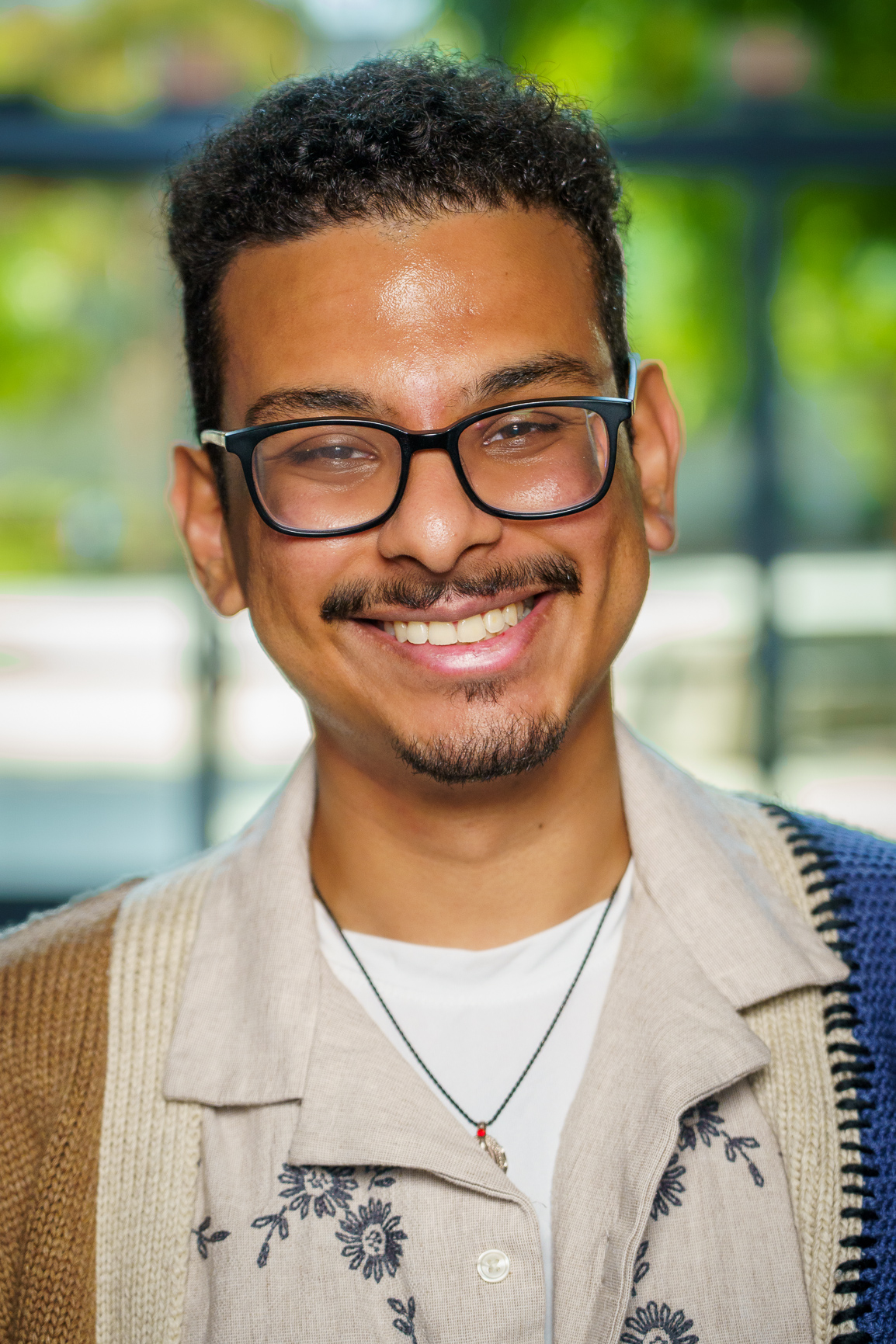
Prithviraj Ammanabrolu is an Assistant Professor at the University of California, San Diego (UCSD) , affiliated with the Department of Computer Science and Engineering . He leads the PEARLS Lab (Pragmatically Exploring Agents with Reinforced LanguageS) and collaborates with Nvidia as a Research Scientist. Research Focus: Bridging Machine Learning (particularly Reinforcement Learning ) with Natural Language Processing to create trustworthy and responsible language-based AI agents . Key Themes: Contextual language understanding, neurosymbolic world modeling, human preference alignment via feedback, and AI in grounded environments . Before joining UCSD in 2024, he worked on the Mosaic team at the Allen Institute for AI and as a Research Scientist at MosaicML (acquired by Databricks) . His work intersects Cognitive Science and AI scalability . Education: PhD in Computer Science from the Georgia Institute of Technology , advised by Professor Mark Riedl at the Entertainment Intelligence Lab . Projects: RL4LMs, ScienceWorld, Q-BERT, WorldGeneration, and LLMFoundry for Databricks foundation models.
Tihana Bicanic is Professor of Infectious Diseases and Mycology at St George's University of London, holding honorary appointments at the MRC Centre for Medical Mycology (University of Exeter) and serving as Director of the Infection Clinical Academic Group. Her clinical and translational research focuses on invasive fungal infections, particularly cryptococcal meningitis in HIV patients and ICU-acquired candidiasis/aspergillosis. She leads the CandiRes study on Candida resistance evolution and previously directed the AspiFlu project on influenza/COVID-associated aspergillosis. Key research domains: Cryptococcal meningitis pathogenesis and treatment optimization Antifungal resistance mechanisms and prevention strategies Genomic epidemiology of fungal pathogens Immunotherapy for fungal infections Her group's publications demonstrate consistent focus on clinical mycology, antimicrobial resistance, and immunopathology. Recent work emphasizes diagnostic innovation, therapeutic optimization, and translational approaches for critical care mycoses. Awards and recognition include: Fellowship in the European Confederation of Medical Mycology (FECMM) Member of Wellcome Trust's Pathogen Biology and Disease Transmission Discovery Advisory Group Research team includes laboratory technicians and clinical research fellows investigating fungal pathogenesis and treatment strategies across multiple UK ICUs.
Associate Professor David Rye is an Honorary Associate Professor in the School of Aerospace, Mechanical and Mechatronic Engineering at the University of Sydney, affiliated with the Australian Centre for Field Robotics. His research focuses on interdisciplinary robotics, blending engineering, social sciences, and art to explore human-robot interaction, tactile sensing, and autonomous systems. Key areas include social robotics, cooperative robot behavior, and creative robotics design. His work spans theoretical and applied robotics, including studies on robot collaboration dynamics, tactile feedback systems, and robotic excavation. Notable contributions include developing EIT-based sensitive skins for robots and analyzing human comfort in multi-agent interactions. He has led projects such as the Fish-Bird art-robotics collaboration and the experimental human-robot interaction facility funded by ARC grants. Publications highlight advancements in human-robot collaboration ethics, motion planning for social robots, and control systems for autonomous machinery. His interdisciplinary approach bridges robotics engineering with creative arts, fostering innovations in both technical and artistic domains.
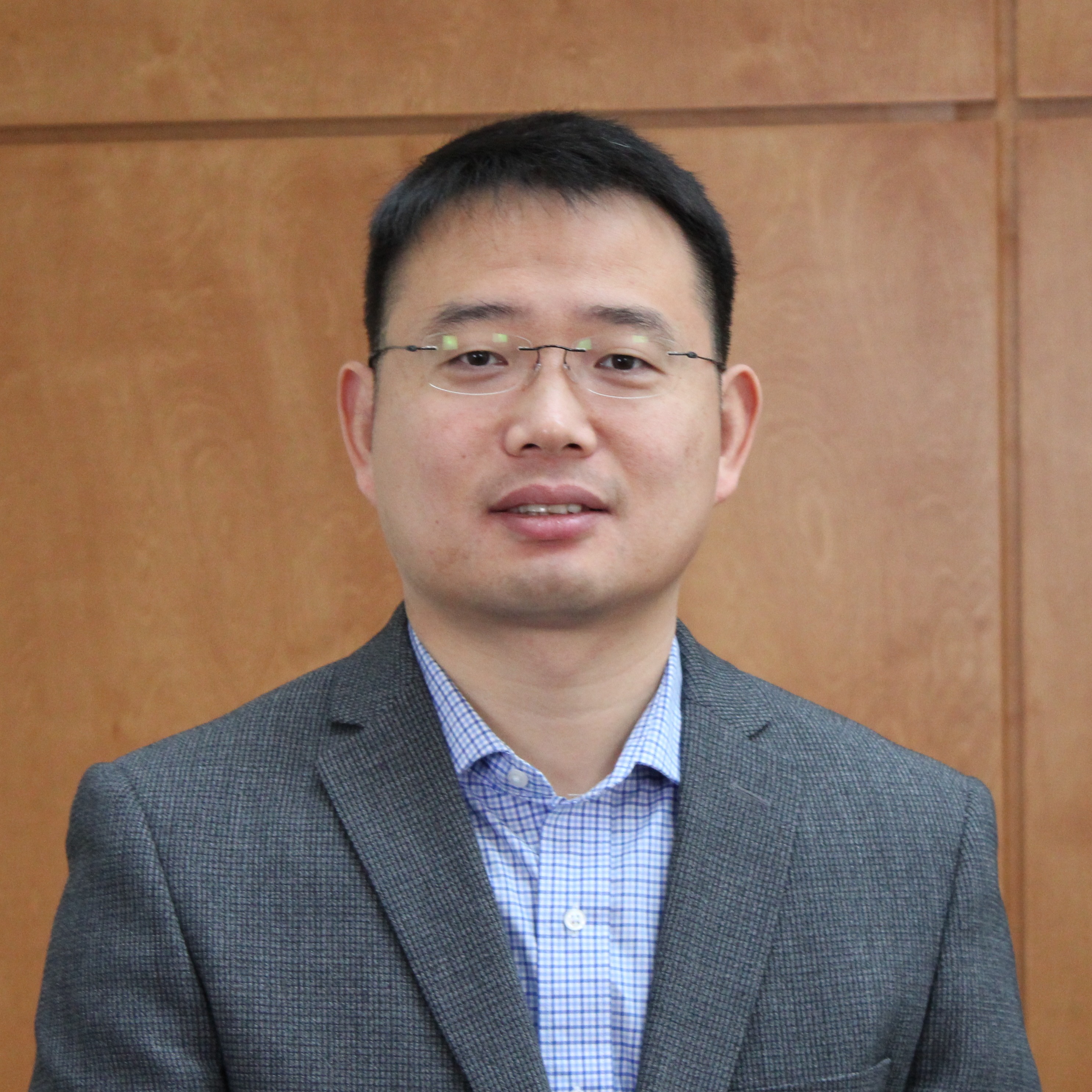
Xiaolei Guo is a Professor of Management Science at the Odette School of Business, University of Windsor. His expertise spans transportation systems, supply chain optimization, and infrastructure pricing strategies. He holds a Ph.D. in Transportation from the Hong Kong University of Science and Technology (2008) and a B.A. in Hydraulic Engineering from Tsinghua University (2004). His research focuses on congestion pricing mechanisms, transportation network modeling, and toll road economics. Notable areas include optimizing toll designs under uncertainty, analyzing autonomous vehicle impacts on ridesharing, and evaluating strategic distribution channel decisions under environmental regulations. Dr. Guo has contributed to over 30 peer-reviewed articles since 2005, exploring topics such as Braess paradox under bounded rationality, Pareto-improving congestion schemes, and profit maximization for private toll roads. His work bridges theoretical optimization with practical policy applications. He is an active member of the Canadian Transportation Research Forum (CTRF) since 2011 and the Institute for Operations Research and the Management Sciences (INFORMS) since 2009.
Prof. Vinod Namboodiri is the Forlenza Chair in Health Innovation and Technology at Lehigh University's Department of Computer Science & Engineering and College of Health. He leads the Accessibility and Assistive Technologies (ACCESS) Lab, focusing on computing technologies to address health disparities affecting people with disabilities. His NSF-funded research develops navigation solutions for individuals with disabilities, with emphasis on smart communities and built environment accessibility. He holds a Ph.D. from UMass Amherst and previously served as Full Professor/Associate Director at Wichita State University and Adjunct Senior Scientist at Envision Research Institute. His research spans assistive technologies, applied computer vision, and smart health systems. Notable work includes MABLESim (indoor accessibility simulation), NaVIP (visually impaired navigation), and economic analyses of accessibility investments. His publications explore both technical innovations and policy implications of assistive technologies. Prof. Namboodiri has received multiple awards for research, teaching, and innovation. His work bridges computer science with disability studies, emphasizing real-world impact through interdisciplinary collaboration. Current projects address indoor navigation systems, cost-benefit analysis of accessibility infrastructure, and human-agent interaction platforms for disability empowerment.
George Hripcsak is the Vivian Beaumont Allen Professor of Biomedical Informatics and Director of Medical Informatics Services at New York-Presbyterian Hospital, Columbia University. He holds affiliations with the Vagelos College of Physicians and Surgeons and the Data Science Institute (DSI). His expertise spans clinical informatics, electronic health records (EHRs), and medical knowledge representation standards. Hripcsak earned degrees in chemistry, medicine, and biostatistics, and is a board-certified internist. Research focuses on leveraging EHR data for clinical research and patient safety through data mining and causal inference techniques. Notable contributions include the Arden Syntax (a national standard for medical knowledge representation) and leadership in the Observational Health Data Sciences and Informatics (OHDSI) network. He chairs the AMIA Standards Committee and has advised federal health informatics policies under HIPAA. His academic awards include Fellowships in the American College of Medical Informatics (1995) and New York Academy of Medicine. Current projects emphasize federated learning, genomic risk prediction, and large-scale real-world evidence analysis through initiatives like LEGEND-T2DM and All of Us Research Program. Educations: MD, Biostatistics, Chemistry Labs/Teams: OHDSI, DSI, Medical Informatics Services Grants & Funding: Not explicitly listed in provided texts
Soufiene Djahel is a Professor at the Centre for Future Transport and Cities (CFTC) at Coventry University, UK. His research focuses on connected and autonomous vehicles (CAVs), unmanned aerial vehicles (UAVs), cyber security, and smart cities. He holds a PhD in Secure Routing and Medium Access Protocols from Université des Sciences et Technologies de Lille (2010), and has held academic positions including Senior Lecturer at the University of Huddersfield and Manchester Metropolitan University. His research interests include CAV coordination protocols, cyber-physical security solutions, and intelligent transportation systems. Djahel leads projects such as the £1.2M AeroPharma Logistics initiative and has secured funding from the Newton Fund and JSPS. He is a recipient of the 2021 JSPS Invitational Fellowship and has published extensively in IEEE journals and conferences. Current projects explore UAVs-as-a-service, digital twins for CAVs, and B5G/6G for smart infrastructure. He advises PhD students on topics like AI-based threat mitigation and transport electrification. Djahel also serves as an external examiner and editorial board member for journals like IEEE Transactions on Intelligent Transportation Systems.
Caterina Cruciani is an Associate Professor at the Department of Management , Venice School of Management , Ca' Foscari University of Venice. She serves as a member of the University Scientific Instrumentation Service Center (CSA) Management Committee and is affiliated with the Research Institute for Social Innovation . Research Interests Trust dynamics in financial advisory Behavioral finance and investor decision-making Sustainability disclosure and ESG integration Digital transformation in financial services Regional economic development and SME financing Agent-based modeling of cooperative behavior Key Article Trends (2009-2024): Span 15 years of research on financial trust (12 publications), behavioral economics (10), sustainability (6), and digital finance (5). Methodologically combines experimental economics , structural equation modeling , and Supervised Topic Modeling for ESG discourse analysis.
Associate Professor at the University of Klagenfurt , affiliated with the Department of Management Control and Strategic Management under the Faculty of Economics and Law . Research focuses on agent-based modeling applied to organizational dynamics , complex systems , and managerial economics . Holds a doctoral degree in Social Sciences and Economics (2012) and venia docendi in Business Economics (2018) . Core faculty member in the Self-Organizing Systems research cluster Academic editor for PLoS ONE and editorial board member for multiple journals Recipient of the 2021 Advancement Award (Humanities/Social Sciences) from Carinthian government Research integrates computational simulation with organizational theory , examining phenomena like decentralized task allocation , incentive mechanisms , and reproducibility in social sciences . Teaching portfolio includes business analytics , management control , and scientific modeling at undergraduate and graduate levels. Recent publications explore organizational resilience , team coordination dynamics , and financial modeling using agent-based simulation techniques. Active participant in international conferences like Social Simulation Conference and European Conference on Operational Research .
Diego Garlaschelli is a Professor of Theoretical Physics at Leiden University, affiliated with the Leiden Institute of Physics (LION) and the Biological, Soft and Complex Systems department within the Faculty of Science. His research focuses on the structure, dynamics, and physics of complex networks in financial, economic, social, neural, and biological systems. Combining statistical physics, information theory, and data science, his group explores interdisciplinary topics such as systemic risk in financial networks, mesoscopic organization in neural systems, and mathematical modeling of networks using maximum-entropy ensembles. Garlaschelli’s work emphasizes collaboration across fields like mathematics, computer science, economics, and neuroscience. Recent grants include NWO Open Competition funding for projects on network theory and systemic risk. He advises several PhD candidates, including Alessio Catanzaro, Francesca Giuffrida, and Jingjing Wang. His publications span high-impact journals like Nature Physics , Nature Reviews Physics , and Science , addressing topics from ensemble equivalence in networks to cultural diversity models. Key research themes include: (1) statistical physics of constrained systems, (2) financial network reconstruction from limited data, (3) early-warning signals for economic instabilities, and (4) information-theoretic bounds for large data structures. Garlaschelli co-leads the Leiden Complex Network Network (LCN2), fostering Dutch network science collaboration.
Ine van der Fels-Klerx is an Associate Professor in Business Economics at Wageningen University & Research, with a focus on food safety and risk management. She is also a Programme and Account Management lead, overseeing interdisciplinary projects. Her work integrates economic analysis with food safety challenges, particularly addressing mycotoxin contamination, climate change impacts, and circular economy solutions. Key collaborations include projects on early warning systems for mycotoxins and cost-effective monitoring strategies for contaminants in food supply chains. Her research spans topics such as alternative protein sources, insect-based feed production, and resilient supply chain designs. Notable projects include developing decision support tools for risk-based monitoring and assessing the economic feasibility of food safety interventions. She has advised multiple PhD candidates, including those studying mycotoxin management in maize and climate change effects on aflatoxins. Media contributions highlight her expertise in food safety, including interviews on predicting grain contamination and smart monitoring techniques. She actively participates in workshops and conferences, discussing digitalization in food systems and the role of artificial intelligence in food safety prevention.
Le Khanh Ngan Nguyen is a Chancellor’s Fellow and Lecturer in the Department of Management Science at the University of Strathclyde. Her research focuses on hybrid simulation models (system dynamics, agent-based, and discrete-event) to evaluate health and social care policies. Previously, she conducted systems thinking research at University College London. She holds a PhD from the University of Strathclyde (2022), a Master of Public Health from the University of Sydney, and a Bachelor of Pharmacy. Research Interests: Combining simulation techniques like system dynamics and agent-based modeling to enhance decision-making in healthcare systems. Specializes in hybrid models for evaluating interventions against healthcare-associated infections and pandemic responses (e.g., COVID-19). Key Focus Areas: Healthcare Policy, Sustainability, Pandemic Modeling, Infection Control UN SDG Contributions: Aligns with goals related to Good Health & Well-being and Sustainable Cities Recent work highlights include analyzing kidney replacement therapy policy in Thailand using causal loop diagrams and exploring unsustainable pressures in UK health systems via qualitative system dynamics. Her research bridges operational research with real-world policy implementation challenges. Recent Awards: Finalist for 2022 EURO Prize for OR in Common Good, SBS Knowledge Exchange Award (2023) Collaborations involve projects on data value chains for evidence-based policymaking and collaborative research cultures in academia. Active in conferences like the Royal Statistical Society Conference (2025) and workshops on occupational health innovations.
Robert S. Laramee is a Professor at the University of Nottingham (previously at Swansea University), specializing in visualization research. His work focuses on data visualization, scientific visualization, and computational fluid dynamics. He has authored over 170 publications in top journals like IEEE Transactions on Visualization and Computer Graphics, Computer Graphics Forum, and IEEE Computer Graphics and Applications. Research Interests: His research spans information visualization, flow visualization, visual literacy, and educational aspects of visualization. He emphasizes practical applications in fields like healthcare, digital humanities, and computational science. Recent Trends: Recent work includes studies on treemap literacy, educational frameworks for visualization, and interactive systems for clinical data. He has also contributed to visualization resources and surveys, aiming to bridge academic and industry needs. Grants & Collaborations: Collaborations include projects on visualization for smart cities, protein-lipid interactions, and quantum chromodynamics data analysis. No specific grant details are provided in the text. Labs & Teams: Affiliated with visualization research groups at Nottingham and Swansea, though specific lab names are not mentioned.
Liuping Wang is a Professor in the School of Electrical and Computer Engineering at RMIT University, Australia, since 2007. He serves as Head of Discipline for Electrical Energy and Control Systems since 2005 and teaches Advanced Control Systems (EEET 2100) and Real Time Estimation and Control (EEET 2221). Current academic rank: Professor Location: City Campus, Australia Industry collaborators: ANCA, Australian Power Academy, Advanced Manufacturing CRC His research interests span: Control Theory with applications to UAVs and industrial processes Development of Model Predictive Control systems System Identification using neural networks Robust Control for constrained systems Control of AC motors and power electronics Applications in biomedical research and food process monitoring The 15 most recent publications (2015-2025) demonstrate expertise in: UAV control systems with segmented surfaces Battery condition monitoring for electric vehicles Mult-agent robotics with coordination algorithms Smart grid security and electricity dispatch GPS-denied localization for mobile robots Disturbance observer control with input constraints As a supervisor, he oversees Masters Research and PhD projects but no specific student names are listed. His email is liuping.wang@rmit.edu.au for collaboration or supervision inquiries.
Hannie A. Gijlers is an Associate Professor at the Digital Society Institute, affiliated with the Department of Instructional Technology in the Faculty of Behavioral, Management and Social Sciences at the University of Twente. Her work bridges technology and education, focusing on innovative learning environments and collaborative processes. Academic Rank: Associate Professor Institution: University of Twente Research Institute: Digital Society Institute Department: Instructional Technology Her research interests center on computer-supported collaborative learning (CSCL) , technology-enhanced STEM education , inquiry-based learning , and the role of emotions and feedback in learning. She investigates how digital tools and agent-facilitated environments support students and teachers in collaborative settings, often through cross-cultural comparisons. Her work integrates physiological and gaze-based data to understand implicit learner emotions, pushing the boundaries of learning analytics. The recent publications (2021–2024) reveal a strong focus on teacher guidance models , gamified STEM apps , clinical reasoning in medical education , and climate change literacy . These works span disciplines including educational psychology, computer science, and environmental education, indicating interdisciplinary collaboration. Keywords across these articles include collaborative learning, emotion detection, technology integration, and cross-cultural studies, reflecting a consistent research trajectory in digital pedagogy and learner support. While no specific awards are listed in the provided text, her sustained publication record in high-impact venues and leadership in collaborative research projects suggest recognition within the academic community. Hannie Gijlers actively supervises research, as evidenced by co-authored works with junior researchers and contributions to practitioner research models. Her involvement in datasets and conference presentations indicates ongoing grant-funded or institutionally supported research activities. She has contributed to both theoretical frameworks (e.g., four-phase mentorship model) and applied tools (e.g., Science Chaser app), demonstrating a balance between scholarship and practical innovation. She is part of a vibrant research network at the University of Twente, collaborating with scholars like T.H.S. Eysink, A.W. Lazonder, and N. Janssen. Her team explores agent-facilitated learning, gamification in STEM, and teacher development, often in international collaborations (e.g., Dutch-Finnish studies). These efforts are supported by digital infrastructure and interdisciplinary datasets, positioning her at the forefront of digital society research in education.