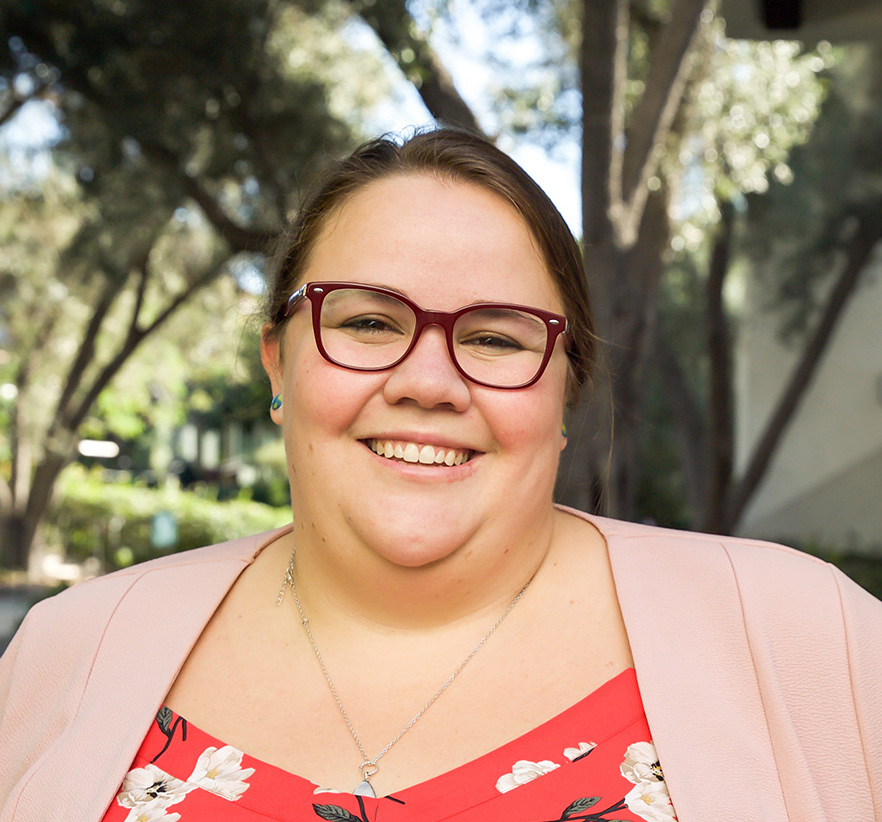
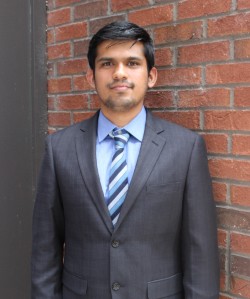
Nianqiao Ju is an Assistant Professor of Statistics at Purdue University's Department of Statistics within the College of Science. They hold a B.A. in Mathematics and Physics from Wellesley College (2016) and a Ph.D. in Statistics from Harvard University (2021). Their research focuses on computational methods for statistical inference, particularly Markov Chain Monte Carlo (MCMC) techniques and Bayesian inference from privatized data. Notable work includes developing privacy-preserving statistical methods and analyzing infectious disease transmission dynamics. Research interests span computational statistics, data privacy, MCMC algorithms, and applications in epidemiology. Their articles explore topics like SOMA samplers, privacy-aware Bayesian inference, and agent-based modeling of disease spread. Ju has received the IMS Hannan Graduate Student Travel Award (2020). Current research emphasizes bridging statistical methodology with computational challenges in data privacy and large-scale epidemiological models. Office: Math 508 | Phone: 765-494-0021
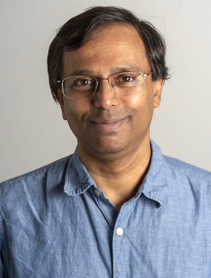
Dr. Ashok Srinivasan is the William Nystul Eminent Scholar Chair and Professor in the Department of Computer Science at the University of West Florida, within the Hal Marcus College of Science and Engineering. He is actively engaged in research, teaching, and professional leadership in high-performance computing and its applications to public policy and health. Education: Ph.D. in Computer Science, University of California, Santa Barbara, 1996 M.S. in Polymer Engineering, University of Akron, 1992 B.S. Tech (Honours) in Chemical Engineering, Regional Engineering College, Tiruchirapalli, 1987 Dr. Srinivasan's research focuses on high-performance computing, supercomputing applications, and simulation-based public policy analysis, particularly in modeling infection spread through air travel. His work integrates computational methods from quantum Monte Carlo, molecular dynamics, and GPU programming with real-world challenges in epidemiology and transportation. He leads Project VIPRA, a multi-institutional effort using supercomputers to analyze public health policies. His recent publications emphasize multiscale and parallel modeling of pedestrian and infection dynamics in transportation systems, leveraging massive computational power for policy-relevant insights. These works span disciplines including computer science, physics, public health, and urban planning. Scientific Awards and Recognitions: Fulbright Senior Research Scholar Best Paper Award at International Conference on Parallel Processing (ICPP) Featured among 12 major breakthroughs using Blue Waters supercomputer Dr. Srinivasan has served as PI or co-PI on approximately $4 million in grants from NSF, DOE, and DoD. He is a founding co-chair of the Student Research Symposium at HiPC, has organized over 15 professional events, and served on more than 40 international conference technical program committees. He actively mentors students and collaborates with researchers at institutions like IBM, Argonne National Lab, and Oak Ridge National Lab. He leads the Project VIPRA research team, which involves interdisciplinary collaboration across universities and domains such as biochemistry, mechanical engineering, and urban planning. His lab focuses on large-scale simulations for public policy impact.
Christina Edholm is an Associate Professor of Mathematics at Scripps College, part of The Claremont Colleges. She is affiliated with the Mathematics Department and contributes to the Computer Science and Data Science minors. Her research focuses on mathematical biology, epidemiological modeling, and invasive species control, using techniques from optimal control theory and stochastic processes. She earned her B.A. from Willamette University, M.S. and Ph.D. from the University of Nebraska-Lincoln, and completed a postdoc at the University of Tennessee, Knoxville. Her teaching includes courses like Calculus III and interdisciplinary courses such as 'Living in a World of Numbers,' exploring the role of quantitative analysis in social justice, disease outbreaks, and politics. She actively mentors undergraduate research, with recent projects on malaria vaccination models, disease dynamics, and agent-based simulations for public health. Edholm is involved in professional organizations including the Society for Mathematical Biology (SMB), Association for Women in Mathematics (AWM), and SACNAS. She emphasizes interdisciplinary collaboration and community engagement, often advising student theses at Scripps and Claremont Colleges.
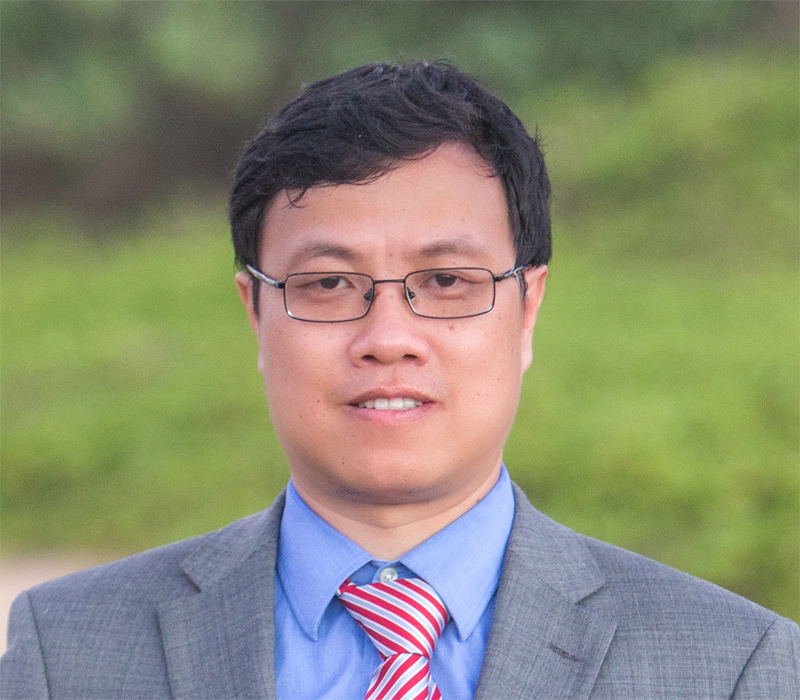
Zhigang Deng is the Moores Professor of Computer Science and Director of Graduate Studies at the University of Houston's Department of Computer Science. He earned his Ph.D. in Computer Science from the University of Southern California (2006), with earlier degrees from Peking University (M.S. 2004) and Xiamen University (B.S. 1997). His research focuses on Human-Centered Computing, Computer Graphics, and Computational Surgery, with notable contributions to insect flight simulation, surgical telementoring, and AI-human collaboration in medical diagnosis. He has been funded by NSF, NIH, NASA, and industry partners like Google and EA. His work is featured in ACM TOG, IEEE TVCG, and SIGGRAPH. Awards include the ACM Distinguished Member (2021), Moores Professorship (2021), and multiple best paper awards. He directs the University of Houston's Computer Graphics and Interactive Media Lab, and serves on editorial boards for IEEE TVCG and Computer Graphics Forum. Teaching includes courses on 3D Graphics and Game Development. Current research projects include surgical simulation frameworks (HySim), farm scene modeling from satellite data, and multimodal conversation analysis in multi-party interactions.
Dr. Andreas Aristidou is an Associate Professor at the Department of Computer Science, University of Cyprus, and a Senior Research Fellow at CYENS Centre of Excellence. He leads the Graphics & Extended Reality Lab and specializes in character animation, motion capture, and digital heritage. His research integrates machine learning, generative AI, and VR/AR technologies to preserve cultural heritage and advance interactive virtual environments. Educations: PhD in Signal Processing and Communications (University of Cambridge, 2007–2010) MSc in Mobile and Personal Communications (King's College London, with honors) BSc in Informatics and Telecommunications (National and Kapodistrian University of Athens) Research Interests: Focus on character animation analysis/synthesis, motion capture techniques, cultural heritage digitization, and applications of Conformal Geometric Algebra. His work bridges computer graphics with tangible/intangible cultural preservation. Key Projects: Lead Principal Investigator for Horizon Europe-funded HAMLET (2024–2027) to democratize generative AI for cultural industries. Principal Investigator for PREMIERE (2022–2025), enhancing performing arts with AI/XR. Developed the Virtual Dance Museum and 3D Reptiles Database for cultural and ecological documentation. Awards & Grants: Received ΔΙΔΑΚΤΩΡ Fellowship (2012–2014) and NVIDIA GPU Grant (2017). Secured over €8M in funding from Horizon Europe, ERASMUS+, and Cyprus Seeds. Best Paper Award at Eurographics Workshop on Graphics and Cultural Heritage (2014). Editorial & Community Roles: Editorial board member of The Visual Computer and Heritage journals; active in SIGGRAPH, Eurographics, and ACM-SCA program committees. Served in Cyprus’s Parallel Parliament for research policy (2020–2021).
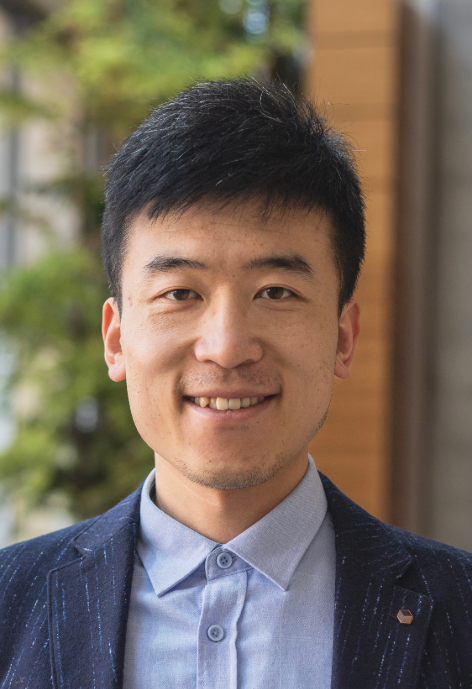
Dr. Pei Li is an Assistant Professor in the Department of Civil and Architectural Engineering and Construction Management at the University of Wyoming. Her research focuses on advancing safety and mobility through the development of digital, intelligent transportation systems that can sense traffic, predict future conditions, and make decisions. She bridges transportation engineering with cutting-edge technologies including digital twins, AI, and V2X communication systems. Dr. Li's educational background includes: B.Eng in Logistics Engineering from Tongji University (2015) M.Eng in Communication and Transportation Engineering from Tongji University (2018) M.S. in Smart Cities from University of Central Florida (2020) Ph.D. in Civil Engineering from University of Central Florida (2021) Dr. Li's research spans multiple domains in intelligent transportation systems. Her primary interests include Digital Twins, Artificial Intelligence, Transportation Safety, and Human Factors. She develops models that leverage deep learning, computer vision, and sensor technologies to create innovative solutions for traffic management and crash prevention. Her work often addresses the challenges of real-time decision making in complex transportation environments, with particular emphasis on pedestrian safety, autonomous vehicle systems, and connected infrastructure. Dr. Li's publication record shows a progression from basic vehicle maneuver detection using smartphone sensors to sophisticated digital twin applications and explainable AI for autonomous systems. Her recent work (2024-2025) demonstrates expertise in large language models for transportation, federated digital twin frameworks, and physics-informed trajectory planning. She frequently employs advanced techniques including deep reinforcement learning, attention mechanisms, and natural language processing to address complex transportation safety challenges. Dr. Li maintains an active research presence through multiple platforms including ResearchGate, LinkedIn, GitHub (as PeiLi-Sandman), and Google Scholar. Her GitHub profile shows contributions to self-driving car projects, including implementations of particle filters, MPC controllers, and other autonomous vehicle technologies from the Udacity Self-Driving Car Engineer Nanodegree program. Dr. Li is actively recruiting students for her research group, with opportunities available for those interested in digital twins, artificial intelligence, transportation safety, and human factors research. She appears to be establishing a robust research program at the University of Wyoming focused on intelligent transportation systems, with particular emphasis on making transportation safer through advanced computing technologies.
Vishnu Prabhu is an Assistant Professor at the University of Central Florida , affiliated with the School of Modeling, Simulation and Training. His research focuses on data-driven decision-making in healthcare , health systems modeling , and IoT solutions to improve patient, clinician, and system outcomes. He previously served as an Assistant Professor at UNC Charlotte. Prabhu employs simulation and stochastic modeling to tackle public health challenges such as Emergency Department Crowding and Healthcare-Acquired Infections . He also explores Extended Reality (AR/VR) , wearables , and non-pharmacological interventions for pain and mental health management, conducting multiple clinical trials in these areas. His recent publications and projects emphasize hybrid modeling , digital health tools , and workforce optimization in healthcare systems. Prabhu has secured grants for initiatives like ED-SHIFT (NIOSH/CDC) and AI applications for pneumonia detection (NSF SBIR). Education : Ph.D. and M.S. in Industrial Engineering (Clemson University), B.Tech. in Mechanical Production Engineering (University of Kerala). Projects : Co-Investigator for ED-SHIFT, Principal Investigator for AI-driven pneumonia detection, Co-Founder of NSF SBIR Phase I.
Pascual Campoy Cervera is a Full Professor at the Universidad Politécnica de Madrid (UPM) and holds visiting professor positions at Delft University of Technology, Tongji University, and Queensland University of Technology. His work focuses on Control Systems , Machine Learning , and Computer Vision for Unmanned Aerial Vehicles (UAVs) . As Principal Investigator of the Computer Vision and Aerial Robotics group at UPM's Center for Automation and Robotics (CAR), he has led over 40 R&D projects with European, national, and industrial funding. Current affiliations: UPM, TU Delft, CAR-UPM Research themes: UAV autonomy, swarm robotics, embedded vision systems His research integrates cutting-edge technologies in image processing, control theory, and artificial intelligence to enhance UAV capabilities in unstructured environments. Recent projects include: Autonomous firefighting systems High-speed drone racing frameworks Swarm-based solar farm inspection Thrust vectoring for heavy UAVs Notable scientific awards include multiple international prizes at UAV competitions (IMAV12–17). His team has developed the Aerostack and Aerostack2 frameworks for aerial robotics, which address execution control, mission planning, and sensor fusion challenges.
Dr. Milad Haghani is a Senior Lecturer at the School of Civil and Environmental Engineering , UNSW Sydney , and holds an Australian Research Council (ARC) Discovery Early Career Researcher Award (DE210100440) for his work in crowd evacuation planning. He earned his PhD in Transport Engineering from the University of Melbourne and has held fellowships at the University of Sydney and University of Melbourne. His research spans transport safety, human factors, and meta-science, with particular emphasis on pedestrian dynamics and disaster preparedness. Education: PhD in Transport Engineering, University of Melbourne MSc in Transport Engineering, Sharif University of Technology BSc in Civil Engineering, Iran University of Science and Technology Research Themes: Crowd safety and evacuation modeling Transport psychology and road safety Econometric and choice modeling Meta-research and science of science Disaster mitigation and urban planning Behavioral interventions in safety Scientific Recognition: ARC DECRA Fellow (DE210100440, 2021-2024) His publications (15 most recent) cover topics including pedestrian behavior , crowd accident analysis , emergency evacuation optimization , and transport safety policy . As a DECRA Fellow, he leads projects on behavioral interventions in crowd management. His work intersects transport engineering , human psychology , and disaster response systems , with applications in urban design, public security perception, and emergency logistics. Dr. Haghani contributes to science of science through bibliometric analyses, examining research trends in fields like coronavirus studies , wildfire science , and digital health technologies . His methodological expertise spans discrete choice modeling and simulation-based research , including virtual reality applications for safety training.
Ryuichiro Ishikawa is a Professor at the Faculty of International Research and Education, Waseda University , and a Visiting Researcher at the University of Tokyo. His research focuses on Game Theory , Experimental Economics , and Collective Intelligence Design , with a particular emphasis on asset market bubbles, mechanism design, and the economics of information. He has received accolades such as the Best Paper Award (2011) and the Education Contribution Award (2009) . Research Interests : Game theory, experimental asset markets, bounded rationality, epistemic logic, mechanism design, and collective intelligence. Key Projects : Analyzed how heterogeneous beliefs and cognitive abilities affect market dynamics, designed protocols for consensus-building in communication, and explored the role of higher-order beliefs in strategic decision-making. Awards : Best Paper Award, 12th International Conference on Global Business and Economic Development (SGBED), 2011 Education Contribution Award, University of Tsukuba, 2009 Publications : Authored 17 papers, including studies on asset market bubbles, dynamic game logic, and inductive learning theory, with citations on Scopus (129) and Google Scholar (375).
Dr. Stavros Nousias is a researcher at the Chair of Computing in Civil and Building Engineering at the Technical University of Munich , focusing on applications of Artificial Intelligence in the Built Environment . His work bridges Knowledge Representation and Reasoning , Geometry Processing , and Machine Learning to advance construction informatics and digital twinning. Research Interests: AI for building evacuation prediction, technical drawing segmentation, BIM optimization, and respiratory disease modeling. Publications: 15+ peer-reviewed articles on topics including graph neural networks for construction simulations, pulmonary airflow analysis, and heritage site monitoring. Supervised Theses: Guided projects on AI-based BIM command prediction and robotized construction simulation . Labs: Active in the BIM-Lab and Robotic Fabrication Lab . Teaching: Co-instructor for courses like Artificial Intelligence in Engineering and Computation in Engineering 1 .
Paulo Noriega is an Assistant Professor at Universidade de Lisboa's Faculdade de Arquitectura, where he researches human-environment interactions through virtual reality. As Vice-Director of ergoUX Lab, he leads studies in cognitive ergonomics, emotional design, and safety systems. His affiliations include: Research Centre for Architecture, Urbanism and Design (CIAUD) Interactive Technologies Institute UNIDCOM/IADE ADUUX (Association of Development of Usability and UX) His research examines how environmental variables influence behavior across three levels: perceptual responses to stimuli like light/color, decision-making in architectural spaces, and emotional engagement. Current projects include FEELS (VR study of home office ergonomics) and VR applications for building safety design. Noriega's 130+ publications demonstrate consistent focus on VR methodologies applied to evacuation behaviors, automotive interfaces, and cultural heritage. Recent work explores multimodal alarms in emergencies (2025), non-anthropomorphic AI agents (2026), and tangible interfaces in vehicles (2024). Key trends include human factors in safety-critical systems, affective computing, and cross-cultural UX evaluation. He teaches extensively in Design programs, covering cognitive ergonomics, emotional design, and neuroscience applications. As supervisor, he has guided multiple master's and PhD theses in Design and Ergonomics. His funded research includes 9 grants from Fundação para a Ciência e a Tecnologia, focusing on VR's role in safety systems and environmental interaction studies. At ergoUX Lab, Noriega's team develops VR protocols for evaluating architectural spaces, emergency responses, and user experiences. The lab's multidisciplinary approach integrates psychophysics, biosensors, and behavioral analysis to advance human-centered design.
Konstantin Schekotihin is an Associate Professor at the Department of Artificial Intelligence and Cybersecurity, Alpen-Adria University of Klagenfurt. His research focuses on artificial intelligence, machine learning, and semantic technologies with applications in industrial systems and semiconductor manufacturing. Reinforcement learning for industrial scheduling Answer Set Programming (ASP) and stream reasoning Failure analysis automation and ontology engineering Neuro-symbolic AI integration Knowledge-based systems in manufacturing Recent publications emphasize AI-driven optimization in semiconductor production, decomposition strategies for scheduling problems, and multi-agent systems for workflow management. His work combines symbolic reasoning with machine learning to address complex industrial challenges. Contact: Konstantin.Schekotihin@aau.at
Nicolas Verstaevel is an Associate Professor at the University of Toulouse Capitole and researcher at the Toulouse Institute of Computer Science Research (IRIT), where he contributes to the SMAC (Cooperative Multi-Agent Systems) team. He holds a PhD in Artificial Intelligence and an HDR (Habilitation à Diriger des Recherches). His career includes international experience as an Associate Research Fellow at the University of Wollongong, Australia, and industrial R&D roles at Capgemini. His research explores complex systems through: Agent-based modeling and simulation frameworks Machine learning applications in urban environments IoT-enabled smart city infrastructure Pedestrian dynamics and crowd behavior analysis Real-time traffic monitoring systems He leads projects funded by ANR and EU programs, focusing on high-density crowd simulations and sustainable urban mobility. His publications demonstrate strong emphasis on multi-agent systems, sensor data fusion, and scalable simulation architectures. Key lab affiliations: Cooperative Multi-Agent Systems (SMAC) at IRIT: https://www.irit.fr/-Equipe-SMAC-