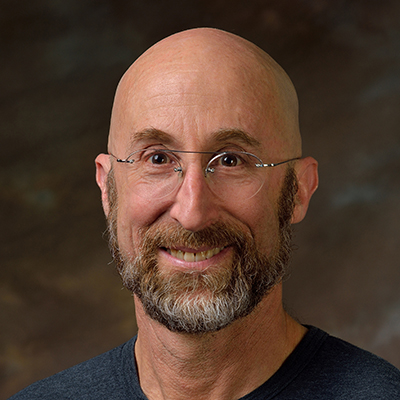
David Welsh is a Professor in the Department of Management and Entrepreneurship at Arizona State University's W. P. Carey School of Business, specializing in workplace ethics, unethical behavior, and organizational dynamics. His research has been published in top-tier journals and featured in mainstream media. Ph.D. in Management (University of Arizona, 2014) J.D. (University of Utah, 2010) B.S. in Management (Southern Utah University, 2007) His research focuses on behavioral ethics , ethical decision-making , and self-regulation , examining how performance goals, leadership styles, and social influences affect workplace morality. Recent work explores prosocial behaviors like voice and organizational citizenship alongside unethical transgressions. Welsh's articles reveal trends linking ethical leadership to dual outcomes of organizational effectiveness and unintended deviance, goal-setting to depletion and unethicality, and social dynamics to peer-driven moral behavior. His studies often employ field experiments and experience sampling methodology. Ascendant Scholar award (Western Academy of Management, 2019) W. P. Carey Dean's Mid-Career Research award (2022) Outstanding Practical Implications for Management Paper award (2021) Professional MBA Faculty Excellence award (2022) At ASU, Welsh mentors doctoral students, serves on PhD committees, and manages the Management Department Behavioral Lab. He is an Associate Editor at Personnel Psychology and teaches graduate courses on research, ethics, and dissertation advising.
Laurie Shannon is the Franklyn Bliss Snyder Professor of English at Northwestern University, with a J.D. from Harvard Law School and a Ph.D. from the University of Chicago. She studies English literature and culture in the long sixteenth century, focusing on the history of ideas in language, stakeholdership, embodiment, and cross-species relations. She serves as convener of The Anne Lister Society and is collaborating with Oxford University Press on a scholarly edition of Anne Lister’s Journal. Education: J.D., Harvard Law School; Ph.D., University of Chicago Shannon’s research explores the political imagination in early modern literature, particularly through friendship (Sovereign Amity: Figures of Friendship in Shakespearean Contexts) and animal studies (The Accommodated Animal: Cosmopolity in Shakespearean Locales). Her current monograph, 'Frailty’s Name: Shakespeare and the Natural History of Human Being,' examines human negative exceptionalism in Renaissance thought and its implications for climate crisis ethics. Her publications span Shakespeare studies, queer theory, environmental humanities, and textual editing. Notable awards include the Elizabeth Dietz Memorial Award, Robert B. Cox Teaching Award, and Dean’s Award for Graduate Mentoring. She has held NEH, ACLS, and Guggenheim fellowships. Scientific Awards: Elizabeth Dietz Memorial Award, Robert B. Cox Distinguished Undergraduate Teaching Award, Dean's Award for Graduate Mentoring, NEH Fellowship, ACLS Fellowship, Guggenheim Fellowship Shannon contributes to the Anne Lister Diary Transcription Project and has served as English Department Chair at Northwestern. Her recent articles focus on Shakespeare’s engagement with natural history, queer cosmology, and animal sovereignty, reflecting her interdisciplinary approach.
A. Michael Knemeyer is a Professor of Logistics at The Ohio State University's Max M. Fisher College of Business, where he contributes to research and teaching in supply chain management. His work focuses on supply chain relationships, risk and resilience, vendor relations, and sustainability integration. Educational Background: PhD from the University of Maryland, BSBA from John Carroll University Research Areas: Supply chain relationships, international logistics, sustainability, vendor relations, risk management Key Awards: 2013 IJPDLM Outstanding Paper Award, 2013 Bernard J. La Londe Best Paper Award Knemeyer's publications in journals like Harvard Business Review and Journal of Business Logistics explore critical themes in logistics outsourcing relationships, supply chain integration, and sustainable practices. His work often examines cross-cultural dynamics and institutional factors affecting supply chain performance. Selected Courses: Strategic Supply Chain Management, Contemporary Issues in Supply Chain Management, Logistics and Supply Chain Decision Making
Lexing Xie is a Professor in Computer Science at the Australian National University. He leads the ANU Computational Media Lab ( http://cm.cecs.anu.edu.au ) and the ANU Integrated AI Network. His work focuses on the intersection of machine learning, social media analysis, and multimedia understanding. Dr. Xie's research broadly focuses on innovative design and use of machine learning algorithms, especially on large-scale graph data and collective behaviour. His recent work spans several key areas: Popularity in social media -- understanding, predicting, and optimization Multimedia knowledge graphs, vision and language integration Humanising machine intelligence through better understanding of social dynamics His publications reveal a strong trend toward understanding information diffusion patterns in social media, particularly through visual content. He has made significant contributions to the study of visual memes, popularity prediction using point processes, and multimodal learning that connects vision with language. His work often bridges theoretical machine learning with practical applications in social media analysis. Dr. Xie has received recognition for his research, including an Honourable Mention at CSCW 2019 for his work on attention flow in online video networks. His research has been supported by collaborations with major institutions including IBM Research and Columbia University. As an advisor, Dr. Xie has mentored numerous students who have gone on to contribute significantly to publications in top-tier conferences. His lab, the ANU Computational Media Lab, serves as a hub for interdisciplinary research connecting computer science with social sciences.
Peter A. Raymond is the Oastler Professor of Biogeochemistry at Yale University's School of the Environment and Department of Geology and Geophysics. He serves as Senior Associate Dean of Research & Director of Doctoral Studies and is Co-Director of the Yale Center for Natural Carbon Capture. Raymond leads the Raymond Biogeochemistry Lab, which investigates the biogeochemistry of inland waters, enhanced weathering, methane cycling, and blue carbon systems through cutting-edge field, laboratory, and modeling approaches. Education B.S., Marist College Ph.D., College of William and Mary/Virginia Institute of Marine Science Research Focus Raymond's research fundamentally reshapes our understanding of carbon cycling in aquatic systems, demonstrating that rivers serve as dynamic conduits rather than passive pipes in the global carbon cycle. His work examines how biology and watershed variables alter carbon chemistry in streams, rivers, and estuaries, with particular emphasis on understanding global carbon cycles in relation to climate change. Raymond employs radiocarbon measurements to explore the age and turnover of carbon in aquatic ecosystems, revealing that rivers are variable sources of both old and young terrestrial dissolved organic carbon to oceans. The Raymond Lab is particularly known for developing the Pulse-Shunt Concept, which challenges traditional views of riverine biogeochemistry by emphasizing the episodic and dynamic nature of elemental fluxes. Current research directions include enhanced weathering and alkalinity studies for carbon removal, global greenhouse gas budgets through projects like RECCAP 2, natural methane cycling in aquatic systems, and blue carbon ecosystems such as mangroves and salt marshes. Publication Trends Raymond's recent publications (2023-2025) demonstrate a strong focus on global carbon and methane cycling, with particular attention to inland water systems' role in the Earth's climate system. His work increasingly integrates large-scale datasets with field measurements to understand how climate change and human activities affect greenhouse gas emissions from rivers and streams. A significant portion of his recent work contributes to international efforts like the Global Carbon Project, aiming to refine estimates of global carbon and methane fluxes. His research also shows growing emphasis on carbon removal strategies, particularly enhanced rock weathering through the Earthshot-funded GOAL-A project, and their potential for climate mitigation. Scientific Recognition Fellow of the American Association for the Advancement of Science Member of the Connecticut Academy of Science and Engineering Coastal and Estuarine Research Federations Cronin Award for Young Scientists ISI highly cited author Past Editor and Chief of the American Geophysical Union's journal Global Biogeochemical Cycles Mentorship and Funding Professor Raymond currently mentors four doctoral students (Jon Gewirtzman, Shou-En "Samuel" Tsao, Benjamin Saalidong, and Mingyu Zhang) and masters student Bella Garrioch. His research is supported by multiple grants from the National Science Foundation (NSF), including CAREER awards, and participation in the Earthshot-funded GOAL-A (Global Ocean And Land Alkalinization) project. Raymond has also been involved in significant collaborative projects with USGS data to research how climate and land use change alter carbon export from US watersheds, and with Lamont Doherty to develop methods for measuring air-sea gas exchange of CO2 in rivers and estuaries. Research Infrastructure The Raymond Biogeochemistry Lab at Yale is a dynamic research group comprising research scientists, postdocs, doctoral and masters students, and postgraduate researchers. The lab recently acquired a Mini Carbon Dating System (MICADAS) at Yale, significantly expanding their research capabilities in ecosystem carbon turnover and verification of natural climate solutions. The lab collaborates globally on projects in the Arctic, Hudson River, and middle Atlantic Bight, and is actively involved in the NASA Carbon Monitoring System BlueFlux field campaign to assess carbon exchange in coastal wetlands.
Adriana Tapus is a Full Professor at ENSTA Paris, affiliated with Institut Polytechnique de Paris, leading the Autonomous Systems and Robotics Laboratory (SAR) within the Computer Science and Systems Engineering Unit (U2IS). She holds an HDR (Habilitation) and a PhD from EPFL, Switzerland, with postdoctoral experience at USC. Her research focuses on socially assistive robotics, human-robot interaction (HRI), and personalized therapy for individuals with physical/cognitive impairments. She directs the IP Paris Doctoral School and coordinates national/international projects like the EU-funded ENRICHME and SWEET. Education: PhD in Mobile Robotics, EPFL (2005) Habilitation (HDR), ENSTA Paris (2011) M.S. Computer Science, University Joseph Fourier Engineer, Politehnica University of Bucharest Research Interests: Tapus pioneers socially assistive robotics, integrating machine learning, human modeling, and multimodal communication (verbal/non-verbal/para-verbal). Her work addresses adaptive therapies for vulnerable populations using robotics, physiological data interpretation, and context-aware interaction. Key themes include: Human-robot cooperation and trust Emotion recognition and expression Personalized rehabilitation systems AI ethics and human-centered design Publications: Over 150 articles, with recent work exploring humor in HRI, teleoperation trust models, and cross-cultural intelligent vehicles. Notable 2025 contributions include studies on robot laughter efficacy and multimodal facial expression frameworks. Awards: 2025: 4 IROS papers accepted 2016: 25 Women in Robotics recognition 2010: Romanian Academy Award Multiple conference best paper awards (RO-MAN, ICRA, etc.) Advising & Grants: Supervised over 20 PhD students and led projects like EU Horizon 2020 ENRICHME. Current students focus on teleoperation dynamics, robot humor, and haptic interfaces. Active in editorial roles (IJSR, THRI) and conference organization (HRI General Chair 2019). Labs/Teams: Founder of RoboticsByDesign lab and co-initiator of the Hi! Paris interdisciplinary AI center. The SAR lab develops systems for healthcare, education, and human-robot collaboration.
Amy Bruckman is a Regents’ Professor and Senior Associate Chair in the School of Interactive Computing at Georgia Institute of Technology. As a Fellow of The ACM and member of the SIGCHI Academy , she contributes to social computing research focusing on online collaboration, cross-cultural understanding, and content moderation. Her 2022 book "Should You Believe Wikipedia? Online Communities and the Construction of Knowledge" explores digital knowledge creation. Education: Ph.D. from MIT Media Lab (1997), B.A. in Physics from Harvard (1987) Research Affiliations: GVU Center, IRI People and Technology Her work addresses social computing challenges including: AI ethics in human-AI interaction Algorithmic bias in content moderation Epistemic justice in online communities Comparative platform analysis (Reddit, Discord, TikTok) Grassroots technology movements Recent publications examine: AI support tools for online counseling Community-driven research frameworks Racial bias mitigation in toxic language detection Designing teachable social media experiences Human trafficking intervention ethics Scientific recognition includes: ACM Fellowship SIGCHI Academy membership She has contributed to: Georgia Tech's Computing Education initiatives Research ethics frameworks for Human-Computer Interaction
Alaina Lemon is a Professor of Anthropology at the University of Michigan, affiliated with the College of Literature, Science, and the Arts (LSA). She serves as Director of Undergraduate Studies in Anthropology and holds affiliations with the Center for Russian, East European, and Eurasian Studies (CREES), the Weiser Center for Europe and Eurasia, and the Interdepartmental Program in Anthropology and History. Her research focuses on socio-cultural anthropology, performance studies, and visual culture, with expertise in Russia, the Romani diaspora, and post-Socialist states. Education: BA in Anthropology (University of Wisconsin, 1987), MA (University of Chicago, 1988), and PhD (University of Chicago, 1996). Notable awards include the Wayne S. Vucinich Book Prize (2001), Heldt Book Prize (2001), and a 2023 visiting scholar position at the École des Hautes Études en Sciences Sociales (Paris). Her work bridges historical and contemporary issues, exploring themes like phatic labor, media infrastructures, and affective politics. Recent projects include editing the documentary Tremors (2023) and researching Soviet-era moral projects through studies of Moscow’s Metro and canine-human interactions. Lemon’s interdisciplinary approach integrates performance studies, linguistic anthropology, and critical race theory to analyze cultural dynamics in transitional societies. Grants include a 2019-2024 University of Michigan Office of Research grant for film collaboration and a 2002-2003 International Research and Exchanges Board fellowship. She has authored influential books such as Between Two Fires (2000) and Technologies for Intuition (2017), and her films document Romani experiences and urban cultural phenomena.
Linda Morrice is a Professor of Education and Migration at the School of Education and Social Work, University of Sussex. She specializes in the intersection of refugee/migration studies with education, focusing on informal learning, social integration, and exclusion. Her research spans both the Global North and South, emphasizing refugee access to higher education and policy implications. Current role: Co-Director, Centre for International Education (2021-2024) Education: BA(Hons) in Social Anthropology (University of Sussex), PgDip (Birkbeck, 2004), MA (University of Sussex, 2005), Doctorate in Education (University of Sussex, 2010) Her scientific work explores refugee education through participatory methodologies, creative/narrative methods, and life history approaches. Recent publications analyze racialized borders, digital technology’s role in refugee well-being, and sanctuary city frameworks. Supervision interests include refugee family dynamics, informal pedagogies, and gendered policy impacts. Key grants include UKRI funding for digital well-being of unaccompanied refugee children (2024-2027), ESRC projects on longitudinal qualitative studies (2023-2024), and AHRC research on refugee cultural values (2013-2014). She has led evaluations for the Home Office and Queen Rania Foundation. Professional roles: Co-Chair, Sussex University of Sanctuary group (2019-2024) Advisory member for Home Office integration frameworks and vulnerable persons resettlement schemes Labs/teams: Founding member of University of Sussex Sanctuary Group and Brighton & Hove Sanctuary on Sea. Her research emphasizes participatory practices with refugee communities and longitudinal tracking of social networks.
Professor Nancy W. Y. Law is a leading scholar in Learning Sciences and Technology at the University of Hong Kong's Faculty of Education . She has served as Founding Director of the Centre for Information Technology in Education (CITE) (1998-2013) and currently holds the Chair of Learning Sciences and Technology . Her career spans over 25 years of international comparative studies, policy analysis, and large-scale educational innovation. Current roles: Associate Dean (Strategic Development), HKU Key affiliations: Sciences of Learning Strategic Research Theme (co-convener) Research Expertise Her work focuses on technology-enhanced learning , digital literacy , knowledge building communities , and multilevel educational change . She pioneered network models of teacher innovation and socio-technical frameworks for sustainable pedagogical transformation, particularly in STEM education and Cyberbullying prevention . Scientific Leadership With over 25 major research grants (2000-2023) exceeding HK$50 million, she leads projects like: Learning and Assessment for Digital Citizenship Jockey Club Self-directed Learning in STEM Design-Aware Learning Analytics A Fellow of the International Society of Learning Sciences and recipient of the HKSAR Humanities and Social Sciences Prestigious Fellowship , she has supervised numerous international comparative studies including SITES 2006, ICILS 2013, and longitudinal digital citizenship research (2019-2021).
Charles M. Jones is a Professor of Finance at Columbia Business School, Columbia University, with an extensive publication record spanning several decades. His research focuses on market microstructure, high-frequency trading, short selling, retail investor behavior, and stock market liquidity. His work has appeared in top finance journals including the Journal of Finance, with his most recent publication "Nonstandard Errors" appearing in the June 2024 issue. Professor Jones's research interests center on understanding how financial markets function at a granular level. His work on market microstructure examines the mechanics of price formation, liquidity provision, and the impact of trading technologies on market quality. His research on short selling has been particularly influential, investigating when short sellers trade, what information they possess, and how regulatory interventions like short sale bans affect market functioning. His more recent work has explored the rise of retail trading through platforms like Reddit and its implications for price discovery, particularly during events like the GameStop phenomenon and the COVID-19 pandemic. Analysis of his publication trends reveals a consistent focus on market efficiency and price discovery mechanisms, with increasing attention to retail investor behavior in recent years. His work spans both theoretical modeling and empirical analysis of market data, often utilizing high-frequency datasets to examine intraday trading patterns. The interdisciplinary nature of his research bridges finance, economics, and information science, contributing to both academic understanding and practical market regulation. Professor Jones has collaborated extensively with researchers across the globe, as evidenced by his numerous co-authored papers with scholars from institutions worldwide. His work has significant implications for market regulators seeking to understand the impact of technological changes and regulatory interventions on market quality and efficiency.
Dr. Laura McMahon is an Associate Professor in Film and Screen Studies at the Faculty of Modern and Medieval Languages and Linguistics , University of Cambridge. She is currently on sabbatical leave and will return in Easter Term 2024. Her research explores intersections between film and philosophy , with a focus on French and Francophone cinema , decolonial approaches , feminist theory , and ecocritical perspectives . Dr. McMahon’s work examines how contemporary feminist filmmakers like Onyeka Igwe and Khady Sylla engage with archives to reframe history through speculative reimagining . She also investigates ecological themes in Claire Denis’s films and the ethics of animality in global art cinema. Her monograph Animal Worlds: Film, Philosophy and Time (2019) and edited collections like Animal Life and the Moving Image (2015) highlight her contributions to debates on nonhuman representation and deconstructive aesthetics . Her recent publications analyze documentary practices , postcolonial archives , and critical repurposing in moving image work. She welcomes inquiries from MPhil and PhD students working on related topics. Her teaching and research are affiliated with the Cambridge Film and Screen initiative and the Cambridge Italian Research Network (CIRN).
Adam Soliman is an Assistant Professor in the John E. Walker Department of Economics at Clemson University's College of Business. His research focuses on the intersection of economics, crime, and public policy, with particular expertise in drug policy, policing behavior, and enforcement strategies. Dr. Soliman's research interests center on understanding the economic incentives behind criminal behavior and law enforcement responses. His work examines how changes in punishment severity affect police behavior, with a particular focus on drug policy reforms. He investigates whether police treat enforcement effort and punishment severity as complements or substitutes, challenging conventional 'War on Drugs' approaches. His research combines economic theory with empirical analysis of geocoded crime data to provide evidence-based insights into criminal justice policy. His publication record demonstrates significant contributions to understanding drug markets, opioid epidemics, and policing strategies. His work shows that weakening drug sale penalties leads to decreased drug arrests without displacement to non-drug offenses, suggesting police treat enforcement and punishment as complements. His research indicates that certain enforcement reductions may not incur large public safety costs, challenging traditional deterrence models. As an active researcher in criminology and public policy, Dr. Soliman collaborates with scholars from various institutions including University of Colorado, University of Pittsburgh, and Duke University. His work appears in working paper series such as the Economic Research Initiatives at Duke (ERID) and has been cited in related fields including public economics, criminology, and urban studies.
Alison Ledgerwood is a Professor in the Department of Psychology at the University of California, Davis, and Principal Investigator of the Attitudes and Group Identity Lab. Her research examines how social context shapes attitudes and preferences, with a focus on open and inclusive scientific practices. Ph.D., Social Psychology, New York University (2008) M.A., Psychology, New York University (2006) B.A., Psychology, Amherst College (2003) Her research explores psychological distance , framing effects , and system justification theory , while methodologically advancing preregistration , collaborative science , and equity in publishing . She also investigates group identity dynamics and implicit/explicit bias measurement . Recent publications highlight her work on racial bias methodology , open science reform , and contextual framing . Awards include the 2024 Distinguished Service to the Society award, 2021 UC Davis Advising and Mentoring Award, and 2017 SPSP Service to the Field award. 2024 Distinguished Service to the Society, SPSP 2021 UC Davis Graduate Advising and Mentoring Award 2017 Service to the Field, SPSP Hellman Fellowship (2010-2011), UC Davis UC Davis Chancellor's Fellow APS Fellow SESP Fellow Ledgerwood advises on scientific integrity through roles like Chair of the Transparency and Openness Promotion (TOP) II Guidelines Task Force and Anti Colorism and Eurocentrism in Methods and Practices (ACEMAP) Task Force. Her lab fosters contextual evaluation studies and psychological distance frameworks .
Lyle Ungar is a Professor at the Department of Computer and Information Science at the University of Pennsylvania . He is affiliated with multiple graduate groups, including Genomics and Computational Biology in the School of Medicine , Operations, Information and Decisions in the Wharton School , and Psychology in the School of Arts and Sciences . His research focuses on explainable machine learning , deep learning , and natural language processing for psychology and medical research , analyzing social media and sensor data to understand well-being, empathy, and stress. His work spans bioinformatics , applied economics , and group decision-making . Recent publications examine LLM-based tutoring , cross-cultural translation , and AI in palliative care , showing trends in reinforcement learning , mobile health , and health data analytics . He has contributed to Google Scholar , PubMed , and DBLP with over 15 papers since 2023. Scientific Awards : 2019 Alan I. Leshner Leadership Institute Public Engagement Fellow His students include Vitoria Aquino Guardieiro , Yihao Li , and co-advised researchers like Shreya Havaldar with Eric Wong. He leads projects at interdisciplinary centers such as the Annenberg Public Policy Center , Center for Cognitive Neuroscience , and Institute for Translational Medicine .