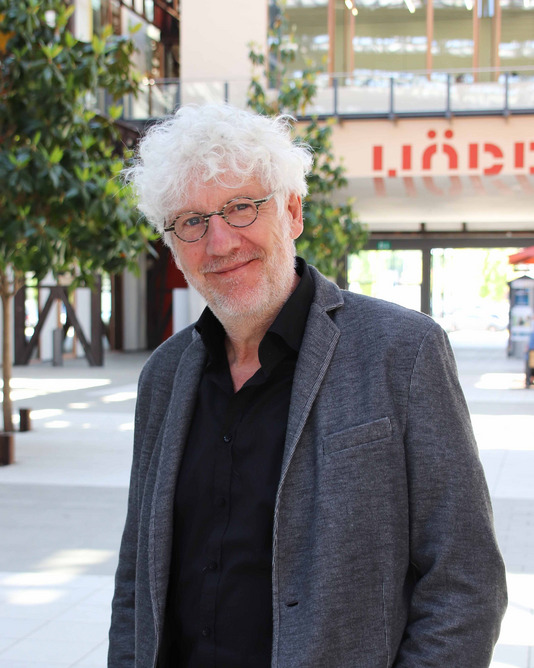
Dr. Richard Ramsey is a Lecturer at the Department of Health Sciences and Technology at ETH Zürich. His research focuses on social cognition, cognitive control mechanisms, and the intersection of artificial intelligence with human behavior. He teaches courses like 'The Social Brain: Critical Perspectives on Science, Society and Neurodiversity.' Key research areas include neurophysiological correlates of imitation, AI ethics, loneliness in neurorehabilitation contexts, and methodological advancements in psychological data analysis. His work often employs computational models and neuroimaging techniques to explore decision-making processes and social perception. Developed Bayesian methods for analyzing time-to-event data in psychological studies Investigated anthropomorphic perceptions of humanoid robots Explored how art education impacts aesthetic and cognitive functions No scientific awards are explicitly listed in the provided materials. His academic contributions span experimental psychology, neuroscience, and interdisciplinary applications of cognitive science.
Dr. Kelly Jakubowski is an Associate Professor of Music Psychology at Durham University's Department of Music. She co-leads the interdisciplinary Music and Science Lab and directs Durham's Centre for Research into Inner Experience. Her research focuses on music-evoked autobiographical memory, musical imagery, and cross-cultural music perception. Jakubowski holds a PhD from Goldsmiths, University of London, and has held academic roles including Postdoctoral Research Associate at Durham and Visiting Lecturer at King’s College London. She is a Fellow of the Higher Education Academy and serves on editorial boards for Psychology of Music and Music & Science . Notable awards include the 2015 Hickman Early Career Researcher Award and a Leverhulme Early Career Fellowship (2018–2021). Her work explores music's cognitive and emotional impacts, with findings featured in media outlets like The New York Times and BBC. Education: Bachelor’s in Music Performance (Baldwin Wallace University, USA) Master’s in Music Theory (Ohio State University, USA) MSc and PhD in Music Psychology (Goldsmiths, University of London) Research Interests: Combines empirical, computational, and biological approaches to study music's role in memory, emotion, and imagination. Key areas include: - The psychological mechanisms of earworms and involuntary musical imagery - Cultural variations in musical timing perception - The interplay between music and autobiographical memory retrieval - Development of methods for analyzing music-evoked imaginings Grants & Projects: Principal Investigator: Leverhulme Trust grant (2024–2026) on perceptual/cognitive constraints on music-evoked imagination Co-Investigator: AHRC grant (2023–2024) for digital skills training in music research Awards: Leverhulme Early Career Fellowship (2018) Hickman Early Career Researcher Award (2015) Labs/Teams: Leads the Music and Science Lab, fostering collaborations between psychologists, neuroscientists, and musicians to explore music's biological and cultural dimensions.
Dr. Julie Kirkham is a Senior Lecturer in Psychology at the University of Chester's Faculty of Health, Medicine and Society, where she serves as Programme Leader for the MSc Family and Child Psychology. Her research integrates developmental, cognitive, and educational psychology, focusing on relationships between language, cognition, pretend play, and drawing during childhood. Key educational achievements include: PhD in Developmental and Educational Psychology from University of Manchester MRes in Psychological Research Methods from University of Manchester BSc in Psychology and Criminology from Staffordshire University Postgraduate Certificate in Learning and Teaching in Higher Education from University of Chester Her research examines: Symbolic development through art and play Influence of Steiner/Montessori education on cognition Aesthetic understanding across the lifespan Fantasy proneness and creativity Interrelationships between representational systems Publications show consistent focus on child development across educational contexts, with recent work emphasizing computational analysis of art perception, validation of play measurement scales, and longitudinal studies of symbolic development. Research consistently demonstrates interdisciplinary approaches bridging psychology, education, and art theory. Teaching encompasses child development, psychopathology, developmental disorders, and applied psychology across undergraduate and postgraduate levels. She supervises research dissertations and previously held academic positions at Aberystwyth University, Edge Hill University, and Staffordshire University.
Dr. Tess Crosbie is a Senior Lecturer in Computer Science at the University of Bedfordshire's School of Computer Science and Technology. She joined as a part-time MSc student in 2005, graduated in 2008, and returned as a Visiting Lecturer while pursuing her PhD. She transitioned to full-time staff in 2016 after submitting her thesis on computational measurement of aesthetics in literary texts. Her teaching focuses on Research Methodologies, Agile Project Management, and Computer Science fundamentals. Her research interests include Digital Humanities, Computational Linguistics, and Natural Language Processing. Notable publications explore e-Government adoption in Nigeria, computational stylistic analysis, and literary aesthetics. She can be contacted via tess.crosbie@beds.ac.uk .
Laura J. Summerfeldt is a Professor in the Department of Psychology at Trent University, where she specializes in personality, psychopathology, and obsessive-compulsive conditions. She holds a M.A. and Ph.D. from York University. Her research focuses on the intersection of personality dimensions and clinical psychopathology, particularly obsessive-compulsive disorders (OCD), social anxiety, and emotional intelligence. Key areas include the 'not just right' experience in OCD, cognitive-emotional processes in anxiety, and heterogeneity in OCD symptomatology. Teaching responsibilities include courses such as Introduction to Abnormal Psychology (PSYC 2300H-A) and Advanced Abnormal Psychology (PSYC 3300H-A). Her work integrates clinical research with theoretical models, emphasizing diathesis-stress frameworks and treatment efficacy, such as cognitive-behavioral therapy (CBT). Recent studies explore longitudinal relationships between ADHD symptoms and life success, bullying dynamics in adolescents, and emotional intelligence's role in interpersonal functioning. Publications span over two decades, with a focus on OCD symptom dimensions, emotional intelligence in clinical populations, and neuropsychological correlates of anxiety. Her research often bridges clinical and theoretical domains, advancing understanding of OCD’s core dimensions (e.g., harm avoidance, incompleteness) and their neurocognitive underpinnings.
Sahand Abbasi is an Assistant Professor and Program Lead in Interior Design at South Dakota State University's School of Design. He also serves as a design consultant at Studio West and directs the North America Chapter of the International Academy for Design and Health. His expertise spans design thinking, sustainability, and human-centered spaces. Education: Ph.D. in Interior and Environmental Design, Texas Tech University M.S. in Environmental Design, Texas Tech University M.S. in Industrial Design, Iran University of Science and Technology B.S. in Industrial Design, Art University of Tabriz Research Focus: Dr. Abbasi explores design strategies to enhance well-being, sustainability, and cooperative behaviors in spaces, particularly for children. His work bridges theoretical frameworks with practical applications, emphasizing ethical and innovative design solutions. Articles Trends: His publications highlight themes like placemaking, child-centric design, and sustainable facility planning. Recent work focuses on signage in urban spaces and historical playground design analyses. Awards: None explicitly mentioned. Advising & Grants: No student advisees or grant details provided. His consultancy role at Studio West and leadership in the International Academy reflect his applied design work and professional engagement. Labs/Teams: Leads the North America Chapter of the International Academy for Design and Health, fostering interdisciplinary design and health initiatives.
Sabrina Caldwell serves as a Senior Lecturer and Researcher at The Australian National University's School of Computing. As Co-chair of JPEG Trust within the ISO/IEC JTC 1/SC 29/WG 1 working group, she has led the development of international standard ISO/IEC 21617-1 for media trustworthiness assessment, scheduled for publication in October 2024. Her work bridges academic research with global standardization efforts in digital media security. Her research interests focus on two interconnected domains: digital image authentication (particularly distinguishing authentic photographs from AI-manipulated content) and physiological signal processing using neural networks. Within human-AI teaming, she investigates deception detection through multimodal analysis of nonverbal behavior and develops frameworks for assessing the credibility of visual media in the age of generative AI. Her fingerprint reveals strong concentrations in neural networks (100%), physiological signal processing (85%), and affective computing (30%). Analysis of her 29 research outputs shows increasing emphasis on multimodal deception detection and media trustworthiness standards since 2020. Her work demonstrates consistent collaboration with international researchers like Temmermans, Bhowmik, and Kyburz, with notable projects including MEC23: Advanced Biometrics and C2 Sociotechnical Experimentation. The publications reveal a strategic shift toward practical standardization frameworks after 2022, coinciding with her JPEG Trust leadership role. Caldwell holds active research supervision registration and leads projects including the 2023-2026 Australian government travel grant for international standards participation and the 2024 Human-machine aesthetics seed grant. Her projects consistently address real-world applications of computing for social good, particularly in media trust and human-centered biometrics.
Prof. Dr. Gabriele Peters is a Professor of Computer Science and Chair for Human-Computer Interaction at FernUniversität in Hagen since 2010. She previously held a Research Professor position and led the Visual Computing Group at Dortmund University of Applied Sciences (2007-2010) and served as Visiting Professor at Caltech's Computational Vision Group (2004, 2005). Her research spans computer vision, computational neuroscience, cognitive systems, and new media art.
Lucía E. Cantero serves as an Assistant Professor of Cultural Studies at Claremont Graduate University, where she brings a political economic perspective to the study of aesthetics and power. Her academic journey, rooted in anthropology and African American studies, informs her critical analyses of contemporary cultural phenomena including consumerism, digital technologies, and urban environments. Cantero's educational foundation was built at two of the nation's leading institutions. She earned her BA in Psychology and Visual Arts from The University of Chicago, followed by an MA in Social Sciences with a focus on Anthropology from the same university. She then pursued advanced degrees at Yale University, completing both an MA and PhD in Anthropology and African American Studies. PhD, Anthropology and African American Studies, Yale University MA, Anthropology and African American Studies, Yale University MA, Social Sciences - Anthropology, The University of Chicago BA, Psychology and Visual Arts, The University of Chicago Her research program critically examines how consumer culture and digital infrastructures shape subjectivity and social relations. By analyzing branding, advertising, and algorithmic systems, Cantero reveals how race, class, gender, and sexuality are constructed through embodied 'kinaesthetic' processes. Current projects investigate facial recognition technology's racial biases and the transformation of intimate relations through prosthetic bodies and digital interfaces, demonstrating her commitment to understanding technology's role in reproducing and challenging power structures. Cantero's scholarly output demonstrates a consistent engagement with the political dimensions of cultural production. Early work (2017) established her expertise in ethnographic theory and the cultural landscape of Rio de Janeiro. Her 2021 contributions expanded to co-editing a volume on Brazilian democracy and publishing on petro-affect and political scandal, while simultaneously addressing urgent contemporary issues through her research on machine learning biases in facial recognition systems. This trajectory reflects her ability to connect historical and ethnographic analysis with cutting-edge technological critique. Scientific Awards: No scientific awards or major honors are mentioned in the available documentation. While specific details about graduate student mentorship and grant funding are not provided in the source material, Cantero's active research agenda—particularly her collaborative project with data scientists on AI bias—suggests ongoing scholarly engagement that likely involves student researchers and external funding, though concrete information is absent from the current text. Her current collaboration with data scientists on facial recognition technology indicates participation in interdisciplinary research networks. Though no formal laboratory structure is described, this partnership exemplifies her approach to bridging humanities perspectives with computational science to address societal challenges related to technology and inequality.
Kendra Lapolla is an Associate Professor in the Department of Fashion Design & Merchandising at Kent State University's College of the Arts. She holds a BFA from Columbus College of Art and Design and an MFA from The Ohio State University. Her teaching focuses on portfolio, illustration, and design courses, integrating industry experience to create real-world learning scenarios. Her research emphasizes co-creation in design, sustainability, and design research. She has presented work internationally in Denmark, England, and New Zealand, and is active in professional organizations like the International Textile and Apparel Association. Key research themes include consumer creativity, sustainable fashion processes, and social innovation. Lapolla has exhibited creative works in venues such as the Costume Society of America Symposium and Colored Pencil Society of America exhibitions. Awards include the Rutherford Teaching Challenge Award and ATEXINC Award for Excellence in Marketable Textile Design. She advises graduate students on topics like design thinking and creative research methods in fashion. Lapolla is affiliated with the TechStyleLAB and Fashion Library initiatives at Kent State University. Her work bridges academic research with community engagement, emphasizing ethical practices and interdisciplinary collaboration.
Prof. Dr. Bernd Ruping is a Professor of Representative Communication and Theater Pedagogy at Osnabrück University of Applied Sciences, leading the Institute for Theater Pedagogy since 2000. He holds a doctoral degree in German Studies and Theater from the University of Münster, with a thesis on Brecht's Lehrstück. His academic career includes teaching at secondary schools, leadership roles at the Theaterpädagogisches Zentrum in Lingen, and curricular development integrating theater pedagogy with regional educational infrastructure. He advises organizations such as the LEGO Group on creativity research and collaborates with the Hepp-Gesellschaft for corporate communication strategies. Education: Studied Germanistics, Philosophy, and Sociology at Westfälische Wilhelms-Universität, Münster Doctorate in Theater Studies (1984) Research Interests: Theater pedagogy's role in interdisciplinary learning, inclusive education through artistic processes, and the application of theater methods in social contexts. His work emphasizes aesthetic experiences as transformative tools in education and therapy. Institutional Roles: Head of the Theater Pedagogy Study Program since 1998 Institute Director and Study Dean Oversees research projects and regional academic collaborations Labs/Teams: Leads the Institute for Theater Pedagogy, fostering partnerships with schools and cultural institutions to implement theater-based educational programs.
Emily Achieng' Akuno is a Professor of Music and former Deputy Vice-Chancellor at The Technical University of Kenya, leading the Department of Creative Arts and Media (DCAM). She holds a PhD in Music Education from Kingston University (UK), an M.Mus from Northwestern State University (USA), and a B.Ed from Kenyatta University (Kenya). Her academic career spans roles such as Head of School at the University of KwaZulu-Natal and leadership in multiple Kenyan universities. Research focuses on music education for cultural relevance and economic development, including projects like Music for Literacy Development and Urban Soundscapes . She advocates for integrating technology and indigenous practices into music pedagogy, emphasizing creativity and community empowerment. Key publications include Music Education in Africa: Concept, Process and Practice (2019) and studies on postcolonial music analysis. Prof. Akuno serves on international bodies like the International Society for Music Education (ISME) and chairs commissions on music in schools. Her work bridges cultural policy, higher education governance, and creative industries development. She has supervised over 30 postgraduate students, focusing on topics like Kenyan popular music, indigenous music preservation, and music education methodologies.
Michael Downton is an Assistant Professor of Education and Chair of the School of Education at McKendree University. He holds a Ph.D. in Learning and Developmental Sciences from Indiana University and a B.A. in Psychology from Purdue University. His research focuses on foundational aspects of education, learning and development, technology integration in teaching, and the role of arts and music in education. He has been recognized for his teaching excellence, receiving awards such as the Outstanding Administrator Award (2021), the National Society of Leadership and Success Excellence in Teaching award (2017 and 2014), and multiple 'Professor of the Year' honors. Dr. Downton's publications explore topics like educational technology partnerships, creative learning through music, and authentic teacher preparation activities. His work emphasizes fostering pre-service teachers' ability to design learning experiences rooted in understanding student development. His teaching philosophy prioritizes community-building among future educators, emphasizing their role as designers of impactful learning environments. Awards showcase his dedication to both teaching and administrative leadership. His articles reflect a blend of educational technology, creative pedagogy, and cross-cultural awareness, often leveraging digital tools like Impromptu for collaborative projects. While no specific grants or labs are listed, his focus on innovative teaching methods suggests active engagement in educational innovation.
Ace Simpson is a Visiting Professor in the Department of Management & Marketing at Manhattan University. With a Ph.D. in Management from UTS Business School, he has held academic leadership roles including Director of Undergraduate Programs and HRM Program Lead. Education: Ph.D. (Management) from UTS Business School Global Experience: Worked in business schools across Australia, UK, and US His research focuses on organizational behavior , human resource management , and organizational compassion , with specific interests in: Positive and dark organizational practices Workplace compassion and bullying Paradox theory and leadership dynamics Compassionate leadership in healthcare Recent publications examine compassion mechanisms in healthcare systems, paradoxical leadership behaviors, and the ethics of dark triad leadership. His work appears in top journals like Academy of Management Review and Leadership . Key awards include: EURAM Best Book Award Runner-Up (2022) Prof. Gisela Alves EuroMed Best Conference Paper (2021) Multiple teaching excellence citations from UTS and Brunel Business Schools Active in professional service as: Editorial Board Member, British Journal of Healthcare Management Research Advisor, Center for Contemplative Science and Compassion-Based Ethics (Emory University) Advisory Committee Member, Focus Area for Compassion and Ethics (Task Force for Global Health)
Prof. Dr. Ervin Garip is a faculty member at Istanbul Technical University's Department of Interior Architecture within the Faculty of Architecture. His research focuses on spatial psychology, behavioral studies, and interior architecture design. He has held roles such as Department Head (2019–2021) and has been an Associate Professor since 2017. His academic journey includes a Visiting Scholar position at North Carolina State University (2009) and a PhD in Architectural Design from Istanbul Technical University. Education: Bachelor's in Architecture, Istanbul Technical University (1996–2000) Master's in Building Sciences, Istanbul Technical University (Completed 2003) PhD in Architectural Design, Istanbul Technical University (Completed 2010) Research Interests: Earthquake risk reduction in housing interiors Sustainable design methodologies Flexible housing and mass customization Biophilic design principles Urban design strategies and public spaces Notable Projects: Haliç Kıyısı 2. Bölge Mimarlık-Mühendislik Research Project (2020–2022) Deprem Risklerini Azaltmaya Yönelik Tasarım Kriterleri (2021–2023) Awards: Antakya Köprübaşı Urban Design Competition (1st Prize, 2021) Adana Ziyapaşa Urban Design Competition (1st Prize, 2008) Borusan Cultural Center Design Competition (1st Mention, 2002) Grants & Administrative Roles: Directed over 20 research projects, securing grants totaling over ₺3 million. Edited books on interior architecture methodologies and sustainability.