معرفی
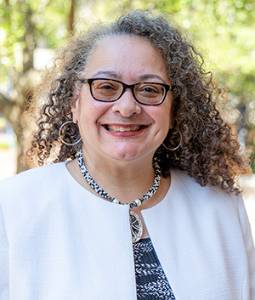
Lucía E. Cantero serves as an Assistant Professor of Cultural Studies at Claremont Graduate University, where she brings a political economic perspective to the study of aesthetics and power. Her academic journey, rooted in anthropology and African American studies, informs her critical analyses of contemporary cultural phenomena including consumerism, digital technologies, and urban environments.
Cantero's educational foundation was built at two of the nation's leading institutions. She earned her BA in Psychology and Visual Arts from The University of Chicago, followed by an MA in Social Sciences with a focus on Anthropology from the same university. She then pursued advanced degrees at Yale University, completing both an MA and PhD in Anthropology and African American Studies.
- PhD, Anthropology and African American Studies, Yale University
- MA, Anthropology and African American Studies, Yale University
- MA, Social Sciences - Anthropology, The University of Chicago
- BA, Psychology and Visual Arts, The University of Chicago
Her research program critically examines how consumer culture and digital infrastructures shape subjectivity and social relations. By analyzing branding, advertising, and algorithmic systems, Cantero reveals how race, class, gender, and sexuality are constructed through embodied 'kinaesthetic' processes. Current projects investigate facial recognition technology's racial biases and the transformation of intimate relations through prosthetic bodies and digital interfaces, demonstrating her commitment to understanding technology's role in reproducing and challenging power structures.
Cantero's scholarly output demonstrates a consistent engagement with the political dimensions of cultural production. Early work (2017) established her expertise in ethnographic theory and the cultural landscape of Rio de Janeiro. Her 2021 contributions expanded to co-editing a volume on Brazilian democracy and publishing on petro-affect and political scandal, while simultaneously addressing urgent contemporary issues through her research on machine learning biases in facial recognition systems. This trajectory reflects her ability to connect historical and ethnographic analysis with cutting-edge technological critique.
Scientific Awards: No scientific awards or major honors are mentioned in the available documentation.
While specific details about graduate student mentorship and grant funding are not provided in the source material, Cantero's active research agenda—particularly her collaborative project with data scientists on AI bias—suggests ongoing scholarly engagement that likely involves student researchers and external funding, though concrete information is absent from the current text.
Her current collaboration with data scientists on facial recognition technology indicates participation in interdisciplinary research networks. Though no formal laboratory structure is described, this partnership exemplifies her approach to bridging humanities perspectives with computational science to address societal challenges related to technology and inequality.