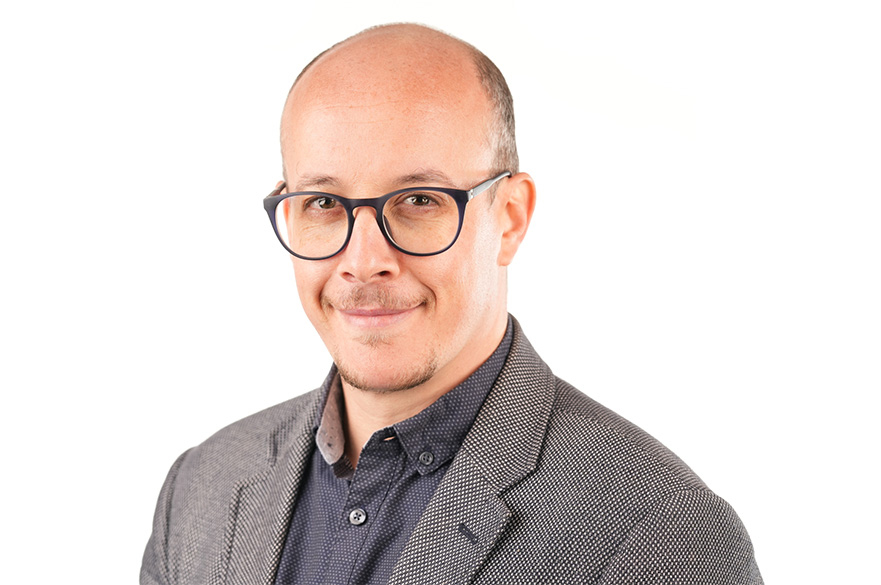
Sumanta Acharya is a Professor in the Department of Mechanical Engineering at Illinois Tech's Armour College of Engineering. His career spans computational methods, experimental fluid mechanics, and combustion, with affiliations including ASME, AIAA, and ASTFE. Ph.D. in Mechanical Engineering, University of Minnesota (1982) M.S. in Mechanical Engineering, University of Minnesota (1980) B.S. in Mechanical Engineering, Indian Institute of Technology (1978) A leading expert in thermal and fluid sciences, Acharya focuses on gas turbine heat transfer, turbulence modeling, and advanced cooling systems. His work integrates Computational Fluid Dynamics (CFD) with experimental validation for applications in biofuels , hydrogen combustion , and phase change materials . Recent publications highlight innovations in Brayton cycle integration, impingement cooling, and aerothermal performance optimization. Awarded by ASME, AIAA, and LSU, his honors include the ASME Heat Transfer Memorial Award (2011) and ASME Fellow (1999). He has contributed to key committees, including the ASME Heat Transfer Division Executive Committee and the Department of Energy's University Turbine Systems Research program. Researcher to Know, Illinois Science & Technology Coalition (2022) ASME Dedicated Service Award (2019) AIAA Thermophysics Award (2015) Contact: sacharya1@illinoistech.edu | Phone: 312.567.3701
Dr. Michael J Pekris is a Senior Lecturer in Mechanical Engineering Sciences at the University of Surrey, serving as Director of Employability within the School of Engineering. He holds a MEng and DPhil from the University of Oxford (2004), with a thesis on liquid crystal heat transfer in turbine blade cooling. His career includes R&D roles at Rolls-Royce, focusing on advanced seal technology and engine efficiency. He is a Chartered Engineer (CEng), Fellow of the IMechE (2023), and Fellow of the Higher Education Academy (FHEA). His research spans sustainable aviation, fluid dynamics, and heat transfer, with a focus on brush seals, hydrogen-fueled aircraft, and transcritical CO2 systems. He leads the Surrey Aerothermal Test Facility (SATF) and collaborates on projects like the Surrey Hydrogen Aircraft Performance Evaluator (SHAPE). He also serves as IMechE Academic Liaison Officer and Royal Academy of Engineering Visiting Professor Scheme Champion. Research interests include environmental technologies for aero-engine seals, sustainable aviation (electric/hydrogen), fluid dynamics, thermodynamic cycles, and rotating machinery. His work addresses energy efficiency, waste heat recovery, and low-emission propulsion systems. Notable contributions include Rolls-Royce Innovation Award (2013) and patents on seal technology. He actively engages in professional development initiatives and industry-academia partnerships. Publications emphasize seal dynamics, CFD modeling, and thermal management. Recent work explores hydrogen-fueled aircraft viability and CO2-based power systems. Collaborations involve Rolls-Royce, ASME Turbo Expo, and Surrey’s interdisciplinary engineering teams. His academic roles include teaching Structural Vibrations and Engineering Management, and advising the Professional Training Year module.
Parviz Moin holds the Franklin P. and Caroline M. Johnson Professorship in Stanford University's School of Engineering. As founding director of the Center for Turbulence Research (CTR)—a NASA-Stanford consortium established in 1987—he has pioneered computational methods for turbulence physics, including direct numerical simulation and Large Eddy Simulation (LES) techniques. CTR serves as an international hub for turbulence studies across engineering, mathematics, and physics disciplines. Moin's research encompasses computational physics of turbulent flows, with emphasis on boundary layer control, hypersonic aerodynamics, propulsion systems, and aircraft icing. His recent work advances high-fidelity simulations for aerospace applications, particularly developing wall models for LES that accurately capture separation phenomena under complex pressure gradients and Reynolds number effects. Recent publications demonstrate extensive applications of LES to aircraft design challenges, including transonic buffet prediction, high-lift configuration analysis, and icing aerodynamics. Investigations consistently address fundamental turbulence physics while developing practical computational tools for aerospace engineering, with particular focus on hypersonic boundary layers, flow separation mechanisms, and conjugate heat transfer in iced environments.
Sheryl Grace is an Associate Professor of Mechanical Engineering at Boston University, leading the Unsteady Fluid Mechanics & Acoustics Laboratory (UFMAL). Her primary appointment is in the Department of Mechanical Engineering within the College of Engineering. She holds a PhD from the University of Notre Dame. Her research focuses on unsteady aerodynamics, aeroacoustics, and fluid-structure interactions, with applications in aerospace systems, propulsion technologies, and biological acoustics. Notable projects include NASA-funded work on quieter vertical lift vehicles and computational modeling of gerbil hearing mechanics. Professor Grace’s research interests span aerodynamics, fluid dynamics, and acoustics. She develops analytical and computational models to predict sound and vibration generated by unsteady flows interacting with solid structures. Recent studies include noise reduction in aircraft wings, turbine blade fatigue analysis, and acoustic scattering in gerbil ears. Her work bridges theoretical models with practical engineering solutions, emphasizing cost-effective predictive tools for next-generation systems. Her publications highlight advancements in shock-droplet interactions, cavitation modeling, and machine learning applications in aeroacoustics. Collaborative projects include multi-institutional efforts to address urban air vehicle noise challenges. While no explicit awards are listed, her contributions to computational acoustics and fluid dynamics are recognized through extensive peer-reviewed output. Advising and grants: Professor Grace leads the UFMAL lab and has secured funding from agencies like NASA. Her research integrates fluid mechanics, acoustics, and computational methods to address industrial and environmental noise issues. She collaborates across disciplines, including mechanical engineering, aerospace, and biomedical acoustics.
David Bogard is a Professor in the Department of Mechanical Engineering at The University of Texas at Austin, holding the Baker Hughes Incorporated Centennial Professorship. He leads research in thermal-fluid systems and turbulence, with a focus on turbine blade cooling and drag reduction. His work combines experimental and computational methods to optimize film cooling designs, thermal barrier coatings, and internal cooling channel configurations. Key contributions include studies on shaped film cooling holes, additive manufacturing applications, and crossflow effects in turbine components. Educational background: Ph.D. in Mechanical Engineering from Purdue University (1982). Joined UT Austin faculty immediately post-Ph.D. Research interests emphasize turbine aerothermal performance, with specializations in: Adjoint-optimized film cooling hole geometries Compressible flow effects on cooling efficacy Additive manufacturing for turbine cooling components Thermal degradation mechanisms and contaminant deposition Recent work includes evaluating adjoint-optimized cooling hole performance (2024), printability of additively manufactured cooling geometries (2023), and crossflow-fed shaped hole analysis (2022). His research bridges fundamental fluid mechanics with industrial turbine design challenges. Awarded the 2002 Outstanding Graduate Advisor at UT Austin. Over 130 technical publications span experimental validation, CFD modeling, and turbine cooling innovation. Active in collaborative industry projects with companies like Baker Hughes. Labs/Teams: Turbulence and Turbine Research Cooling Laboratory. Collaborates with research centers focusing on aero-thermal systems and advanced manufacturing.
Dr. Kidambi Sreenivas is an Associate Professor in Mechanical Engineering at the University of Tennessee at Chattanooga (UTC), affiliated with the College of Engineering and Computer Science. He holds a PhD in Mechanical Engineering and specializes in computational fluid dynamics (CFD), with a focus on unstructured multi-physics flow solvers and applications in aerospace, environmental systems, and biomedical engineering. His research bridges academia and industry, collaborating with NASA, the U.S. Navy, Department of Energy, and private companies. Dr. Sreenivas' research interests include rotating machinery simulations, pre-conditioners for non-ideal fluids, and real-world applications such as submarine hydrodynamics, wind farm optimization, aerodynamic efficiency of vehicles, and contaminant dispersal modeling. He has pioneered methods for simulating complex geometries and physics, including high-fidelity simulations of hypersonic vehicles, weapons bay cavities, and shock-wave interactions. Recent work emphasizes advanced CFD methodologies for high-speed flows, thermal effects on turbulence, and aerothermal characteristics of hypersonic test articles. His collaborations have led to practical solutions for drag reduction on Class 8 trucks and improved accuracy in wind turbine modeling. Dr. Sreenivas also contributes to educational initiatives, such as developing PIV systems for undergraduate fluid mechanics labs. His advising and grants reflect partnerships with federal agencies and private sectors, focusing on projects like microplastic sampling devices for stormwater management. These projects highlight his interdisciplinary approach to solving real-world engineering challenges through cutting-edge computational methods.
Marco Panesi is a Professor in the Department of Aerospace Engineering at the University of Illinois at Urbana-Champaign and Director of the Center for Hypersonics and Entry Systems Studies (CHESS). His research focuses on non-equilibrium phenomena in high-enthalpy flows, plasma dynamics, and uncertainty quantification. He holds a Ph.D. from the von Kármán Institute for Fluid Dynamics (2009) and M.S. degrees from Università di Pisa (2003) and VKI (2005). Roles: Faculty Member, Research Director, Principal Investigator Key Affiliations: CHESS, University of Illinois, VKI Research Interests: Hypersonic flow modeling, non-equilibrium plasmas, radiation effects, machine learning applications in aerothermodynamics, ablation processes, and state-to-state chemistry. His work bridges computational fluid dynamics with experimental validation in facilities like the Plasmatron X wind tunnel. Publications: Over 100 peer-reviewed articles on topics ranging from plasma kinetics to thermal protection systems. Recent work emphasizes adaptive neural operator models and Bayesian uncertainty quantification. Awards: Includes the Vannevar Bush Faculty Fellowship (2021), NASA Groundbreaker Award (2021), and multiple early-career recognitions from AFOSR, NASA, and ESA. Grants & Leadership: Secured funding from NSF, NASA, and DOD. Leads multidisciplinary teams on projects like the CHyPS material response solver and hypersonic entry modeling. Labs & Facilities: Principal investigator for the UIUC Plasmatron X facility, a key resource for studying high-enthalpy plasma flows.
Jens von Wolfersdorf is a Professor at the University of Stuttgart's Faculty of Engineering, Department of Mechanical Engineering. His research focuses on advanced thermal management systems for high-speed aerospace applications, particularly in the areas of heat transfer, fluid dynamics, and combustion. He specializes in experimental and numerical methods for analyzing complex flows in rotating and stationary cooling channels, transpiration cooling for rocket engines, and turbulence modeling. His work integrates cutting-edge techniques such as thermochromic liquid crystal (TLC) measurements, particle image velocimetry (PIV), and computational fluid dynamics (CFD) to validate novel cooling configurations. Key projects include the COOREFLEX-Turbo initiative and contributions to the European ATLLAS-II program for high-speed vehicle materials. Recent studies emphasize rotational heat transfer effects in two-pass cooling channels, additive manufacturing of ribbed cooling structures, and validation of coupled FEM-CFD frameworks. His research addresses challenges in aerospace thermal protection, turbine blade cooling, and scramjet combustor efficiency. Publications span over 15 years, with a focus on transient heat transfer, flow visualization, and material characterization for transpiration-cooled systems. Collaborations involve experimental facilities for high-speed flows and advanced thermal measurement systems.
Dr. Hope Michelsen is an Associate Professor in the Department of Mechanical Engineering at the University of Colorado Boulder, specializing in Thermo Fluid Sciences and Air Quality. Her research focuses on carbonaceous particle formation mechanisms, combustion diagnostics, and their environmental impacts. She leads efforts in developing laser/X-ray-based diagnostic tools for studying soot evolution in flames and atmospheric systems. Research Interests include soot inception/growth, black carbon climate effects, and particle synthesis control. She has pioneered studies on resonance-stabilized radicals' role in soot formation and developed novel sampling techniques like jet-entrainment methods. Her work bridges fundamental combustion science with practical applications in air quality and climate mitigation. Awards: Fellow, American Physical Society Fellow, The Optical Society Alameda County Women’s Hall of Fame Inductee Lab facilities include advanced diagnostics at ECME 1B68/ECNW 180. Research collaborations involve multi-scale modeling of emissions and atmospheric transport. Current projects address wildfire soot dynamics and Arctic methane monitoring through inverse modeling techniques.
Dr. Zak Mansouri serves as a Senior Lecturer in Aerospace Engineering at Nottingham Trent University's School of Science & Technology, where he acts as Course Director for Aerospace Engineering and leads the Development and Diagnostic of Alternative Fuels (DDAF) Laboratory. A core member of the Imaging, Materials and Engineering Research Centre (IMEC), he oversees critical engineering modules including Solid Mechanics & Dynamics and Advanced Dynamics & Vibration as Module Leader, shaping curriculum for undergraduate and postgraduate aerospace programs. His academic foundation includes a PhD from Algeria's University of Laghouat (2016), doctoral research at France's CNRS, and postdoctoral work at the French Alternative Energies and Atomic Energy Commission. Key milestones: PhD in Combustion Engineering, University of Laghouat (2016) Doctoral Researcher, CNRS France (2013-2016) Postdoctoral Researcher, CEA France (2016-2017) Mansouri's research pioneers net-zero combustion technologies, with current focus on iron fuel systems (funded by The Royal Society), hydrogen combustion dynamics, and aerothermal optimization of gas turbines. His expertise bridges experimental diagnostics and computational fluid dynamics to address combustor-turbine interactions in next-generation aero engines, directly supporting global decarbonization efforts in aerospace and energy sectors through industry-academic partnerships. Analysis of his 2021-2025 publications reveals a cohesive research trajectory centered on turbine performance under non-ideal conditions, with growing emphasis on alternative fuels. His work consistently targets aerothermal challenges in gas turbines—particularly hot-streak and swirl effects—while expanding into micro-combustion systems for hydrogen and metal powders, demonstrating a strategic shift toward scalable net-zero propulsion solutions. His scientific recognition includes: ANR Research Fellowship (2017) for low-carbon combustion technology (€50,000) Mansouri secures competitive funding from The Royal Society and previously from French National Research Agency, with industrial consultancy contributions to €2.5M projects at GE Renewable Energy modernizing hydropower infrastructure. He actively supervises PhD candidates through NTU's Doctoral School, prioritizing projects in sustainable combustion and turbomachinery, and maintains open collaboration channels for industrial R&D partnerships. He directs the DDAF Laboratory's experimental research on alternative fuel diagnostics and leverages IMEC's multidisciplinary facilities for thermal-fluid investigations. His global network integrates industrial partners (Lanemark, ArcelorMittal, TSI) with academic institutions across France and Algeria, driving innovation in turbine cooling systems and zero-emission combustion through shared expertise in computational modeling and experimental validation.
Simone Salvadori is an Associate Professor at the Department of Energy (DENERG) of Politecnico di Torino, specializing in Computational Fluid Dynamics, Heat Transfer, and Turbomachinery. His research intersects Aerospace Engineering , Propulsion , and Energy Sustainability (SDG 7 & 9). He leads the EnaTech-RDE project on CO2-Free Rotating Detonation Engines and contributes to H2POWRD for hydrogen propulsion systems. Editorial roles: Guest Editor for Frontiers in Aerospace Engineering and Applied Sciences , Member of Energies Editorial Board. Organizing Committee Member for 8th ART Summer School (2024) and multiple international conferences including Aerospace Europe Conference 2023. His research focuses on pressure gain combustion , film cooling optimization , and machine learning-driven turbine design . He employs advanced computational tools to analyze unsteady flows, cavity dynamics, and exhaust systems in gas turbines, with applications to hydrogen/natural gas blends and rotating detonation engines . Salvadori supervises PhD students in projects related to high-pressure turbine vane coupling , cooling channel optimization , and exhaust flow control . He collaborates with the TEP Research Group and networks like ETN Global (Energy & Turbomachinery Network).
Dr. Serhat Hosder is the James A. Drallmeier Centennial Professor in the Department of Mechanical and Aerospace Engineering at Missouri S&T. He serves as Director of the Aerospace Simulations Laboratory, focusing on computational aerothermodynamics, hypersonic flow modeling, and uncertainty quantification for planetary entry systems. Professor of Aerospace Engineering (2019–present) Director, Aerospace Simulations Lab Advisor to students receiving NASA Space Technology Research Fellowships and Amelia Earhart Fellowships Research funded by NASA, DoD, and NSF Research Interests: Computational aerothermodynamics, hypersonic flow modeling, uncertainty quantification, multi-fidelity methods, directed energy applications, planetary entry systems, and aerodynamic shape optimization. His work combines numerical methods with robust design principles for high-speed vehicles. Scientific Awards: Missouri S&T Outstanding Faculty for Contributions to Graduate Studies Award (2022) Fellow of the Royal Aeronautical Society (2021) NASA Langley Research Center Henry J. E. Reid Award (2018) Associate Fellow of AIAA (2017) Missouri S&T Faculty Research Awards (2015, 2012) Advising & Grants: His students have secured positions at NASA, Sandia National Labs, and academia. Research funded by DoD Joint Hypersonics Transition Office, NASA (Langley, JPL), Missile Defense Agency, NSF, and industry partners like M4 Engineering, Inc.
Piotr Koniorczyk is a full professor at the Military University of Technology, specializing in mechanical engineering and thermal sciences. His research focuses on thermophysical properties of materials, heat transfer in engineering systems, and advanced materials for aerospace and defense applications. He has published over 91 articles and supervised 12 promoted theses, demonstrating expertise in topics such as thermal analysis of metals, composite materials, and thermal management systems. His work includes studies on steel barrel heat transfer in firearms, thermophysical properties of tool steels, and passive cooling solutions for high-power electronics. Notable projects involve numerical simulations of heat transfer in rocket engines and gun barrels, as well as investigations into phase-change materials for thermal energy storage. His research has contributed to advancements in materials science, thermal engineering, and aerospace technology.
Owen Williams is a Research Associate Professor in the William E. Boeing Department of Aeronautics and Astronautics at the University of Washington, with a focus on turbulent and hypersonic flows. He holds a PhD from Princeton University and an MEng from Imperial College, London. His research explores unsteady turbulent flows, hypersonic boundary layers, and renewable energy systems like rotating foils for hydrokinetic power generation. Dr. Williams has held prior positions, including Research Associate at the University of Maryland. His work addresses challenges in compressible turbulence, shock interactions, and flow separation dynamics. He leads the Williams Lab, which investigates turbulence modeling, flow control, and aerospace applications. Recent student achievements include Kevin Manohar's Herbold Fellowship and Abigale Snortland's graduation to PNNL. Research Interests: Fluid mechanics, turbulence dynamics, hypersonic flow physics, stratified atmospheric flows, and renewable energy systems. His lab focuses on improving predictive models for vehicular and environmental flows through experimental and computational methods. Recent Contributions: Studies on asymmetric flow phenomena, cross-flow turbine performance optimization, and supersonic retropropulsion. His work bridges fundamental turbulence studies with practical applications in aerospace and energy sectors. Lab Activities: Active in mentoring students and overseeing projects like the Pacific Marine Energy Center. Lab members have presented at SHARC Week and Space Grant's SURP program, showcasing innovations in hypersonic testing and turbine design.
Professor Richard Morgan is an academic at the University of Queensland's School of Mechanical and Mining Engineering, where he served as Director of the Centre for Hypersonics from 1997 to 2021. His research specializes in hypervelocity aerothermodynamics, scramjet propulsion, and advanced hypersonic testing facilities. He lectures in mechanical and aerospace engineering and maintains an extensive international research program. His research focuses on: Development of hypervelocity impulsive facilities (including the 'X' series expansion tubes) Hypersonic aero-thermo-dynamics and radiation physics Scramjet propulsion systems for high-speed flight Planetary entry phenomena including ablation and radiation coupling Superorbital ground testing methodologies Analysis of recent publications reveals a dominant focus on experimental hypersonics, particularly in expansion tube facility development, radiation measurement techniques, planetary entry simulations, and aerodynamic heating. His work consistently addresses challenges in recreating extreme flight conditions for spacecraft and missile technologies. Awards and honors include: NASA Ames Honour Award (2010) for contributions to Hayabusa asteroid sample return mission observations UQ Excellence in Research Higher Degree Supervision Award (2012) He leads significant research collaborations with DSTG, NASA, ESA, Oxford University, and Ecole Centrale Paris, supported by continuous ARC funding since 1990 including current Discovery grants. His laboratory develops cutting-edge facilities like the X3 expansion tube and T6 Stalker Tunnel for hypersonic testing.