Massachusetts Institute of TechnologyUnited States
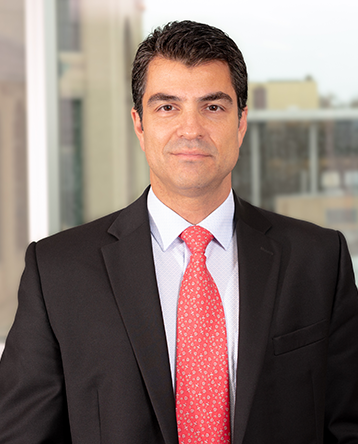
Luca Carlone is the Boeing Career Development Associate Professor in the Department of Aeronautics and Astronautics at MIT and a Principal Investigator at the Laboratory for Information & Decision Systems (LIDS) . He leads the SPARK Lab , focusing on developing certifiable perception algorithms for autonomous systems. PhD in Mechatronics (Polytechnic University of Turin, 2012) Research spans robotics, computer vision, and optimization Research Interests : Certifiable Perception algorithms for high-integrity systems High-level Perception (geometric, semantic, physical understanding) Efficient Perception methods for resource-constrained robots Scientific Contributions include: 2024 Outstanding Systems Paper Award (RSS) 2023 IEEE Transactions on Robotics King-Sun Fu Award 2021 NSF CAREER Award 2020 AIAA Advising Award 2019 Amazon Research Award Advising : Teaches graduate courses like Visual Navigation for Autonomous Vehicles and Robotics: Science and Systems . Collaborates with institutions including JPL, Caltech, and KAIST through the DARPA SubT Challenge.
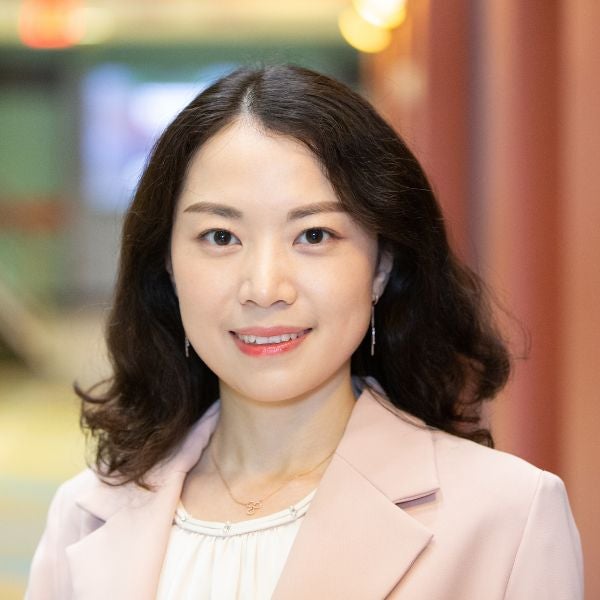
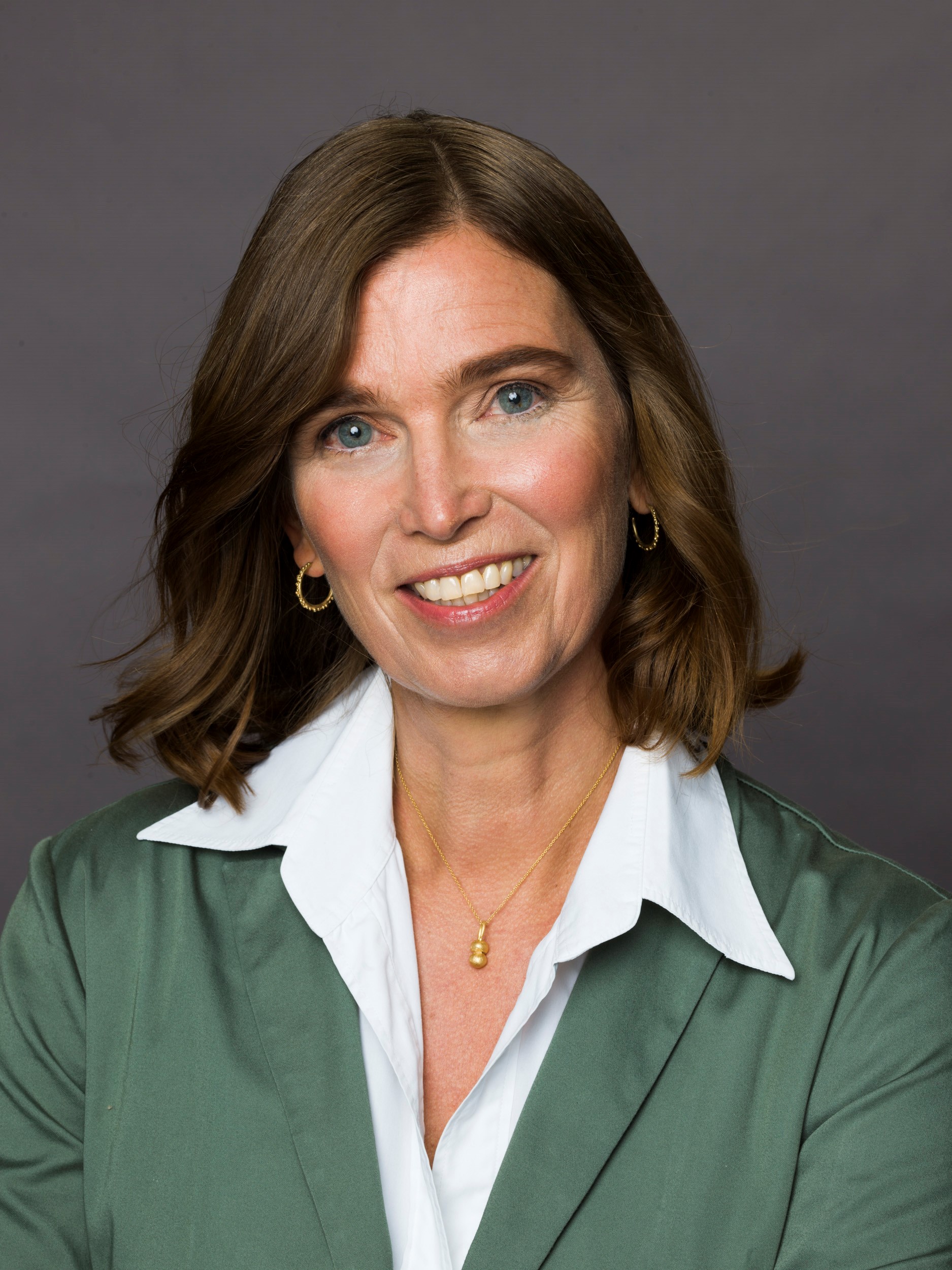
Hanjie Chen is an Assistant Professor in the Department of Computer Science at Rice University, affiliated with the Ken Kennedy Institute. She holds a Ph.D. from the University of Virginia and a Master's from the University of Science and Technology of China. Her research focuses on Natural Language Processing, Interpretable Machine Learning, and Trustworthy AI, emphasizing model explainability, alignment with human needs, and applications in healthcare, sports, and medicine. She has advised numerous students and led initiatives in AI ethics and education. Education: Ph.D. (Computer Science, UVA 2023), M.Sc. (USTC 2018), B.Sc. (Nanjing University of Aeronautics and Astronautics 2015). Awards include the Outstanding Doctoral Student Award (UVA 2023) and John A. Stankovic Research Award (UVA 2023). She has organized workshops like BlackboxNLP and served on program committees for ACL, NAACL, and EMNLP. Her recent work includes developing benchmarks like SPORTU for multimodal LLMs, evaluating medical question-answering systems, and advancing methods for robust rationale evaluation (RORA). She teaches courses on Natural Language Processing and Trustworthy NLP, emphasizing pedagogical innovation recognized by teaching awards at UVA. Research collaborations include internships at Microsoft Research, IBM, and the Allen Institute for AI. She mentors students in SURF programs and advocates for diversity in tech, serving as a mentor in UVA's CSGSG Council.
Farzad Mashayek is a Professor and Department Head of Aerospace and Mechanical Engineering at the University of Arizona, College of Engineering. He is a member of the Graduate Faculty and leads the Computational Multiphase Transport Laboratory. His research integrates high-fidelity simulations, machine learning, and experimental validation across diverse domains in fluid dynamics and energy systems. Educational Background: PhD in Mechanical Engineering, State University of New York at Buffalo, Buffalo, NY MS in Mechanical Engineering, Sharif University of Technology, Tehran, Iran BS in Mechanical Engineering, Sharif University of Technology, Tehran, Iran His research interests include turbulent reacting flows, plasma dynamics, electrostatic atomization, solid-ion and lithium batteries, computational fluid dynamics, and machine learning applications in engineering. He employs high-order spectral element methods, phase-field modeling, and deep neural networks to study complex multiphysics phenomena such as drop impact, battery degradation, and turbulence modeling. The recent publications reflect a strong trend toward integrating machine learning with multiphysics simulations, particularly in battery safety (thermal runaway prediction), materials characterization (STEM image analysis), and fluid dynamics (modal analysis of turbulence). His work often involves collaboration with experimental groups to validate models, especially in dental aerosol suppression and electrohydrodynamics. Scientific Awards: Sustained Service Award, American Institute of Aeronautics and Astronautics (AIAA), Spring 2022 Best Presentation Award, The 20th International Conference on Computational Mathematics, Parallel and Distributed Computing, Summer I 2018 Dr. Mashayek has secured funding from NSF (GOALI program) for controlled coating via charged droplet deposition. He advises graduate students and postdoctoral researchers in computational mechanics and energy systems, fostering interdisciplinary research. He has contributed to engineering education, particularly during the pandemic, with active learning strategies in online instruction. He leads a dynamic research team focused on advancing simulation tools and applying them to real-world challenges in energy, manufacturing, and public health.
Gianluca Iaccarino is a Professor of Mechanical Engineering at Stanford University and the Robert Bosch Chairholder. He serves as Director of the PSAAP Center and leads large-scale computational research initiatives in uncertainty quantification, exascale computing, and multiphysics simulations. His academic journey includes a PhD in Mechanical Engineering from Politecnico di Bari (2005), postdoctoral work at Stanford's Center for Turbulence Research, and progression from Research Engineer to full Professor. Education : PhD (Politecnico di Bari), MS/BS in Aeronautical Engineering (University of Naples) Research : Computational engineering, turbulence modeling, uncertainty quantification, biomedical fluid dynamics, and exascale-ready algorithms Publications : 15+ recent articles focus on turbulence modeling, data-driven simulations, and uncertainty quantification across diverse applications in aerospace, biomedical, and energy systems Awards : PECASE (2010), APS Fellow (2019), multiple best paper awards (AIAA, ASME), Terman Fellow (2007) Students : Advises doctoral and master's students in mechanical engineering and computational methods Leadership : Director of PSAAP Center (2014-present), Chair of Mechanical Engineering Department (2024-present)
Trevor Campbell is an Associate Professor in the Department of Statistics at the University of British Columbia (UBC), Vancouver. He holds a Ph.D. in Machine Learning and Statistics from MIT and a B.A.Sc. in Aerospace Engineering from the University of Toronto. His research focuses on automated, scalable Bayesian inference algorithms, Bayesian nonparametrics, and streaming data analysis. Campbell is a core contributor to probabilistic programming tools like Pigeons.jl and has developed influential methods for coreset-based Bayesian inference. Education : Ph.D. in Machine Learning and Statistics (2016), MIT M.S. in Aeronautics and Astronautics (2013), MIT B.A.Sc. in Aerospace Engineering (2011), University of Toronto Research Interests : His work emphasizes scalable Bayesian computation, including variational inference, MCMC optimization, and coresets. He develops algorithms that balance statistical accuracy with computational efficiency, particularly for large-scale datasets. His recent work explores adaptive samplers (e.g., AutoStep, autoMALA) and theoretical guarantees for coreset methods. Applications span astrophysics, materials science, and network analysis. Awards & Grants : NSERC Discovery Grant (2025) Blackwell-Rosenbluth Award (2021) PIMS Early Career Award (2023) Google Perception Academic Funding (2020) Advising & Labs : He supervises a team of PhD and M.Sc. students at UBC, focusing on Bayesian methodology and computational tools. His lab collaborates with institutions like SFU and MIT on projects involving distributed sampling and probabilistic modeling. He co-organizes workshops on Bayesian computation and serves on editorial boards for Bayesian Analysis and TMLR.
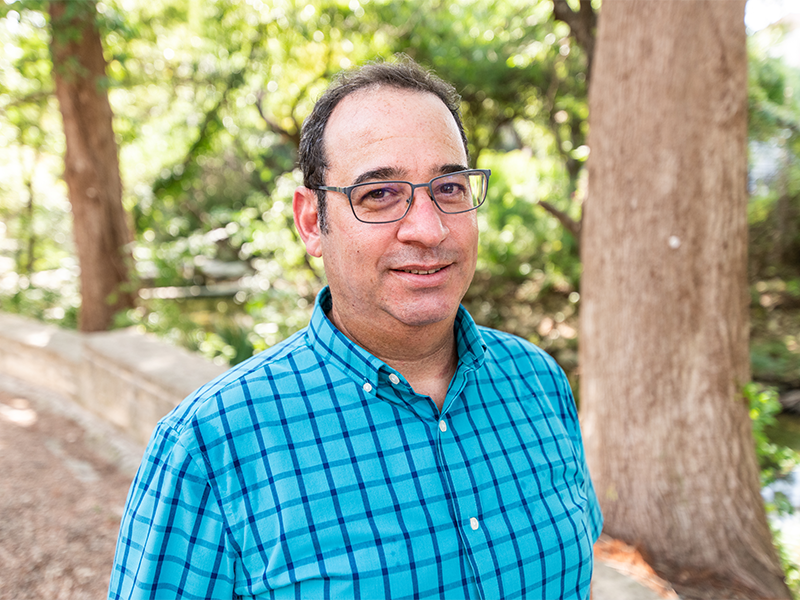
Desiderio Kovar is a Professor at the University of Texas at Austin holding the BFGoodrich Professorship in Materials Engineering and the Distinguished Teaching Professor title within the Department of Mechanical Engineering at the Cockrell School of Engineering. He is affiliated with the Texas Materials Institute, the Center for Electromechanics, and is a core member of the Center for Additive Manufacturing and Design Innovation. Dr. Kovar currently serves as the Associate Chair for Academics for the Mechanical Engineering Department. Dr. Kovar's research focuses on the interface between materials science and engineering and additive manufacturing, with particular expertise in ceramic processing. His work encompasses Advanced Design and Manufacturing, Advanced Materials Science and Engineering, and Nano and Micro-scale Engineering. He teaches undergraduate and graduate classes in the Materials Engineering area, having developed the Materials Science and Engineering minor in 2018, the first minor in Engineering at UT Austin. His recent publications (2023-2025) demonstrate a strong focus on ceramic additive manufacturing processes, particularly Selective Laser Flash Sintering and Micro-Cold Spray technologies. These works explore fundamental mechanisms of high-velocity particle impact, sintering kinetics, and process optimization for ceramic film and part production, reflecting his pioneering work in direct ceramic additive manufacturing without polymer binders. Dr. Kovar has received numerous prestigious awards for his teaching and research: Engineering Foundation Young Faculty Excellence Award (2000) Teaching Excellence Award from the Student Engineering Council (2000) Cockrell School of Engineering's Jack and Maxine Zarrow Family K-16 Teaching Innovation Award (2014) Lockheed Martin Aeronautics Company Award for Excellence in Engineering Teaching (2016) Mechanical Engineering Department's Teaching Award (2016) University of Texas' Outstanding Graduate Advisor (2012) Inducted into the University of Texas at Austin's Academy of Distinguished Teachers (2019) Dr. Kovar has supervised 47 undergraduate students, 21 MS theses, and 17 Ph.D. dissertations, and currently supervises 12 graduate students and one undergraduate student. His research has been generously funded by the National Science Foundation, Los Alamos National Laboratory, Sandia National Laboratory, the Army Research Laboratory, the Office of Naval Research, the US Department of Energy, and various corporate sponsors. In 2013, he founded the Cockrell School's Longhorn Maker Studio, which evolved into Texas Inventionworks. Dr. Kovar leads the Kovar Research Group which currently includes multiple graduate students and postdoctoral researchers working across three main research thrusts: Additive Manufacturing of Ceramics by Selective Laser Flash Sintering, Additive Manufacturing of Ceramics by Indirect Selective Laser Sintering, and Direct Writing of Patterned Films and Devices using the Micro-cold Spray Process.
Salvador Navarro-Martinez is a Visiting Professor in the Department of Mechanical Engineering at Imperial College London, affiliated with the Energy Futures Lab and Thermofluids research groups. He holds a Mechanical Engineering degree from the University of Zaragoza (Spain) and a PhD in Aeronautics and Astronautics from the University of Southampton, where his doctoral work focused on numerical simulations of hypersonic flows and heat transfer for planetary re-entry systems. BEng (Ingeniero Industrial): University of Zaragoza, Spain PhD: University of Southampton, UK His research interests span combustion modeling, spray atomization, and computational fluid dynamics. Notable achievements include the Sugden Award (Combustion Institute, 2005 & 2007) and a Royal Society University Fellowship (2009) for studying droplet size distributions. His work bridges aerospace engineering, applied mathematics, and interdisciplinary engineering applications. He has contributed to Large Eddy Simulation (LES) frameworks for combustion systems and has expertise in experimental measurements of complex fluid dynamics. His current role at Imperial College emphasizes collaborative research in energy-efficient technologies and advanced thermal management systems.
Burak Ozdoganlar is a Ver Planck Endowed Chair Professor of Mechanical Engineering at Carnegie Mellon University (CMU) and Associate Director of the Engineering Research Accelerator. He holds courtesy faculty positions in Biomedical Engineering and Materials Science and Engineering. Ozdoganlar earned his Ph.D. in Mechanical Engineering from the University of Michigan (1999), M.S. degrees from Ohio State University (1993, 1995), and a B.S. in Aeronautical Engineering from Istanbul Technical University (1991). Ph.D., Mechanical Engineering, University of Michigan (1999) MS, Mechanical Engineering, Ohio State University (1995) MS, Aeronautical and Astronautical Engineering, Ohio State University (1993) BS, Aeronautical Engineering, Istanbul Technical University (1991) Ozdoganlar’s research focuses on multi-scale manufacturing processes (macro/micro/nano), precision engineering , structural dynamics , and modal testing , with applications in biomedical device fabrication , microneedle arrays , soft electronics , and 3D ice printing for vascular networks. His work bridges computational modeling with experimental validation. Recent scientific awards include the 2023 AIMBE College of Fellows induction, ASME Fellow (2019), and NSF CAREER Award (2006). He served as interim CTO of the Advanced Robotics for Manufacturing (ARM) Institute and chaired the ASME-MED Manufacturing Equipment Technical Committee. Ozdoganlar leads projects in scalable manufacturing for implantable medical devices , bioelectric medicine , and wearable robotics . His lab develops 3D ice-printed vascular templates for tissue engineering and liquid metal circuits for soft electronics, funded by institutions like the Manufacturing Futures Institute and ARPA-H.
Veronika Eyring serves as Head of the Earth System Model Evaluation and Analysis Department at the German Aerospace Center (DLR) Institute of Atmospheric Physics and Professor of Climate Modelling at the University of Bremen. She holds dual appointments at these leading institutions, directing cutting-edge research at the intersection of climate science and artificial intelligence. Education: 2008: Habilitation in Environmental Physics at the University of Bremen 1999: PhD in Physics from the University of Bremen 1994: Diploma in Physics from the University of Erlangen Professor Eyring's research program focuses on improving climate models and projections through innovative integration of machine learning techniques and spaceborne Earth observations. Her work spans process-oriented modeling, development of observationally-based performance metrics, and understanding systematic biases in climate models. She has pioneered approaches to weighting model projections based on their performance using machine learning, significantly advancing the field of climate model evaluation. Her research has critical applications across multiple sectors including aeronautics, space research, transportation, and energy systems. Analysis of her recent publications reveals a clear trajectory toward deeper integration of machine learning with traditional climate modeling approaches. Her work has increasingly focused on developing community tools like the Earth System Model Evaluation Tool (ESMValTool) and leading major international initiatives such as the USMILE project (Understanding and Modelling the Earth System with Machine Learning). The publications span climate science, machine learning, Earth system modeling, and remote sensing, with specific emphasis on climate model evaluation, parameterization techniques, and improved climate projections. Scientific Awards: AGU Ambassador Award (2024) TUM Distinguished Affiliated Professor (2024) Gottfried Wilhelm Leibniz Prize (2021) ERC Synergy Grant (2019) Thomson Reuters Highly Cited Researcher (2016-2021) Top female researchers award, Helmholtz-Society (2015) Professor Eyring actively supervises a large research group comprising PhD students working on ML-based sea ice parameterizations, causal model evaluation for air-sea interactions, and machine learning-based detection of droughts in climate projections. She leads the prestigious ERC Synergy Grant USMILE and secured significant funding through the DFG Gottfried Wilhelm Leibniz Prize. Her research group at DLR includes multiple postdocs, research scientists, and software engineers working collaboratively on climate informatics projects. Professor Eyring leads the Earth System Model Evaluation and Analysis Department at DLR, which encompasses research groups focused on CMIP model evaluation, ESMValTool development, and machine learning applications in climate science. She founded and supervises the 'Climate Informatics' Group at the DLR Institute for Data Science in Jena. Her department maintains strong international collaborations, particularly with the National Center for Atmospheric Research (NCAR) in Boulder, Colorado, where she serves as an Affiliate Scientist.
Shafiul Monir serves as Senior Lecturer in Engineering, Associate Dean (International and Partnerships), and Programme Leader for the MSc in Engineering at Wrexham University, with contact details including Room D30, phone 01978 293151, and email s.monir@wrexham.ac.uk. His academic qualifications include: BEng (Hons) in Aeronautical Mechanical Engineering from Wrexham University (2008) MSc in Aeronautical Engineering specializing in Computational Fluid Dynamics (CFD) modelling PhD in Low Carbon Research from University of Wales (awarded 2018) under Wrexham University's auspices Monir's research centers on solar photovoltaic technology development, particularly applying computational fluid dynamics to optimize thin-film deposition processes for Cadmium Telluride (CdTe) solar cells. His expertise spans atmospheric pressure metalorganic chemical vapour deposition (AP-MOCVD), thin-film uniformity challenges, and renewable energy systems engineering, with significant contributions to advancing sustainable photovoltaic manufacturing techniques. He is a core member of the Centre for Solar Energy Research (CSER), participating in the Solar Photovoltaic Academic Research Consortium (SPARC) Cymru project funded by the Lower Carbon Research Institute (LCRI). His doctoral research received support through the Knowledge Economy Skills Scholarships (KESS) program, European Social Fund (ESF), and Scanwel Ltd sponsorship.
Prof. Dr. Mirko Hornung is a Professor of Aircraft Design at the TUM School of Engineering and Design, Technische Universität München. His research focuses on conceptual aircraft design, integration of propulsion systems, and evaluation of aviation technologies in operational contexts. Education and Career: PhD in Aeronautical Engineering from the University of the Bundeswehr (2003), awarded a research prize for work on reusable space transport systems. 2003–2009: Worked at Airbus Group (EADS) on military air systems, propulsion integration, and program management. Executive Director of Research & Technology at Bauhaus Luftfahrt, a think tank for long-term aviation developments. Research Interests: Aircraft design optimization, including hybrid energy systems, electric propulsion, and UAV technologies. Environmental sustainability in aviation, such as hydrogen-powered aircraft and lifecycle assessment. Aerodynamic and structural analysis, including flutter suppression and composite materials. Key Publications Highlight Trends: Focus on hybrid-electric and hydrogen propulsion for reducing environmental impact. Advancements in UAV design, including morphing wings and autonomous systems. Integration of AI-driven tools for propulsion optimization and lifecycle analysis. Scientific Awards: EADS Promotion Award (1995) Research Prize for Thesis on Reusable Space Transport Systems (2003) Advising & Grants: Directs research at Bauhaus Luftfahrt, collaborating on future aviation concepts. Engaged in interdisciplinary projects like FLEXOP UAV demonstrator and Ce-Liner eMobility studies. Labs/Teams: Active in the Aircraft Design Professorship at TUM and leadership roles at Bauhaus Luftfahrt, focusing on next-generation aviation technologies.
California Institute of Technology (Caltech)United States
Beverley J. McKeon is a Professor of Mechanical Engineering at Stanford University, previously holding the Theodore von Kármán Professorship in Aeronautics at Caltech. Her research focuses on fluid mechanics, particularly turbulence, flow control, and boundary layer dynamics. She earned her B.A. and M.Eng. from the University of Cambridge, and her Ph.D. from Princeton University. McKeon's work integrates experimental and theoretical approaches to manipulate wall-bounded flows for drag reduction and performance enhancement. Her research interests include resolvent analysis, high Reynolds number turbulence, and the application of machine learning to fluid dynamics. She has led interdisciplinary projects on morphing surfaces and viscoelastic turbulence. Awarded the Vannevar Bush Faculty Fellowship and PECASE, McKeon has been recognized for her teaching and mentoring. Her honors include Fellowships from the APS and AIAA. She chairs editorial boards for journals like Physical Review Fluids and has served on national committees for theoretical and applied mechanics. Her academic leadership includes roles as Deputy Chair of Caltech’s Division of Engineering and Applied Science and Associate Director of GALCIT. She advises numerous students and collaborates globally on initiatives like the Stories of Women in Fluids.
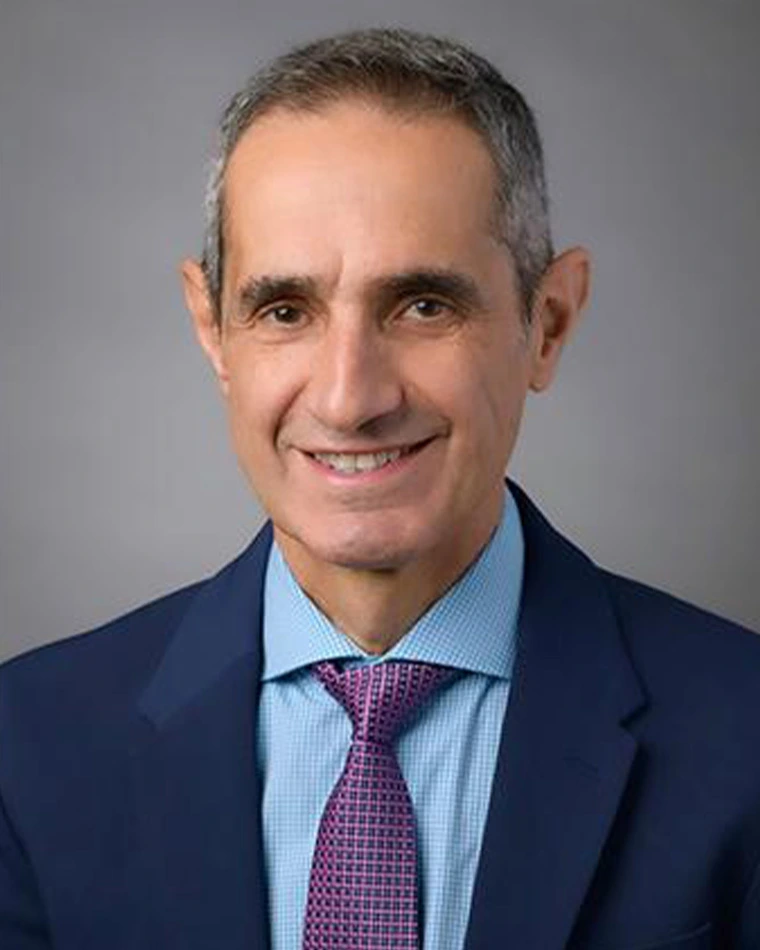
Ashwani K. Gupta is a Distinguished University Professor at the University of Maryland, holding the Minta Martin Professorship in Engineering. He serves as Professor in the Department of Mechanical Engineering, Professor at the Institute of Physical Science and Technology, and Affiliate Professor in the Department of Aerospace Engineering. With over 45 years of experience in combustion engineering since graduating from Southampton University in 1970, Gupta has established himself as a leading authority in advanced combustion technologies. Dr. Gupta earned his Ph.D. from the University of Sheffield in 1973, followed by a D.Sc. from the same institution in 1986 and another D.Sc. from Southampton University in 2013. His academic journey includes six years at MIT as a research staff member and three years at Sheffield University as an independent research worker before joining the University of Maryland in 1983. Gupta's research focuses on revolutionizing combustion technology through innovations in swirl flows, high-temperature air combustion (HiTAC), and distributed combustion systems. His pioneering work on 'colorless distributed combustion' has enabled ultra-low emission combustion processes with significant applications in gas turbine engines and waste-to-energy conversion. His research spans biofuels, CO2 utilization, sulfur chemistry, waste conversion, and advanced laser diagnostics, addressing critical challenges in sustainable energy and environmental protection. Analyzing his recent publications reveals a strong emphasis on waste-to-energy conversion, biomass processing, and CO2-assisted technologies. Gupta's work demonstrates a clear trajectory toward sustainable energy solutions, with increasing integration of artificial intelligence for combustion optimization and emission control. His research bridges fundamental combustion science with practical engineering applications for cleaner energy systems. Among Gupta's numerous accolades are: Election to Fellowship of the Royal Academy of Engineering (2023) Honorary Fellowship of the Royal Aeronautical Society (2020) Recognition as one of the top 2% of scientists worldwide by Stanford University (2022-2024) Multiple prestigious medals from ASME and AIAA including the Soichiro Honda Medal (2018) and AIAA Air Breathing Propulsion Award (2014) Honorary doctorates from three international universities Gupta has secured substantial research funding throughout his career, resulting in over 850 technical papers, three books, 18 edited books, and 22 book chapters. He has delivered over 100 plenary/keynote/invited presentations at international conferences. His mentorship has shaped numerous graduate students who continue to contribute to the field of combustion engineering. Gupta directs the Combustion Laboratory at the University of Maryland, which serves as a hub for cutting-edge research in sustainable combustion technologies. The Combustion Laboratory, under Gupta's leadership, has become a center of excellence for advanced combustion research, particularly in distributed combustion systems, waste-to-energy conversion, and alternative fuels. The lab maintains strong collaborations with industry partners and international research institutions, facilitating technology transfer and practical implementation of research findings. Gupta's team employs state-of-the-art diagnostics and computational tools to advance fundamental understanding while developing practical engineering solutions for cleaner energy systems.
Dr. Feng Cheng is a Senior Researcher and head of the IT Security Engineering (Sec-Eng) Team at the Hasso Plattner Institute (HPI), Germany, and serves as the Representative of the Chair "Internet Technologies and Systems" at the Digital Engineering Faculty, University of Potsdam. He holds a PhD from the University of Potsdam, an MEng from Beijing University of Technology, and a BEng from Beijing University of Aeronautics and Astronautics. His research is centered on data-driven security engineering, security analytics, network security, cloud security, firewall, IDS/IPS, attack modeling, and penetration testing. Dr. Cheng's research interests span a broad range of cybersecurity domains, with a strong emphasis on security analytics , data-driven threat detection , cloud and network security , and authentication . His work integrates advanced data engineering and machine learning techniques to enhance security operations, including intrusion detection, threat intelligence, and security information and event management (SIEM). Key application areas include IoT security, mobile security, and web security. The recent publications of Dr. Cheng and his team reflect a significant trend towards leveraging big data analytics , machine learning , and graph-based methods for cybersecurity. Their work focuses on developing frameworks for blockchain-based public key infrastructures, advanced SIEM analytics, malware detection using NLP, and chaos engineering for cloud security. This demonstrates a strong commitment to creating practical, scalable, and intelligent solutions for modern security challenges in complex, distributed environments. Dr. Cheng is actively involved in the academic community as a member of ACM and IEEE, a program committee member for numerous international conferences, and an organizer of workshops on cloud computing and cybersecurity. He has also served on editorial boards for international journals. He supervises a large group of PhD, master's, and bachelor's students, guiding research on topics such as security analytics, cyber threat intelligence, digital credentials, and behavioral authentication. He leads the Sec-Eng team, which conducts research on a diverse portfolio including the Security Analytics Lab, HPI-VDB (vulnerability database), Lock-Keeper (physical separation technology), and the Security Lab Generator for scenario-driven security training.
Ares J. Rosakis is the Theodore von Kármán Professor of Aeronautics and Mechanical Engineering at the California Institute of Technology (Caltech), where he served as Chair of the Division of Engineering and Applied Science from 2009-2015 and previously as Director of the Graduate Aerospace Laboratories (GALCIT). He has held numerous prestigious visiting professorships including at Nanyang Technological University, Northwestern University, Columbia University, Oxford University, and École Normale Supérieure in Paris. Rosakis earned his B.A. and M.A. in Engineering Science from Oxford University in 1978, followed by his Sc.M. (1980) and Ph.D. (1982) in Engineering (Solid Mechanics) from Brown University. He joined Caltech as an Assistant Professor in 1982, was promoted to Associate Professor in 1988, and to full Professor in 1993. In 2004, he was named the Theodore von Kármán Professor, one of Caltech's most distinguished named chairs. Rosakis is globally recognized as the foremost expert in dynamic failure mechanics of solid materials. His pioneering contributions span the dynamic failure of metals, composites, and interfaces. He invented Coherent Gradient Sensing (CGS) interferometry, a novel optical method sensitive to gradients of optical path differences that has been widely adopted in fracture mechanics and thin film stress measurements. His research encompasses dynamic shear-dominated rupture of heterogeneous materials, rupture mechanics of crustal earthquakes (where he experimentally discovered 'intersonic' or 'supershear' ruptures), and reliability of thin films and in-situ wafer level metrology. His work bridges engineering science, materials mechanics, and geophysics with remarkable interdisciplinary impact. His recent publications demonstrate a strong focus on earthquake mechanics and laboratory simulations of seismic events, particularly supershear earthquake ruptures. The research connects fundamental fracture mechanics with real-world geophysical phenomena, revealing how laboratory-scale experiments can illuminate the physics of large-scale earthquakes. His work has established critical links between theoretical models, experimental observations, and geological field evidence. Rosakis has received numerous prestigious awards including: 2024 Foreign Member of the Royal Society, UK 2023 Honorary PhD from National Technical University of Athens 2023 Honorary Degree of Doctor of Engineering from University of Illinois 2021 Zdeněk P. Bažant Medal for Failure and Damage Prevention 2018 Timoshenko Medal from ASME 2016 Elected to the National Academy of Sciences 2011 Elected to the National Academy of Engineering Throughout his distinguished career at Caltech, Rosakis has mentored numerous graduate students and postdoctoral researchers, many of whom have become leaders in their fields. His research has been continuously supported by major grants from the National Science Foundation, Department of Energy, and other federal agencies, focusing on dynamic fracture, earthquake mechanics, and advanced optical measurement techniques. He has served on numerous editorial boards and advisory committees for major scientific organizations. At Caltech, Rosakis leads research in the Graduate Aerospace Laboratories (GALCIT), where he has established world-class experimental facilities for studying dynamic fracture and earthquake mechanics. His laboratory features high-speed imaging systems capable of millions of frames per second, infrared diagnostics for temperature field measurements, and specialized equipment for simulating earthquake ruptures at laboratory scale. His research group combines experimental, theoretical, and computational approaches to address fundamental questions in solid mechanics and their applications to geophysics and materials engineering.