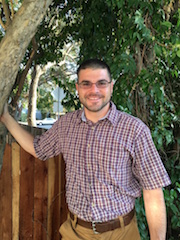
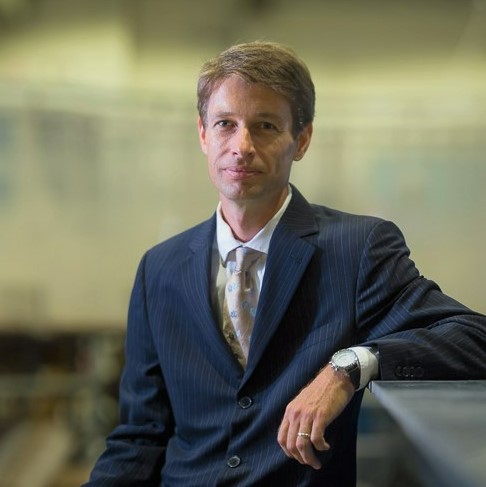
Professor Oliver Wild is based at the Lancaster Environment Centre , Lancaster University , where he serves as Programme Director for Environmental Science and Earth and Environmental Science degree schemes. Previously, he was Associate Director for Research (2017-2023) and Undergraduate Admissions Tutor for Environmental Science degrees. His research focuses on atmospheric composition and chemistry , particularly modeling intercontinental transport of ozone and its precursors , indirect climate impacts of short-lived gases (NOx, CO), and Earth System interactions . He contributes to international policy through the UN-ECE HTAP task force and has participated in IPCC climate assessments (2001, 2007, 2013). Current projects include HYDRA (hydrogen economy climate impacts), COP-AQ (net zero policy effects on air quality), and ACITES (atmospheric chemistry in Earth systems). His work spans global to urban scales , with collaborations across US, Japan, China , and involvement in model intercomparison projects (ACCENT, HTAP, CCMI). Scientific Awards EGU Outstanding Reviewer Award He teaches undergraduate courses on atmosphere, weather, and climate, and supervises PhD studentships supported by ExaGeO, E5 DTP , and Edinburgh .
Associate Professor Marcus Kitchen is affiliated with Monash University's School of Physics and Astronomy and the Victorian Heart Institute. He specializes in developing advanced X-ray imaging techniques, including Phase Contrast Imaging, Compton Scatter Imaging, and Ultra-Low Radiation Dose methods. His research focuses on enhancing diagnostic capabilities in lung and brain imaging while minimizing radiation exposure. Collaborations with institutions like the Hudson Institute aim to improve neonatal care, particularly for preterm infants with underdeveloped lungs. Key projects include translating synchrotron-based methodologies for clinical and industrial applications. Research interests span biomedical imaging, material discrimination, and radiation dose reduction. He leads or co-leads over 30 projects, including 'X-ray Scatter Imaging: Vast Information with Minimal Radiation' (2025–2028) and 'IMPACT: IMplementation of x-ray PhAse-Contrast Tomography to transform cancer diagnosis' (2022–2026). His work aligns with UN Sustainable Development Goals focused on health and innovation. Publications emphasize novel imaging modalities and their applications in respiratory and neurological disorders. Despite no explicit awards listed, his contributions to reducing radiation exposure and advancing lung mechanics research are significant. He supervises graduate students and actively seeks PhD candidates. His lab integrates theoretical, computational, and experimental approaches to bridge gaps between fundamental physics and clinical medicine.
Dr. Stephanie Kulesza is an Assistant Professor at North Carolina State University (NC State), specializing in nutrient management and animal waste research. She is affiliated with the Animal Waste Management Lab, focusing on optimizing the use of animal manures in North Carolina's diverse cropping systems. Her work emphasizes maximizing crop yield and quality while minimizing environmental impacts, particularly through nutrient management strategies. Dr. Kulesza serves on critical state committees: the Senate Bill 1217 Interagency Committee (regulatory guidance for animal waste) and the Interagency Nutrient Management Committee (technical guidance). She teaches the annual Nutrient Management Training, a five-day certification course required for technical specialists writing nutrient management plans in North Carolina. Her research spans manure utilization in crop rotations, optimal application rates, and environmental risk mitigation. Key areas include soil phosphorus dynamics, poultry litter effects on weed emergence, and ammonia volatilization from manure injection. Recent studies also address antibiotic fate in soils and swine/slurry waste management. Her publications highlight themes in sustainable agriculture, environmental chemistry, and precision farming. She collaborates on applied research to bridge agricultural practices and environmental stewardship in North Carolina's agroecosystems.
Irwin Donis-Gonzalez is an Associate Professor in the Department of Biological and Agricultural Engineering at the UC Davis College of Engineering. His research focuses on postharvest engineering, aiming to reduce energy consumption while maintaining food quality and safety in agricultural commodities. Key areas include storage, drying, traceability, and processing of fruits, vegetables, tree nuts, and rice. He is affiliated with Cooperative Extension, emphasizing applied research for industry impact. Education & Academic Roles Ph.D. in Biological and Agricultural Engineering Research Interests Non-invasive assessment techniques (e.g., X-ray CT, hyperspectral imaging) Energy-efficient drying systems (e.g., desiccant-based technologies) Food safety and quality preservation during storage and transport Optimization of postharvest processes for high-value crops His publications highlight advancements in chestnut decay detection, almond drying systems, and coffee quality assessment. He collaborates on sensor development for real-time monitoring in agriculture. Grants and industry partnerships drive his work on sustainable postharvest solutions. Labs/Teams Involved in UC Davis’s Cooperative Extension programs, focusing on translational research for California’s agricultural sector.
Valery Chernoray is a Research Professor at the Division of Fluid Dynamics, Chalmers University of Technology. Since 1996, he has specialized in experimental fluid dynamics with extensive expertise in modern flow analysis and measurement techniques. He currently leads the Chalmers Laboratory of Fluid and Thermal Science, a university-wide research infrastructure facility that provides equal access to flow, temperature, and motion measurement capabilities for researchers across all engineering disciplines at Chalmers. Professor Chernoray's research encompasses several key areas in fluid dynamics: Experimental validation of computational models using Particle Image Velocimetry (PIV) Turbomachinery aerodynamics, particularly turbine rear structures and outlet guide vanes Bearing lubrication systems and multiphase flow in mechanical components Active flow control applications for automotive and marine systems Wind engineering for urban and marine environments Heat transfer analysis in complex engineering systems His recent publications (2022-2024) reveal a strong emphasis on experimental validation of computational models, with particular focus on lubrication systems in bearings and gearboxes, turbine aerodynamics, and active flow control. His work consistently bridges theoretical fluid dynamics with practical engineering applications, demonstrating expertise in both fundamental research and industrial problem-solving. As head of the Chalmers Laboratory of Fluid and Thermal Science, Professor Chernoray oversees comprehensive experimental facilities supporting research across multiple engineering disciplines. The laboratory provides critical infrastructure for experimental work in air, water, and solid object measurements, serving as a hub for interdisciplinary collaboration at Chalmers University.
Tao Chen is an Associate Professor in the Department of Economics at the University of Waterloo. His research focuses on environmental engineering challenges, particularly membrane fouling mechanisms in cold-climate water treatment systems, operational parameter optimization (e.g., temperature, hydraulic retention time), and sustainable wastewater management strategies. He holds cross appointments and is affiliated with groups related to interdisciplinary environmental research. Research interests include membrane technology applications in tertiary treatment, temperature effects on fouling dynamics, and process modeling for biological reactors (e.g., MBBR, IFAS). His work emphasizes practical solutions for energy-efficient and climate-adaptive water systems, particularly in cold regions. Key trends in his publications (2014-2024) highlight advancements in understanding fouling mechanisms, optimizing operational variables, and developing models for sustainable wastewater treatment. Notable topics include ultrafiltration membrane performance under low temperatures, soluble microbial products in activated sludge systems, and partial nitrification-anammox processes. No scientific awards or grants are explicitly listed in the provided text. No advisee students are mentioned, but his research likely involves graduate student collaboration. Lab or team affiliations are not detailed in the available information.
Daniela Guericke is an Assistant Professor at the University of Twente in the Department of Industrial Engineering & Business Information Systems. Her research contributes to UN Sustainable Development Goals in Artificial Intelligence, Health, Energy, Climate, and Circular Economy. She specializes in modeling, simulation, optimization, and data science for energy systems and sustainable industry. Research Trends: Daniela's recent work focuses on Stochastic network optimization for district heating systems Multi-objective scheduling with energy tariffs Hydrogen railway infrastructure design Renewable energy community planning Demand response integration in large-scale energy systems Labs & Collaborations: She collaborates with the CITIES project (Centre for IT-Intelligent Energy Systems) and contributes to advancements in smart grids, energy efficiency, and circular economy frameworks.
Prof. Vivek Ranade is a Bernal Chair Professor of Process Engineering at the Bernal Institute, University of Limerick, and a Professor of Chemical Engineering at Queen's University Belfast. He leads research in multiphase reactors, process intensification, and sustainable energy/water technologies. His work spans applications in energy, water, and fine chemicals sectors, with contributions to industrial flow modeling, CFD, and digital twins. Education: B.Tech in Chemical Engineering (1983) and PhD (1988) from the Institute of Chemical Technology, Mumbai. Postdoctoral research at ETH Zurich (1988–1990). Served as Deputy Director at CSIR-National Chemical Laboratory (NCL) until 2016. Holds adjunct roles at the Institute of Chemical Technology and Academy of Scientific and Innovative Research. Research Interests: Multiphase flow dynamics, reactor engineering, process intensification, hydrodynamic cavitation, and sustainable technologies. Co-founded Tridiagonal Solutions and VIVIRA Process Technologies to commercialize innovations. Awards: Shanti Swarup Bhatnagar Prize (2004), Swarnajayanti Fellowship, Fellowships from IChemE, Indian National Science Academy, and multiple academies. Advising: Guided over 20 PhD students; involved in industrial collaborations and start-ups. Labs/Teams: Leads the Multiphase Reactors group at UL and QUB, and collaborates on projects like the MAGIC initiative for specialty chemicals.
Griffiths G. Atungulu is an Associate Professor in the Department of Food Science at the University of Arkansas, where he also serves as the Director of the University of Arkansas Rice Processing Program. His work bridges grain processing, post-harvest systems engineering, and food safety, with a strong emphasis on innovative technologies like infrared and microwave drying. He is actively involved in research, teaching, and outreach, contributing significantly to advancements in rice quality, safety, and processing efficiency. Doctor of Philosophy, Agricultural Engineering, Iwate University, Japan Masters of Science, Agricultural Engineering, Iwate University, Japan Bachelor of Science, Agricultural Engineering, Jomo Kenyatta University of Agriculture and Technology, Kenya Dr. Atungulu’s research focuses on engineering solutions for grain and rice processing, particularly in drying, storage, aeration, and mycotoxin mitigation. His interests include infrared heating , microwave drying , automated quality monitoring , and post-harvest system optimization . He applies lab and field experiments, mathematical modeling, and simulation tools to improve food safety and processing efficiency across the food, feed, and pet food industries. His teaching includes Advanced Food Engineering, Cereal Science, and Alternatives to Conventional Food Processing. The most recent publications highlight a strong trend in microwave and infrared drying technologies , moisture and quality monitoring , and mycotoxin control in grains . His work spans from fundamental studies on rice microstructure and protein functionality to applied engineering of drying systems and storage technologies. The interdisciplinary nature of his research integrates food physics, agricultural engineering, and food safety. Associate Editor, Transactions of ASABE Associate Editor, Applied Engineering in Agriculture Associate Editor, Cereal Chemistry Journal, AACCI Dr. Atungulu has advised numerous graduate students, particularly in drying and storage technologies, and has secured significant research funding to support his program. His grants often focus on improving the efficiency and safety of grain processing systems. He leads a multidisciplinary research team working on both fundamental and applied aspects of food engineering. His outreach includes extension publications and collaborations with industry stakeholders to implement new technologies on farms and in processing facilities. He directs the University of Arkansas Rice Processing Program, overseeing a research, teaching, and outreach initiative focused on advancing rice processing technologies. His team conducts experiments in controlled environments and in the field, utilizing advanced instrumentation and modeling software to develop scalable solutions for the agricultural sector.
Associate Professor Guna Hewa Alankarage is affiliated with the University of South Australia within the UniSA STEM division. He specializes in Water Engineering and actively supervises research degrees. His work focuses on urban water systems and environmental management. Research Interests : Water Sensitive Urban Design (WSUD), sediment transport dynamics, erosion modeling, stormwater management, and phytocapping for sustainable landfill covers. Key Publications : 2024 studies on Dry Creek sediment transport and phytocapping, 2023 systematic review on erosion models, and 2019 works on Asian urban stormwater strategies and cyanobacterial bloom control. Collaborations : Works with the South Australian Department of Environment and Water, Goyder Institute for Water Research, and international institutions like National Taiwan University. Methodologies : Employs statistical modeling, LiDAR-derived DEM for morphological analysis, and dose-response modeling for chemical inhibition of algal blooms. Email : Guna.Hewa@unisa.edu.au
Dr James Shucksmith is a Senior Lecturer in Water Engineering at the School of Mechanical, Aerospace and Civil Engineering, University of Sheffield. After completing his undergraduate degree and PhD at the same department, he joined the academic staff in 2010 following a KTP associate role with Yorkshire Water. His research focuses on urban flooding hydrodynamics, water quality modeling, and sustainable drainage systems. Co-director of EPSRC Centre for Doctoral Training in Water Infrastructure and Resilience Current projects: Real Time Abstraction Management (with Severn Trent Water), Centaur FloodInteract Research interests include: Urban flood hydrodynamics and drainage-surface flow interactions Water quality forecasting tools for surface water abstraction Development of local real-time control systems for urban drainage Experimental validation of flood models using PIV measurements His publications (2010-2025) cover topics like contaminant transport in flooded sewer systems, longitudinal dispersion modeling, and real-time control optimization. Recent work focuses on data-driven approaches for Cryptosporidium prediction and E. coli forecasting.
Professor George Nakhla holds the Salamander Chair in Environmental Engineering at the Department of Chemical and Biochemical Engineering, Faculty of Engineering, Western University. With a Ph.D. from the University of Illinois at Urbana-Champaign, his career spans decades of groundbreaking research in biological wastewater treatment and bioremediation. Education: Ph.D. (University of Illinois at Urbana-Champaign, 1989), M.Sc. (University of Illinois at Urbana-Champaign, 1987), B.Sc. (University of Khartoum, 1983) His research focuses on biological nutrient removal , anaerobic digestion , and advanced oxidation processes , with recent work exploring vacuum-assisted fermentation systems, micro-aeration for sulfide control, and biochar-enabled co-digestion technologies. Collaborative projects include: Development of the first Communal Biological Nutrient Removal System in Ontario Patented fluidized bed nutrient removal processes Membrane bioreactor systems for biological nutrient removal Investigation of lignin accumulation impacts in cattle manure digesters Optimization of hydrogen production from industrial wastes Dr. Nakhla's work has expanded to include process modeling , bioreactor design , and micropollutant management , with significant contributions to understanding the interplay between operational parameters and microbial ecology in wastewater systems.
Dr. Fabian Abiusi is a post-doctoral researcher in Sustainable Food Processing at ETH Zurich's Institute of Food, Nutrition and Health, part of the Department of Health Sciences and Technology (D-HEST). His work focuses on developing innovative bioprocesses to convert industrial food by-products into high-quality microalgal biomass using mixotrophic cultivation strategies. His research emphasizes enhancing microalgae productivity through oxygen-balanced systems and improving protein bioaccessibility via in vitro digestion models and cell disruption techniques. His academic background includes a PhD (details unspecified) followed by postdoctoral research at ETH Zurich. Key research themes include acidophilic microalgae (e.g., Galdieria sulphuraria), photobioreactor optimization, and leveraging extremophilic organisms for sustainable food production. He has contributed to projects like the MAB2.0 initiative integrating algae into wastewater treatment systems. Abiusi's publications highlight advancements in mixotrophic cultivation, protein bioaccessibility assessment, and utilization of volcanic microalgae for nutritional applications. Though no awards are explicitly listed, his work aligns with emerging trends in circular bioeconomy and alternative protein sources. His research group collaborates on lab-scale to pilot-scale systems, aiming to bridge gaps between microbial biotechnology and food industry applications.
Josep Ribes Bertomeu is an Associate Professor in the Department of Chemical Engineering at the University of Valencia, Spain, within the School of Engineering. He is a key member of the CALAGUA-UV Research Group on Environmental Technologies, where he has conducted extensive research since 1999. His research focuses on wastewater treatment , particularly using anaerobic membrane bioreactors (AnMBR) , mathematical modeling , process control , and optimization through artificial intelligence. He has made significant contributions to the development of simulation tools such as DESASS and LoDif-BioControl, and has worked on parameter calibration and control algorithms for wastewater treatment plants (WWTPs). His recent publications demonstrate a strong trend in energy recovery , resource valorization , and sustainable water management , aligning with circular economy principles. He has also been active in chemical engineering education , innovating laboratory teaching and virtual learning strategies. Principal Researcher, LIFE MEMORY Project (University of Valencia) Supervised 3 PhD theses Published over 35 international journal papers Co-author of 3 registered software programs and 5 invention patents He has contributed to numerous applied research and technology transfer projects with public and private entities, emphasizing real-world impact.
Colin D. Rennie is a Professor and Chair in the Department of Civil Engineering at the University of Ottawa, Faculty of Engineering. He holds a Ph.D. and MASc from the University of British Columbia and a B.Sc. from the University of Guelph, and is a licensed Professional Engineer (P.Eng.). He is an active researcher, educator, and leader in river and environmental hydraulics. His research focuses on river morphodynamics, sediment transport, turbulence, and aquatic habitat, utilizing advanced techniques including acoustic Doppler current profilers (ADCPs), laboratory physical models, and 3D numerical modeling. His work addresses critical issues such as river stability, flood dynamics, hydroelectric development, and ecosystem protection. The recent trends in his publications reflect a strong emphasis on high-resolution numerical modeling of local scour, sediment transport using acoustic methods, and the morphodynamic impacts of river confluences and floods. His work integrates field data with computational fluid dynamics (CFD), particularly using OpenFOAM, to understand complex flow-sediment interactions. He is an Associate Editor of the Journal of Hydraulic Engineering (ASCE) and has served on editorial boards of Journal of Geophysical Research – Earth Surface (AGU). He is a member of professional organizations including ASCE, IAHR, CSCE, and AGU, and has held leadership roles such as Secretary of the River Hydraulics Division at IAHR. Professor Rennie currently supervises multiple graduate students, including Yi Man, Xiatong Cai, Qingcheng Yu, and others, supporting research in sediment dynamics and hydraulic modeling. He has secured research funding for projects related to river flooding, ice processes, and habitat restoration. His teaching includes CVG3116 (Hydraulics), CVG4001 (Introduction to Civil Engineering Design), CVG4907 (Design Project), CVG5162 (River Hydraulics), and CVG5160 (Sediment Transport). His research has been conducted globally, with collaborations in New Zealand, Switzerland, Spain, and China, where he has led field campaigns and trained researchers in spatial mapping of water and sediment fluxes. He has applied his expertise to major flood events, including the 2013 Alberta flood and the 2017–2019 Ottawa River floods.