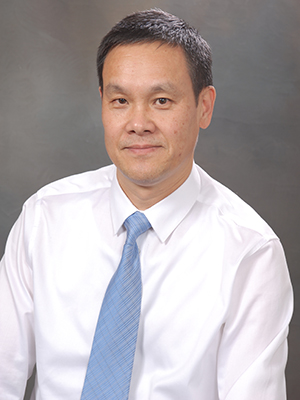
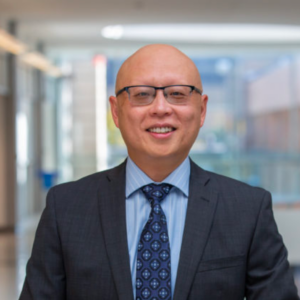
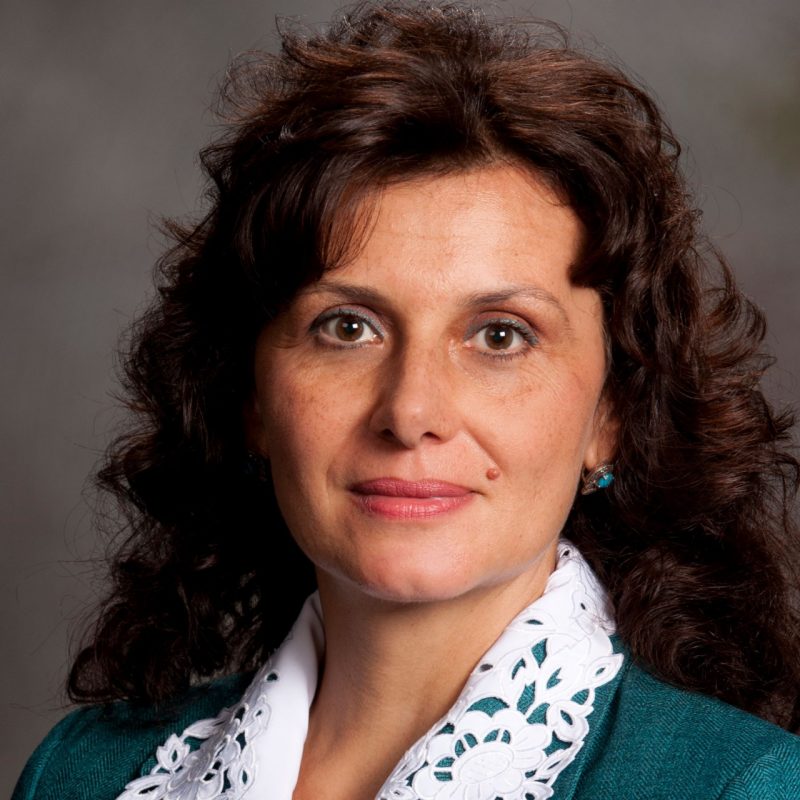
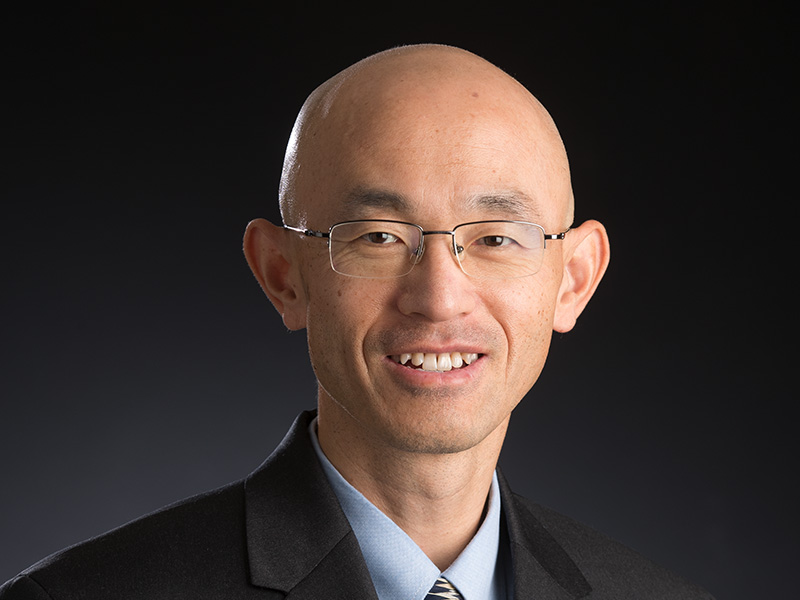
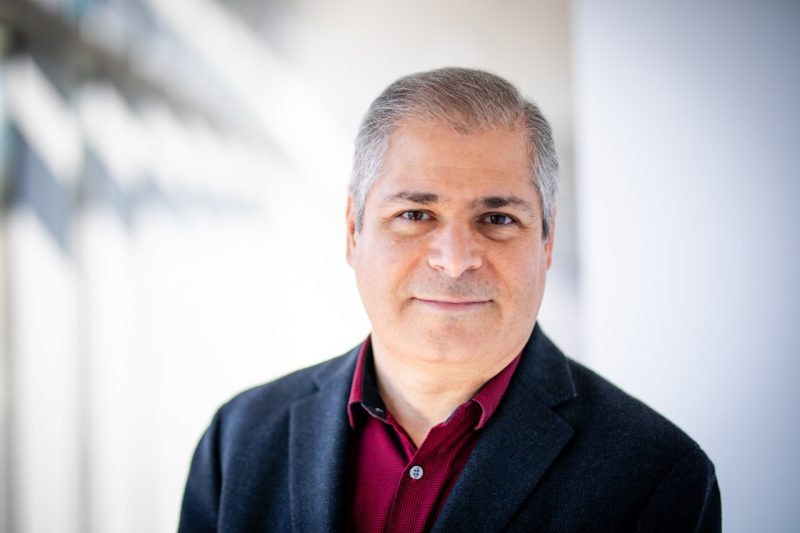
Torsten Wik is a Professor in Control Engineering at Chalmers University of Technology. He leads the Control Engineering research group and focuses on process control with theoretical and applied methodologies. Institution: Chalmers University of Technology Department: Control Engineering His research spans optimal control, model reduction, and systems with model uncertainties. Applications include energy-saving systems, environmental improvement, biological systems (water purification, recirculating fish farms, LED greenhouse lighting), and battery estimation/modeling/control. Recent work emphasizes battery degradation diagnosis, state estimation, fast charging, and reconfigurable systems. Key methodologies include physics-informed frameworks, machine learning integration, entropy-based predictive algorithms, and hypergraph modeling. Applications extend to electric vehicles, photovoltaic systems, fuel cells, and biofilm reactors. Publications highlight collaborations across engineering domains, focusing on control theory, electrochemical modeling, and real-time optimization. His work bridges theoretical advancements with industrial applications in energy systems, transportation, and sustainable agriculture.
Dr. Yunlong Zhang is a Professor at the Zachry Department of Civil & Environmental Engineering at Texas A&M University and holds a joint appointment with the Texas A&M Transportation Institute. With over 35 years of experience in transportation engineering, he specializes in traffic operations, transportation modeling, intelligent transportation systems, and AI applications in transportation. Ph.D. in Transportation Engineering from Virginia Tech (1996) M.S. in Highway and Traffic Engineering from Southeast University (1987) B.S. in Civil Engineering from Southeast University (1984) Research Interests: Traffic flow modeling, simulation, and analysis Traffic control devices and signal systems Safety analysis in transportation Evaluation of connected and autonomous vehicle (CAV) technologies Artificial intelligence and advanced computing applications Professional Affiliations: Joint appointment with Texas A&M Transportation Institute Member and sub-committee chair of TRB’s Artificial Intelligence and Advanced Computing committee
Yafeng Yin is Professor of Civil and Environmental Engineering and Professor of Industrial and Operations Engineering at the University of Michigan, College of Engineering, where he serves as Donald Malloure Department Chair of Civil and Environmental Engineering and holds the Donald Cleveland Collegiate Professorship in Engineering. His educational background includes: PhD in Civil Engineering from University of Tokyo (2002) ME in Civil Engineering from Tsinghua University (1996) BE in Environmental Engineering from Tsinghua University (1994) BE in Structural Engineering from Tsinghua University (1994) Dr. Yin's research centers on developing sustainable and economically efficient transportation systems through analysis, modeling, design, and optimization. He investigates how emerging technologies—including connected/automated vehicles, electric vehicles, drones, and mobile sensing—impact transportation demand and supply. His work extends to interdependencies between transportation, power, and communications networks in urban infrastructure systems. Key focus areas include mobility services, ride-sourcing markets, traffic management, and integration of artificial intelligence in transportation. His recent publications (2023-2025) demonstrate a pronounced shift toward leveraging large language models and agent-based frameworks for transportation analysis, with significant emphasis on on-demand mobility services (ride-sourcing, food delivery), traffic control with connected vehicles, and economic implications of emerging technologies. The research spans theoretical foundations in game theory and optimization to practical applications in urban settings. As director of the Lab for Innovative Mobility Systems, Dr. Yin leads interdisciplinary research developing solutions that enhance transportation efficiency, reliability, safety, and service diversity through technological integration. His work bridges theoretical modeling with real-world implementation challenges in evolving transportation ecosystems.
Corina Sandu is the Robert E. Hord Jr. Professor in the Department of Mechanical Engineering at Virginia Tech. She leads the Terramechanics, Multibody, and Vehicle Systems Laboratory, focusing on advanced modeling of multibody dynamics, vehicle-terrain interaction, and tire performance optimization. Her research integrates computational methods, experimental validation, and interdisciplinary approaches to address challenges in off-road mobility, autonomous systems, and vehicle dynamics. Dr. Sandu holds a Ph.D. (2000) and M.S. (1995) in Mechanical Engineering from the University of Iowa, complemented by an Engineering Diploma in Mechanics from the Bucharest Polytechnic Institute (1991). She serves as the President of the International Society for Terrain-Vehicle Systems and chairs the SAE Fellow Committee, underscoring her leadership in automotive and mechanical engineering fields. Her research interests span: Uncertainty quantification in multibody systems Optimization of vehicle dynamics and tire performance Terramechanics and terrain-vehicle interaction modeling Sensitivity analysis and adjoint methods for complex systems Recent publications highlight innovations in tire-ice interface models, hydroplaning risk estimation, and advanced multibody system simulation frameworks. She has pioneered experimental methodologies for tire performance evaluation on ice and soft soils, linking material science with mechanical engineering principles. Her work impacts automotive safety, off-road vehicle design, and autonomous systems, with applications in both industry and academia. Awards include recognition for her contributions to terrain-vehicle systems research and leadership in professional societies.
Roger Dixon is a Professor of Control Systems Engineering at the University of Birmingham's School of Engineering and a Visiting Professor at Loughborough University. His expertise spans applied control systems, mechatronics, condition monitoring, fault detection, and systems engineering. He holds a PhD from Lancaster University (1996) and has led major research initiatives in academia and industry, publishing over 150 papers. His work focuses on rail, road, aerospace, and energy sectors, emphasizing innovative solutions for industrial challenges. Education: BEng (Hons) Mechanical Engineering, Lancaster University (1992) MSc Mechatronics, Lancaster University (1993) PhD Control Systems Engineering, Lancaster University (1996) Research Interests: His research integrates advanced control strategies, fault detection, and condition monitoring. Key areas include: Rail infrastructure (e.g., fault-tolerant track switches) Aerospace actuator systems and fault-tolerant designs Energy systems (e.g., LNG platform monitoring) Model-based control and simulation Professional Highlights: Notable contributions include the 2013 REPOINT railway track switch concept and 2003 gas turbine fault-tolerant control patents. He chairs the UK Automatic Control Council (2017–2020) and has editorial roles in international journals. Awards: Fellow of the IMechE (2011) Fellow of the Higher Education Academy (2006) Chartered Engineer (2000) Lab & Collaborations: Leads the Control Systems theme at the Birmingham Centre for Railway Research & Education (BCRRE), focusing on rail innovation and multidisciplinary projects.
Dr. Tieming Liu is an Associate Professor in the School of Industrial Engineering and Management at Oklahoma State University , where he has served since 2005, first as Assistant Professor and then promoted to Associate Professor in 2011. His expertise bridges operations research, supply-chain coordination, healthcare analytics, renewable-energy policy, and production scheduling. Education Ph.D. in Transportation and Logistics, Massachusetts Institute of Technology, 2005 M.S. in Industrial Engineering and Management Science, Northwestern University, 2001 M.S. in Control Theory and Control Engineering, Tsinghua University, 2000 B.S. in Control Theory and Control Engineering, Tsinghua University, 1997 Research Interests Dr. Liu’s scholarship is organized around three pillars: Supply-Chain & Logistics: coordination contracts, inventory bounds, responsive pricing, channel rebates, and production flexibility under uncertainty. Healthcare Analytics: machine-learning models for diabetic retinopathy and sepsis risk prediction, clinical decision-support systems, and handling imbalanced EHR data. Energy & Sustainability: renewable portfolio standards, capacity coordination with renewable energy certificates, and incentive mechanisms for renewable and conventional generators. Recent methodological contributions include hidden Markov models for continuous mortality prediction, tree-augmented Bayesian networks for sepsis risk, and tensor-completion-driven convolutional networks for longitudinal medical data. Scientific Awards & Honors EJOR Reviewer Award, 2019 IEM Faculty Award, 2019 Halliburton Outstanding Faculty Award, OSU, 2014 Merrick Foundation Teaching Award, OSU, 2013 Riata/Koch Faculty Fellow, OSU, 2012 Lockheed Martin Teaching Award, OSU, 2011 Student Organization Faculty Advisor of the Year, OSU, 2010 Student Mentorship & Collaboration Dr. Liu has advised or co-advised a large cohort of doctoral and master’s students whose names appear as first or co-authors on his publications. His collaborative network spans MIT, Northwestern, IBM T. J. Watson Research Center, and multiple departments across OSU, fostering interdisciplinary projects that integrate operations research with real-world healthcare, transportation, and energy challenges. Laboratories & Teams He conducts research within the analytics and optimization laboratories of the School of Industrial Engineering and Management, directing projects funded by federal agencies and industry partners aimed at next-generation decision-support systems for healthcare providers, logistics operators, and energy market regulators.
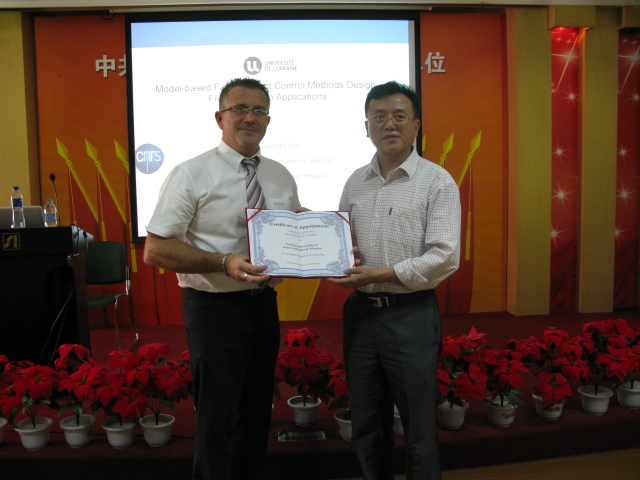
Didier Theilliol is a Professor of Control Engineering at the University of Lorraine, France, since 2004. He holds a Ph.D. in Control Engineering from Nancy-University (1993). He was awarded the CAS Visiting Professorship by the Chinese Academy of Sciences (CAS) in 2012, during which he collaborated with the Shenyang Institute of Automation (SIA) on flight control and fault-tolerant systems. His research focuses on model-based fault diagnosis (FDI), fault-tolerant control (FTC) for complex systems, and reliability analysis, with applications in aerospace, industrial automation, and robotics. Education: Ph.D. in Control Engineering (Nancy-University, 1993). Research interests include advanced control strategies for linear and nonlinear systems, multi-agent coordination, and safety-critical applications. His work integrates theoretical advancements with practical implementations across industries such as steel production, wastewater treatment, and aerospace. Notable contributions include methodologies for degradation management, distributed observer design, and health-aware control. Recent article trends emphasize fault-tolerant control in multi-agent systems, reinforcement learning for safety-critical tasks, and integration of physics-informed neural networks for system modeling. His publications span topics from model-based diagnostics to real-world applications in UAVs and propulsion systems. Awards: CAS Visiting Professorships for Senior International Scientists (2012). Collaborations include co-working with SIA’s rotorcraft UAV project team and leading European R&D initiatives. He serves as Associate Editor for ISA Transactions and Unmanned Systems , and chairs conferences on fault-tolerant control systems. His research also extends to Bayesian networks for system reliability and particle filter-based prognostics in industrial settings. Labs/Teams: Active in the State Key Laboratory of Robotics (visited during his CAS tenure) and coordinates projects within the German-French Institute for Automation and Robotics.
Professor Dan Negrut is a faculty member in the Department of Mechanical Engineering at the University of Wisconsin–Madison, affiliated with the College of Engineering. He holds the Mead Witter Foundation Chaired Professorship and is a recognized leader in high-performance computing and robotics simulation. Education: PhD in Mechanical Engineering, University of Iowa (1998) BS in Mechanical Engineering, Polytechnic Institute of Bucharest (1992) Research Interests: Computer modeling and simulation of robots and autonomous vehicles High-performance computing and GPU-accelerated algorithms Fluid-solid interaction and granular dynamics Terramechanics and extraterrestrial mobility Autonomous systems and sensor simulation Recent Contributions: His work focuses on advancing physics-based simulation tools like Project Chrono , which supports open-source frameworks for robotics, autonomous vehicles, and granular systems. Recent trends in his publications emphasize sim-to-real gap quantification, lunar rover mobility, and AI-driven digital twins. Awards: NSF CAREER Award (2009) NVIDIA CUDA Fellow (2010) LEED Scholar (2017) ASME Best Paper Awards (2017–2023) Advising & Grants: He advises graduate students in mechanical engineering and computer science, focusing on robotics and autonomous systems. His research is supported by federal grants and industry partnerships. Notable projects include the Synchrono platform for autonomous vehicle simulation and Chrono::Electronics for electro-mechanical systems. Labs & Teams: His team develops Project Chrono , an open-source simulation engine used globally for robotics, automotive, and aerospace applications. Collaborations span academia and industry to address challenges in autonomous systems and space exploration.
Bo Wang is an active academic researcher primarily affiliated with multiple Chinese institutions, with strong connections to Tsinghua University, Beijing Jiaotong University, and other leading Chinese universities. His research spans artificial intelligence, machine learning, computer vision, medical image analysis, and intelligent control systems, demonstrating significant interdisciplinary work across computer science, engineering, and biomedical applications. Primary institutional affiliation: School of Computer Science and Technology at multiple Chinese universities Active research areas: AI/ML applications in healthcare, computer vision, federated learning, and intelligent control systems Extensive publication record across top-tier venues in multiple disciplines Wang's research interests focus on the intersection of artificial intelligence and practical applications. His work demonstrates strong expertise in developing novel machine learning architectures for medical image analysis, including applications in CT imaging, MRI, and sperm tracking. He has made significant contributions to federated learning approaches for large language models, sliding mode control systems, and molecular optimization frameworks. His research consistently bridges theoretical advances with practical implementations across healthcare, manufacturing, and environmental monitoring domains. Analysis of Wang's recent publications reveals a strong trend toward interdisciplinary AI applications, particularly in medical imaging and bioinformatics. His work on VAE-GANMDA for microbe-drug association prediction, ACE-QSM for accelerating MRI acquisition, and text-guided molecular optimization demonstrates innovative approaches at the intersection of AI and life sciences. Wang also maintains active research in industrial applications including digital twin technology for energy systems and robust scheduling approaches for multi-factory production. Notable research contributions include: FLFT: A Large-Scale Pre-Training Model Distributed Fine-Tuning Method with Federated Learning VAE-GANMDA: Microbe-drug association prediction model ACE-QSM: Accelerating quantitative susceptibility mapping using diffusion models Digital twin-empowered power consumption prediction systems Wang actively collaborates with researchers across China and internationally, with publications spanning computer science, engineering, medical imaging, and environmental science journals. His work demonstrates strong technical depth across multiple AI methodologies while maintaining focus on practical applications that address real-world challenges in healthcare, manufacturing, and environmental monitoring.
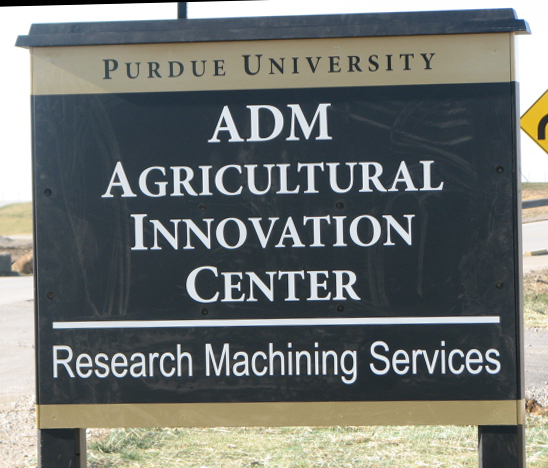
John T. Evans IV is an Assistant Professor in the Department of Agricultural & Biological Engineering at Purdue University. He specializes in Machine Systems and Automation, focusing on agricultural machine design, precision agriculture technologies, and automated systems modeling. His research bridges robotics, digital agriculture, and sustainable farming practices, contributing to advancements in autonomous navigation and machine learning applications for crop management. Bachelor's in Biosystems Engineering, University of Kentucky Master's in Biosystems Engineering, University of Kentucky PhD in Biological Systems Engineering, University of Nebraska–Lincoln Evans' work centers on optimizing agricultural machinery through synthetic vision systems, digital twin environments, and deep learning algorithms. Key areas include autonomous roadside mowing , corn row identification , and transfer performance optimization for robotic systems. His publications reveal interdisciplinary trends combining robotics, precision agriculture, and computational modeling. He actively mentors Purdue's Quarter Scale Tractor Team and contributes to the American Society of Agricultural and Biological Engineers. His research involves collaboration with Purdue's ADM Agricultural Innovation Center and Discovery Park facilities, focusing on automation, data science, and machine learning in agricultural contexts.
Yi Zhang is a Professor in the Department of Mechanical Engineering at the University of Michigan-Dearborn's College of Engineering and Computer Science. His expertise lies in automotive engineering, focusing on power transmission systems, dual clutch transmissions (DCTs), and hybrid electric vehicle (HEV) control strategies. Zhang's research spans theoretical and applied domains, including gear theory, CAD/CAM, and robotics. His scholarly work emphasizes advanced control systems for automotive components, energy management in hybrid and electric vehicles, and dynamic modeling of transmission systems. Recent publications highlight eco-driving optimization, adaptive gearshift strategies, and coordinated braking-shifting control for electric vehicles. Grants from General Motors, Ford Motor Company, and the U.S. Department of Energy support his research on transmission dynamics, hybrid vehicle systems, and gear design. Zhang's collaborations with industry leaders like Magna International and academic institutions demonstrate his impact in automotive and mechanical engineering.
Dr Nur Sarma is an Assistant Professor in the Department of Engineering at Durham University. He specializes in renewable energy systems, electrical power systems, and advanced control strategies. His research focuses on condition monitoring, fault analysis, and fault mitigation strategies for electrical machines and drive systems. He currently serves as the EDI and Wellbeing Director of the Durham University Engineering Department and holds an EPSRC EDI+ Fellowship. He is actively involved in promoting equity, diversity, and inclusion through roles such as Co-chair of the Durham University International Staff Network, member of the Women in Engineering Society (WES Durham), and Mentoring Coordinator for IEEE UK & Ireland Women in Power Group. He is also an EPSRC-WES Ambassador and a Programme Committee Member for the IEEE Women in Engineering International Leadership Conference (WiE ILC 2025). His research interests include electrical machine modeling, grid integration of renewable systems, and sensor-based condition monitoring. Key contributions include work on DFIG control strategies, fault detection using controller signals, and fiber optic sensing for machine diagnostics. Dr Sarma has authored over 20 publications in top conferences and journals, including IEEE Transactions on Sustainable Energy and International Journal of Electrical Power & Energy Systems. His work has been recognized with awards such as the Best Paper Prize at ICRERA 2016 and the TÜBİTAK International Postdoctoral Fellowship (2019). He currently supervises two PhD students at the Electrical Power Node and has taught modules like ENGI4467 on electrical energy conversion since 2022.
Professor Peter Fussey holds a dual role at the University of Sussex as a Professor in the School of Engineering and Informatics and Associate Dean for Global and Civic Engagement at the Faculty of Science, Engineering and Medicine. He leads the Energy and Materials Engineering Research Centre, focusing on Thermal Systems , Battery and Vehicle Energy Management , Model Predictive Control , and Data Analytics . Previously, he spent over 25 years at Ricardo UK, leading the Control Department and developing advanced control systems for hybrid/electric vehicles and thermal management. His career also includes rail acoustics research at British Rail Research and SNCF. Education: DPhil in Engineering from the University of Oxford MA in Engineering from the University of Cambridge Research Interests: Professor Fussey’s work spans automotive and mechanical engineering , with a focus on low-emission powertrains , energy management systems , and advanced control algorithms . His recent projects include optimizing EV cabin climate control for extended range, geofencing for smart mobility, and neuro-fuzzy modeling for thermal systems. He has also pioneered applications of model predictive control (MPC) in selective catalytic reduction (SCR) systems and engine combustion optimization. Teaching: Courses include Low Emission Vehicle Propulsion , Vehicle Dynamics , and supervising Formula Student projects. His teaching emphasizes practical applications of control theory and sustainability. Labs/Teams: Leads the Energy and Materials Engineering Research Centre , fostering interdisciplinary research in sustainable energy and advanced propulsion systems.
Mazen Farhood is a Professor in the Kevin T. Crofton Department of Aerospace and Ocean Engineering at Virginia Polytechnic Institute and State University (Virginia Tech). He holds a Ph.D. (2005), M.S. (2001), and B.Engr. (1999) in Mechanical Engineering from the University of Illinois and American University of Beirut. His research focuses on formal validation of UAV control systems, motion planning, cooperative control in complex environments, model reduction, and obstacle-sensitive trajectory regulation. He is a Senior Member of the IEEE, and a member of AIAA and ASME. In 2014, he received the NSF CAREER Award for his work on formal validation of autonomous systems. Farhood leads the distributed UAV test bed at Virginia Tech, integrating theoretical control frameworks with experimental validation. His research emphasizes safety-critical systems, cybersecurity for autonomous vehicles, and robust control under uncertainty. Collaborations include Virginia Tech’s Autonomous Systems Center and National Security and Technology initiatives. Key projects include developing compositional falsification tools, analyzing cyber-physical system vulnerabilities, and advancing LPV control methodologies for nonstationary systems. Education: Ph.D. Mechanical Engineering (UIUC), M.S. Mechanical Engineering (UIUC), B.Engr. Mechanical Engineering (AUB) Awards: 2014 NSF CAREER Grant Key Projects: Formal validation of UAV software, cooperative multi-vehicle control, obstacle-aware trajectory regulation His work bridges theoretical control advancements with practical applications, contributing to safer and more reliable autonomous systems.
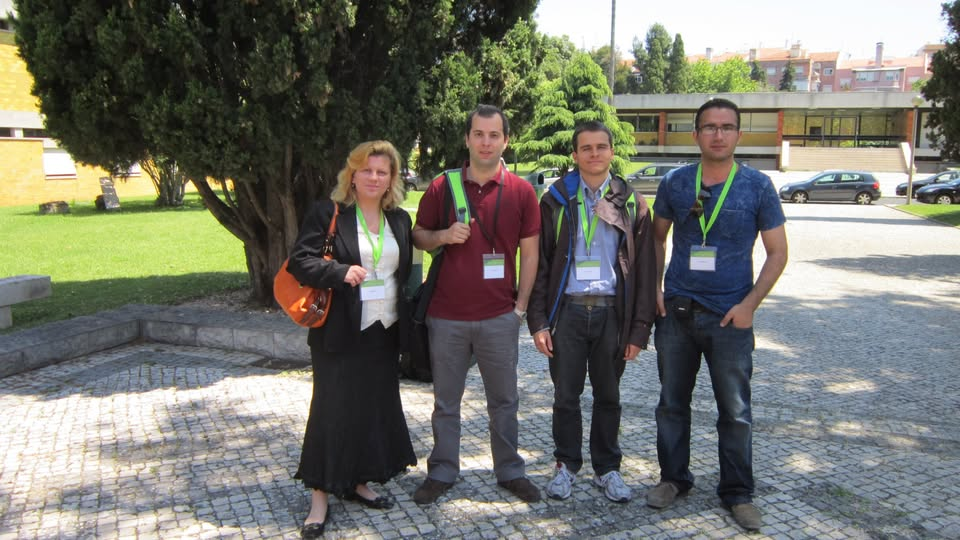
Jose Carlos Easter Marques is a Full Professor and Vice-Rector for Internationalization and Interaction with Society at the University of Beira Interior (UBI), Portugal. He holds a position in the Department of Electromechanical Engineering and leads the UBIMedical initiative. His academic roles include Director of the C-MAST Center for Mechanical and Aerospace Sciences and Technologies, and he teaches courses in Fluid Mechanics and Mechanical Engineering. Education: Aggregation in Mechanical Engineering, University of Beira Interior (2017) PhD in Mechanical Engineering, University of Beira Interior (2008) Research Interests: Focuses on plasma actuators, magnetohydrodynamics, computational fluid dynamics (CFD), and advanced propulsion systems. His work integrates experimental validation with numerical simulations to address challenges in aerospace engineering, energy systems, and renewable technologies. Recent projects include optimizing automotive painting processes using CFD and artificial neural networks (ANN), and developing plasma-based ice protection systems for aircraft. Publications & Patents: Authored over 116 journal articles, 1 book chapter, and 4 books. Holds patents such as 'Plasma Actuators for Cycloidal Rotor Thrust Vectoring' and 'Smart System for Cycloidal Vertical Axis Wind Turbines'. Awards & Grants: Recipient of the 2012 Pedagogical Merit Award. Led projects like 'GreenAuto: Green Innovation for the Automotive Industry' and contributed to the CLOUD Experiment at CERN. Labs & Teams: Founder of ClusterDEM, a multiphysics flow research group specializing in HPC simulations and experimental facilities for aerospace propulsion, turbulent flows, and magnetoplasmadynamic systems.