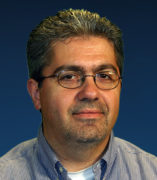
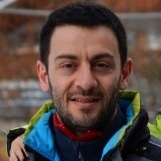
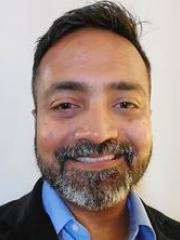
Hrvoje Kozmar is a Full Professor in the Department of Physics at the University of Zagreb's Faculty of Science. His research focuses on fluid dynamics, aerodynamics, and environmental engineering, with particular emphasis on wind energy systems, atmospheric boundary layer flows, and structural dynamics. His work addresses challenges in offshore engineering, wind turbine design, and urban building aerodynamics. Professor Kozmar has contributed to advanced computational models for hydrodynamic loads on offshore structures, turbulence effects on tall buildings, and wind energy harvesting systems. His studies on Bora wind dynamics and rotor blade aerodynamics highlight interdisciplinary applications in meteorology and renewable energy. Key projects include surrogate modeling for offshore monopiles, numerical simulations of wave-current interactions, and experimental studies on porous double-skin façades for wind load mitigation. He has collaborated on wind farm layouts, cable-supported bridge stability, and aerodynamic optimization of vehicles.
Paul Richardson is a Professor in the Department of Electrical and Computer Engineering at the University of Michigan-Dearborn’s College of Engineering and Computer Science. His research spans automotive systems, real-time networks, and robotics. PhD in Systems Engineering, Oakland University His work focuses on Automotive Engineering , Computing and Networks , and Robotics . Key contributions include innovations in intra-vehicle networks, UWB channel modeling, and real-time control systems. Recent publications highlight advancements in OFDM signal processing, PAPR reduction techniques, and adaptive scheduling for QoS in vehicular and mobile networks. Collaborations include researchers like W. Xiang and A. Elkateeb. He is affiliated with the Institute for Advanced Vehicle Systems at UM-Dearborn. Contact: richarpc@umich.edu .
Vahe Caliskan is a Clinical Professor in the Department of Electrical and Computer Engineering at the University of Illinois at Chicago (UIC), affiliated with the College of Engineering. His office is located at 1009 SEO Building, 851 S. Morgan St, Chicago, and he can be contacted at 312.996.6013 or vahe@uic.edu. Education: Sc.D. in Electrical Engineering and Computer Science, Massachusetts Institute of Technology (2000) M.S. in Electrical Engineering and Computer Science, University of Illinois at Chicago (1993) B.S. in Electrical Engineering and Computer Science, University of Illinois at Chicago (1990) Research Focus: Dr. Caliskan specializes in power electronics, analog circuit design, automotive electronics, and computer-aided modeling/simulation. His work bridges theoretical analysis and practical applications, particularly in automotive power systems and advanced converter topologies. Publication Trends: His scholarly output (1991-2005) demonstrates consistent focus on power conversion technologies, automotive electrical systems, and control methodologies. Key themes include three-phase rectifiers, switched-mode power supplies, resonant converters, and innovative automotive alternator designs, often emphasizing modeling precision and efficiency optimization. Awards and Honors: Faculty Advising Award, UIC College of Engineering (2017) Faculty Teaching Award, UIC College of Engineering (2016) EEWeb Featured Engineer Spotlight Interview (2015) Silver Circle Award for Excellence in Teaching, UIC (2012) Professional Engagement: Dr. Caliskan maintains an active conference presence, presenting at IEEE events on automotive power systems and converter technologies. His collaborations include researchers from MIT and industry partners in power electronics.
Alessandro Ferrari is a Full Professor at Politecnico di Torino's Department of Energy (DENERG) and a key member of the Center for Automotive Research and Sustainable Mobility (CARS@PoliTO) . His academic activities span teaching, research, and industrial collaboration, with a focus on automotive engineering, fluid machinery, and sustainable energy systems. Roles : Vice-Rector for Research Model Development, Scientific Director for industrial projects, PhD Thesis Supervisor Teaching : Advanced computational techniques for thermal/hydraulic machines, Computational heat/mass transfer Research : Fuel injection systems, ammonia combustion, cavitation dynamics, flow measurement Research Focus Professor Ferrari specializes in automotive propulsion systems and fluid machinery with emphasis on: Internal Combustion Engine optimization Computational Fluid Dynamics (CFD) modeling Novel fuel injection technologies Sustainable transport solutions His recent publications show strong trends in: Ammonia combustion for carbon-free fuels Real-time injection control using neural networks Cavitation analysis in GDI injectors Flow rate measurement techniques Academic Leadership As a PhD program director for Energetics since 2014, he has directly supervised 4 doctoral students. His industrial collaborations include patents for injection systems and flow measurement devices with commercial partners. Laboratory Involvement Active in the CARS@PoliTO center, he leads research on automotive sustainability and participates in fluid power experimental testing facilities.
Paolo Pescetto is a Fixed-term tenure-track Assistant Professor in the Department of Energy (DENERG) at Politecnico di Torino, where he is also a member of the Interdepartmental Center PEIC (Power Electronics Innovation Center). He serves on multiple academic boards including the College of Electrical and Energy Engineering, College of Computer, Film and Mechatronics Engineering, and College of Mechanical, Aerospace, and Automotive Engineering. His research focuses on power electronics, electrical machines, and motor drives with particular emphasis on electric vehicle applications. His work spans motor control strategies, thermal management of high-power density motors, sensorless control techniques, and integrated power systems for e-mobility. He has developed advanced methodologies for flux mapping, torque ripple compensation, and fault protection in permanent magnet and synchronous reluctance machines. Analysis of his recent publications reveals a strong trend toward solving practical challenges in electric vehicle powertrains, with significant contributions in multi-phase motor drives, thermal management, and fault-tolerant control systems. His work bridges theoretical advances with practical automotive applications, particularly in third-generation electric vehicle technologies. Dr. Pescetto holds multiple patents in motor control technologies, including methods for MTPA tracking without HF injection, spatial harmonic flux-map identification, and isolated on-board battery chargers for electric vehicles. His intellectual property demonstrates practical innovation in the field of motor drives and power electronics. He actively supervises PhD students Andrei Bojoi and Chen Chen in the Electrical, Electronics, and Communications Engineering program, focusing on electric motor drives and sustainable traction electrification. His research projects include commercial contracts on sensorless control of synchronous reluctance machines, firmware implementation for motor control, and advanced sensorless control methodologies for brushless motors. As a member of the PEEMD Research Group within DENERG, Dr. Pescetto contributes to cutting-edge research in power electronics and motor drives, with a strong industry collaboration focus that translates academic research into practical automotive solutions.
Enrico Galvagno is an Associate Professor at the Department of Mechanical and Aerospace Engineering (DIMEAS) of the Polytechnic University of Turin. He is a member of the CARS@PoliTO Interdepartmental Center for Automotive Research and Sustainable Mobility. His academic roles include teaching and supervising courses on Mechanical System Dynamics , Hybrid and Electric Propulsion Systems , and Motor Vehicle Mechanics , as well as serving on doctoral college committees for Mechanical Engineering since 2019. His research interests span Applied Mechanics , Vehicle Dynamics , Hybrid and Electric Vehicles , and Noise, Vibration, and Harshness (NVH) . He focuses on Mathematical Modeling , Control Optimization , and Experimental Mechanics in automotive systems. Recent projects include the OWHEEL benchmarking initiative, EFFEREST for energy management in electric vehicles, and CliMAFlux for axial flux motor drives. Galvagno's scholarly work includes collaborative research on electric powertrain vibro-acoustics , off-road tire modeling , and tracked vehicle simulations . His 2024 publications highlight advancements in nonlinear vehicle dynamics , e-NVH performance , and model order reduction techniques. Scientific Awards and Memberships : Effective member of IFToMM Italy (2019-) Scientific Committee member of IFToMM Technical Committee for Engines and Powertrains (2019-) Effective member of SAE International (2010-) He supervises PhD students Luca Biondo , Luca Ciravegna , and Luca Zerbato , and has led commercial research contracts like Off-Road Tyre Model Integration and Tracked Vehicle Kinematic Modeling for industrial clients.
Professor Zhe Chen is a distinguished academic at Aalborg University's Faculty of Engineering and Science, where he leads research in Electric Power Systems and Microgrids within the Intelligent Energy Systems and Flexible Markets department. With an extensive publication record spanning over two decades and more than 1,200 publications, he has established himself as a leading expert in power engineering and renewable energy systems. Professor Chen's research focuses on Wind Turbine Engineering, Power Engineering, Control Strategy, Wind Power Engineering, Energy Engineering, and Reinforcement Learning. His work bridges theoretical advancements with practical applications in smart grid technology and microgrid systems. His research interests center around developing innovative solutions for renewable energy integration, power system stability, and efficient energy management. His recent publications demonstrate a strong trend toward integrating artificial intelligence with traditional power engineering, particularly in applying deep reinforcement learning to power system control, state estimation with noisy data, and optimization of power electronic converters. His work shows increasing focus on carbon emissions optimization, thermal management in power electronics, and the application of advanced neural network architectures to energy systems. MPCE 2023 Best Paper Award for research on reinforcement learning applications in electric vehicles MPCE 2022 Best Paper Award for distribution network optimization MPCE 2021 Best Paper Award for reinforcement learning in energy systems WATAB Best Paper Award 2005 for offshore wind farm research IEEE Fellow recognition for contributions to power electronics and renewable energy systems Professor Chen has supervised 27 PhD students throughout his career, demonstrating his commitment to academic mentorship. His current research is supported by significant grants including the Erasmus+ funded S3SF project (Smart Energy Solutions for a Sustainable Future) and multiple projects focused on machine learning-based stability analysis for multi-energy systems. His collaborative work spans numerous international partnerships, with recent projects involving researchers from China, Europe, and other global institutions. Professor Chen leads a research team focused on intelligent energy systems, working on advanced control strategies for microgrids, power quality analysis, and the integration of renewable energy sources into existing power infrastructure. His team is particularly known for innovative approaches to wind power integration and DC microgrid technologies.
Sandro Bartolini serves as Associate Professor in the Department of Information Engineering and Mathematical Sciences at the University of Siena, Italy, where he teaches advanced courses in computer architecture and parallel programming while leading cutting-edge research in high-performance computing systems. His academic journey began with a cum laude Laurea in Computer Engineering followed by a PhD in Computer Science and Engineering from Università di Pisa. Education: PhD in Computer Science and Engineering, Università di Pisa Laurea in Computer Engineering (cum laude), Università di Pisa Research Focus: His work centers on photonic interconnects for chip multiprocessors , energy-efficient software optimization for multi-core/GPU architectures, and performance-portable parallel programming models . Current investigations span cryptographic acceleration, blockchain algorithms, and hardware/software co-design for emerging computing paradigms, with strong emphasis on practical implementations bridging theoretical advances and real-world applications. Publication Trends: Recent publications (2019-2023) reveal three dominant threads: (1) Photonic network innovations addressing energy bottlenecks in chip multiprocessors, (2) The PHAST library ecosystem enabling seamless CPU/GPU programming across domains from autonomous vehicles to UAV navigation, and (3) Hardware accelerator designs for convolutional networks and cryptographic workloads. These works consistently target performance-portability challenges in heterogeneous computing environments. Grants and Collaborations: As principal investigator for the Italian Ministry-funded PHOTONICA project, he established international research partnerships with Murcia University, Columbia University, and Hong Kong University of Science and Technology, while securing industry collaborations with STMicroelectronics, Intel Munich, IBM, and IMEC. He has also managed complex IT system deployments for Siemens Italy, RAI (Italian public broadcasting), and SpaceDys. Academic Leadership: Bartolini serves as Associate Editor for the Eurasip Journal of Embedded Computing and actively contributes to the European HiPEAC network. His research group at Siena maintains strong industry ties for technology transfer, particularly in photonic interconnect validation and parallel programming frameworks for next-generation computing systems.
Dr. Xiaoyan Hong is an Associate Professor in the Department of Computer Science at The University of Alabama's College of Engineering. Her research focuses on mobile/wireless networks, vehicular networks, and delay-tolerant systems. Ph.D., Computer Science, University of California-Los Angeles (2003) M.S., Computer Science, Zhejiang University (2000) Research spans Internet of Things (IoT) , Connected Vehicles , and Underwater Wireless Networks . Key projects include NSF-funded underwater robot communication infrastructure and smart traffic light systems. Recent work explores Named Data Networking (NDN) in vehicular environments, Task Synchronization for autonomous vehicles, and V2I Communication for traffic optimization. NSF Research Experience for Undergraduates (REU) grant recipient $1.5M NSF grant for underwater robotics networking Her research integrates with multiple engineering centers, including the Center for Advanced Vehicle Technologies and Center for Transportation Operations .
Hilmi AYGÜN is an Assistant Professor in the Department of Mechatronics Engineering at Karabük University's Faculty of Engineering and Natural Sciences, where he has been serving since 2019. His academic career began as a Research Assistant in the Electrical and Electronics Engineering Department from 2009-2019 before transitioning to his current position in Mechatronics Engineering. He also serves as the Erasmus Coordinator for both the Mechatronics Engineering Department and the university since 2021. Education: PhD in Electrical and Electronics Engineering (2011-2019), Karabük University, Institute of Science MSc in Electrical and Electronics Engineering (2010-2011), Karabük University, Institute of Science BSc in Electrical and Electronics Engineering (2003-2007), Kırıkkale University, Faculty of Engineering Hilmi AYGÜN's research primarily focuses on electrical machines and energy conversion systems, with particular emphasis on motor control algorithms for electric vehicle applications. His work integrates control theory with artificial intelligence techniques, especially optimization algorithms like Particle Swarm Optimization (PSO) and the Yusufcuk Algorithm. He has made significant contributions to field-oriented control of induction motors, DC motor control systems, and wind energy applications. His publication record shows a clear trajectory toward increasingly sophisticated control systems for electromechanical applications, with recent work focusing on metaheuristic methods for motor control, optimization of wind energy systems, and advanced DC motor control techniques. His research bridges theoretical control concepts with practical engineering applications, particularly in transportation and renewable energy sectors. Hilmi AYGÜN has successfully advised at least one Master's student, Hersh Hasan Taha Al Dawoodı, whose thesis focused on field-oriented control of induction motors using metaheuristic methods. He has participated in two major research projects: one on optimal flux reference direct torque control for asynchronous motors used in electric vehicles (2015-2019), and another on controlling bed temperature in fluidized bed boilers using PSO-PID controllers (2011-2013). As an educator, he has taught numerous courses including Electric Machine Dynamics, Modeling and Control of Biomedical Systems, Control of Electric Machines, Electric and Hybrid Vehicles, Industrial Automation, and various electronics courses. His teaching spans both undergraduate and graduate levels, demonstrating his versatility across multiple engineering disciplines within the mechatronics field.
Jane E. Huggins is a Research Professor in the Department of Biomedical Engineering and Physical Medicine and Rehabilitation at the University of Michigan. Her work focuses on developing EEG-based brain-computer interfaces (BCIs) into clinical tools for individuals with physical impairments, addressing challenges like signal processing, task design, and in-home technical support. University of Michigan Appointments: Biomedical Engineering (2024–Present), Physical Medicine and Rehabilitation (2024–Present) Research Interests: Jane’s research bridges BCIs with augmentative and alternative communication (AAC) systems, emphasizing accessibility, commercial readiness, and integration with established clinical infrastructure. Her projects explore event-related potentials (P300), neural prostheses, and user-centered design for equitable healthcare technologies. Grant Funding Highlights: She has secured major grants from NIH, NSF, General Motors, and Cerebral Palsy Alliance Research Foundation to advance BCI applications in accessibility, autonomous vehicles, and lifelong assistive technology deployment. Professional Contributions: Jane actively presents at international BCI conferences and collaborates with the UMDBI Lab on clinical trials and software innovations for BCI systems.
Professor Anand Veeraragavan is a leading expert in hypersonics and combustion at the University of Queensland's School of Mechanical and Mining Engineering. As Centre Director of the Centre for Hypersonics and Associate Editor of the AIAA Journal of Spacecraft and Rockets, he drives international research initiatives and technical standards. B.Tech (IIT-Madras), MS/PhD (University of Maryland) Co-Director, Centre for Hypersonics Mid-Career Advance Queensland Research Fellow (2017-2020) His research spans supersonic combustion of hydrocarbons, hypersonic aerothermodynamics , advanced optical diagnostics (PLIF, FLDI), and microcombustion power systems . Current projects focus on Boundary Layer Transition (BOLT II) simulations and scramjet cavity optimization for supersonic combustion. Recent publications emphasize fuel injection dynamics in hypersonic flows, cavity flameholding mechanisms, and thermal management for scramjets. His team develops 3D numerical models and experimental diagnostics for shock-turbulence interactions. Best Thesis Award, University of Maryland (2009) Associate Editor, AIAA Journal of Spacecraft and Rockets (2021-present) Advance Queensland Mid-Career Fellowship (2017-2020) Supervising PhD researchers on topics including cavity flame holders, hypersonic boundary layer transition, and turbulent transport mechanisms. Collaborations with UQ's Centre for Hypersonics, MIT, and GE Energy inform his work.
Dr. Yuguang 'Michael' Fang is a globally recognized academic in Electrical and Computer Engineering, currently serving as Chair Professor of Internet of Things at the Department of Computer Science, City University of Hong Kong, since August 2022. Previously, he held positions at the University of Florida, where he advanced from Assistant Professor (2000) to Professor (2005) and Distinguished Professor (2019), and earlier at New Jersey Institute of Technology as an Assistant Professor (1998-2000). Education MS in Mathematics, Qufu Normal University, China (1987) PhD in Systems, Control, and Industrial Engineering, Case Western Reserve University (1994) PhD in Electrical and Computer Systems, Boston University (1997) His research focuses on Internet of Things (IoT) , Smart Cities , and Wireless Networks , with applications in Cyber-Physical Systems , Vehicular Networking , and Communication Systems . His work explores transforming urban environments through interconnected devices and leveraging vehicles as dynamic nodes in resource networks. Dr. Fang has received prestigious awards including the NSF CAREER Award (2001), ONR Young Investigator Award (2002), and multiple IEEE Technical Achievement Awards. He has held significant editorial roles, serving as Editor-in-Chief of IEEE Transactions on Vehicular Technology (2013-2017) and IEEE Wireless Communications (2009-2012), and currently contributes to Proceedings of the IEEE and ACM Computing Surveys . He has also held visiting professorships, including Changjiang Scholar Chair Professor (2008-2011) at Tsinghua University and National Taiwan University's NSC Visiting Researcher (2007-2008). Dr. Fang is an ACM Fellow, IEEE Fellow, and AAAS Fellow, underscoring his sustained contributions to academia.
Daniel Flippo serves as Associate Professor and Patrick Wilburn Keystone Research Scholar in Biological and Agricultural Engineering at Kansas State University's College of Engineering. His research integrates robotics with agricultural systems to address global food sustainability challenges beyond 2050 through precision automation. His educational foundation includes: Ph.D. in Mechanical Engineering, University of Oklahoma (2009) M.S. in Mechanical Engineering, Wichita State University (2004) B.S. in Mechanical Engineering, Kansas State University (1994) Flippo's work pioneers small autonomous agricultural vehicles and drone systems that enhance soil management, reduce chemical runoff, and enable biodiversity through innovations in wheel-terrain interaction and skid-steering dynamics. His research bridges space robotics testing methodologies with terrestrial farming applications. Publication analysis reveals consistent advancement in robotic vehicle dynamics, particularly in wheel-soil interaction modeling and autonomous navigation systems applicable to both Mars exploration and precision agriculture. Key recognition includes: Patrick Wilburn Keystone Research Scholar designation He has directly mentored four graduate students while securing competitive research funding from NASA and the Kansas Corn Commission. His grant portfolio focuses on robotic pest identification systems and sustainable agricultural machinery development. Flippo directs the SWEET (Suspension and Wheel Evaluation and Experimentation Test-bed) laboratory and actively contributes to BotsKC, a STEM education initiative promoting engineering through competitive robotics.
André Dietrich serves as a Researcher at the Department of Ergonomics, Technical University of Munich, since March 2015. His work centers on pedestrian-vehicle interactions within automated driving contexts, utilizing advanced simulation methodologies and field studies to enhance urban traffic safety. Education: Diploma in Aerospace Engineering from Technical University of Munich specializing in aircraft propulsion and aerospace engineering Completed diploma thesis "Feasibility Analysis of a Pedestrian Simulator" in December 2014 Research Interests: Dietrich investigates pedestrian crossing behavior in automated urban environments through human factors and ergonomics frameworks. His work pioneers external human-machine interfaces (eHMIs) for vehicle-pedestrian communication, examining kinematic effects, cultural influences, and age-related perception differences. Key methodologies include augmented reality simulations, LiDAR-based field observations, and motion-platform pedestrian simulators to capture behavioral nuances in traffic scenarios. His research directly addresses safety challenges posed by increasing vehicle automation levels in complex urban settings. Publication Trends: Analysis of Dietrich's 12 publications (2016-2022) reveals consistent focus on pedestrian-AV interaction mechanisms. His work demonstrates evolving methodologies from controlled simulator studies toward real-world field validations, with growing emphasis on inclusive eHMI design for diverse user groups. Cross-cultural comparisons and technical innovations in projection-based interfaces represent significant thematic threads across his publication history. Advising and Grants: No student supervision or grant funding details are documented in the provided materials. Labs and Infrastructure: Dietrich operates within TUM's Ergonomics Chair facilities including the Dynamical Mock-Up, Modular Ergonomic Mockup, Static Driving Simulator, and robotics labs. These resources support his research on cabin design, automated driving systems, and human-robot interaction within traffic contexts.