Sudhaker Reddy Saripally is a Research Fellow at Monash University's Department of Chemical and Biological Engineering, specializing in advanced materials for optoelectronic devices. His research develops novel organic and perovskite materials for high-performance solar cells and light-emitting diodes. Research Interests: Dr. Saripally's work focuses on molecular design of conjugated polymers, interface engineering for photovoltaics, and lead-free perovskite development, with emphasis on stability and efficiency improvements. Publications: Recent publications demonstrate innovations in nonhalogenated solvent processing, ternary solar cells, liquid crystal polymer additives for perovskites, and novel interlayer materials. His research bridges materials chemistry with device engineering for sustainable optoelectronics.
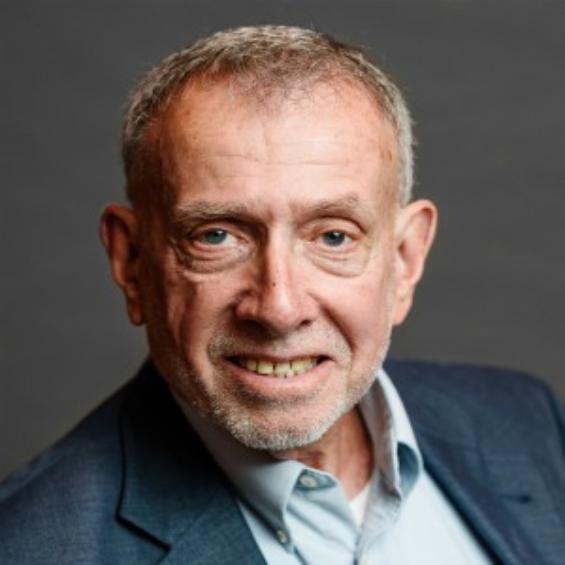
James W. Smith is a Professor in the Department of Engineering at the University of Southern Maine (USM), part of the College of Science, Technology, & Health. He holds a PhD in Solid State Science from Penn State (1967), alongside earlier degrees in Engineering Mechanics (MS, 1963) and Electrical Engineering (BS, 1961). Prior to joining USM in 1986, Smith held roles at Corning Glass Works (1967–1975), GTE Sylvania Lighting Laboratories (1976–1978), and GTE Control Devices (1978–1986), focusing on advanced materials research and product development. His scholarly work bridges engineering and education: he investigates failure mechanisms in electroceramic components and explores pedagogical strategies to harmonize liberal arts with professional training. His publications emphasize applied engineering education, such as integrating technical literature into mechanical engineering curricula and embedding sustainability principles in capstone projects. Though no awards are listed, his career reflects sustained contributions to both technical innovation and educational reform. No advising or grant details are provided in the text. His affiliation with USM remains current as of the text's publication date.
Li Wei is a Professor in the Department of Physics and Computer Science at Wilfrid Laurier University. His contact information includes the email lwei@wlu.ca and office N2084B. He speaks both English and Chinese fluently. Research interests focus on advanced photonics, fiber optics, and plasmonic technologies. His work emphasizes tunable optical filters, fiber lasers, and hybrid waveguide systems. Notable areas include high-birefringence fiber loop mirrors, Fano resonance-based sensors, and the integration of nanomaterials like graphene and carbon nanotubes into optical systems. Recent studies also explore theoretical models for guided modes in multilayer plasmonic structures and their applications in sensing and communication. His publications reflect a sustained focus on optical device design, with contributions spanning from 1992 to 2024. While no specific awards or grants are listed, his research demonstrates expertise in optical communication systems, sensor technologies, and quantum phenomena in nanoscale structures. No formal advisees are documented here. His research has been applied in fiber sensors, compact photonic devices, and interdisciplinary areas combining optics with materials science and nanotechnology.
Thomas Griffiths is a Researcher at King's College London with a Doctor of Philosophy in History. His research focuses on semiconductor materials, nanotechnology, and optoelectronic devices, with a strong emphasis on advanced materials characterization and device optimization. Education: Doctor of Philosophy in History, King's College London. Research interests include the structural and optical properties of semiconductor nanomaterials such as InGaN quantum wells, GaN-based devices, perovskite nanocrystals, and metal-organic frameworks (MOFs). His work bridges materials science and applied physics, addressing challenges in high-speed telecommunications, optoelectronic component design, and nanomaterial synthesis. Articles highlight trends in: Optimization of semiconductor materials for high-performance electronics and photonics Development of advanced fabrication techniques for nanoscale devices Exploration of novel materials for next-generation optoelectronic applications No scientific awards or grants are explicitly mentioned in the provided texts. No formal advisees are listed.
Ludovic Desplanque is an Associate Professor at the University of Lille, specializing in materials science and semiconductor nanostructures. He holds a Ph.D. in Electronics (2003) and an HDR in Physics (2017). His research focuses on molecular beam epitaxy (MBE) of III-V semiconductor heterostructures, quantum devices, and low-power electronics. He leads the EPIPHY Research Group, exploring InAs-based nanowires, InGaSb heterostructures, and topological nanostructures. Education: 2000: Degree, Ecole Centrale de Lille 2000: Master in Electronics and Microtechnology, University of Lille 2003: Ph.D. in Electronics, University of Lille 2017: HDR in Physics, University of Lille Research Interests: MBE growth of 2D/3D nanostructures High-speed/low-power electronic devices Quantum transport phenomena III-V semiconductor heteroepitaxy His work addresses challenges in epitaxial strain management, interface engineering, and device scalability for next-generation electronics. Grants: Coordinator of ANR SAMBA (2012) and participant in multiple ANR projects like TOPONANO (2014), DIRAC35 (2017), and MILLIPRISM (2013). These grants focus on topological materials, Dirac electron systems, and terahertz imaging technologies. Advising: Supervised 4 PhD students, 2 post-docs, and directed 2 masters programs. His group collaborates with institutes like CEA INAC and Institut Néel on advanced microscopy and quantum transport. Labs/Teams: Member of the EPIPHY Group and affiliated with research departments in Materials/Nanostructures, Micro/nano Optoelectronics, and Telecommunications. Active in projects like BioMEMS, CARBON, and SUBLAMBDA.
Pierre Lefranc serves as a Lecturer at the School of Energy, Water and Environment (ENSE3) within Grenoble Institute of Technology, affiliated with the G2Elab research laboratory where he is a key member of the Power Team (Équipe de Puissance). His academic responsibilities span teaching and research in power electronics, converter design, and power switch control across undergraduate and graduate programs. His educational foundation includes: Supélec Engineer (2002) DEA in Electrical Engineering from Paris (2002) Doctorate in Electrical Engineering from INSA Lyon (2005) Dr. Lefranc's research centers on power converter modeling and optimization , developing methodologies for pre-sizing, sizing, and algorithmic optimization while addressing power-control interactions. He pioneers close control of advanced power switches (IGBT, MOSFET, HEMT-GaN), focusing on high-galvanic-isolation signal transmission, planar/coreless transformer design with large air gaps, and control circuit optimization for next-generation wide-bandgap devices. His work bridges theoretical optimization with practical implementation challenges in high-frequency power systems. Analysis of his 11 publications (2009-2013) reveals consistent innovation in virtual prototyping and constraint-based optimization for DC-DC/DC-AC converters. His research spans transportation electrification, medium-voltage multi-level converters (10-50kV), and plasma reactor applications, with strong emphasis on multi-physics constraints (thermal, spatial, electromagnetic) and real-world implementation of wide-bandgap semiconductor technologies. Dr. Lefranc maintains active international collaborations including: NTNU (Norway) on Carnot 3D-MMC project for medium-voltage modular converters CentraleSupélec on predictive control of hybrid power systems LAAS Laboratory on micro-inductor optimization While his teaching portfolio spans instrumentation electronics, power converters, and switch control across ENSE3's 1A-3A programs, the source text indicates no formal student advisement records or major scientific awards. His research continues through G2Elab's Power Team on transformer design, plasma reactors, and micro-inductor optimization.
Veronica Bartolucci is a Research Fellow at the Department of Information Engineering (DII) of the Polytechnic University of the Marche, currently affiliated with the LabMACS (Laboratory of Modeling, Analysis and Control of dynamical Systems) under Professor Scaradozzi. She holds a Master's Degree (cum laude) in Computer and Automation Engineering from the same university, with a thesis on BLDC motor test benches, followed by a Ph.D. in Information Engineering focusing on max-plus algebra modeling of robotic fish swarms. Previously, she worked at the University of Bologna on the MAXFISH project, addressing multi-agent control for robotic fish swarms. Her research spans underwater robotics, multi-agent systems, biomimetic marine vehicles, and educational robotics. Key projects include DiveSafe and MAXFISH (PRIN 2022) for marine robotics, and RoboPisces/RoboAquaria for educational applications. She also contributed to low-cost hydrophone development for dolphin vocalization monitoring and digital twin infrastructures for underwater surveys. Publications emphasize mathematical frameworks (max-plus algebra), control strategies, and hardware/software systems for robotics and energy applications. Despite no explicitly stated awards, her work demonstrates significant contributions to biomimetic robotics and educational technologies. She advises no listed students but collaborates actively in lab-based and project-driven research. Current focus includes advancing max-plus algebra methodologies for autonomous underwater systems and integrating robotics in STEM education.
Dave Hsinhan Tsai is an Assistant Professor in the Department of Chemical and Biological Engineering at the State University of New York at Buffalo's School of Engineering and Applied Sciences. He joined SUNY-Buffalo in January 2025 after completing a postdoctoral fellowship at the University of California, Berkeley and previous research positions at Los Alamos National Laboratory. His research group focuses on developing hybrid semiconductor materials that integrate organic and inorganic components for applications in sustainable energy and optoelectronics. Dr. Tsai's educational background includes a PhD in Materials Science and Nanoengineering from Rice University (2018), an MS in Molecular Science and Engineering from National Taipei University of Technology (2010), and a BS in Chemistry from Fu Jen Catholic University (2006). His research interests span functional hybrid materials, optoelectronics, opto-spintronics, clean energy, CO₂ capture and conversion, high-energy detectors, crystal superlattices, and operando characterization techniques. His recent publications reveal a strong focus on perovskite-based materials for energy applications, with significant work on CO₂ capture using metal-organic frameworks and advancements in X-ray detection technologies. The research shows consistent progress in understanding material properties at the molecular level and translating these insights into practical devices for energy conversion and environmental applications. Scientific awards received by Dr. Tsai include: R&D 100 award for Solution-processed Perovskite Crystalline Films (2023) Rising Star of Science Award from Research.com (2022) Highly Cited Researcher designation from Clarivate (2021) Rosalind Franklin Young Investigator Award from Argonne National Laboratory (2020) J. Robert Oppenheimer Distinguished Postdoc Fellowship from Los Alamos National Laboratory (2019) Dr. Tsai currently mentors several graduate and undergraduate students in his research group, including Rongbo Ji, Mahdi Montazeri, Cunyi Wei, and Melina Toromani. His lab maintains collaborations with other researchers at SUNY-Buffalo, including Professors Chi-Ching Kuo and Jeff Long. The Tsai Group operates from Furnas Hall and utilizes specialized facilities including Vigor gloveboxes with thermal deposition capabilities and spin coaters for materials synthesis and device fabrication.
Dr Karthik Depuru-Mohan (MRAeS, SMAIAA, MIET, AFHEA) serves as a Lecturer in Aerodynamics at Cranfield University's Centre for Defence Engineering and Physical Science. His research and teaching focus on aerodynamics, aeroacoustics, propulsion, and airworthiness across aerospace, defense, automobile, motorsport, UAV, and energy applications. PhD in Aerospace Engineering from University of Cambridge Holds two US patents in gas turbine sealing technology Active in EPSRC Peer Review College and UKRI Talent Peer Review College Research spans jet noise reduction, urban wind assessment, and sustainable aviation fuels His methodology combines experimental, computational, and theoretical approaches to address global engineering challenges. The 2025 Environmental Data Science paper demonstrates a deep learning surrogate model for urban wind dynamics with mean error rates of 0.3 m/s, while prior works explore chevron noise reduction (2016), vortex-enhanced mixing (2015), and jet flow control (2008-2017). Scientific Contributions: 2015 - AIAA's top 10 most-read paper Over 40 publications in journals, conferences, and book chapters Peer reviewer for leading journals Member of multiple learned societies He maintains an honorary position at the University of Cambridge and encourages prospective MSc/PhD students to contact him regarding research projects in aerodynamics and propulsion systems.
Camelia COȘEREANU is a Professor at the Department of Wood Processing and Design of Wood Products, Faculty of Furniture Design and Wood Engineering, Transilvania University of Brașov. Her research focuses on advanced wood-based materials, sustainable furniture manufacturing, heat/sound insulation composites, and digital design technologies. She has authored/co-authored influential textbooks including "Furniture. Seating furniture" (2012) and "3D modeling and manufacturing technology of furniture products" (2019). Recent studies explore CNC surface quality analysis, adhesive innovations for particleboards, and sustainable insulation solutions for passive houses. Education: Academic qualifications not explicitly stated in text Her work bridges traditional wood craftsmanship with modern manufacturing techniques, emphasizing sustainability through material innovation. Key research areas include lignocellulosic composites, decorative techniques, and 3D printing applications in furniture assembly. Over 10 years of continuous publication activity demonstrates her leadership in wood science and furniture engineering. Notable publications span applied engineering journals like "BioResources" and "Coatings" , reflecting interdisciplinary impact. Her research addresses both industrial needs (e.g., low-emission adhesives) and architectural trends (e.g., passive house insulation systems). Labs/Teams: Active in university's wood engineering research facilities
Prof. Antonio Cammi is a distinguished academic focusing on advanced nuclear technologies and thermal-fluid systems. His research integrates computational modeling, experimental validation, and innovative engineering solutions for fusion energy systems, molten salt reactors, and high-performance thermal management. Key areas include gyrotron design for plasma heating, remote maintenance systems for fusion facilities, and reactor safety through multiphysics analysis. He actively contributes to international projects like JUNO (neutrino detection), IFMIF-DONES (fusion materials testing), and EU-DEMO (demonstration fusion reactor). His work bridges fundamental physics with applied engineering, addressing challenges in reactor core dynamics, fuel cycle optimization, and computational efficiency. Notable methodologies include reduced order modeling (ROM), data assimilation techniques, and hybrid simulation approaches. Cammi collaborates with institutions like ENEA (Italian National Agency for New Technologies), ITER, and the University of Pavia (TRIGA reactor). Research interests span fusion plasma physics, advanced reactor materials, neutron radiation effects, and sustainable nuclear energy economics. His team develops novel tools for reactor safety assessment, including digital twins and real-time monitoring systems. Current projects emphasize high-flux testing infrastructure, passive safety systems, and modular reactor designs for next-generation energy systems.
Luiz ANET NETO is a Professor in the Département Optique at IMT Atlantique, a leading technological university within the Institut Mines-Télécom network. His research focuses on advanced optical communications, telecommunications networks, and network architecture innovations, particularly in areas like 5G integration, passive optical networks (PON), and software-defined networking (SDN). He has contributed extensively to optimizing high-speed data transmission systems, including work on wavelength-division multiplexing (WDM), cost-effective transceivers, and machine learning-driven network modeling. His projects often bridge theoretical advancements with practical implementations, addressing challenges in optical access networks, fiber optics, and mobile network convergence. Recent efforts emphasize reconfigurable architectures for bidirectional access networks and the integration of SDN for enhanced network flexibility and security. Key areas of research include: High-speed optical transmission systems (up to 200 Gbps) Optimizing PON technologies for 5G fronthaul/backhaul Machine learning applications in fiber optics and network modeling SDN-enabled network slicing for 5G environments His publications highlight trends in ultra-high-speed PONs, low-complexity decoding algorithms, and the synergy between optical and wireless systems. Collaborations often involve industry partners to ensure practical relevance, such as developing cost-effective 50G ONU solutions or analyzing real-time performance of optical access platforms. Despite no explicitly listed awards or students, his contributions are reflected in numerous peer-reviewed journals and conference proceedings.
Assoc. Prof. Dr. Firat Ertaç Durak is an Associate Professor at the Department of Telecommunications, Faculty of Engineering, Dumlupınar University. He holds a PhD in Electrical and Electronics Engineering from Dumlupınar University (2013-2017), preceded by a Master's (2009-2012) and Bachelor's (2004-2008) from Kocaeli University and Dumlupınar University respectively. His research focuses on fiber optic systems, including EDFA optimization, fiber lasers, and sensor applications. He has led over 9 projects, including notable initiatives like 'Design and Development of a Stable, Nanosecond Pulsed, Wavelength-Tunable Fiber Ring Laser' and 'Spectral Gain Measurement of EDFA Using Saturation Tone'. His 54+ publications span journals like Optical Engineering and IEEE Journal of Lightwave Technology , with a concentration on fiber optic amplifiers and communication systems. Prof. Durak currently serves as Director of the Research and Application Center and Vice President of the Department at Dumlupınar University. He is an active IEEE member and teaches courses such as Electro-Optical System Analysis and Fiber Optic Communication Systems . His lab focuses on advancing photonic technologies for telecommunications and sensor systems.
Dr. Bertrand P Boussert is an Adjunct Professor at the School of Electrical & Computer Engineering at Georgia Institute of Technology and an associate researcher with the Unité Mixte Internationale 2958 Georgia Tech-CNRS in Metz, France. He holds advanced degrees in Electrical & Computer Engineering (M.S., 1992) and Applied Physics (Ph.D., 1996). Research Focus: His work spans two domains: (1) Atomic Clock Technology (cesium beam clocks, optoelectronic oscillators, frequency stability) and (2) Photovoltaics (III-N semiconductor modeling, solar cell trackers). Recent publications emphasize microwave engineering in quantum systems. Academic Leadership: Dr. Boussert serves as director of academic programs and partnerships at Georgia Tech Lorraine, France.
Roberta Martin is an Associate Professor in the School of Ocean Futures at Arizona State University (ASU) and serves as the Associate Director of Academics. She is also a faculty member in the Center for Global Discovery and Conservation Science (GDCS), where she contributes to global environmental research initiatives. Her primary research focuses on applying remote sensing technologies to study biodiversity and ecosystem functions in tropical forests and coral reefs, with an emphasis on conservation and management strategies. Dr. Martin holds a Ph.D. in Biochemistry and Remote Sensing from the University of Colorado (2003), an M.A. in Rangeland Ecosystem Science from Colorado State University (1996), and a B.A. in Population and Organismic Biology from the University of Colorado (1993). Her teaching philosophy prioritizes experiential learning through online courses with field components, aiming to equip students with practical skills for ecological conservation. Her research integrates airborne and satellite remote sensing with field measurements to analyze functional traits of plants and corals, examining evolutionary, phylogenetic, and environmental influences on ecosystem processes. She actively investigates challenges such as invasive species management, coral reef degradation, and climate change impacts on tropical ecosystems. Dr. Martin collaborates with interdisciplinary teams to advance conservation strategies and sustainable resource management practices. Her educational contributions include courses like Geographic Research Methods , Plant Geography , and Ocean Futures Workshop , designed for diverse student populations. These courses emphasize hands-on fieldwork and place-based projects to address real-world environmental challenges.