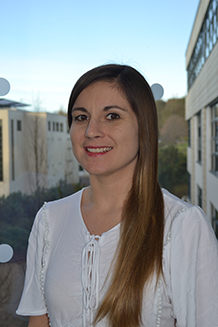
Carlo Bianco is a Fixed-term Tenure-Track Assistant Professor at Politecnico di Torino within the Department of Environment, Land and Infrastructure Engineering (DIATI) . His work spans Sanitary and Environmental Engineering with a focus on Groundwater Remediation using Nanotechnologies and Colloid Transport mechanisms. Research Highlights: Developing Nanoremediation techniques for Contaminated Aquifers Investigating Non-Exhaust Traffic Emissions in Poros Media Designing Eco-Friendly Formulations to reduce Pesticide Volatility Advancing Adsorption Models for VOC Mixtures in water treatment Scientific Contributions: Co-inventor of Advanced Oxidation-Reduction Systems for water contaminant removal Pioneering Electrochemical Remediation via Subsurface Currents Patents on Zero-Valent Metal Synthesis and Colloid Deposition Control Teaching Roles: Course Instructor for Nanotechnologies in Remediation (PhD, Civil and Environmental Engineering) Collaborator in Groundwater Engineering courses across multiple academic years Lecturer in Life Cycle Assessment for Sustainable Industry
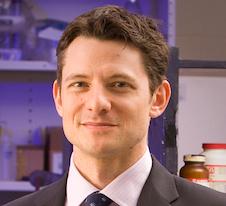
Alberto Tiraferri is a Full Professor at the Department of Environment, Land and Infrastructure Engineering (DIATI) at Politecnico di Torino , Italy. His research focuses on membrane technology for water desalination , wastewater treatment , and resource recovery , with expertise in advanced oxidation processes and environmental chemistry . He leads the en.sur.e water lab , which bridges separation technology , materials science , and colloid/surface science . Member, Interdepartmental Center CWC - CleanWaterCenter@PoliTo Full Member, ANDIS (2019–present), GITISA (2015–present) Associate Editor, Frontiers in Environmental Science (2018–2025) His research projects include MEloDIZER (EU-funded, 2022–2026) for sustainable membrane distillation and FLOWING (2017–2019) for produced water reuse in oil & gas. He has received prestigious awards such as the ACS Environmental Chemistry Graduate Student Award (2010), Membrane X-Prize (2010), and Marie Curie Intra European Fellowship (2012). His work aligns with UN SDG 6 (Clean Water), SDG 9 (Innovation), and SDG 11 (Sustainable Cities). Professor Tiraferri supervises 10 PhD students and has authored 15+ recent publications on membrane processes , chemical water treatment , and microfiber pollution . He holds multiple international patents , including Biomimetic membranes with water channels and Living water filtration membranes .
Laura Wiley is a Research Fellow (Trial Coordinator) at the York Trials Unit within the Department of Health Sciences at the University of York. She specializes in clinical trial coordination with expertise in trials focused on healthy ageing, mental health interventions, and data quality assurance. Her work spans multiple randomized controlled trials including the Gentle Years Yoga trial, the moreRESPECT trial, and the ComBAT trial. Education: PhD in Biology of Ageing (2014), Newcastle University MRes in Medical and Molecular Bioscience (2009) BSc (Hons) in Human Biology (2007) Laura's research focuses on lifestyle interventions for healthy ageing and mental wellbeing in older adults with multimorbidity. Her work examines how chair-based yoga programs can be effectively implemented to improve quality of life for this population. She also investigates data quality assurance methodologies and strategies for improving recruitment and retention in clinical trials, with particular attention to vulnerable populations. Her research combines quantitative and qualitative approaches to understand both the clinical effectiveness and implementation challenges of interventions. Her recent publications demonstrate a strong focus on pragmatic clinical trials with embedded process and economic evaluations, particularly in geriatric interventions. There's a clear trajectory from protocol development through to effectiveness and implementation research, with increasing attention to process evaluation components that help understand why interventions succeed or fail in real-world settings. Her work bridges clinical research methodology with practical healthcare applications for older adults. Laura has contributed significantly to methodological research in clinical trials, particularly regarding recruitment strategies and data collection methods. Her work on study-within-a-trial (SWAT) methodologies has provided valuable insights into improving trial processes without compromising scientific integrity. As a trial coordinator, Laura has led multiple complex research projects from inception through to completion. Her expertise in managing multi-center trials, ensuring data quality, and addressing recruitment challenges has been instrumental in advancing research on interventions for older adults with multiple long-term conditions. She works closely with interdisciplinary teams including clinicians, statisticians, health economists, and qualitative researchers.
Odile Merdrignac-Conanec is an Associate Professor in the Department of Chemistry at University of Rennes 1's Faculty of Science, affiliated with the Institut des Sciences Chimiques de Rennes (UMR 6226 CNRS). Her career spans over three decades at the university, progressing from Assistant Professor (1991-2000) to current Associate Professor status with qualification for university professorship (CNU 31-33). PhD in Chemistry, University of Rennes 1 (1989) Accreditation to Supervise Research (HDR), Chemistry; Chemical Physics, University of Rennes 1 (2000) Post-Doctoral Fellow, Harwell Lab, AEA Technology (UK) (1990-1991) Her research focuses on advanced materials synthesis and characterization, specializing in ceramics engineering for optical, sensing, and biomedical applications. Key areas include infrared-transparent ceramics (ZnS, La 2 O 2 S), gas sensors using semiconductor oxides, photocatalytic (oxy)nitrides, and biomaterials like bioactive glasses. Her work integrates soft chemistry methods with advanced sintering techniques (HP, HIP, SPS) and in-situ characterization (TPD/MS, DRIFTS). Analysis of her 15 most recent publications reveals strong emphasis on rare-earth doped phosphors for lighting applications, porous biomaterials for tissue engineering, and energy conversion materials including thermoelectrics and CO 2 reduction catalysts. Her optical materials research consistently targets infrared transparency and luminescence efficiency. 2018 Semester for Innovation of Rennes 1 Foundation 2017 Year for business creation of Rennes 1 Foundation 2015 CNRS delegation (50%) 2013 Board Member, French Ceramic Society (GFC) 1990 Chemistry PhD Thesis Prize (Pr P. Gineste Award) She has directed eight PhD theses since 2003 with notable success including the Rennes 1 Foundation Thesis Prize (2017) and French Ceramic Society Thesis Prize (2020). Her research is supported by CNRS collaborations and Rennes 1 Foundation innovation grants. She actively participates in thesis committees at institutions including University of Tübingen, ENSM Saint-Etienne, and IRCER Limoges. Her laboratory work centers on the Institut des Sciences Chimiques de Rennes, utilizing specialized equipment for ceramic synthesis, optical characterization, and biomaterial testing. Current projects include infrared-transparent sulfide ceramics and doped oxysulfides for optical refrigeration.
Stephen O'Brien is a Professor of Chemistry and Biochemistry at The City College of New York, affiliated with the Center for Advanced Technology, Chemical Engineering, and the Energy Institute. His research focuses on nanocrystal synthesis, biomedical applications of nanomaterials, batteries, and capacitors, with emphasis on energy storage and clean technology. He leads a research group exploring nanomaterials for applications in photonics, catalysis, and medical devices. His work integrates chemical solution processing and self-assembly techniques to develop high-performance nanocomposites and devices. Key research areas include lithium metal batteries, multiferroic oxides, and meta-capacitor projects. He has pioneered studies on nanoparticle self-assembly and transition metal oxide nanomaterials. His group collaborates on projects funded by various sponsors, aiming to bridge nanotechnology with practical industrial applications. Recent publications span advancements in magnetic sensor design, alkaline battery anodes, and biomedical imaging techniques. He has advised numerous graduate students in materials science and engineering. Notable collaborations include work on fibrotic tissue recovery and biomaterials characterization. His research has implications for sustainable energy systems, medical diagnostics, and nanoscale device fabrication.
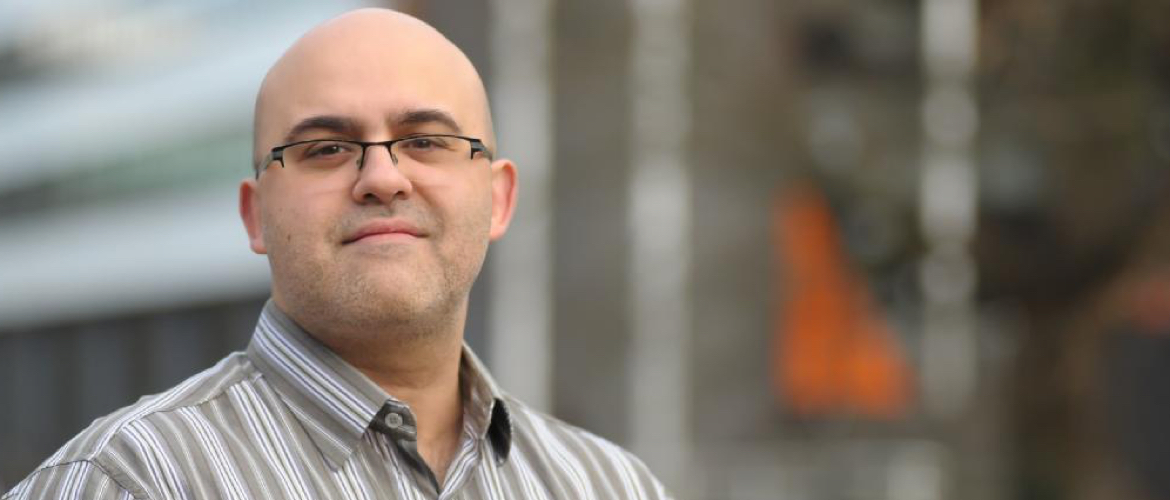
Xenofon Strakosas is an Assistant Professor at Linköping University's Department of Science and Technology (ITN), affiliated with the Laboratory of Organic Electronics (LOE) within the Faculty of Science and Engineering. His research focuses on organic bioelectronics, particularly the integration of electronic systems with biological tissues. Key projects include developing conductive hydrogels for 3D bioprinting, enzymatic polymerization of organic conductors on lipid membranes, and in vivo fabrication of soft electrodes for electronic medicine. Recent breakthroughs include growing electrodes in living tissue using injectable gels and achieving precise drug delivery via proton-trapping ion pumps. Supported by a SEK 10 million donation from the Stig Wadström Foundation, his work bridges technology and biology to address neurological diseases and human-machine interfaces. His lab collaborates across disciplines, leveraging organic electronics for biosensors, neural interfaces, and sustainable energy solutions. Publications emphasize advanced materials, electrochemical platforms, and biomedical applications. Current research trends prioritize biocompatibility, in vivo compatibility, and precise control of electronic-ionic interactions. Awards and recognitions include Physics World's 2023 major breakthrough designation for electrode growth in living tissues. Future directions include scalable bioelectronic systems and next-generation medical therapies.
Professor Peter Nockemann is a faculty member at Queen's University Belfast, serving as Professor in Inorganic and Materials Chemistry and Director of Research. He leads research in ionic liquids, energy storage, and sustainable metal separation. His work addresses critical challenges in renewable energy systems and rare earth metal recycling, contributing to UN Sustainable Development Goals. He co-founded Green Lizard Technologies Ltd., a startup focused on clean energy solutions. Nockemann holds a Royal Society of Chemistry Fellowship and has received awards for innovation and sustainability. Research Interests: Ionothermal synthesis of advanced materials Redox flow battery electrolyte development Environmental applications of ionic liquids Urban mining and rare earth recycling Key Achievements: Developed novel electrolytes for high-energy-density batteries Pioneered ionic liquid-based metal separation techniques Recipient of AkzoNobel Imagine Chemistry Award (2018) Co-creator of a scalable rare earth recycling plant Current Projects: 3D-printed redox flow battery systems High-power-density electrolyte formulations Sodium semi-solid-state battery development
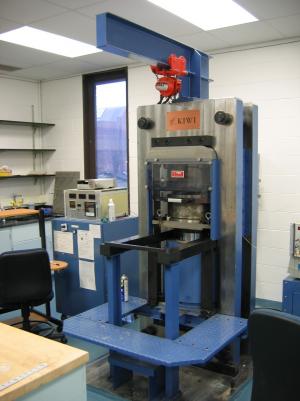
Shun-ichiro Karato is a Professor of Earth & Planetary Sciences at Yale University, affiliated with the Department of Geology and Geophysics. His research focuses on high-pressure materials science, mantle dynamics, and planetary evolution. He leads experimental studies using advanced facilities like the 1000-ton Kawai-type Multi-anvil Apparatus and field-emission SEM with EBSD for microstructural analysis. Education: PhD in Geophysics, University of Tokyo, 1977 MSc in Geophysics, University of Tokyo, 1974 BSc in Geophysics, University of Tokyo, 1972 His research interests include water distribution in planetary interiors, deformation mechanisms of mantle minerals, and the role of volatiles in Earth’s dynamics. He collaborates across disciplines to integrate experimental, theoretical, and observational approaches. Recent work explores hydrogen dissolution in bridgmanite, mantle rheology under high pressure-temperature conditions, and the implications of seismic anomalies for mantle structure. Labs/Facilities: Karato oversees cutting-edge facilities enabling high-pressure/temperature experiments, including rotational Drickamer apparatuses and synchrotron-based deformation studies. These tools support investigations into phase transitions, deformation mechanisms, and melt localization in the mantle. Teaching: Teaches courses like Introduction to Earth Materials (G&G 319/519), Deformation of Earth Materials (G&G 450/650), and Seminar on Mantle and Core Geophysics (G&G 744).
Philip J. Reid serves as Professor and Vice Provost for Academic & Student Affairs at the University of Washington's Department of Chemistry. With a Ph.D. from the University of California at Berkeley (1992), he maintains an active research program while holding significant administrative responsibilities within the university structure. Professor Reid's research focuses on molecular photophysics at the single-molecule level, particularly investigating fluorescence intermittency (blinking) , charge transfer processes , and guest-host interactions in various materials systems. His laboratory employs advanced confocal microscopy and femtosecond spectroscopy techniques to study phenomena in semiconductor nanocrystals, polymer matrices, and molecular crystals. Key research areas include understanding the nature of non-emissive states that serve as gateways to material decomposition, temperature-dependent photophysics around polymer glass transitions, and proton transfer mechanisms in crystalline environments. Analysis of Professor Reid's recent publications reveals consistent focus on single-molecule spectroscopy applied to nanomaterials and polymers. His work demonstrates how molecular-scale photophysical measurements can provide insights not obtainable through bulk techniques, particularly regarding environmental effects on photostability and emission properties. The research bridges fundamental physical chemistry with practical applications in photonic materials. Professor Reid has advised numerous graduate students and postdoctoral researchers who have gone on to diverse careers in academia, government, and industry. His laboratory collaborates extensively with other research groups, notably the Gamelin Lab at UW and the Kahr Group at New York University, reflecting the interdisciplinary nature of his work. The Reid Lab operates custom-built confocal microscopy systems designed for single-molecule investigations. Research focuses on chromophore-polymer systems and mixed-crystal materials where single molecules are isolated in well-defined environments. This approach allows precise investigation of molecular photophysics while minimizing complications from oxygen permeability and nonradiative relaxation.
Abbie Jones is a Professor of Nuclear Graphite Engineering at the University of Manchester's School of Mechanical, Aerospace & Civil Engineering (MACE), serving as Research Area Lead for Nuclear Materials at the Henry Royce Institute. Her research focuses on nuclear graphite behavior in reactor systems, emphasizing irradiation damage, microstructural characterization, and waste management. She leads international collaborations through organizations like the IAEA and ONR, contributing to nuclear safety and decommissioning strategies. Education: BSc Hons, MSc, PhD, and Fellow of the Higher Education Academy (FHEA). Awards include a 2016 finalist for the Research Project of the Year Award. Research Interests: Irradiation damage in graphite, isotopic reduction (14C/3H), and advanced techniques like synchrotron tomography. Over £10M in grants secured as PI/Co-I, including a £2M National Nuclear User Group facility for molten salts. Holds a pending patent for graphite decontamination. Impacts: Improved UK nuclear reactor safety via independent graphite analysis for the Office for Nuclear Regulation. Active in global networks like the IAEA's GRAPA initiative. Labs/Teams: Leads the MACE Nuclear Materials Group and collaborates with industrial partners worldwide. Supervised 7 graduate students.
Valerie Kouskoff is a Reader in the Division of Developmental Biology and Medicine at the University of Manchester, UK (2016–present). Previously, she held roles including Group Leader at the CRUK Manchester Institute (2003–2016) and Assistant Professor at Mount Sinai School of Medicine, New York (2002–2003). She earned her PhD from Louis Pasteur University, Strasbourg, France (1988–1994). Her research focuses on understanding hematopoietic stem cell (HSC) development during embryogenesis, particularly the endothelial-to-hematopoietic transition and genetic/epigenetic mechanisms regulating blood cell specification. Key areas include the role of transcription factors (RUNX1, SOX7, GFI1), hemogenic endothelium differentiation, and therapeutic applications of stem cell engineering. Her work contributes to UN Sustainable Development Goals related to health and regenerative medicine. Recent articles highlight advancements in AML treatment via KAT6A inhibitors, CD82’s role in blood specification, and SOX7-dependent lymphatic patterning. Collaborations span institutions like the Manchester Regenerative Medicine Network and Christabel Pankhurst Institute. She has supervised 8 research projects and published over 100 peer-reviewed articles. Her studies explore genomic instability in cancer, reprogramming fibroblasts to hematopoietic cells, and the interplay between vascular and blood development.
Eon Soo Lee is an Associate Professor in the Department of Mechanical and Industrial Engineering at the New Jersey Institute of Technology (NJIT). His primary research focuses on advanced materials engineering, biomedical microfluidics, and assistive technologies for individuals with disabilities. He has led federally funded projects including 'I-Corps: Multiplex Diagnostic Assay Using Interdigitated Nano-Sensing Technology' (NSF, 2023-2025) and 'Innovative Nano Catalysts for Automobile and Fuel Cell Applications' (NSF, 2018). Research Interests: Lee's work spans interdisciplinary areas including: Development of N-doped graphene/MOF composites for energy applications Microfluidic systems for blood plasma separation and antigen detection Design of accessible technologies for visually impaired users, including VR audio descriptions and remote sighted assistance systems Grants and Projects (select): National Science Foundation (2023): $500K for multiplex diagnostic assays National Science Foundation (2018): $300K for nano-catalysts in fuel cells Multiyear collaborations with industry partners on biosensor integration Innovation Highlights: Developed AIGuide: AR hand-guidance system for visual impairments Pioneered omnidirectional audio descriptions for VR music performances Published extensively in Carbon , Biomicrofluidics , and ACM/IEEE accessibility venues
Dr José Rodolpho de Oliveira Leo is an Assistant Professor at the University of Warwick , School of Engineering (joined May 2023). Previously, he spent nearly eight years as a lecturer at Coventry University and has extensive industrial consulting experience in mining, steel, oil & gas, and energy sectors. He is a Fellow of the Higher Education Academy (FHEA) and a Chartered Engineer (CEng) . Education BSc in Mechanical Engineering, Universidade Federal de Minas Gerais (UFMG), Brazil, 2011 – final-year project on die-sinking electrical discharge machining. PhD in Materials Engineering, The Open University, UK, 2016 – thesis on creep and anelastic recovery of steels for advanced nuclear reactors. Research Interests Rodolpho’s research spans materials characterisation of metals and alloys, focusing on oxide-dispersion-strengthened (ODS) steels , titanium alloys and nickel superalloys . He investigates creep, fatigue and mechanical testing under extreme conditions and develops manufacturing processes such as machining, welding and additive manufacturing. He also explores control and automation applied to manufacturing systems and conducts pedagogical research on modern engineering curricula and teaching practices. Across his publications, a clear trend emerges: cutting-edge metallurgical studies (ODS steels, Ti-alloys) combined with advanced manufacturing techniques (additive manufacturing, EDM, laser shock peening) and a parallel stream of scholarship on engineering education, assessment and technology-enhanced learning environments. Scientific Awards & Professional Recognition Fellow of the Higher Education Academy (FHEA) Chartered Engineer (CEng) – Institution of Engineering & Technology (MIET) Teaching & Supervision In 2024/2025 Rodolpho leads or co-leads four key modules: ES3E8 – Precision, Measurement & Control ES2F9 – Dynamics & Vibrations (EMDA) ES2J7 – Fundamentals of Manufacturing ES3H7 – Group Project (EMDA) He is presently open to supervising fully funded PhD students and welcomes informal discussions for MSc or PhD project ideas. Office & Contact Office A420, School of Engineering, University of Warwick, Coventry CV4 7AL, UK Advice & feedback hours: Wednesdays & Fridays 10:00–12:00 during term time or by appointment.
Prof. Robert Meißner is a Professor at the Department of Surface Physics and Technology at TUHH. His research focuses on molecular simulation techniques applied to corrosion processes, energy storage systems, and nanomaterials. He develops computational tools like ELECTRODE and i-PI for electrochemical and advanced molecular dynamics simulations. His work addresses challenges in magnesium battery performance, structural health monitoring of composite materials, and interfacial phenomena in nanoscale systems. Education details are not explicitly provided in the text, but his professional trajectory reflects extensive academic and industrial experience in materials science. Research interests span from fundamental studies (e.g., water imbibition in nanopores, magnetite oxidation dynamics) to applied innovations (e.g., corrosion protection via layered double hydroxides, data-driven electrolyte design). His recent publications highlight trends in data-driven materials discovery, structural health monitoring via vibro-acoustic methods, and computational prediction of corrosion inhibitors. He collaborates on projects involving graphene-based supercapacitors, epoxy resin curing dynamics, and peptide-surface interactions. Advising and grants: While student names are not listed, his research group actively explores corrosion engineering, battery technology, and nanomaterials. Projects include EU-funded initiatives and industry partnerships. Technical expertise includes ATR-FTIR spectroscopy, molecular dynamics, and machine learning for sparse data scenarios. He leads teams focused on surface science and energy storage, maintaining lab facilities for in situ electrochemical analysis and advanced computational modeling. His work bridges theoretical insights with practical applications in materials durability and energy systems.
Professor Se-Hee Lee is a faculty member in the Department of Materials Science and Engineering at the University of Colorado, specializing in nanostructured materials for electrochemical energy systems. Her research focuses on developing high-performance materials for batteries, supercapacitors, fuel cells, and electrochromic devices. She leads the Electrochemical Energy Laboratory, which emphasizes materials design, synthesis, characterization, and device fabrication. Key achievements include the 2010 COTLABS Governor’s Award for electrochromic window research and the 2009 R&D 100 Award for the PowerPlane UX Microbattery. Her work spans solid-state electrolytes, silicon-based anodes, and advanced coating technologies. Research interests include nanostructured metal oxides and chalcogenides, with a focus on addressing challenges like electrode-electrolyte interface stability and volumetric expansion. Awards include invited speaker roles at the 2008 Japan-American Frontiers of Engineering Symposium. Her patents cover thin-film batteries, nano-composites, and hydrogen sensors. Lab locations are in ECNW 160C (office) and ECES 127 (laboratory). Over 50 publications highlight her contributions to solid-state battery technology, including advancements in silicon anodes, ionic liquid electrolytes, and covalent organic frameworks. She collaborates on grants targeting sustainable energy solutions and has pioneered methods like slurry-coated anodes and operando imaging techniques for electrolyte analysis.