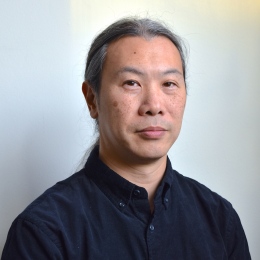
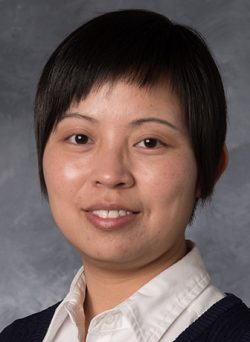
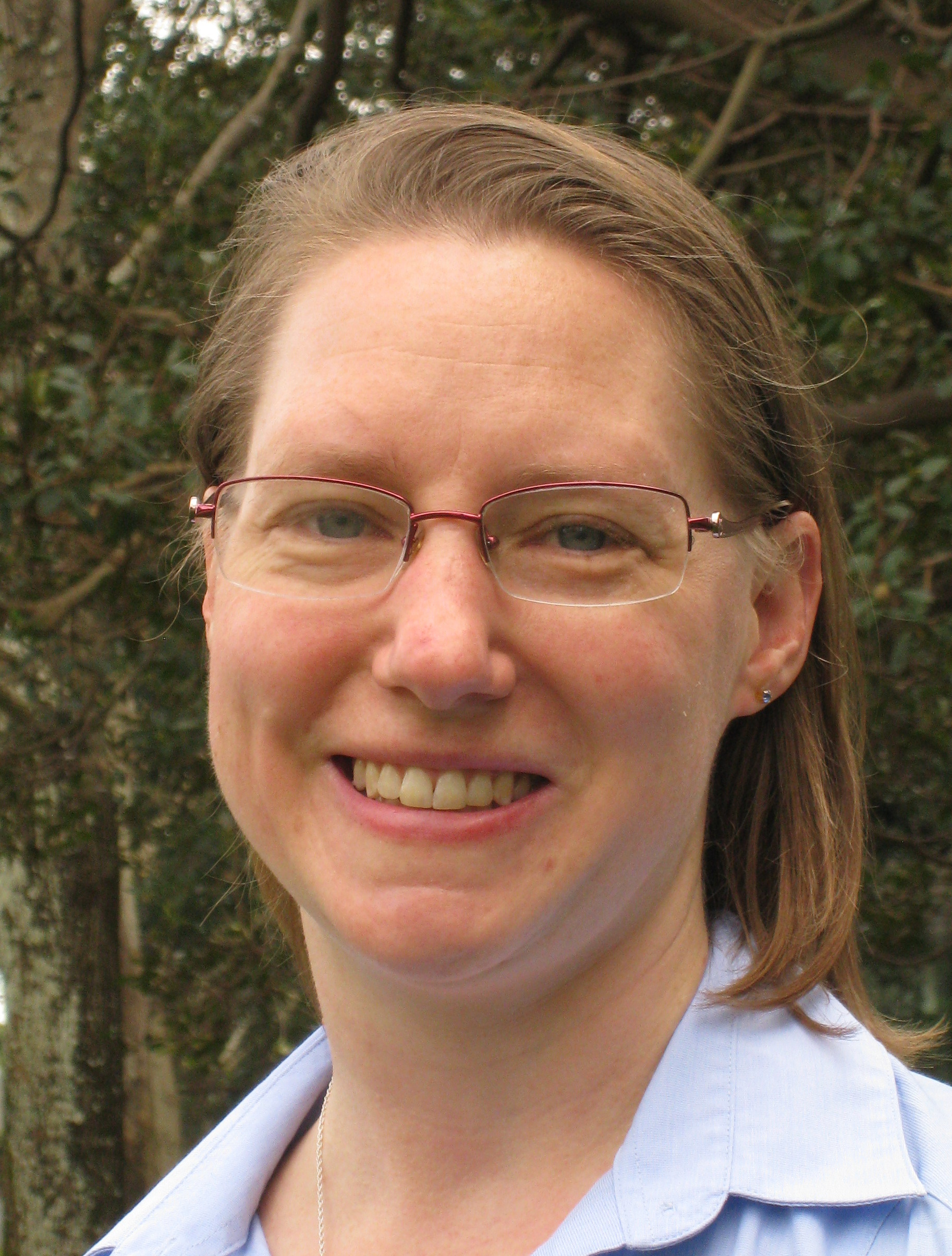
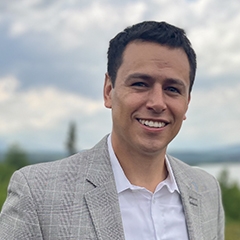
Michael Gasik is a Professor at the Department of Chemical and Metallurgical Engineering, School of Chemical Engineering, Aalto University. With over 30 years of experience in technology transfer, he has led initiatives across the EU, Japan, and the Middle East, including BC-Net (EC DG Enterprise). He serves as an expert for European bodies like EC/REA, COST, and ERC since 1993. His research spans biomaterials ceramic materials metals processing sustainable manufacturing additive manufacturing green energy systems and focuses on interdisciplinary applications in biomedical and environmental engineering. Recent research trends include advanced biomaterials for medical implants (e.g., PEO-coated magnesium alloys) multi-material 3D printing for industrial components green hydrogen production via HyS cycle optimization sustainable polymer composites photocatalytic nanomaterials blockchain-enabled recycling for electric vehicles Scientific accolades include 2023 EORS Ambassador for Finland 2015 National State Prize of Ukraine 2013 M.M. Dobrohotov Award 1997 JSPS Scholarship 1995 Best Doctorate Thesis Award 2007 Certificate of Appreciation for Functional Graded Materials He has secured funding through 10 EU projects, 2 IEA projects, and over 15 national projects, contributing to >300 publications and patents. His expertise extends to technology transfer leadership and peer review for journals and funding agencies in multiple countries.
Cheuk Wai Tai is a Senior Staff Researcher at Stockholm University's Department of Environmental and Materials Chemistry since 2009. He manages the transmission electron microscopes and sample preparation equipment at the Electron Microscopy Center and serves as Section Editor for the Journal of Electronic Materials. His work focuses on quantitative structure characterization in functional materials research, particularly within nanoscience and nanotechnology contexts. Education: Ph.D. in Applied Physics, The Hong Kong Polytechnic University, 2004 M.Phil. in Applied Physics, The Hong Kong Polytechnic University, 2001 M.Sc. in Physics, The Chinese University of Hong Kong, 1998 B.Sc. (Hons) in Engineering Physics, The Hong Kong Polytechnic University, 1997 Dip. in Mechanical Engineering (Computer Aided Engineering), Institute of Vocational Education (formerly Haking Wong Technical Institute), Hong Kong, 1992 His research centers on structure-property relationships in functional materials through advanced electron microscopy techniques. Current specializations include Pair Distribution Function (ePDF) & Diffuse Scattering, Energy Materials characterization, and EM sample preparation methodology development. The group maintains strong focus on translating structural data into functional performance metrics for nanomaterials. Recent publications (2013-2019) demonstrate consistent emphasis on electron microscopy applications for energy storage materials (batteries, photocatalysts) and functional ceramics. Key trends include structural disorder analysis in piezoelectrics, development of quantitative TEM methods like SUePDF, and nanoscale characterization of electrocatalyst surface phases. His work bridges materials chemistry with advanced imaging techniques. Scientific recognition includes: Fellow of The Royal Microscopical Society (U.K.) Senior Member of IEEE Marie Curie Fellowship (2007-2009) from European Commission Sir Edward Youde Memorial Fellowship (2003/2004) from Hong Kong S.A.R. Government He teaches Solid State Chemistry (KZ7003) and leads Introduction to Analytical Electron Microscopy (KZ8009), having previously taught Advanced Transmission Electron Microscopy (KZ8010) before 2011. Major grants supporting his work include: "Quantitative structural characterisation using 3D electron-based pair distribution function" (Swedish Research Council) "A Multidimensional Toolkit for Modern Electron Microscopy" (Swedish Foundation for Strategic Research) "Mitigating Ni-rich Li-ion cathode side-reactions" (Swedish Energy Agency, Co-applicant) He leads the Cheuk-Wai Tai group within Stockholm University's chemistry department and oversees operations at the Electron Microscopy Center, where his team develops and applies advanced characterization techniques for functional materials research.
Susie Dai is a Professor in the Department of Chemical and Biomedical Engineering at the University of Missouri, with a laboratory located at the Bond Life Sciences Center. Her research bridges chemistry, biology, and engineering to address critical environmental and sustainability challenges. Education: PhD in Chemistry from Duke University; Certificate in Biomedical Engineering from Duke University; Certificate in Regulatory Science from Texas A&M University; BS in Chemistry from Fudan University Dr. Dai specializes in biological and material engineering, carbon waste conversion, contaminant remediation, and synthetic biology. She is developing RAPIMER, a lignin-based fungal scaffold for PFAS removal, and pioneering electro-microbial systems to convert CO2 into bioplastics and biofuels. Her work focuses on scalable, sustainable solutions for environmental pollutants and carbon utilization. Recent research trends include creating biomimetic materials for sustainable packaging, optimizing lignocellulosic biorefineries, and designing lignin-derived photocatalysts. She leads projects funded by Tito's Handmade Vodka's philanthropic arm for PFAS remediation and collaborates with the NSF Engineering Research Center CURB at Washington University in St. Louis. At Mizzou, Dai integrates engineering and life sciences, leveraging both Mizzou Engineering and Bond Life Sciences Center's resources. Her interdisciplinary approach combines electrochemistry, microbial engineering, and social impact analysis to advance circular bioeconomy solutions.
Cécile Mailler is a Reader in Probability at the University of Bath, where she is a member of the probability group Prob-L@B. She has held significant research positions including an EPSRC postdoctoral fellowship (2018-2021) titled "Random trees: analysis and applications" and previously worked as a postdoc at Prob-L@B (2013-2016) as part of Peter Mörters' EPSRC project "Emergence of Condensation in Stochastic Networks". She earned her PhD under the supervision of Brigitte Chauvin and Danièle Gardy at the Laboratoire de Mathématiques de Versailles. Her research focuses on probability theory with emphasis on branching processes, random trees, reinforcement mechanisms, Pólya urns, stochastic approximation, random networks, and statistical physics. She has made significant contributions to understanding preferential attachment models, zero-range processes, and random Boolean trees. Her work bridges theoretical probability with applications in statistical physics and combinatorics. Analysis of her recent publications shows a strong focus on random tree structures, branching processes, and reinforcement learning algorithms, with applications spanning from network theory to statistical mechanics. Her research demonstrates sophisticated mathematical techniques applied to complex stochastic systems, particularly those with reinforcement mechanisms and memory effects. Associate Editor of the Applied Probability Trust (since October 2020) Associate Editor of Stochastic Processes and Their Applications (since March 2022) Author of a general introduction to Pólya urns for the LMS Newsletter (November 2020) Co-organizer of the "Random Walks: Applications and Interactions" conference at CIRM (January 2026) She actively supervises PhD students working on topics including the multi-city ants process, Pólya urns with growing initial composition, large deviations for the Monkey walk, and competing growth processes. She has secured research funding through EPSRC fellowships and has been involved in multiple collaborative projects with prominent researchers in probability theory. Mailler regularly teaches mini-courses on advanced probability topics at international summer schools and workshops, demonstrating her commitment to knowledge dissemination in the field.
Connor Myant is Reader in Digital Manufacturing Systems at Imperial College London's Dyson School of Design Engineering, where he leads the Advanced Manufacturing Group. He holds a PhD from Imperial College (2010) and teaches courses in Solid Mechanics and Design for Additive Manufacture. His research advances multi-material 3D printing technologies with applications in medical devices, energy-absorbing structures, and functional composites. Current projects focus on open-source 5-axis printing platforms and stiffness-matched implants. Publication themes include: Medical device customization Nanocomposite material development Biomechanical optimization Industrial 3D printing systems
Gianni Dal Maso is a Professor of Mathematical Analysis at the International School for Advanced Studies (SISSA) in Trieste, Italy. He has been a faculty member at SISSA since 1985, first as Associate Professor and then as Full Professor since 1987. He has held several leadership positions at SISSA including Head of the Sector of Functional Analysis and Applications (1993-1998, 2001-2010), Deputy Director (2010-2015), and Coordinator of the Mathematics Area (2016-2020). His educational background includes: 1973-1977: Undergraduate student in Mathematics at the University of Pisa and Scuola Normale Superiore 1977: Degree in Mathematics with honors at the University of Pisa (thesis: "Gamma-limits of set functions," advised by Ennio De Giorgi) 1977: "Diploma" in Mathematics from the Scuola Normale Superiore 1977-1981: Post-graduate Research Fellowship in Mathematics ("Perfezionamento") at the Scuola Normale Superiore Dal Maso's research focuses on the Calculus of Variations, with particular emphasis on semicontinuity and relaxation problems, Gamma-convergence, and more recently, free discontinuity problems and their applications to mechanics. His work bridges pure mathematical analysis with practical applications in material science, particularly in plasticity and fracture mechanics. He has developed mathematical frameworks for understanding crack propagation, material failure, and the behavior of solids under stress, contributing significantly to both theoretical foundations and practical modeling approaches in these areas. His extensive publication record shows a clear evolution from foundational work in Gamma-convergence (culminating in his influential book "An Introduction to Gamma-Convergence" in 1993) toward increasingly sophisticated models of material behavior, particularly in fracture mechanics and plasticity. Recent work demonstrates continued innovation in handling complex discontinuities, non-local effects, and multi-scale phenomena in material science applications. Among his notable scientific recognitions: 1982: Stampacchia Prize, awarded by the Scuola Normale Superiore 1990: Caccioppoli Prize, awarded by the Italian Mathematical Union 1996: Medaglia dei XL per la Matematica, awarded by the Accademia Nazionale delle Scienze detta dei XL 2003: Prize of the Minister for the Cultural Heritage for Mathematics and Mechanics, awarded by the Accademia Nazionale dei Lincei 2005: Prize Luigi and Wanda Amerio, awarded by the Istituto Lombardo Accademia di Scienze e Lettere Dal Maso has supervised 42 PhD students at SISSA, demonstrating a strong commitment to academic mentorship. His research has been significantly supported by multiple National Research Projects (PRIN) in Italy, and notably by an ERC Advanced Grant "Quasistatic and Dynamic Evolution Problems in Plasticity and Fracture" (QuaDynEvoPro) from 2012-2017, where he served as Principal Investigator. This major project focused on nonlinear evolution problems in plasticity and fracture, with three main research directions: plasticity with hardening and softening, quasistatic crack growth, and dynamic fracture mechanics. His scholarly activities extend to editorial service, with membership on the boards of numerous prestigious journals including Archive for Rational Mechanics and Analysis, SIAM Journal on Mathematical Analysis, and Journal of Convex Analysis. He has also been active in the mathematical community through membership in scientific committees and academies, including the Accademia Nazionale dei Lincei since 2014.
Ruth Kanfer is a Professor of Psychology at the Georgia Institute of Technology's School of Psychology, specializing in adult learning, motivation, and career development. Her research addresses the impacts of technological advancements, demographic shifts, and global economic changes on work and career trajectories. She co-directs the PARK Lab, focusing on topics such as self-regulation in job search, motivational dynamics, and the psychology of workplace environments. Dr. Kanfer holds a Ph.D. in Psychology from Arizona State University and has contributed to seminal works on aging and workforce diversity. She is a Fellow of prominent organizations including the Academy of Management and the American Psychological Association, and has received prestigious awards such as the SIOP's William R. Owens Scholarly Achievement Award. Her research employs mixed-methods approaches, including experimental studies and large-scale field research. Key themes include adult learning efficacy, team-based motivation, and the design of workspaces to enhance employee well-being. Dr. Kanfer has led projects funded by the Sloan Foundation and the National Academy of Sciences, emphasizing interdisciplinary collaboration. Notable contributions include studies on the future of work, the role of future time perspective in career decisions, and the application of a 'whole-person' framework to adult learning. Her work has been published in journals like Journal of Applied Psychology and American Psychologist . She actively participates in professional committees, including the Sloan Research Network on Aging and Work and the National Academy of Sciences' How People Learn II initiative.
Associate Professor Judy Hart is a materials scientist at the School of Materials Science & Engineering, UNSW Sydney , specializing in the development of semiconducting materials for renewable energy applications. Her work integrates computational (DFT) and experimental approaches to understand composition-property relationships in systems like solid solutions , heterostructures , and doped materials for photocatalysis and solar cells . She leads projects funded by ARC Discovery and Linkage grants , including work on photo-electro-catalysis systems and stabilizing ceramic materials . Education: PhD in Materials Engineering (Monash University, 2007), BEng (Materials) (Monash, 2002) Professional Experience: Senior Lecturer (UNSW, 2017–), Lecturer (UNSW, 2013–2017), University of Bristol (2007–2012) Research Interests Her research focuses on designing materials for renewable energy , particularly photoelectrochemical water splitting and organic oxidation reactions . Key areas include Density Functional Theory (DFT) , defect engineering , band gap tuning , and nanostructured materials . She investigates ferroelectric polarization effects , metal oxide heterostructures , and stability of battery components , with applications in hydrogen production , CO2 conversion , and advanced battery materials . Scientific Awards Ramsay Memorial Fellowship (University of Bristol, 2007–2009) Teaching Contributions She is co-author of the 1st Australian & New Zealand edition of "Materials Science and Engineering: An Introduction" , and teaches courses on computational materials science , corrosion-resistant surfaces , mechanical behavior of metals , and materials design .
Xihong Lin is a Professor of Statistics at Harvard University and a Professor of Biostatistics at the Harvard T.H. Chan School of Public Health. She is a distinguished academic, holding membership in both the National Academy of Sciences and the National Academy of Medicine. Her research focuses on scalable statistical inference for big data, statistical machine learning, causal inference, and integrative data analysis, with applications in genomics, public health, and precision medicine. Lin’s work addresses challenges in analyzing large-scale genomic and multi-ancestry data, including methods for rare variant association testing, ancestry-adjusted sample analysis, and scalable computing frameworks. Her contributions span biobank studies (e.g., UK Biobank, TOPMed) and clinical applications in lung cancer, cardiovascular health, and smoking cessation. Her scientific awards reflect her leadership in statistical genetics and public health. Key research trends include leveraging single-cell sequencing for functional genomics, developing ensemble machine learning methods for health subtyping, and enhancing polygenic risk prediction across diverse populations. Lin’s methodologies prioritize interpretability and scalability, enabling impactful analyses of complex observational and genomic datasets. Awards: Member, National Academy of Sciences; Member, National Academy of Medicine Her grants and advising efforts focus on interdisciplinary collaborations, bridging statistics, AI, and domain sciences. Lin leads initiatives to improve genomic data management and ethical use of federated data (e.g., FADI framework). She is affiliated with labs advancing statistical genetics and cloud-based workflows (e.g., STAAR workflow).
Abhinav Shrivastava is an Associate Professor in the Department of Computer Science at University of Maryland, College Park, with a joint appointment in the Institute of Advanced Computer Studies (UMIACS). Previously, he served as an Assistant Professor at the same institution from August 2018 to June 2024, and spent one year as a Visiting Research Scientist at Google Research from September 2017 to August 2018. His educational background includes: PhD in Robotics and Artificial Intelligence from Carnegie Mellon University (2017), advised by Abhinav Gupta, with thesis titled 'Discovering and Leveraging Visual Structure for Large-scale Recognition' MS in Artificial Intelligence from Carnegie Mellon University (2011), supervised by Alyosha Efros and Martial Hebert BTech in Computer Science and Engineering from Jaypee Institute of Information Technology (2010) Professor Shrivastava's research focuses on computer vision and machine learning, with particular expertise in object detection, image recognition, and neural representations. His work bridges theoretical advances with practical applications, exploring how visual systems can discover and leverage structure in large-scale recognition problems. He has made significant contributions to understanding the role of supervision in vision transformers, developing novel approaches for object-state composition recognition, and creating efficient neural representations for videos and 3D scenes. His research often addresses fundamental challenges in visual recognition, including handling novelty in open-world environments and improving the efficiency of visual systems. An analysis of his recent publications reveals a strong emphasis on neural representations, particularly for dynamic content like videos and 3D scenes. His work demonstrates increasing sophistication in handling open-world vision problems, with research spanning object discovery, localization, and representation learning. The publications show a clear progression toward more efficient and scalable models, with recent work focusing on model compression, sparse representations, and addressing the challenges of working with limited annotations. His scientific contributions have been recognized with several prestigious awards: Best Paper Award (Applications) at IEEE Winter Conference on Applications of Computer Vision (2020) Microsoft Research PhD Fellowship (2014-2016) Best Student Paper Award at IEEE Winter Conference on Applications of Computer Vision (2014) Outstanding Reviewer Award at IEEE CVPR (2015) Professor Shrivastava has successfully mentored numerous graduate students, many of whom have become prominent researchers in computer vision. His Amazon Research Awards (2020 and 2023) have supported innovative projects including 'The pursuit of knowledge: discovering and localizing new concepts using dual memory' and 'Audio-conditioned Diffusion Models for Generating Lip-synchronized Videos.' He has served as Area Chair for major conferences including ICCV, CVPR, and AAAI, demonstrating his leadership in the computer vision community. His research has attracted significant funding from both academic and industry sources, supporting his exploration of fundamental questions in visual recognition and representation learning.
Houman BOROUCHAKI is a Professor at the University of Technology of Troyes (UTT), France, with over 20 years of academic leadership. He has served as Head of the Automatic Mesh Generation and Advanced Methods (GAMMA3) project team since 2008 and previously led the Laboratory of Mechanical Systems and Concurrent Engineering (LASMIS) (2005-2007). His work bridges academic research and industrial applications through collaborations with INRIA , French Petroleum Institute (IFPEN) , Dassault Aviation , and others. Research Interests: A pioneer in adaptive meshing , he focuses on finite element methods , geometric modeling , and numerical simulations . His innovations underpin mesh generation algorithms , 3D triangulation software , and industrial applications in metal forming, composite simulation, and subterranean modeling. Scientific Trends: His recent work emphasizes metric-based meshing , high-order geometric validity , and parallel processing for mesh generation , with applications in petroleum reservoirs, aviation surfaces, and nanomaterials. His Google Scholar profile reflects 25+ years of contributions to meshing and simulation. Teaching: With 22 years of experience, he teaches courses on meshing , numerical analysis , geometric modeling , and computer graphics at UTT, covering undergraduate to PhD levels. Labs & Teams: He leads the interdisciplinary GAMMA3 team and has contributed to LASMIS (mechanical engineering), L2n (CNRS-UMR 7076) (nanomaterials), and LIST3N (computer science).
Peyman Karami is a Postdoctoral Researcher at the Laboratory of Biomechanical Orthopedics (LBO) within École Polytechnique Fédérale de Lausanne (EPFL)'s College of Engineering . Research focuses on adhesive hydrogels for cartilage repair and orthopedic applications Investigates biomimetic stimuli (hydrostatic pressure, temperature) in chondrocyte homeostasis Develops ligin-based multifunctional hydrogels for sustainable biomedical applications Expertise in mechanobiology and thermomechanical regulation of tissue-engineered constructs Scientific Contributions: Leads 15+ publications on hydrogel technologies for cartilage regeneration, thermomechanical stimulation effects, and lignin functionalization, including breakthrough work in NIR-light photocuring , malacic trachea repair , and biomimetic temperature gradients . Current Research Trends: Prioritizes injectable adhesive hydrogels , noninvasive tissue repair , and multi-functional biomaterials that couple mechanical and biochemical cues for enhanced regeneration.
Per Sigvald Bakke is a Professor at the University of Bergen's Faculty of Medicine, Department of Clinical Science, with extensive expertise in respiratory medicine. His research primarily focuses on Chronic Obstructive Pulmonary Disease (COPD), asthma, and related pulmonary conditions, with significant contributions to understanding disease mechanisms, clinical phenotyping, and epidemiology. Dr. Bakke's research interests span COPD phenotyping, asthma heterogeneity, genomics of respiratory diseases, pulmonary function testing, and clinical epidemiology. His work frequently involves large-scale cohort studies and international collaborations, particularly through the U-BIOPRED consortium. His research has significantly advanced understanding of COPD progression, exacerbation risk factors, and the relationship between respiratory diseases and systemic conditions like metabolic syndrome. His publication record demonstrates consistent contributions to respiratory medicine, with recent work focusing on multi-omics approaches to disease phenotyping, genetic determinants of lung function, and clinical management of COPD. His research often bridges basic science with clinical application, addressing critical questions in respiratory disease management and patient outcomes. Dr. Bakke has been instrumental in numerous international collaborative studies including the ECLIPSE cohort, U-BIOPRED, and various genome-wide association studies examining COPD and asthma. His work has contributed to clinical guidelines and improved understanding of respiratory disease mechanisms across diverse populations.
Dr. Daniel Oropeza is an Assistant Professor in the Materials Department at the University of California, Santa Barbara (UCSB), within the College of Engineering. His research focuses on advancing materials and manufacturing technologies for aerospace systems and extreme environments, emphasizing process-microstructure-property relationships. He leads the Materials and Manufacturing for Aerospace and Extremes (MMAX) Lab, which develops novel techniques for powder synthesis, additive manufacturing, and ceramic processing. Education: Ph.D. in Mechanical Engineering (MIT, 2021) M.S. in Aeronautics and Astronautics (Stanford, 2014) B.S. in Aerospace Engineering (UT Austin, 2012) Research Interests: His work spans powder synthesis (e.g., ultrasonic atomization of refractory alloys), additive manufacturing (porous materials, reactive binder jetting), and functional ceramics for applications in hypersonics, space propulsion, and robotics. The MMAX Lab integrates material science, mechanical engineering, and advanced manufacturing testbeds to enable responsive manufacturing solutions. Awards & Grants: LLNL Early Career UC Faculty Initiative Award (2024) Global Young Investigator Award (ACerS, 2025) ONR Grant for Ultrasonic Atomization Research (2024) CNSI Challenge Grant for UC M 2 ADE Consortium (2024) Advising & Labs: He mentors a team of graduate and undergraduate students in the MMAX Lab, focusing on projects like NASA-funded research on refractory metal alloys for space propulsion. The lab collaborates with national labs (e.g., LLNL) and industry partners to bridge fundamental research and applied technologies. Labs/Teams: MMAX Lab develops custom equipment for powder bed fusion, nanoparticle jetting, and reactive binder jetting systems. Current projects include ultra-high temperature ceramics (UHTCs) for extreme environments and multi-material manufacturing for defense and energy applications.
Shu Hu is an Assistant Professor in the Department of Chemical & Environmental Engineering at Yale University, affiliated with the Energy Sciences Institute. He holds a PhD from Stanford University and a B.S. from Tsinghua University. His research focuses on solar energy conversion, photocatalytic devices, and sustainable chemical synthesis using CO₂ and water. The Hu Lab develops photocatalysts and reactor designs for producing H₂, CO, and small molecular-weight chemicals from renewable sources. Key areas include semiconductor photoelectrochemistry, functional coatings, and cascade catalysis under molecular flux. Notable achievements include an ACS ENFL Emerging Researcher Award (2024), a DOE Early Career Award (2021), and the Scialog Fellow designation (2020). The lab has published 86 peer-reviewed papers, graduated 5 PhD students, and employs 14 researchers. Funding comes from prestigious grants supporting energy-efficient AI hardware and scalable PEC systems. Research interests span semiconductor-electrochemistry interfaces, non-equilibrium catalysis, and multi-scale modeling. The lab’s work integrates photocatalyst discovery, device engineering, and practical reactor design to advance clean energy technologies.