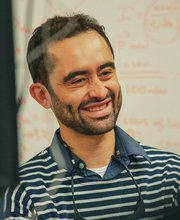
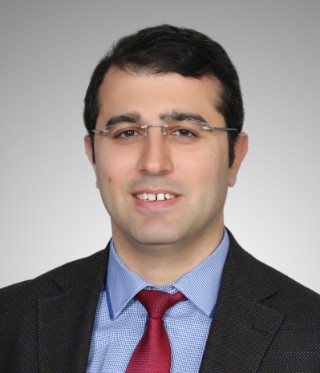
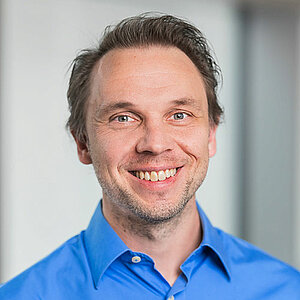
Dr. Samuel Serna Otálvaro is an Assistant Professor at Bridgewater State University's Department of Physics, Photonics and Optical Engineering. He holds a PhD in Physics from Paris-Saclay University and completed postdoctoral research at the Centre for Nanoscience and Nanotechnology (C2N) and Massachusetts Institute of Technology (MIT). His work focuses on integrated photonics, nonlinear optics, and optical materials, with a particular emphasis on nanofabrication and photonic crystal design. BS (2010): Universidad Nacional de Colombia, Sede Medellín MA (2013): Friedrich Schieller University, Germany MA (2013): Paris-Sud University, Institute d’Optique Graduate School, France PhD (2016): Paris-Saclay University, France Dr. Serna's research explores hybrid photonic devices, third-order nonlinear susceptibilities, and sustainable optical technologies. His publications highlight advancements in coupler design, nonlinear material characterization, and educational innovations in photonics. He is an OSA Ambassador (2019) and has contributed to SPIE Career Lab Editorial initiatives (2021). Recent publications demonstrate expertise in hybrid photonics , nonlinear optical characterization , environmental sensing applications , and photonics education . His work spans topics from Germanium-based mid-infrared platforms to free-form micro-optics , reflecting a multidisciplinary approach to advancing optical engineering. Scientific Awards: OSA Ambassador 2019
Emilie Carretier is a Professor at Aix-Marseille University (AMU) , affiliated with the Procédés Membranaires research team. Her work focuses on membrane separation technologies, particularly for industrial applications in pharmaceuticals, water treatment, and nuclear waste management. Research Interests : Membrane processes (pervaporation, reverse osmosis), solvent regeneration, radioactive effluent treatment, catalyst recovery, and industrial sustainability. Publications highlight advancements in ceramic membranes, VOC removal, and membrane aging studies, with applications in pharmaceuticals, microelectronics, and nuclear industries. Laboratory : Active within the M2P2 research center, specializing in membrane process innovation for complex industrial matrices.
Hüsnü Dal is a Professor at Middle East Technical University (METU) in Ankara, Turkey, specializing in computational mechanics of materials. His research bridges engineering and biomedical applications through advanced computational modeling techniques. Education: Bachelor's Degree, Middle East Technical University, 2001 Master's Degree, University of Stuttgart, 2005 PhD, Dresden University of Technology, 2011 Research Focus: Prof. Dal's work centers on computational micromechanics, multiscale and multifield problems, and materials theory. He investigates fracture in multiphysics media with applications in lithium-ion batteries and tissue mechanics, developing novel constitutive models for complex material behaviors under extreme conditions. His research integrates thermomechanical coupling, viscoplasticity, and data-driven approaches to solve engineering challenges in both synthetic polymers and biological systems. Publication Trends: Recent publications (2023-2025) reveal a dominant focus on data-driven constitutive modeling and phase-field fracture methods. His work spans rubber mechanics, polymeric foams, biological tissues, and battery materials, characterized by strong interdisciplinary connections between materials science, biomechanics, and computational engineering. Key themes include anisotropic hyperelasticity, thermo-viscoplastic fracture, and spatial property variations in additively manufactured materials.
Dr. Amir K. Miri is an Assistant Professor in the Department of Biomedical Engineering at New Jersey Institute of Technology (NJIT) and Director of the Advanced Biofabrication Lab. His work focuses on additive manufacturing for biomedical applications, particularly bioprinting technologies for tissue regeneration and disease modeling. After receiving his PhD in Mechanical Engineering from McGill University (2013) and completing postdoctoral training at the MIT-Harvard Division of Health Sciences and Technology, he began his academic career at Rowan University before joining NJIT. PhD, Mechanical Engineering, McGill University (2013) MSc, Mechanical Engineering, Sharif University of Technology (2007) BSc, Mechanical Engineering, Iran University of Science and Technology (2005) Dr. Miri's research spans advanced bioprinting platforms, including multi-axial extrusion, handheld printers, and digital light projection systems. His work emphasizes the development of biomimetic models for cancer, vocal fold tissue, and vascular systems, with a particular focus on microfluidic integration and material optimization for bioprinting. He has pioneered low-cost prototyping solutions for resource-limited settings and explored the role of extracellular matrix mechanics in cellular behavior. Key trends in his publications include 3D bioprinting for tumor modeling, microfluidic device applications in drug screening, and the use of hydrogels like GelMA in cancer research. His group has also advanced acoustic metasurface technology for biomedical wave manipulation and investigated the interplay between biomaterial rheology and bioprinting resolution. Dr. Miri leads a research team at NJIT focused on biofabrication and microfluidics, though specific student advisees are not listed in the provided information. His lab emphasizes interdisciplinary collaboration, particularly in the development of multi-material and multi-scale tissue constructs.
Ruben Snellings is a Professor at the KU Leuven , affiliated with the Institute for Sustainable Metals and Minerals and the Division of Geology . His research focuses on sustainable cementitious materials, mineral carbonation, and valorization of industrial by-products in construction. He actively contributes to RILEM technical committees, including TC 309-MCP and TC 267-TRM, establishing terminology and testing protocols for carbonation-based construction products. Research Highlights Advancing low-carbon binders through co-calcination of waste materials Investigating hydration kinetics and reactivity of supplementary cementitious materials (SCMs) Developing CO2 mineralization techniques for sustainable construction Technical Contributions Co-developing standardized R3 reactivity tests for SCMs Leading interlaboratory validation studies for binder performance Environmental Focus Reducing environmental leaching via carbonation of metallurgical slags Optimizing circular economy approaches for concrete recycling
Professor JC Ji is a distinguished academic at the School of Mechanical and Mechatronic Engineering at the University of Technology Sydney (UTS), where he was promoted to Professor on January 3, 2025, after serving as an Associate Professor since January 1, 2016. He serves as the Theme Research Director at the Centre for Audio, Acoustics and Vibration (CAAV) at UTS and is an active member of the Faculty of Engineering and Information Technology. Professor Ji holds a PhD in Mechanical Engineering from Australia and a Graduate Certificate from UTS, along with CPEng NER certification from Engineers Australia since 2018. Professor Ji's research spans multiple interdisciplinary areas with significant practical applications. His primary research interests include Dynamics, Vibration and Vibration Control (focusing on wind turbine dynamics, rotor-bearing systems, and vibration isolation); Machine Condition Monitoring and Asset Management (specializing in fault diagnostics, prognostics, and digital twin-based modeling); Renewable Energy and Sustainability (particularly in vibration-based energy harvesting and battery circular economy); Mechanical and Vehicle Systems; Robotic and Multi-Agent Systems; and Ecological Systems. His work demonstrates a strong integration of theoretical foundations with practical engineering solutions for real-world problems. Analysis of Professor Ji's recent publications reveals a clear research trajectory focused on advanced vibration control systems, condition monitoring techniques, and digital twin applications. His work increasingly integrates machine learning with traditional mechanical engineering approaches, particularly in bearing and gear health management. A significant portion of his recent research focuses on quasi-zero stiffness vibration isolators using innovative structural designs including origami-inspired mechanisms. His publications show strong international impact with numerous high-citation articles in top mechanical engineering journals. Stanford University's World's Top 2% Scientists List for both career-long impact and single-calendar year impact in 2023 and 2024 CPEng NER Chartered Engineers certification from Engineers Australia (2018-present) Professor Ji actively supervises research students and has secured substantial funding for his work, including multiple ARC Discovery and Linkage Projects. He serves as an Associate Editor for Mechanical Systems and Signal Processing (Q1 journal), Journal of Vibration and Control (Q2 journal), and International Journal of Bifurcation and Chaos (Q2 journal). He is also an active assessor for ARC grant applications since 2007 and for international funding bodies including Hong Kong RGC, Belgium FNRS, and New Zealand MBIE. His industry collaborations include projects with Zip Heaters, Alstom Transport, and Coal Services Health and Safety Trust. As Theme Research Director at the Centre for Audio, Acoustics and Vibration (CAAV) at UTS, Professor Ji leads a research team focused on advancing vibration control technologies and their applications. His laboratory work includes developing innovative vibration isolators, condition monitoring systems for industrial machinery, and energy harvesting technologies. The research group maintains strong connections with industry partners to ensure practical implementation of their theoretical advancements.
Professor Farookh Hussain is a distinguished academic at the School of Computer Science , University of Technology Sydney , specializing in Artificial Intelligence , Cloud Computing , and Software Engineering . His research spans diverse sectors including agriculture, manufacturing, healthcare, and transportation. Affiliated with the Australian Artificial Intelligence Institute (AAII) , he leads impactful work in business intelligence and carbon credit systems. Key research areas: AI applications, blockchain for provenance, carbon credit analytics Active in Masters/PhD supervision and cloud computing education Research Highlights : Developed KACINO framework for carbon dynamics modeling Created hybrid cybersecurity frameworks for supply chain risk management Advanced chatbot dialogue breakdown solutions through systematic reviews Proposed hypercomplex knowledge graph recommenders Published extensively on carbon credit price prediction and blockchain storage methods Contributions to water demand forecasting and collaborative robotics adoption Grant Activities : Secured funding from Hampton Capital Asset Management , Innovation Connections , and Science and Industry Endowment Fund Projects include LLM-driven text-to-SQL conversion , blockchain for melanoma data , and AI for storm water management
Prof. Ing. Juraj Beniak, PhD is a leading academic at the Institute of Production Engineering and Production Quality (Faculty of Mechanical Engineering, Slovak University of Technology in Bratislava, STU). He serves as a Professor CSc., PhD and holds external collaborator roles at the Institute of Computer Engineering and Applied Informatics (FIIT) and the Institute of Manufacturing Technologies (MTF). His research bridges mechanical engineering and sustainable production. Office: U.V.I.P. SjF, Office 537 Contact: +421 2 57296 537 | +421 905 593 953 (mobile) Beniak's research focuses on additive manufacturing , biomass compaction , and smart production technologies . He investigates 3D printing parameter optimization, surface modification techniques, and composite material development from renewable sources. His work addresses both industrial applications and environmental sustainability through advanced manufacturing. Key projects include: OP R&I: Automation in freight railway vehicle production (2019–2023) APVV-18-0527: Additive manufacturing technology development (2019–2022) Recovery Plan: AI-driven waste management systems (2024–2026) As a KEGA grant guarantor and APVV co-investigator , he leads initiatives in CAx education, virtual laboratories, and biofuel production optimization. His contributions span from experimental equipment design to mathematical modeling of compaction processes.
Aleksey Rogov is a Researcher in the Department of Materials Engineering at the University of Manchester, UK. His work focuses on advanced surface engineering techniques, particularly plasma electrolytic oxidation (PEO), contributing to sustainable materials development and corrosion protection technologies. Key Research Areas Plasma Electrolytic Oxidation (PEO) for metal coatings Corrosion resistance in light alloys Electrochemical synthesis of ceramic coatings Surface modification of magnesium, aluminum, and titanium alloys Recent Research Trends His publications highlight innovations in PEO processing, including data-driven AI optimization of coatings, incorporation of nanomaterials (e.g., Ce-zeolite) for active corrosion protection, and fundamental studies on discharge dynamics during PEO. Collaborative efforts with Aleksey Yerokhin and others explore coatings for biomedical devices, renewable energy applications, and industrial manufacturing.
Dr. Krishna Kumar Saxena is a faculty member at KU Leuven, affiliated with the Research and Education - Materials and Mechanical Engineering (Geel Campus) and the Manufacturing Processes and Systems (MaPS) unit in the Arenberg campus. He is actively involved in research, teaching, and engagement, with a focus on non-conventional micromachining processes and hybrid manufacturing technologies. Research Interests: Non-conventional micromachining (ECM, EDM, laser), hybrid laser-electrochemical processes, electrochemical nano-manufacturing, simulation-based virtual sensing, and sustainable manufacturing systems. Teaching: Contributes to courses on smart mechanics and industrial control systems. Engagement: Participates in EU Horizon 2020 projects (MICROMAN, ProSurf), FWO-funded postdoctoral research (2021-2024), and international collaborations (University of Tokyo, NSFC mobility projects).
Professor Marcel Huptych serves as faculty within the Faculty of Engineering at Hof University of Applied Sciences, maintaining an office in Building C, Room C120 on Campus Hof. His primary contact channels include email at marcel.huptych@hof-university.de and telephone number +49 9281 409 - 4413, with dedicated office hours held every Wednesday from 14:00 to 15:00. His academic specialization centers on Mechatronics, with concentrated expertise in Industrial Robotics and Automation Technology. These fields form the core of his instructional responsibilities, where he delivers advanced coursework integrating robotic systems and automated manufacturing processes within engineering education.
Dr. Jae Seong Lee serves as Associate Professor in the Department of Molecular Science and Technology at Ajou University, South Korea, where he directs the Mammalian Cell Designers' Lab. His research bridges mammalian synthetic biology and industrial biopharmaceutical production through advanced cell engineering. Academic credentials include B.S. and Ph.D. in Biological Sciences from KAIST, followed by postdoctoral training at the Novo Nordisk Foundation Center for Biosustainability (DTU). His educational journey established foundations in genetic and metabolic engineering of CHO cells. Research focuses on reprogramming mammalian cells using genome-scale methodologies for: Therapeutic protein production Diagnostic applications Drug discovery platforms Big data-driven cell line optimization CRISPR-based genome editing technologies These efforts target cost reduction in biopharmaceutical manufacturing while enhancing Korean industry competitiveness. Recent publications demonstrate CRISPR screening breakthroughs in CHO cells and inducible expression systems, establishing foundational technologies for next-generation bioproduction. Work consistently appears in high-impact journals like Metabolic Engineering and Scientific Data. Mentorship spans 14+ graduate students, with multiple recipients of KSBB and KSIEC Excellent Poster Awards. Lab activities include frequent invited talks at national symposia and international conferences across Korea and Europe. The Mammalian Cell Designers' Lab operates from Paldal Hall at Ajou University, maintaining active collaborations with biopharma industry partners to translate synthetic biology innovations into commercial production pipelines.
Marco Picone is an Associate Professor at the Department of Sciences and Methods for Engineering (DISMI) of the University of Modena and Reggio Emilia. He leads the Distributed and Pervasive Intelligence (DIPI) Group and holds a PhD in Information Technology from the University of Parma. His postdoctoral research at the University of Parma (2012-2015) and a visiting scholar position at the University of Cambridge (2011) further enriched his expertise. He is nationally qualified as an Associate Professor by MIUR (2020). Education: PhD in Information Technology, University of Parma (Italy) M.Sc. (cum Laude) in Computer Engineering, University of Parma Visiting Researcher, NetOS Group, University of Cambridge (UK) His research focuses on Distributed Systems , IoT , Edge Computing , and Digital Twins , emphasizing their applications in smart industries and cities. He has supervised postdocs (e.g., Matteo Martinelli) and PhD students (e.g., Enrico Rossini) on topics like Digital Twin Continuum and Edge-Cloud Systems. Teaching spans courses on Intelligent IoT , Distributed IoT Software Architectures , and Edge Computing , with a focus on lab-based learning and industry-relevant projects. He actively contributes to open-source frameworks like the White Label Digital Twin (WLDT) and collaborates on initiatives such as the Web of Digital Twins (WoDT). Research collaborations include projects on smart city data fusion, livestock waste management, and Industry 5.0 human-centric systems. His work bridges theoretical advancements with practical implementations in cyber-physical environments.
Dr Winifred (Wini) Obande serves as a Lecturer and Elizabeth Georgeson Fellow within the Department of Mechanical Engineering at the University of Edinburgh's School of Engineering. Her research focuses on sustainable composite materials development through circular engineering principles. Her academic credentials include a PhD in Mechanical Engineering from the University of Edinburgh, an MRes in Mechanical Engineering from the University of Limerick, and a BEng in Biomedical Engineering from the same institution. Professional memberships encompass the Institution of Engineering and Technology (IET), Society for the Advancement of Material and Process Engineering (SAMPE), and Institute of Materials, Minerals and Mining (IOM3). Dr Obande leads the Circular Composites Engineering Group , pioneering resource-efficient lightweight materials through life-cycle assessment integration. Her work emphasizes waste valorisation and bio-based feedstocks as virgin material alternatives, with rigorous functionality/durability testing. Current research spans thermoplastic composites for marine applications, manufacturing process innovation, and end-of-life recycling strategies. Analysis of her publication record reveals dominant themes in marine-grade thermoplastic composites and sustainable manufacturing . Key trends include room-temperature resin infusion techniques, seawater ageing effects on glass-fibre composites, and thermal reshaping for composite recycling – all targeting tidal energy infrastructure applications. Her scientific recognition includes the prestigious Elizabeth Georgeson Fellowship. She actively serves on the SAMPE UK & Ireland Committee and co-founded the Edinburgh Materials Society. Dr Obande supervises PhD candidates through the Circular Composites Engineering Group, currently offering projects on recycled fibre alignment and sustainable manufacturing processes. Her Royal Academy of Engineering-funded project "Alignment and Functionalisation of Waste Fibres into High-Value Composite Materials" (2025-2030) represents significant grant leadership. The Circular Composites Engineering Group operates at the intersection of materials science and environmental sustainability, collaborating with tidal energy developers and waste management specialists to advance circular economy implementation in composite manufacturing.
Rasmus Bjørk is a Professor at the Technical University of Denmark (DTU) in the Department of Energy Conversion and Storage. His research focuses on advanced materials for energy systems, particularly in magnetocaloric and elastocaloric cooling, magnetic materials, and additive manufacturing for functional devices. His work contributes to the UN Sustainable Development Goals, especially in affordable and clean energy. PhD Supervision: Active projects include energy storage using topological spin textures, magnetothermal waste heat harvesting, and bio-magnetometers. Key Research Areas: Magnetic refrigeration, energy harvesting, and freeze-casting of functional materials. Recent advancements include 3D-printed elastocaloric coolers and studies on magnetoresistive devices. His team develops novel techniques for optimizing magnetic systems and energy conversion processes. He has published over 160 articles and led projects on regenerator design, magnetic bearings, and sensor technologies. Collaborations span multiple countries and disciplines. Notable contributions include pioneering work on freeze-casting for biomaterials and the MagTense micromagnetic framework. His research bridges theoretical modeling and practical applications in sustainable energy solutions.