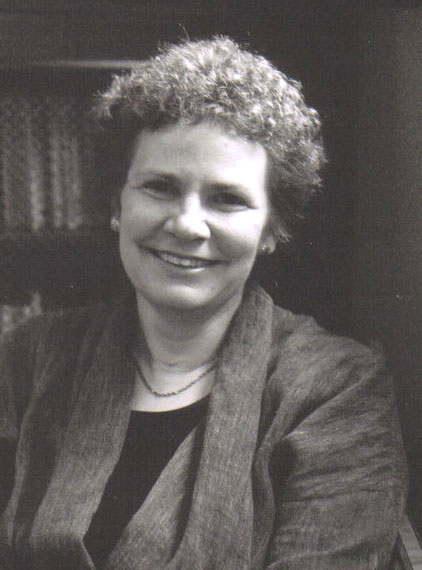
James Delbourgo is the James Westfall Thompson Distinguished Professor in the Department of History at Rutgers, The State University of New Jersey, where he has been teaching since 2008. His academic journey includes education at Reigate Grammar School, University of East Anglia (B.A., 1996), Cambridge University (M.Phil., 1997), and Columbia University (Ph.D., 2003). Prior to Rutgers, he taught at McGill and Harvard Universities. Delbourgo specializes in the Early Modern Atlantic World with particular focus on the history of science, collecting practices, and museums. His research examines how objects move across cultural boundaries and the historical development of collecting as both intellectual pursuit and cultural phenomenon. He has made significant contributions to understanding the relationship between scientific knowledge, imperial expansion, and material culture in the Atlantic World. His scholarly output reveals a consistent focus on the cultural dimensions of collecting, with recent work expanding into contemporary collecting practices and their psychological dimensions. The publications show increasing engagement with global perspectives on collecting, moving from Atlantic World contexts to broader global and contemporary frameworks, while maintaining his core interest in the intersection of science, empire, and material culture. Hughes Prize for best scholarly book in history of science accessible to the general public (2019) Annibel Jenkins Biography Prize (2019) Leo Gershoy Award (2018) Louis Gottschalk Prize (2018) Book of the Week in major UK publications (2017) Apollo Magazine Book of the Year (2017) Delbourgo has received significant research support including fellowships from the American Philosophical Society/British Academy, Max Planck Institute for the History of Science, Institute for Advanced Study at Princeton, and Social Sciences and Humanities Research Council of Canada. His teaching includes undergraduate courses on Science, Collecting and Power; Science and Society; Age of Enlightenment; and Development of US I. While specific doctoral students aren't listed in the provided text, his extensive publication record and book projects suggest significant mentorship of graduate researchers.