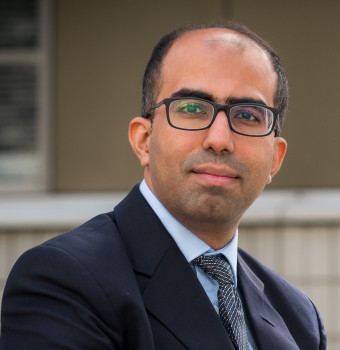
Mr. David Morrison is a Lecturer at the School of Computer Science, University of St Andrews. His research focuses on medical imaging, computer vision, deep learning, and generative models with applications in pathology and healthcare technology. He has contributed to projects such as the Automated Remote Pulse Oximetry System (ARPOS) and developed tools like wsipipe for digital pathology analysis. Research Interests: Medical imaging techniques, AI-driven diagnostics, metric search algorithms, and tangible computing applications. His work bridges theoretical computer science with practical healthcare solutions, emphasizing reproducibility and privacy in medical data. Selected Contributions: Published on cervical biopsy automation, endometrial cancer detection, and anonymizing pathology data using GANs. Collaborates with clinicians and engineers to advance digital diagnostics. Active in open-source tool development and public engagement through events like Doors Open @ Computer Science.
Dr. Dimitrios Kollias is a Lecturer in Artificial Intelligence at Queen Mary University of London, part of the School of Electronic Engineering and Computer Science. He holds a PhD from Imperial College London and is a Fellow of the Higher Education Academy. His academic affiliations include the Centre for Multimodal AI, Multimedia and Vision (MMV) research group, Queen Mary Computer Vision Group, and associate memberships in advanced robotics and digital environment institutes. Dr. Kollias’ research focuses on multimodal AI, trustworthy AI, computer vision, affective computing, and healthcare applications. He has authored over 70 publications in top-tier journals/conferences like CVPR, ICCV, and IEEE TPAMI. Notable achievements include the Sullivan Thesis Prize (2023) and inclusion in the World’s Top 2% Scientists (2023). He chairs major competitions such as the ABAW and MIA-COV19D series. He teaches courses in Data Mining, Digital Media, and Machine Learning Deployment. Current opportunities include PhD/postdoc scholarships across multiple international programs and postdoc fellowships (e.g., MSCA, Royal Fellowship). His work spans collaborations with industry partners like Deep Render Ltd and Realeyes, with two patents filed. Key awards include Imperial College Teaching Fellowship and grants from City & Guilds College Association. He evaluates proposals for EU, UK, Canadian, and Qatari funding bodies, and serves on editorial boards of IEEE Transactions on Affective Computing and Electronics.
Clive Parini is a Professor of Antenna Engineering at Queen Mary University of London, affiliated with the School of Electronic Engineering and Computer Science and leading the Antennas & Electromagnetics Research Group. He holds a BSc(Eng) and PhD from Queen Mary College, University of London. His career includes significant contributions to antenna design, measurement techniques, and metamaterials. He has authored over 300 papers and co-authored the book 'Principles of Planan Near-Field Antenna Measurements' (2008). His research focuses on microwave/millimeter-wave antennas, compact test ranges, array design, and body-centric communications. Prof. Parini has received notable awards, including the IEE Measurements Prize (1990) and BAE Systems Bronze Award (2002). He is a Fellow of the IET and Royal Academy of Engineering. His leadership roles include Director of Research for the School of Electronic Engineering & Computer Science and past Chair of the IET Antennas & Propagation Professional Network. Research highlights include metamaterials for antennas, on-body communication systems, and high-frequency imaging. His work bridges academic and industrial applications, with contributions to 5G, satellite antennas, and compact test range technologies. Recent articles emphasize advanced measurement techniques, compressive sensing, and drone-based systems for antenna testing. Teaching spans undergraduate and postgraduate levels, covering satellite systems, microwave electronics, and research techniques. His work integrates computational electromagnetics, antenna diagnostics, and emerging 5G/6G challenges, ensuring his research remains impactful across academia and industry.
Dr. Muhammad Salman Haleem is a Lecturer in the School of Electronic Engineering and Computer Science at Queen Mary University of London (QMUL). He holds a PhD in Computing from Manchester Metropolitan University, supported by the EPSRC-DHPA scholarship, focusing on retinal feature extraction for glaucoma diagnosis. Previously, he served as an Assistant Professor at the University of Warwick and as a Research Associate in data science at Manchester Metropolitan University. His research interests center on AI, data science, and deep learning applied to healthcare, including chronic disease monitoring (diabetes, cardiovascular diseases), retinal/MRI analysis, and stress/activity tracking. He has authored/co-authored over 40 peer-reviewed publications and reviews for journals like IEEE Transactions on Biomedical Engineering and Biomedical Signal Processing and Control. Teaching includes modules on Advanced Network Programming and Artificial Intelligence fundamentals. Haleem is affiliated with the Centre for Multimodal AI at QMUL and collaborates with institutions like Beijing University of Posts and Telecommunications on joint programs. Education: PhD in Computing (Manchester Metropolitan University), MSc in Electronics Engineering (NED University), BSc in Electronics Engineering (NED University) Awards: First Prize (IFMBE 2023), Dorothy Hodgkin Postgraduate Award (EPSRC 2012) Labs/Teams: Centre for Multimodal AI, Intelligent eHealth Lab
Professor Cédric M. John is a leading academic in the field of Data Science for the Environment and Sustainability, affiliated with Queen Mary University of London's Digital Environment Research Institute (DERI). He holds the academic rank of Professor and leads the Data Science for the Environment and Sustainability Research Platform. His work bridges Earth Sciences with Artificial Intelligence, focusing on applications such as subsurface characterization, climate modeling, and environmental monitoring. John's research interests span machine learning in geoscience, carbonate geochemistry, clumped isotope thermometry, and AI-driven solutions for energy transition and climate action. He has contributed over 100 publications, with recent work emphasizing deep learning for geological image analysis and generative AI in geothermal reservoir studies. His research aligns with UN Sustainable Development Goals 7 (Clean Energy) and 13 (Climate Action). He has mentored numerous PhD students and postdocs, including notable alumni like Dr. John MacDonald (University of Glasgow) and Dr. Sarah Robinson. His academic journey includes roles at Imperial College London (2008–2024) and the Integrated Ocean Drilling Program (2006–2008), where he led international research initiatives. John also serves on committees for the European Association of Geologists and Engineers (EAGE) and collaborates with institutions like the Alan Turing Institute. His teaching portfolio includes advanced courses on machine learning for geoscientists, carbonate systems, and stratigraphy, delivered through classroom and field-based programs in locations like Oman and Texas. John’s lab emphasizes interdisciplinary collaboration, blending fieldwork, lab analysis, and computational methods to address global environmental challenges. Key research themes include AI for climate action (Earth observation, reef monitoring), energy transition (geothermal, carbon storage), and novel applications of clumped isotopes to reconstruct paleoenvironments and fluid dynamics. His work is supported by grants from UKRI and industry partnerships, emphasizing practical solutions for sustainability.
Prof. Yi Ma is a Chair Professor at the Institute for Communication Systems (ICS) and the Home of the 6G Innovation Centre (6GIC) at the University of Surrey. He holds a Professorial rank in the School of Computer Science and Electronic Engineering. His research focuses on semantic/effective communication, machine learning for RF and physical layer design, MIMO technology, and opportunistic networking. Current PhD students include Yupeng Zheng, Ashkan Jafari, Zohre M. Bakhsh, and Mehdi Tafazolli. Research interests span scalable quantum-based wireless communications, distributed hybrid beamforming, and satellite communication systems. Recent publications highlight advancements in SA-MIMO, non-uniform quantization, and distributed MIMO-LEO networks. Prof. Ma teaches courses such as EEEM017 and EEE3006, and serves as an EEE examination officer. His work integrates theoretical contributions with practical applications, emphasizing future wireless systems and sensing technologies. Collaborations with industry and academia, including projects on 6G innovation, underscore his commitment to cutting-edge research.
Dr. Fabio Caraffini is an Associate Professor in Computer Science at Swansea University's School of Mathematics and Computer Science. He holds dual PhDs in Mathematical Information Technology (University of Jyväskylä, 2016) and Computer Science (De Montfort University, 2014), along with BSc and MSc degrees in Engineering from the University of Perugia. His research focuses on computational intelligence, particularly heuristic optimization methods like evolutionary algorithms and differential evolution. He also holds an honorary position as Senior Research Fellow at De Montfort University (2022–2024). Education History: BSc in Electronics Engineering (University of Perugia, 2008) MSc in Telecommunications Engineering (University of Perugia, 2011) PhD in Mathematical Information Technology (University of Jyväskylä, 2016) PhD in Computer Science (De Montfort University, 2014) Research Interests: Dr. Caraffini's work bridges theoretical optimization and practical applications. Key areas include evolutionary computing, structural bias analysis in algorithms, and interdisciplinary AI applications such as medical imaging, climate risk modeling, and robotics. His SOS Platform and BIAS toolbox are notable contributions to algorithm benchmarking and bias detection. Recent projects include AI-driven solutions for crop mapping, medical record analysis, and rail scheduling optimization. Publications & Trends: His 150+ publications span journals like Information Sciences , IEEE Transactions , and Applied Soft Computing . Themes include algorithmic robustness, constraint handling, and real-world optimization challenges. Notable works address differential evolution improvements, climate transition risk prediction, and medical decision support systems. Awards & Grants: Fellow of the Higher Education Academy (FHEA) Recipient of multiple research grants for projects in optimization and AI applications Advising & Collaboration: Actively supervises PhD students in AI-driven optimization and interdisciplinary applications. Collaborates with institutions globally on topics like microgrid energy management and pandemic prediction through self-organizing maps. Labs & Teams: Engaged in Swansea's Computational Foundry and the Morgan Advanced Studies Institute (MASI), contributing to cross-disciplinary research initiatives in AI and computational science.
Dr. In Um is a Research Fellow at the School of Medicine, University of St Andrews, with an email address at ihu@st-andrews.ac.uk. Their research focuses on interdisciplinary medical and computational sciences, including advanced imaging techniques, oncology, genomics, and ecological behavioral studies. Key areas include mass spectrometry imaging for cancer biomarker discovery, computational methods for medical image analysis, and drug mechanism exploration. Research interests span Medical Imaging, Oncology, Genomics, Computational Biology, and Ecology. Publications emphasize innovative applications of AI in medical diagnostics, kidney disease mechanisms, and symbiotic effects on insect behavior. Dr. Um supervises PhD student Clare Orange and collaborates on projects involving drug development and ecological predator-prey dynamics. Recent work includes co-developing GAN-based tools for virtual staining and exploring transcription factors in glomerulonephropathies. Their contributions bridge clinical, computational, and ecological research domains, with a focus on translational applications in healthcare and environmental science.
Professor Colette Fagan is a Professor in the Department of Food and Nutritional Sciences at the University of Reading, serving as Head of Department and Head of the Food Processing Centre. She specializes in food quality assurance through process analytical technology (PAT), particularly applying optical spectroscopy to optimize dairy and food processing. Her work emphasizes real-time sensing for safe, consistent product development. Academic qualifications include a BSc (Hons) in Industrial Microbiology, an MSc (Agr) in Engineering Technology, and a PhD in Biosystems Engineering. Her research spans food processing optimization, cheese maturation monitoring, and dairy fat reformulation's impact on cardiovascular health. Key research interests include PAT implementation, sensor technology for food quality, and the interplay between food composition and health outcomes. Her publications highlight advancements in cheese processing, lipid metabolism studies, and non-destructive food analysis methods. Professor Fagan’s work integrates industry collaboration and curriculum innovation, exemplified by her focus on employability in academic programs. Her contributions bridge food science, technology, and public health, addressing both industrial and nutritional challenges in food production.
Professor Heiko Balzter is a Professor of Physical Geography and Director of the Institute for Environmental Futures at the University of Leicester's School of Geography, Geology & the Environment. He chairs the UKRI Landscape Decisions Programme, coordinating 70 projects, and is a leading member of the National Centre for Earth Observation. His research focuses on earth observation techniques for environmental monitoring, deforestation, climate change, and land use dynamics. He has received notable awards including the Royal Society Wolfson Research Merit Award (2011), Royal Geographical Society’s Cuthbert Peek Award (2015), Copernicus Masters Award (2017), and Leicestershire Live Innovation Award (2023). His work integrates satellite data with ecological models to address global challenges like carbon sequestration, biodiversity conservation, and sustainable land management. Research interests include remote sensing of biomass, forest degradation, and environmental vulnerability. He collaborates internationally on projects such as the LULUCF Scientific Steering Committee for the UK National Greenhouse Gas Account. His recent work emphasizes interdisciplinary approaches to landscape decisions, balancing ecological, agricultural, and energy demands while advancing net-zero strategies. Key contributions include developing tools like Pyeo for near-real-time forest monitoring and frameworks for deforestation-free supply chains using Copernicus data. Awards: Royal Society Wolfson Research Merit Award (2011) Royal Geographical Society’s Cuthbert Peek Award (2015) Copernicus Masters Award (2017) Leicestershire Live Innovation Award (2023) Advising and grants focus on interdisciplinary landscape solutions, with grants from UKRI and EU programs. His work with the Institute for Environmental Futures and National Centre for Earth Observation drives innovative applications of Earth observation to address climate and biodiversity crises. Ongoing projects include analyzing biomass dynamics in African savannahs, oil spill detection via SAR imagery, and modeling climate impacts on disease spread.
Dr Daniel Andre is a Lecturer in Radar at Cranfield University, affiliated with the Centre for Electronic Warfare, Information and Cyber within the Cranfield Defence and Security school. He leads the Cranfield Ground-Based SAR Laboratory (GBSAR Lab), conducting cutting-edge research in Synthetic Aperture Radar (SAR), interferometry, and multistatic imaging. Education: PhD in Applied Mathematics Joint Honours BSc in Mathematics and Physics His research interests span Synthetic Aperture Radar (SAR) , Interferometric SAR (InSAR) , Coherent Change Detection (CCD) , Bistatic and Multistatic Radar , Through-Wall Imaging , Polarimetry , and Remote Sensing . His work integrates applied mathematics with radar phenomenology to solve complex defense and security challenges. The recent publications reveal a strong trend in experimental and computational SAR research, particularly in multistatic 3D imaging , polarimetric coherence analysis , near-field effects , and through-wall transmission modeling . His team leverages laboratory-based SAR systems to validate novel algorithms under controlled conditions. Scientific Awards: John Benjamin Memorial Prize (UK Civil Service Scientist Innovation Award, 2011) Simon Fellowship, Isaac Newton Institute for Mathematical Sciences (2023) Dr Andre actively supervises PhD students and secures funding for advanced radar research. He collaborates with key defense and research institutions including Dstl, ESA, BAE Systems, QinetiQ, ATI, and the Sir Bobby Charlton Foundation. His projects often involve experimental validation, algorithm development, and real-world applications in intelligence and surveillance. He heads the GBSAR Lab, a unique facility enabling precise control over SAR geometries for fundamental research in radar coherence, imaging, and change detection. The lab supports both academic inquiry and defense technology development.
Professor Sanowar Khan is a Professor and Associate Dean (SSE) at the School of Science and Technology , City St George's, University of London , where he has been a faculty member since 1989. He holds a PhD and MSc (with Distinction) in Electrical Engineering from Peter the Great St Petersburg Polytechnic University, Russia. He previously served as Deputy Dean from 2008 to 2019. His research spans mathematical modelling, computational electromagnetics, finite element analysis, magnetic shape memory materials, sensor and actuator design, tomographic imaging, and measurement systems . His work integrates advanced numerical methods with practical instrumentation and biomedical applications, including hemodynamics and smart sensors. Recent publications show a strong trend in finite element modeling of electromagnetic phenomena , particularly in power systems (e.g., skin and proximity effects in cables) and biomedical engineering (e.g., carotid artery hemodynamics). He also contributes significantly to signal processing and smart material-based sensing . His editorial leadership includes being Editor-in-Chief of Sensor Review and former Associate Editor of Measurement and related journals. Fellow of the Institution of Engineering and Technology (IET) Fellow of the Institute of Measurement and Control (InstMC) Honorary Professor, Peter the Great St Petersburg Polytechnic University Founder Member, International Compumag Society (ICS) Liveryman, Worshipful Company of Scientific Instrument Makers Freeman of the City of London He advises on instrumentation standards and policy through his editorial and professional roles. He has no known PhD or Master’s students listed. He leads no specific lab or research team mentioned in the text but collaborates widely, particularly with researchers in biomedical engineering and electromagnetics.
Seyed Masoud Sotoodeh Bahraini is an Assistant Professor at Sirjan University of Technology and Senior Research Fellow at the University of Birmingham. His career spans multiple institutions including Loughborough University (Research Associate/Teaching Fellow) and City, University of London (Postdoctoral Research Fellow). Current Affiliations: Assistant Professor, Sirjan University of Technology Senior Research Fellow, University of Birmingham Past Positions: Research Associate & Teaching Fellow, Loughborough University (2022-2024) Postdoctoral Research Fellow, City, University of London (2019-2021) Dr. Bahraini's research bridges robotics, control theory, and fractional calculus applications. His work focuses on: SLAM and visual odometry in dynamic environments Human-robot collaboration gestural interfaces Fractional-order control for chaotic systems Viscoelastic material modeling in microbeams Multi-robot cooperation for planetary exploration Deep learning integration in robotic perception His publications since 2013 demonstrate expertise in applying fractional calculus to mechanical systems and advancing SLAM algorithms through machine learning. Key trends include: 2013-2014: Foundational work on fractional derivative models for viscoelastic beams 2018-2021: Development of ML-RANSAC SLAM techniques and planetary exploration robotics 2023-2025: Expansion into fuzzy fractional control and human-robot interaction gestures
Professor B Buchanan OBE FRSE is a Professor of Cryptography at the University of Edinburgh, based in Edinburgh. His research focuses on cryptography, cybersecurity, blockchain technology, quantum computing, and IoT security. He leads initiatives in post-quantum cryptography, secure IoT architectures, and privacy-preserving machine learning. His work spans theoretical developments and practical implementations, including frameworks for threat intelligence sharing and ethical AI integration in security systems. Research Interests: His core areas include cryptographic algorithm design, quantum-resistant protocols, machine learning in cybersecurity, and secure distributed systems. Recent projects explore homomorphic encryption for financial applications, GANs for anomaly detection, and blockchain frameworks for trust management. He is a vocal advocate for ethical cybersecurity practices and interdisciplinary collaboration. Scientific Awards: He has been awarded the OBE (Order of the British Empire) and is a Fellow of the Royal Society of Edinburgh (FRSE). These honors recognize his contributions to advancing cybersecurity and cryptography in both academic and industry contexts. Labs/Teams: His work is supported by the asecuritysite.com , a platform for cybersecurity research and analysis. Collaborations include EU initiatives on digital governance and industry partnerships in secure manufacturing.
Gordon Russell is an Associate Professor at Edinburgh Napier University's School of Computing Engineering and the Built Environment, specializing in cybersecurity and digital forensics research. His work focuses on practical security applications for law enforcement and critical infrastructure protection. His research interests span multiple domains within cybersecurity, with particular emphasis on digital evidence management, ransomware detection, and blockchain applications for forensic investigations. Russell's work bridges theoretical computer science with practical law enforcement needs, developing systems for secure evidence handling and leak attribution. His research group has made significant contributions to industrial control system security and memory-based encryption analysis. Russell's recent publications demonstrate a strong focus on practical digital forensics applications, particularly in blockchain-based evidence management systems and forensic watermarking techniques. His work shows consistent development from foundational computer architecture research in the 1990s to contemporary cybersecurity applications, with a clear trajectory toward solving real-world security challenges for law enforcement agencies and critical infrastructure providers. Russell has secured multiple research grants totaling over £300,000 from organizations including Innovate UK, Scottish Enterprise, and The Scottish Informatics & Computer Science Alliance. His research projects include MEMCRYPT (focused on ransomware detection), vSOC (Virtualized Security Operations Centre), and evidence management frameworks for law enforcement. MEMCRYPT CyberASAP Phase 2 (2020-2021, £52,310, Innovate UK) Memcrypt (HGSP) (2020-2021, £109,883, Scottish Enterprise) MemCrypt (2020, £31,930, Innovate UK) MemoryCrypt (2019-2020, £10,759, SICSA) vSOC - Virtualised Security Operations Centre (2015-2017, £39,268, Advance HE) As an academic supervisor, Russell has mentored numerous doctoral candidates, serving as primary or secondary supervisor for research in digital forensics, ransomware detection, and evidence management systems. His students' work often focuses on practical applications of cybersecurity research for law enforcement and critical infrastructure protection.