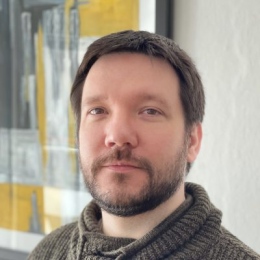
Parag Khanna is a Doctoral Student at the Division of Robotics, Perception and Learning , KTH Royal Institute of Technology. His work focuses on Human-Robot Interaction (HRI) , particularly in developing adaptive techniques for robot-human handovers. University: KTH Royal Institute of Technology Department: Robotics, Perception and Learning Khanna's research explores physical and social aspects of HRI . He studies human-human handovers to improve robotic grip release strategies and object weight adaptation. His work also delves into non-touch modalities like EEG and gaze tracking for intention detection. His recent publications highlight advancements in data-driven control , failure explanations , and multimodal datasets for HRI. Notable works include the REFLEX Dataset and studies on adaptive grip release in human-robot collaborations. Key Research Areas: Human-Robot Handovers Machine Learning for Robotics EEG and Gaze-Based Intention Detection Failure Communication in Social HRI Khanna is affiliated with the Digital Futures - Advanced Adaptive Intelligent Systems project, aiming to empower elderly and disabled individuals through autonomous robotics.
Danica Kragic Jensfelt is a Professor and Head of Division at the Division of Robotics, Perception and Learning, KTH Royal Institute of Technology. She serves as Co-PI of the research project Robotic Matter under the Digital Futures Faculty. Her work focuses on advancing robotic technologies and their societal applications. She is actively involved in the Robotic Matter project, aiming to develop innovative robotic solutions for global challenges. As part of Digital Futures—a collaborative center with Stockholm University and RISE Research Institutes of Sweden—she contributes to interdisciplinary digital technology research. Research interests include robotics, perception systems, and AI-driven solutions for human-robot interaction. No specific awards or grants are listed in the provided text. Her affiliation with Digital Futures highlights her role in fostering industrial relevance and training future leaders in technology.
Henrik Andersson is an Associate Professor (Docent) at Mid Sweden University's Department of Engineering, Mathematics and Science Education (IMD) in Sundsvall. His research spans multiple interdisciplinary fields at the intersection of materials science, nanotechnology, and energy harvesting. Andersson's research focuses on printed electronics , triboelectric nanogenerators , and paper-based electronics . His work explores innovative approaches to energy harvesting from everyday movements and environmental sources, with particular emphasis on sustainable and biodegradable materials. He has made significant contributions to understanding the triboelectric properties of various materials, including human body interactions, plant-based materials, and novel composites. His recent publications reveal a strong trend toward green energy solutions using waste materials like paper, development of high-performance sensors for healthcare applications, and exploration of novel materials for energy storage and conversion. His research has practical applications in wearable technology, IoT devices, and sustainable energy solutions. Andersson leads and participates in multiple research projects including IMPHET (Innovation environment for advanced Materials and Processes with Sustainable Energy Applications), LEAP (Large-area Energy Application Platform), and STORE (Electrical energy storage). These projects demonstrate his commitment to developing practical, sustainable energy solutions through interdisciplinary collaboration. His work bridges fundamental materials research with practical applications, particularly in developing manufacturing processes for printed electronics on paper substrates and exploring new applications for triboelectric phenomena in everyday environments.
Stefan Larsson serves as Senior Lecturer and Associate Professor in Technology and Social Change at Lund University's Department of Technology and Society within the Faculty of Engineering. He directs the AI and Society research team and holds affiliate status at Lund's Centre for Retail Research, leveraging dual PhDs in Sociology of Law and Spatial Planning alongside an LLM to examine technology's societal impacts. His educational credentials include: PhD in Sociology of Law PhD in Spatial Planning Master of Laws (LLM) Larsson investigates critical intersections of law, technology, and social systems with emphasis on AI governance frameworks , consumer protection in digital markets , and trust mechanisms for autonomous systems . His work addresses socio-legal challenges across healthcare robotics, public sector automation, and algorithmic consumer markets while advancing UN Sustainable Development Goals through responsible innovation pathways. Current publications reveal concentrated analysis of youth interactions with generative AI and regulatory tensions in the EU AI Act , demonstrating how users navigate authenticity assessments of AI content while exposing fundamental conflicts between technological evolution and legal stability. Key distinctions include: Election to Royal Swedish Academy of Engineering Sciences (2024) Co-chair appointment for RCSL Working Group on Digitalisation, AI and Society (2024) Research board membership at Lund Engineering Faculty (2022) As supervisor for three doctoral candidates, Larsson manages significant research portfolios: Principal Investigator : 'When N equals 1' (2025-2027) on AI ethics in predictive medicine Project Coordinator : 'Girls in AI Science' gender-inclusion network (2025) Researcher : Swedish Research Council project on EU AI Act risk governance (2024-2026) His multidisciplinary team actively collaborates with public sector agencies, healthcare institutions, and consumer protection bodies to develop practical frameworks for trustworthy AI implementation across societal domains.
Ali Mansourian is a Professor of Geomatics at Lund University's Department of Physical Geography and Ecosystem Science, where he serves as Director of the Lund University GIS Centre and Coordinator of the GIS & RS Master Programme. He is actively involved with the United Nations Global Geospatial Information Management (UN-GGIM) Academic Network and previously served on the European Association of Geographic Information Laboratories in Europe (AGILE) council. His academic leadership spans large-scale international research initiatives and capacity-building projects funded by Erasmus+ and SIDA. Mansourian's research focuses on Geospatial Artificial Intelligence (GeoAI), Spatial Data Infrastructures (SDI), and Multi-Criteria Decision Analysis (MCDA) using multi-objective optimization techniques. His work extends to applying GIS in epidemiology and public health, disaster risk management, land-use planning, climate change, environmental management, and sustainability. His research portfolio demonstrates a strong interdisciplinary approach, bridging geospatial technology with critical societal challenges. His recent publications reveal a clear trend toward integrating advanced machine learning techniques with geospatial analysis, particularly in health applications, environmental monitoring, and climate change impacts. The research shows increasing emphasis on spatial ensemble learning, remote sensing applications, and the development of GeoAI tools that make geospatial analysis more accessible through natural language interfaces. His work spans multiple continents, with significant contributions in Africa, Europe, and Asia. Mansourian has extensive experience supervising PhD students and postdoctoral researchers, though specific student names aren't listed in the provided materials. He has coordinated numerous large-scale international projects including Geo-Academy, INTEGRAL, CADEO, and SWEMENA, demonstrating significant grant acquisition and management expertise. His leadership extends to evaluating proposals for major European research grant programs and serving as an invited evaluator for PhD theses. As Director of the Lund University GIS Centre and active member of multiple international networks, Mansourian leads a dynamic research environment focused on advancing geospatial technologies and their applications. His teams work at the intersection of traditional GIScience and emerging artificial intelligence approaches, creating innovative solutions for complex spatial problems across multiple domains including public health, environmental management, and sustainable development.
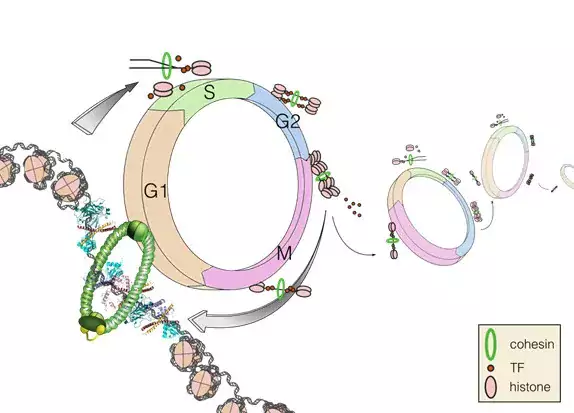
Jussi Taipale is a Professor of Medical Systems Biology at Karolinska Institutet and holds professorships at University of Helsinki. His research focuses on transcription factor binding mechanisms , cancer genomics , and gene regulatory networks . The interdisciplinary Taipale Lab operates across three international locations: Wellcome Sanger Institute (UK), Karolinska Institutet (Sweden), and University of Helsinki (Finland), with over 20 members including senior scientists, postdoctoral fellows, and graduate students. Ph.D., University of Helsinki (1996) Postdoctoral training: University of Helsinki, Johns Hopkins University Research spans transcription factor cooperativity , epigenetic regulation , chromatin accessibility , and noncoding mutation analysis . Key methodologies include HT-SELEX , CUT&RUN , ATI assays , and CRISPR-based functional genomics . The lab has significantly advanced understanding of Myc-driven oncogenesis , TF-nucleosome interactions , and dinucleotide specificity mechanisms . Notable discoveries include chromatin context-dependent enhancers , water-mediated DNA recognition , and novel composite transcription factor motifs . The group maintains active collaborations across Europe and has trained numerous alumni now leading academic and industry positions worldwide.
Henrik Engström is a Professor of Informatics at the University of Skövde, affiliated with the School of Informatics and Department of Information Technology. He holds a PhD in Computer Science from the University of Exeter. His research focuses on game development processes, serious games, and interdisciplinary collaboration in game design. Engström has led multiple projects, including the Game Tech Academy and Sweden Game Arena initiative, aiming to leverage game technology for societal challenges in health, education, and industry. He coordinates the Game Development Master's Programme and has published extensively on topics like game analytics, inclusive design, and mobile game publishing strategies. His work often bridges academia and industry, emphasizing practical applications in training simulations and healthcare. Education: PhD in Computer Science (University of Exeter) Key Projects: Sweden Game Arena, Game Hub Scandinavia, Digital Parental Support Tools Research Interests: Game design processes, serious games for health, inclusive game development, and mobile game business models Engström’s research outputs span over two decades, with notable contributions to understanding game development challenges, stress detection in games, and the application of AI in game narratives. His book Game Development Research (2020) synthesizes empirical insights from industry practices. He collaborates internationally, including with Japanese and Scandinavian institutions, to advance educational game models and industry-academia partnerships. His articles highlight trends in data-driven decision-making for indie game publishers, the psychological impact of game design on player experiences, and leveraging game jams for addressing heavy societal topics. Engström also leads grants focused on digital health tools for expecting parents and sustainable urban planning via game-based participation. Labs/Teams: Key contributor to the Sweden Game Conference and collaborator with Game Tech Academy, fostering innovation in game-based solutions for societal challenges.
Jonas Örtegren is an Associate Professor and Senior Lecturer in the Department of Engineering, Mathematics and Subject Didactics at Mid Sweden University. He serves as the subject representative for Engineering Physics and program manager for both the Master of Science program in Engineering Physics (years 4-5) and the project-based Master by Research in Engineering Physics program. His research focuses on nanomaterials and functional surfaces for energy applications. Örtegren's research explores nanomaterials, functional materials, and surface science with applications in energy conversion (nanogenerators) and energy storage (batteries). His work spans triboelectric energy harvesting, plasmonic devices, battery electrode design, and sustainable energy solutions. Current projects include IMPHET (Innovation Environment for Advanced Materials and Processes with Sustainable Energy Applications) and aluminum-graphite dual-ion battery development. Analysis of his recent publications reveals strong focus on: Advanced battery technologies including silicon anodes and aluminum-ion systems Triboelectric nanogenerators using sustainable materials like wastepaper Plasmonic devices for optical applications Surface engineering and nanomaterial synthesis techniques Primary research trends show integration of energy harvesting with materials science and nanotechnology. Örtegren manages multiple research projects: Flexibla och hållbara fastfasbatterier (Flexible solid-state batteries) ALGCC (Graphene-coated aluminum current collectors) IMPHET innovation environment Aluminum-graphite dual-ion battery development He is affiliated with the FSCN Research Centre and supervises research in nanomaterials and energy systems. No specific students or awards are mentioned in the source material.
Donald McMillan is an Associate Professor (Docent) in Human-Computer Interaction at Stockholm University's Department of Computer and Systems Sciences. He is a core member of the Stockholm Technology & Interaction Research (STIR) group, which brings together technologists and social scientists to research and build new digital technologies within the Human-Computer Interaction field. His research focuses on the adoption, adaptation, and use of novel technology in everyday settings, with particular emphasis on expanding the interactional repertoire of conversational interfaces. McMillan investigates how insights from fluid human-human communication can inform the development of better human-computer interaction paradigms through machine learning applications. His work often examines the contextual and social dimensions of technology use in real-world environments. Currently, McMillan serves as Principal Investigator for the Advanced Adaptive Intelligent Systems project, which develops new ways for robots and intelligent agents to understand and adapt to human collaborative work, and the Designing New Speech Interfaces with Ambient Audio project. He is also involved in the Implicit Interaction project. Previous projects include Autonomous Last Mile (developing Extended Reality experiences for human intervention in autonomous vehicle scenarios) and From Tracking to Hacking (exploring how people interact with technology to hack traditional sleep schedules). Advanced Adaptive Intelligent Systems: Developing adaptive interaction frameworks for intelligent systems Designing New Speech Interfaces with Ambient Audio: Expanding conversational capabilities through environmental audio analysis Implicit Interaction: Exploring subtle, background interaction paradigms Autonomous Last Mile: Creating XR experiences for human-robot collaboration scenarios From Tracking to Hacking: Investigating technology adaptation for non-normative sleep patterns His extensive publication record demonstrates deep expertise across multiple HCI domains, with recent work focusing on conversational interfaces, ethical AI considerations, gaze patterns in speech interaction, and contextual wearable technology use. McMillan's research methodology often combines empirical studies of real-world technology use with design implications for future systems, resulting in practical contributions to the field of Human-Computer Interaction.
Patric Jensfelt is a full-time Professor at the Robotics, Perception and Learning (RPL) division within the School of Electrical Engineering and Computer Science (EECS) at KTH Royal Institute of Technology . He contributes to robotics and autonomous systems through research, teaching, and industry collaboration. Academic Rank: Professor Department: Robotics, Perception and Learning (RPL) School: School of Electrical Engineering and Computer Science (EECS) University: KTH Royal Institute of Technology His research focuses on robotics and autonomous systems , particularly spatial cognition for enabling robots to understand and model their environments. He integrates sensor data with high-level symbolic reasoning to advance navigation, mapping, and system integration. Recent work includes applications in service robotics, 3D foot scanning (via the company Volumental ), and drone-based perception. The 15 most recent articles highlight advancements in scene flow estimation, autonomous driving, LiDAR processing, and domain adaptation. They emphasize self-supervised learning , dynamic environment modeling , and robust spatial representations for autonomous systems. Patric supervises Master’s and PhD students, particularly in project courses like DD2410 Introduction to Robotics , DD2419 Project Course in Robotics and Autonomous Systems , and the doctoral course FDD3356 System Integration for Robotics . He is actively involved in the WASP Graduate School , teaching Autonomous Systems annually. He leads the Robotics, Perception and Learning (RPL) division, which fosters innovation in robotics through experimental projects and industry partnerships like Intelligent Machines . The division supports internships (unpaid) and encourages applicants to demonstrate prior engagement with his research.
Christina Garsten is Professor at the Swedish Collegium for Advanced Study (SCAS) in Uppsala, Sweden, where she conducts research at the intersection of organizational anthropology, global governance, and political economy. Her work focuses on power dynamics within transnational institutions, particularly examining the World Economic Forum, think tanks, and other global governance arrangements. Garsten's research interests span organizational anthropology, global governance, transparency and secrecy practices, anticipation studies, and flexible work arrangements. Her scholarship employs ethnographic methods to investigate how power operates through seemingly neutral organizational practices, particularly in transnational contexts where formal democratic accountability mechanisms are limited. She has made significant contributions to understanding how elite networks shape global agendas through discretionary governance mechanisms that operate outside traditional democratic frameworks. Her recent publications (2021-2024) reveal a strong focus on anticipation practices, secrecy in transnational think tanks, and reflections on global crises. The articles demonstrate consistent engagement with questions of power, knowledge production, and temporal organization across various institutional settings. Her work shows particular strength in examining how future-making practices serve as sites of political contestation and power consolidation. Garsten has collaborated extensively with scholars including Adrienne Sörbom and Kerstin Jacobsson across multiple publications and research projects. Her academic trajectory shows a sustained interest in organizational phenomena, evolving from early work on flexible labor markets to current investigations of global governance institutions and future-making practices.
Christiane Schmidt is a Senior Associate Professor at Linköping University's Department of Science and Technology (ITN), affiliated with the Communications and Transport Systems (KTS) research group. Her work focuses on algorithm design, air traffic management, railway optimization, and computational geometry. She contributes to both academic research and practical solutions for transportation systems. Education and Research: While specific educational details are not provided, her research emphasizes algorithmic solutions for complex transportation challenges. Her team develops models for air traffic controller workload prediction using machine learning and explores late train-crew rescheduling via heuristic approaches. Research Interests: Key areas include railway traffic optimization, air traffic management systems, and computational geometry applications. Recent projects involve guard route optimization for polygons, multi-agent path planning, and automated aircraft arrival scheduling. Publications: Her 2025 work highlights advancements in tabu-search-based scheduling, machine learning for air traffic analysis, and train path insertion methods. Earlier papers address workforce scheduling and disaster recovery in transportation networks. Labs and Teams: Active within the Communications and Transport Systems group, she collaborates on projects like the Flight Logistics Unit (FL) and contributes to initiatives like B-PREPARED for disaster preparedness.
Christina Tånnander is an Industry doctoral student and Researcher at KTH Royal Institute of Technology's Division of Speech, Music and Hearing, collaborating with the Swedish Agency for Accessible Media (MTM). Her work focuses on advancing text-to-speech (TTS) synthesis for accessible media, producing spoken versions of textbooks and newspapers for individuals with reading difficulties such as dyslexia or low vision. Her research centers on TTS for long, information-rich texts, examining the relationship between written and spoken language. Key interests include neural TTS input representations (e.g., phonemic levels, pausing), text normalization, pronunciation generation, and evaluation methodologies for synthesized speech quality. She investigates how contextual framing and prosodic features impact listener perception in educational and journalistic content. Analysis of her publications (2013–2024) reveals consistent expertise in TTS evaluation using audience response systems, with recent emphasis (2023–2024) on neural prosody modeling, continuous phonological features, and English-accented Swedish synthesis. Her work bridges industrial application at MTM—where over 100 newspapers and 800 textbooks are annually processed—and academic innovation in speech technology.
Professor Palle Dahlstedt is affiliated with the University of Gothenburg's Interaction Design department. His work bridges music technology, live coding, and interdisciplinary performance. He specializes in gestural interactions, algorithmic creativity, and systems for collaborative improvisation. Key projects include the Bucket System, OtoKin, and research on live coding frameworks. Research interests focus on creative technologies in music and performance, with emphasis on real-time systems, human-computer interaction, and artistic collaboration. Dahlstedt has published extensively in venues like NIME, ICLC, and Evolutionary Intelligence, addressing topics ranging from hybrid piano design to generative storytelling. Notable contributions include the Biosphere Code Manifesto (2015), exploring algorithms in environmental contexts, and the Electroacoustic Modular Ecosystem (2020). His work often involves cross-disciplinary collaborations with dancers, musicians, and technologists. Performance highlights include jury-selected NIME performances (2015) and collaborations with artists like Gino Robair and Tim Perkis. Dahlstedt actively participates in international festivals and conferences, advancing the field of computational creativity and artistic research.
Monica Liljeström serves as an Associate Professor in the Department of Education at Umeå University, Sweden, where she is affiliated with the Learning and ICT (LIKT) research area. Her primary teaching responsibilities span online-based education programs, including the fully online Education A-C curriculum, special education courses, and HR management instruction. Appointed as assistant professor in 2001, she completed her doctoral degree in 2010 and has since been instrumental in developing the institution's online pedagogical frameworks. Her educational trajectory culminated in a doctorate in 2010 after seven years as assistant professor, reflecting deep institutional commitment and scholarly development. Liljeström's research centers on digital transformation in education, specifically examining online learning methodologies, special education adaptations, and innovative assessment practices. She investigates how collaborative learning and peer assessment function in digital environments, with particular focus on video-based tasks and text-based discussion forums. Her work bridges theoretical frameworks with practical course development, emphasizing student-centered evaluation approaches that foster meaningful engagement in virtual classrooms. Analysis of her publication history reveals a sustained 20-year commitment to advancing online education, evolving from foundational studies on text-based collaboration (2004-2010) to contemporary explorations of video-mediated learning (2017-2023). Her research consistently addresses peer assessment mechanisms, student perception dynamics, and the integration of process evaluation in digital pedagogy, demonstrating methodological rigor across diverse online educational contexts. Scientific Recognition: Distinguished University Teacher award for exceptional pedagogical contributions As an active academic leader, Liljeström has supervised students in special education and pedagogy programs while directing significant research initiatives including the "Collaborative Mixed Reality Aid" project (2019-2020) and foundational work on "Peer assessment in online courses" (2007-2009). These projects secured institutional funding and directly shaped Umeå University's online course development standards. She remains a core contributor to the Learning and ICT (LIKT) research group, driving collaborative investigations into how digital tools transform teaching practices and learning outcomes across educational levels.