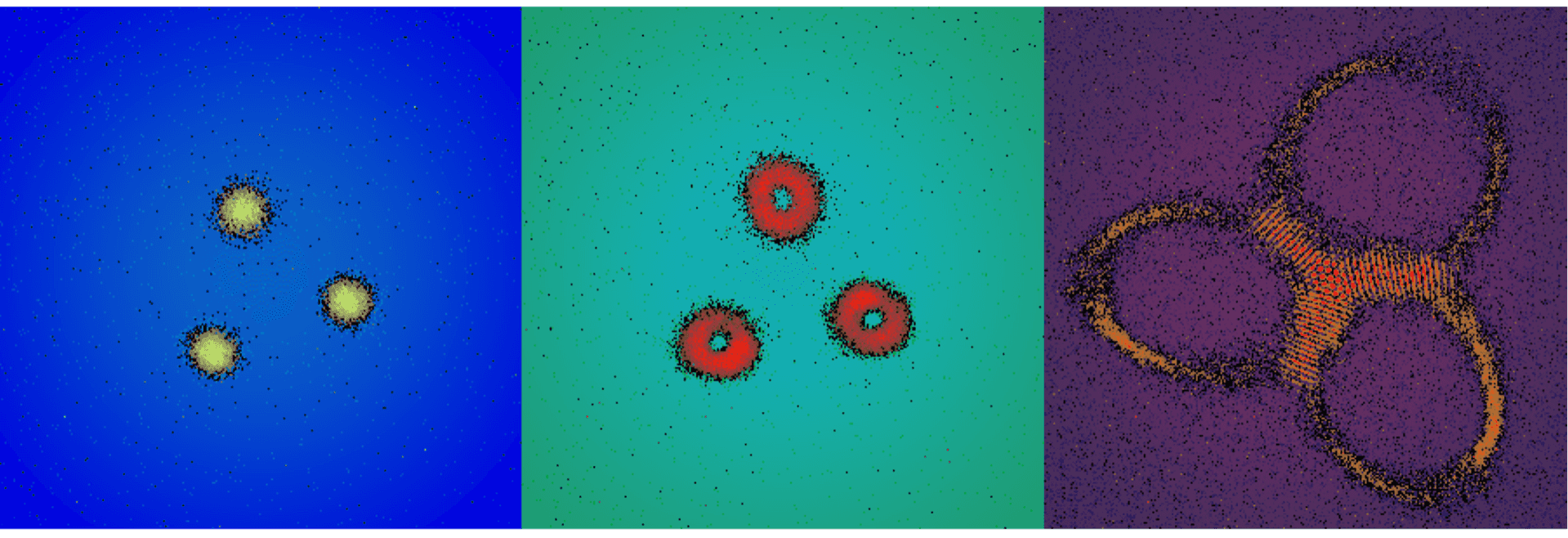
Nathan Schine is an Assistant Professor at the University of Maryland, specializing in quantum physics and quantum information science. He leads the Schine lab, which explores controlled coherent dynamics and engineered dissipation in quantum systems, particularly using optical cavities coupled to tweezer-trapped cold atoms. His research bridges atomic physics, quantum optics, and condensed matter physics. Education: B.A. in Physics, Williams College (2013) Ph.D. in Physics, University of Chicago (2019) Research interests focus on quantum many-body systems, optical cavities, and applications such as quantum information processing and ultra-coherent atomic clocks. The lab’s work includes developing state-of-the-art strontium tweezer array apparatuses for precision metrology and quantum simulation. Recent publications highlight advancements in Dicke state preparation, optical pumping of quantum Hall states, and cavity-enhanced measurements. Advising and grants involve mentoring graduate students and postbaccalaureate researchers, including Shardul Rao and Siddharth Taneja. The lab collaborates with groups like AMPED, QuICS, and RQS at UMD. Members include postdoctoral researchers and graduate students working on theoretical quantum optics and experimental setups. Labs/Teams: The Schine lab integrates atomic, optical, and condensed matter physics approaches to address fundamental and applied questions in quantum science.
Andreas Eklund is an Assistant Professor in the Marketing Department at the University of Wisconsin-La Crosse (UWL). He holds a Ph.D. in Marketing from Linnaeus University (Sweden), specializing in consumer psychology, and a Master’s degree from Lund University (Sweden). His research focuses on sensory marketing, branding, and service-dominant logic, exploring how sensory cues influence consumer behavior and brand experiences. He has taught courses on branding, consumer behavior, and marketing strategy at universities in Sweden, Norway, and the U.S. Education: Ph.D. in Marketing (Consumer Psychology), Linnaeus University, Sweden M.Sc. in Marketing, Lund University, Sweden Research Interests: Sensory marketing and its intersection with branding Multi-sensory consumer experiences in automotive and retail environments Experiential marketing and value proposition design Congruency theories in brand-consumer relationships Teaching: Recent courses include MKT351 (Principles of Marketing), MKT362 (Consumer Behavior), and MBA755 (Advanced Marketing) Focuses on experiential learning and real-world marketing applications Professional Background: Prior career as a chef informs his sensory marketing research Experience in Scandinavian universities before joining UWL Personal Interests: Outdoor activities (disc golf, ice skating) Swedish salt licorice enthusiast Manchester United football fan
Professor Christopher Foot is a Professor of Physics and Perenco Fellow and Tutor in Physics at St Peter’s College, University of Oxford. He holds a B.A. and D.Phil. in Physics from Oxford and has held roles including Tutorial Fellow at St Peter’s since 1991 and Senior Tutor from 2010–2014. His research focuses on ultracold atomic gases, Bose-Einstein condensation, and quantum systems manipulation using magnetic and radio-frequency fields. He leads experimental efforts to study large quantum systems and has pioneered techniques involving electric fields for ion confinement. Teaching responsibilities include Quantum Mechanics, Atomic/Molecular/Laser Physics, and graduate courses on Ultracold Quantum Matter. He coordinates the fourth-year option on Lasers and Quantum Information Processing. Awards include the Lindemann Trust Fellowship during his time at Stanford University. His work bridges fundamental quantum physics with advanced experimental techniques, enabling precise control of atomic systems. Collaborations involve developing novel methods to probe many-body quantum phenomena at extreme temperatures (tens of nanokelvin). Current projects aim to extend quantum system studies to biomolecular ions, leveraging interdisciplinary approaches.
Junjian Qi serves as the Hohbach Endowed Associate Professor in the Department of Electrical Engineering and Computer Science at South Dakota State University's College of Engineering, holding this position since 2023. His academic journey includes prior appointments as Assistant Professor at Stevens Institute of Technology (2020-2023) and University of Central Florida (2017-2020), along with research roles at Argonne National Laboratory and University of Tennessee. His educational background includes: Ph.D. in electrical engineering from Tsinghua University, Beijing, China (2013) B.E. in electrical engineering from Shandong University, Jinan, China (2008) Dr. Qi's research centers on electric power systems resilience, with particular expertise in cascading failure mechanisms, microgrid control architectures, cyber-physical security vulnerabilities, and synchrophasor applications. His work integrates advanced data analytics and machine learning techniques to enhance grid stability against extreme weather events and cyber threats. Current investigations focus on developing distributed control strategies for inverter-dominated grids and modeling system interdependencies during failure propagation. Analysis of his 15 most recent publications (2021-2024) reveals a strong methodological shift toward data-driven approaches for power system challenges. Key trends include machine learning applications for cascading failure prediction, novel distributed control frameworks for AC/DC microgrids, and cybersecurity enhancements for inverter-based resources. His work consistently bridges theoretical models with real-world utility data, particularly evident in multiple Best Paper Award-winning publications analyzing actual outage sequences. Dr. Qi's scientific recognition includes: NSF CAREER Award (2020) Three consecutive Best Paper Awards at IEEE PES General Meetings (2022-2024) World's Top 2% Scientist designation in energy (2020-2023) IEEE PES Outstanding Working Group Award (2023) Multiple journal Best Paper Awards (IEEE Transactions on Power Systems, Journal of Modern Power Systems) He currently leads significant research initiatives including an NSF CAREER project ($500k) on cascading failure analysis and an NSF collaborative grant ($219k) for grid stability, alongside previous DOE funding ($1.8M) for cybersecurity of distributed energy resources. His service includes editorial roles for IEEE Transactions on Power Systems and IEEE Power Engineering Letters, plus leadership in IEEE PES technical committees focused on voltage control and smart grid security.
Kostas Bekris is a Professor in the Department of Computer Science at Rutgers University, specializing in Robotics and Artificial Intelligence. His research focuses on motion planning, autonomous manipulation, and robot control, with notable contributions to tensegrity robotics, perception-driven systems, and large-scale package handling. He leads a team conducting groundbreaking work in robotics, supported by grants from NSF, NASA, and industry collaborators like ExxonMobil. His group emphasizes interdisciplinary approaches, combining machine learning, topological methods, and differentiable physics modeling to advance robot capabilities in complex environments. Education details are not explicitly stated in the provided texts, but his academic career has included significant mentorship of PhD students and postdoctoral researchers. Key projects involve vision-driven manipulation pipelines, obstacle detection systems (PROBE), and resilient robot designs inspired by biological structures. He has been recognized for his work through prestigious awards including the NASA Early Career Grant and multiple NSF grants, as well as team achievements in robotics competitions like the Amazon Picking Challenge. Research interests span robotics subfields such as: Autonomous manipulation in cluttered environments Learning-based control for dynamic systems Topological data analysis for motion reasoning Tensegrity and soft robotics architectures Sim-to-real transfer in robotic tasks His team's work has produced open-source software tools and datasets, advancing benchmarks in manipulation and perception. Recent articles emphasize scalable solutions for industrial automation and robust navigation strategies in unstructured settings. Scientific achievements include: Development of PROBE for proprioceptive obstacle detection Advances in differentiable physics engines for tensegrity systems NSF-funded projects on robotic rearrangement and modular morphologies Advising contributions span over a decade, with current advisees focusing on topics like non-prehensile manipulation and large-scale storage optimization. Collaborations with industry (e.g., ExxonMobil) and academic partners (Yale University) reflect his commitment to applied robotics research. Labs and teams under his leadership include the Rutgers CS Robotics Group, contributing to projects like the ARIAC challenge platform and packing/industrial automation systems. Future work targets improved robot resilience in disaster scenarios and enhanced human-robot collaboration paradigms.
Barry Naughton is the So Kwan Lok Chair of Chinese International Affairs at the School of Global Policy and Strategy (GPS), University of California, San Diego, where he has been a faculty member since 1988 and was appointed to his named professorship in 1998. As a globally recognized authority on China's economic transformation, his work bridges academic rigor and policy relevance through decades of analysis of market reforms, industrial development, and international economic relations. His academic foundation includes: Ph.D. in Economics from Yale University (1986) M.A. in International Relations from Yale University (1979) B.A. in Chinese Language and Literature from the University of Washington (1975) Naughton's research centers on China's transition from planned to market economy, with emphasis on industrial restructuring, foreign trade dynamics, and regional development disparities. His scholarship uniquely connects historical analysis of reform milestones with contemporary policy challenges, particularly examining how state-market interactions shape technological advancement and global economic integration. This dual focus on institutional evolution and sectoral transformation has established him as a critical interpreter of China's development model for both academic and policy audiences. Analysis of his 2020-2024 publications reveals a decisive shift toward examining China's industrial policy architecture and state capitalism mechanisms. Key thematic clusters include the conceptualization of 'Grand Steerage' in state-economy relations, the restructuring of science-technology systems, and the sectoral implementation of industrial policies. These works collectively document China's evolving governance approach—from market liberalization to targeted state direction—while analyzing implications for global trade and innovation ecosystems. His scholarly recognition includes: Ohira Memorial Prize for 'Growing Out of the Plan: Chinese Economic Reform, 1978-1993' (1996) Administrative leadership has been integral to Naughton's career, serving as Associate Dean of GPS (1992-1995, 2001-2003) and Chair of UCSD's Chinese Studies Program (1998-2000). His policy engagement extends through the Research Grants Council of Hong Kong (1998-2003) and U.S. academic committees on Chinese studies. Current research examines regional growth patterns and foreign investment linkages while completing a new edition of his seminal textbook 'The Chinese Economy: Transitions and Growth,' which remains the field's authoritative reference. Though not leading a formal laboratory, Naughton shapes discourse through China Leadership Monitor's quarterly economic assessments and collaborative networks like the edited volume 'State Capitalism, Institutional Adaptation and the Chinese Miracle' (2015), which mobilized leading scholars to analyze China's institutional innovation within global capitalism.
Prof. Dr. Oliver Reiser is a full Professor at the Institute of Organic Chemistry within the Faculty of Chemistry and Pharmacy at the University of Regensburg. His research group focuses on cutting-edge developments in organic synthesis, particularly in the areas of photocatalysis and visible light chemistry. He leads the Collaborative Research Centre CRC 325 on "Assembly Controlled Chemical Photocatalysis," which aims to develop new frontiers in photocatalysis for organic synthesis through designed control of catalyst-substrate interactions. University of Hamburg (PhD, 1989) IBM Research Center (Postdoc) Harvard University (Postdoc) University of Göttingen (Habilitation, 1995) Prof. Reiser's research spans multiple interconnected fields with a strong emphasis on sustainable chemistry. His group extensively utilizes modern techniques for organic synthesis including flow reactors, microwaves, and high-pressure systems. The primary research thrusts include catalysis (both metal and organocatalysts), unnatural amino acids and peptide foldamers, and natural product synthesis. His work on visible light photocatalysis has been particularly influential, with numerous publications in high-impact journals like Angewandte Chemie and Nature Catalysis. The group's research integrates experimental, spectroscopic, and computational techniques to analyze catalyst-substrate interactions for more rational design of photochemical reactions. Analysis of Prof. Reiser's recent publications (2023-2025) reveals a strong focus on copper-based photocatalysis, sustainable chemistry using earth-abundant metals, and innovative approaches to heterocycle synthesis. His work demonstrates a clear trend toward developing more efficient and environmentally friendly catalytic processes, with particular emphasis on visible light activation, catalyst immobilization for recyclability, and applications in medicinal chemistry. The research spans from fundamental mechanistic studies to practical applications in synthesis. German Academic Scholarship Foundation Minerva Foundation NATO Fellowship German Research Foundation Support Karl Winnacker Foundation Prof. Reiser has supervised numerous doctoral students, with recent PhD theses focusing on copper photoredox catalysis, magnetic nanoparticle-supported catalysts, and the synthesis of bioactive compounds. His research is supported by multiple collaborative projects, including the Collaborative Research Centre CRC 325, and involves extensive national and international collaborations with institutions such as the University of Kansas, the National Institute of Chemistry in Pune, the Institut Chimie de Coordination du CNRS in Toulouse, and the University of Zaragoza. The group maintains strong ties with pharmaceutical research through collaborations with Prof. A. Beck-Sickinger in Leipzig on neuropeptide ligands. The research group operates well-equipped laboratories with capabilities for advanced organic synthesis and characterization. They have developed specialized expertise in flow chemistry, high-pressure techniques, and magnetic nanoparticle-based catalyst systems. The CRC 325 initiative has provided significant infrastructure for collaborative research in photocatalysis, bringing together multiple research groups with complementary expertise in organic synthesis, spectroscopy, and computational chemistry.
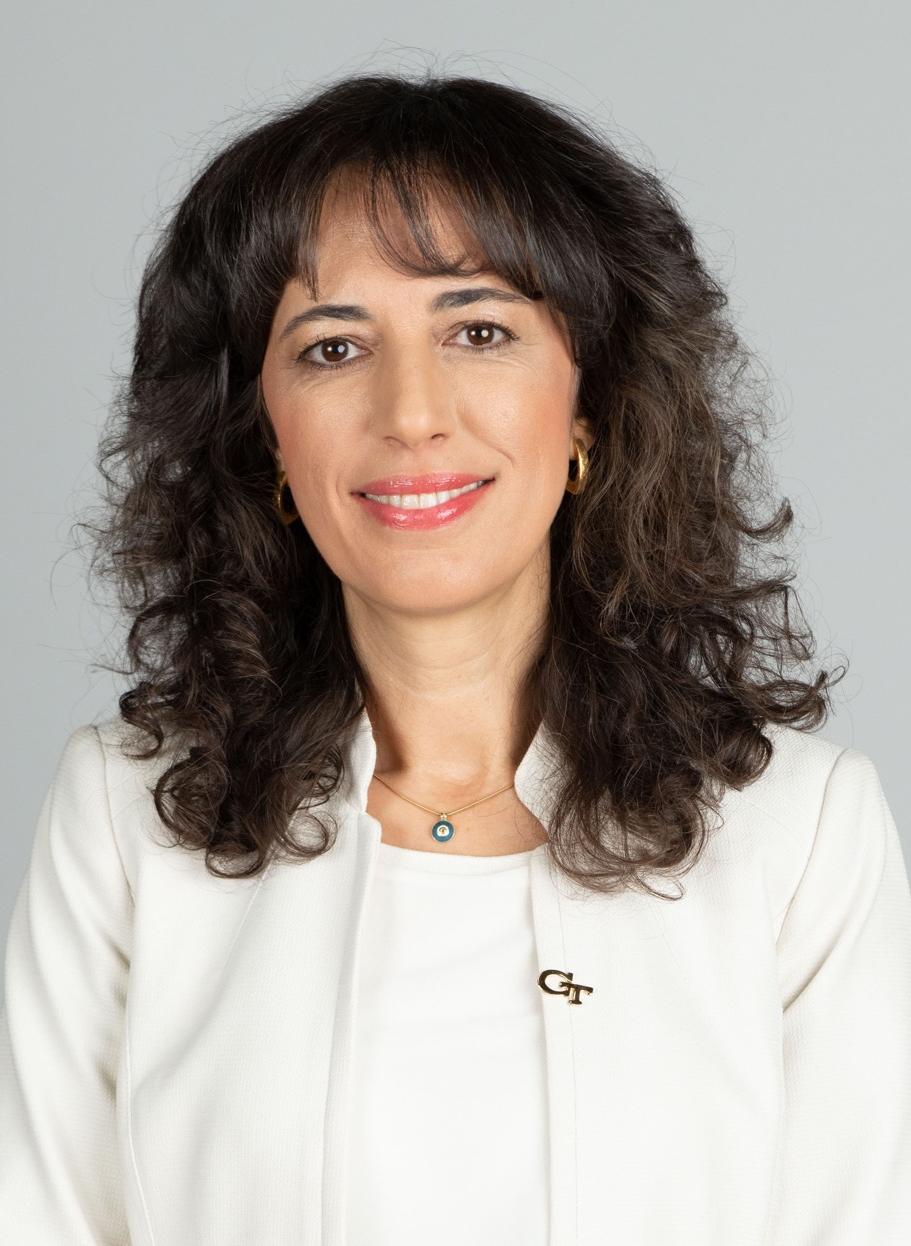
Pinar Keskinocak serves as the H. Milton and Carolyn J. Stewart School Chair and Professor in the H. Milton Stewart School of Industrial and Systems Engineering at the Georgia Institute of Technology. She co-founded and directs the Center for Health and Humanitarian Systems, demonstrating leadership in both academic administration and research innovation. Her career includes prior roles as College of Engineering ADVANCE Professor and interim associate dean for faculty development, alongside industry experience at IBM T.J. Watson Research Center. Her educational foundation includes a Ph.D. in Operations Research from Carnegie Mellon University and M.S. and B.S. degrees in Industrial Engineering from Bilkent University. This rigorous training underpins her interdisciplinary approach to complex societal challenges. Dr. Keskinocak's research pioneers operations research applications for societal impact , with dual emphases on health systems and humanitarian logistics . She develops advanced models for infectious disease dynamics (including COVID-19, malaria, and Guinea worm), vaccination strategies, disaster response, and supply chain optimization. Her work uniquely bridges engineering analytics with real-world implementation through partnerships with the CDC, American Red Cross, Carter Center, and Children's Healthcare of Atlanta. Analysis of her 2023-2025 publications reveals intensifying focus on eradication program modeling for polio and Guinea worm, with increasing integration of machine learning for predictive accuracy in vaccine distribution. A pronounced trend addresses health equity through targeted interventions for under-immunized populations in Sub-Saharan Africa, emphasizing resource allocation under constraints and cross-border coordination challenges. Her scientific recognition includes: INFORMS Fellow (2015) NSF CAREER Award (2001) Outstanding Professional Education Award, Georgia Tech (2018) Denning Award for Global Engagement, Georgia Tech (2016) Women in Engineering Excellence Teaching Award (2005) Moving Spirit Award, INFORMS (2005) Dr. Keskinocak has secured extensive project funding through collaborations with federal agencies and NGOs, directing research on pandemic response systems, vaccine logistics, and disaster debris management. While specific advisees aren't publicly cataloged, her leadership in the Center for Health and Humanitarian Systems mentors numerous graduate researchers through interdisciplinary projects. She significantly influences national policy via National Academies committees addressing supply chain resilience and vaccine distribution infrastructure. The Center for Health and Humanitarian Systems operates as a dynamic hub where engineering rigor meets humanitarian action, coordinating multi-institutional teams to develop deployable solutions for global health crises and disaster response systems.
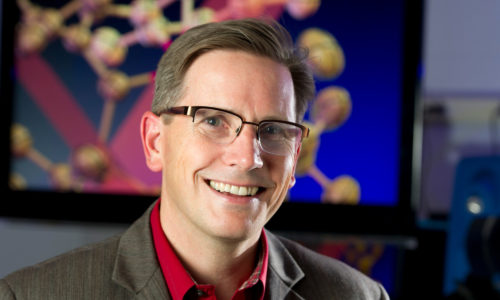
William F. Schneider is the Keating-Crawford Professor of Chemical Engineering and Chair of the Department of Chemical and Biomolecular Engineering at the University of Notre Dame's College of Engineering. He also holds a concurrent professorship in the Department of Chemistry and Biochemistry. Dr. Schneider leads the Computational Environmental Catalysis research group focused on applying density functional theory (DFT) simulations to solve problems in energy and the environment. Dr. Schneider's educational background includes a Ph.D. in Chemistry from Ohio State University (1991) and a B.S. in Chemistry from the University of Michigan-Dearborn (1986). Before joining Notre Dame in 2004 as an Associate Professor, he worked at the Ford Motor Company Research Laboratory where he developed expertise in catalytic chemistry related to automobile emissions control. Dr. Schneider's research focuses on molecular-scale understanding of heterogeneous catalysis, with particular emphasis on energy-related applications. His group uses computationally intensive molecular simulations to understand and predict chemical properties and reactivity from first principles. Key research areas include: Zeolites for NOx reduction Catalysis at metal surfaces Catalysis for shale gas conversion Energy-directed catalysis Carbon capture and conversion Sustainable bio/fossil fuels His recent publications demonstrate a strong focus on computational approaches to understanding catalytic mechanisms, particularly in zeolite systems for environmental applications and energy conversion processes. The research often combines density functional theory with microkinetic modeling to provide molecular-level insights into catalytic processes. Dr. Schneider has received numerous honors including: Dorini Family Chair of Energy Studies Keating-Crawford Professor of Chemical Engineering Fellow of the American Association for the Advancement of Science James A. Burns, C.S.C., Award for outstanding mentorship of doctoral students Executive Editor of the Journal of Physical Chemistry C As an advisor, Dr. Schneider mentors numerous graduate students and postdocs in the Computational Molecular Sciences and Engineering Laboratory (CoMSEL). His research group collaborates closely with experimentalists to validate computational findings and accelerate their application. Current projects include investigations into plasma-catalytic processes, copper-zeolite systems for methane oxidation, and computational screening of catalysts for various energy applications. Dr. Schneider's research is supported by various grants focusing on energy conversion, environmental catalysis, and computational materials design. He leads the Computational Environmental Catalysis group which is part of the broader CoMSEL research community at Notre Dame.
Dr. Yunjie Yang is an Associate Professor at the University of Edinburgh's School of Engineering, with affiliations at the Edinburgh Futures Institute (EFI), the Edinburgh Generative AI Laboratory (GAIL), and the Edinburgh Centre for Robotics. He previously held the Chancellor's Fellow in Data Driven Innovation (2018-2023) and Bayes Innovation Fellow (2023-2024) positions. His research focuses on AI-powered sensing and imaging, machine learning, and soft sensors & electronics for robotics. Yang received his PhD in Engineering Electronics from the University of Edinburgh, MSc in Control Science & Engineering from Tsinghua University, and BEng in Measurement & Control Engineering from Anhui University. After his PhD, he worked as a Postdoctoral Research Associate in Chemical Species Tomography before securing his lectureship. His research interests center on developing intelligent sensing systems that replicate human perception capabilities for robotics and intelligent systems. He pioneers flexible sensing and imaging technologies across various scales through innovative multi-modal sensors, soft electronics, and their modeling using machine learning approaches. His work aims to enable autonomous physical artificial intelligence by bridging the gap between robotic systems and human-like perception. Analysis of his recent publications reveals a strong focus on soft robotics perception, particularly through electrical impedance tomography (EIT) and transformer-based architectures. His research spans medical imaging applications, digital twin modeling for industrial processes, and machine learning approaches for sensor data interpretation. The trend shows increasing integration of physics-informed deep learning with traditional tomographic techniques to achieve higher accuracy and efficiency. European Research Council (ERC) Starting Grant (2024) IEEE J. Barry Oakes Advancement Award (2024) IEEE I&M Society Graduate Fellowship Award (2015) Multiple Best Paper Awards Senior Member of IEEE Fellow of the International Society for Industrial Process Tomography Fellow of the Higher Education Academy ESI highly cited papers Dr. Yang serves as Associate Editor for IEEE Transactions on Instrumentation and Measurement and holds editorial positions with Scientific Reports and IEEE Sensors Journal. His research has been licensed to overseas research institutes and industry partners and received wide media coverage including BBC, EFE, USA Today, and STV. He has secured significant grant funding including the prestigious ERC Starting Grant. He leads the Edinburgh SMART Lab (Sensing/imaging + Machine Learning + Robotics), which aims to replicate human perception capabilities for robotics and advance flexible sensing technologies through innovative multi-modal sensors and machine learning approaches. The lab focuses on enabling autonomous physical artificial intelligence with applications spanning medical diagnostics, industrial monitoring, and advanced robotics systems.
Professor Liyue Shen is a faculty member in the Department of Biomedical Engineering within the College of Engineering at the University of Michigan. Her research program focuses on cutting-edge applications of artificial intelligence in biomedical imaging and healthcare, with particular expertise in diffusion models and inverse problem solving for medical image reconstruction. Dr. Shen's research interests span biomedical AI, medical image analysis, biomedical imaging, machine learning, computer vision, signal and image processing, AI for precision health, and bioinformatics. Her work bridges theoretical advances in AI with practical clinical applications, developing novel methods for medical image reconstruction, segmentation, and analysis that can improve diagnostic accuracy and treatment planning. Analysis of her recent publications reveals a strong focus on diffusion models for solving complex inverse problems in medical imaging, with particular emphasis on patch-based approaches, latent space disentanglement, and efficient sampling techniques. Her research group has made significant contributions to 3D CT reconstruction, chest X-ray analysis, holographic phase retrieval, and patient-specific imaging studies, demonstrating both theoretical innovation and practical clinical relevance. While specific scientific awards aren't mentioned in the available materials, her extensive publication record in top venues demonstrates significant scholarly impact in the field of biomedical AI. Her research program appears well-funded through grants supporting her work in medical imaging and AI development.
Jonathan M. Baker is an Assistant Professor in the Department of Electrical and Computer Engineering at The University of Texas at Austin, holding the Advanced Micro Devices Chair in Computer Engineering. His research centers on quantum computer architecture with emphasis on practical quantum error correction implementation across the quantum computing stack. His educational background includes a Ph.D. in Computer Science from the University of Chicago (advised by Fred Chong) and dual B.S. degrees in Mathematics and Chemistry and Computer Science from the University of Notre Dame. Baker's research spans quantum compilation, logic synthesis, multi-radix architectures, and error mitigation for both near-term and fault-tolerant quantum systems. His work addresses critical challenges in quantum hardware-software co-design, with particular focus on optimizing quantum circuits for real-world hardware constraints and noise characteristics. Current projects emphasize qudit-based computing, neutral atom architectures, and efficient error correction implementations. His publication record shows strong focus on quantum architecture innovations, with recent work exploring qudit advantages, modular chiplet designs, and dynamic noise adaptation. Key trends include hardware-aware compilation techniques, communication optimization across quantum systems, and practical approaches to fault tolerance. Best Paper Award Runner Up, MICRO 2020 IEEE Micro Top Pick, 2020 (Virtualized Logical Qubits) IEEE Micro Top Pick, 2020 (Extending Frontier with Qutrits) IEEE Micro Top Pick, 2021 (Emerging Technologies) Best Poster Award, MICRO 2018 Baker actively mentors graduate students in quantum computing architecture research and serves on conference review committees including MICRO and ASPLOS. His teaching includes specialized quantum systems courses at UT Austin and online EdX modules covering quantum computation fundamentals and architecture. He collaborates with the Duke Quantum Center and maintains strong industry connections through the AMD Chair position, focusing on bridging academic research with practical quantum computing implementations.
Aidan J Horner is a Professor in the Department of Psychology at the University of York. He holds a BSc in Psychology (2005) and MSc in Cognitive Neuroscience (2006) from the University of York, followed by a PhD in Cognitive Neuroscience from the University of Cambridge (2010). His career includes postdoctoral research at Otto-von-Guericke University (2010–2011) and University College London (2011–2016), and a visiting scholar position at Stanford University (2008). He returned to York as a Lecturer in 2016, advancing to Senior Lecturer and his current Professorship. Research Focus: Horner’s work examines how the brain encodes and retrieves long-term memories, particularly spatial and event-based information. He employs experimental psychology, virtual reality, neuroimaging (e.g., fMRI, MEG), and computational modeling to study hippocampal and cortical mechanisms underlying memory formation, consolidation, and forgetting. His recent studies explore the role of theta oscillations in memory binding, the impact of emotion on memory coherence, and forgetting dynamics. Publications & Awards: Over 50 peer-reviewed articles, including high-impact work in Current Biology , Nature Communications , and Cognition . Recognized with the Annual Cognitive Paper Prize Award (2022) for groundbreaking contributions to memory research. Grants & Projects: Lead investigator on ESRC-funded projects (e.g., "Promoting rapid and sustained learning of novel information" , 2018–2022). Collaborates with institutions like the York Neuroimaging Centre (YNiC) to advance neuroimaging techniques in cognitive studies. Labs & Teams: Affiliated with the York Neuroimaging Centre (YNiC), integrating neuroimaging with behavioral and computational approaches to memory systems. Active in interdisciplinary teams studying memory plasticity and cognitive neuroscience.
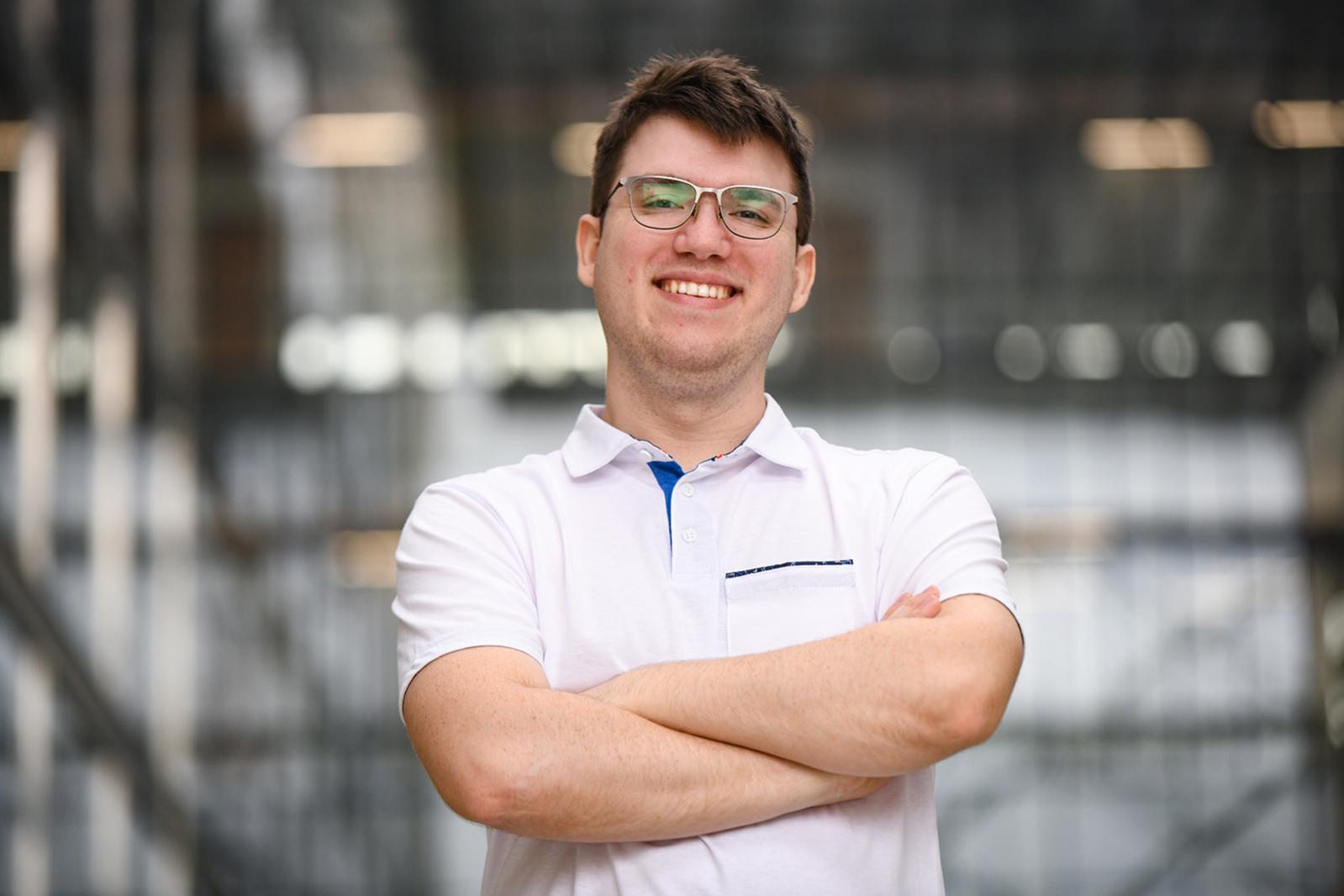
Umut Aydemir is an Associate Professor at the Department of Chemistry, Koç University , where he also serves as Director of KUBAM (Koç University Boron Application and Research Center) . His research focuses on Boron-Based High-Tech Materials, 2D Materials, Electrocatalysis, Thermoelectric Energy Harvesting , and Hydrogen Storage . PhD in Chemistry (2012), Dresden University of Technology MSc in Materials Science and Engineering (2006), Koç University BSc in Chemistry and Physics (2004), Koç University Umut’s work addresses structure-property relationships in advanced materials, with a particular emphasis on boron-containing compounds , MXenes , and thermoelectric systems . His recent publications highlight innovations in electrocatalytic water splitting , hydrogen storage materials , and sustainable coating technologies . His research trends include: Development of metal diborides for water splitting Engineering MXene/polymer composites for corrosion resistance Novel approaches to thermoelectric materials like MgAgSb and Zintl phases Designing hydrogenated borophene for environmental applications Awarded the 2024 Koç University College of Science Outstanding Faculty Award and 2019 TÜBA Young Scientist Award , Umut leads high-impact projects in materials science. He advises graduate students in Nanocatalysis and Advanced Material Synthesis and contributes to interdisciplinary initiatives at KUBAM.
Paolo Ienne is a Professor at the Swiss Federal Institute of Technology in Lausanne (EPFL), where he leads the Processor Architecture Laboratory (LAP) within the School of Computer and Communication Sciences. His research focuses on advancing reconfigurable computing systems through innovative FPGA architectures and high-level synthesis methodologies. His primary research domains include reconfigurable computing, FPGA architecture design, dynamically scheduled dataflow circuits, and hardware acceleration techniques. Recent work emphasizes memory system optimization for FPGAs, formal verification of circuit transformations, and rapid C-to-hardware compilation flows. He has pioneered approaches for handling thousands of outstanding memory misses in FPGA accelerators and developed novel techniques for switch-block exploration without explicit pattern enumeration. Analysis of his 2023-2025 publications reveals a strong trend toward practical FPGA deployment challenges, with increasing focus on HBM integration, virtual memory systems for PCIe-attached devices, and formally verified circuit transformations. His work consistently targets real-world bottlenecks in high-level synthesis toolchains while maintaining theoretical rigor in dataflow architecture design. Professor Ienne's laboratory receives support from the Swiss National Science Foundation and industry partners including Huawei, enabling cutting-edge research in FPGA-based acceleration. His collaborative network spans major semiconductor companies and academic institutions worldwide, with frequent co-authorship on conference proceedings and journal publications in IEEE and ACM venues.




.jpg)
