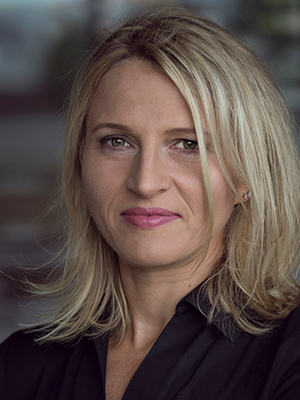
Adam John Privitera is a Research Fellow at Nanyang Technological University (Singapore) in the Centre for Research and Development in Learning (CRADLE). He holds a PhD in cognitive science from the University of Hong Kong's Faculty of Education. His research focuses on bilingualism's cognitive impacts, particularly language experience on decision-making and executive function, and applies neuroscience findings to education policy. He has authored publications in top journals like Higher Education and Bilingualism: Language and Cognition, and serves on editorial boards for Trends in Neuroscience and Education and Frontiers in Psychology. Previously, he served as a Medical Sergeant in the U.S. Army (2002–2012), Psychology Instructor/Program Chair (2011–2016), AP Psychology Teacher (2016–2021), and Assistant Professor of Psychology in China (2021–2023). Research interests include: 1) Translating cognitive/neural science into educational practices; 2) Language experience effects on cognitive control; 3) Neuroeducational markers for learning. His work bridges experimental psychology with real-world educational challenges, emphasizing bilingualism's role in cognitive reserve and academic integrity. Recent articles highlight systematic reviews on generative AI in education assessment, bilingualism's holistic cognitive effects, and neural mechanisms of learning. His research methodologies include ERP studies, eye-tracking, and neuroimaging. Privitera also explores AI's ethical implications in aphasia therapy and mental health monitoring among university students. His career spans military service, teaching, and academic research, reflecting a multidisciplinary approach to education and cognition.
Prof. Dr. Annika Goeze holds the Chair of Educational Science with a focus on professional and company-based continuing education at the Eberhard Karls University of Tübingen since April 2021. She was previously a professor at TU Chemnitz (2019-2021) and has held visiting positions at Ruhr University Bochum and Karl-Franzens University of Graz. Her work centers on professional development , digital media in education , and implementation research in adult education. Her research includes: Video case-based teaching for competence development Digital sovereignty in language education Personnel diagnostics in continuing education Teacher training program evaluation Implementation research in educational systems Recent article trends emphasize digital media integration in teacher training, leadership development, and evidence-based professional development. She leads the DFG-funded DigiNICs project and has secured grants from BMBF and the State of Baden-Württemberg. Scientific awards include the Leibniz Mentoring Program scholarship and DFG Young Researchers’ Academy admission. Grants & Projects : "Digitally Supported Networked Improvement Communities" (BMBF, 2023-2025) "Quality Offensive for Teacher Training" (BMBF, 2021-2023) Leadership training evaluation (Baden-Württemberg, 2023) Ongoing DFG/DIE research on personnel diagnostic competencies (since 2013) Labs & Teams : She co-leads the Institute of Educational Science at Tübingen and coordinates research groups within the Tübingen School of Education . Her collaborative work includes the development of the Online Case Laboratory (www.videofallarbeit.de).
Neil Allison is a Lecturer in Modern Foreign Languages at the University of Glasgow, specializing in English for Academic Study (EAS) with a focus on Law. He has been active in EAP since 2010 and previously worked in legal practice and publishing. LLB (Hons), Strathclyde University DipLP (Legal Practice) MSc in Information Science DELTA (English Language Teaching) MEd in Academic Practice His research centers on English for Specific Academic Purposes (ESAP) , particularly Legal Text and Discourse Analysis , Legal Ontology , and Cognitive Linguistics . He explores schema theory, cognitive architecture, and legal conceptual frameworks to enhance academic skills for law students. Recent publications (2024–2011) span Legal Linguistics , EAP Pedagogy , and Educational Technology , with a focus on classroom attention metrics, legal ontology, and digital learning tools like Microsoft Teams. Key themes include legal discourse, cognitive learning strategies, and ethical pedagogy. Senior Fellow of the Higher Education Academy (RET) UCU Area Representative for SMLC Former IELTS Examiner Trainer Pro bono legal advisor via Citizens' Advice Bureau Neil integrates legal expertise with language pedagogy, emphasizing clarity in legal education and student-centered learning technologies. He collaborates on projects involving BALEAP TEL SIG and contributes to discussions on power dynamics in EAP.
Prof. Dr. Daniela Caspari is a Professor of Didactics of Romance Languages and Literatures at Freie Universität Berlin's Department of Philosophy and Humanities, where she has served since 2002. She directs the Institute of Romance Philology and previously held research positions at TU Berlin and HU Berlin. Her academic credentials include a PhD (1994) and Habilitation (2002) focused on foreign language pedagogy. Research Focus: Caspari specializes in competency-oriented language teaching, empirical research methods, and literature didactics. Her work explores intercultural learning, teacher education reform, and the role of children's literature in language acquisition. Current projects examine multilingual education challenges and innovative teaching methodologies for Romance languages. Publication Trends: Her recent articles (2020-2024) analyze language policy, teacher training efficacy, and motivational strategies in multilingual classrooms, emphasizing empirical approaches and curriculum design for French, Spanish, and Italian pedagogy. Leadership & Service: She chairs the German Society for Foreign Language Research (DGFF), contributes to national education standards committees, and leads projects like K2Teach and ViFoNet. She coordinates master's programs and mentors future educators through digital and in-person consultations.
Sezen Arslan is an Associate Professor at Bandirma Onyedi Eylul University, holding roles in the Department of English Translation and Interpreting (Faculty of Humanities and Social Sciences) and the Department of Foreign Languages. She previously served at Van Yuzuncu Yil University as a Doctor Lecturer and Research Assistant. Her academic leadership includes positions as Department Head and Erasmus Coordinator. Her research focuses on sustainable education, EFL pedagogy, teacher training, AI integration, and inclusive practices. Key contributions include work on dialogic teaching, EMI sustainability, and intercultural communication. She has authored over 20 books and 88 articles, with a TÜBİTAK Science Award recognition. Her projects involve national initiatives like TÜBİTAK-funded dialogical teaching workshops and language policy studies. Educationally, she teaches courses like 'Measurement and Evaluation in Foreign Language Teaching' and 'Pedagogical Grammar.' She advises one master’s thesis and has organized conferences like GLOBELT. Her administrative roles include coordinating Erasmus programs and managing academic research projects. Collaborations with institutions like Hacettepe University highlight her network. Her research spans topics from AI in EFL classrooms to sustainable curriculum reforms, reflecting a commitment to innovative and equitable education models.
Raffaella Baccolini is a Full Professor in the Department of Interpretation and Translation at the University of Bologna's School of Modern Languages for Interpreters and Translators. She holds the scientific-disciplinary sector ANGL-01/A (English Literature) and serves as Vice Coordinator of the European Studies Bachelor's program (BAES - UnaEuropa) since 2024. Her educational background includes a PhD (1989) and MA (1983) from the University of Wisconsin-Madison, and a Degree in Foreign Languages and Literatures from the University of Bologna. Key institutional roles include President of the WOMEN Association (2021-present), Delegata DIT for Third Mission (2021-2024), and coordinator of multiple doctoral programs and EU-funded projects. Twentieth-century and contemporary American/English literature Feminist criticism and gender studies Utopian/dystopian theory and science fiction Trauma and memory studies Young adult literature and cultural translation Ethics of care in post-apocalyptic narratives Her recent publications demonstrate a consistent focus on gender-positive education through the G-BOOK series (2021-2025), ecofeminist interpretations of dystopian fiction, and critical analyses of utopian impulses in contemporary media. The work increasingly examines transmedia storytelling and social-emotional learning applications for European youth. Selected honors include: Brittingham Fellowship (University of Wisconsin-Madison) Ministry of Public Education Cultural Exchange Grant Honorary Fellow, Institute for Research in Humanities (1997) Visiting Scholar at CUNY's Calandra Institute (2012-2013) Baccolini directs the MeTRa research center and coordinates multiple EU Creative Europe projects including G-BOOK 3. She supervises doctoral candidates through the DIT Doctoral School and serves as external examiner for international PhD committees. Her leadership extends to the European Women's University Network (WOMEN) and UnaEuropa's European Studies Steering Committee. She co-directs the "Ralahine Utopian Studies" series (Peter Lang) and the online journal mediAzioni, while maintaining active roles in the Society for Utopian Studies and Utopian Studies Society Europe.
Eve Vivienne Clark is the Richard W. Lyman Professor of Humanities in the Department of Linguistics at Stanford University. She has been a faculty member at Stanford since 1971, rising from Assistant Professor to her current position as full Professor. Her extensive academic career includes numerous visiting professorships at institutions across Europe and North America. Clark's research focuses on first language acquisition, particularly examining how children acquire meaning, develop semantic understanding, and construct verb paradigms. Her work investigates pragmatic information in adult-child interactions, how children make inferences about unfamiliar words, and how they learn to distinguish homophones. She has made significant contributions to understanding how children place information in common ground during communication. Her recent scholarly output shows a consistent focus on pragmatic principles in language acquisition, with particular attention to conversational dynamics, common ground establishment, and how children process linguistic input. Her research spans multiple languages and examines both theoretical and applied aspects of language development. Foreign Member, Royal Netherlands Academy of Arts and Sciences (1991) Guggenheim Fellow (1983-1984) Fellow of multiple prestigious organizations including the American Association for the Advancement of Science, Association for Psychological Science, Cognitive Science Society, and Linguistic Society of America Richard W. Lyman Professorship in the Humanities (2007–) Clark has mentored numerous graduate students and has been instrumental in organizing the Child Language Research Forum, an influential annual conference that has shaped research in language acquisition. She has served on editorial boards for major journals including Language , Cognition , and Journal of Child Language , and has held leadership positions in professional organizations including President of the International Association for the Study of Child Language (2011-2014).
Noelia Ibarra Rius is an Associate Professor in the Department of Didactics of Language and Literature at the Universitat de València, Faculty of Teacher Training. She is actively involved in research and pedagogy, focusing on literary and intercultural education, particularly in children's and young adult literature. She is a member of the ELCIS research group, dedicated to Reading Literacy, Literary and Linguistic Education, Culture, and Society. Her research interests include Literary Education , Intercultural Didactics , Teacher Training , Children's and Young Adult Literature , Digital Narratives , and Migration in Literature . Her work emphasizes the role of literature in fostering inclusive citizenship and intercultural understanding in educational contexts. The analysis of her recent publications reveals a consistent focus on the intersection of literature, identity, and pedagogy. Her work spans from digital storytelling and book trailers in primary education to critical examinations of interculturalism, feminism, and migration in contemporary Spanish literature. She frequently collaborates with Dr. Josep Ballester Roca, and her scholarship is deeply rooted in both theoretical and practical educational concerns. Noelia Ibarra actively contributes to academic discourse through numerous peer-reviewed articles and book chapters. Her publications are widely accessed, indicating a strong scholarly presence. While no specific awards or fellowships are mentioned in the provided texts, her sustained research output and leadership in intercultural literary education underscore her academic impact. She mentors and collaborates with fellow researchers and educators, contributing to curriculum innovation and teacher training within the European Higher Education Area. Her work on reading-life histories of future teachers highlights her commitment to reflective pedagogy and the affective dimensions of literary engagement. She is also involved in projects related to final degree projects and educational innovation in higher education.
Alan Seaman is Professor of TESOL and Director of TESOL and Intercultural Studies at Wheaton College Graduate School, where he has been a faculty member since 1993. He designed and directs the M.A. in TESOL and Intercultural Studies, undergraduate ESL/Bilingual Education endorsements, and a TEFL certificate program. He pioneered Wheaton's first fully online degree program. His expertise includes bilingual education research, language assessment, and curriculum design. Education: Ph.D., English Education/TESOL, University of Virginia M.Ed., English Education, University of Virginia M.A., English, University of Virginia B.A., English and Fine Arts, College of William and Mary Seaman's research focuses on second language writing processes, history of English teaching in Asia, and best practices for teaching English skills. Current projects analyze teaching methodologies for children in bilingual schools globally, with comparative studies in Indonesia and Colombia. His collaborative work spans second language assessment, ESL program models, and materials development. His publications emphasize practical TESOL applications, including program evaluation, materials development, and classroom strategies for diverse learners. Recent works feature international education contexts and innovative curriculum design, with significant contributions as senior editor of the 'Passport to Adventure' textbook series. Seaman has secured grants for projects like the U.S. State Department-funded Mindanao English Language Enhancement Project. He advises graduate students in Wheaton's MA program and leads the 'Passport to Adventure' initiative, coordinating teams of graduate assistants, musicians, and artists to develop EFL resources for global Christian schools.
Regina Kaplan-Rakowski is an Assistant Professor in the Department of Learning Technologies at the University of North Texas. Her research focuses on immersive technologies like virtual reality (VR), artificial intelligence (AI), and computer-assisted language learning. She holds a PhD in Curriculum and Instruction from Southern Illinois University (2016), an MA in Foreign Languages (2006), and an MEd in European Studies (2001) from Pedagogical University, Cracow. Her research interests include VR applications in education, emotional responses to technology, and second language acquisition. Notable projects explore VR for social isolation mitigation, AI-mediated language learning, and accessibility for visually impaired learners. She has co-edited multiple books on educational technology, including pandemic-era teaching strategies and AI-driven innovations. Recent publications highlight VR’s impact on language anxiety reduction, AI integration in teacher training, and the effectiveness of immersive technologies in vocabulary and listening comprehension. Her work bridges theoretical insights with practical applications, influencing both classroom practices and technology design.
Nicholas Andon is a researcher specializing in language education and pedagogical innovation. His work focuses on language teacher expertise, task-based language teaching (TBLT), and the integration of digital tools in language learning environments. He holds a PhD investigating the relationship between second language acquisition theory and classroom practices, particularly in the uptake of task-based approaches. Research Interests: Teacher Education & Development Task-Based Language Teaching (TBLT) Learner Autonomy Strategies ICT in Language Pedagogy Language Materials Design Key Contributions: His 2023 systematic review on teacher education innovation and 2018 study on academic discourse development via online forums highlight his focus on bridging theory and practice in language education. Recent work also addresses challenges in secondary school language teaching and optimal conditions for TBLT in commercial adult education contexts. Professional Engagement: Co-authored 17 peer-reviewed publications Presenter at 19 international conferences Editorial contributor to ELT Journal Member of professional organizations like BAAL and MATSDA Supervised 6 academic works, fostering next-generation language educators through mentorship in research methodologies and pedagogical design.
Luchezar Afrikanov serves as Assistant Professor ( главен асистент ) in the Department of Foreign Languages and Cultures at New Bulgarian University, teaching Bulgarian studies courses including Competency Approach and Innovations in Education (BULB621). His office is located in room 612, II Corps (contact: 0885155524/Viber, lafrikanov@nbu.bg ), with Tuesday office hours 10:30-14:30. His research centers on educational leadership, competency-based frameworks, and innovation ecosystems, with emphasis on coaching methodologies, design thinking, and entrepreneurial education. He integrates European project management expertise into sustainable education models, particularly addressing green skills development and burnout prevention for educators within Balkan contexts. His work bridges theoretical rigor with practical applications for teacher training and organizational transformation. Recent publications (2018-2025) reveal three dominant trajectories: (1) Sustainable education through green schools and VR-enhanced environmental curricula; (2) Teacher resilience via burnout prevention and coaching skill development; (3) Entrepreneurial ecosystems including inclusive mentoring models and student readiness assessments. These studies predominantly employ case-based methodologies within Bulgarian, Romanian, and Serbian educational settings, often supported by Erasmus+ initiatives. Dr. Afrikanov actively contributes to international projects including Voice UP (Erasmus+, 2020) and APEL (Erasmus+, 2021), developing training toolkits for women's job reintegration and youth leadership. His grant work focuses on European project coordination, with outputs including methodological guidelines for dual education systems and social innovation frameworks. He collaborates with Bulgarian NGOs advancing educational reform and social innovation, particularly through initiatives promoting teacher resilience and school culture transformation. His current projects emphasize cross-border knowledge exchange in Southeastern Europe, notably through the EUNITA network and Green Schools partnerships.
Cecilia Gunnarsson is an Associate Professor in Language Sciences at the University of Toulouse Jean Jaurès, affiliated with the NeuroPsychoLinguistics Laboratory (LNPL) and the Department of French as a Foreign Language Studies (DEFLE). She holds leadership roles as Axis 2 Manager in URI Octogone Lordat, Head of the Master's in French and Francophone Studies (DEFLE), and Co-Director of the Master's in Teaching Abroad (ESPE). Her academic work bridges research and pedagogy in second language acquisition, particularly in L2 French writing. Her research focuses on the cognitive and linguistic aspects of written production in both L1 and L2 French, with emphasis on fluency, complexity, and accuracy (FCA), working memory, and the oral/written interface—especially liaison and instance retrieval. She investigates how L2 learners develop writing automatization and how cognitive and emotional factors influence orthographic production. Her recent work uses experimental paradigms, such as dual-task methodologies, to differentiate controlled from automated writing processes. The analysis of her publications reveals a strong trajectory in psycholinguistics and applied linguistics, with a consistent focus on empirical and corpus-based methods. Her work spans developmental, cognitive, and educational dimensions of writing, with increasing interest in digital communication (e.g., instant messaging) and its impact on spelling. She frequently collaborates with researchers in neurolinguistics and cognitive psychology. Member, Scientific Committee, International Conference Les troubles du langage écrite : de l’enfance à l’âge adulte , 2012 Member and Organizer, Phonlex 2010 : Liaison and other sandhi phenomena Organizer, Conscila Workshop, ENS Paris, 2010: Multidisciplinary analysis of a student writing corpus She has supervised doctoral research, including a thesis on metacognitive strategies in vocabulary learning, and has co-edited several academic volumes. Her participation in national and international research networks—including ANR PHONLEX, GDR-CNRS APPVE, and GIS ReAL2—demonstrates her active role in the academic community. She also contributes to research valorization through conference organization and editorial work.
Daniel Adrover Roig is a Full Professor at the University of the Balearic Islands (UIB), where he serves in the Department of Applied Pedagogy and Educational Psychology within the Faculty of Education. He has held several administrative positions including Vice-Dean of the Faculty of Education since 2017 and Coordinator of Admission Tests for Early Childhood and Primary Education degrees since 2019. He leads the Development, Education and Language (I+DEL) research group at UIB and serves on the Research Ethics Committee of the university. His academic background includes: 2004: Psychology Degree from the University of the Balearic Islands 2005: Teaching Aptitude Course (CAP) from the Institute of Educational Sciences 2007: Postgraduate in Teaching Techniques for the European Higher Education Area 2009: PhD in Psychology from the University of the Balearic Islands 2009-2011: Postdoctoral studies at the Montreal Geriatrics Institute in Canada Dr. Adrover Roig's research primarily focuses on how bilingualism influences human cognition, with particular interest in children with language difficulties, healthy adults, and elderly individuals without cognitive decline. His work explores the relationship between school bullying and educational needs, language difficulties, and communication. He examines how linguistic, cognitive, and temperamental foundations interact across the lifespan, with special attention to Developmental Language Disorder (DLD). His interdisciplinary approach combines clinical psychology, cognitive psychology, neuropsychology, psycholinguistics, and psychopedagogy to understand educational and emotional challenges in children with Specific Educational Support Needs. His recent publications demonstrate a strong focus on language development, bilingualism effects, school bullying, and cognitive processing in children with language disorders. The research shows consistent exploration of how bilingualism impacts executive control, the relationship between language disorders and social outcomes, and the validation of assessment tools for bullying victimization. His work spans multiple methodologies including longitudinal studies, experimental cognitive tasks, and validation of psychological instruments. His notable scientific recognitions include: The 'Jordi Perelló' award from the College of Speech Therapists of Catalonia A Flash Call in Social Sciences project grant from the 'La Caixa' Foundation in January 2022 for expanding research on cyberbullying Dr. Adrover Roig has directed numerous doctoral theses on topics related to language development, bilingualism, and educational challenges. He has served as principal investigator for two consecutive projects funded by the Ministry of Science and Innovation. His teaching portfolio includes courses in Educational Psychology, School Psychology, Developmental Psychology in School Age, and Language Disorders in Primary Education. He has also contributed to teacher training programs and research on educational guidelines and best practices. He leads the Development, Education and Language Research Laboratory (I+DELab), an interdisciplinary research group focused on psychological development across the lifespan and psychological aspects linked to education. The laboratory promotes knowledge transfer through school training activities, psychopedagogical guidance teams, early intervention programs, hospitals, and media appearances. The team comprises researchers with diverse backgrounds including clinical psychology, cognitive psychology, neuropsychology, psycholinguistics, and speech therapy.
Patricia J. Brooks is a Professor in the Department of Psychology at the College of Staten Island, City University of New York (CUNY). She serves as Director of the Language Learning Laboratory and is an active member of the Doctoral Faculty at The Graduate Center, CUNY, contributing to PhD programs in Psychology, Educational Psychology, and Speech-Language-Hearing Sciences. Education: PhD, New York University MA, New York University BA, Johns Hopkins University Her research focuses on individual differences in language learning across the lifespan, with an emphasis on adult second language acquisition and child language development. She employs experimental methods and computer-based games to study speech perception and production in both typical and atypical development. She also has a strong interest in pedagogy, particularly active learning, mentoring, and the use of technology in education. Her recent publications span diverse areas including statistical learning in developmental disorders, narrative evaluation in children, phonological processing, and innovative teaching practices such as Wikipedia editing in the classroom. These works reflect a consistent theme of understanding cognitive and social mechanisms in language development and applying that knowledge to educational contexts. Scientific Service and Leadership: Faculty Advisor, Graduate Student Teaching Association, American Psychological Association (Division 2) She has authored and edited key academic texts such as Language Development (2012), Encyclopedia of Language Development (2014), and Cognitive Development in Digital Contexts (2017). Her work bridges experimental psychology, linguistics, and educational practice. She is actively involved in research mentorship and graduate training, contributing to the development of future scholars in psychology and education. Her laboratory supports interdisciplinary research on language and cognition, and she collaborates widely across institutions and disciplines.




/prod02/channel_1/media/faculty/Seaman-Alan.jpg)